建设强大国内市场

Search documents
何立峰发表署名文章:因地制宜发展新质生产力
Ren Min Ri Bao· 2025-11-11 02:58
Core Insights - The article emphasizes the importance of developing new quality productivity tailored to local conditions as outlined in the 20th Central Committee's Fourth Plenary Session [2][3] Group 1: Significance of Developing New Quality Productivity - Understanding the significance of developing new quality productivity is crucial for high-quality development and modernization in China [3] - Historical trends show that the development of new quality productivity has historically led to significant advancements in social productivity [4] - The development of new quality productivity reflects the advantages of the socialist system, enabling faster and better productivity growth [5] Group 2: Tasks and Measures for Implementation - Strengthening technological innovation is identified as the core driver for developing new quality productivity [7] - Optimizing and upgrading industrial structures is a primary pathway for enhancing new quality productivity [8] - Promoting a comprehensive green transformation in economic and social development is an important direction for new quality productivity [9] - Building a strong domestic market is essential for supporting the development of new quality productivity [10] - Fostering common prosperity and comprehensive human development is the value orientation behind developing new quality productivity [11] - Adjusting production relations to align with new quality productivity is necessary for institutional support [12] Group 3: Basic Requirements for Development - A unified national strategy is essential for the effective development of new quality productivity [13] - Leveraging regional comparative advantages can enhance the development of new quality productivity [14] - Tailored policies for different industries are necessary to address their unique development stages and market demands [15] - Strengthening the role of enterprises as the main force in technological innovation and productivity development is critical [16] - Expanding high-level openness can optimize resource allocation and promote industrial upgrades [16]


何立峰署名文章《因地制宜发展新质生产力》
Ren Min Wang· 2025-11-11 01:58
Core Insights - The article emphasizes the importance of developing new quality productivity tailored to local conditions as outlined in the 20th Central Committee's Fourth Plenary Session [1][2] Group 1: Historical and Theoretical Context - The development of new quality productivity has historically driven comprehensive improvements in social productivity, representing the most innovative and forward-looking aspects of productivity [3] - The socialist system's advantages facilitate faster and better productivity development, with significant advancements in key technologies and industries since the 18th National Congress [4] Group 2: Practical Implications - Developing new quality productivity is essential for high-quality development and gaining strategic advantages in major power competition, focusing on creating a modern industrial system that meets people's needs [5] - New quality productivity encompasses innovation-driven approaches and the integration of new elements, impacting various sectors including agriculture, industry, and services [5] Group 3: Major Tasks and Initiatives - Strengthening technological innovation is identified as the core driver for developing new quality productivity, emphasizing the need for original and disruptive innovations [6][7] - Optimizing and upgrading industrial structures is crucial, with a focus on enhancing traditional industries and fostering emerging industries [8] - Promoting a comprehensive green transition in economic and social development is highlighted as a key direction for new quality productivity [9] Group 4: Market and Social Considerations - Building a strong domestic market is fundamental for supporting new quality productivity, leveraging the scale of the domestic market to stimulate demand and innovation [10] - Ensuring common prosperity and comprehensive human development is the ultimate goal of developing new quality productivity, emphasizing the importance of investing in human resources [11] Group 5: Institutional Support - Adapting production relations to align with new quality productivity is necessary, requiring reforms to facilitate the flow of advanced production factors [12] - Implementing a unified national strategy while leveraging local advantages and tailoring policies to specific industries is essential for effective development [14][15][16] - Encouraging enterprises to play a leading role in innovation and productivity development is critical, with a focus on both state-owned and private enterprises [16][17]
何立峰谈新质生产力|宏观经济
清华金融评论· 2025-11-11 00:51
Core Viewpoint - The article emphasizes the importance of developing new quality productivity tailored to local conditions, as outlined in the 15th Five-Year Plan, to promote high-quality development and modernization in China [4][5]. Group 1: Significance of Developing New Quality Productivity - Understanding the significance of developing new quality productivity is crucial for enhancing overall productivity and achieving high-quality development in the context of China's modernization [5]. - Historical trends show that the development of new quality productivity has historically led to significant advancements in social productivity, with each technological revolution marking a leap in productivity levels [6]. - The development of new quality productivity reflects the advantages of the socialist system, which can more effectively overcome contradictions in production and drive economic growth [7]. Group 2: Tasks and Measures for Implementing New Quality Productivity - Strengthening technological innovation is identified as the core driver for developing new quality productivity, with a focus on original and disruptive innovations [10]. - Optimizing and upgrading industrial structures is a primary pathway for developing new quality productivity, emphasizing the need for traditional industries to enhance quality and for new industries to scale up [11]. - Promoting a comprehensive green transformation of economic and social development is essential, with a focus on resource efficiency and cleaner production processes [12]. - Building a strong domestic market is fundamental for supporting new quality productivity, leveraging the scale of the domestic market to stimulate demand and innovation [13]. - Ensuring common prosperity and comprehensive human development is a key value orientation, emphasizing the need to invest in human capital and reduce income disparities [14]. - Establishing production relations that align with new quality productivity is necessary for facilitating the flow of advanced production factors [15]. Group 3: Basic Requirements for Developing New Quality Productivity - A unified national strategy is essential for coordinating major productivity layouts and addressing the relationship between reform and development [17]. - Leveraging regional comparative advantages is important, encouraging regions to identify their roles in the national development framework and focus on their unique strengths [18]. - Tailored policies for different industries are necessary, recognizing the diverse stages and needs of various sectors [19]. - Strengthening the role of enterprises as the main drivers of innovation and productivity development is crucial, with a focus on both state-owned and private enterprises [20].

何立峰:因地制宜发展新质生产力
Ren Min Ri Bao· 2025-11-10 23:04
Core Insights - The article emphasizes the importance of developing new quality productivity tailored to local conditions as a significant directive from the 20th Central Committee of the Communist Party of China, aimed at promoting high-quality development and modernization in China [1] Historical Context - The development of new quality productivity has historically driven comprehensive improvements in social productivity, representing the most innovative and technologically advanced segment of productivity [2] - Since the 18th National Congress, China has effectively enhanced overall social productivity by seizing opportunities from the new round of technological revolutions and industrial transformations [2] Theoretical Framework - Developing new quality productivity reflects the advantages of the socialist system, which can overcome contradictions in capitalist production and promote faster and better productivity growth [3] - By 2024, the value added from new industries, new business formats, and new models is expected to account for 18% of GDP, showcasing China's leading capabilities in sectors like new energy vehicles and 5G technology [3] Practical Implications - The development of new quality productivity is essential for achieving high-quality growth and gaining strategic advantages in global competition [4] - New quality productivity emphasizes innovation and the introduction of new factor combinations, impacting various sectors including agriculture, industry, and services [4] Major Tasks and Initiatives - Strengthening technological innovation is identified as the core driver for developing new quality productivity, with a focus on original and disruptive innovations [6] - Optimizing and upgrading industrial structures is crucial, with an emphasis on enhancing traditional industries and fostering emerging sectors [7] - Promoting a comprehensive green transition in economic and social development is highlighted as an important direction for new quality productivity [8] - Building a strong domestic market is essential for supporting the development of new quality productivity, leveraging the scale and economic effects of China's vast market [9] - Ensuring common prosperity and comprehensive human development is the value orientation behind developing new quality productivity [10] - Adjusting production relations to align with new quality productivity is necessary for its formation and development [11] Implementation Strategies - A unified national strategy is required to enhance the overall effectiveness of developing new quality productivity [13] - Encouraging local regions to leverage their comparative advantages is vital for identifying optimal development paths [14] - Tailored policies for different industries are necessary to address their unique stages and demands [15] - Strengthening the role of enterprises, particularly state-owned and private firms, is crucial for driving innovation and productivity [16] - Expanding high-level openness is important for optimizing resource allocation and promoting industrial upgrades [16]
拓展增量 提升效益 畅通循环 锚定三方面重点任务 建设强大国内市场
Zhong Guo Zheng Quan Bao· 2025-11-02 20:39
Group 1: Core Insights - The "15th Five-Year Plan" emphasizes the importance of a strong domestic market as a strategic foundation for Chinese modernization, focusing on expanding domestic demand and enhancing the interaction between supply and demand [1][2][3] - Key tasks include boosting consumption, increasing effective investment, and removing barriers to the construction of a unified national market [1][6] Group 2: Consumption Boosting Strategies - The plan prioritizes boosting consumption, leveraging China's large population and the expected growth of the middle-income group to tap into market potential [2] - Measures include increasing public service spending to enhance consumer capacity and implementing inclusive policies to support livelihoods [2][4] Group 3: Supply-Side Enhancements - The strategy involves leading new supply with new demand, focusing on high-quality, personalized, and green products and services to meet the evolving needs of consumers [3][4] - Institutional guarantees will be established to optimize the consumption environment, encouraging consumer spending [3][5] Group 4: Effective Investment Focus - "Investment in people" is highlighted as a key approach to drive economic and social structural transformation, with a focus on enhancing public service and human capital investment [4][5] - The plan aims to optimize investment structure, improve investment efficiency, and reform the investment financing system to better allocate government funds [4][5] Group 5: Market Barrier Removal - The removal of market barriers is crucial for efficiently aggregating domestic and international resources, facilitating a unified national market [6][7] - The plan outlines systematic deployments to eliminate local protectionism and market segmentation, aiming to create a high-standard market system [6][7]
锚定三方面重点任务 建设强大国内市场
Zhong Guo Zheng Quan Bao· 2025-11-02 20:16
Group 1 - The core viewpoint of the news is that the "14th Five-Year Plan" emphasizes the importance of a strong domestic market as a strategic foundation for China's modernization, focusing on expanding domestic demand and enhancing the interaction between supply and demand [1][6] - The plan aims to reshape the supply-demand structure and achieve a balance between new and old growth drivers, enhancing economic resilience [1][6] - Key tasks include boosting consumption, expanding effective investment, and removing barriers to the construction of a unified national market [1][5] Group 2 - The plan prioritizes boosting consumption as the first task in building a strong domestic market, leveraging the potential of over 1.4 billion people and an expected middle-income group exceeding 800 million in the next decade [1][2] - Measures to enhance consumer capacity include increasing public service spending and implementing inclusive policies to directly benefit consumers [2][3] - The focus on supply-side reforms will involve creating high-quality, personalized, and green products and services to meet the growing demands of consumers [2][3] Group 3 - Effective investment is emphasized, particularly in "investing in people," which is seen as crucial for economic and social structural transformation [3][4] - The plan suggests optimizing investment structure by increasing funding for public services and human capital, which is vital for sustained economic growth [3][4] - Specific measures to improve investment efficiency include enhancing government investment management and reforming investment approval processes [4] Group 4 - The removal of market barriers is highlighted as essential for efficiently aggregating domestic and international resources, thereby unlocking the potential of the vast market [5][6] - The plan outlines the need for a unified national market to facilitate smooth circulation of resources and enhance market efficiency [5][6] - The construction of a high-standard market system is crucial for addressing local protectionism and market fragmentation [6]
专家谈“十五五”规划建议:五年规划的国际化水平不断提高
Zhong Guo Xin Wen Wang· 2025-10-29 12:42
Group 1 - The internationalization level of China's five-year plans is continuously improving as the country strengthens its economic ties with the world [1] - The "14th Five-Year Plan" successfully stabilized the economy under complex circumstances, while the "15th Five-Year Plan" aims to leverage new advantages for high-quality development [1] - Cultural enterprises are presented with better opportunities during the "15th Five-Year Plan" period to facilitate exchanges between Chinese and foreign civilizations [1] Group 2 - To build a strong domestic market, it is essential to expand domestic demand, focusing on improving public services and increasing residents' disposable income [2] - The strategy emphasizes the importance of combining investments in goods and people to enhance consumption and investment [2]
财富解读第七期:一文读懂十五五规划公报中的主线投资线索
Sou Hu Cai Jing· 2025-10-29 02:10
Group 1 - The core focus of the 14th Five-Year Plan is on "technological self-reliance and strength," with an emphasis on high-quality development and original innovation, reflecting the importance of technology in economic growth [4][5] - The plan highlights the need for breakthroughs in "bottleneck" areas of core technology, particularly in the AI industry chain, which includes upstream computing power, midstream algorithms/data, and downstream applications [5] - The announcement indicates a significant shift towards boosting domestic consumption, with a focus on improving the consumption rate and increasing government investment in social welfare sectors such as education and healthcare [6][7] Group 2 - The plan emphasizes the construction of a robust national security system, covering critical areas such as food, energy resources, and key industrial supply chains, with a notable increase in focus on national defense and aerospace [8][10] - Emerging industries such as new energy, new materials, and aerospace are identified as strategic growth areas, alongside future industries like quantum technology and AI, which are expected to drive new growth points [10] - The military industry is anticipated to experience a cyclical recovery, with strong expectations for order releases at the intersection of the five-year plan, particularly in aerospace projects similar to the US "Starlink" initiative [11][12]

中共中央明确“十五五”规划建议重点任务
Bei Jing Shang Bao· 2025-10-28 16:40
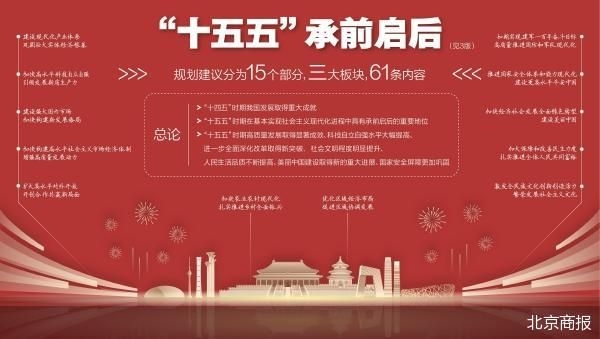
Core Viewpoint - The "Suggestions for Formulating the 15th Five-Year Plan for National Economic and Social Development" aims to significantly enhance China's economic, technological, defense, and comprehensive national strength by 2035, achieving a per capita GDP at the level of moderately developed countries and improving the quality of life for its citizens [1] Group 1: Modern Industrial System - Optimize and upgrade traditional industries to enhance their global competitiveness, focusing on sectors like mining, metallurgy, and machinery [3] - Cultivate and expand emerging and future industries, emphasizing innovation in sectors such as new energy and aerospace [4] - Promote high-quality development in the service industry by enhancing service capacity and quality [5] Group 2: Infrastructure Development - Strengthen the planning and integration of modern infrastructure, focusing on new types of infrastructure and digital transformation [6] Group 3: Technological Self-Reliance - Enhance original innovation and tackle key core technology challenges in critical fields like integrated circuits and advanced materials [7][8] - Promote the deep integration of technological and industrial innovation, establishing regional innovation systems [9] - Foster education and talent development to support technological innovation [10] Group 4: Domestic Market Expansion - Stimulate consumption through targeted actions and improve public service spending to enhance consumer capacity [12] - Maintain reasonable investment growth and optimize government investment structures [13] - Remove barriers to the construction of a unified national market [14] Group 5: High-Quality Development Dynamics - Activate various business entities by promoting diverse ownership and enhancing the competitiveness of state-owned enterprises [15] - Improve the market-oriented allocation of resources across various sectors [16] - Enhance macroeconomic governance effectiveness through coordinated policies [18] Group 6: Open Economy - Expand autonomous opening-up, focusing on service sectors and high-standard trade agreements [19] - Promote trade innovation and balance in imports and exports [20] - Create favorable conditions for foreign investment and ensure transparency [21] Group 7: Rural Revitalization - Improve agricultural production capacity and quality through modern agricultural practices [23] - Enhance rural living conditions and public services [24] - Strengthen policies to support farmers and ensure effective financial input for rural development [25] Group 8: Regional Economic Layout - Promote coordinated development across different regions, focusing on the western development and revitalization of the northeast [27] - Enhance inter-regional connectivity and collaboration [28] - Optimize land use and urbanization strategies [30] Group 9: Cultural Development - Foster a vibrant cultural ecosystem and enhance cultural production capabilities [31] - Develop the cultural industry through improved management and market systems [32] - Strengthen the international influence of Chinese culture [33] Group 10: Common Prosperity - Implement strategies for high-quality employment and improve the income distribution system [34][35] - Enhance social security systems to support citizens [36] - Promote high-quality development in the real estate sector [37] Group 11: Health and Environment - Advance health initiatives to improve public health and life expectancy [38] - Promote sustainable environmental practices and energy systems [41][42] - Encourage green production and lifestyle changes [43] Group 12: National Security - Establish a robust national security framework and enhance capabilities in key areas [44][46] - Improve public safety governance and emergency response systems [47] Group 13: Defense Modernization - Accelerate the development of advanced military capabilities and modernize military governance [48][49] - Strengthen the integration of national strategic systems and capabilities [50]
“带着空箱子去中国”成新风尚,前三季度离境退税销售额增长约1倍
Sou Hu Cai Jing· 2025-10-28 04:31
Core Insights - The number of foreign visitors entering China without a visa reached 20.89 million in the first three quarters of the year, representing a year-on-year increase of over 50% [1][5][9] - The sales volume of tax refunds for departing tourists has doubled compared to the previous year [1][5][9] - The "Buy in China" initiative has been launched to enhance consumer activities and promote high-quality imports [1][5][9] Event Overview - The 8th China International Import Expo (CIIE) will be held from November 5 to 10, with participation from 155 countries, regions, and international organizations, featuring 4,108 overseas exhibitors and an exhibition area exceeding 430,000 square meters [2][6][10] - The event will include the Hongqiao International Economic Forum, which will host 33 sub-forums and closed-door meetings, along with over 80 supporting activities such as trade negotiations and investment promotion [2][6][11] Economic Impact - Shanghai aims to enhance its status as an international consumption center by integrating the CIIE with local consumer activities, launching the "2025 Boutique Consumption Month" during the expo [2][6][11] - The city has hosted over 2,000 product launch events this year, with 787 new stores opening from January to September [3][12] - E-commerce transactions in Shanghai exceeded 3.27 trillion yuan (approximately 460 billion USD) in the first nine months, marking a 12.7% year-on-year growth [3][12] Consumer Trends - The trend of "bringing empty boxes to China" has gained popularity on overseas social media platforms, indicating a growing interest in shopping in China [1][5][9] - The tourism sector in Shanghai saw over 6.3 million inbound visitors in the first nine months, with tourism consumption increasing by nearly 30% [3][12]