换电模式

Search documents
机器人能思善动,换电站前景可期,在“灯塔工厂”感受中国智造
Huan Qiu Wang· 2025-11-11 22:54
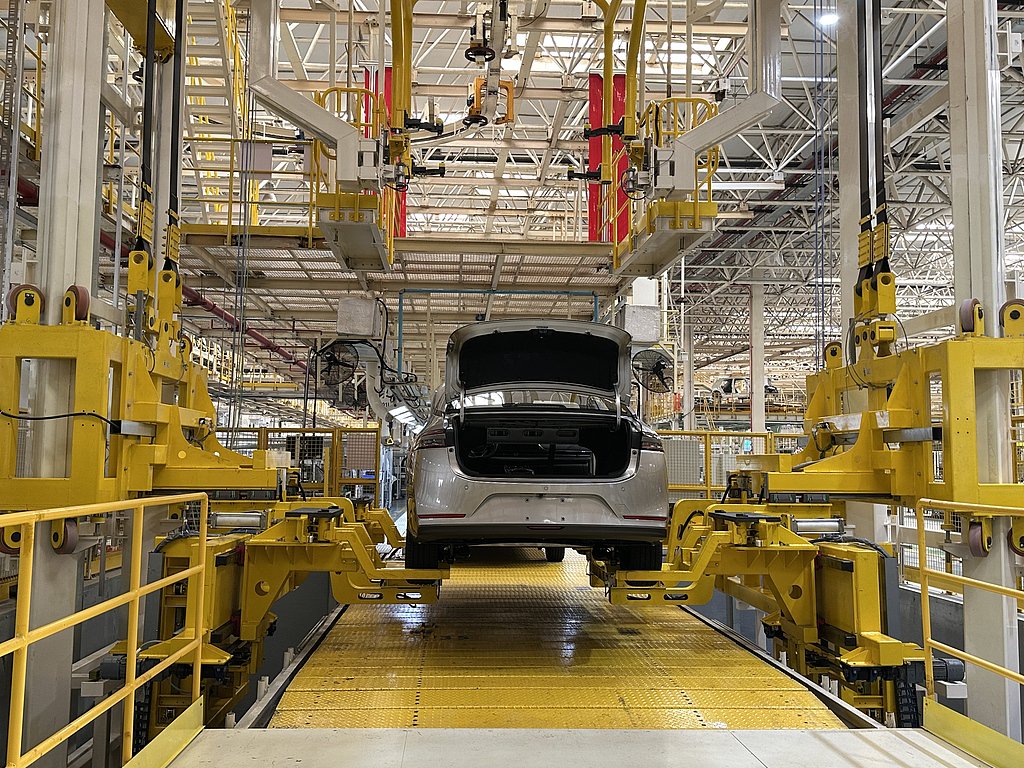
Core Insights - In October, China's new energy vehicle (NEV) production and sales reached 1.772 million and 1.715 million units, respectively, marking year-on-year increases of 21.1% and 20%, with NEVs accounting for 51.6% of total new car sales [1][4] Group 1: Industry Trends - The NEV sector has become a significant identifier for China in the international community, showcasing strong development momentum and potential future directions [1] - The "battery swapping" model is gaining traction, with industry leaders indicating that by 2030, battery swapping, home charging, and public charging stations will each hold a third of the market [4][5] Group 2: Technological Advancements - The Aion UT super vehicle features a "chocolate battery" that allows for both charging and battery swapping, enhancing user convenience [4][6] - The Aion factory in Changsha is recognized as a "lighthouse factory," capable of producing a new NEV every 53 seconds, highlighting advancements in smart manufacturing [8] Group 3: Market Dynamics - The introduction of e-commerce platforms like JD.com in car sales is expected to disrupt the traditional automotive sales market, offering competitive pricing and enhanced user experience [8][9] - In October, China's passenger car retail sales saw a slight decline of 0.8% year-on-year, but there are expectations for a rebound in sales due to rural demand and promotional activities [9]



租电版仅售4.99万 京东野心不止于卖车
Bei Jing Shang Bao· 2025-11-10 17:07
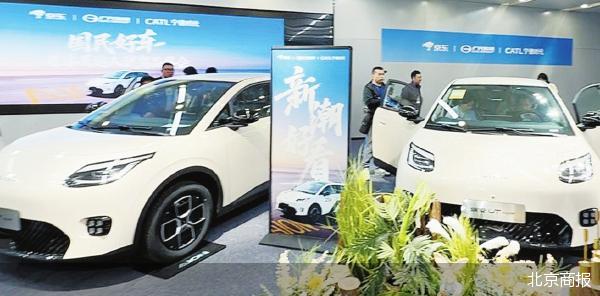
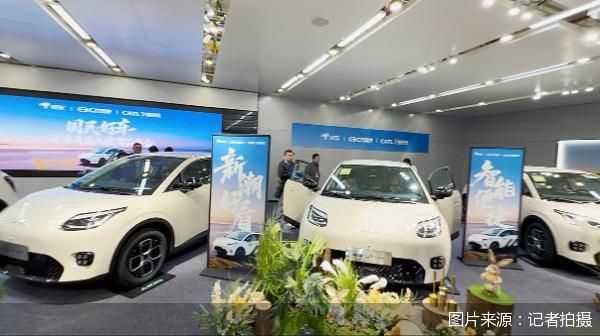
Core Insights - The core point of the article is that JD.com, in collaboration with GAC and CATL, has launched the Aion UT Super at a competitive price, aiming to reshape the electric vehicle ecosystem through a comprehensive service network that includes sales, delivery, and after-sales services [1][5]. Pricing Strategy - The rental version of the Aion UT Super is priced at 49,900 yuan, which is lower than market predictions and the official price range of 69,800 to 101,800 yuan [3][4]. - The battery rental fee is set at 499 yuan per month, with a limited-time offer reducing it to 399 yuan until December 8 [3]. - Users who purchase the vehicle can waive the annual battery management service fee of 699 yuan and receive a complimentary battery inspection service valued at 299 yuan [3]. Collaborative Ecosystem - The competitive pricing is a result of the collaboration between JD.com, GAC, and CATL, which has streamlined costs through exclusive sales channels, large-scale production, and technological advancements in battery management [4]. - JD.com is not only focused on vehicle sales but aims to enhance user engagement through maintenance, battery swapping, and other services [5][6]. Service Network Development - JD.com is actively recruiting new car delivery centers nationwide to establish a one-stop service network that integrates sales, delivery, and after-sales services [8]. - The company plans to operate its own after-sales service centers rather than relying on franchise models, which is essential for creating a closed-loop service ecosystem [8]. Future Expansion Plans - JD.com intends to introduce more vehicle models that meet its "National Good Car" standard, catering to diverse consumer needs [6]. - The company has already established over 3,000 offline service centers and is expanding its partnerships with major electric vehicle manufacturers for maintenance and repair services [6][7]. Industry Competition - The shift in sales and after-sales models is a key feature of the new vehicle launch, with a focus on enhancing user experience and service quality [8]. - Future competition among automakers will center around safety and business models, with after-sales services becoming a critical competitive factor [8].

租电版售价仅4.99万元,京东的野心不止于卖车
Bei Jing Shang Bao· 2025-11-10 13:51
Core Insights - The core point of the article is that JD.com, in collaboration with GAC and CATL, has launched the Aion UT Super at a competitive price, aiming to reshape the electric vehicle ecosystem through a comprehensive service network and innovative business models [1][5][6]. Pricing Strategy - The rental version of the Aion UT Super is priced at 49,900 yuan, which is lower than market predictions and the official price range of 69,800 to 101,800 yuan [3][4]. - The battery rental fee is set at 499 yuan per month, with a limited-time offer reducing it to 399 yuan [3]. - Customers who purchase the vehicle can waive the annual battery management service fee of 699 yuan and receive a complimentary battery inspection service valued at 299 yuan [3]. Collaborative Ecosystem - The competitive pricing is a result of the collaboration between JD.com, GAC, and CATL, focusing on channel efficiency, production scale, and battery technology [4]. - JD.com leverages its exclusive sales channels to avoid traditional dealership markups, while GAC benefits from economies of scale in production [4]. Service Network Development - JD.com is actively recruiting new car delivery centers to establish a one-stop service network encompassing sales, delivery, and after-sales services [1][8]. - The company aims to enhance user engagement through maintenance, battery replacement, and other services, indicating a shift from merely selling cars to building a comprehensive ecosystem [6][8]. After-Sales Strategy - JD.com is expanding its after-sales capabilities, having partnered with various electric vehicle brands to provide maintenance and repair services [7]. - The company has opened a technical center in Beijing, certified as a first-class repair enterprise, to offer battery repair services for electric vehicles [7]. Future Outlook - The automotive industry is expected to see increased competition focused on safety and business models, with after-sales services becoming a critical competitive factor [1][8]. - JD.com plans to introduce more vehicle models that meet its "National Good Car" standard, aiming to cater to diverse consumer needs [6]. - The company faces challenges in technology investment and collaboration with other automakers, which may impact its ability to establish a competitive edge in the evolving market [8].

车fans社群话题:蔚来四季度能否完成15万销量目标?
车fans· 2025-11-10 00:33
Core Viewpoint - The challenge for NIO to achieve its target of 150,000 vehicle sales in the fourth quarter is significant, primarily due to the complexities of its battery swap model and the need for infrastructure to support it [2][3][5]. Group 1: Sales Target Challenges - NIO's unique battery swap model allows for diverse pricing but also presents risks, as the profitability of battery swap stations is uncertain and they may not generate sufficient revenue to support expansion [2][3]. - The current delivery volume of NIO is 910,000 units as of 2024, and maintaining a delivery rate of 40,000 units per month is crucial for doubling the vehicle ownership in two years [2][3]. - The competition in the charging infrastructure is intensifying, and if battery swap stations cannot keep pace with vehicle sales, it may lead to a shortage of available battery swaps for customers [2][3]. Group 2: Perspectives on Achieving Sales Goals - Some analysts believe that NIO will meet its sales target due to its strong capital structure and the need to demonstrate progress to investors [5][9]. - The reduction in vehicle prices and operational costs is expected to boost sales, as consumers respond positively to lower prices [5][9]. - The production capacity and delivery logistics are seen as the main hurdles, but existing orders indicate a potential for achieving the sales target [6][12]. Group 3: Future Outlook - NIO's strategy involves a focus on service and positioning itself as a mobility company, which may enhance its market appeal and sales performance [9][10]. - The introduction of new models and potential price adjustments could further stimulate demand, especially if the company can maintain a competitive edge in the market [10][12]. - Analysts suggest that 40,000 units per month could become a new normal for NIO, but achieving profitability while maintaining brand integrity will be a significant challenge [10][11].

京东、广汽、宁德时代三方联手!埃安UT Super下线,10万级新能源车如何突围?
Bei Jing Shang Bao· 2025-11-06 12:52
Core Insights - The Aion UT Super, a collaboration between JD.com, GAC, and CATL, officially rolled off the production line on November 5, with a market price expected around 100,000 yuan [2][8] - The vehicle targets the mass market with a focus on battery swapping technology and aims to enhance user experience through a robust service network [5][9] Pricing and Market Positioning - The anticipated price range for the Aion UT series is between 69,800 and 101,800 yuan, with market predictions centering around 100,000 yuan [8] - 83% of surveyed users expect the price to be below 100,000 yuan, indicating a strong demand for affordability in the competitive EV market [3] Product Features and Technology - The Aion UT Super features CATL's "chocolate battery," offering a range of 500 kilometers and a rapid battery swap time of approximately 85 seconds [3][4] - Advanced manufacturing techniques, such as laser spiral welding and AI visual inspection, have been implemented to enhance production efficiency and vehicle safety [3] Sales and Service Strategy - The vehicle will be available in both purchase and rental models, with the rental option providing lifetime battery warranty from CATL [4][7] - JD.com is establishing delivery centers to enhance customer service, integrating online and offline sales channels for improved accessibility [6] Infrastructure Development - CATL plans to build 1,000 battery swap stations this year, with a long-term goal of 30,000 stations to ensure convenient access for users [5][9] - The current coverage of battery swap stations is limited, which may affect user experience if not addressed promptly [9] Competitive Landscape - The 100,000 yuan EV market is highly competitive, with strong contenders like BYD Dolphin, which has sold 183,924 units this year [8] - Differentiation through marketing and service offerings will be crucial for the Aion UT Super to stand out in a crowded market [8][9]
京东1号车下线,价格或低于10万,刘强东开出百万年薪抢人
21世纪经济报道· 2025-11-05 05:58
Group 1 - The core product launched is the Aion UT Super 1, featuring a 500 km range and a battery that supports rapid swapping in 99 seconds, developed in collaboration with CATL [1][5] - The vehicle is built on an A-class platform with a B-class wheelbase of 2750 mm, offering spacious interior options in two color schemes [3] - CATL plans to establish 1,000 battery swap stations across 45 cities by the end of the year, with a long-term goal of over 30,000 stations by 2026 [5] Group 2 - JD.com has over 3,000 service locations and 40,000 partner stores to provide comprehensive service throughout the vehicle ownership cycle [7] - The initial auction for the vehicle attracted nearly 300,000 viewers, with bids exceeding 78 million yuan within four hours [7] - JD.com is enhancing its automotive supply chain capabilities by recruiting talent, with high salaries offered for positions requiring automotive industry experience [9]

王俊履新东风汽车副总经理;赛力斯开启港股招股丨汽车早参
Mei Ri Jing Ji Xin Wen· 2025-10-27 23:01
Group 1: Company Developments - Seres has launched its Hong Kong IPO, with a base issuance of 100.2 million H-shares, aiming to raise approximately HKD 12.9249 billion at a maximum price of HKD 131.50 per share, attracting 22 cornerstone investors [1] - Wang Jun has been appointed as the Vice General Manager and Party Committee Member of Dongfeng Motor Group, indicating potential strategic and technological innovations within the company [2] - Faraday Future has established Faraday Finance Inc. and submitted an application for an automotive finance license in California, aiming to enhance cash flow and reduce purchase barriers for its high-end models [3] Group 2: Industry Insights - Seres' IPO is expected to draw more investor attention to the rapidly growing electric vehicle sector, potentially influencing market focus and capital inflow for related companies [1] - The appointment of Wang Jun at Dongfeng Motor may lead to increased market interest in the company's future developments amid the automotive industry's transformation [2] - NIO has surpassed 90 million battery swap instances, indicating strong growth and user acceptance in the electric vehicle market, which may boost confidence in electric vehicle manufacturers [4]


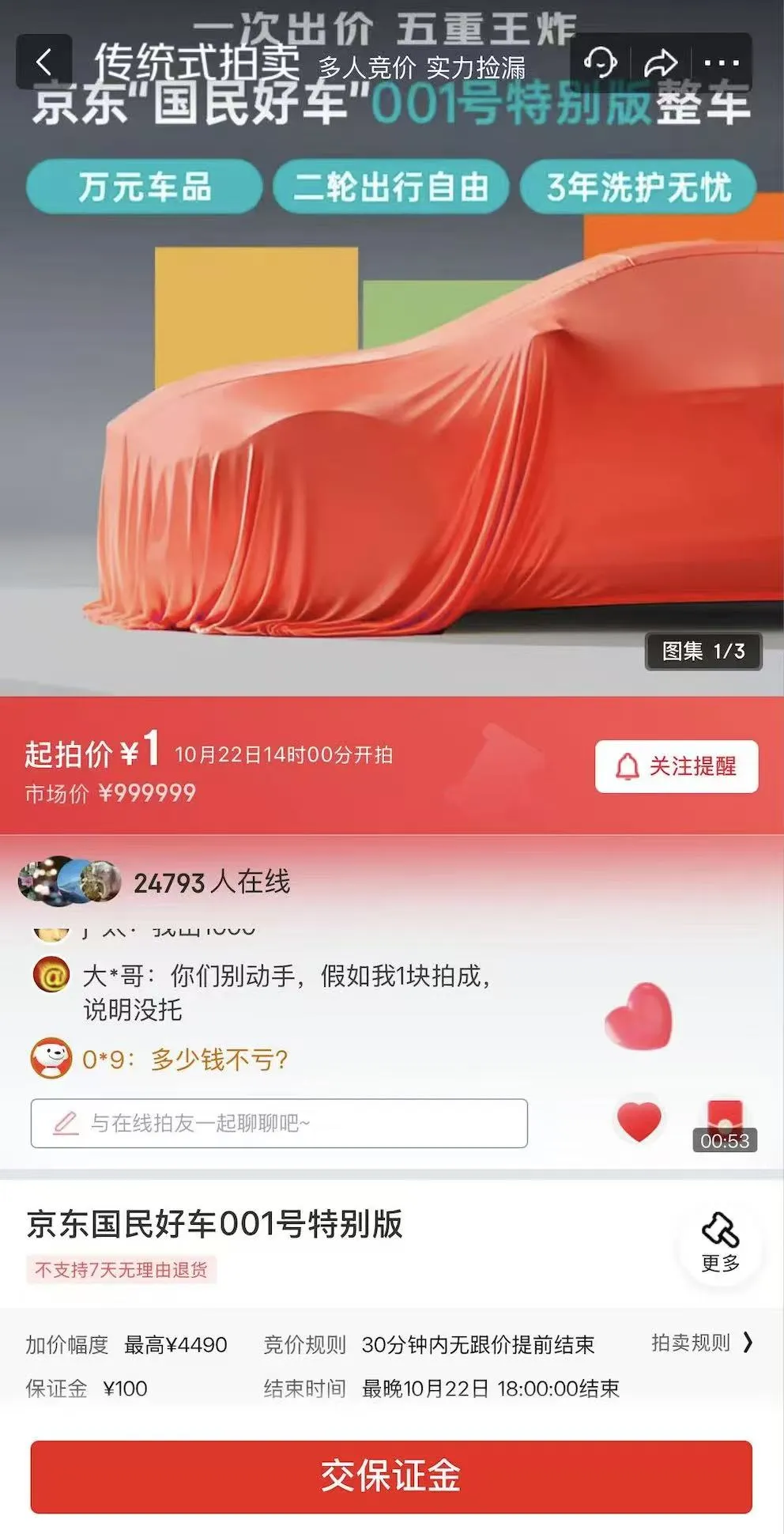
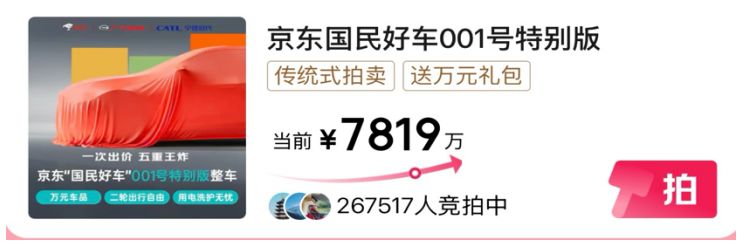
竞拍价定格7819万元!京东001号“国民好车”拍卖吸引超26万人参与
Mei Ri Jing Ji Xin Wen· 2025-10-22 12:35
Core Insights - JD.com successfully auctioned its "National Good Car" model 001 for 78.19 million yuan, attracting over 260,000 participants [1][4] - The vehicle is a collaboration between JD.com, GAC Group, and CATL, with JD.com focusing on consumer insights and sales, while GAC handles manufacturing and CATL provides battery technology [3] Auction Details - The auction began at 2 PM on October 22, with an initial starting price of 1 yuan, quickly escalating to 10 million yuan within minutes [4] - Participants were required to pay a 100 yuan deposit, which would be forfeited if they canceled their order [4] Vehicle Specifications - The car features over 70% high-strength steel, a weight 300 kg heavier than similar models, and a wider wheelbase and tire width compared to industry standards [4] - It is expected to be priced between 100,000 and 120,000 yuan and will utilize a battery swapping model [4] Strategic Partnerships and Future Plans - JD.com announced exclusive sales of the new car during the "Double 11" shopping festival and signed strategic agreements with CATL and Changan Automobile [5] - The company has been expanding its automotive business since 2018, focusing on both online and offline sales, particularly in the new energy vehicle market [5]
启境首款车型将于明年年中推出;中汽协:9月我国新能源汽车出口同比增长1倍 | 汽车早参
Mei Ri Jing Ji Xin Wen· 2025-10-21 22:33
Group 1 - GAC Group and Huawei are collaborating to launch a new brand called "Qijing," with the first model expected to be released in mid-2026, featuring Huawei's advanced technology [1] - The name "Qijing" was inspired by a suggestion from Huawei's founder, emphasizing a youthful and technological image, with "Qi" representing new beginnings and "Jing" symbolizing new realms [1] - Huawei has deployed hundreds of personnel to work on the "Qijing" project, indicating a deep partnership in technology and market strategy between the two companies [1] Group 2 - As of the end of September, China's electric vehicle charging infrastructure reached 18.063 million units, marking a 54.5% year-on-year increase [2] - Public charging facilities accounted for 4.476 million units, up 40% year-on-year, while private charging facilities reached 13.587 million units, reflecting a 60% increase [2] - The growth in charging infrastructure is driven by both policy support and market demand, positively impacting related industries such as charging equipment manufacturing and energy management [2] Group 3 - In September, China's automobile exports exceeded 600,000 units, with a year-on-year increase of 21%, highlighting the strong international competitiveness of the Chinese automotive industry [3] - New energy vehicle exports reached 222,000 units, showing a remarkable year-on-year growth of 100%, despite a slight month-on-month decline [3] - The growth in exports indicates global market recognition of Chinese automobiles and reflects ongoing innovations and breakthroughs in the industry [3] Group 4 - CATL announced that its "Chocolate" battery swap stations have surpassed 700 locations, with plans to accelerate towards a target of 1,000 stations by 2025 [4] - The expansion of the battery swap network enhances CATL's competitiveness in charging infrastructure and demonstrates proactive market positioning [4] - The promotion of battery swap models is expected to boost the battery manufacturing and related service markets, improving overall supply chain efficiency [4]

京东、宁德时代联手广汽共推“新车” 打造一站式配齐消费新模式
Cai Jing Wang· 2025-10-18 12:31
Core Viewpoint - The collaboration between JD.com, GAC Group, and CATL represents an innovative combination of e-commerce, battery technology, and traditional automotive manufacturing, aiming to create new opportunities in the automotive industry [1][4]. Group 1: Collaboration Details - JD.com officially announced a partnership with GAC Group and CATL to launch a new vehicle, set for exclusive sales on JD's platform during this year's "Double Eleven" shopping festival [1]. - GAC Group's chairman emphasized the need for traditional manufacturers to transition into user service-oriented companies, moving away from a purely technical focus [1][6]. - The new vehicle is being auctioned on JD.com starting at 1 yuan, showcasing a novel sales approach [1]. Group 2: Strategic Significance - The collaboration is seen as strategically significant for all three parties, with potential for synergy, but its success will depend on execution and ecosystem integration [5][16]. - JD.com aims to penetrate the automotive sector by leveraging its vast online traffic and user engagement capabilities, creating a comprehensive "people-car-life" service ecosystem [6]. - For CATL, this partnership allows deeper involvement in vehicle development, positioning its battery technology as a key selling point in a competitive market [6]. Group 3: GAC Group's Challenges - GAC Group faces significant challenges, including declining revenue and profitability, with a reported revenue of 42.611 billion yuan in the first half of 2025, down 7.88% year-on-year, and a net loss of 2.538 billion yuan [11][12]. - The company has struggled with sales of its new energy vehicles, with a 6.08% year-on-year decline in sales [13]. - GAC's traditional sales channels are lagging behind competitors in adapting to new market demands, impacting profitability [11][16]. Group 4: Market Context and Future Outlook - The automotive market is increasingly competitive, prompting traditional manufacturers like GAC to seek external partnerships for innovation and market adaptation [5][11]. - The new vehicle is expected to be priced between 100,000 and 120,000 yuan and may utilize a "chocolate battery swap" model, indicating a shift towards innovative service offerings [13]. - The collaboration is viewed as a potential turning point for GAC, with hopes that it will enhance brand recognition and customer reach [16].