数字中国建设

Search documents
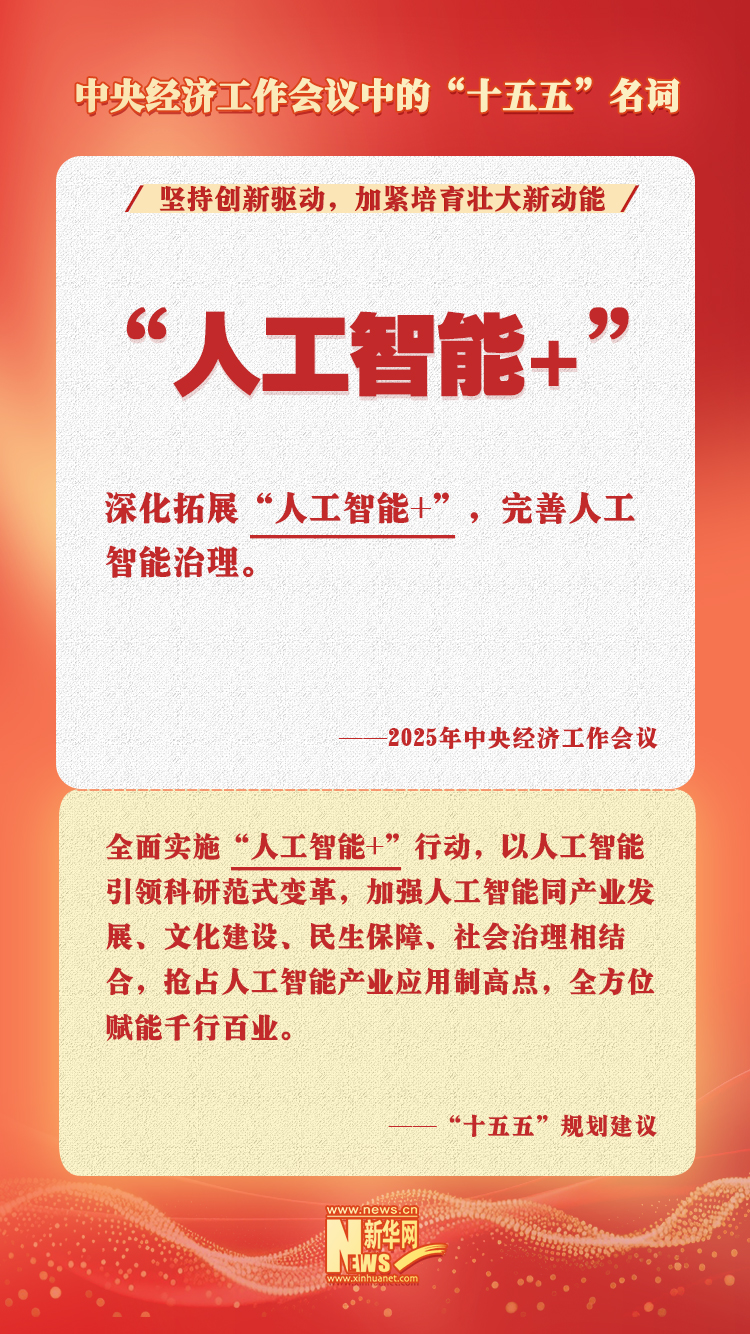
中央经济工作会议中的“十五五”名词:“人工智能+”
Xin Hua Wang· 2025-12-18 02:12
2026年是"十五五"开局之年,近日召开的中央经济工作会议明确了关于明年经济工作的思路、任务、 政策等,一系列重点工作与"十五五"规划建议的部署一脉相承。为更好帮助网友理解会议精神,新华网梳 理了会议提出的部分关键提法,一起来学习。 为什么要全面实施"人工智能+"行动? 这是推进人工智能与经济社会各行业各领域广泛深度融合、重塑生产生活范式、促进生产力革命性跃 迁和生产关系深层次变革的重大战略部署。 第一,人工智能是数字经济时代引领新一轮科技革命和产业变革的战略性技术。 【纠错】 【责任编辑:李童】 我国要在人工智能领域占得先机、赢得优势,就必须在基础理论、方法、工具等方面取得突破。 全面实施"人工智能+"行动,有利于发挥我国产业体系完备、市场规模巨大、应用场景丰富等优势, 以实际应用加速人工智能技术不断向上生长,形成以创新带应用、以应用促创新的良性循环。 第二,随着大模型训练成本持续降低,多模态融合技术不断优化,智能体和具身智能快速发展,人工 智能正从实验室走向生产生活,创造出大量新的发展机会。 全面实施"人工智能+"行动,是为了进一步强化人工智能技术开发的应用导向,积极培育人工智能创 新产品和服务,大力推进 ...

学习规划建议每日问答 | 怎样理解促进形成更多由内需主导、消费拉动、内生增长的经济发展模式
Xin Hua She· 2025-12-17 05:13
Core Viewpoint - The article emphasizes the importance of promoting an economic development model driven by domestic demand, consumption, and endogenous growth, which is crucial for China's modernization strategy and high-quality economic development [1][2]. Group 1: Economic Development Strategy - The strategy aims to solidify the role of domestic demand as the main engine for economic growth, establishing a dual circulation pattern that supports high-quality development over the next five years [2]. - There is a clear need to address the imbalance between strong supply and weak demand, particularly the insufficient domestic consumption, which is a significant shortcoming that needs to be resolved [2][3]. - Enhancing domestic demand is seen as a way to optimize resource allocation, leverage technological innovation, and shift economic growth from factor-driven to innovation-driven [2]. Group 2: Enhancing Consumer Demand - The article highlights that insufficient consumer demand is a major bottleneck in the domestic circulation, which presents an opportunity to improve living standards and quality of life [2][4]. - Policies aimed at increasing consumer capacity and confidence are essential, including improving public services and implementing income distribution reforms [4]. - Initiatives to stimulate consumption, such as expanding the supply of quality goods and services, are crucial for driving economic growth [4]. Group 3: Investment and Innovation - The need to improve the investment framework is emphasized, focusing on effective investment expansion and the role of government in guiding social capital towards key infrastructure projects [3][5]. - Strengthening innovation capabilities and integrating technological advancements with industrial innovation are critical for fostering endogenous growth [4]. - The article calls for a comprehensive approach to develop a resilient and efficient supply chain while promoting new and emerging industries [4]. Group 4: Economic Governance and Reform - The importance of enhancing macroeconomic governance and improving market economic systems is highlighted to ensure consistent policy direction and effective management of expectations [5]. - Expanding bilateral investment cooperation and promoting trade innovation are seen as ways to enhance the quality of domestic circulation [5].
增强对科技创新领域融资支持,助力科技自立自强!万亿级公募发声
券商中国· 2025-12-11 11:00
编者按: 三十余载砥砺前行,中国资管行业从初步探索到如今跻身全球前列,与经济的蓬勃发展和制度的日趋完善 密不可分。在此期间,公募与私募协同发展的多元生态为资本市场的鼎新革故注入了核心动力,二者的发 展始终与国家改革同频共振,与经济发展浪潮同向而行,与产业升级齐头并进。 站在"十五五"开启的历史节点,党的二十届四中全会明确的"高质量发展取得显著成效、科技自立自强水平 大幅提高"等目标,为资本市场赋予了更重使命。中国证券投资基金业协会与证券时报·券商中国携手推出 本次联名报道,特别邀请多家国内头部公私募基金,从制度创新、市场演进、投资实践等多维度建言献 策。 党的二十届四中全会胜利召开,举国关注,催人奋进。全会审议通过的《中共中央关于制定国民经济和社会发 展第十五个五年规划的建议》(以下简称《 建议 》),对未来五年发展作出顶层设计和战略擘画,是乘势而 上、接续推进中国式现代化的又一次总动员、总部署,也为公募基金行业高质量发展指明了方向和路径。 百万用户都在看 突然!美国决定:撤销! 杀疯了!半小时500亿元!刚刚,重磅利好彻底引爆! 自1998年成立以来,国泰基金乘着中国资本市场改革开放的东风,砥砺奋进,资产管 ...

学习规划建议每日问答|为什么要全面实施“人工智能+”行动
Xin Hua She· 2025-12-06 03:02
Group 1 - The core viewpoint emphasizes the strategic importance of implementing the "Artificial Intelligence +" initiative to integrate AI with various sectors, aiming to reshape production and living paradigms and drive a revolutionary leap in productivity and social relations [1] - AI is identified as a strategic technology leading a new round of technological revolution and industrial transformation, with China needing breakthroughs in foundational theories and key technologies to seize opportunities in AI development [1][2] - The initiative aims to leverage China's complete industrial system, vast market scale, and rich application scenarios to accelerate the growth of AI technologies through practical applications, fostering a virtuous cycle of innovation and application [1] Group 2 - The reduction in training costs for large models and advancements in multimodal integration are facilitating the transition of AI from laboratories to everyday life, creating numerous new development opportunities [2] - Countries are increasingly formulating AI development strategies, leading to the emergence of new fields such as autonomous driving and humanoid robots, which could reshape the global economic landscape [2] - The "Artificial Intelligence +" initiative is designed to strengthen the application-oriented development of AI technologies and promote large-scale commercialization of AI products and services [2] Group 3 - The rapid growth of generative AI products and the expansion of application scenarios are advancing the transition from digitalization to intelligentization in China [3] - The digital economy's core industries are projected to account for approximately 10% of GDP in 2024, with the national data market transaction scale exceeding 160 billion yuan, reflecting a growth of over 30% from 2023 [3] - The initiative aims to integrate AI into various economic and social development areas, promoting deep fusion and accelerating the establishment of a new intelligent development landscape [3] Group 4 - The commercialization and large-scale application of AI is a long-term and complex system project that requires broad collaboration through the "Artificial Intelligence +" initiative [4] - Key areas of focus include strengthening foundational research, supporting diverse technological explorations, and developing a self-controlled AI infrastructure [4] - The initiative also emphasizes the importance of talent cultivation, financial support, and the establishment of legal frameworks to ensure the safe and reliable development of AI technologies [4]
学习规划建议每日问答|为什么要全面实施“人工智能+”行动
Xin Hua She· 2025-12-06 02:26
Group 1 - The core viewpoint emphasizes the strategic importance of implementing the "Artificial Intelligence +" initiative to integrate AI with various sectors, aiming to reshape production and living paradigms and promote revolutionary changes in productivity and social relations [1][3]. - AI is identified as a strategic technology leading a new round of technological revolution and industrial transformation, with a focus on overcoming existing weaknesses in foundational theories and key technologies to gain a competitive edge [1][2]. - The initiative aims to foster a virtuous cycle of innovation and application, leveraging China's complete industrial system, vast market scale, and rich application scenarios to accelerate AI technology development [1][2]. Group 2 - The continuous reduction in training costs for large models and advancements in multimodal integration technologies are creating new development opportunities as AI transitions from laboratories to everyday life [2]. - Countries are increasingly formulating AI development strategies, leading to the emergence of new fields such as autonomous driving and humanoid robots, which are expected to reshape the global economic landscape [2]. - The "Artificial Intelligence +" initiative is designed to enhance the application-oriented development of AI technologies and promote large-scale commercialization of AI products and services [2][4]. Group 3 - The rapid growth of generative AI products and expanding application scenarios are propelling the transition from digitalization to intelligentization in China's digital economy [3]. - By 2024, the core industries of the digital economy are projected to account for approximately 10% of the GDP, with the data market transaction scale exceeding 160 billion, reflecting a growth of over 30% from 2023 [3]. - The initiative aims to ensure the deep integration of AI across various sectors, enhancing the efficiency of public services and improving the quality of life for citizens [3][4]. Group 4 - The commercialization and large-scale application of AI is a complex, long-term endeavor that requires collaboration across various sectors [4]. - Key areas of focus include strengthening foundational research, supporting diverse technological explorations, and developing a robust AI infrastructure [4]. - The initiative also emphasizes the importance of legal frameworks, ethical guidelines, and safety measures to ensure the secure and controllable development of AI technologies [4].
时报观察丨发展数字经济 需先投资于人
证券时报· 2025-12-04 00:08
Group 1 - The core viewpoint emphasizes that investing in human resources is essential for the development of the digital economy, as highlighted by the recent policy document issued by various government departments [1][2] - The digital economy's core industries are projected to exceed 10% of GDP in 2024, with an expected annual output value surpassing 80 trillion yuan by 2025, indicating robust growth [1] - The "14th Five-Year Plan" suggests a deep integration of data resources and talent development, aligning with the current trends in digital economy growth, which relies on both technological advancements and high-quality talent [1][2] Group 2 - Talent is identified as the core participant in the supply, circulation, and assurance of data elements, serving as the fundamental driving force for high-quality development in the digital economy [2] - The strategy of "investing in people" is not only a practical measure to address immediate talent shortages but also a long-term strategic choice to strengthen the foundation for sustainable development [2] - The rapid iteration of digital technologies and diverse application scenarios necessitate a continuous supply of high-quality talent to effectively respond to technological changes and unlock the potential of data elements [2]

加快高水平科技自立自强 引领发展新质生产力(权威访谈·学习贯彻党的二十届四中全会精神)
Ren Min Ri Bao· 2025-12-03 00:22
Core Viewpoint - The article emphasizes the importance of accelerating high-level technological self-reliance and innovation to lead the development of new productive forces, as highlighted by Xi Jinping and the 20th Central Committee of the Communist Party of China [1][5]. Group 1: Achievements in Technological Innovation - During the 14th Five-Year Plan period, China has made historic achievements in technological innovation, with R&D investment reaching 3.63 trillion yuan in 2024, an intensity of 2.69%, and the highest number of R&D personnel globally [3]. - Basic research funding has increased to 250.09 billion yuan, over 70% growth since 2020, with significant original achievements and leading positions in international patent applications and high-level journal publications [3]. - The national comprehensive innovation capability ranking improved from 14th in 2020 to 10th in 2024, with Shenzhen-Hong Kong-Guangzhou becoming the top global innovation cluster [3]. Group 2: Integration of Technological and Industrial Innovation - The added value of high-tech manufacturing industries increased by 42% compared to the end of the 13th Five-Year Plan, with the "three new" economies contributing 18% to GDP [4]. - Major technological achievements include the operational normalization of the "Tiangong" space station, successful lunar sample return by "Chang'e 6", and the large-scale application of 5G technology [4]. - China leads the world in the production and sales of new energy vehicles, with significant advancements in high-speed rail technology and the commissioning of the world's first fourth-generation nuclear power plant [4]. Group 3: Strategic Goals for the 15th Five-Year Plan - The 15th Five-Year Plan aims to significantly enhance the level of technological self-reliance and innovation, recognizing its critical role in modernizing the economy and society [5][6]. - Key strategies include strengthening original innovation, promoting deep integration of technological and industrial innovation, and advancing digital China initiatives to harness new technological revolutions [6][7]. Group 4: Policies for Education, Technology, and Talent Development - The government plans to implement policies that promote the integration of education, technology, and talent development, ensuring that talent cultivation aligns closely with technological innovation and industrial needs [9][10]. - Emphasis will be placed on improving the evaluation and incentive systems for talent, facilitating talent mobility, and fostering a conducive environment for innovation [9][10].
【学习贯彻四中全会精神在基层】不断释放数据要素活力 助力高质量发展
Yang Shi Wang· 2025-12-02 13:57
Group 1 - The core viewpoint emphasizes the importance of data resource development and utilization in promoting high-quality development in Beijing and Jiangxi, in line with the spirit of the 20th Central Committee's Fourth Plenary Session [1][2][3] Group 2 - Beijing has established the first national "Medical Insurance + Commercial Insurance" clearing and settlement center, facilitating synchronized reimbursement for patients across the country [2] - Since the 14th Five-Year Plan, Beijing has launched over 3,000 data products at the Beijing International Big Data Exchange and has provided services over 400 million times to 700,000 market entities [2] - Jiangxi has implemented digital transformation policies, resulting in over 13,000 enterprises adopting digital upgrades, contributing 22.9% to the industrial growth of large-scale enterprises [3] - The AI visual inspection system in a large automotive manufacturing company in Jiangxi can now complete key vehicle inspections within 50 seconds, covering over 1,200 types of components [3] - Jiangxi aims to enhance its industrial competitiveness by building a digital transformation ecosystem that integrates large, medium, and small enterprises [3]
乘数而上激活潜能 “2025中国数据要素高质量发展论坛”12月10日将在京举办
Zhong Guo Jing Ying Bao· 2025-12-02 13:29
Core Insights - Data is identified as the core engine of the digital economy, crucial for driving industrial upgrades and technological revolutions, as well as for building national competitive advantages and leading high-quality economic development [1][2] Group 1: Forum Overview - The "2025 China Data Element High-Quality Development Forum" will be held on December 10 in Beijing, focusing on the theme "Multiplying Potential" and discussing the value realization path of data from resources to assets to capital [1] - The forum aims to analyze cutting-edge policies, explore governance paradigms, and address practical challenges in the data industry [1][2] Group 2: Market Growth and Policy Support - In 2024, China's data element market is projected to exceed 160 billion yuan, with an annual growth rate of over 30%, supported by policies such as the "Opinions on Building a Data Basic System" and the "Three-Year Action Plan for Data Elements (2024-2026)" [2] - The number of national data exchanges has increased to 33, with on-site trading volume surpassing 30 billion yuan [2] Group 3: Case Selection and Recognition - A "2025 China Data Element High-Quality Development Case Selection" initiative has been launched to identify innovative and valuable benchmark cases in the data element field, including categories like industrial digital transformation and market practice leadership [3] - The results of the case selection will be announced during the forum, along with the release of the "Blue Book on Real-World Token Industry Applications (2025)" [3] Group 4: Media Engagement and Coverage - The forum has attracted over a hundred professional attendees from the data element field, with comprehensive media coverage planned across various platforms including Weibo, Douyin, and Bilibili [3]
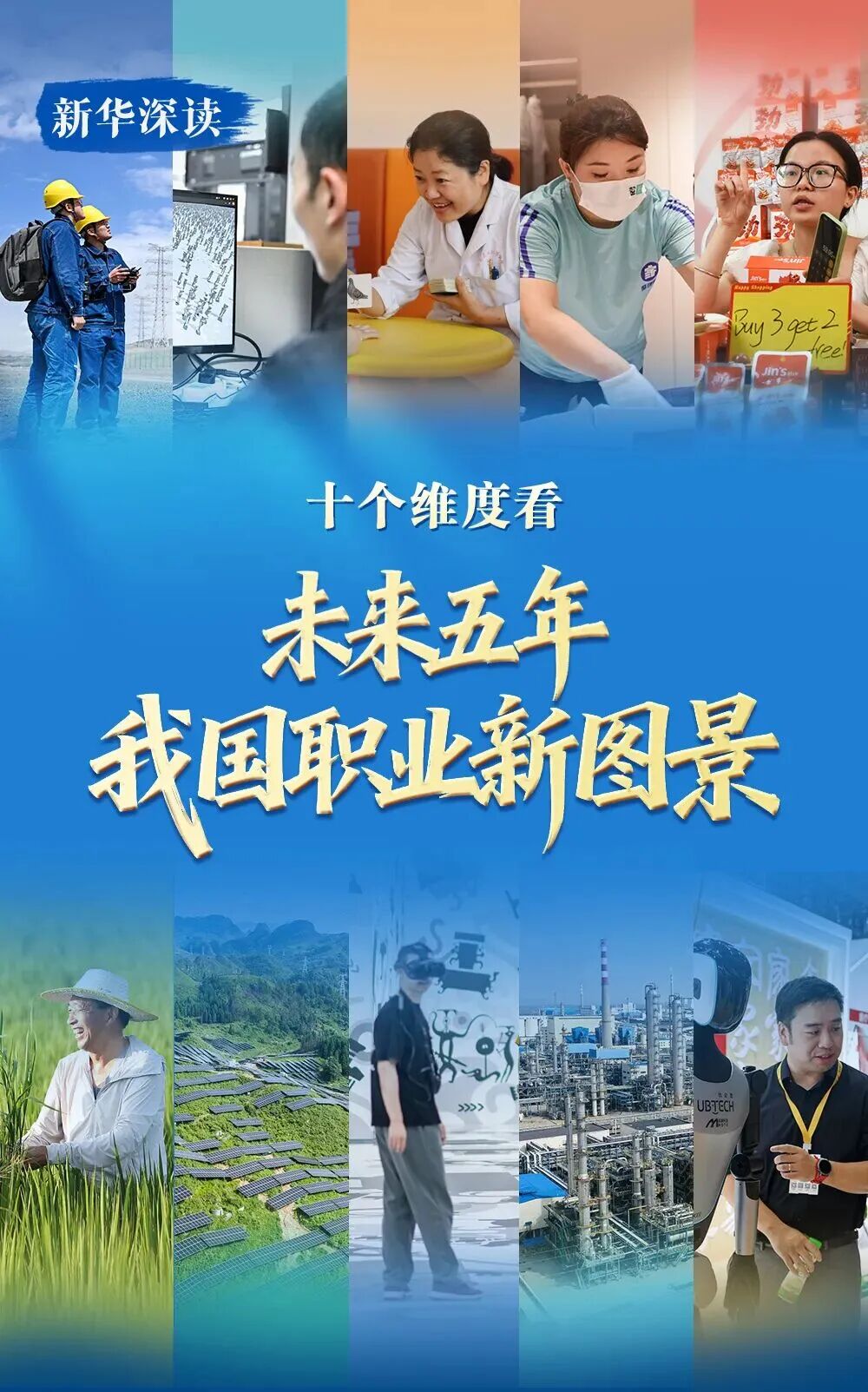
未来5年什么工作最吃香?
Xin Lang Cai Jing· 2025-12-02 11:44
Core Insights - The article outlines the future job market in China over the next five years, emphasizing the impact of industrial upgrades, technological changes, and demographic shifts on employment opportunities [1][3][53] Emerging Industries - The "Suggestions" document highlights the cultivation of emerging industries such as new energy, new materials, aerospace, and low-altitude economy, which are expected to create new job opportunities across the entire industrial chain [6][56] - The low-altitude economy alone is projected to have a talent gap of 1 million for drone operators, with the market expected to exceed 1 trillion yuan by 2030 [6][57] - Various roles are identified across the low-altitude economy, including equipment designers, flight control engineers, and data analysts, reflecting a trend of integration between manufacturing and services [7][58] Digital Economy - The rise of AI and digital technologies is transforming traditional jobs, leading to the creation of high-value new roles while displacing repetitive labor [12][63] - The AI sector is expected to see significant growth, with job postings increasing by 3% and job seekers by 39% in the first three quarters of 2025 [12][63][64] - The demand for AI-related positions, such as AI product managers and engineers, is surging, with growth rates of 178% and 26% respectively [12][63] Service Sector - The service industry is anticipated to absorb more labor, particularly in health, elderly care, and domestic services, driven by rising consumer demand [15][66] - The elderly care sector is experiencing a job growth rate of 29.2%, with specific roles like caregivers and rehabilitation therapists seeing significant demand [15][66] - The service sector's employment share is expected to rise from over 48% to around 55% in the next five years, reflecting a shift towards more specialized and standardized service roles [17][67] Flexible Employment - The flexible employment landscape is diversifying, with over 84 million new employment forms emerging, providing opportunities for various skill levels [21][71] - The government is focusing on promoting high-quality employment and improving social security for flexible workers, including establishing protections for new employment forms [22][72] Cross-Border Employment - The expansion of cross-border e-commerce is creating diverse job opportunities, with a projected 45 million jobs created in this sector by 2030 [25][77] - There is a growing demand for talents proficient in international trade and local market knowledge, particularly in small and medium enterprises [25][77] Rural Revitalization - New agricultural entrepreneurs are emerging, driving innovation and income growth in rural areas, with significant contributions to local economies [30][81] - The government is promoting rural modernization and encouraging talent to engage in rural development, aiming to enhance local employment opportunities [30][81] Cultural Industry - The cultural sector is evolving, with a strong demand for talents who can blend cultural storytelling with technological skills, such as VR/AR developers and cultural creative engineers [34][35] - The cultural industry is projected to generate substantial revenue, with a focus on integrating technology and culture to create new job opportunities [34][35] Green Jobs - The green economy is expanding, with new roles in renewable energy and sustainability expected to grow significantly, including positions like energy storage operation managers [42][43] - The government is emphasizing the need for multi-disciplinary talents in the green sector, anticipating a doubling of job opportunities in this field [42][43] Regional Employment - Employment patterns are shifting from urban-centric to a more balanced regional distribution, with emerging cities attracting talent due to their industrial strengths [47][48] - The government's regional development strategies are expected to create a more equitable job market across various regions, promoting local employment opportunities [47][48][49]