
无人驾驶

Search documents
人生发财靠周期:2026年展望
泽平宏观· 2026-03-01 05:04
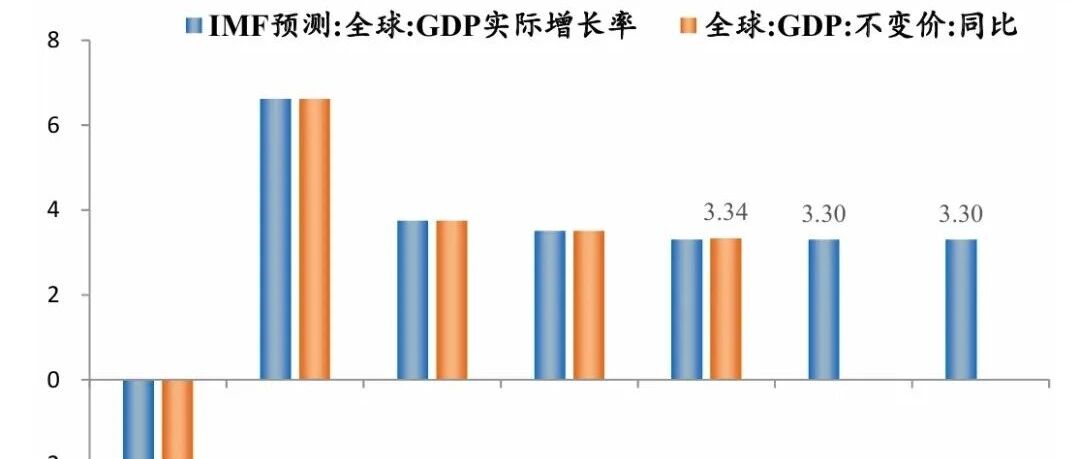
Core Viewpoint - The article discusses the cyclical nature of economic and technological trends, predicting significant shifts in global dynamics by 2026, including a new wave of technological revolution led by AI, a surge in commodity prices, and the onset of a new economic cycle characterized by inflation and monetary tightening [2][4]. Group 1: Economic Cycles - The article identifies the end of a century-long economic cycle, with increasing income disparity, populism, and geopolitical tensions, leading to a global arms race [5][10]. - It highlights the emergence of a new Kondratiev wave driven by AI, which is expected to surpass the previous IT revolution, initiating substantial capital expenditures in new infrastructure [5][16]. - The article outlines the cyclical nature of various economic factors, including the real estate cycle, capacity cycle, inventory cycle, and debt cycle, all converging around 2026 [4][6]. Group 2: AI and Technological Revolution - AI is positioned as the catalyst for the fourth technological revolution, with a significant impact on national strength and global order, leading to a massive increase in capital spending on new infrastructure [5][17]. - The article notes that the AI revolution is in its early stages, with rapid advancements in GPU and large model technologies, paving the way for widespread commercial applications [18][19]. - It anticipates that AI will lead to transformative applications in various sectors, including autonomous driving, healthcare, and robotics, fundamentally altering the global landscape [18][19]. Group 3: Real Estate Market Dynamics - The real estate market is expected to experience a bifurcation, with core cities seeing price stabilization while lower-tier cities face prolonged downturns [6][19]. - The article predicts that by 2026, policies will shift from merely stabilizing the market to actively encouraging growth, including potential subsidies and relaxed purchasing restrictions [20][21]. - It emphasizes the need for continued policy support to stimulate demand and restore confidence in the real estate sector [20][21]. Group 4: Capacity and Inventory Cycles - The article discusses the transition in capacity cycles, with traditional industries undergoing adjustments while new productive forces, particularly AI, drive significant investments in infrastructure [23][25]. - It notes that the inventory cycle is moving from passive destocking to active restocking, although the recovery may be constrained by long-term pressures [27][29]. - The article highlights the role of "anti-involution" policies in improving supply-side dynamics and supporting price recovery in industrial sectors [27][29]. Group 5: Debt Cycle and Policy Outlook - The article outlines the ongoing deleveraging process in the household sector, with a focus on repairing balance sheets and the need for supportive fiscal and monetary policies [32][33]. - It anticipates that government leverage will increase, but the pace of fiscal action may be limited by local government financial constraints [37]. - The article suggests that 2026 will see a more aggressive policy stance aimed at stimulating new productive forces and addressing structural economic challenges [42][44]. Group 6: Asset Class Outlook - The article predicts a "confidence bull market" in the stock market, driven by technological advancements and a favorable policy environment [48][50]. - It highlights the expected rise in commodity prices, particularly in the context of a weakening dollar and global monetary easing [51][52]. - The article emphasizes the potential for the RMB to appreciate due to favorable economic conditions and improved export competitiveness [52].

地方两会系列(二):重点工作如何部署?
East Money Securities· 2026-02-26 07:45
Key Focus Areas - Local governments emphasize the synergy between supply and demand, promoting a combination of investment and consumption[9] - The integration of education, technology, talent, and industry is prioritized to accelerate the application of technology in industries[9] - Regional coordinated development and the construction of a unified national market are highlighted, with a focus on reducing "involution" competition[10] Investment Strategies - Investment is directed towards key industries and major projects, with a focus on digital infrastructure, artificial intelligence, quantum technology, and low-altitude economy[9] - Emphasis on "investment in people" policies, highlighting the importance of livelihood investments[9] - Some regions have already initiated major projects under the "14th Five-Year Plan," ensuring solid project reserves[9] Consumption Initiatives - Efforts to boost consumption are intensified, with a focus on supply-demand adaptability in specific deployments[9] - New consumption scenarios and models are being explored, incorporating regional characteristics such as digital, green, and emotional consumption[9] - The approach to consumption is shifting from multiple points of growth to broader industrial upgrades[9] Industrial Development - Traditional industries are accelerating transformation and efficiency improvements, focusing on sectors like automotive, steel, chemicals, textiles, food, and building materials[9] - New and future industries are emphasized for effective implementation, particularly in the "6+10" categories, including AI, low-altitude economy, and biomedicine[9] - The integration of modern service industries with advanced manufacturing is being promoted[9] International Expansion - There is a push to expand the scale of enterprises going abroad and enhance their international visibility[9] - Improvement of overseas comprehensive service systems to protect the interests of domestic companies abroad is emphasized[9] - Development of new business formats in cultural and entertainment sectors for international markets is highlighted[9]
2026年将发生七件大事,选择优于努力
泽平宏观· 2026-02-21 16:05
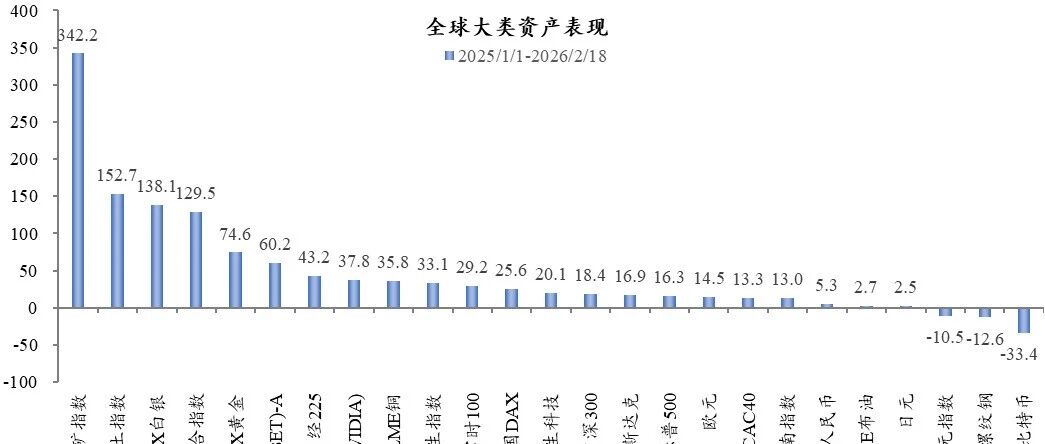
Group 1 - The article outlines seven major events expected to occur by 2026, including significant interest rate cuts in the US and China, the explosive growth of AI applications, and increased geopolitical tensions [2][3] - The AI revolution is in its early stages, with large-scale deployment of GPUs and computing centers leading to a significant drop in costs, resulting in the commercialization of super applications by 2026 [3][5] - The article emphasizes that AI is not just a trend but a transformative force, likening its impact to a tsunami rather than a mere windfall, marking the beginning of a fourth technological revolution [3][5] Group 2 - The upcoming bull market is driven by three strong forces: continuous monetary easing, a new wave of technological revolution, and ample liquidity, characterized as a confidence bull market [5][6] - The capital market is tasked with three historical missions: developing new productive forces, aiding in major power technological competition, and repairing household balance sheets [5] - The article encourages a long-term perspective, focusing on essential trends and making decisive actions rather than relying solely on hard work [7]
任泽平:“2026年将发生七件大事”
Sou Hu Cai Jing· 2026-02-10 04:37
Group 1 - Ren Zeping predicts seven major events will occur in 2026: significant interest rate cuts in China and the US, explosive growth of AI super applications, the rise of China's AI capabilities, increased geopolitical tensions, a year of commodity boom, a confidence-driven bull market, and a bifurcation in the real estate market [3] - The AI revolution is in its early stages, with large-scale deployment of GPUs and computing centers leading to a significant drop in costs, resulting in the commercialization of super applications by 2026, including large models, AI agents, autonomous driving, AI healthcare, humanoid robots, brain-computer interfaces, commercial space travel, and satellite communication [4] - Countries are engaged in an AI race, initiating large-scale infrastructure capital expenditures that are driving up commodity prices, with silver, non-ferrous metals, energy, photovoltaics, and chemicals becoming increasingly important [5] Group 2 - The rapid development of AI is heavily reliant on computing power, which in turn depends on electricity; the pace of AI advancement is so fast that a month without updates can make one feel outdated, indicating a historical opportunity presented by the fourth technological revolution in the Kondratiev wave, occurring once every 60 years [6] - An AI bubble may temporarily arise but will ultimately be supported by future commercialization; opportunities typically go through four phases: invisible, undervalued, misunderstood, and too late [7] - The current capital market is tasked with three historical missions: developing new productive forces, aiding major power technological competition, and repairing household balance sheets [8]

人生发财靠康波:2026年展望
泽平宏观· 2026-02-08 16:05
Core Viewpoint - The article discusses the impending global economic shifts, including de-dollarization, the rise of AI, and the cyclical nature of economic trends, predicting significant inflation and subsequent monetary tightening by 2026 [2][4][5]. Group 1: Economic Cycles - The article emphasizes the end of a century-long economic cycle, marked by the disintegration of the old order and the emergence of new challenges such as income inequality, populism, and geopolitical tensions [6][12]. - It highlights the fourth technological revolution driven by AI, which is expected to lead to substantial capital expenditure in new infrastructure and reshape wealth distribution and national power [6][18][19]. Group 2: Real Estate Market - The real estate sector is entering a phase of differentiation, with a predicted 20% of the population moving to core cities while 80% in lower-tier cities face prolonged declines [7][21]. - The article forecasts that 2026 will see a stabilization in the real estate market, contingent on policy support such as relaxed purchase restrictions and lower interest rates [22][23]. Group 3: Capacity Cycle - The capacity cycle is undergoing a transition, with traditional industries facing capacity reduction while new productive forces, particularly AI, drive large-scale infrastructure investments [24][27]. - The article notes that the capacity cycle has reached a turning point, with improvements in supply-demand dynamics and a recovery in prices and corporate profits expected [25][29]. Group 4: Inventory Cycle - The inventory cycle is transitioning from passive destocking to active restocking, although the recovery is expected to be weak due to ongoing industry differentiation and external uncertainties [29][30]. - The article anticipates a potential exit from deflation in 2026, driven by factors such as anti-involution policies and external inflationary pressures [30][31]. Group 5: Debt Cycle - The article discusses the ongoing challenges in the debt cycle, particularly the need for households to repair their balance sheets while new productive enterprises increase leverage [34][35]. - It emphasizes the necessity for fiscal and monetary policy adjustments to support new productive forces and stimulate economic recovery [39][41]. Group 6: Policy Outlook - The article outlines five key policy areas for 2026, including maintaining a moderately loose monetary policy, proactive fiscal measures, and supportive real estate policies aimed at stabilizing the market [46][48]. - It suggests that the focus will shift from merely preventing overheating in the real estate market to encouraging sustainable growth and addressing housing affordability [48][49]. Group 7: Asset Class Outlook - The article predicts a "confidence bull market" in the stock market, driven by technological advancements and a favorable policy environment, with a focus on sectors like AI, semiconductors, and renewable energy [51][52]. - It also anticipates a significant year for commodities, with expectations of rising prices due to de-dollarization and increased demand from the AI sector [53][54].
任泽平:中国经济的十大趋势
泽平宏观· 2026-02-02 16:06
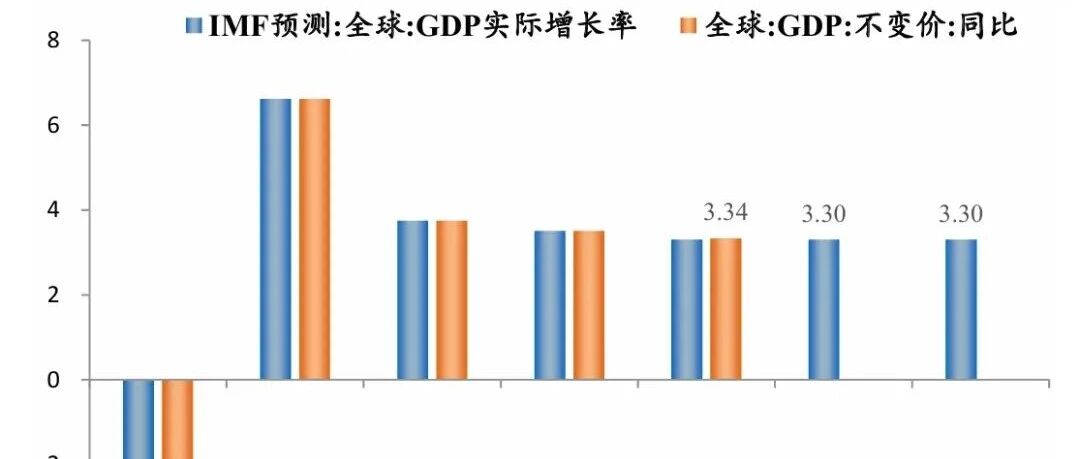
Group 1 - The core viewpoint of the article is that the next decade will witness significant trends in China's economy, driven by global shifts and technological advancements [2] - The first major trend is the reshaping of global economic, trade, technological, and geopolitical orders, marking a critical period for major power competition, with China's GDP projected to reach 140.19 trillion yuan by 2025 [3][4] - The second trend highlights the explosive application of artificial intelligence (AI), which will become a new growth point for the economy, with China poised to be a major player in the global AI revolution due to its vast market and strong industrial base [6] - The third trend indicates breakthroughs in life sciences, with AI facilitating drug development, potentially increasing human lifespan to 120 years and significantly improving life quality [8] - The fourth trend discusses the proliferation of humanoid robots in various sectors, which will replace simple repetitive tasks and allow humans to engage in more creative and social activities [10] Group 2 - The fifth trend emphasizes the unstoppable rise of autonomous driving, which is expected to revolutionize urban transportation and significantly reduce traffic accidents [12] - The sixth trend outlines the emergence of a new green energy system, where renewable sources like solar and wind power will replace coal, contributing to a significant reduction in greenhouse gas emissions [13] - The seventh trend notes the arrival of a post-real estate era, with a bifurcated market where 20% of regions may see rising property prices while 80% may experience prolonged declines [15] - The eighth trend highlights demographic changes, including aging, declining birth rates, and shifts in family structures, leading to the rise of the silver economy and emotional consumption [18][19] - The ninth trend predicts that by 2035, China's per capita GDP will reach levels comparable to developed countries, leading to a shift in consumer focus towards spiritual and emotional needs [23] Group 3 - The tenth trend indicates a profound transformation in lifestyles, transitioning from an internet-based existence to one dominated by AI, with significant implications for daily life and social interactions [24][25]

中国信通院:城市制造业高质量发展研究报告(2025年)
Xin Lang Cai Jing· 2025-12-19 12:44
Core Viewpoint - The report emphasizes the importance of high-quality development in urban manufacturing, highlighting the need for innovation, coordination, green practices, openness, and sharing as guiding principles for future growth in the sector [5][17]. Group 1: Opportunities and Challenges in Urban Manufacturing - Urban manufacturing is entering a new phase driven by innovation, with cities increasingly recognized as innovation hubs [13][14]. - The integration of smart, green, and collaborative practices is becoming a new direction for industrial upgrades, expanding growth opportunities in urban manufacturing [15]. - Urban manufacturing faces new challenges amid rapid transformation, including pressures to boost domestic demand and adapt to changing market conditions [16]. Group 2: Characteristics of Strong Manufacturing Cities - The distribution of strong manufacturing cities remains stable, with a notable concentration in the eastern region of China, while central regions are experiencing localized growth [22][25]. - Strong manufacturing cities are characterized by high-end, intelligent, and green development, leading to significant transformation outcomes [29][30]. - Technological innovation and industrial reform are driving forces, with strong cities concentrating innovation resources and achieving substantial advancements in key sectors [38][40]. Group 3: Issues in High-Quality Development - There are significant disparities in the quality of manufacturing development across regions, necessitating improved coordination and development levels [8][17]. - The efficiency of technology transfer and the proportion of basic research and original innovation remain relatively low, indicating areas for improvement [8][17]. - Structural contradictions in external openness and the need for enhanced effectiveness in foreign investment are evident [8][17]. Group 4: Outlook for Urban Manufacturing Development - Optimizing regional spatial layouts for manufacturing and focusing on collaborative development paths among key city clusters are essential for future growth [8][17]. - Building an integrated innovation ecosystem that connects industry, academia, research, finance, and application is crucial for enhancing the conversion of research outcomes [8][17]. - There is a strong emphasis on elevating levels of intelligence, greenness, and integration in manufacturing practices to drive deep industrial transformation [8][17].
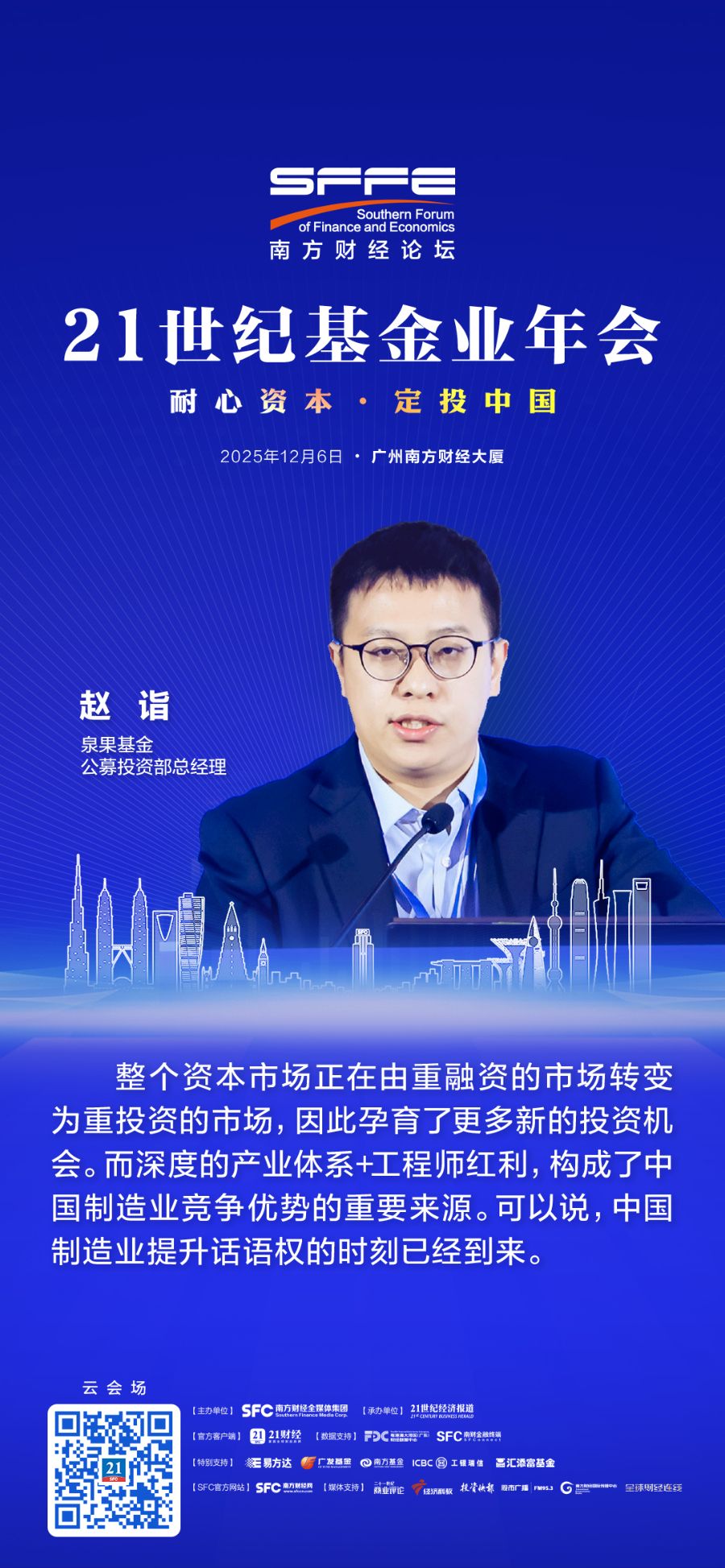
泉果基金赵诣:中国经济的“复杂性”红利与四大投资机遇
2 1 Shi Ji Jing Ji Bao Dao· 2025-12-11 14:18
Core Viewpoint - The South Finance Forum 2025 emphasizes the resilience and evolution of the Chinese economy, highlighting its unique competitive advantages and long-term investment potential despite short-term market fluctuations [1][4]. Economic Resilience and Complexity - China's economy is characterized as a vast ocean, underpinned by a large ecosystem and scale economy, which is crucial for understanding its resilience [4]. - As of the end of 2024, China's goods trade import and export value is projected to reach $6.16 trillion, maintaining its position as the world's largest for eight consecutive years [4]. - The country has over 1.4 billion people, with more than 400 million in the middle-income group, creating a substantial consumer market [4]. - China leads globally in new energy vehicle production and sales for nine consecutive years, as well as in wind and solar power capacity [4]. - The number of PhD graduates in STEM fields in China has surpassed that of the U.S. since 2007, with expectations to reach 77,000 by 2025, indicating a strong talent pool [4]. - The Economic Complexity Index suggests that China's economy has become one of the most complex globally, enhancing its resilience and adaptability to new trends [5]. Positive Changes in the Business Landscape - Two significant positive changes are occurring in the Chinese business sector: a generational transition in many companies and the emergence of young entrepreneurs, indicating a shift towards more dynamic and innovative management [6]. Investment Opportunities - A new upward cycle in investment is beginning, with a notable shift from "heavy financing" to "heavy investment" in the capital market, creating a more favorable environment for investors [8][15]. - The capital expenditure in new economies has turned positive since the end of 2024, indicating substantial expansion in high-end manufacturing, technological innovation, and green transformation [11]. Key Investment Themes for 2026 - Focus on emerging industries, particularly AI-driven technologies and new consumer products, which are expected to enhance operational efficiency and create new revenue streams [16]. - Emphasis on globally competitive industries, especially in new energy and innovative pharmaceuticals, with a significant focus on lithium battery supply chains and the global expansion of Chinese pharmaceutical companies [17][20]. - Targeting domestic substitution in high-tech and strategically significant sectors, such as aviation engines and semiconductors, which present substantial market opportunities [21]. - Encouraging the globalization of Chinese manufacturing companies, which are now equipped to compete effectively in international markets, driven by advancements in automation and technology [21].
学习规划建议每日问答|为什么要全面实施“人工智能+”行动
Xin Hua She· 2025-12-06 03:02
Group 1 - The core viewpoint emphasizes the strategic importance of implementing the "Artificial Intelligence +" initiative to integrate AI with various sectors, aiming to reshape production and living paradigms and drive a revolutionary leap in productivity and social relations [1] - AI is identified as a strategic technology leading a new round of technological revolution and industrial transformation, with China needing breakthroughs in foundational theories and key technologies to seize opportunities in AI development [1][2] - The initiative aims to leverage China's complete industrial system, vast market scale, and rich application scenarios to accelerate the growth of AI technologies through practical applications, fostering a virtuous cycle of innovation and application [1] Group 2 - The reduction in training costs for large models and advancements in multimodal integration are facilitating the transition of AI from laboratories to everyday life, creating numerous new development opportunities [2] - Countries are increasingly formulating AI development strategies, leading to the emergence of new fields such as autonomous driving and humanoid robots, which could reshape the global economic landscape [2] - The "Artificial Intelligence +" initiative is designed to strengthen the application-oriented development of AI technologies and promote large-scale commercialization of AI products and services [2] Group 3 - The rapid growth of generative AI products and the expansion of application scenarios are advancing the transition from digitalization to intelligentization in China [3] - The digital economy's core industries are projected to account for approximately 10% of GDP in 2024, with the national data market transaction scale exceeding 160 billion yuan, reflecting a growth of over 30% from 2023 [3] - The initiative aims to integrate AI into various economic and social development areas, promoting deep fusion and accelerating the establishment of a new intelligent development landscape [3] Group 4 - The commercialization and large-scale application of AI is a long-term and complex system project that requires broad collaboration through the "Artificial Intelligence +" initiative [4] - Key areas of focus include strengthening foundational research, supporting diverse technological explorations, and developing a self-controlled AI infrastructure [4] - The initiative also emphasizes the importance of talent cultivation, financial support, and the establishment of legal frameworks to ensure the safe and reliable development of AI technologies [4]
学习规划建议每日问答丨为什么要全面实施“人工智能+”行动
Xin Hua Wang· 2025-12-06 02:51
Group 1 - The core viewpoint emphasizes the strategic importance of implementing the "Artificial Intelligence +" initiative to integrate AI with various sectors, aiming to reshape production and living paradigms and promote revolutionary changes in productivity and social relations [1] - AI is identified as a strategic technology leading a new round of technological revolution and industrial transformation, with China needing breakthroughs in foundational theories and key technologies to seize opportunities in AI development [1][2] - The initiative aims to leverage China's complete industrial system, vast market scale, and rich application scenarios to accelerate the growth of AI technologies through practical applications, fostering a virtuous cycle of innovation and application [1] Group 2 - The reduction in training costs for large models and advancements in multimodal integration are driving AI from laboratories to real-world applications, creating new development opportunities across various sectors [2] - Countries are increasingly formulating AI development strategies, leading to the emergence of new fields such as autonomous driving and humanoid robots, which could reshape the global economic landscape [2] - The "Artificial Intelligence +" initiative is designed to enhance the application-oriented development of AI technologies, promoting the commercialization of AI products and services [2] Group 3 - The rapid growth of generative AI products and expanding application scenarios are facilitating the transition from digitalization to intelligentization in China's digital economy [3] - In 2024, the core industries of China's digital economy are projected to account for approximately 10% of GDP, with the national data market transaction scale exceeding 160 billion yuan, reflecting a growth of over 30% from 2023 [3] - The initiative aims to ensure the continuous integration of AI into various economic and social development fields, advancing the construction of a digital China [3] Group 4 - The commercialization and large-scale application of AI is a long-term and complex system project that requires broad collaboration through the "Artificial Intelligence +" initiative [4] - Key areas of focus include strengthening foundational research, supporting diverse technological explorations, and developing a self-controlled AI infrastructure [4] - The initiative also emphasizes the importance of talent cultivation, financial support, and the establishment of legal frameworks to ensure the safe and reliable development of AI technologies [4]