
数字孪生

Search documents
嘉兴机场货运口岸获批 圆通“东方天地港”国际化物流倒计时
Nan Fang Du Shi Bao· 2026-02-14 02:37
Core Insights - The temporary opening of the Jiaxing Airport cargo port has been officially approved by the National Port Administration Office, marking a significant advancement in the construction of Jiaxing's global air logistics hub and indicating that YTO Express's international logistics services are nearing launch [1] Group 1: Port Opening and Infrastructure - The temporary port opening is a prerequisite for the airport hub to conduct international business [1] - The Dongfang Tiandi Port has completed the basic construction of its international cargo functions, supported by airport operational guarantees and port facilities [1] - The infrastructure in the port operation area has been fully constructed, and the customs clearance capacity meets operational requirements [1] Group 2: Business Preparation and Future Plans - Dongfang Tiandi Port has secured its first international cargo route, with preparations for collection, customs declaration, and ground services already in place [1] - The project is set to commence operations on December 26, 2025, alongside Jiaxing Nanhu Airport, emphasizing specialization and intelligence in its logistics hub design [1] - The port aims to create efficient logistics channels for cross-border e-commerce goods, general cargo, and express shipments through advanced technologies like "digital twin" and centralized customs inspection [1] Group 3: Future Development Goals - Dongfang Tiandi Port will use the port opening as a new starting point to continuously improve its operational system, expand its route network, and enhance service capabilities [2]

炼钢不再凭经验靠感觉
Jing Ji Ri Bao· 2026-02-13 22:13
Core Insights - The integration of artificial intelligence with traditional steel manufacturing is transforming production processes, enhancing transparency and efficiency in operations [1][2]. Group 1: Digital Empowerment in Production - The Nanjing Steel Group has implemented a digital twin technology that visualizes the entire steel production process, allowing for remote operations and real-time data monitoring [2]. - The first-grade production rate of molten iron has increased from 80% to 99% due to the optimization of the entire iron-making process through advanced technologies [2][3]. - The introduction of over a thousand sensors around the blast furnace has enabled real-time data collection, leading to a furnace temperature prediction accuracy exceeding 90% [2][3]. Group 2: Innovation in Manufacturing - The company has developed an industrial internet platform that integrates various data sources, enhancing energy management and production efficiency [4]. - The ongoing digital transformation is in its second phase, focusing on artificial intelligence and data assetization as key drivers for innovation [4][5]. - The launch of the "Yuan Ye·Steel Big Model" aims to facilitate interaction with production systems through natural language, making advanced technology accessible to non-experts [5]. Group 3: Value-Driven Development - Digitalization has led to significant improvements, including a 12% reduction in comprehensive energy consumption per unit of output and a 9% decrease in total costs across the supply chain [6]. - The company has been recognized as a leading intelligent factory, reflecting over 20 years of digital transformation efforts and the establishment of a comprehensive digital twin system [6][7]. - Nanjing Steel has contributed to over 100 international and national standards and holds more than 4,700 patents, showcasing its leadership in technological advancements within the industry [7].

炼钢不再凭经验靠感觉 ——南钢以智能技术驱动产业升级
Jing Ji Ri Bao· 2026-02-13 22:01
Core Viewpoint - The integration of artificial intelligence with traditional steel manufacturing is transforming production processes, enhancing transparency and efficiency in operations [1][2]. Group 1: Digital Empowerment of Production - The Nanjing Steel Group has implemented a digital twin technology that allows real-time monitoring of the entire steel production process, significantly improving operational efficiency and product quality [2][3]. - The first-grade production rate of molten iron has increased from 80% to 99% due to the optimization of the iron-making process through advanced technologies [2]. - The introduction of over a thousand sensors around the blast furnace enables real-time data collection, leading to a trend analysis prediction accuracy of over 90% for furnace temperature [3]. Group 2: Innovation Leading Intelligent Manufacturing - The company has developed an industrial internet platform that integrates various data sources, enhancing energy management and production efficiency [4]. - The ongoing digital transformation is in its second phase, focusing on artificial intelligence and data assetization as key drivers for innovation and value creation [4][5]. - The launch of the "Yuan Ye Steel Big Model" aims to facilitate interaction with production systems through natural language, making AI technology accessible to non-professionals [5]. Group 3: Value-Driven Development - Digitalization has led to a comprehensive value enhancement for the company, with a 12% reduction in comprehensive energy consumption per unit of output and a 9% decrease in total costs across the supply chain [6]. - The company has been recognized as a leading intelligent factory, reflecting its 20 years of digital transformation efforts and the establishment of a five-level digital twin system [6][7]. - The company has contributed to over 100 international and national standards and holds more than 4,700 patents, showcasing its commitment to technological advancement and industry leadership [7].
制造业数字化转型进入“深水区” 超89%规上企业已行动
Xin Lang Cai Jing· 2026-02-13 16:24
Core Insights - The report indicates that the next five years are crucial for China's manufacturing digital transformation, transitioning from "benchmark leadership" to "scale promotion" and from "digital empowerment" to "intelligent application" [1] - The digital transformation of manufacturing is entering a phase of widespread adoption, supported by intelligent applications that will enhance efficiency, innovation, and sustainability [1] - The integration of technologies such as artificial intelligence and digital twins will be pivotal in optimizing decision-making and enhancing competitiveness in the manufacturing sector [1] Industry Overview - By December 2025, 89.6% of registered large-scale industrial enterprises are expected to engage in digital transformation, with a digital equipment penetration rate of 57.7% [2] - The digital transformation landscape shows a tiered structure, with the electronic information and equipment manufacturing sectors leading, while consumer goods and raw materials lag behind [2] - The automotive, shipbuilding, and electronic information manufacturing sectors have the highest rates of digital transformation, at 94.4%, 94.2%, and 93.9% respectively [2] Policy Support - The Chinese government has been increasing policy support for manufacturing transformation, with the "Digital Transformation Action Plan" approved in May 2024 [2] - The plan emphasizes the importance of digital transformation in promoting new industrialization and building a modern industrial system, with tailored strategies for different industries [2] Talent and Skills Gap - A significant challenge for manufacturing digital transformation is the shortage of composite talents who understand both industrial production and digital technologies [3] - Recommendations include enhancing the training of composite talents in higher education and vocational training to meet industry needs [3]
潍柴点亮“电动力”
Zheng Quan Ri Bao Zhi Sheng· 2026-02-13 15:38
Core Insights - The article highlights the transformation of Weichai Power from an engine manufacturer to an energy solutions provider, capitalizing on the growing demand for reliable power sources in the AI and data center sectors [2][3]. Group 1: Industry Trends - The demand for high-reliability backup power sources is surging due to the increasing need for "zero interruption" power supply in data centers, marking a strategic shift in the energy sector [3][8]. - The global AI competition intensifies the need for stable power supply, with multiple factors driving structural changes in the energy industry [8][9]. Group 2: Company Strategy - Weichai Power has strategically positioned its power energy segment as the seventh business unit of Shandong Heavy Industry Group, reflecting a long-term vision initiated over a decade ago [3][4]. - The acquisition of Baudouin in 2009 was a pivotal move, allowing Weichai to enter the high-end power generation market, which is increasingly relevant in the digital age [4][5]. Group 3: Technological Advancements - Weichai Power has developed a new platform-based large-bore high-speed engine, which has been successfully integrated into backup power systems for AI data centers, showcasing its technological capabilities [4][6]. - The company has achieved a zero failure rate in continuous 1000-hour full-load operation tests, positioning its products to compete directly with international leaders [6][7]. Group 4: Market Positioning - Weichai Power has successfully penetrated the backup power market for data centers, traditionally dominated by international giants like Cummins and Caterpillar, by focusing on technological innovation and product reliability [6][9]. - The company has reduced its delivery time to 45 days, significantly faster than the six-month average of competitors, enhancing its competitive edge in the market [7][9]. Group 5: Future Outlook - Weichai Power is expanding its focus to include solid oxide fuel cells (SOFC) and hydrogen internal combustion engines, indicating a commitment to diversifying its energy solutions [9]. - The company recognizes the ongoing relevance of diesel generators in high-reliability scenarios, while also adapting to the growing demand for gas-powered generators in regions with saturated grid capacities [9].
真机RL杀疯了,机器人自学20分钟100分,数字孪生封神
3 6 Ke· 2026-02-13 07:32
Core Insights - TwinRL introduces a digital twin-driven reinforcement learning framework that enhances the exploration capabilities of robots in real-world tasks, achieving a 100% success rate in various operations within approximately 20 minutes, while reducing human intervention by over 50% [1][22][36]. Group 1: Technology and Framework - TwinRL is not a simulator but an exploration amplifier and guide, designed to expand the exploration space for robots beyond the limitations of traditional methods [16][15]. - The framework consists of three main components: exploration space expansion, parallel online reinforcement learning in the digital twin, and sim-to-real guided exploration [32][36]. - The exploration space expansion strategy utilizes high-fidelity digital twin environments to generate synthetic trajectories that exceed human demonstration coverage [25][32]. Group 2: Performance and Efficiency - TwinRL demonstrates a significant improvement in exploration efficiency, achieving at least a 30% acceleration in convergence time compared to existing real-world reinforcement learning methods [22][39]. - In experiments, TwinRL maintained a near 100% success rate in both in-distribution and out-of-distribution areas, showcasing its robustness against environmental changes [39][46]. - The framework effectively bridges the gap between offline training and online learning, allowing for a smoother transition and reducing performance degradation during the learning process [39][34]. Group 3: Research Background and Observations - The research highlights that the effective exploration space in real-world VLA reinforcement learning is heavily constrained by the distribution of supervised fine-tuning (SFT) data [27][30]. - The study reveals that traditional reinforcement learning methods struggle with exploration deadlock in out-of-distribution scenarios, emphasizing the need for a broader exploration strategy [30][31]. - TwinRL addresses these challenges by moving the exploration process to a controllable and expandable digital twin environment, allowing for more effective learning [15][36].


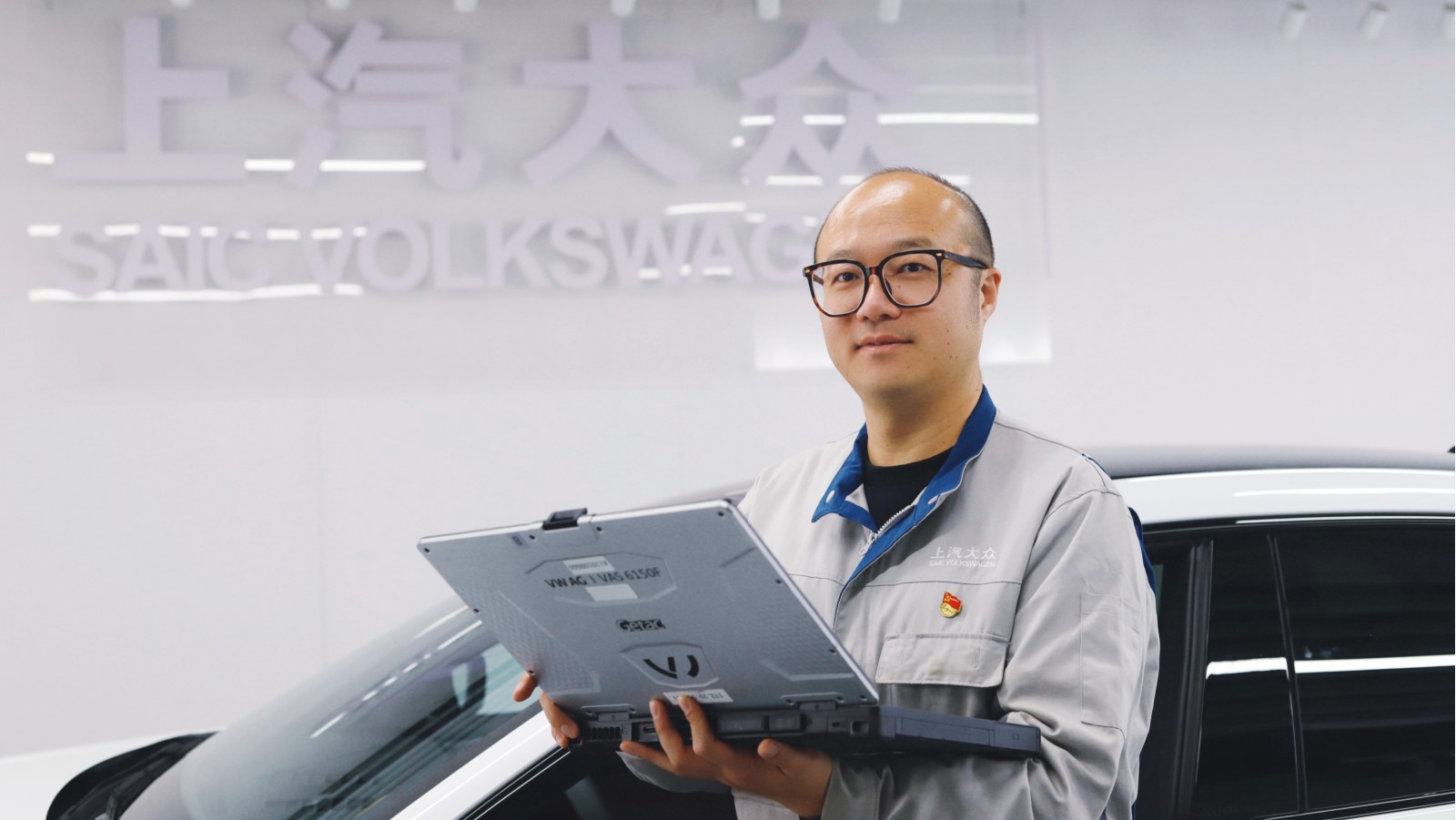
上汽大众王建强:电气化时代更要守住品质基因和安全底线
Zhong Guo Qi Che Bao Wang· 2026-02-13 07:16
Core Viewpoint - The mission of automotive companies is to provide high-quality vehicles that are enjoyable to drive, emphasizing the importance of quality control and safety as the foundation for long-term survival and brand trust [1][3]. Group 1: Quality Control and Manufacturing - The company focuses on ensuring the manufacturability of each production process and controlling quality issues through a comprehensive project workflow, which helps eliminate risks and maintain product consistency during mass production [3]. - A data-driven continuous improvement mechanism is crucial for enhancing product quality, utilizing big data analysis software to monitor and analyze vehicle data for stable and consistent product quality [3][5]. Group 2: Technological Innovations in Production - The company has implemented dynamic calibration technology in mass production, allowing for efficient online calibration of various sensors as vehicles pass through a short test track, thus achieving breakthroughs in calibration efficiency and intelligence [4]. - To address the challenges of sensor installation precision, the company developed an intelligent analysis and digital twin application platform for automotive electrical inspection, which enhances production efficiency and quality stability through real-time data monitoring and anomaly alerts [5]. Group 3: New Energy Transition and Team Development - The company has established a comprehensive and rigorous new energy manufacturing system, with specialized teams that include trained experts capable of handling high-voltage operations and safety protocols, fostering a culture of innovation and proactive learning among team members [6]. - The focus has shifted towards optimizing electrical inspection processes and integrating advanced detection technologies with smart manufacturing concepts to enhance efficiency and precision in the production line [6]. Group 4: Future Directions and Smart Manufacturing - The company aims to leverage intelligent technology to optimize manufacturing processes, aligning smart production lines with smart vehicles, and enhancing data monitoring and analysis capabilities for lean management in large-scale manufacturing [7]. - Ongoing development of an intelligent expert diagnostic system is underway, utilizing accumulated experience data to create a vehicle fault diagnosis system that guides lean operations on the production line [7].
捷安高科股价异动上涨,职业教育与军工概念受关注
Jing Ji Guan Cha Wang· 2026-02-12 10:26
Core Viewpoint - The stock price of Jiean High-Tech (300845) experienced a notable increase of 2.49% on February 9, 2026, with a trading volume of 68.17 million yuan and a net inflow of 2.74 million yuan from main funds, driven by its involvement in sectors such as vocational education, digital twin technology, artificial intelligence, virtual reality, and military industry [1] Stock Performance - Over the past week (February 6 to 12, 2026), Jiean High-Tech's stock price rose from 12.07 yuan to 12.44 yuan, marking a cumulative increase of 3.32% with a volatility of 6.56%. The stock showed a strong performance on February 9 with a turnover rate of 3.85%, but remained flat on the latest trading day (February 12) with a net outflow of 6.05 million yuan and a turnover rate of 2.85%. During the same period, the computer equipment sector increased by 1.50%, and the Shanghai Composite Index rose by 1.41% [2] Financial Report Analysis - According to the Q3 2025 financial report, the company reported a revenue of 157 million yuan, reflecting a year-on-year growth of 1.97%. However, the net profit attributable to the parent company was 3.45 million yuan, showing a significant decline of 61.19% year-on-year. The gross profit margin stood at 46.96%, down by 3.52 percentage points compared to the previous year. The accounts receivable accounted for a high proportion of net profit at 326.64%, indicating a need to monitor collection risks [3] Institutional Perspectives - Institutional sentiment towards Jiean High-Tech is generally neutral, with profit forecasts indicating a projected net profit growth of 1.20% for 2025 and an anticipated increase of 18.69% for 2026. The fund holding ratio is relatively low at 0.05%, and the frequency of research is average, leading to an overall neutral rating [4]

波兰PACK产线成功出机,利元亨欧洲战略落地提速
高工锂电· 2026-02-12 07:05
Core Viewpoint - The article highlights the accelerated global restructuring of the new energy industry, with Europe emerging as a key market for electric commercial vehicles and energy storage, driving demand for high-end intelligent equipment from Chinese manufacturers [3]. Group 1: European Market Strategy - The successful delivery of a customized commercial vehicle battery module PACK production line to a Polish client marks a significant milestone in the company's European market strategy [4]. - The production line is tailored to meet the specific needs of the European commercial vehicle and energy storage sectors, showcasing the company's ability to provide customized solutions rather than standard equipment [4]. - The production line adheres to EU CE certification and energy efficiency standards, achieving over 90% automation, which ensures stable and reliable manufacturing support for European clients [4]. Group 2: Technological Innovation and Competitive Advantage - The company's success in the competitive European market is attributed to its long-standing focus on technological innovation and the establishment of a comprehensive technical system from core components to complete line solutions [6]. - The company has developed key technologies for high-precision handling, flexible assembly, and intelligent positioning, significantly enhancing production efficiency and product consistency [6]. - The integration of advanced technologies such as industrial internet, big data analysis, and digital twin into equipment development has transformed traditional manufacturing into intelligent manufacturing [6][7]. Group 3: Market Opportunities and Localization Strategy - The European new energy industry is experiencing unprecedented growth, driven by stringent carbon emission regulations and subsidies, creating substantial demand for power and energy storage batteries [8]. - The company has adopted a localization strategy that emphasizes local design, manufacturing, and service to ensure long-term business development in the European market [8]. - A specialized local technical team has been established in Poland to provide comprehensive service support, addressing after-sales concerns for overseas clients [8][9]. Group 4: Global Expansion and Future Outlook - The company has strengthened its position in Europe by becoming a major shareholder in a Polish company, enhancing its local intelligent equipment business [9]. - By 2025, the company aims to have over 20 subsidiaries and offices globally, including in Asia, Europe, and America, to support its international business expansion and localized services [9]. - The successful launch of the PACK production line in Poland represents a substantial breakthrough in the company's European strategy and reflects the broader trend of Chinese high-end equipment manufacturing entering the global market [10].


走进普莱得:探索锂电工具领先企业的智造内核与全球布局
Quan Jing Wang· 2026-02-12 02:48
Core Insights - The article highlights the rapid transformation of the global power tools industry towards lithium battery technology and smart manufacturing, with Zhejiang Plade Electric Co., Ltd. emerging as a leader in this segment due to its strong technological foundation and efficient manufacturing system [1][4] Group 1: Company Overview - Plade is headquartered in Jinhua, Zhejiang, covering an area of 150 acres, and has established a fully integrated intelligent system encompassing R&D, production, and sales [1] - The company went public on the Shenzhen Stock Exchange's ChiNext board on May 30, 2023, marking a significant milestone in its capital journey and reflecting market recognition of Chinese manufacturing value [1] Group 2: Technological Innovation - Plade has upgraded its production lines to a high-speed chain system to accommodate the "variety and small batch" production characteristics of power tools, enhancing production flexibility [1] - The company utilizes digital twin technology for real-time management of production operations, integrating 5G and industrial internet, and has been recognized as a "future factory" by the Ministry of Industry and Information Technology [2] - Plade is the first globally to apply infrared temperature measurement technology in hot air gun products, achieving full coverage from general to professional levels [2] Group 3: Business Model - The company employs a "dual-wheel drive" strategy, maintaining stability through ODM (Original Design Manufacturing) while pursuing growth via OBM (Own Brand Manufacturing) [2] - This model ensures a high degree of certainty in growth amidst fierce market competition [2] Group 4: Global Expansion - Plade established a manufacturing base in Thailand in 2018, which serves as a core hub for expanding into Europe, Southeast Asia, and Belt and Road Initiative markets [3] - The Thai factory has developed comprehensive service capabilities, with local talent in key management positions to enhance operational efficiency and market responsiveness [3] Group 5: Strategic Developments - In 2023, Plade founded a subsidiary, Pucheng Electronics, focused on core components like motors and controls, enhancing its self-research capabilities and quality control systems [3] - The company aims to create long-term value for investors by focusing on its core business and ensuring steady performance growth [3]