
无人驾驶技术

Search documents
小马智行20251015
2025-10-15 14:57
Summary of the Conference Call for LuoBo Technology Industry Overview - LuoBo Technology operates in the autonomous driving industry, specifically focusing on Robotaxi services in major cities in China and exploring international markets. Key Points and Arguments Autonomous Driving Operations - LuoBo Technology has achieved over 2,000 square kilometers of autonomous taxi operations in first-tier cities like Beijing, Shanghai, Guangzhou, and Shenzhen, covering millions of residents [2][3] - The company currently operates approximately 700 autonomous vehicles, with a target of reaching 1,000 vehicles by the end of 2025, of which nearly 500 will be used for external operations [2][5] Vehicle Cost and Profitability - The seventh-generation vehicle costs 300,000 yuan, with 150,000 yuan attributed to the vehicle itself and 150,000 yuan for sensors and autonomous driving kits [5] - The company anticipates achieving breakeven for individual vehicles in a city by late 2025 to early 2026, maintaining previous profitability expectations [2][11] Daily Orders and Pricing - The average daily order volume for LuoBo's Robotaxi is 15 orders per vehicle, with a per-kilometer price of approximately 2.4 yuan as of June 2025, which has more than doubled compared to 2024 but remains lower than ride-hailing services [2][17] Market Expansion and Licensing - LuoBo has obtained the final stage of commercial licensing for autonomous driving in the four major cities, making it the only company to achieve this [3] - The company is exploring potential overseas markets, including Dubai, Qatar, Southeast Asia, and Europe, but notes that most countries outside of China and the U.S. have conservative policies regarding autonomous driving [4][9] Future Growth and Fleet Expansion - The company aims to significantly increase its fleet size, projecting to reach several thousand vehicles by 2026 and potentially over ten thousand by 2027 [10] - The operational area in Beijing is expected to expand from 600 square kilometers to 3,000 square kilometers, although a specific timeline for this expansion is not yet determined [13] Strategic Partnerships - LuoBo is collaborating with West Lake Group to explore a light-asset operation model, which may involve selling or leasing some vehicles, contingent on achieving breakeven for individual vehicles [4][14] Safety and Remote Assistance - All vehicles operate without safety drivers, relying on remote assistance personnel who only provide route planning in special traffic situations, indicating confidence in the company's algorithms and technology [6] Comparison with Competitors - LuoBo's autonomous taxi service is positioned as a leader in the market, with operational capabilities that exceed those of competitors like Tesla and Didi, which have not yet deployed fully autonomous vehicles [20] Limitations and Future Considerations - The company is currently not considering expansion into the robotics market, focusing instead on the rapidly growing Robotaxi sector, which has strong policy support and technological maturity [22] Additional Important Information - The company is actively negotiating partnerships with various taxi companies, leasing firms, and internet platforms to enhance its operational model [4][14] - The flexibility of vehicle stop points is limited to fixed locations, but the density of these stops is high, allowing for some degree of passenger choice in stop selection [15]
文远知行港股IPO备案获批,拟发行1.02亿股股份
Ju Chao Zi Xun· 2025-10-15 02:38
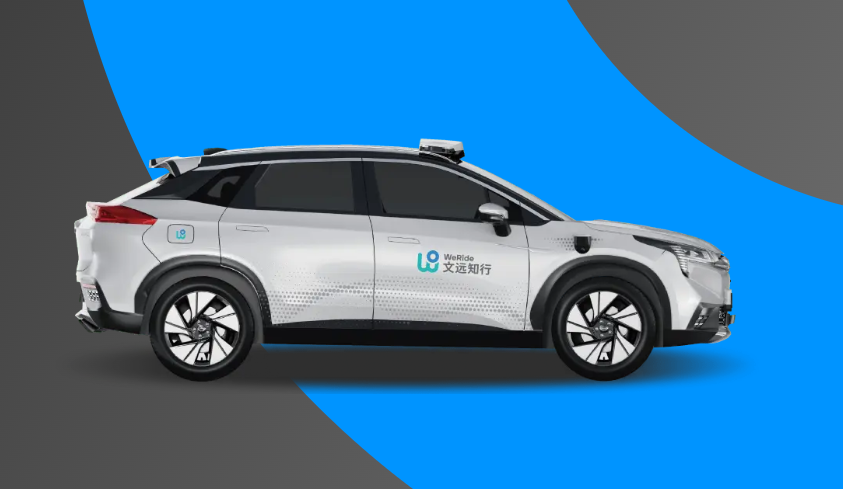
Core Insights - WeRide Inc. (文远知行) has received approval from the China Securities Regulatory Commission for its overseas listing in Hong Kong, indicating a significant step in its capital market strategy [2][3] - The company plans to issue up to 102,428,200 shares of ordinary stock for its listing on the Hong Kong Stock Exchange [2] Company Overview - Founded in 2017, WeRide Inc. focuses on transforming human mobility through autonomous driving technology, offering products and services ranging from Level 2 to Level 4 autonomous driving [5] - The company's product matrix includes Robotaxi, Robobus, Robovan, Robosweeper, and advanced intelligent driving solutions, which are widely applied in smart mobility, freight, and sanitation sectors [5] Financial Performance - In Q2 2025, WeRide reported revenue of 127 million yuan, marking a year-on-year increase of 60.8% [5] - The Robotaxi business generated revenue of 45.9 million yuan in Q2, a substantial year-on-year growth of 836.7%, setting a new record for the company [5] - The proportion of Robotaxi revenue in total revenue rose to 36.1% in Q2, the highest since 2021, while gross profit increased by 40.6% year-on-year [5] Market Position - WeRide became the first global publicly traded autonomous driving company upon its listing on NASDAQ on October 25, 2024, under the ticker symbol "WRD.US" [5] - The scale of the Robotaxi fleet in Abu Dhabi has tripled since 2024, demonstrating significant scaling effects [5] - The Robotaxi service has operated safely for over 2,200 days, establishing a new safety benchmark in the industry [5] IPO Context - The decision for WeRide to pursue a Hong Kong IPO is influenced by geopolitical factors, reflecting the company's strategic response to market conditions [6]


涛涛车业预计:今年前三季度盈利同比大幅增长
Zhong Guo Zheng Quan Bao· 2025-10-10 00:10
Core Viewpoint - TaoTao Automotive is experiencing significant growth in net profit and is planning to issue H-shares for further global expansion and brand enhancement [1][5] Financial Performance - The company expects a net profit attributable to shareholders of 580 million to 620 million yuan for the first three quarters of the year, representing a year-on-year increase of 92.46% to 105.73% [2] - The net profit after deducting non-recurring items is projected to be between 575 million and 615 million yuan, with a growth rate of 94.97% to 108.54% [2] - For the first half of the year, the company reported revenue of 1.713 billion yuan, a year-on-year increase of 23.19% [3] Product and Market Strategy - TaoTao Automotive focuses on "new energy smart travel," offering products like electric golf carts, electric bicycles, and all-terrain vehicles, catering to various age groups and usage scenarios [2][3] - The company is actively integrating advancements in robotics and autonomous driving into its core products to foster new business growth [3] Global Expansion - Over 90% of the company's revenue comes from overseas markets, with a strategic focus on "China + Southeast Asia + North America" for capacity layout [4] - The company is accelerating its overseas production capabilities, with a manufacturing facility in the U.S. for electric golf carts and a new production base in Thailand expected to be operational by February 2026 [4] Capital Market Activities - The company is planning to issue H-shares and list on the Hong Kong Stock Exchange to enhance its capital strength and support overseas capacity construction and technology development [5]

涛涛车业预计 今年前三季度 盈利同比大幅增长
Zhong Guo Zheng Quan Bao· 2025-10-09 20:54
Core Insights - The company expects a significant increase in net profit for the first three quarters of the year, projecting between 580 million to 620 million yuan, representing a year-on-year growth of 92.46% to 105.73% [1][2] - The company is planning to issue H-shares and list on the Hong Kong Stock Exchange to enhance its global strategy and brand image [1][5] Financial Performance - The company reported an operating income of 1.713 billion yuan for the first half of the year, a year-on-year increase of 23.19% [3] - Sales revenue from smart electric low-speed vehicles reached 1.152 billion yuan, up 30.65%, while special vehicle sales amounted to 490 million yuan, growing by 8.22% [3][4] - The net profit after deducting non-recurring items is expected to be between 575 million to 615 million yuan, reflecting a growth of 94.97% to 108.54% [2] Global Strategy - Over 90% of the company's revenue comes from overseas markets, focusing on a manufacturing layout in "China + Southeast Asia + North America" [4] - The company is accelerating its overseas production capacity, with a local manufacturing facility in North America and ongoing construction of a production base in Thailand [4] - The establishment of a dual-hub structure in Southeast Asia is expected to enhance supply capabilities for the U.S. market [4] Future Plans - The company aims to strengthen its capital base through the H-share issuance, which will support overseas capacity building, channel expansion, and technology research and development [5]
今年前三季度盈利同比大幅增长
Zhong Guo Zheng Quan Bao· 2025-10-09 20:53
Core Viewpoint - TaoTao Automotive is experiencing significant growth in net profit and is planning to issue H-shares for further global expansion and brand enhancement [1][3]. Financial Performance - The company expects a net profit attributable to shareholders of 580 million to 620 million yuan for the first three quarters of the year, representing a year-on-year increase of 92.46% to 105.73% [1]. - The net profit after deducting non-recurring items is projected to be between 575 million and 615 million yuan, with a year-on-year growth of 94.97% to 108.54% [1]. - For the first half of the year, the company achieved operating revenue of 1.713 billion yuan, a year-on-year increase of 23.19% [2]. Product and Market Strategy - TaoTao Automotive focuses on "new energy smart travel," offering products such as smart electric low-speed vehicles and special vehicles [1]. - The smart electric low-speed vehicles include electric golf carts, electric bicycles, electric scooters, and electric balance bikes, while special vehicles cover all-terrain vehicles and off-road motorcycles [2]. - The company is actively embracing the trend of smart technology, planning to integrate advancements in humanoid robots and autonomous driving into its core products [2]. Global Expansion - Over 90% of the company's revenue comes from overseas markets, with a focus on a "China + Southeast Asia + North America" production layout [3]. - The company is accelerating its overseas production capacity, with local manufacturing in North America and ongoing construction of a production base in Thailand [3]. - The planned issuance of H-shares aims to enhance capital strength and broaden financing channels to support overseas capacity construction and technological development [3].
准能集团:智驾煤海 青春报国
Xin Hua Cai Jing· 2025-10-06 10:03
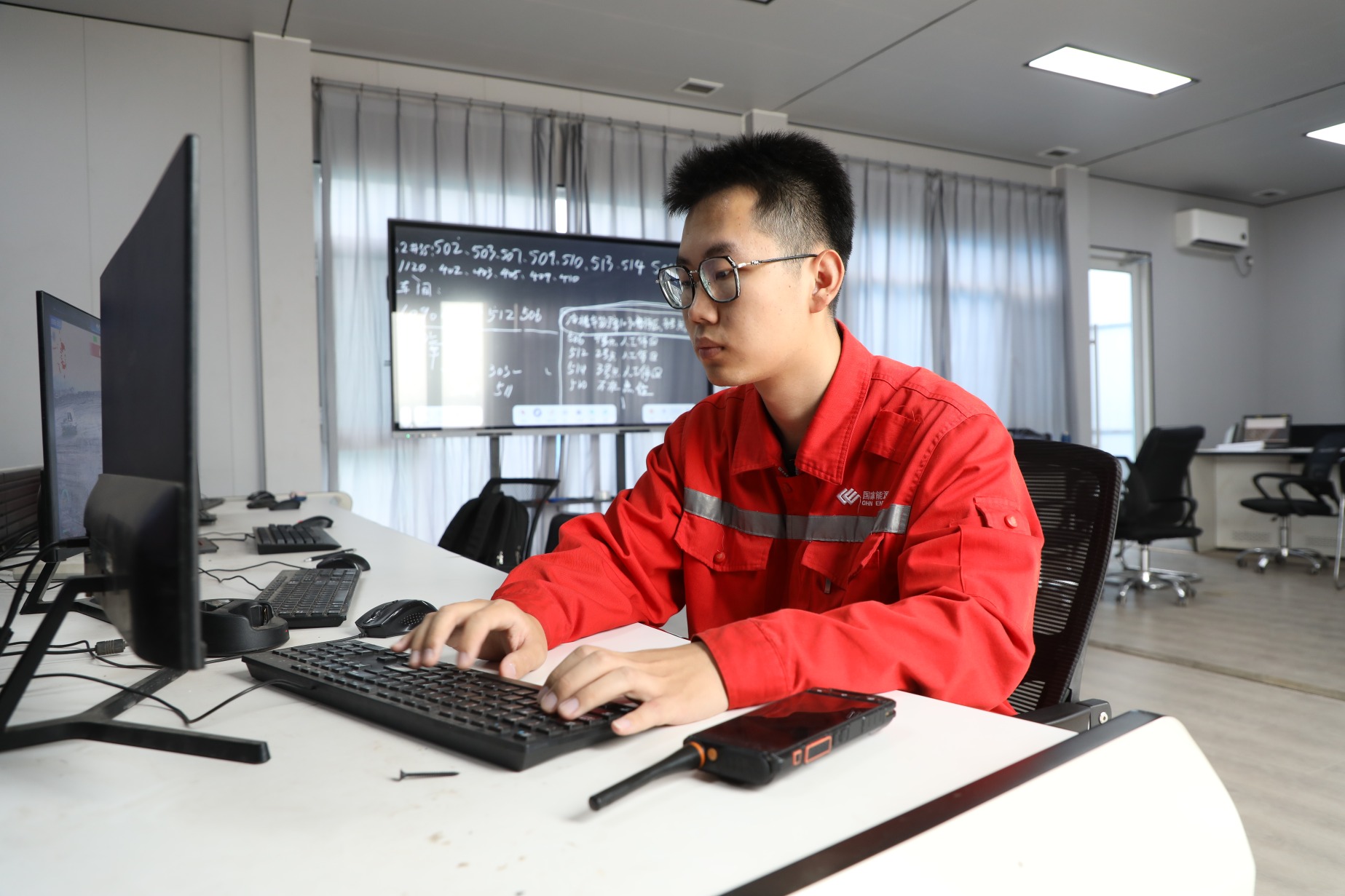
Core Viewpoint - The article highlights the advancements in autonomous mining technology at the Quener Group's Heidaigou open-pit coal mine, showcasing the transition from manual to intelligent control systems in mining operations [1][8]. Group 1: Technological Advancements - The Quener Group has successfully implemented a fully autonomous transportation system in its open-pit coal mine, utilizing 300-ton unmanned mining trucks that operate efficiently along planned routes [1][3]. - The team has achieved 42 key technological breakthroughs in areas such as equipment performance, mining processes, safety operations, and intelligent scheduling [4][8]. - Since the implementation of the autonomous system, the mine has completed modifications on 60 unmanned trucks and 129 engineering collaborative devices, achieving a high level of intelligent construction [6]. Group 2: Operational Achievements - As of now, the autonomous mining system has accumulated over 19,000 hours of operation, completed 208,000 trips, and moved 2,132,140 cubic meters of material, covering more than 940,000 kilometers [6]. - The team has expanded from an initial group of 5 to a professional team of 49, reflecting significant growth and development in operational capabilities [6][8]. Group 3: Workforce and Culture - The average age of the team is 34, and they are committed to transforming the mining production model from human control to intelligent control, emphasizing the integration of technology in coal production [8]. - The article emphasizes the dedication of the team members who work tirelessly to ensure energy supply stability, showcasing their contributions to high-level technological independence and strength [8].
“准能奋斗者·礼赞国庆”系列报道之三:智驾煤海 青春报国
Zhong Guo Neng Yuan Wang· 2025-10-04 06:39
Core Viewpoint - The article highlights the advancements in autonomous mining technology at the Heidaigou open-pit coal mine, showcasing the successful implementation of unmanned trucks and the dedication of the young team behind this innovation [1][3][11]. Group 1: Technological Advancements - The Heidaigou open-pit coal mine has successfully integrated 300-ton unmanned trucks that operate efficiently along planned routes [1]. - The team has achieved 42 key technological breakthroughs in areas such as equipment performance, mining processes, safety operations, and intelligent scheduling [7]. - Since the implementation of the unmanned transportation system, the mine has completed modifications on 60 unmanned trucks and 129 engineering collaborative devices, achieving full-process stripping operations [7]. Group 2: Team Dedication and Development - The innovation team started with just five members in a simple office and has now grown to a professional team of 49, demonstrating significant growth and commitment [11]. - Team members have been actively working during the National Day holiday, ensuring the safe and orderly operation of unmanned trucks through various roles such as monitoring, equipment inspection, and data analysis [6][11]. - The average age of the team is 34, reflecting a youthful and dynamic workforce dedicated to advancing technology in the mining sector [11]. Group 3: Operational Achievements - Since May 2023, the unmanned trucks have accumulated over 19,000 hours of operation, completed 208,000 trips, and moved a total of 2,132,140 cubic meters of material, covering more than 940,000 kilometers [7]. - The successful operation of unmanned trucks has been recognized with a high-level acceptance of the mine's intelligent construction [7].
斯年智驾完成数亿元B+轮融资,新老股东共同加持
Jing Ji Guan Cha Bao· 2025-09-29 03:22
Core Insights - SiNian Intelligent Driving has completed a multi-hundred million yuan Series B+ financing round, with investments from various institutions including Zhengzhou High-tech Investment Fund and Huarong [1] - The funds will primarily be allocated towards the research and development of autonomous driving products and market expansion [1] Company Overview - SiNian Intelligent Driving is a global provider of autonomous logistics solutions, focusing on empowering smart logistics through autonomous driving technology [1] - The company offers autonomous heavy-duty trucks, intelligent flatbed transport equipment, and capacity operation services, with a focus on developing a comprehensive autonomous truck transportation solution for ports [1] Funding Utilization - The founder and chairman of SiNian Intelligent Driving, He Bei, stated that the funding will be directed towards three main areas: 1. Deepening technology and product development to create next-generation autonomous driving systems suitable for diverse scenarios and with higher performance [1] 2. Accelerating the adaptation of customized chassis and self-developed chassis to ensure system stability and safety while effectively reducing per-vehicle costs [1] 3. Promoting large-scale production to lower unit cost amortization and maintain high gross margins, thereby achieving rapid revenue growth and steady improvement in profitability [1]
山推股份20250925
2025-09-26 02:28
Summary of the Conference Call for Shantui Construction Machinery Co., Ltd. Industry Overview - The domestic construction machinery industry is currently in a bottoming and recovery phase, benefiting from a series of infrastructure investment projects announced in June, such as the Yajiang investment project and the New Tibet Railway, which may bring sustained investment opportunities for 5-10 years with a total investment exceeding 1.2 trillion yuan [7][8][19]. Company Performance - Shantui's overall sales revenue growth of 5% outpaced the industry average, although it remains weaker compared to leading companies like Zoomlion, SANY, and LiuGong [2][3]. - The company has adjusted its overseas market structure, achieving significant growth in regions such as Indonesia, Africa, Southeast Asia, and Australia, which helped offset declines in the Russian market [2][4][5]. Product Development and Innovation - To address reliability issues in mining machinery products, Shantui is accelerating new product validation, including excavators ranging from 150 to 300 tons and AI-powered bulldozers and excavators [2][8][10]. - The company has released an AI product implementation roadmap, progressing from L1 to L5 levels to enhance construction efficiency [9][10]. Market Expansion and Strategic Initiatives - Shantui's Hong Kong stock issuance is progressing smoothly, with plans to complete it by the end of 2025 and potentially finalize it in Q1 2026 [12][13]. - The mining machinery sector is identified as a key development area, with related profits accounting for over 40% of total profits, and overseas markets being the main growth driver [2][14]. Sales and Revenue Insights - In the first half of 2025, Shantui's sales revenue from parts reached nearly 1.3 billion yuan, with an annual target of 12 to 13 billion yuan, indicating that the company is on track to exceed its budget [4][36]. - The company has approximately 200-300 orders for high-end mining trucks, with revenue exceeding 300 million yuan, and is expanding production with a total investment of 250 million yuan [15][17]. Regional Market Performance - The African market accounts for over 30% of Shantui's sales, with Southeast Asia nearing 20% and Indonesia showing continuous growth [4][11]. - The company is focusing on enhancing its presence in Indonesia by establishing a subsidiary and renting facilities for after-sales service [11]. Future Outlook - The Russian market is expected to recover slightly in Q3 and Q4 of 2025, with a new wave of demand anticipated due to increased scrapping taxes for excavators [6][26]. - The global mining truck market is projected to reach 5.7 billion USD by 2023, with a compound annual growth rate (CAGR) of 3.8%, while the Chinese market is expected to grow from 3.2 billion USD in 2023 to 4.6 billion USD by 2030, with a CAGR of 4.2% [4][19]. Conclusion - Shantui is strategically positioned to leverage growth opportunities in the construction machinery sector, particularly through innovation in AI technology and expansion into overseas markets, while addressing challenges in the Russian market and enhancing product reliability.

广汽董事长冯兴亚: 未来全球十大车企将有中国3-5个席位
Shen Zhen Shang Bao· 2025-09-25 23:16
Core Insights - The chairman of GAC Group predicts that 3-5 Chinese companies will be among the top ten global automakers in the next decade, driven by the shift towards new energy, low-carbon, and green development [1][1][1] Industry Trends - The Chinese automotive industry is currently experiencing a "four-phase overlap": transformation, rapid iteration, restructuring of management models, and reshaping of competitive landscape [1][1][1] - The future of automobiles is expected to be characterized by intelligent mobility, with widespread adoption of autonomous driving technology [1][1][1] - Consumer preferences are diversifying, with some seeking driving enjoyment while others view cars as mere transportation tools, indicating a shift towards autonomous and self-driving vehicles [1][1][1] Competitive Landscape - The competition among automotive manufacturers is evolving from hardware-based competition to competition across the entire industry ecosystem [1][1][1] - The revenue model for the automotive industry is shifting from reliance solely on products and services to include hardware, software, services, and ecosystem as profit sources [1][1][1] - The automotive industry is facing unprecedented changes, marking a significant transformation not seen in a century [1][1][1]
