特朗普关税政策

Search documents
美国最高法院将于11月5日就特朗普关税案听取口头辩论 万亿美元退税风险或引发市场震荡
智通财经网· 2025-09-18 16:18
Core Points - The U.S. Supreme Court will hold oral arguments on November 5 regarding the legality of President Trump's global tariff plan, which is a significant test of his economic and trade policies [1] - The case centers on whether Trump exceeded presidential authority and misused the International Emergency Economic Powers Act (IEEPA) [1] - If the Supreme Court rules the tariffs illegal, the U.S. Treasury may have to refund approximately half of the collected tariff revenues, potentially leading to a financial burden on federal finances [1] Group 1: Impact on Companies - If the court overturns some tariffs, companies may apply for refunds, which could provide short-term financial benefits and improve earnings [2] - However, consumers may not see immediate price reductions as companies have already absorbed or shifted costs due to tariffs [2] - Companies will face operational challenges in confirming refund eligibility and managing potential "tariff vacuum periods" before new policies are established [2][3] Group 2: Market Reactions - Wall Street analysts predict that stocks of companies closely related to tariffs may rise in the short term due to market expectations, but long-term uncertainty remains high [2] - Even if tariffs are overturned, consumers are unlikely to benefit immediately during the holiday shopping season due to prior inventory purchases [2] Group 3: Alternative Measures - If the Supreme Court rules against Trump, the White House may quickly implement alternative measures, such as temporary tariffs under the Trade Act of 1974, but these would be limited in duration and complexity [3] - The Trump administration may seek legislative support from Congress for tariffs, but this approach carries higher risks due to the unpopularity of tariff policies [4] Group 4: Specific Case of Swiss Tariffs - The Trump administration recently imposed a 39% tariff on Swiss exports, leading to a significant drop in Swiss exports to the U.S., particularly in watches and gold [4] - The trade deficit with Switzerland has narrowed to its lowest level since 2020, indicating a direct impact of the tariff policy [4]
对日房产投资1~6月首超3万亿日元,东京全球居首
日经中文网· 2025-09-13 00:31
Core Viewpoint - The real estate investment in Japan is experiencing significant growth, with a 22% year-on-year increase in the first half of 2025, surpassing 3 trillion yen for the first time since 2007, driven by low interest rates and rising rental expectations [2][7]. Investment Trends - Real estate investment in Japan reached 3.1932 trillion yen in the first half of 2025, marking a 22% increase compared to the previous year [2]. - Tokyo ranks first among global cities for real estate investment, with overseas investors increasing their purchases by 3.7 times, accounting for 34% of Japan's total real estate investment [5][7]. Sector Analysis - Office buildings represent 53% of the total real estate investment in Japan, with significant transactions occurring in Tokyo's central areas [4]. - Major transactions include Mitsubishi Estate's acquisition of the Akasaka Park Building and Wacoal's sale of its building in Kyoto, indicating a trend of asset sales among companies [4]. Regional Insights - The five central districts of Tokyo (Chiyoda, Chuo, Minato, Shinjuku, Shibuya) accounted for 56% of the investment, the highest since the first half of 2018 [5]. - The Osaka region's share of investment decreased to 10%, down from 21% the previous year, as hotel investment demand related to the Osaka Kansai Expo has subsided [5]. Future Outlook - JLL forecasts that Japan's real estate investment will approach 6 trillion yen in 2025, with financial institutions maintaining a positive stance on real estate financing [7]. - The current investment return rate for A-grade office buildings in Tokyo's central districts is between 2.0% and 2.5%, with expectations of slight increases if interest rates rise further [7].



事关关税,美最高法院罕见批准
券商中国· 2025-09-10 06:23
Core Viewpoint - The U.S. Supreme Court has agreed to expedite hearings regarding the legality of Trump's tariff policies, which have been deemed illegal by lower courts, with hearings scheduled for November [1][2][3]. Group 1: Legal Proceedings - The Supreme Court's decision to hold a rapid hearing is considered unusually fast, with the hearings set to take place in November [1]. - Lower courts have ruled that Trump lacked the authority to impose tariffs on nearly all goods from global countries, leading to the Supreme Court's acceptance of the Trump administration's appeal [2][3]. - Small businesses and states challenging the tariff policies have also agreed to the expedited review, citing severe financial distress due to the tariffs [2]. Group 2: Economic Impact - As of the end of August, total tariff revenue for the U.S. reached $159 billion, more than doubling compared to the same period last year [4]. - The Trump administration argues that repealing these tariffs could lead to significant financial losses for the U.S. Treasury due to the need to refund previously collected tariffs [4].

特朗普被法院判输了!美联储褐皮书出炉,降息稳了?
Sou Hu Cai Jing· 2025-09-04 05:56
Group 1 - The Boston federal judge ruled that the Trump administration's freezing of over $2 billion in federal funding to Harvard University was illegal and cannot be repeated in the future [2][3] - The Trump administration had previously imposed multiple demands on Harvard, including curbing alleged anti-Semitism and terminating diversity-related programs, which led to escalating tensions between the government and the university [3] - The White House spokesperson stated that Harvard failed to protect students from harassment and allowed discrimination to persist, asserting that the university does not have a constitutional right to taxpayer funding [3] Group 2 - Recently, a U.S. appellate court ruled that most of the global tariff policies implemented by the Trump administration were illegal, indicating a significant blow to Trump's aggressive trade policies [4] - The appellate court allowed the tariffs to remain in effect until October 14, giving the government time to appeal to the Supreme Court, while noting that this ruling does not affect tariffs imposed under other regulations [4] - Experts suggest that the composition of the Supreme Court, with several justices appointed by Trump, may favor the maintenance of his tariff policies from a national security perspective [4] Group 3 - The Federal Reserve's latest Beige Book report indicated that businesses are reluctant to hire due to weak sales and uncertainties related to U.S. trade tensions, although tariffs have only moderately exacerbated inflation [5][6] - The JOLTS report showed a decrease of 176,000 job openings, bringing the total to 7.181 million, highlighting concerns about the labor market [6] - Some Federal Reserve officials believe that the deterioration of the labor market poses a greater economic risk, suggesting that the Fed should act preemptively to prevent rapid declines in employment [6][7]

贺博生:9.1黄金原油今日行情涨跌趋势分析及今日独家最新操作建议
Sou Hu Cai Jing· 2025-09-01 02:13
Group 1: Market Overview - The investment market has four levels: preserving capital, controlling risk, earning returns, and achieving long-term stable profits [1] - Recent data from the U.S. Commerce Department showed that the PCE price index rose by 0.2% month-on-month in July, with a year-on-year increase of 2.6%, indicating steady consumer spending but rising inflationary pressures [1][2] - The upcoming U.S. non-farm payroll data is expected to show an addition of 75,000 jobs, with the unemployment rate potentially rising to 4.3%, which could influence interest rate expectations and gold prices [2][5] Group 2: Gold Market Analysis - The gold market is currently experiencing a "slow but solid" upward trend, with key support at 3,423 and potential resistance at 3,470-3,480 [4][6] - The technical analysis indicates that gold's upward momentum remains strong, and traders are advised to focus on buying on dips [4][7] - The core PCE inflation data has sparked discussions about the Federal Reserve's monetary policy, which could impact gold prices in the near term [1][2] Group 3: Oil Market Analysis - The international oil market has seen increased volatility, with Brent crude and WTI prices closing at $67.63 and $64.32 per barrel, respectively, influenced by various factors including demand expectations and geopolitical tensions [5][6] - The upcoming OPEC+ meeting is expected to confirm plans to increase production by 547,000 barrels per day, which may further affect oil prices [6][7] - Technical analysis suggests that Brent crude faces key support at $60 per barrel, with potential downside risks if this level is breached [6][7]

特朗普关税被判非法:专家称“印度肯定在庆祝”,贝森特都怕美国“遭报复”
Guan Cha Zhe Wang· 2025-08-31 13:01
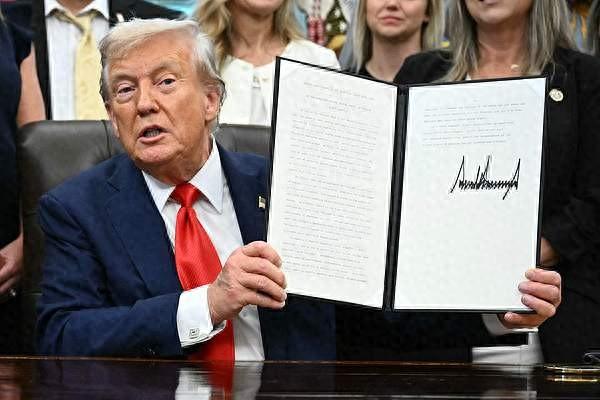
Core Points - The U.S. Court of Appeals ruled that most of Trump's global tariff policies implemented under the International Emergency Economic Powers Act (IEEPA) are illegal, although current tariffs will remain in effect until October 14 to allow for an appeal [1][2][5] - Trump's administration expressed concerns that the ruling could jeopardize ongoing trade negotiations and provoke retaliation from other countries, particularly India, which has been subjected to a 50% tariff [1][6][10] Group 1: Legal Context - The IEEPA, enacted in 1977, grants the U.S. President significant powers to respond to national emergencies or major threats from abroad, but the court clarified that it does not explicitly authorize the imposition of tariffs [4][5] - The court's decision emphasized that the power to levy taxes, including tariffs, is constitutionally reserved for Congress, not the President [5][11] Group 2: Implications for Trade - The ruling could disrupt existing trade agreements and negotiations with key partners, as highlighted by concerns from U.S. Commerce Secretary and other officials about potential retaliatory measures from trade partners [7][10] - The decision may also impact the financial implications for the U.S. Treasury, as the government has collected approximately $159 billion in tariff revenue this year, more than double compared to the previous year [10][11] Group 3: Political Reactions - Trump criticized the ruling as politically motivated and warned that its implementation would lead to disastrous consequences for the U.S. economy [9][12] - The administration plans to appeal the decision, with expectations that the conservative majority in the Supreme Court may favor Trump's position [11][12]
美联储,强烈降息信号!
券商中国· 2025-08-30 01:29
Core Viewpoint - The Federal Reserve officials are signaling a potential interest rate cut soon, with market expectations for a 25 basis point cut in September reaching 86.9% [1][3]. Group 1: Federal Reserve's Position - Mary Daly, President of the San Francisco Fed, indicated that the Fed is preparing to lower interest rates, suggesting that inflation pressures from tariffs may be temporary [2][3]. - The Fed's dual mandate of maximum employment and price stability is currently under tension, with rising inflation from tariffs and signs of a slowing labor market [2]. Group 2: Economic Indicators - Recent data showed that U.S. consumer spending in July recorded its largest increase in four months, indicating resilience in the economy [3]. - The next Federal Reserve meeting is scheduled for September 16-17, where a 25 basis point rate cut is highly anticipated [3]. Group 3: Trump vs. Federal Reserve - A court hearing regarding the dismissal of Fed Governor Cook by President Trump took place, marking a significant legal battle over the President's control over Fed monetary policy [4][5]. - The Justice Department argues that the President has discretion in dismissing Fed officials, while Cook's legal team claims the accusations against her are politically motivated and unverified [5][6]. Group 4: Implications of Court Ruling - If Trump successfully removes Cook and appoints a new member, he could gain substantial control over the Fed's interest rate decisions, potentially aligning the board with his preference for aggressive rate cuts [6].

上诉法院裁定美政府大部分全球关税政策非法,特朗普回应
美股IPO· 2025-08-30 00:25
Core Viewpoint - The U.S. Court of Appeals ruled that most of President Trump's global tariff policies are illegal, stating that he exceeded his authority in implementing these tariffs [1][3][9]. Group 1: Court Ruling and Implications - The Appeals Court upheld a previous ruling by the International Trade Court, which found that Trump improperly invoked an emergency powers law to impose tariffs [3][8]. - The court's decision allows the tariffs to remain in effect temporarily while the case is sent back to a lower court for further review [3][6]. - The ruling could prolong uncertainty regarding the fate of Trump's tariffs, as the government has the option to appeal to the Supreme Court [3][9]. Group 2: Government Officials' Statements - Following the ruling, Trump asserted that all tariffs remain valid and criticized the court's decision as partisan [5][6]. - U.S. officials, including the Treasury Secretary and Commerce Secretary, expressed concerns that a ruling against the tariffs could severely damage U.S. foreign policy and lead to diplomatic embarrassment [7][8]. - They argued that invalidating the tariffs would undermine months of negotiations with countries like the EU, Japan, and South Korea [8][9]. Group 3: Broader Trade Context - The legal battle over Trump's tariffs involves trillions of dollars in global trade and could lead to demands for refunds of tariffs already paid [9][10]. - Opponents of the tariffs, including small businesses and Democratic-led states, argue that Trump misused the emergency powers law, which is typically not intended for tariff imposition [9][10]. - The tariffs, initially set at a baseline rate of 10%, were implemented to address the U.S. trade deficit and have been in effect for several months [9].

美国上诉法院裁定特朗普关税非法 但暂时维持现状直至最高法院裁决
智通财经网· 2025-08-29 23:45
Core Points - The U.S. Court of Appeals ruled that the broad tariffs implemented by the Trump administration lack legal basis but temporarily upheld the tariffs while the White House appeals to the Supreme Court [1] - The court's decision, made with a 7-4 vote, supports a previous ruling that the Trump administration overstepped presidential authority regarding tariffs [1] - The ruling could impact negotiations between the U.S. and certain trade partners if upheld by the Supreme Court, although it does not address tariffs on specific industries like steel and automobiles [1] Group 1 - The U.S. International Trade Court previously ruled that Trump lacked the authority to impose global tariffs without explicit Congressional authorization under the International Emergency Economic Powers Act (IEEPA) [1] - The Appeals Court noted that it could not identify any clear Congressional authorization for the President to exercise tariff powers in such cases [1] - The Trump administration's rationale for imposing tariffs, citing reasons like "fentanyl cross-border input," was deemed insufficient by the court [1] Group 2 - Following the ruling, Trump criticized the court's decision on social media, claiming that if upheld, it would lead to the destruction of the U.S. [2] - Trump emphasized that tariffs are essential tools for supporting American workers and manufacturing [2] - Cabinet members warned that ruling against the President's authority to impose global tariffs could severely damage U.S. diplomatic and economic security [2]
乐歌股份20250827
2025-08-27 15:19
Summary of Lege's Conference Call Company Overview - **Company**: Lege Co., Ltd. - **Industry**: Smart Home and Cross-Border E-commerce Key Financial Highlights - **Revenue Growth**: In the first half of 2025, revenue increased by nearly 30% year-on-year, reaching 3.145 billion CNY [2][3] - **Net Profit Decline**: Net profit decreased by 26.58% year-on-year, primarily due to increased tariffs, management, and R&D expenses [2][3] - **Cost Control**: The company needs to focus on the effectiveness of cost reduction and efficiency improvement measures [2] Business Segments Performance - **Overseas Warehouse Business**: - Revenue grew by 84.27% year-on-year to 1.569 billion CNY, accounting for nearly 50% of total revenue [2][6] - Number of overseas warehouses reached 1,744, with shipment volume increasing over 120% year-on-year [2][6] - Expected annual shipment volume could reach 20 million [2][6] - Risk of declining gross margin noted [2][6] - **Ergonomic Products**: - Revenue increased by 3.48% year-on-year to 1.383 billion CNY, with independent site sales rising to 41% [2][7] - New product categories accounted for 20% of sales [2][7] - Impact from tariffs is significant, necessitating attention to pricing strategies and local production in the U.S. [2][7] - **Domestic Market**: - Achieved a slight revenue increase of 1%, with operating profit margin improving to 11% [2][7] - Focus on optimizing store profitability and e-commerce strategies for sustainable growth [2][7] Challenges and Risks - **Tariff Pressures**: Increased tariffs and regulatory scrutiny from U.S. customs are significant challenges [4][13][29] - **Rising Costs**: Management and R&D expenses have increased due to investments in new models and personnel [4][5] - **Competition in Overseas Warehousing**: Increased competition and narrowing price differences in overseas warehouse operations [4][10] Future Outlook - **Second Half of 2025**: - Anticipated acceleration in revenue growth due to the peak season for cross-border e-commerce and reduced leasing liabilities [2][8] - Profit improvement expected from cost reduction measures and operational efficiency [2][8] - Resilience in the dual business model of smart home products and overseas warehouses [2][8] Strategic Initiatives - **Automation and Information Technology**: Continued investment in automation and IT to enhance operational efficiency and service capabilities [4][10][11] - **Local Production Considerations**: Plans to localize production in the U.S. to mitigate tariff risks [4][13] - **Marketing and Brand Strategy**: Focus on brand strength and consumer insights to maintain competitive advantage despite higher costs compared to smaller competitors [28] Additional Insights - **Inventory Management**: Need to balance inventory levels with new orders and market demand to maintain profit margins [23][25] - **Cross-Border E-commerce Pricing**: Some product categories have seen price increases of 2-3% due to tariffs, but overall sales remain stable [22] - **Distribution Strategy**: Adjustments in distribution strategy to focus on profitable channels and reduce losses in underperforming segments [27] This summary encapsulates the key points from Lege's conference call, highlighting financial performance, business segment insights, challenges, future outlook, and strategic initiatives.