科技自主创新

Search documents
对华能源出口几乎归零!特朗普终于发现不对劲,他不能再轻举妄动,中方说到做到,连断美3条财路
Sou Hu Cai Jing· 2025-07-28 04:58
Group 1: Energy Sector - China's imports of coal, crude oil, and liquefied natural gas from the U.S. dropped to nearly zero in June, with crude oil imports falling from $800 million in the same month last year to zero, marking the first complete supply cut in three years [1] - The U.S. Energy Information Administration (EIA) reported a 92% decrease in crude oil exports to China for 2024 compared to the previous year, with liquefied natural gas exports to China also at zero for four consecutive months [1][3] - The imposition of tariffs by China on U.S. coal (15%), liquefied natural gas (15%), and crude oil (10%) has significantly reduced the price competitiveness of U.S. energy products, leading to a halt in drilling activities in U.S. shale oil regions [3] Group 2: Technology Sector - U.S. semiconductor companies are facing revenue declines due to export restrictions to China, with Applied Materials reporting a 25% drop in revenue from China and Lam Research seeing a 10% decrease [3][4] - Nvidia anticipates a loss of $5.5 billion in revenue due to U.S. government restrictions on H20 chip exports to China, highlighting the significant impact of missing out on the Chinese AI market [3] - China's self-sufficiency in semiconductor production has increased to 35% in 2024, with over 50% of mature process chip capacity being consumed domestically, indicating a rapid rise in China's semiconductor industry [3][4] Group 3: Agricultural Sector - The U.S. Department of Agriculture reported that China has zero forward purchases of U.S. soybeans and corn for the 2025-26 season, compared to $12.8 billion and $3.5 billion in exports for these products in 2023 [6] - Canada has significantly increased its crude oil exports to China, while Brazil has seen a 33% increase in beef exports and a 25% increase in soybean exports to China, filling the gap left by U.S. agricultural products [6] - The U.S. agricultural sector is experiencing a price war, with U.S. soybeans priced 15% lower than Brazilian counterparts, yet still unable to attract Chinese buyers due to higher effective costs after tariffs [7] Group 4: Strategic Adjustments - China's cessation of U.S. crude oil imports reflects a strategic shift towards diversifying energy sources and reducing reliance on the U.S., with Russia becoming the largest supplier of natural gas to China [6][9] - The U.S. energy industry is beginning to reassess its policies towards China, as trust issues arise with Chinese importers no longer willing to sign new liquefied natural gas contracts with the U.S. [6] - The changes in trade dynamics illustrate China's proactive adjustment of its supply chain strategy in the global economic landscape, emphasizing the importance of maintaining strategic autonomy [9]

外资把脉中国市场 看好港股与AI投资机遇
Zhong Guo Zheng Quan Bao· 2025-07-20 20:16
Group 1: Market Outlook - The Chinese stock and bond markets, along with the resilience of the Renminbi, have exceeded expectations this year, attracting positive views from foreign institutions like BlackRock and Fidelity International [1][2] - BlackRock's fund manager expressed optimism for the A-share market in the second half of the year, citing improved corporate operating environments and supportive regulatory policies [2] - Wellington's fund manager noted a global trend of reducing U.S. stock allocations, with China emerging as a key investment market due to its improving economic structure and supportive policies for the private sector [2] Group 2: Investment Opportunities - The technology sector, particularly artificial intelligence (AI), is highlighted as a key area for investment, with significant opportunities in computing power, data, and downstream applications [4][5] - The bond market is expected to present structural opportunities despite high valuations, with continued support from the People's Bank of China maintaining liquidity [5][6] - The Hong Kong stock market has shown strong performance, with potential opportunities in technology and quality traditional enterprises, especially if they report strong earnings [3] Group 3: Economic Transition - China is transitioning from being the "world's factory" to a global technology innovator, which is expected to unlock growth potential in the tech sector [2][4] - The focus on domestic innovation and the low domestic production rates in advanced sectors like chip manufacturing and aerospace present attractive investment opportunities [5]

“继续看好!”贝莱德解析中国市场投资机会
天天基金网· 2025-07-17 06:29
Core Viewpoints - The Chinese stock, bond, and foreign exchange markets have shown resilience beyond expectations this year, leading to optimism for the A-share market in the second half of the year [1][5] - BlackRock plans to focus more resources on building a systematic investment platform in China, aligning with the high-quality development direction of public funds [1] - Positive changes in macroeconomic policies and industry regulations since September last year have increased foreign investment interest in the Chinese market [2] Group 1: Market Outlook - The domestic economic data for the first half of the year has exceeded expectations, with resilience stemming from corporate competitiveness and policy flexibility [2] - The valuation of the CSI 300 index is currently about 10% below its reasonable value center, with potential for further upward adjustment if interest rates are lowered [4] - The overall macro environment and corporate earnings in China have undergone significant changes, supporting a positive outlook for A-shares in the second half of the year [5] Group 2: Investment Opportunities - The Hong Kong stock market has performed well this year, with structural directions and inflows of southbound funds influencing its performance [7] - Key areas for potential investment in Hong Kong stocks include the Hang Seng Tech index and high-quality companies in the traditional economy, which are currently undervalued [7] - In technology investments, AI is highlighted as a key area, with opportunities in computing power, data, and downstream applications [8]

推动科技自主创新和人才自主培养良性互动(专题深思)
Ren Min Ri Bao· 2025-07-09 22:32
Group 1 - Education, technology, and talent are foundational and strategic supports for China's modernization, emphasizing the need for a virtuous cycle among education, technology, and talent [1] - Higher education institutions are crucial for developing technology and nurturing talent, which are essential for driving innovation and supporting China's modernization efforts [1] Group 2 - Talent is recognized as the primary resource for innovation, and higher education institutions must integrate moral education with talent cultivation to produce innovative talents [2] - The reform of ideological and political courses is highlighted as a means to instill values and enhance students' capabilities, ensuring a comprehensive talent development system [2] - The role of artificial intelligence in personalizing and optimizing talent training is emphasized, alongside the need for a global perspective in nurturing innovative talents [2] Group 3 - There is a call for collaboration between basic and interdisciplinary sciences to cultivate composite talents needed for economic and social development [3] - Higher education must innovate its discipline systems to activate innovation potential and support high-level technological self-reliance [3] - The focus is on long-term support strategies for foundational disciplines and the establishment of interdisciplinary collaborative entities to drive technological innovation [3] Group 4 - Deep integration of industry, academia, and research is essential for accelerating the cultivation of innovative talents and leading technological innovation [4] - Higher education institutions are urged to enhance their talent cultivation systems and collaborate with industries to address technological challenges [4] - The establishment of specialized technology transfer institutions and a differentiated talent cultivation model is necessary to align talent supply with regional industrial upgrades [4]
京津冀人工智能+人才科技成果展:助京津冀人工智能生态圈建设
Huan Qiu Wang Zi Xun· 2025-05-30 08:20
Core Viewpoint - The 2025 Beijing-Tianjin-Hebei Artificial Intelligence + Talent Technology Achievement Exhibition showcases the latest AI technologies from the three regions, emphasizing collaboration and innovation in building an AI ecosystem [1][2] Group 1: Event Overview - The exhibition features advancements in various fields including intelligent robots, smart manufacturing, smart healthcare, digital humans, and vertical large models [1] - The event serves as a significant opportunity for talent exchange and cooperation among the three regions [1] Group 2: Technological Innovations - A notable exhibit is the highly intelligent virtual human interaction system "Qin Xiaoke," developed by Qinhuangdao Technology Co., Ltd. and Northeastern University Sydney Intelligent Technology Institute, which impressed attendees with its natural expressions [1] - The Qinhuangdao Artificial Intelligence Incubator was inaugurated, providing a crucial platform for the transformation and industrialization of AI technologies [1] Group 3: Regional Technological Strength - Qinhuangdao has established 387 technology innovation centers, key laboratories, and industrial technology research institutes, with 760 patent results published and 433 successfully transformed [2] - The exhibition highlights the strong capabilities of the Beijing-Tianjin-Hebei region in independent technological innovation and significant collaborative achievements [2]
树立报国之志 锐意创新进取——习近平总书记致复旦大学的贺信激发挺膺担当的奋进力量
Xin Hua Wang· 2025-05-26 15:23
Core Viewpoint - The congratulatory letter from General Secretary Xi Jinping to Fudan University emphasizes the importance of patriotism, innovation, and the cultivation of talent to support national development and modernization efforts [1][2]. Group 1: Innovation and Talent Development - The letter highlights the need for continuous improvement in serving national strategies and regional economic development [2][3]. - Fudan University is encouraged to uphold its educational mission and contribute to the cultivation of high-quality talent that meets national needs [1][4]. - The emphasis on "self-innovation" and "talent cultivation" indicates a strategic direction for educational institutions to align with national priorities [3][4]. Group 2: Educational Reform and Responsibilities - The educational sector is urged to implement reforms that focus on practical problem-solving and high-quality research outcomes [4]. - There is a call for universities to leverage their resources to produce more high-level talent and impactful research [4]. - The letter expresses expectations for the younger generation to take on new responsibilities and contribute to the modernization of China [4].
早盘直击 | 今日行情关注
申万宏源证券上海北京西路营业部· 2025-05-21 02:21
Core Viewpoint - The A-share market is experiencing a recovery after a technical adjustment around the 3400-point level, supported by recent monetary easing and trade negotiations [1][2] Market Outlook - The peak impact of the tariff events has passed, and the A-share market is expected to continue its recovery despite fluctuations. The extreme drop on April 7 was a one-time reaction to the "reciprocal tariffs" event, and the subsequent rebound in April reflects a correction of pessimistic sentiment. With the implementation of monetary easing and the first phase of trade negotiations, the market has entered a new phase of substantive recovery [2][3] Key Sectors - In May, attention should shift back to technology growth and innovative pharmaceuticals. The low valuation and high dividend sectors performed well in April, and the market style may switch back to technology growth in May. Anticipated catalysts include updates to AI large models and developments in robotics competitions. The semiconductor industry remains a key focus, particularly in domestic production, including semiconductor equipment and IC design [3][4] Market Review - The A-share market showed a gradual rebound with increased trading volume, and over 3800 stocks rose. Most of the 31 primary sectors experienced gains, particularly in growth-oriented industries such as beauty care, media, home appliances, and pharmaceuticals. In contrast, cyclical sectors like military, coal, real estate, and steel saw declines [4]

2025五道口金融论坛|粤港澳大湾区新机遇与挑战:以开放创新应对全球不确定性
Bei Jing Shang Bao· 2025-05-19 14:08
Core Viewpoint - The construction and development of the Guangdong-Hong Kong-Macao Greater Bay Area (GBA) has faced new opportunities and challenges after six years since the release of the development plan in 2019, particularly in the context of global uncertainties exacerbated by trade tensions initiated by the U.S. [1] Group 1: Guangdong's Role - Guangdong is actively promoting deep integration and cooperation within the GBA, establishing a solid foundation for collaborative development among the three regions [3] - The Shenzhen Financial Bureau has initiated four specialized teams to enhance financial cooperation with Hong Kong, focusing on areas such as enterprise overseas expansion and financial technology [3] - There is a strong emphasis on supporting GBA enterprises to list in Hong Kong and facilitating the return of qualified Hong Kong companies to the Shenzhen Stock Exchange [3] Group 2: Hong Kong's Contribution - Hong Kong plays an irreplaceable role in the GBA as an international financial center, focusing on four financial areas: innovative finance, green finance, livelihood finance, and Silk Road finance [5] - The introduction of the 18A listing rule has positioned Hong Kong as the second-largest biotech financing center globally, with potential for around 70,000 tech companies in the GBA to seek funding through this platform [5] - Hong Kong aims to enhance its role as a "super connector" for mainland enterprises seeking to expand internationally, leveraging its unique legal advantages and high-quality professional services [5][8] Group 3: Macao's Strategic Position - Macao is positioned as a "precise connector" targeting Portuguese-speaking countries, complementing Hong Kong's role [6][7] - The Macao Financial Management Bureau is focusing on enhancing connectivity with mainland and Hong Kong financial markets, including plans for a rapid payment system and digital currency integration [7] Group 4: Common Strategies Amid Uncertainty - Key strategies discussed by participants from Guangdong, Hong Kong, and Macao include open innovation to address global uncertainties and trade tensions [8] - Emphasis on strengthening the dual circulation hub function, enhancing domestic demand, and promoting deep integration with the mainland market [8] - The importance of leveraging the "One Country, Two Systems" advantage to enhance international cooperation and trade investment links, particularly with ASEAN and BRICS countries [8][9]
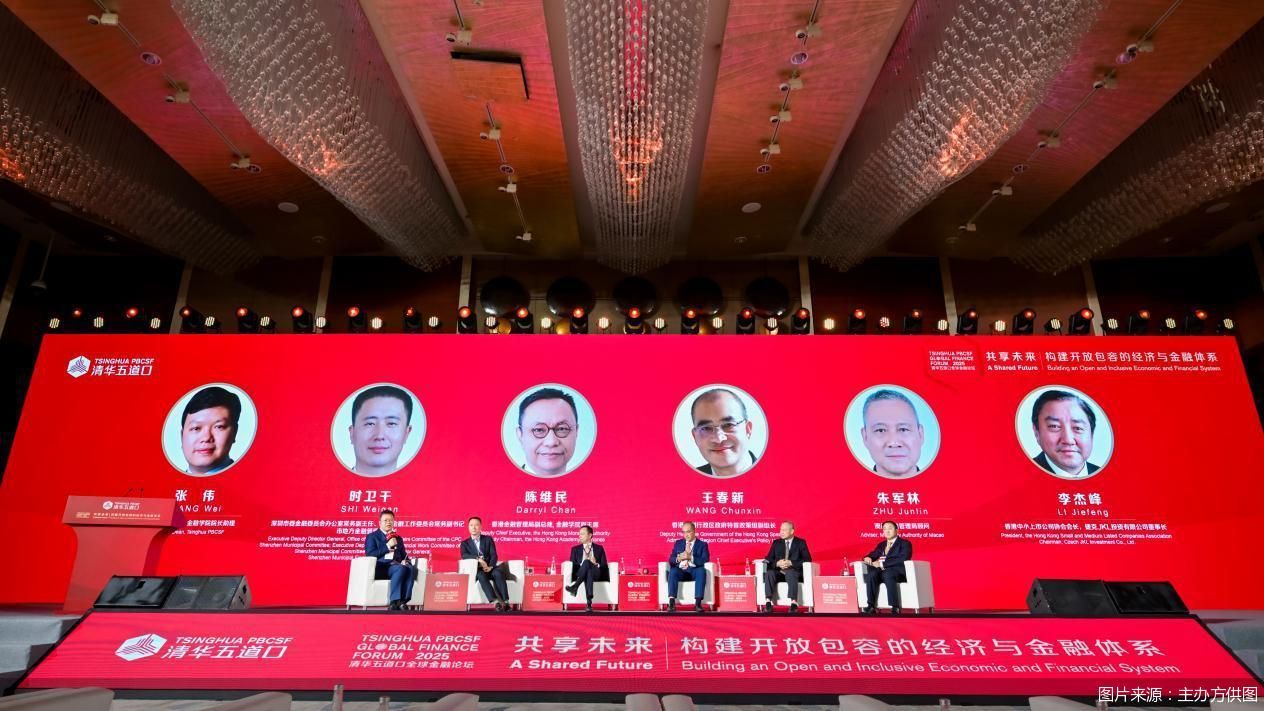
聚焦粤港澳大湾区建设与发展:促进跨境资本流通 优化长期资金投资环境
Zheng Quan Ri Bao Wang· 2025-05-19 03:07
Group 1: Development Opportunities in the Greater Bay Area - The Greater Bay Area is experiencing a clear trend of integration and development despite increasing external uncertainties, with Hong Kong's role as a major offshore RMB center expected to strengthen [1] - Shenzhen's financial bureau plans to enhance cooperation with Hong Kong through project-based initiatives, support listings for Shenzhen and Greater Bay Area companies in Hong Kong, and improve cross-border transaction efficiency [1] Group 2: Financial Innovation and Connectivity - Hong Kong's financial sector possesses unique advantages in financing and investment, aiming to deepen financial connectivity with the mainland through initiatives like Stock Connect and Bond Connect, while promoting RMB internationalization [2] - The Hong Kong government emphasizes the development of innovative finance, green finance, livelihood finance, and Silk Road finance, with significant achievements in innovative finance, becoming the world's second-largest biotech financing center [2] Group 3: Macau's Role and Sector Focus - Macau aims for moderate economic diversification, focusing on traditional Chinese medicine, modern finance, high-tech, and cultural sports, while enhancing connectivity with the mainland and Hong Kong in the financial sector [3] - Macau plans to facilitate cross-border capital flow and digital currency integration, leveraging its connections with Portuguese-speaking countries to promote outbound and inbound business [3] Group 4: Strategies for Addressing Challenges - The Greater Bay Area should enhance technological self-innovation, deepen institutional openness, and strengthen industrial chain resilience, with capital market development being crucial for optimizing financing structures and promoting cross-border capital flow [3]
早盘直击 | 今日行情关注
申万宏源证券上海北京西路营业部· 2025-05-16 01:58
Core Viewpoint - The A-share market is experiencing a technical adjustment as it approaches the March high of 3439 points, but the underlying trend is strengthening due to recent monetary policy easing and trade negotiations [1][2] Market Outlook - The peak impact of the tariff events has passed, and the A-share market is expected to continue its recovery despite uncertainties regarding the effects of the "reciprocal tariffs" on industries with high overseas business reliance, such as consumer electronics and CXO [2] - The domestic consumption and technology self-innovation sectors are expected to benefit from future countermeasures [2] Hot Sectors - In May, attention may shift back to technology growth stocks, with catalysts including updates on AI large models and developments in robotics competitions [3] - Key areas to watch include: 1. AI development transitioning from model training to inference, with potential in cloud computing and AI applications in various sectors [3] 2. The trend of robot localization and integration into daily life, with opportunities in sensors and controllers [3] 3. The ongoing trend of semiconductor localization, focusing on semiconductor equipment and IC design [3] 4. The low-altitude economy, with expectations for accelerated construction in pilot cities [3] Market Review - The A-share market showed a gradual decline with reduced trading volume, and over 3800 stocks fell, particularly in technology growth sectors [4] - Defensive sectors such as beauty care, coal, and agriculture showed resilience, while technology sectors like computing and communication faced significant declines [4]