跨境资金流动

Search documents
外汇局:国际金融市场波动性有所上升,我国外汇市场继续稳健运行
Bei Jing Shang Bao· 2025-11-17 11:16
Core Viewpoint - The foreign exchange market in China remains stable despite increased volatility in international financial markets, with a balanced supply and demand situation observed in October 2025 [1] Group 1: Foreign Exchange Market Performance - In October, the bank's foreign exchange settlement and sales surplus was $17.7 billion, showing a narrowing trend compared to previous months, indicating a more balanced settlement and sales activity [1] - The settlement and sales rates for enterprises and other entities were consistent with the average levels from the first nine months of the year [1] Group 2: Cross-Border Capital Flows - Cross-border capital flows remained stable, with a slight net outflow from non-bank sectors in September due to holiday factors, followed by an increase in net inflows in October [1] - The average monthly surplus for cross-border receipts and payments over the two months was $24 billion, supported by high levels of net inflow from goods trade [1] - Seasonal declines were noted in cross-border expenditures related to resident travel abroad and foreign enterprise dividends, while the net outflow from service trade and investment income narrowed compared to previous months [1]
国家外汇局:10月银行结售汇顺差177亿美元
Sou Hu Cai Jing· 2025-11-17 10:12
Core Viewpoint - The international financial market has seen increased volatility since October, but China's foreign exchange market remains stable with a balanced supply and demand [2] Group 1: Cross-Border Capital Flow - In September, there was a slight net outflow of cross-border funds from non-bank sectors such as enterprises and individuals due to the National Day and Mid-Autumn Festival holidays [2] - In October, there has been an increase in net inflows of cross-border funds, leading to an average monthly surplus of $24 billion over the two months [2] - The net inflow of funds from goods trade remains high, while seasonal declines in cross-border expenditures such as outbound travel and foreign enterprise dividends have been observed [2] Group 2: Market Stability - The foreign exchange market in China continues to operate steadily despite the fluctuations in the international financial market [2] - The overall cross-border capital flow remains stable, indicating resilience in the market [2]

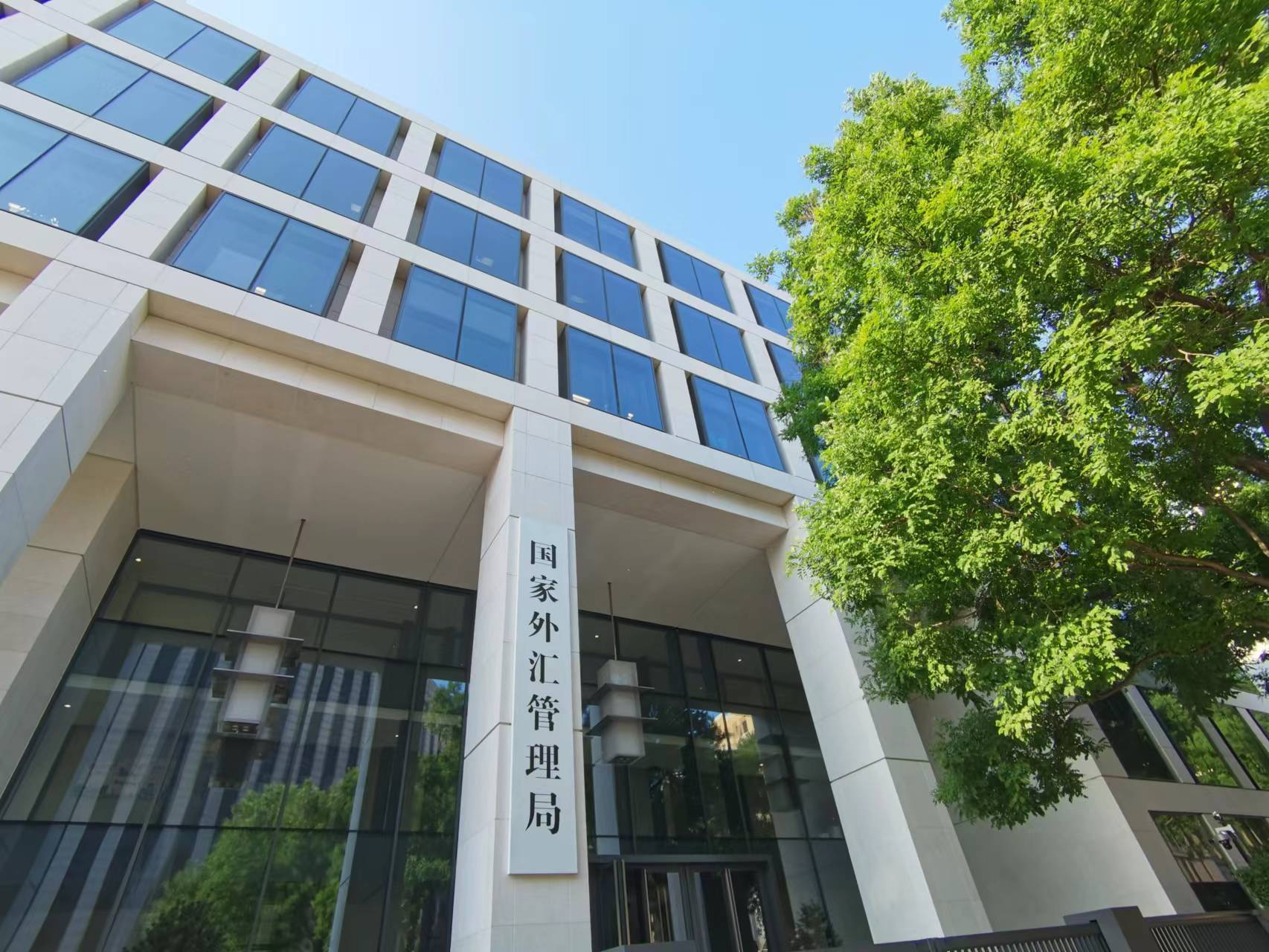
【金融街发布】国家外汇局:10月外汇市场供求基本平衡 货物贸易资金净流入保持高位
Xin Hua Cai Jing· 2025-11-17 09:26
Core Viewpoint - The foreign exchange market in China is maintaining a stable operation despite increased volatility in international financial markets and a rising US dollar index [1] Group 1: Foreign Exchange Market Performance - The supply and demand in the foreign exchange market are basically balanced, with a surplus of 17.7 billion USD in bank foreign exchange settlement and sales in October, showing a slight month-on-month contraction [1] - The foreign exchange settlement and sales activities are more balanced, with the settlement and sales rates remaining consistent with the average levels of the previous nine months [1] Group 2: Cross-Border Capital Flows - Cross-border capital flows remain stable, with a slight net outflow from non-bank sectors in September due to holiday factors, followed by an increase in net inflows in October [1] - The average monthly surplus for cross-border receipts and payments over the two months is 24 billion USD, with high levels of net inflow from goods trade [1] - Seasonal declines in cross-border expenditures such as outbound travel and foreign enterprise dividends have been observed, while the net outflow from service trade and investment income has narrowed month-on-month [1]

跨境资金流动_ 资产管理机构大举增持美元-Liquid Cross Border Flows_ Asset Managers piling onto USD
2025-11-07 01:28
Summary of Key Points from the Conference Call Industry Overview - The conference call primarily discusses the **foreign exchange (FX) market** and the **cross-border capital flows**, with a focus on the **USD** and **EUR** currencies. Key Takeaways 1. **USD Investor Demand** - The demand for USD by Bank of America (BofA) investors in the past month was the strongest since June 2024, driven mainly by asset managers. - Asset managers' USD buying last week was the largest since July, although they remain net short on dollars, indicating a light position overall [1][5][6]. 2. **EUR Supply Dynamics** - There was a significant supply of EUR last week, the strongest since May, primarily driven by corporates. - All BofA client types, except hedge funds, were net sellers of EUR, suggesting a souring sentiment towards the currency [6][10]. 3. **Emerging Market (EM) FX Flows** - EM FX flows turned negative across all regions, indicating a moderating sentiment. - Notable selling was observed in currencies such as SGD, ZAR, BRL, and to some extent, MXN [7][9]. 4. **Investor Positioning** - The positioning of BofA investors in G10 currencies as of October 31, 2025, shows varied sentiment across different currencies, with asset managers showing a slight long position in EM currencies [24][27]. - The aggregate positioning for USD was noted to be negative, while positioning for AUD and NZD showed some positive trends [16][24]. 5. **Options and Futures Flows** - The snapshot of FX options and futures flows indicates mixed sentiment, with some currencies like JPY and GBP showing negative positioning, while others like AUD and NZD had positive flows [14][33]. Additional Insights - **Market Sentiment** - The overall sentiment in the FX market appears to be cautious, with a notable shift in positioning among asset managers and hedge funds, reflecting broader market uncertainties [4][6][24]. - **Potential Risks** - The report highlights potential risks associated with the current positioning and market dynamics, suggesting that investors should be aware of the volatility and changing trends in the FX market [4][5]. - **Data Sources** - The analysis is based on proprietary data from BofA Securities, including flow data, positioning data, and market sentiment surveys, providing a comprehensive view of the current market landscape [9][30]. This summary encapsulates the critical insights from the conference call, focusing on the dynamics of the FX market, investor behavior, and emerging trends that could influence future investment strategies.
9月外汇市场分析报告:境内外人民币汇率涨跌互现,结汇意愿增强驱动银行结售汇顺差扩大,但购汇动机减弱是近七个月来境内外汇供求改善的主因
Bank of China Securities· 2025-11-03 03:05
Report Industry Investment Rating - The report does not provide an industry investment rating [1][2] Core Viewpoints - In September, the Fed initiated its first rate cut of the year, the US dollar index fluctuated, onshore and offshore RMB exchange rates showed mixed trends, and the "three - price" unification trend intensified with stable market expectations [2] - The recent RMB appreciation has increased the negative impact on export enterprises' financial conditions, but China's foreign trade growth remains resilient [2] - Cross - border capital flows continued to be balanced in September, shifting from a small net inflow to a small net outflow, with securities investment being the main contributor [2] - The enhanced willingness to settle foreign exchange led to a continuous surplus in bank foreign exchange settlement and sales for the seventh consecutive month in September, and the surplus reached a record high [2] Summary by Related Catalogs Fed's Rate Cut and RMB Exchange Rate - In September, the Fed started its first rate cut of the year due to increased employment downside risks in the US. The US dollar index first declined and then rebounded, and the RMB exchange rate appreciation slowed down [3] - The RMB central parity rate fluctuated slightly in a narrow range; the onshore and offshore spot exchange rates first rose and then fell. The "three - price" unification trend of the RMB exchange rate intensified, and market expectations were basically stable [4] - The RMB's nominal and real effective exchange rate indices continued to rise, but China's goods export volume still increased year - on - year, indicating that exchange rate changes are not the main factor for China's foreign trade resilience [6] Cross - border Capital Flows - Cross - border capital flows continued to be balanced in September, shifting from a small net inflow to a small net outflow. Securities investment was the main contributor [2] - Foreign investors slowed down their reduction of RMB bonds, and the balance of their RMB stocks continued to increase, but different types of foreign capital flow data showed differentiation, indicating a cautious and optimistic attitude towards participating in the A - share market [2] Bank Foreign Exchange Settlement and Sales - The willingness to settle foreign exchange increased, driving the bank's foreign exchange settlement and sales to have a continuous surplus for the seventh consecutive month in September, and the surplus reached a record high [2] - The change in the domestic foreign exchange supply - demand relationship since March was mainly due to the weakening of market participants' motivation to purchase foreign exchange [2] - In the future, if the exchange rate expectation turns to the appreciation direction, it may trigger a concentrated release of foreign exchange settlement demand [2]
数据突然暴增,这意味着什么?
大胡子说房· 2025-10-28 11:50
Core Insights - The article highlights a significant increase in the foreign exchange settlement surplus in September, reaching $51.1 billion, the highest since January 2021 [3][4]. - The total surplus for the first nine months of the year is $63.2 billion, indicating that September alone contributed a substantial portion to this figure [3][4]. Group 1: Foreign Exchange Settlement Data - The September foreign exchange settlement data shows a surplus, indicating that the inflow of foreign currency into banks exceeded the outflow [7]. - The increase in surplus can be attributed to two main factors: foreign capital flowing into the Chinese market and domestic entities converting foreign currency into RMB due to expectations of RMB appreciation [8][10]. Group 2: Market Sentiment and Investment Trends - The decline in the willingness to hold USD is linked to the Federal Reserve's interest rate cuts, which suggest a long-term weakening of the dollar [9]. - In contrast, the RMB is expected to appreciate over the next year, prompting investors to prefer holding RMB over USD [10]. - The strong performance of the A-share market has led investors to seek higher returns in domestic equities rather than keeping funds in USD-denominated accounts [10]. Group 3: Implications for Capital Markets - Historical patterns indicate that when domestic markets perform well or when there is an expectation of RMB appreciation, there is a tendency for increased holding of RMB, leading to favorable settlement data [12]. - The September surplus of $51.1 billion signals growing confidence in RMB assets from both domestic and foreign investors [12][14]. - The overall net inflow of cross-border capital for the first three quarters of the year reached $119.7 billion, further demonstrating the attractiveness of the Chinese market to international funds [13][14]. Group 4: Future Market Outlook - The influx of capital into the A-share market suggests a potential long-term bullish trend for the market [15][16]. - The article implies that the current liquidity situation in the A-share market has improved, making it more appealing to both domestic and foreign investors [15].

前三季度 我国涉外收支总规模超11万亿美元
Mei Ri Shang Bao· 2025-10-25 22:18
Core Insights - In September, the non-bank sector's cross-border receipts and payments totaled $1.37 trillion, a month-on-month increase of 7% [1] - In the first three quarters of this year, China's foreign-related receipts and payments reached $11.6 trillion, marking a historical high for the same period, with a year-on-year growth of 10.5% [1] - The foreign exchange market in China has shown resilience and vitality, maintaining a stable operation despite complex external pressures [1] Cross-Border Transactions - The net inflow of cross-border funds was $119.7 billion in the first three quarters [1] - The bank's foreign exchange settlement and sales surplus was $63.2 billion, outperforming the same period in 2024 [1] - The capital account showed a net outflow, primarily influenced by domestic entities' foreign investment activities [1] Trade and Investment - China's foreign trade continues to grow steadily, with high net inflows under goods trade [1] - The cross-border capital flows related to service trade and investment income remained relatively stable [1] - The overall foreign exchange supply and demand is basically balanced, reflecting strong market expectations [1]
今年前三季度海南自贸港跨境资金流动保持增长势头
Zhong Guo Xin Wen Wang· 2025-10-24 16:16
Core Insights - The cross-border capital flow in Hainan Free Trade Port has maintained a growth momentum in the first three quarters of this year, enhancing the level of cross-border trade and investment liberalization and facilitation [1] Group 1: Cross-Border Capital Flow - In the first three quarters, the cross-border payment and receipt scale in Hainan reached 804.6 billion USD, a year-on-year increase of 1.1% [1] - The total amount of foreign exchange settlement and sales was 179.8 billion USD, up 10.4% year-on-year; among which, the settlement scale was 46.3 billion USD, increasing by 22.5%, while the purchase scale was 133.5 billion USD, growing by 2.4% [1] Group 2: Trade Structure Characteristics - The scale of goods trade receipts and payments in Hainan was 352.8 billion USD, with a notable increase in bonded trade, which reached 45.9 billion USD, a growth of 5.4% [2] - The payment for imported duty-free goods grew rapidly, amounting to 21.4 billion USD, reflecting a year-on-year increase of 26.6% [2] Group 3: Service Trade Growth - The cross-border receipts and payments for service trade in Hainan totaled 50.4 billion USD, marking an 8.1% year-on-year growth [2] - Transportation services saw a revenue scale of 25.1 billion USD, increasing by 11.3%, while telecommunications and computer services grew significantly by 67.2% to 3.2 billion USD [2] - Cross-border travel services also experienced rapid growth, with receipts of 4.4 billion USD, up 25.7% [2] Group 4: Direct Investment Scale - The direct investment receipts and payments in Hainan reached 367.1 billion USD, reflecting a year-on-year increase of 4.2% [2] - Outward direct investment grew significantly, amounting to 37.6 billion USD, a rise of 23.1%, while inward direct investment surged to 66.6 billion USD, increasing by 28.5% [2]
9月结售汇顺差510亿美元 上中旬净结汇较多 下旬结售汇差额趋向均衡
Mei Ri Jing Ji Xin Wen· 2025-10-23 18:20
Core Insights - The foreign exchange market in China showed a surplus in September, with a total settlement of 18,809 billion RMB and a sale of 15,183 billion RMB, resulting in a surplus of 3,626 billion RMB, which has expanded compared to the previous month [1] - The total foreign exchange surplus for September was reported at 51 billion USD, with a notable increase in both customer settlements and sales [1][3] - The overall scale of foreign exchange receipts and payments by banks for the first nine months of 2025 reached 11.6 trillion USD, marking a historical high for the same period [3] Foreign Exchange Data - In September 2025, banks settled 2,647 billion USD and sold 2,136 billion USD, with cumulative settlements from January to September reaching 1,853.3 billion USD and sales at 1,790.1 billion USD [2] - For the same month, banks recorded foreign income of 48,409 billion RMB and payments of 48,629 billion RMB, with cumulative figures for the first nine months at 420,628 billion RMB in income and 412,029 billion RMB in payments [2] Market Trends - The foreign exchange market is characterized by balanced supply and demand, with a significant increase in customer settlements and sales in September [3] - The cross-border capital flow remains active, with a total of 1.37 trillion USD in cross-border income and expenditure in September, reflecting a 7% month-on-month growth [3] - The trade surplus for September was reported at 645.47 billion RMB, with exports and imports showing year-on-year growth of 8.4% and 7.5%, respectively [4] Future Outlook - Experts suggest that the upcoming peak period for corporate financial settlements and profit distributions may lead to an increase in bank customer settlements, potentially supporting the appreciation of the RMB [4] - The transition of China's economy from external demand to internal demand may lead to a decrease in the contribution of trade surpluses to settlement and sales [5] - The complexity of factors influencing customer settlement and sales data indicates that these figures should not be directly equated with cross-border capital flows or RMB exchange rate changes [4][5]
9月跨境资金流动保持活跃均衡态势
Yang Shi Wang· 2025-10-23 02:46
Core Insights - The State Administration of Foreign Exchange reported that cross-border capital flows remained active and balanced in September, with a relatively stable supply and demand in the foreign exchange market [1] Group 1: Cross-Border Capital Flows - In the first three quarters of the year, China's total foreign-related income and expenditure reached $11.6 trillion, marking a historical high for the same period [3] - There was a net inflow of $119.7 billion in cross-border capital, with a bank settlement surplus of $63.2 billion, both exceeding levels from the previous year [3] Group 2: Monthly Trends - In September, the total cross-border income and expenditure for non-bank sectors, including enterprises and individuals, amounted to $1.37 trillion, reflecting a month-on-month increase of 7% [4] - Both current and capital account cross-border receipts maintained a growth trend, indicating robust development in China's foreign-related economy [4] - Due to seasonal effects from the National Day holiday, there was a slight net outflow of $3.1 billion in September, which has since reversed to a net inflow in October [4]