
5G通信

Search documents
预见2025:《2025年中国全屋智能行业全景图谱》(附市场现状和发展趋势等)
Qian Zhan Wang· 2026-01-12 01:35
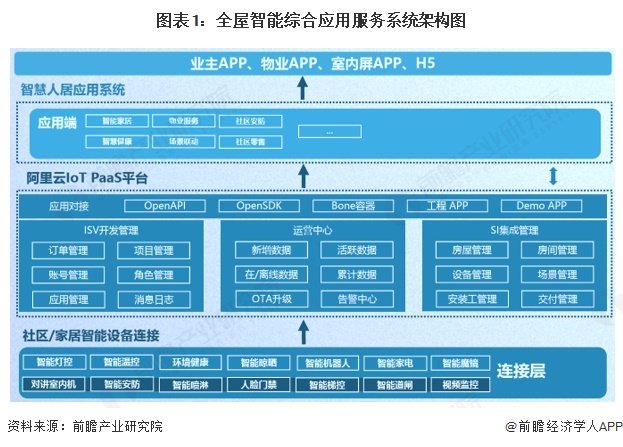
Industry Overview - The concept of "whole-house intelligence" refers to an integrated smart home system that combines smart lighting, security, audio-visual, and appliance control into a comprehensive home solution. This system allows for automated operations based on environmental and personal needs, enabling connectivity between individual smart products for a more personalized home experience [1][2] - The whole-house intelligent system relies on cloud platform capabilities and channel resources to create mature smart home applications, smart community applications, and market solutions, forming an IoT ecosystem that includes home device connectivity, automated control, data analysis, health care, community services, and new retail [1] Industry Chain Analysis - The whole-house intelligent field has developed a complete industrial chain, with upstream consisting of component suppliers, middleware suppliers, and software technology providers. The midstream includes whole-house smart home brand manufacturers that sell products directly to consumers and provide solutions to real estate and home decoration companies [2][5] Industry Development Status - The global whole-house intelligent industry is in a rapid development phase, supported by the maturity and integration of IoT, AI, and 5G technologies. This has facilitated easier interconnectivity between devices and enhanced system intelligence and interactivity. Market demand for convenient, healthy, and safe home environments is driving the transition from niche to mass markets [13][15] - In China, the whole-house intelligent industry is experiencing rapid growth driven by both policy and market forces, with a projected market size of approximately 222.4 billion yuan in 2024 [15][25] Competitive Landscape - The competitive landscape of China's whole-house intelligent industry can be categorized into three factions: traditional home appliance companies (e.g., Haier, Midea, Gree), internet companies (e.g., Xiaomi, Huawei), and other specialized firms. Traditional companies leverage supply chain and brand advantages, while internet firms possess strong technological and financial capabilities [17][19] Industry Development Trends - The Chinese whole-house intelligent industry is moving towards standardization in technology, market scenario development, and ecological competition. The combined push from policies, technology, and consumer demand is expected to facilitate a transition from rapid expansion to high-quality development, gradually building a more complete smart living ecosystem [23][25] - The market is expected to see a compound annual growth rate of 9.8%, with the market size projected to reach approximately 390 billion yuan by 2030 [25]

衢州公安启用警用智能AI眼镜
Xin Lang Cai Jing· 2026-01-09 17:40
Core Insights - The article highlights the successful deployment of AI smart glasses by police during the Zhejiang Satellite TV New Year's Eve concert in Quzhou, showcasing advancements in public safety technology [1] Group 1: Technology Overview - The AI glasses integrate 5G communication, edge computing, and mixed reality (MR) technology, marking a shift from traditional experience-based traffic management to data-driven intelligence [1] - The glasses can capture license plate information within a range of 2 to 4 meters using a built-in high-definition camera, enabling rapid comparison with a vast backend database [1] Group 2: Operational Efficiency - The AI glasses reduce the verification time for each vehicle to 1 to 2 seconds, significantly improving the efficiency of traffic checks compared to traditional methods [1] - The device not only distinguishes between allowed and prohibited vehicles but also provides real-time access to critical information such as vehicle inspection status and violation records, enhancing road safety [1] Group 3: Impact on Law Enforcement - The implementation of AI glasses during the event allows police officers to focus on core tasks such as emergency response and crowd management, freeing them from repetitive verification duties [1]
2026年首只新券亮相!可转债发行有望加快
证券时报· 2026-01-09 10:45
Core Viewpoint - The launch of Lianrui Convertible Bond marks the beginning of the 2026 convertible bond issuance, with expectations for increased issuance scale and market performance in the coming year [1][4]. Group 1: Lianrui Convertible Bond Details - Lianrui Convertible Bond, issued by Lianrui New Materials, has a total issuance amount of 695 million yuan, with funds allocated for high-performance materials projects and working capital [3]. - The company is a leader in inorganic non-metallic powder materials, benefiting from the growth in AI computing power and domestic substitution trends, with a reported revenue of 824 million yuan and a net profit of 220 million yuan for the first three quarters of 2025, reflecting year-on-year growth of 18.76% and 19.01% respectively [4]. - The bond attracted 9.2173 million investors, setting a record for subscription numbers since October 2023, with a low winning rate of 0.0009% [4]. Group 2: Market Trends and Issuance Pace - The pace of convertible bond issuance is accelerating, with 35 companies having announced issuance plans since October 2025, totaling a scale of 37.247 billion yuan [6]. - An additional 11 companies have received approval for their issuance plans since November 2025, with a combined issuance scale of 10.249 billion yuan [6]. - The total planned issuance from companies like Zhenhua Co., Yilian Technology, and others indicates a growing trend, with Yilian Technology planning the largest issuance of 1.2 billion yuan [7]. Group 3: Market Supply and Demand Dynamics - Despite the increase in issuance plans, the market remains characterized by a supply-demand imbalance, with 411 existing convertible bonds and a total balance of 556.015 billion yuan as of January 9 [10]. - The demand for convertible bonds remains strong, particularly in a volatile stock market, but the limited supply has led to inflated prices for some popular bonds, increasing investment risks [11]. - The exit of convertible bonds through forced redemption is expected to continue, with a significant number maturing in 2026, potentially exacerbating the supply-demand imbalance [11]. Group 4: Future Outlook - The issuance volume of convertible bonds is expected to increase in 2026, with a projected annual issuance scale of around 60 billion yuan if the growth rate remains consistent with 2025 [8][12]. - The low-interest-rate environment and potential regulatory easing may further stimulate demand for convertible bonds, particularly from companies in high-end manufacturing and technology sectors [12].


SMD热敏电阻市场细分研究报告(总体规模、主要厂商、产品&应用)
QYResearch· 2026-01-07 08:58
Core Viewpoint - The SMD thermistor market is projected to grow significantly, with a global revenue forecast of approximately $270.61 million in 2024, reaching $430.18 million by 2031, representing a compound annual growth rate (CAGR) of 6.95% from 2024 to 2031 [3]. Market Overview - SMD thermistors are electronic components that change resistance with temperature, widely used in temperature sensing, overheat protection, and temperature compensation [2]. - The global market for SMD thermistors is dominated by NTC type thermistors, which are expected to reach a market size of $181.43 million in 2024 and $265.05 million by 2031, with a CAGR of 5.67% from 2025 to 2031 [5]. Regional Analysis - In 2024, the Chinese market for SMD thermistors is estimated to be around $117.11 million, accounting for approximately 43.28% of the global market. North America and Europe are expected to hold market shares of 16.98% and 15.41%, respectively [5]. - The CAGR for the Chinese market is projected at 8.1%, while the U.S. and European markets are expected to grow at CAGRs of 4.10% and 5.28%, respectively [5]. Application Segments - The consumer electronics sector is the largest downstream application for SMD thermistors, with a market size of $95.69 million in 2024, anticipated to grow to $144.07 million by 2031, reflecting a CAGR of 6.08% from 2025 to 2031 [8]. Competitive Landscape - Major global players in the SMD thermistor market include Thinking Electronic, TDK Corporation, Murata, Shiheng Electronic, TE Connectivity, and Panasonic, with the top five companies expected to hold over 27.73% of the market share in 2024 [11]. Market Drivers - The growth in market demand is driven by the rapid development of smart appliances, automotive electronics, renewable energy, and environmental protection, which require high precision in temperature control [12]. - The expansion of application fields for SMD thermistors includes smart homes, medical devices, industrial automation, and aerospace, with increasing precision requirements [13]. - Government policies supporting environmental protection and sectors like new energy vehicles and smart homes are providing significant growth opportunities for the market [14]. Market Restraints - Intense price competition among numerous market players makes it challenging to increase product prices and profit margins [15]. - The demand for smaller and more compact electronic devices may impose higher requirements on the size and performance of SMD thermistors [16]. - Changes in market demand, such as reduced consumer spending on electronic devices, could impact the demand for SMD thermistors [18]. Development Trends - The application fields for SMD thermistors are continuously expanding, with significant growth expected in consumer electronics, automotive, home appliances, and industrial equipment [19]. - Technological advancements are enhancing the performance of SMD thermistors, enabling them to meet higher precision and wider temperature range requirements [19]. - Policy support and supply chain optimization are crucial for market development, particularly in the environmental sector [20].

研判2025!中国云台模块行业概述、产业链及市场现状分析:技术迭代驱动产业链向高精度、网络化升级,行业呈现稳健扩张与智能化转型趋势[图]
Chan Ye Xin Xi Wang· 2026-01-06 01:24
Industry Overview - The cloud gimbal module industry in China is experiencing rapid growth and technological iteration, with the market size continuously expanding. The industry chain has evolved from traditional mechanical rotation to high precision, miniaturization, and networking, particularly with the integration of cutting-edge technologies like 5G communication and edge computing, significantly enhancing system response speed, stability, and intelligence levels. The market size of the cloud gimbal module industry is expected to reach approximately 1.258 billion yuan in 2024, representing a year-on-year growth of 6.97% [1][7]. Industry Chain - The upstream of the cloud gimbal module industry chain includes raw materials and components such as aluminum alloy, carbon steel, stainless steel, carbon fiber, glass fiber, plastics, resins, sensors, motors, chips, batteries, controllers, and bearings. The midstream involves the production and manufacturing of cloud gimbal modules, while the downstream applications are primarily in smart home, drones, and security monitoring sectors [4]. Market Size - The cloud gimbal module industry is in a golden period of high-speed growth and technological iteration, with a continuous expansion of market size. The integration of advanced technologies has greatly improved system performance. The market size is projected to be around 1.258 billion yuan in 2024, with a year-on-year increase of 6.97% [7][8]. Key Companies' Performance - The market concentration in the cloud gimbal module industry is increasingly leaning towards technology leaders. Hikvision and Dahua Technology dominate the security monitoring sector, with Hikvision achieving a revenue of 65.758 billion yuan in the first three quarters of 2025, a year-on-year increase of 1.18%, and a net profit of 9.319 billion yuan, up 14.94% [8]. Dahua Technology reported a revenue of 22.913 billion yuan, a growth of 2.06%, and a net profit of 3.535 billion yuan, increasing by 38.92% [11]. Industry Development Trends 1. AI Empowerment: The core value of cloud gimbal modules is shifting from providing mechanical stability to becoming intelligent perception terminals integrated with artificial intelligence. This includes upgrades in software algorithms and the integration of multiple hardware functions for comprehensive environmental perception [12]. 2. Deepening Application Scenarios: Market demand is transitioning from generic products to precise vertical solutions, driven by the rise of professional content creation and complex industrial applications. This shift emphasizes the need for integrated solutions that combine hardware, algorithms, and industry applications [12]. 3. Collaborative Innovation: The future of the industry will focus on "industry collaboration" and "ecosystem building," moving away from isolated efforts. Organizations like the "Unmanned Systems Intelligent Vision Alliance" are emerging to integrate various components of the industry, enhancing competitive advantages for companies that can establish deep cooperative relationships [13].



锡市开年燃爆!新质催发银龙跃,供需弦绷岁首红!
Xin Lang Cai Jing· 2026-01-05 09:28
Core Viewpoint - The domestic tin price has surged significantly at the beginning of 2026, driven by supply concerns from Myanmar and increased demand from emerging technologies, leading to speculation about the start of a "tin bull" market [1] Group 1: Macro Influences - Tin prices have risen due to a "triple push" from macroeconomic and financial factors, including supportive domestic policies, a weakening dollar, and escalating geopolitical tensions [1] - The weakening dollar has reduced the cost of non-ferrous metals priced in USD, attracting global capital back to commodities [1] - Geopolitical conflicts, particularly in Venezuela and the Democratic Republic of Congo, have heightened concerns over resource supply chain stability, increasing the risk premium for strategic metals like tin [1] Group 2: Supply Side Tension - Despite Myanmar's announcement of resuming production, actual supply recovery has been slow due to previous rainy seasons and equipment issues, with December's domestic tin concentrate arrivals decreasing month-on-month [2] - Indonesia's ongoing resource export controls have limited the flow of tin resources to the Chinese market [2] - Global tin inventories are at historically low levels, contributing to price support from supply-side uncertainties [2] Group 3: Emerging Demand Growth - The AI revolution and rapid development of industries such as 5G communication and electric vehicles have significantly increased demand for tin, which is widely used in electronic chips, circuit boards, and batteries [3] - Traditional industries, including home appliances, automotive, and construction, continue to provide stable demand for tin, further supporting its price [3] Group 4: Price Dynamics - Short-term tin prices are expected to oscillate between 330,000 and 340,000 yuan/ton, reflecting a high-stakes battle between strong expectations and weak realities [4] - Supply anxieties from delayed recovery in Myanmar and geopolitical risks in the Democratic Republic of Congo provide solid price support, while traditional consumption is currently in a low season [4] - The current high prices may have already factored in optimistic expectations, with 340,000 yuan/ton identified as a key resistance level [4]

英伟达斥资百亿元获得Groq技术授权,算力ETF——5G通信ETF(515050)年内涨超100%
Mei Ri Jing Ji Xin Wen· 2025-12-30 02:04
Group 1 - The A-share market saw a quick rise after a low opening, with active performance in concepts related to Microsoft partners, ChatGPT, and AIGC [1] - The AI-focused ETFs, such as the Huaxia Artificial Intelligence ETF (159381), saw a rise of over 1%, while the 5G Communication ETF (515050) has more than doubled in value this year [1] - Nvidia agreed to pay approximately $20 billion to acquire technology licensing from the startup Groq, which is three times the company's valuation of $6.9 billion from a few months ago [1] Group 2 - Haitong Securities believes that the leap in AI capabilities is driving the acceleration of commercialization, with leading firms in China and the US dominating the global large model landscape [2] - The demand structure for computing power is undergoing profound changes due to the comprehensive upgrade of inference paradigms, with high-value scenarios like continuous inference and multi-modal generation becoming core sources of future growth [2] - The year 2026 is expected to be a critical turning point for AI commercialization, as the synchronization of model capabilities, engineering systems, and business models will drive AI applications from "tool availability" to "value realization" [2] Group 3 - The Cloud Computing 50 ETF (516630) tracks a cloud computing index with a high AI computing power content, covering popular concepts such as optical modules and AI servers [3] - The 5G Communication ETF (515050) focuses on the 5G communication theme index, with major holdings in companies like Nvidia and Apple [3] - The Huaxia Artificial Intelligence ETF (159381) tracks the entrepreneurial board AI index, with over 57% weight in optical module CPO and a low fee rate of 0.2% [3]

上证指数再度冲击4000点,科技或仍是行情主线
Mei Ri Jing Ji Xin Wen· 2025-12-29 06:25
Group 1 - A-shares trading volume has rebounded, with significant movements in the technology sector, particularly in artificial intelligence, chips, and 5G communications [1] - The AI ETF (515070) saw a rapid increase in holdings, with stocks like Cambricon Technologies rising over 6%, and other companies such as Tuowei Information and Xiechuang Data also experiencing gains [1] - The automotive parts sector (562700) rose over 1%, with stocks like Siling Zhichu increasing over 13%, and other companies such as Wuzhou Xinchun and Xinquan Co. also seeing substantial increases [1] Group 2 - The central bank stated that artificial intelligence is becoming a crucial engine for high-quality development across various industries, emphasizing its role in the digital transformation of finance [1] - The "14th Five-Year Plan" suggests the comprehensive implementation of the "AI+" initiative to seize the high ground in AI industry applications, with a focus on deepening and expanding AI governance [1] - According to Xinda Securities, the year-end market will rapidly rotate around policies and themes, recommending an increase in value sector allocations, with potential structural rebounds in previously lagging sectors [1] Group 3 - The Smart Car ETF (159888) closely tracks the CS Smart Car index, with constituent stocks primarily distributed across electronics, computers, automotive, and communications sectors, showcasing strong technological attributes [2] - The Automotive Parts ETF (562700) tracks the CSI Automotive Parts Theme Index, covering high-quality parts companies in various automotive fields, benefiting from the trends of electrification and intelligence in the automotive industry [2] - The AI ETF (515070) tracks the CS AI Theme Index, selecting stocks that provide technology, foundational resources, and applications in AI, focusing on the midstream and upstream of the AI industry chain [2]
成都都市圈握手长三角 加快低空经济“一起飞”2025
Sou Hu Cai Jing· 2025-12-27 04:59
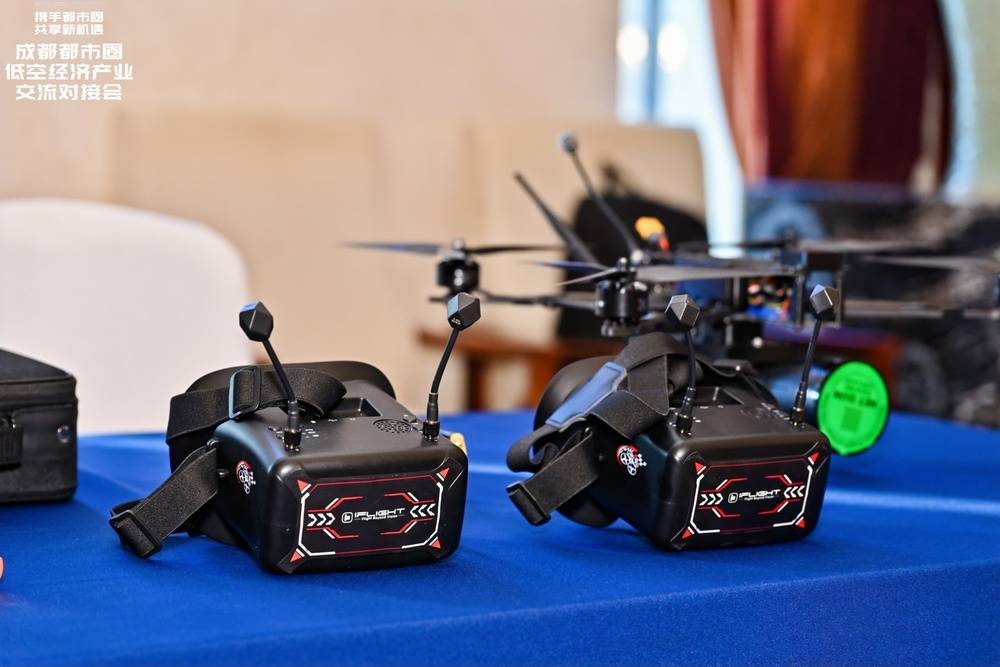
Core Insights - The Chengdu metropolitan area is actively promoting its low-altitude economy through a series of investment promotion activities, culminating in a recent exchange meeting in Nanjing, which gathered over 100 representatives from government, enterprises, and academia to explore opportunities in this emerging sector [1] Group 1: Industry Opportunities - The Chengdu metropolitan area released a notable "Low-altitude Economy Opportunity List," which includes 75 demand-side items covering low-altitude logistics, public governance, and cultural tourism, and 152 supply-side items encompassing aircraft manufacturing, flight control systems, and operational services [2] - The region boasts over 1,500 aerospace companies, more than 190 national-level innovation platforms, and a talent pool exceeding 7.6 million professionals, indicating a robust industrial foundation for low-altitude economic development [2] - The meeting highlighted 227 collaboration opportunities, emphasizing the complementary nature of industries between Chengdu and the Yangtze River Delta, which could enhance the overall market size of the low-altitude economy [2] Group 2: Technological and Regulatory Aspects - Safety is emphasized as a prerequisite for the development of the low-altitude economy, with companies showcasing innovative solutions such as intelligent parachutes and comprehensive monitoring systems to ensure safe operations [4] - The integration of technologies such as IoT, artificial intelligence, and 5G communication is deemed essential for advancing the low-altitude economy, leveraging Chengdu's manufacturing capabilities and the Yangtze River Delta's pioneering experiences [6] Group 3: Collaborative Efforts - The exchange meeting served as a platform for deep engagement, with 35 companies from the Yangtze River Delta and 14 from Chengdu initiating potential collaborations, indicating a strong interest in mutual growth [6] - Companies expressed optimism about the business environment in Chengdu, with intentions to expand production capacity and share development benefits, reflecting a positive outlook on future partnerships [6][7]
成都都市圈握手长三角 加快低空经济“一起飞”
Sou Hu Cai Jing· 2025-12-26 13:46
Group 1 - The Chengdu metropolitan area hosted a low-altitude economy industry exchange meeting, marking the final event in a series of investment promotion activities in the Yangtze River Delta [1] - Over 100 representatives from government departments, enterprises, and scholars gathered to explore opportunities in the low-altitude economy, covering the entire industrial chain from R&D to application [1] Group 2 - The Chengdu metropolitan area released a "Low-altitude Economy Opportunity List," featuring 227 collaboration opportunities, with 75 demand-side items and 152 supply-side items [2] - The demand-side includes low-altitude logistics, public governance, and cultural tourism, while the supply-side encompasses complete machine manufacturing, flight control systems, and operational services [2] - The Chengdu metropolitan area boasts over 1,500 aerospace companies, 190 national-level innovation platforms, and more than 7.6 million specialized technical talents [2] Group 3 - The event included exhibitions showcasing various applications of low-altitude technologies, such as amphibious airports and heavy-lift drones for logistics and emergency services [3] - Safety is emphasized as a prerequisite for the development of the low-altitude economy, with companies presenting solutions for monitoring and regulatory frameworks [3] Group 4 - The exchange meeting served as a platform for deep communication, with 35 companies from the Yangtze River Delta and 14 from the Chengdu metropolitan area engaging in collaboration discussions [4] - The partnership aims to leverage the R&D capabilities of Chengdu and the manufacturing experience of the Yangtze River Delta to explore a trillion-dollar market [4] Group 5 - The meeting concluded with a positive outlook for future collaborations, as companies expressed interest in expanding their market reach and sharing development benefits [5] - The low-altitude economy is seen as a significant area for innovation and cooperation, with plans for ongoing exchanges in airspace management, drone manufacturing, and commercial applications [5]