AI芯片

Search documents
1596亿,AI芯片超级独角兽诞生
3 6 Ke· 2026-02-05 05:15
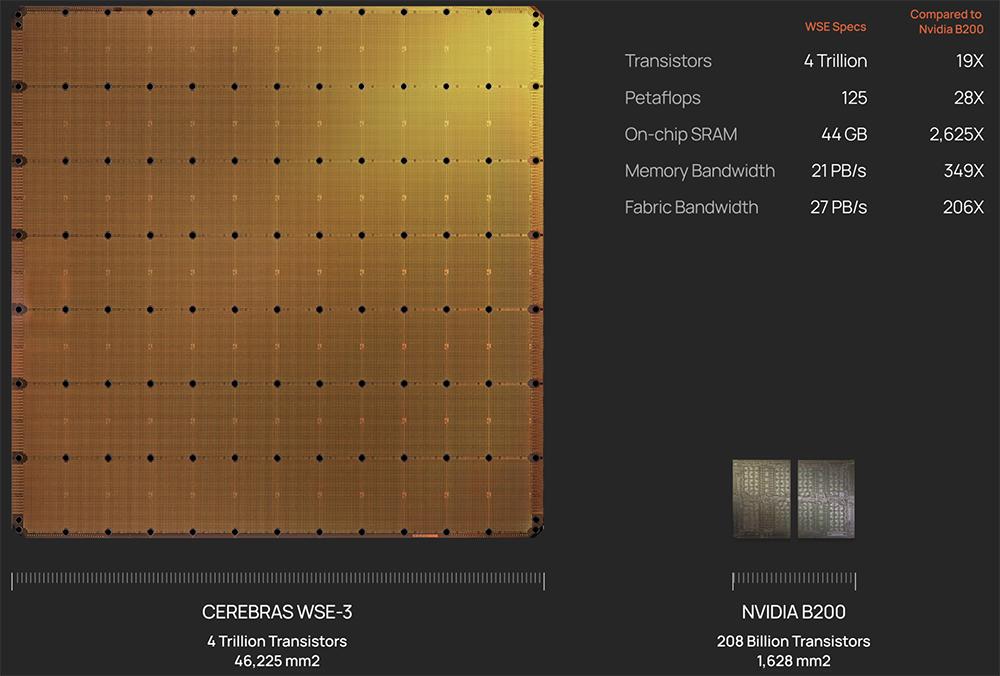
芯东西2月5日报道,今日,美国AI芯片独角兽Cerebras Systems宣布完成10亿美元(约合人民币69亿元)F轮融资,估值达到230亿美元(约合 人民币1596亿元)。 本轮融资由Tiger Global领投,Benchmark、Fidelity Management & Research Company、Atreides Management、Alpha Wave Global、Altimeter、 AMD、Coatue以及1789 Capital(合伙人包括小唐纳德·特朗普)等机构跟投。 成立于2015年的Cerebras,以餐盘大小的AI芯片而闻名。其晶圆级引擎3(WSE-3)芯片是全球最大、速度最快的AI芯片,体积是当前最大 GPU的56倍,单位计算功耗却远低于同类产品,同时推理和训练速度比竞品快20倍以上。 其芯片用于处理AI推理所需的顺序执行、内存密集型工作负载。与需要在芯片和内存之间来回传输数据的GPU不同,WSE将所有运算都保存 在芯片内部,从而消除了限制GPU推理能力的内存带宽瓶颈。 Cerebras上一轮融资是在2025年9月宣布完成的11亿美元(约合人民币76亿元)G轮融资,当时 ...

股价暴跌17%!2017年以来最惨!AMD怎么了?
美股IPO· 2026-02-04 23:27
Core Viewpoint - AMD's stock price plummeted despite reporting better-than-expected Q4 earnings, raising concerns about its ability to compete in the AI chip market against Nvidia and the impact of its revenue guidance for Q1 [4][5][6]. Financial Performance - AMD reported Q4 revenue of $10.3 billion, a 34% year-over-year increase, surpassing the analyst consensus of $9.65 billion [5]. - Adjusted EPS for Q4 was $1.53, exceeding the expected $1.32 by nearly 16% [5]. - The data center business grew 39% year-over-year to $5.38 billion, significantly above the expected $4.97 billion [5]. Market Concerns - Despite strong Q4 results, AMD's Q1 revenue guidance of approximately $9.8 billion fell short of some analysts' expectations, leading to disappointment in the market [4][5]. - Concerns were raised about AMD's ability to compete effectively in the AI chip market, especially without a boost from the Chinese market [3][4][5]. - The stock's high forward P/E ratio of 33.16 indicates that any execution missteps could lead to significant price adjustments [4][6]. Analyst Perspectives - Analysts expressed mixed views, with some noting that AMD's revenue from the Chinese market was unexpected and did not significantly exceed expectations [6]. - AMD's CEO maintained an optimistic outlook, projecting AI revenue to reach hundreds of billions by 2027 and indicating strong demand for data center chips [6][7]. - Some analysts believe the recent stock drop may present a buying opportunity, suggesting that the market's reaction may be overly cautious [8][9]. Future Outlook - AMD's agreements with OpenAI and Oracle reflect growing interest in its MI series AI accelerators, with significant deployments expected in the future [7]. - Analysts have set target prices for AMD stock between $280 and $300, indicating potential upside of 40% to 50% from current levels [9]. - The upcoming launch of the Helios rack-scale solution is anticipated to drive significant growth [9].


美股半导体深夜重挫,AMD跌超17%,闪迪跌近16%,黄金白银反弹,美国恢复美伊谈判
2 1 Shi Ji Jing Ji Bao Dao· 2026-02-04 23:14
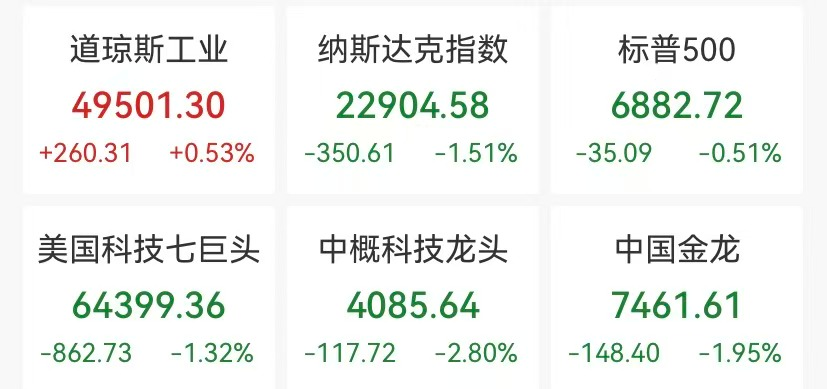
美东时间周三,美股三大指数收盘涨跌不一,仅道指飘红小幅上涨,纳指、标普指数、中概股指数集体下跌。消息面上,美国就业数据疲软,中东局势趋 缓,AI芯片需求波动,投资者对成长股估值与经济韧性信心承压,风险偏好趋于谨慎。 | 道琼斯工业 | 纳斯达克指数 | 标普500 | | --- | --- | --- | | 49501.30 | 22904.58 | 6882.72 | | +260.31 +0.53% -350.61 -1.51% | | -35.09 -0.51% | | 美国科技七巨头 中概科技龙头 | | 中国金龙 | | 64399.36 | 4085.64 | 7461.61 | | -862.73 -1.32% -117.72 -2.80% | | -148.40 -1.95% | 科技股普跌,脸书、英伟达、特斯拉跌超3%,谷歌跌近2%。 中概新能源股逆势走强,亿鹏能源狂飙近58%,晶科能源涨超8%,阿特斯太阳能涨逾3%。消息面上,马斯克团队密访中国多家光伏企业,晶科能源直线 涨停,光伏股集体拉升。 费城半导体指数大跌超4%,AMD跌超17%,该公司预计季度营收小幅下滑。存储概念跌幅居前,闪 ...
美股半导体深夜重挫,AMD跌超17%,闪迪跌近16%,黄金白银反弹,美国恢复美伊谈判
21世纪经济报道· 2026-02-04 23:09
编辑丨江佩霞 美东时间周三,美股三大指数收盘涨跌不一,仅道指飘红小幅上涨,纳指、标普指数、中概股指数集体下跌。消息面上,美国就业数据疲软, 中东局势趋缓,AI芯片需求波动,投资者对成长股估值与经济韧性信心承压,风险偏好趋于谨慎。 | 纳斯达克指数 | 道琼斯工业 | 标普500 | | --- | --- | --- | | 22904.58 | 49501.30 | 6882.72 | | +260.31 +0.53% | -350.61 -1.51% | -35.09 -0.51% | | 中概科技龙头 | 美国科技七巨头 | 中国金龙 | | 4085.64 | 64399.36 | 7461.61 | | 股普跌 股书 英伟计 特斯拉胜超3% 公歌胜近20% | -862.73 -1.32% -117.72 -2.80% -148.40 -1.95% | | 科技股普跌,脸书、英伟达、特斯拉跌超3%, 谷歌跌近2%。 费城半导体指数大跌超4%, AMD跌超17%,该公司预计季度营收小幅下滑。 存储概念跌幅居前,闪迪跌近16%,美光科技跌逾9%, 西部数 据跌超7%, 阿斯麦跌超4%。 记者丨曾静娇 | ...

寒武纪祛魅 因为国产芯片不再独舞
Bei Jing Shang Bao· 2026-02-04 16:12
摩尔线程、沐曦股份之外,壁仞科技、天数智芯、燧原科技也争相叩开资本市场的大门。寒武纪等一众 企业披露业绩的同时,百度的昆仑芯、阿里的平头哥接连走到台前。 "小作文"可以呼应投资者高预期下的焦虑,但不能成为股价大跌的唯一由头。 从投资者的视角看,无论是寒武纪,还是紧随其后上市的摩尔线程、沐曦股份,大家都面临着背负高预 期之后,如何兑现、何时兑现的考题。硬件的稳定性、性价比、供应能力都是市场的重要考察因素。 附在股价上的预期,自然比单纯的数字更复杂。营收增长幅度、亏损收窄情况、盈利预期的变化,都可 能变成"小作文"制造焦虑的诱导因素。在这个过程中,稍有风吹草动,让市场产生不安情绪自然在所难 免。 从行业自身的视角看,寒武纪需要正视的不仅是资本市场对于芯片题材祛魅,还有同行竞争加剧、同业 态百花齐放。 寒武纪从最初的"高处不胜寒",到数家国产芯片企业先后奔赴资本市场,股市上相关概念股的稀缺时代 也将结束。 刚刚交出亮眼的业绩,寒武纪就迎来了猝不及防的大跌。 2月4日,寒武纪股价收跌5.32%,报1068元/股,总市值4504亿元。此前一天,公司股价跌去12.88%,市 值从约5300亿元回落到4563亿元,几乎半天 ...

台积电CoWoS大量扩产!
国芯网· 2026-02-04 13:10
Group 1 - TSMC has decided to adjust its advanced packaging capacity planning for CoWoS 2.5D heterogeneous integration technology, increasing its production targets for 2026-2027 [2] - The primary reason for TSMC's adjustment is the strong demand for high-end AI chips, particularly from its largest customer, NVIDIA, and the accelerating growth of AI ASIC production [4] - TSMC plans to add two new advanced packaging facilities focused on CoWoS technology at its AP8 plant in the southern science park, while also converting existing facilities originally intended for SoIC processes to CoWoS production [4] Group 2 - Media reports indicate that MediaTek, which recently entered the AI ASIC design service market, is increasing its orders with TSMC due to insufficient CoWoS capacity to meet customer demand [4] - The mass production timeline for panel-level CoPoS packaging has been postponed to 2029 [4] - TSMC is also considering building a new advanced packaging facility in Yunlin, and plans to double the number of advanced packaging facilities at its Arizona subsidiary from two to four [4]

AI芯片“小巨人”酷芯微冲刺港股:业绩亮眼,上市能缓解对赌与现金流压力?
Sou Hu Cai Jing· 2026-02-04 11:23
酷芯微电子冲刺港股IPO,缓解财务压力 近日,合肥酷芯微电子股份有限公司正式向港交所主板递交上市申请书,华泰金融控股(香港)有限公司为独家保荐人,标志着这家安徽AI芯片"小巨人"正 式启动港股上市进程。 从业务布局方面来看,酷芯微电子采用无晶圆厂模式,聚焦视觉处理AISoC与无线视频传输SoC研发。 据芯东西1月29日消息,其在无人机领域起步早,2012年便进入该赛道,产品覆盖消费级航拍与工业级巡检。 按2024年收益计,在中国无人机视觉处理AISoC市场以8.0%的份额排名第三;智能物联领域,产品已应用于扫地机器人、智能门铃等,正拓展拇指相机等新 兴场景;智能可穿戴领域则主攻AR/AI眼镜,2024年起实现规模量产。 从财务方面来看,公司收入呈现高速增长态势:2023年总收入为1.05亿元,2024年大幅增长至4.49亿元,2025年前九个月收入为3.41亿元。毛利率也逐渐呈 现上升态势,同期毛利分别为1170万元、1.44亿元和1.51亿元。 | | A 編 | B輌 | 2021 年 | B+ 輸 | B++ 輸 | 21 | | --- | --- | --- | --- | --- | --- | ...
AI算力行业周报:Meta与康宁签订60亿美元光纤大单,英伟达即将举办CPO网络研讨会-20260204
Huaxin Securities· 2026-02-04 07:53
Investment Rating - The report maintains a "Buy" rating for companies such as沃尔核材 (Worley), 天孚通信 (Tianfu Communication), and 长飞光纤 (Changfei Fiber) while recommending "Accumulate" for 立讯精密 (Luxshare Precision) [7] Core Insights - Meta has signed a long-term supply agreement with Corning for fiber optic cables worth up to $6 billion to accelerate AI data center construction, highlighting the strong demand for fiber optics in the AI infrastructure [3] - Nvidia is hosting a webinar focused on co-packaged silicon photonics (CPO) switches, emphasizing their strategic value in scaling AI computing power [4] - The report suggests focusing on companies like 天孚通信, 立讯精密, 长飞光纤, and 沃尔核材 due to their potential in the AI computing sector [5] Weekly Market Analysis - From January 26 to January 30, the communication sector saw a significant increase of 5.83%, ranking second among all sectors, while the electronics sector decreased by 2.51% [12][19] - The AI computing-related sub-sectors mostly showed an upward trend, with the communication network equipment and devices sector leading with an increase of 8.56% [19] - The report indicates a divergence in capital flow, with the communication sector experiencing a net inflow of 11.53 billion yuan, while the electronics sector faced a net outflow of 55.83 billion yuan [23][25] Company Announcements - Lotus Holdings announced progress in its transition to computing power business, including various contracts for GPU servers and cloud services [49] - Tongfu Microelectronics reported a reduction in shareholding by its major shareholder, which will not affect the company's governance structure [51] - Tianfu Communication completed a share reduction plan by a board member, which was executed in accordance with regulations and did not impact company control [52]
研报掘金丨东兴证券:维持北京利尔“强烈推荐”评级,定增发展新材料和海外业务
Ge Long Hui A P P· 2026-02-04 06:54
Core Viewpoint - The report from Dongxing Securities highlights Beijing Lier's capital increase plan to develop new materials and overseas business, which aligns with the company's dual-driven strategy of "building a foundation in refractory materials and emerging technologies" [1] Group 1: Business Development - The production lines for composite zirconia and zirconium-based materials can be utilized for high-end refractory materials, solid-state battery electrolytes, and aerospace materials [1] - The construction of the production line in Vietnam is expected to enhance the company's overseas business development [1] Group 2: Financial Projections - The traditional business of the company is expected to maintain stable growth, with significant potential in investments in AI chip companies and silicon-carbon anode companies [1] - Projected net profits attributable to the parent company for 2025, 2026, and 2027 are estimated to be 459 million, 669 million, and 929 million yuan respectively, with corresponding EPS of 0.39, 0.56, and 0.78 yuan [1] Group 3: Competitive Advantage - The company has a clear competitive advantage in its traditional refractory materials business, demonstrating strong risk resistance and increasing market share even in adverse conditions [1] - The development of emerging and overseas businesses is expected to provide new growth opportunities for the company [1]


盘中暴跌超14%!“寒王”紧急发声,基金经理如何应对?
券商中国· 2026-02-03 10:08
2月3日,寒武纪低开低走,受"小作文"影响盘中一度跌超14%,并以9.18%的跌幅报收1128元/股,较去年8月 份创下的高位回撤逼近三成。且据近期披露的公募基金2025年四季报,在高位震荡之际,基金经理对该股的持 仓亦有分歧,有基金依旧坚定选择加仓,也有基金将其调出前十大重仓股名单。 有基金经理分析称,在前期涨幅巨大、估值高企的背景下,任何不利传闻都可能成为"压垮骆驼的一根稻草"。 如果所持股票受"小作文"冲击,但核实为不实谣言,且公司基本面、长期成长逻辑未变,短期股价大跌反而可 能是布局机会,会结合估值水平适度加仓或坚定持有。 "寒王"遭遇"小作文"空袭! 寒武纪重挫 近日有市场传闻称,寒武纪小范围交流给出2026年营收200亿元的估计,远低于市场300亿—500亿元预期。 受"小作文"影响,寒武纪-U今天上午突然跳水,盘中跌幅一度超过14%,成交量明显放大。 2月3日中午,寒武纪官微发文称:"公司关注到今日网络传播的关于公司近期组织小范围交流等信息为不实信 息,公司近期从未组织任何小范围交流,没有出具过任何年度、季度营业收入指引数据,相关信息请以公司公 开披露的信息为准。" 下午开盘,随着大盘逐渐升温, ...