大数据

Search documents
民政部:鼓励养老服务机器人产业发展,支持智能设备开发企业嵌入养老机构试点试用
Xin Lang Cai Jing· 2026-01-13 01:56
Core Viewpoint - The Ministry of Civil Affairs introduced measures to foster the development of the elderly care service industry, emphasizing the integration of technology to enhance service delivery and improve the experience for senior citizens [1] Group 1: Policy Initiatives - The new measures aim to significantly support the application of technology in elderly care services [1] - There is a focus on utilizing big data, artificial intelligence, and Beidou technology for health monitoring and personalized services for the elderly [1] - The initiative encourages the development of the elderly care robotics industry and supports the trial use of smart devices in pilot elderly care institutions [1] Group 2: Industry Implications - The measures provide a clear direction for the intelligent development of elderly care services [1] - The integration of technology is expected to enhance the service experience for elderly individuals [1]

申万期货服务浙江润富:大模型助力钢铁贸易型企业“玩转”套保
Qi Huo Ri Bao Wang· 2026-01-13 01:07
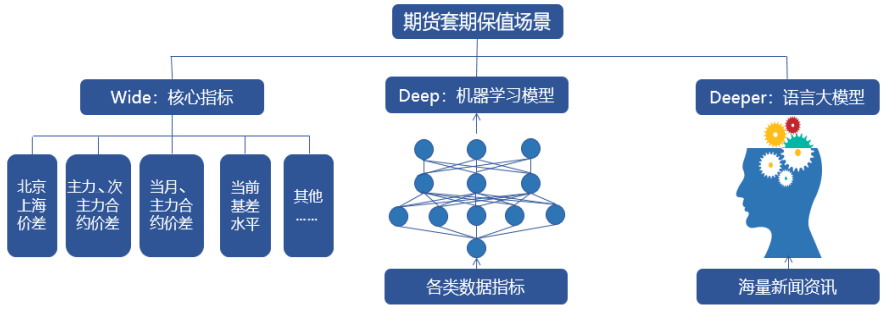
Core Viewpoint - The futures market is facing new challenges and opportunities driven by the deep adjustment of the global economic landscape and the acceleration of the digital technology revolution [2] Group 1: Industry Challenges - The futures hedging industry lacks specialized talent, comprehensive market information coverage, and sufficient risk assessment and control capabilities, making it difficult to make quick trading decisions [3] Group 2: Company Initiatives - Shenwan Futures has developed an intelligent service platform for industrial hedging, achieving significant breakthroughs in the futures industry since May 2024, providing effective strategies for Zhejiang Runfu Supply Chain Co., Ltd. [4] Group 3: Client Needs - Zhejiang Runfu, a steel trading company, emphasizes the importance of hedging operations in the futures market due to the increasingly complex supply-demand relationship in the steel market [5][6] Group 4: Smart Hedging Platform - The SmartGPT platform, developed by Shenwan Futures in collaboration with its parent securities company, utilizes a "WDD" architecture to capture both direct business signals and complex nonlinear information, enhancing service efficiency and quality [7] - The platform leverages deep learning to identify complex data logic, market risks, and trading opportunities, providing more scientific and precise risk pricing for financial institutions [7][8] Group 5: Implementation Process - The implementation process involves data standardization, daily analysis of macro and industry data, and model parameter adjustments, with continuous optimization based on out-of-sample data [10] Group 6: Project Outcomes - The intelligent service platform has received multiple awards, including the "Outstanding Achievement Award" at the 18th "Golden Fair" and has been recognized as a demonstration case in the financial technology innovation pilot program [12] - The application of the platform is expected to significantly enhance service to the real economy, improve market efficiency, strengthen compliance risk control, and ensure financial security [12]

从武汉飞向美国拉斯维加斯 普宙科技携低空治理方案亮相全球科技盛会
Chang Jiang Ri Bao· 2026-01-13 01:06
Group 1 - The 2026 International Consumer Electronics Show (CES) was held in Las Vegas, showcasing global tech innovations with participation from major companies like Nvidia, Siemens, and Lenovo, as well as the debut of the P300 drone by Puzhou Technology [1] - The P300 lightweight drone features advanced continuous optical zoom camera, an industry-first "optical + electronic" dual fog penetration mode, and robust omnidirectional perception capabilities, designed for complex environments such as rain, fog, and nighttime operations [2] - Puzhou Technology also presented a comprehensive, replicable urban governance model, demonstrated in Wuhan's East Lake High-tech Zone, which includes 128 drone automatic hangars and 186 drones, creating a low-altitude perception network for efficient government operations [2] Group 2 - The drone system in Wuhan has been operational at scale, with approximately 2,500 planned flight routes and over 310,000 kilometers flown, serving 34 government departments for daily inspections and management [2] - Since its launch, the platform has developed and deployed 55 specialized AI algorithms for automatic and precise identification of complex scenarios such as illegal construction and open fire points [2] - The "co-construction, sharing, and collaboration" model pioneered by Puzhou Technology in Wuhan is expanding to other cities in China and exploring benchmark projects in countries like South Korea, Singapore, Malaysia, North America, and Europe [3]

全面加强网络生态治理
Xin Hua Ri Bao· 2026-01-12 23:27
Core Viewpoint - The importance of network ecological governance is emphasized as a crucial aspect of building a strong cyber nation, directly impacting national security and the well-being of the populace [1][2]. Group 1: Principles of Network Ecological Governance - Adherence to the Party's leadership is essential for ensuring that network ecological governance progresses in the right direction [2]. - The principle of putting people first is highlighted, as the governance outcomes must be evaluated by the people [2]. - A balance between maintaining core values and fostering innovation is necessary to enhance the vitality of network ecological governance [2]. - Legal frameworks must be strengthened to ensure the healthy operation of the internet within a legal framework [2]. - A systematic approach is required to enhance the effectiveness of governance by integrating various aspects of development and security [2]. Group 2: Long-term Governance Strategies - The governance of network ecology is a long-term task that requires a scientific understanding of the internet's characteristics and the establishment of a long-term governance mechanism [3]. - A comprehensive governance structure involving multiple stakeholders, including government, platforms, and users, is essential for effective governance [3]. - Political responsibility and collaboration among various departments are crucial for effective network governance [3]. Group 3: Innovative Governance Methods - A combination of educational, administrative, and legal measures is necessary to create a positive online environment [4]. - The importance of moral education in the online space is emphasized, with a focus on enhancing societal network literacy [4]. - Legislative efforts should be advanced to cover key areas and emerging technologies, ensuring effective law enforcement [4]. Group 4: Balancing Regulation and Innovation - The governance of network ecology must adapt to the unique characteristics of the online space, emphasizing both robust regulation and high-quality innovation [5]. - A tiered safety regulation mechanism and improved industry access standards are necessary for effective governance [5]. - Encouragement of new technology development in the internet sector is vital for healthy growth [5]. Group 5: International Cooperation - Network ecological governance is a global challenge that requires international collaboration and participation in global internet governance [6]. - Strengthening international cooperation in areas such as cybersecurity and data flow is essential for building a community of shared future in cyberspace [6]. - Enhancing international communication capabilities is crucial for promoting a positive image of the country and gaining influence in global discourse [6].
麓港(深圳)数智科技有限公司成立,注册资本200万人民币
Jin Rong Jie· 2026-01-12 20:57
Group 1 - The establishment of Lukang (Shenzhen) Intelligent Technology Co., Ltd. has been registered with a capital of 2 million RMB, fully owned by Hong Kong Data Security Assessment Center Ltd. [1] - The legal representative of the new company is Zhou Qiao, and it is located in Nanshan District, Shenzhen [1]. - The business scope includes software development, AI application software development, technical services, big data services, and various other technology-related services [2]. Group 2 - The company is classified under the scientific research and technical services industry, specifically in technology promotion and application services [2]. - The operational period of the company is set until January 12, 2026, with no fixed term thereafter [2]. - The company is categorized as a limited liability company with foreign investment from Hong Kong [2].
ResMed (NYSE:RMD) FY Conference Transcript
2026-01-12 19:32
Summary of ResMed's Conference Call Company Overview - **Company**: ResMed - **Market Cap**: Approximately $37 billion [2] - **Revenue**: $5.3 billion in the trailing 12 months with gross margins around 59-62% and net operating profit margins above 30% [3][30] - **Business Segments**: - Sleep health and breathing health solutions - Software business contributing 12% of revenue [3][4] - **Geographic Distribution**: 58% of revenue from the US, Canada, and Latin America; strong presence in Europe and Asia [3] Investment Opportunity - **Target Markets**: Large addressable markets including sleep apnea, insomnia, and chronic obstructive pulmonary disease [4][5] - **Megatrends**: - Integration of sleep apnea detection in wearables by Big Tech (e.g., Apple, Samsung) [5][44] - Increased patient flow into healthcare due to new GLP-1 drugs [6][22] - **Innovation and Operating Excellence**: Strong cash flow generation of $1.8 billion in the last 12 months, with a focus on R&D, share buybacks, and acquisitions [6][30] Product Innovations - **New Products**: - AirTouch N30i and AirTouch F30i masks with fabric technology for improved comfort [12][53] - AI-enabled medical devices to enhance patient adherence to therapy [13][15] - **Digital Health Initiatives**: Launch of a digital sleep health concierge named Dawn to assist patients in managing their sleep health [16] Market Dynamics - **Competitive Landscape**: - ResMed maintains a strong lead over competitors in the US and globally, with a focus on innovation and patient adherence [35][36] - A major competitor has returned to the market, but ResMed has continued to grow its market share [37] - **Regulatory Environment**: - CPAP therapy excluded from the latest round of competitive bidding, which is seen as a positive for the industry [38][39] Patient Engagement and Education - **Primary Care Physician Education**: - 60,000 CME courses on sleep apnea have been downloaded, with 77% of physicians indicating they will change their practice protocols [26] - **Patient Adherence**: - Patients on GLP-1 medications show higher adherence rates to CPAP therapy, with a 10.8% higher probability of starting CPAP treatment [23][50] Financial Performance - **Capital Distribution**: Over $3.7 billion distributed in the last three years, with a focus on R&D and shareholder returns [30][31] - **Share Repurchases**: Plans for at least $600 million in share repurchases in fiscal year 2026 [31] Future Outlook - **Growth Projections**: Anticipated high single-digit growth with continued leverage on the P&L [33] - **Manufacturing Expansion**: New facilities in the US to support increased manufacturing capacity, aligning with the "Made in America" initiative [29] Conclusion - ResMed is positioned as a compelling investment opportunity due to its strong market presence, innovative product offerings, and strategic focus on patient engagement and education [34]

医疗援疆助力兵团诊疗水平再上新台阶
Xin Lang Cai Jing· 2026-01-12 19:03
Group 1 - The Xinjiang Production and Construction Corps (XPCC) has strengthened cooperation with counterpart provinces and cities in medical infrastructure, talent development, and advanced medical technology since the 14th Five-Year Plan, with a total investment of 1.45 billion yuan in 315 medical aid projects [1] - The establishment of high-level hospitals is accelerating, with the opening of the first national regional medical center in the XPCC and significant funding from Guangdong and Jiangsu provinces for hospital construction [1] - Medical aid teams are focusing on training medical personnel in the XPCC, resulting in the cultivation of 109 key physicians and the publication of 262 academic papers, significantly enhancing the medical service level [1] Group 2 - Experts from Beijing, Tianjin, and Henan have improved the ophthalmology capabilities of XPCC hospitals, with 63% of surgeries in secondary and tertiary hospitals being advanced procedures, allowing many patients to receive treatment locally [2] - The XPCC Health Commission plans to enhance the "Internet + Healthcare" support system during the 15th Five-Year Plan, leveraging digital technologies to extend quality medical resources to remote areas and promote high-quality development in healthcare [2]
北京国联视讯信息技术股份有限公司第九届董事会第十一次会议决议公告
Shang Hai Zheng Quan Bao· 2026-01-12 18:14
Core Viewpoint - The company has decided to conclude and terminate certain fundraising projects and permanently supplement the remaining raised funds into working capital to enhance the efficiency of fund utilization and meet operational needs [12][13][38]. Group 1: Board Meeting Decisions - The company held its 11th meeting of the 9th Board of Directors on January 9, 2026, where all 9 directors were present and unanimously approved the agenda [1][3]. - The board approved the proposal to conclude and terminate certain fundraising projects and to permanently supplement the remaining funds into working capital [2][4][12]. - The proposal will be submitted for review at the company's first extraordinary general meeting of shareholders on January 28, 2026 [7][6]. Group 2: Fundraising Project Details - The company plans to conclude the "Cloud-based Enterprise Digital System Integration Application Platform R&D Project" and terminate the "AI-based Big Data Production Analysis System R&D Project" and the "IoT Support System for Network Freight and Smart Supply Chain R&D Project," reallocating the remaining funds to working capital [12][22][27]. - As of December 31, 2025, the company has completed the main construction of the "AI-based Big Data Production Analysis System R&D Project," which has met all preset usage standards [23][25]. - The total estimated surplus funds from the terminated projects amount to approximately 51.19 million yuan, which will be used to supplement working capital [17][21]. Group 3: Financial and Operational Impact - The decision to terminate certain projects is based on the need to improve fund utilization efficiency and to adapt to the current market conditions, particularly in the real estate sector [36][38]. - The company aims to maximize shareholder interests by reallocating approximately 39.26 million yuan from the terminated projects to support daily operations and business development [37][38]. - The board believes that these changes will not adversely affect the company's normal operations and are in line with long-term strategic goals [39][40].

黑龙江合志达新能源有限公司成立,注册资本200万人民币
Sou Hu Cai Jing· 2026-01-12 16:45
Core Viewpoint - Heilongjiang Hezhida New Energy Co., Ltd. has been established with a registered capital of 2 million RMB, fully owned by Harbin Fenglin Information Technology Co., Ltd. [1] Company Overview - Company Name: Heilongjiang Hezhida New Energy Co., Ltd. [1] - Legal Representative: Wu Dongbin [1] - Registered Capital: 2 million RMB [1] - Business Type: Limited liability company (wholly owned by a natural person) [1] - Business Duration: Until January 12, 2026, with no fixed term thereafter [1] - Registration Authority: Harbin Daoli District Market Supervision Administration [1] Shareholding Structure - Shareholder: Harbin Fenglin Information Technology Co., Ltd. [1] - Shareholding Ratio: 100% [1] Business Scope - The company’s business scope includes: - Technical services, development, consulting, exchange, transfer, and promotion [1] - Emerging energy technology research and development [1] - Software development [1] - Big data services and internet data services [1] - Data processing and storage support services [1] - Artificial intelligence application software development [1] - Information system integration services [1] - Research and development of wind farm-related systems [1] - Engineering and technical research and experimental development [1] - Intelligent control system integration [1] - Energy storage technology services [1] - Contract energy management [1] Industry Classification - National Standard Industry: Manufacturing > Oil, Coal, and Other Fuel Processing Industry > Coal Processing [1] - Location: No. 2, 1st Floor, Unit 6, Xinkang Street, Daoli District, Harbin, Heilongjiang Province [1]
三七互娱:目前已投资的脑机接口公司包括华南脑控及强脑科技
Zheng Quan Shi Bao Wang· 2026-01-12 14:35
Group 1 - The core viewpoint of the article is that the company Sanqi Interactive Entertainment has invested in brain-computer interface companies, specifically Huannan Brain Control and Qiang Brain Technology, with investments of 20 million RMB and 20 million USD respectively [1] Group 2 - The investment in Huannan Brain Control amounts to 20 million RMB [1] - The investment in Qiang Brain Technology amounts to 20 million USD [1]