自动驾驶

Search documents
四大证券报精华摘要:2月6日
Zhong Guo Jin Rong Xin Xi Wang· 2026-02-06 00:38
Group 1: Mechanical Industry - In 2025, the mechanical industry is expected to show a high-level slowdown with steady progress, achieving a growth rate of around 5.5% for the year [1] - The first quarter of 2025 had a good start, while the second quarter experienced a slowdown due to tariff fluctuations, but quickly stabilized [1] Group 2: Stock Market Trends - A-shares and Hong Kong stocks showed divergence, with Hong Kong's main index rising in the afternoon, particularly in the consumer sector [1] - Several public funds believe that Hong Kong stocks remain undervalued globally, with structural investment opportunities expected [1] Group 3: Autonomous Driving Industry - Waymo, a subsidiary of Alphabet, completed a financing round of over 100 billion yuan, marking a critical turning point for scaling autonomous driving [2] - Domestic leaders in autonomous driving, such as Xiaoma Zhixing and Wenyuan Zhixing, reported that their Robotaxi fleets have surpassed 1,000 vehicles, indicating a clearer path to profitability [2] Group 4: Cash Dividends in the Stock Market - Companies in the Shanghai market are actively distributing cash dividends, with nearly 20 companies set to distribute approximately 25.8 billion yuan before the 2026 Spring Festival [3] - The total cash dividends from Shanghai companies from December 2025 to before the 2026 Spring Festival are expected to exceed 347.6 billion yuan, a significant increase from the previous year's 300 billion yuan [3] Group 5: Fresh Food Instant Retail - Meituan announced the acquisition of Dingdong Maicai's China business for approximately 717 million USD, accelerating its layout in the instant retail sector [4] - This acquisition indicates a potential concentration of competition towards leading platforms in the industry [4] Group 6: Automotive Industry - In 2025, Chinese automakers are accelerating electrification, intelligence, and internationalization, with profit margins declining to the lowest in a decade [5] - The decline in profit margins is attributed to significant investments in R&D rather than industry recession, as companies focus on long-term assets [5] Group 7: Lithium Battery Industry - The lithium battery industry is gradually improving in supply and demand, leading to stabilized product prices and corporate profitability [6] - Over 70 A-share listed companies in the lithium battery sector have disclosed performance forecasts, with over 70% showing year-on-year profit growth [6] Group 8: Commercial Aerospace - Tianbing Technology's satellite launch facility has passed pre-acceptance review, marking a significant step in China's commercial aerospace sector [7] - The facility represents a transition from technology validation to engineering application, indicating a potential explosive growth period for the industry [7] Group 9: Capital Raising in Battery Manufacturing - Guoxuan High-Tech plans to raise no more than 5 billion yuan through a private placement to fund battery projects and supplement working capital [8] - This move is seen as a critical step for Guoxuan High-Tech to expand production capacity amid the high growth cycle of the global new energy vehicle and energy storage markets [8]



2亿用户,撑不起Uber的自动驾驶梦
汽车商业评论· 2026-02-05 23:06
Core Viewpoint - Uber's recent financial report highlights significant growth in user engagement and bookings, but concerns over profitability and market competition have led to a decline in stock price despite positive operational metrics [6][12][13]. Financial Performance - In Q4 2025, Uber reported a 22% increase in ride-hailing trips to 3.8 billion, with total bookings also rising 22% to $54.1 billion, and revenue growing 20% to $14 billion [6]. - Monthly active users reached a record 202 million, an 18% increase year-over-year, doubling from 100 million in 2019 [7][8]. - Operating profit for Q4 2025 was $1.77 billion, a 130% increase, but fell short of analyst expectations of $1.85 billion by $80 million [18]. Growth Drivers - The growth in bookings was attributed to new products and services, including the Uber One subscription service and expanded offerings in holiday travel and airport transportation [17]. - The food delivery segment also performed well, capturing market share from competitors by introducing more non-food merchants and increasing discounts [17]. Profitability Concerns - Despite revenue growth, Uber's profitability remains a concern, with significant losses from investments in companies like Lucid and Grab leading to a $1.6 billion write-down [19]. - The company anticipates a higher effective tax rate of 22%-25% in 2026, which could further pressure profit margins [22]. Autonomous Driving Strategy - Uber views autonomous driving as a key future growth area, investing heavily and forming partnerships with various technology firms [25][26]. - The company plans to deploy 25,000 autonomous vehicles on its platform and expand services to 15 global markets by the end of 2026 [28][30]. - Uber argues that its existing user base and operational experience will allow it to achieve better utilization and economic benefits from autonomous vehicles compared to independent operators [31]. Market Competition - The autonomous vehicle market is competitive, with companies like Waymo and Tesla advancing their own technologies, which poses a threat to Uber's strategy [42][44]. - Regulatory challenges in major cities may delay the rollout of autonomous services, impacting Uber's ability to capitalize on high-margin markets [46]. Investor Sentiment - Investor confidence is wavering, as the potential impact of autonomous vehicles on Uber's core business remains uncertain, leading to stock price volatility [47].


九识智能董事长孔旗:提速无人货运产业化 携手菜鸟迎商业化拐点
Zhong Guo Zheng Quan Bao· 2026-02-05 22:27
值得一提的是,2025年,九识与菜鸟完成战略整合,进一步夯实了行业领先地位,更中标中国邮政7000 台无人货运车采购项目,拿下全球最大L4级无人货运车集采订单。近日,九识智能董事长孔旗接受了 中国证券报记者的专访,深度拆解了企业从战略选择到商业化落地的核心逻辑,揭秘了这场自动驾驶产 业革命的底层密码。 押注L4级载货赛道 在多数同行扎堆Robotaxi(无人驾驶出租车)或封闭场景时,孔旗的战略选择显得格外清醒。"产业的 最后决胜实际上来自数据,而数据的价值在于两点:一是复杂的城市开放道路场景,二是商业模式能赚 钱,拿数据的时候要盈利,才能良性促进技术增长。"这一判断源于他在百度硅谷的从业经历。彼时, 他参与Robotaxi研发,深刻意识到载人场景的商业化困境——技术投入巨大却难以形成盈利闭环,而城 市开放道路的载货需求,恰好能弥补这一短板。 "城市开放道路上的载货一定是最先能够落地的,既能拿到核心数据,又能不亏钱,甚至赚钱。"基于这 一第一性原理,孔旗在2021年创立九识后,便坚定聚焦L4级无人货运赛道。为验证这一思路,九识团 队租下美团优选仓库,将传统面包车与自主研发的无人车开展对比实验,从2021年持续至 ...
自动驾驶公司Waymo获大额融资 Robotaxi商业模式多元化拓展
Zhong Guo Zheng Quan Bao· 2026-02-05 22:21
Group 1: Waymo's Financing and Expansion - Waymo has completed a record financing round of $16 billion, equivalent to approximately 1110 billion RMB, raising its valuation to $126 billion, or over 8700 billion RMB [2] - The financing was led by prominent investment firms including Dragonneer Investment Group, DST Global, and Sequoia Capital, among others [2] - Waymo plans to provide paid autonomous driving services in six U.S. cities by April 2025, with an expected weekly order volume exceeding 250,000 [2][3] Group 2: Domestic Competitors' Progress - Domestic leaders in autonomous driving, Xiaoma Zhixing and WeRide, have announced that their Robotaxi fleets have surpassed 1000 vehicles, with Xiaoma reaching 1159 and WeRide at 1023 [4] - Both companies aim to achieve significant scale to dilute early R&D costs and move towards profitability [4] - WeRide has set a goal to deploy tens of thousands of Robotaxis globally by 2030, indicating a strong growth trajectory [4] Group 3: Market Dynamics and Financial Performance - The Robotaxi sector is characterized by three competing factions: technology-focused companies like Waymo, vehicle manufacturers like Tesla and XPeng, and ride-hailing platforms like Uber and Didi [5] - WeRide reported a revenue of 371 million RMB for the first three quarters of 2025, a year-on-year increase of 68.21%, while narrowing its net loss to 1.099 billion RMB from 1.924 billion RMB in the previous year [5] - Xiaoma Zhixing anticipates a loss between $69 million and $86 million for the year, following a loss of $275 million in 2024, indicating a trend of reduced losses [6]
自动驾驶公司Waymo获大额融资 Robotaxi商业模式 多元化拓展
Zhong Guo Zheng Quan Bao· 2026-02-05 21:42
近日,全球自动驾驶行业迎来新的融资进展,谷歌母公司Alphabet旗下专注自动驾驶的公司Waymo完成 千亿元级别融资,标志着其从示范到规模化落地将迎来关键拐点。 视线转向国内,国内自动驾驶龙头也纷纷报喜,小马智行和文远知行先后宣布Robotaxi车队规模破千 辆,Robotaxi的盈利路径变得更为清晰,正加速迈向商业化拐点。 Waymo获千亿元级融资 2月2日,自动驾驶公司Waymo在官方博客正式宣布完成了160亿美元融资,折合人民币约1110亿元,刷 新了自动驾驶公司的融资纪录。本轮投资过后,Waymo的公司估值达1260亿美元,折合人民币超过了 8700亿元。 小马智行和文远知行车队规模破千 与Waymo的盈利路线一致,国内的自动驾驶龙头公司小马智行与文远知行也都在扩大车队摊薄前期的 巨额研发投入,以期实现盈利目标。 2025年12月31日,小马智行在官方微信宣布Robotaxi规模突破了1159辆,超额完成2025年千辆Robotaxi 战略目标。截至2026年1月12日,文远知行全球Robotaxi车队也正式迈入了"千辆时代",整体数量为 1023辆,文远知行在官方微信表示,公司朝着2030年全球落 ...
Robotaxi商业模式多元化拓展
Zhong Guo Zheng Quan Bao· 2026-02-05 20:27
● 本报记者 张妍頔 龚梦泽 近日,全球自动驾驶行业迎来新的融资进展,谷歌母公司Alphabet旗下专注自动驾驶的公司Waymo完成 千亿元级别融资,标志着其从示范到规模化落地将迎来关键拐点。 2025年11月,Waymo宣布启动商业扩张:计划到2026年底将无人驾驶出租车服务覆盖至少15座美国城 市,新增拉斯维加斯、底特律与圣迭戈三大枢纽,并快速跟进迈阿密、达拉斯等城市的完全自主测试及 多城部署。此次融资也是在启动扩张计划后完成,为扩张计划提供了充分的资金储备。 小马智行和文远知行车队规模破千 与Waymo的盈利路线一致,国内的自动驾驶龙头公司小马智行与文远知行也都在扩大车队摊薄前期的 巨额研发投入,以期实现盈利目标。 2025年12月31日,小马智行在官方微信宣布Robotaxi规模突破了1159辆,超额完成2025年千辆Robotaxi 战略目标。截至2026年1月12日,文远知行全球Robotaxi车队也正式迈入了"千辆时代",整体数量为 1023辆,文远知行在官方微信表示,公司朝着2030年全球落地数万辆Robotaxi的目标稳步迈进。 目前,Robotaxi领域形成了三大派别同场竞技的局面。 专注 ...
锐明技术(002970) - 002970锐明技术投资者关系管理信息20260206
2026-02-05 18:22
Group 1: Business Development Expectations - The company focuses on the global commercial vehicle fleet management market, leveraging advancements in AI technology and chip performance to enhance product penetration and market growth [3] - The company aims to capitalize on industry growth opportunities based on its extensive insights and customer base [3] Group 2: Robobus Business Development - The company has initiated a systematic layout for the Robobus business, including the establishment of autonomous driving test sites and expansion of the R&D team [4] - The focus for this year is on the implementation of benchmark projects both domestically and internationally [4] Group 3: Reasons for Choosing Robobus - Robobus customers require complex solutions that integrate business products with autonomous driving technology, which the company is well-positioned to provide [5] - The company has a deep understanding of customer needs due to its long-term service to various public transport operators [5] Group 4: Smart Equipment Product Division - The Smart Equipment Product Division is currently focused on contract manufacturing of server power products, with optimistic future growth expectations [6] - Plans include enhancing service capabilities and expanding production of supporting products for computing centers [6] Group 5: Vietnam Factory Capabilities - The first phase of the Vietnam factory was completed in May 2023, with the second phase set to begin construction in 2025 [7] - The local team has gained familiarity with the operating environment, and the factory is expected to meet future business development needs [7]

优步(UBER.US)FY25Q4电话会:公司是自动驾驶落地最理想的平台
智通财经网· 2026-02-05 13:41
Core Insights - Uber's management emphasizes the company's strong cash flow and commitment to expanding its consumer, earner, and merchant base through advanced market matching technology and global scale [1] - The company positions itself as the ideal platform for the commercialization of autonomous vehicles (AV), leveraging its operational experience and pilot programs in multiple cities to validate its platform strategy [1] - For 2026, Uber plans to focus on six strategic priorities to ensure sustainable long-term growth, including transitioning from single rides to lifetime value, investing in local e-commerce, and expanding gig economy opportunities [1] Market Dynamics - Uber's total bookings in cities like San Francisco and Austin have accelerated despite competition from Tesla and Waymo, indicating that AV is expanding the overall market rather than cannibalizing it [2] - The company expects to cover 15 cities with AV partnerships by the end of the year, benefiting from higher utilization rates and positioning itself as the preferred platform for AV manufacturers [2] - 60% of Uber's mobility bookings come from international markets, providing a strong competitive moat through geographic diversity [2] User Growth Strategy - Uber's user growth strategy focuses on new products, scenarios, demographics, and regions, with initiatives like the low-cost Moto product and the Reserve service for suburban and airport travel [2] - Monthly active users have increased to over 202 million, with a year-on-year growth rate rising from 14% to 18% by year-end, driven by improved user retention and quality [3] - The Uber One membership program has seen a 55% year-on-year increase, enhancing user frequency and loyalty [3] Financial Performance - Uber's free cash flow is projected to reach approximately $10 billion, growing 40% year-on-year, allowing for significant reinvestment in core business opportunities while returning cash to shareholders [5] - The company maintains a dual strategy of "buyback + investment" to maximize long-term shareholder value, with a focus on maintaining an attractive stock price [5] Autonomous Vehicle Strategy - Uber's AV strategy involves investing in software developers to ensure future supply, while maintaining a fleet financing model to optimize capital efficiency [7] - The company aims to establish operational loops in 15 cities by securing partner agreements and building necessary infrastructure, while addressing regulatory challenges [8] - Uber's approach to AV deployment is gradual, initially retaining safety drivers before transitioning to fully autonomous operations [9] Advertising and Delivery Growth - The advertising penetration rate in delivery has surpassed previous expectations, with significant growth opportunities in various sectors, including SMBs and enterprise clients [12] - The delivery business has seen record growth driven by supply-side expansion and increased market penetration in low-density areas, with a focus on retail and grocery sectors [13] - Uber's membership system enhances user engagement across multiple product categories, contributing to high lifetime value [13]

智研咨询—中国车电子智能检测装备行业发展概况、市场需求及投资前景评估报告
Xin Lang Cai Jing· 2026-02-05 12:25
Core Insights - The automotive electronic smart testing equipment, also known as automotive electronic water valves or smart thermal management water valves, is a core component of automotive thermal management systems, crucial for controlling the flow of coolant in battery, motor, and electronic control systems [3][33] - The demand for automotive electronic smart testing equipment is expected to grow significantly, with the market size projected to reach 11.75 billion yuan by 2025, reflecting a year-on-year growth of 13.3% [6][37] - The evolution of electric vehicles towards higher endurance, intelligence, and safety, along with the transition from distributed to centralized electronic architectures, will further drive the demand for specialized testing equipment in China [6][37] Industry Overview - The automotive electronic smart testing equipment industry is characterized by a complex integration of multiple disciplines, including mechanical, electrical, hydraulic, measurement, control, algorithms, software, and simulation [39] - The industry is divided into three segments: upstream suppliers of precision mechanical components and core electronic parts, midstream manufacturers of testing equipment, and downstream demand from automotive manufacturers and third-party testing institutions [5][36] Market Dynamics - The safety and reliability requirements of core components in new energy vehicles, such as battery management systems and high-voltage distribution systems, are significantly higher than those of traditional fuel vehicles, leading to increased demand for testing equipment [6][37] - The market is witnessing a shift from single-point component testing to integrated system-level testing, driven by advancements in AI, digital twins, and simulation technologies [39] Competitive Landscape - The market structure consists of three tiers: international giants leading the high-end segment, domestic leaders emerging as key players, and regional manufacturers filling niche markets [38] - Key players in the first tier include foreign companies like Keysight Technologies, Teradyne, dSPACE, and SPEA, which dominate the high-end market with superior testing precision and system stability [38] Financial Performance - Beijing Oriental Zhongke Integrated Technology Co., Ltd. reported a total revenue of 1.348 billion yuan in the first half of 2025, with 67.5% from general testing services and 13.17% from automotive testing services [38]
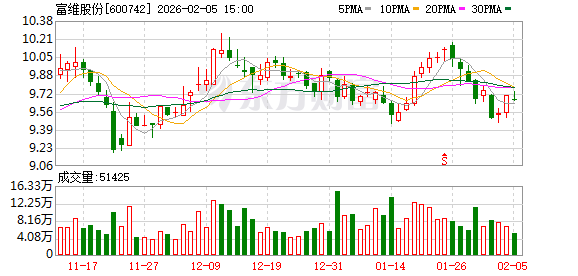
富维股份:公司的摄像头已经在自动驾驶领域应用
Zheng Quan Ri Bao· 2026-02-05 12:13
Group 1 - The core viewpoint of the article is that Fuwei Co., Ltd. has applied its cameras in the autonomous driving sector, but this business currently contributes a small proportion to the company's overall revenue and has not yet formed significant income [2] Group 2 - The company has engaged with investors through an interactive platform, indicating transparency in communication [2] - The company advises investors to be aware of investment risks and to make rational decisions [2]