
固态电池技术

Search documents
北交所高端制造产业研究系列(一):固态电池产业加速冲刺量产目标,北交所固态电池产业重点标的梳理-20250822
Hua Yuan Zheng Quan· 2025-08-22 01:32
Investment Rating - The report indicates a positive outlook for the solid-state battery industry, suggesting it as a key upgrade direction for lithium-ion batteries [1]. Core Insights - Solid-state batteries are expected to address the limitations of liquid lithium-ion batteries, such as energy density ceilings, safety risks from lithium dendrites, and performance issues at low temperatures [5][11]. - The global solid-state battery shipment is projected to reach 614.1 GWh by 2030, with a market size potentially reaching 17.2 billion yuan [19][21]. - The penetration rate of solid-state batteries is expected to increase from approximately 0.1% in 2023 to 10% by 2030 [22][24]. Summary by Sections 1. Solid-State Battery as an Upgrade Direction - The solid-state electrolyte enhances battery safety, with technology routes categorized into sulfide, oxide, and polymer types [5][16]. - The development of solid-state batteries is crucial for overcoming existing technological bottlenecks and meeting future diverse application needs [5][11]. 2. Industry Progress and Adoption - Major automotive manufacturers are accelerating the adoption of solid-state batteries, with a focus on sulfide technology [29][33]. - Companies like BYD and CATL have confirmed their commitment to the sulfide solid-state battery route, with production plans in place [33][36]. 3. Cost Reduction Trends - The current cost of solid-state batteries is higher than traditional lithium-ion batteries, with projections indicating that the unit cost could reach 0.78 yuan/Wh in the long term [38][42]. - The cost of solid-state batteries is expected to decrease as production yields improve, with mid-term costs estimated at around 0.50 yuan/Wh [42][43]. 4. Key Companies in the Solid-State Battery Industry - Notable companies involved in the solid-state battery sector include Nakanor, Yuanhang Precision, Better Ray, Lingge Technology, and Wuhan Blue Electric, each making significant advancements in technology and production capabilities [4][4][4]. - Nakanor has delivered key solid-state battery equipment to major clients, marking a technological breakthrough in the industry [4][4]. - Better Ray has launched high-nickel positive electrodes and solid-state electrolytes, contributing to next-generation battery solutions [4][4]. 5. Market Demand and Government Support - The Chinese government has elevated solid-state battery research to a national strategic level, with significant funding and policy support aimed at accelerating development [19][20]. - The solid-state battery market is anticipated to grow significantly, driven by advancements in technology and increasing demand for electric vehicles [19][21].
固态电池产业加速冲刺量产目标,北交所固态电池产业重点标的梳理 | 投研报告
Zhong Guo Neng Yuan Wang· 2025-08-22 01:29
Core Viewpoint - Solid-state batteries are expected to be the next upgrade direction for lithium-ion batteries, addressing limitations such as energy density, safety risks, and performance in low temperatures [2][3] Industry Logic - Solid-state batteries can potentially use higher capacity electrode materials and improve safety by replacing liquid electrolytes with solid electrolytes, leading to higher energy density, safety, and longer cycle life [2] - The solid-state battery technology routes can be categorized into sulfide, oxide, and polymer types based on the solid electrolyte materials [2] - China's Ministry of Industry and Information Technology has introduced new requirements for solid-state batteries to maintain the country's technological leadership in electric vehicles, with expectations for significant market growth by 2030 [2] Market Progress - Major automotive manufacturers are accelerating the adoption of solid-state batteries, with a focus on sulfide as the primary route [3] - Leading companies in solid-state battery technology development include QuantumScape, SolidPower, and Toyota, which are working on breakthroughs in energy density, safety, and charging speed [3] - Several companies, including BYD and Enpower, have confirmed their commitment to the sulfide route for solid-state batteries [3] Technical Insights - The cost of solid-state batteries is currently higher than traditional lithium-ion batteries, with projections for cost reductions as production processes improve [3] - The unit total cost of semi-solid-state cells is expected to decrease from 0.85 CNY/Wh to 0.50 CNY/Wh in the medium term, with full solid-state cells potentially reaching 0.78 CNY/Wh in the long term [3] Key Companies in the Solid-State Battery Sector - Companies such as Nakanor, Yuanhang Precision, Better Ray, Lingge Technology, and Wuhan Blue Electric are highlighted for their advancements in solid-state battery technology [5] - Nakanor has made significant progress in solid-state battery equipment, marking a technological breakthrough in industrial application [5] - Better Ray has launched high-nickel positive electrodes and solid-state electrolytes, contributing to next-generation battery technology [5]
对话产业链大佬 - 固态电池头部设备厂专家详解等静压设备
2025-08-21 15:05
Summary of Conference Call on Solid-State Battery Equipment Industry Overview - The discussion centers around the solid-state battery equipment industry, particularly focusing on the domestic development of isostatic pressing equipment, which is crucial for solid-state battery manufacturing [1][2]. Key Points and Arguments - **Leading Position in Passive Electronic Components**: The company has established a leading position in the manufacturing of passive electronic component equipment, with domestic MLCC (Multi-Layer Ceramic Capacitor) equipment fully adopting their technology [1]. - **Importance of Isostatic Pressing Technology**: Isostatic pressing technology is critical for reducing the resistivity of solid-state batteries by enhancing the contact area between solid electrolytes, which is essential for improving conductivity [1][5]. - **Temperature-Controlled Isostatic Pressing Machines**: The temperature-controlled isostatic pressing machine is highlighted as superior to cold and hot isostatic machines due to its ability to enhance material flow and bonding at sensitive temperatures [1][9]. - **Market Specifications**: Common specifications for solid-state battery isostatic equipment include pressure ranges of 100-600 MPa and diameters of 400-450 mm, with ongoing development of a 1,500 MPa machine for special applications [1][10][11]. - **Cost Advantage of Domestic Equipment**: Domestic temperature-controlled isostatic machines are priced at about one-third of their imported counterparts, demonstrating a significant cost advantage while maintaining comparable quality [1][16]. Additional Important Insights - **Historical Context**: Prior to 2021, domestic solid-state battery equipment heavily relied on imports, particularly for temperature-controlled isostatic equipment, which faced restrictions under the Wassenaar Arrangement [2][17]. - **Application of MLCC**: MLCCs are widely used in electronic products, with a smartphone requiring over 1,000 units and an electric vehicle needing around 30,000 units, underscoring the demand for high-quality passive components [3]. - **Technical Challenges**: Key technical challenges in manufacturing isostatic equipment include material strength, pressure control, and the quality of sealing components, which are critical for safe operation under high pressure [20][22]. - **Safety Risks**: The operation of isostatic equipment at pressures exceeding 600 MPa poses significant safety risks, necessitating strict adherence to safety protocols and professional training for operators [13][22][23]. - **Market Competition**: Domestic companies are making progress in catching up with international leaders, but issues such as lack of respect for high-pressure technology and improper practices in bidding processes have been noted [21][24]. - **Revenue Contribution**: Solid-state battery equipment currently accounts for less than 20% of the company's overall business, with a reported revenue of approximately 30 million yuan from solid-state battery equipment sales [25][26]. This summary encapsulates the critical aspects of the conference call, highlighting the advancements, challenges, and market dynamics within the solid-state battery equipment industry.
国金证券:硫化物为全固态电池主力路线 产业化进程提速
智通财经网· 2025-08-20 23:21
Core Viewpoint - Solid-state batteries are the trend due to high safety and high energy density, with a focus on sulfide routes aiming for energy density of 400Wh/kg and cycle life exceeding 1000 times, targeting small batch production for cars by 2027 and large-scale production by 2030 [1][2] Group 1: Solid-State Battery Development - The current focus of all-solid-state batteries is on sulfide routes, which offer the highest room temperature conductivity and excellent mechanical properties, making them the theoretically ideal solid electrolyte material [2] - The main performance goals for solid-state batteries include achieving an energy density of 400Wh/kg and a cycle life of over 1000 times, with a roadmap to small batch production by 2027 and large-scale production by 2030 [2] Group 2: Sulfide Electrolyte Characteristics - Sulfide electrolytes have various forms, with lithium sulfide silver germanium ore structure being the mainstream due to its low cost, high room temperature conductivity, simple synthesis, and high reproducibility [3] - The electrochemical stability of sulfide electrolytes is a challenge, with narrow electrochemical windows and poor interfacial properties, requiring improvements through doping and coating [3] - Solid-state synthesis methods are advantageous for high ionic conductivity, while liquid-phase methods are easier for large-scale production but yield lower conductivity [3] Group 3: Lithium Sulfide as Core Material - The purity of lithium sulfide is critical for the preparation of sulfide electrolytes, with over five mainstream preparation processes evaluated for purity, safety, and economic viability [4] - The lithium sulfide synthesis process stands out for its product indicators, with carbon thermal reduction, hydrazine reduction, and liquid-phase methods showing significant advantages and entering engineering validation stages [4] Group 4: Market Landscape and Competition - The landscape for lithium sulfide and sulfide electrolytes is competitive, with leading lithium battery companies establishing industry matrices, including Ganfeng Lithium, Tianqi Lithium, and others [5] - Startups are emerging rapidly, and semiconductor companies are extending their technology to the lithium sulfide supply chain [5] - The competition in the sulfide electrolyte market is expected to be intense, with battery manufacturers actively researching sulfide electrolytes and many material companies involved [5]

龙蟠科技上半年实现营收36.22亿元,净亏损同比大幅收窄
Ju Chao Zi Xun· 2025-08-20 10:27
Core Viewpoint - The company reported a slight increase in revenue while significantly reducing its net loss compared to the previous year, indicating improved operational efficiency and market positioning in the lithium iron phosphate sector. Financial Performance - The company achieved operating revenue of 3.622 billion yuan in the first half of the year, representing a year-on-year increase of 1.49% [3] - The net profit attributable to shareholders was -85.15 million yuan, a substantial improvement from the adjusted loss of -222.31 million yuan in the same period last year [3] - The net cash flow from operating activities was 6.07 million yuan, a decrease of 90.32% compared to the previous year [3] - Total assets increased by 11.14% to 17.845 billion yuan compared to the end of the previous year [3] Market Position and Strategy - The company ranks among the industry leaders in lithium iron phosphate shipments and has established long-term stable partnerships with major global lithium battery manufacturers, including CATL and others [1] - The company has expanded its international strategy, securing long-term supply agreements with top international battery manufacturers such as Blue Oval and Eve Energy [1] Production Capacity and Development - The company is accelerating the construction of multiple production bases, with the first phase of a 30,000-ton lithium iron phosphate project in Indonesia starting mass production in 2025 [2] - The second phase of the 90,000-ton lithium iron phosphate project in Indonesia is actively under construction, indicating further expansion of overseas production capacity [2] Research and Development - The company has three major R&D centers in Shenzhen, Nanjing, and Changzhou, focusing on lithium iron phosphate, sodium-ion battery materials, and solid-state battery technologies [4] - As of the end of the reporting period, the company holds 474 valid patents, including 138 invention patents, reflecting its commitment to innovation [4]


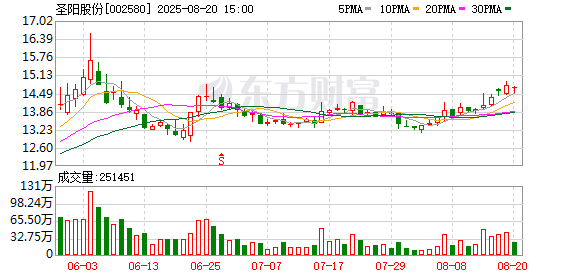
圣阳股份:公司密切关注固态电池技术发展趋势,加快推进固态电池技术研发
Zheng Quan Ri Bao· 2025-08-20 09:12
Group 1 - The company is closely monitoring the development trends of solid-state battery technology and is accelerating its research and development efforts in this area [2] - The company's self-developed solid-state battery primarily utilizes a composite oxide technology route and has successfully completed safety verification and cycle stability testing [2]

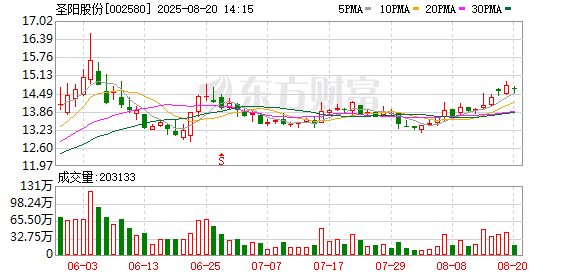
圣阳股份:目前公司自主研发的固态电池以复合氧化物技术路线为主,已顺利完成安全验证及循环稳定性测试
Mei Ri Jing Ji Xin Wen· 2025-08-20 06:15
每经AI快讯,有投资者在投资者互动平台提问:据最新报道,天津大学联合开发的锂电池包已经能够 达到480G/公斤,请问公司目前固态电池的研究进度怎么样?有和高校合作开发吗?年末的固态电池中 试公司会参与吗? 圣阳股份(002580.SZ)8月20日在投资者互动平台表示,公司密切跟踪固态电池技术发展趋势,加快推 进固态电池技术研发。目前公司自主研发的固态电池以复合氧化物技术路线为主,已顺利完成安全验证 及循环稳定性测试。 (文章来源:每日经济新闻) ...
行业超配比例持续下降,风电设备板块关注度提升 | 投研报告
Zhong Guo Neng Yuan Wang· 2025-08-20 01:47
电池、光伏设备及电网设备板块基金持仓市值回落,风电设备板块则明显提升。细分板 块方面,2025Q2,电池、光伏设备、电网设备板块基金持仓总市值位居行业前三,分别为 792.74、230.51、124.73亿元,分别环比-4.83%、-26.00%、-21.57%,排名前三细分板块均有 所回落。另外,风电设备板块表现较好,持股总市值超越其他电源设备板块,排名回升至第 四;电机板块持仓市值则显著下降,主要受机器人概念热度下降影响。2025Q2,风电设备 板块持仓总市值为81.16亿元,环比+50.84%,其他电源设备、电机板块持仓总市值分别为 54.20、14.44亿元,环比分别下降28.63%、58.93%。 从各个细分板块个股来看,(1)电池板块:个股持仓增减持情况分化,璞泰来、新宙 邦、震裕科技、珠海冠宇、湖南裕能获增持,其余个股遭减持,其中龙头企业宁德时代、亿 万联证券近日发布电力设备行业跟踪报告:SW电力设备超配比例持续回落。2025Q2, 公募基金重仓SW电力设备行业的总市值为1297.79亿元,环比下降11.62%,同比下降 22.50%;占基金重仓A股市值规模为9.91%,环比下降1.03pct, ...
谁在布局硫化物固态电池?宁德、比亚迪、丰田等巨头纷纷押注
材料汇· 2025-08-19 14:57
Core Viewpoint - Solid-state batteries are the trend due to high safety and high energy density, focusing on sulfide routes with performance targets of 400Wh/kg and over 1000 cycles, aiming for small-scale production in 2027 and mass production by 2030 [2][8]. Group 1: Solid-State Battery Development - The transition to solid-state batteries is driven by the need for improved safety and energy density, as traditional lithium-ion batteries pose safety risks due to flammable organic electrolytes [8]. - Solid-state batteries eliminate liquid electrolytes, enhancing safety and space utilization, with energy densities potentially reaching 500Wh/kg [9][10]. Group 2: Sulfide Electrolyte Characteristics - Sulfide electrolytes are favored for their high ionic conductivity at room temperature, making them ideal solid-state electrolyte materials despite challenges like air stability and electrochemical window limitations [3][10][22]. - The main types of sulfide electrolytes include lithium sulfide-silver-germanium structures, which offer low cost, high conductivity, and good electrochemical stability [3][24]. Group 3: Competitive Landscape - The competitive landscape for lithium sulfide and sulfide electrolytes is diverse, with major players like Ganfeng Lithium and Tianqi Lithium leading, alongside emerging startups and semiconductor companies expanding into the sulfide supply chain [4][14]. - The competition is expected to intensify as battery manufacturers actively develop their own sulfide electrolytes, with the barrier to entry for lithium sulfide being higher than for sulfide electrolytes [4][14]. Group 4: Investment Opportunities - Investment opportunities are identified in companies with unique processes and outstanding product performance in lithium sulfide production, with potential for large-scale applications in the medium term [5]. - Key companies include Xiamen New Energy, Shanghai Xiba, and Rongbai Technology, each with distinct advantages in solid-state battery technology and production capabilities [5][20]. Group 5: Future Projections - By 2030, the market for sulfide solid-state batteries is projected to reach 117GWh, with a corresponding market value estimated between 117 billion to 175.5 billion yuan [20][21]. - The demand for lithium sulfide is expected to exceed 20,000 tons by 2030, driven by the anticipated production scale of solid-state batteries [21].



多个扰动预期仍未落地,碳酸锂高位区间偏强波动
Tong Hui Qi Huo· 2025-08-19 11:19
Group 1: Report Industry Investment Rating - No relevant content provided Group 2: Core View of the Report - Over the next 1 - 2 weeks, the lithium carbonate futures market may shift to a wide - range, volatile, and bullish pattern. Although supply disturbances have boosted market bullish sentiment, the impact of current mine shutdowns on actual production is yet to be seen, and lithium salt plants maintain high operating rates, so the spot market still faces inventory pressure. On the demand side, the growth rate of new energy vehicle sales is slowing down, and the "anti - involution" initiative in the battery industry chain restrains the mid - stream's impulse to expand production, so there is a risk of revising the peak - season expectations. Attention should be paid to the marginal changes in policy implementation and the progress of mine rectification in Jiangxi [3]. Group 3: Summary According to the Table of Contents 1. Daily Market Summary - **Analysis of Lithium Carbonate Futures Market Data** - On August 18, the price of the lithium carbonate main contract rose to 89,240 yuan/ton; the basis weakened from - 3,600 yuan/ton to - 5,940 yuan/ton, indicating that the market's pricing of the supply - tightening expectation increased [1]. - The open interest of the main contract increased by 19,967 lots to 421,106 lots, and the trading volume increased to 1.036328 million lots. The simultaneous expansion of volume and open interest shows that the divergence among funds on the direction of lithium prices has intensified, and the market's gambling sentiment has heated up [1]. - **Analysis of Industrial Chain Supply - Demand and Inventory Changes** - **Supply side**: The shutdown of Ningde Times' Jianxiawo Mine in Jiangxi has triggered market concerns about the shortage of lithium mica supply. Coupled with the regulatory pressure on local mines to complete the re - application of ore types by September 30, the uncertainty of lithium ore supply has increased. However, the prices of spodumene concentrate and lithium mica concentrate are stable at 940 yuan/ton and 990 yuan/ton respectively, and the weekly capacity utilization rate of lithium carbonate remains flat at 63.92%. The short - term actual supply has not significantly shrunk [2]. - **Demand side**: The retail performance of new energy vehicles is moderate, with the year - on - year growth rate dropping to 6% from August 1 - 10, indicating marginal weakening pressure on demand. However, the price of lithium hexafluorophosphate increased by 0.54% week - on - week to 55,500 yuan/ton, and the price of power ternary materials slightly increased by 0.42% to 119,695 yuan/ton, indicating that there is still some support for downstream inventory - building demand [2]. - **Inventory and warehouse receipts**: Lithium carbonate inventory decreased slightly by 162 physical tons to 142,256 tons (a decrease of 0.11%), and the absolute value is still at a high level this year. The number of warehouse receipts has not changed abnormally, and the overall inventory pressure has not been substantially relieved [2]. - **Market Price** - Future 1 - 2 weeks, the lithium carbonate futures market may enter a wide - range, volatile, and bullish pattern. Although supply disturbances have boosted market bullish sentiment, the impact of current mine shutdowns on actual production is yet to be seen, and the spot market still faces inventory pressure. On the demand side, the growth rate of new energy vehicle sales is slowing down, and the "anti - involution" initiative in the battery industry chain restrains the mid - stream's impulse to expand production, so there is a risk of revising the peak - season expectations. Attention should be paid to the marginal changes in policy implementation and the progress of mine rectification in Jiangxi [3]. 2. Industrial Chain Price Monitoring - From August 15 to August 18, the price of the lithium carbonate main contract rose from 86,900 yuan/ton to 89,240 yuan/ton, an increase of 2,340 yuan or 2.69%. The basis weakened from - 3,600 yuan/ton to - 5,940 yuan/ton, a decrease of 2,340 yuan or 65%. The open interest of the main contract increased from 401,139 lots to 421,106 lots, an increase of 19,967 lots or 4.98%. The trading volume of the main contract increased from 868,811 lots to 1,036,328 lots, an increase of 167,517 lots or 19.28% [5]. - The market price of battery - grade lithium carbonate remained unchanged at 83,300 yuan/ton. The market prices of spodumene concentrate and lithium mica concentrate remained unchanged at 940 yuan/ton and 990 yuan/ton respectively. The price of lithium hexafluorophosphate increased from 55,200 yuan/ton to 55,500 yuan/ton, an increase of 300 yuan or 0.54%. The price of power ternary materials increased from 119,195 yuan/ton to 119,695 yuan/ton, an increase of 500 yuan or 0.42%. The price of power lithium iron phosphate increased from 35,655 yuan/ton to 36,170 yuan/ton, an increase of 515 yuan or 1.44% [5]. - From August 8 to August 15, the capacity utilization rate of lithium carbonate remained unchanged at 63.92%. Lithium carbonate inventory decreased from 142,418 physical tons to 142,256 physical tons, a decrease of 162 physical tons or 0.11%. The price of 523 cylindrical ternary cells increased from 4.31 yuan/piece to 4.32 yuan/piece, an increase of 0.01 yuan or 0.23%. The price of 523 square ternary cells increased from 0.38 yuan/Wh to 0.39 yuan/Wh, an increase of 0.00 yuan or 0.26%. The price of 523 soft - pack ternary cells remained unchanged at 0.40 yuan/Wh. The price of square lithium iron phosphate cells remained unchanged at 0.32 yuan/Wh. The price of cobalt - acid lithium cells increased from 5.53 yuan/Ah to 5.55 yuan/Ah, an increase of 0.02 yuan or 0.36% [5]. 3. Industry Dynamics and Interpretation - **Spot Market Quotation (August 18)**: The SMM battery - grade lithium carbonate index price was 84,794 yuan/ton, a increase of 2,069 yuan/ton compared with the previous working day. The price range of battery - grade lithium carbonate was 82,500 - 86,700 yuan/ton, with an average price of 84,600 yuan/ton, a increase of 1,900 yuan/ton compared with the previous working day. The price range of industrial - grade lithium carbonate was 81,600 - 83,000 yuan/ton, with an average price of 82,300 yuan/ton, a increase of 1,900 yuan/ton compared with the previous working day. Affected by the news that a lithium salt production enterprise in Qinghai may face shutdown due to the mining license issue, the futures price continued to rise, breaking through the 90,000 - yuan/ton mark at the highest. The downstream purchasing enthusiasm continued to increase, and the market activity increased. Due to the rigid - demand purchasing needs of some downstream enterprises and the general reluctance - to - sell sentiment of upstream and traders, the center of the spot transaction price of lithium carbonate continued to move up significantly. Under the dual effects of the supply - tightening expectation and the peak - demand season, the spot price of lithium carbonate is expected to have room for an upward movement, and the price center may continue to move up in the short term. The trading sentiment factor of lithium carbonate on this day was 2.31, the upstream shipping sentiment factor was 2.67, and the downstream purchasing sentiment factor was 2.05. The downstream purchasing sentiment factor increased compared with the previous working day, and the upstream shipping sentiment factor remained relatively stable [6]. - **Downstream Consumption Situation (August 13)**: According to the data of the Passenger Car Association, from August 1 - 10, the retail sales of new energy vehicles in the national passenger car market were 262,000 units, a year - on - year increase of 6% and a month - on - month increase of 6%. The retail penetration rate of the national new energy market was 57.9%. The cumulative retail sales this year were 6.717 million units, a year - on - year increase of 28%. From August 1 - 10, the wholesale sales of new energy vehicles by national passenger car manufacturers were 229,000 units, a year - on - year increase of 15% and a month - on - month decrease of 2%. The wholesale penetration rate of new energy manufacturers was 56.8%. The cumulative wholesale sales this year were 7.862 million units, a year - on - year increase of 35% [6]. - **Industry News** - August 15: Ningde Times' Jianxiawo Mine, one of the largest lithium mica mines in Yichun, announced a shutdown due to the expiration of the mining license, which will directly affect the change in lithium carbonate prices. Local mines in Yichun mainly mine ceramic soil and tantalum - niobium ore, but the new mining law revision tends to determine the ore type based on the actual economic behavior. There are a total of eight mines in the same situation, and local authorities require them to re - apply before September 30 this year [8]. - August 13: An "anti - involution" storm is sweeping through the entire lithium - battery industry chain. On August 12, the Lithium Industry Branch of the China Non - Ferrous Metals Industry Association issued an initiative for the healthy development of the lithium industry, calling on the entire industry chain to jointly resist vicious competition and promote the high - quality development of the lithium industry. The initiative includes strengthening upstream - downstream collaboration, maintaining industrial safety, adhering to the principle of fair market competition, and actively assessing market trends to reasonably plan new production capacities [8]. - July 23: On July 22, Yang Hongxin, the chairman of Hive Energy, revealed that Hive Energy is fully promoting the R & D and mass - production process of solid - state batteries. It plans to trial - produce the first - generation 140Ah semi - solid batteries on its 2.3GWh semi - solid mass - production line in the fourth quarter of 2025. These batteries will be used exclusively for the next - generation models of BMW MINI and are expected to be supplied on a large scale starting in 2027 [9]. 4. Industrial Chain Data Charts - The report provides data charts including the main contract and basis of lithium carbonate futures, lithium concentrate prices, hexafluorophosphate and electrolyte prices, ternary precursor prices, ternary material prices, lithium iron phosphate prices, lithium carbonate operating rate, lithium carbonate inventory, and cell selling prices, with data sources including iFinD, SMM, Shanghai Steel Union, and the R & D department of Tonghui Futures [10][13][15][17][18][21][22][24].