新型储能

Search documents
钒钛股份(000629) - 000629钒钛股份投资者关系管理信息20250826
2025-08-26 11:16
Group 1: Company Overview - The main business of the company includes the production and sales of vanadium, titanium, and electricity, with a focus on vanadium products, titanium dioxide, and titanium slag [2] - In the first half of the year, the company completed the production of 26,100 tons of vanadium products (measured in V2O5), 136,200 tons of titanium dioxide (including 38,200 tons of chlorinated titanium dioxide), and 94,900 tons of titanium slag [2] Group 2: Product Applications - Vanadium is a crucial alloying element primarily used in the steel industry and energy storage, with applications in machinery, automotive, shipbuilding, railways, bridges, and electronics [3] - The company’s vanadium products cover key sectors such as steel, non-ferrous metallurgy, chemicals, and energy, and are exported to countries including Canada, the Netherlands, Japan, South Korea, and New Zealand [3] Group 3: Financial Performance - The company reported a net profit of -199 million yuan in the first half of the year, primarily due to a decline in vanadium and titanium product prices compared to the same period last year [3] - To address market competition, the company has implemented measures to optimize product structure, enhance production efficiency, and reduce manufacturing costs [3] Group 4: Strategic Partnerships - The company has a joint venture with Dalian Rongke to build a 2,000 cubic meters/year vanadium electrolyte production line, with expected supply of 15,000 tons of vanadium products in 2024, accounting for 28% of the company's total vanadium product sales [4] - A framework agreement for 2025 has been signed, with an anticipated total supply of 20,000 tons of vanadium products to Dalian Rongke [4] Group 5: Market Trends - The vanadium energy storage market is rapidly developing, with the total installed capacity of all-vanadium flow battery projects expected to reach 1.64 GWh by the end of the year, showing significant growth [5] - The company plans to closely monitor the market for vanadium battery projects and expand its applications in energy storage [5]

第十届储能西部论坛:储能产业高质量发展呼唤“双轮驱动”
Zhong Guo Hua Gong Bao· 2025-08-26 06:24
Group 1 - The cancellation of mandatory storage requirements under Document No. 136 prompts the need for collaboration between renewable energy and energy storage for high-quality development [1] - The western region of China, with over 80% of wind and solar resources, is identified as a strategic base for energy, providing unique opportunities for large-scale energy storage applications [1] - Current challenges in the energy storage sector include an imperfect electricity market mechanism, technological bottlenecks, and an incomplete standard system [1] Group 2 - The National Energy Administration emphasizes the rapid development of new energy storage since the 14th Five-Year Plan and outlines three key areas for focus in the upcoming 15th Five-Year Plan [2] - Key areas include strengthening top-level design, improving market mechanisms for energy storage participation, and promoting high-quality development by shifting from "price comparison" to "value comparison" [2] - The construction of a new power system creates a rigid demand for new energy storage, necessitating confidence in development and alignment with technological frontiers, system needs, and market mechanisms [2] Group 3 - Lithium-ion batteries are expected to remain the mainstream technology in battery storage, with a focus on overcoming safety bottlenecks and reducing energy storage costs to 0.1 yuan per watt-hour [3] - The integration of multiple disciplines is essential for advancing energy storage technology and developing a zero-carbon energy system [3] - Inner Mongolia Power Group has pioneered a long-term compensation mechanism for energy storage, ensuring stable returns for storage projects and plans to initiate the construction of 600,000 kilowatts of new energy storage in 2024 [3]
国家能源局:我国新型储能装机规模5年增长近30倍
Zhong Guo Xin Wen Wang· 2025-08-26 06:02
Core Viewpoint - The "14th Five-Year Plan" period has seen significant achievements in high-quality development within China's energy sector, driven by technological innovation and a focus on self-reliance in key energy technologies [1][2]. Group 1: Energy Self-Innovation - The capacity for energy self-innovation has been continuously enhanced, with breakthroughs in areas such as renewable energy generation, large-scale hydropower, advanced nuclear power, heavy-duty gas turbines, smart grids, and deep-sea oil and gas exploration [1]. - Major technological projects and energy engineering have been pivotal in accelerating the development of core technologies [1]. Group 2: Modernization of Energy Industry Chain - The modernization of the energy industry chain has been expedited through the establishment of "production, learning, research, and application" innovation platforms, facilitating the transition of prototypes from laboratories to market-ready products [2]. - A total of 236 first-of-a-kind projects have been certified, some of which are not only the first in China but also globally [2]. Group 3: Development of New Industries and Business Models - New industries and business models, such as energy storage and hydrogen energy, have flourished, with the installed capacity of new energy storage reaching approximately 95 million kilowatts, a nearly 30-fold increase over five years [2]. - By 2024, China's hydrogen production and consumption scale is expected to exceed 36 million tons, leading the world, with renewable energy-based hydrogen production capacity surpassing half of the global total [2]. - Artificial intelligence is increasingly empowering the energy sector, expanding applications in areas like renewable energy generation, grid inspection, and oil and gas resource discovery, showcasing significant potential for revitalizing the energy industry [2].
中国7月用电量首破1万亿度,相当于日本全年用电量总和
财联社· 2025-08-26 05:23
Core Viewpoint - The article highlights the significant achievements and developments in China's energy sector during the "14th Five-Year Plan" period, emphasizing high-quality energy development, increased electricity consumption, and advancements in renewable energy infrastructure. Group 1: Electricity Consumption and Supply - In July, China's electricity consumption exceeded 1 trillion kilowatt-hours for the first time, equivalent to Japan's total annual consumption [2] - Despite extreme weather conditions, China's energy supply remained stable, with no major power outages reported [2] - The energy supply capacity and resilience have reached a high level, ensuring reliable energy security [2] Group 2: Investment in Energy Infrastructure - Over the past five years, the central government has invested 25 billion yuan in rural power grid enhancement, leading to over 800 billion yuan in total investment in rural power networks [3] - Energy industrial investment has shown a steady increase, with an average annual growth rate exceeding 16% during the "14th Five-Year Plan" [9] - Renewable energy investments have become the dominant force in power investments, with over 80% of power investment in 2024 allocated to renewable energy projects [10] Group 3: Renewable Energy and Technological Advancements - China has established the world's largest electric vehicle charging network, with 1.67 million charging facilities, ten times the number at the end of the "13th Five-Year Plan" [11] - The share of renewable energy generation capacity has increased from 40% to approximately 60% [4] - New energy patents account for over 40% of the global total, with significant advancements in solar and wind energy technologies [5] Group 4: Market Dynamics and Energy Reform - The number of registered entities in the electricity market has reached 970,000, five times that of 2020, indicating increased market vitality [6] - Market transaction volumes have more than doubled, with market-based electricity transactions accounting for over 60% of total electricity consumption [12] - A comprehensive energy production, supply, storage, and sales system has been established, enhancing energy security and price stability [7][8]

储能5年增长近30倍!国家能源局最新发布
行家说储能· 2025-08-26 04:20
Core Viewpoint - The article emphasizes the rapid growth and innovation in China's energy sector, particularly in new energy storage technologies, which have positioned the country as a global leader in this field [3][4]. Group 1: New Energy Storage Development - China's new energy storage capacity has reached approximately 95 million kilowatts, growing nearly 30 times over the past five years, akin to equipping the new power system with a "giant power bank" [3][4]. - The investment in new energy storage, charging infrastructure, hydrogen energy, and integrated source-grid-load-storage projects is expected to approach 200 billion yuan in 2024, marking a new growth point for energy investment [3][4]. Group 2: Market Dynamics and Participation - The market transaction volume of electricity has increased from 10.7 trillion kilowatt-hours during the 13th Five-Year Plan to 23.8 trillion kilowatt-hours, more than doubling and stabilizing at over 60% of total electricity consumption for four consecutive years [5]. - A diverse market structure has emerged, with independent storage and new business models flourishing, allowing various entities to participate in the energy market [5]. Group 3: Technological Innovation and Equipment - The National Energy Administration is promoting the application of major technological equipment in the energy sector, with 236 projects certified as first-of-their-kind, some being the first in the world [6][7]. - The focus is on building innovation platforms that facilitate the transition from laboratory prototypes to market-ready products [6]. Group 4: New Power System Construction - The National Energy Administration is accelerating the construction of a new power system to enhance the adaptability of the electricity system to renewable energy sources, addressing challenges related to the intermittent nature of wind and solar power [8][11]. - Key strategies include building system-friendly renewable energy power stations, enhancing grid capacity, and expanding the scale of virtual power plants [11].

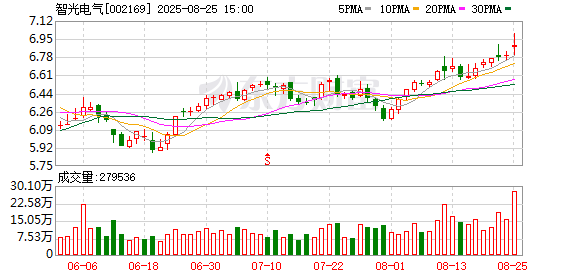
储能业务驱动 广州智光电气上半年营收增逾三成明显减亏
Nan Fang Du Shi Bao· 2025-08-25 08:28
Company Performance - In the first half of 2025, the company reported revenue of approximately 1.643 billion yuan, representing a year-on-year increase of 31.71% [2][3] - The net profit attributable to shareholders was approximately -55.15 million yuan, a reduction in losses by about 35.08 million yuan compared to the same period last year [2][3] - The net cash flow from operating activities was 186.20 million yuan, a significant increase of 310.74% compared to the previous year [3] Business Segments - The growth in revenue was primarily driven by the energy storage business, which generated approximately 1.177 billion yuan, making it the largest revenue segment for the company [4][6] - The company’s independent energy storage station in Qingyuan reported revenue of 117.25 million yuan and a net profit of 7.41 million yuan during the reporting period [4] - The company has multiple production bases, and once fully operational, the total production capacity for large-scale energy storage systems is expected to reach 12 GWh [6] Industry Trends - The new energy storage industry has been experiencing rapid development, with a projected 5%-6% growth in national electricity consumption in 2025 [5] - The total installed capacity of new energy storage in the country has seen significant growth, enhancing the stability and safety of the power grid [5] - The Ministry of Industry and Information Technology has initiated a high-quality development action plan for the new energy storage manufacturing industry, which is expected to accelerate the development of high-pressure cascade storage technology [6]

南开大学陈军:引领全球储能新范式:从“跟跑”到“领跑”的战略路径
中关村储能产业技术联盟· 2025-08-24 15:19
Core Viewpoint - The report highlights the significant role of new energy storage in supporting the energy revolution and achieving the "dual carbon" strategic goals in China, emphasizing the need for top-level design, addressing development bottlenecks, and strategic layout for the new energy storage industry during the 14th Five-Year Plan period [2]. Group 1: Top-Level Design and Industry Practice - A comprehensive policy framework has been established, with new energy storage included in the Energy Law of the People's Republic of China, marking its legal position in power system regulation [3]. - By the end of 2024, China's new energy storage installed capacity reached 73.76 million kilowatts, accounting for over 40% of the global total, with an annual growth rate exceeding 130% [4]. - The technology landscape is diversifying, with lithium-ion batteries dominating at 96.4%, alongside significant advancements in compressed air storage and flow battery projects [4][5]. Group 2: High-Quality Development Bottlenecks - Despite a 25% reduction in lithium-ion battery storage costs compared to 2023, long-duration storage systems still face high initial investments, with vanadium flow battery systems costing 1.6 to 2.5 times more than lithium-ion batteries [7]. - The current standards primarily cover electrochemical storage, but execution gaps reveal systemic challenges in standard implementation, necessitating a tripartite approach of standards, regulation, and resources [8]. - The supply chain has weak links, particularly in high-end materials, which still rely on imports, and there is a need for improved collaboration between research and engineering [9]. Group 3: Leading Global Storage Paradigms - The strategy focuses on meeting diverse demand across short, medium, and long-duration storage, leveraging big data and AI to enhance lithium-ion battery performance and accelerate the commercialization of sodium-ion and solid-state batteries [10]. - A unified capacity compensation mechanism is being promoted to establish a three-pronged revenue model, allowing new energy storage to participate in the spot market and explore innovative business models [12]. - The initiative aims to internationalize storage technology standards and establish a competitive edge in the global market, encouraging domestic companies to expand overseas and shift from product to technology and service exports [13].
公用环保202508第4期:7月全社会用电量同比+8.6%,1-7月新增电力装机32505万千瓦
Guoxin Securities· 2025-08-24 13:24
Investment Rating - The report maintains an "Outperform" rating for the public utility and environmental sectors [6][9]. Core Views - The report highlights a significant increase in electricity consumption, with a year-on-year growth of 8.6% in July 2025, reaching 1,022.6 billion kWh [3][16]. - The total installed power generation capacity in China reached 367.367 million kW by July 2025, with an increase of 32.505 million kW compared to the end of 2024 [3][17]. - The new energy storage capacity has seen substantial growth, with a cumulative installed capacity of 101.3 GW by mid-2025, marking a 110% increase year-on-year [16][18]. Summary by Sections Market Review - The Shanghai Composite Index rose by 4.18%, while the public utility index increased by 1.89% and the environmental index by 1.33% [15][29]. - Within the electricity sector, thermal power increased by 3.38%, hydropower by 1.05%, and new energy generation by 1.91% [15][32]. Important Events - In July 2025, the total electricity consumption reached 1,022.6 billion kWh, with the first industry showing a 20.2% increase, the second industry a 4.7% increase, and the third industry a 10.7% increase [3][16]. - The installed capacity for various power sources as of July 2025 includes hydropower at 44.161 million kW, thermal power at 148.66 million kW, nuclear power at 6.094 million kW, wind power at 57.487 million kW, and solar power at 110.96 million kW [3][17]. Investment Strategy - Recommendations include major thermal power companies like Huadian International and Shanghai Electric, as well as leading new energy firms such as Longyuan Power and Three Gorges Energy [5][26]. - The report suggests that the nuclear power sector will maintain stable profitability, recommending companies like China Nuclear Power and China General Nuclear Power [5][26]. - In the environmental sector, it highlights opportunities in water and waste incineration industries, recommending companies like China Everbright Environment and Zhongshan Public Utilities [5][27]. Key Company Earnings Forecasts - Huadian International is rated "Outperform" with an expected EPS of 0.46 for 2024 and 0.62 for 2025 [9]. - Longyuan Power is also rated "Outperform" with an expected EPS of 0.75 for 2024 and 0.85 for 2025 [9]. - China Nuclear Power is rated "Outperform" with an expected EPS of 0.46 for 2024 and 0.50 for 2025 [9].
专家解读丨坚持规划引领与创新驱动 积极促进新型储能产业高质量发展
国家能源局· 2025-08-23 01:20
Core Viewpoint - New energy storage is a key technology supporting the construction of a new energy system and a new power system, significantly promoting the implementation of the "dual carbon" strategy and driving domestic demand, industrial innovation, and talent cultivation [2] Group 1: Achievements in New Energy Storage Development - Since the "14th Five-Year Plan," China's new energy storage installed capacity has increased from approximately 3 million kilowatts at the end of the "13th Five-Year Plan" to 73.76 million kilowatts by the end of 2024, marking a transition from the initial commercialization phase to a stage of scaled development [3] - The National Energy Administration has actively improved the policy framework for new energy storage, issuing key documents that guide the development direction and establish specialized policies for project management, scheduling, pilot demonstrations, market mechanisms, and industrial development [4] - Significant technological advancements have been made, with lithium-ion battery storage technology reaching world-leading levels, and various storage technologies such as compressed air, flow batteries, and flywheel storage moving towards commercial application [5] - The utilization hours of new energy storage have approached 1,000 hours in 2024, an increase of approximately 300 hours compared to 2023, demonstrating its critical role in power supply during peak summer periods [6] - The management level of the new energy storage industry has improved, with the establishment of a collaborative management system and a national big data platform for the industry, contributing to the healthy and orderly development of the sector [7] Group 2: Challenges Facing the Industry - The establishment of a price mechanism for new energy storage needs to be accelerated, as the current market does not fully reflect the value of storage resources, necessitating the development of a capacity compensation mechanism to ensure reasonable returns [10] - The development layout of the new energy storage industry requires scientific guidance, as the long industrial chain and high investment enthusiasm from social capital necessitate rational planning and coordination among upstream and downstream sectors [11] - Continuous strengthening of multi-technology innovation is essential to maintain competitiveness in the face of increasing international competition and emerging innovative technologies in the new energy storage field [12] Group 3: Strategies for Future Development - Strengthening development planning is crucial, with the need to compile the "15th Five-Year Plan" implementation plan for new energy storage to ensure integration with various energy sectors [14] - Emphasizing technology innovation as a core element for cultivating new productive forces, with increased support for R&D and application of new energy storage technologies [15] - Improving market mechanisms is necessary to enhance the connection between long-term and spot markets, expand auxiliary service market trading varieties, and establish a capacity compensation mechanism suitable for new energy storage [16] - Encouraging application scenarios to drive the development of new energy storage technologies, including optimizing configurations in renewable energy bases and exploring new models and fields for storage applications [17]

专家解读丨安全高效布局新型储能 创新引领新兴产业发展
国家能源局· 2025-08-22 02:31
Core Viewpoint - The article emphasizes the strategic significance of new energy storage in supporting the construction of a new power system and achieving "dual carbon" goals, highlighting the efforts of the State Grid Corporation in driving high-quality development in this sector [2][7]. Group 1: Achievements in New Energy Storage Development - The State Grid Corporation has significantly enhanced new energy storage technology innovation and mechanism construction, achieving substantial growth in both scale and quality [3]. - By the end of 2024, the cumulative installed capacity of new energy storage projects in China reached 73.76 million kilowatts, a growth of over 130% compared to the end of 2023 [4]. - As of June 2025, the installed capacity in the State Grid's operating area reached 76.24 million kilowatts, with an annual increase of 17.48 million kilowatts, representing a year-on-year growth of 100.34% [4]. Group 2: Technological Advancements and Standards - The State Grid Corporation has led the establishment of a technology innovation hub, promoting diverse technological advancements and standardization in new energy storage [5]. - Various technologies such as lithium-ion batteries, sodium-ion batteries, and vanadium flow batteries have been successfully integrated and demonstrated, contributing to a competitive development landscape [5]. Group 3: Market Mechanism Improvements - The State Grid Corporation has pioneered the establishment of market mechanisms for new energy storage, facilitating value release across 22 provinces [6]. - In 2024, the trading volume of new energy storage reached 7.12 billion kilowatt-hours, a year-on-year increase of 2.7 times [6]. Group 4: Future Directions for New Energy Storage - The article outlines the need for new energy storage to evolve into a core system regulation component, clarifying its functional positioning within the new energy system [8][9]. - There is an urgent need to focus on breakthroughs in long-duration energy storage technologies, as current applications are predominantly lithium-ion batteries, which account for 96.4% of installed capacity [10]. - The establishment of a multi-layered unified electricity market system is essential to enhance the market mechanisms for new energy storage, ensuring reasonable returns and cost distribution [11]. Group 5: Key Initiatives for High-Quality Development - The State Grid Corporation aims to strengthen top-level design and optimize resource allocation to support the national "14th Five-Year Plan" for new energy storage [13]. - Focused efforts on core technology breakthroughs and the promotion of innovative storage technologies are crucial for upgrading the industry [14]. - The corporation is committed to providing technical support for the national unified electricity market, enhancing the profitability of new energy storage [15].