
数字经济

Search documents
共建“一带一路”在动荡世界中发挥稳定器作用
Xin Hua She· 2026-01-28 07:51
Core Insights - The report titled "Building the Belt and Road Initiative - High-Quality International Economic Cooperation" emphasizes the stabilizing role of the Belt and Road Initiative (BRI) in a turbulent global environment [1] - It highlights the transition of BRI into a new phase of high-quality development, with an expanding network of partners and steady progress in connectivity and trade and investment cooperation [1] Group 1: BRI Development and Impact - The BRI has entered a new stage of high-quality development, with an expanding network of cooperation partners and steady progress in connectivity construction [1] - The report indicates that trade and investment cooperation under the BRI continues to improve, showcasing vibrant "soft connectivity" and "heart connectivity" exchanges [1] Group 2: Global Economic Context - The report points out that the U.S.-initiated tariff war has negatively impacted the global economy [1] - It suggests a "three-step" approach to de-escalate global trade conflicts, stabilize trade relations, and revive trade cooperation, emphasizing the importance of maintaining a multilateral trade system centered around the World Trade Organization [1] Group 3: Digital Economy and Future Cooperation - The report asserts that the world economy is on the brink of a new industrial revolution, with data potentially becoming the "new oil" in economic development [1] - It calls for accelerated construction of a digital Silk Road and cooperation in digital economy, digital trade, and new digital infrastructure [1] - The establishment of a new multilateral dialogue and cooperation platform for digital and artificial intelligence within the BRI framework is recommended [1]
周村农商银行:金融“流量”浇灌乡土
Qi Lu Wan Bao· 2026-01-28 07:33
Core Insights - The article highlights the transformative role of live streaming in connecting urban and rural economies, particularly through the initiatives of Zhoucun Rural Commercial Bank, which has successfully integrated financial services with local consumption and agricultural promotion [1][10]. Group 1: Live Streaming Impact - Zhoucun Rural Commercial Bank conducted 32 live streaming events in 2025, including 11 "agricultural assistance" streams and 8 "cross-industry alliance" streams, attracting over 200,000 viewers and generating more than 100,000 likes [1]. - The live streaming initiatives resulted in an average sales increase of over 40% for local products and services, significantly boosting the income of farmers and merchants [2]. - The live streams successfully drove over 1,500 physical visits to local business outlets, demonstrating effective online-to-offline conversion [4]. Group 2: Financial Services Evolution - The bank has shifted from being a mere "fund manager" to an active "channel developer," engaging directly with farmers to enhance their sales through live streaming [5]. - Zhoucun Rural Commercial Bank has evolved into an "ecological organizer," connecting various local consumption scenarios and becoming a central hub for community trust and interaction [7]. - The bank's role has transformed from a "service provider" to a "trust community hub," facilitating connections among producers, consumers, and merchants [7]. Group 3: Regional Economic Activation - The live streaming initiatives have revitalized the regional consumption landscape, offering consumers a comprehensive experience that combines product purchasing, leisure discovery, and financial advice [8]. - The integration of agricultural products with local services has created cross-industry synergies, enhancing the internal circulation of the county's economy [8]. - The live streaming efforts have not only sold products but also promoted local culture and increased the value recognition of rural industries [10].


北京两会聚焦科技创新 代表委员建言献策
Zhong Guo Xin Wen Wang· 2026-01-28 06:31
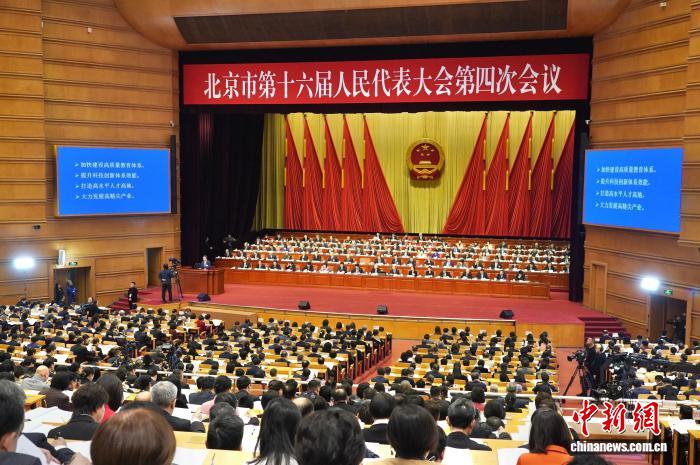
Group 1: Core Insights - The Beijing Two Sessions focus on technology innovation, with representatives discussing youth talent, technology transfer, and the balance between safety and innovation [1][2][3] - The Beijing government aims to enhance its international technology innovation center and accelerate the development of high-tech industries, aiming to establish itself as a global benchmark for the digital economy [2] - Suggestions include optimizing the innovation ecosystem by enhancing collaboration between universities and industries to improve the local conversion rate of technological achievements [2] Group 2: Youth Talent and Entrepreneurship - A youth-friendly policy system will be established, including housing guarantees and entrepreneurial services to stimulate innovation among young people [3][5] - Proposals include a comprehensive policy package addressing high living costs for young entrepreneurs, such as expanding public rental housing and providing rental subsidies [5] - The focus is on creating an environment where young talents can settle, innovate, and develop comfortably in Beijing [5] Group 3: Safety and Innovation - New safety risks associated with emerging industries necessitate new measures to ensure a solid safety foundation for innovation [6] - Recommendations include creating a management framework for new technologies and business models, ensuring legal clarity and safety protocols [6] - The goal is to achieve a dynamic balance between safety and innovation, facilitating the healthy development of emerging industries [6] Group 4: Housing Needs for Youth - There is a growing demand for personalized rental services among youth, particularly recent graduates, who seek better living conditions [7] - Suggestions include increasing the supply of decentralized housing options to meet the diverse needs of young people [7] - Emphasis is placed on affordable, quality housing as a key factor in attracting and retaining talent in the city [7]
天津两会观察:落子改革开放,津城借“制度红利”赢“发展胜势”
Zhong Guo Xin Wen Wang· 2026-01-28 06:11
Core Viewpoint - Tianjin is leveraging "institutional dividends" from reform and opening up to drive high-quality development, as highlighted in the government work report during the 2026 municipal congress [1]. Group 1: Economic Development and Reform - The report outlines a clear path for deepening institutional reforms to gain a competitive advantage in development [1]. - In 2025, Tianjin's private enterprises achieved an import and export total of 384.36 billion yuan, accounting for 46% of the city's total foreign trade, with over 11,400 enterprises achieving actual import and export performance [2]. - The 2026 "Tianjin Private Economy Promotion Regulations" aim to create a stable, fair, and transparent legal environment for private enterprises, focusing on fair competition, financing support, and technological innovation [3]. Group 2: Open Economy and Trade - Tianjin's export value reached 430.94 billion yuan in 2025, marking a 10.1% year-on-year increase and the first time exceeding 400 billion yuan [4]. - The report emphasizes the need to steadily expand institutional openness and enhance the innovation of the free trade zone, while also improving the level of industrial openness and expanding "going out" opportunities [4]. - Suggestions from representatives include enhancing port functions and optimizing customs clearance to strengthen Tianjin's role as a northern cruise tourism hub [6]. Group 3: Institutional Support and Recommendations - The report stresses the importance of precise policy supply for institutional openness, focusing on key measures such as free trade zone innovation and expanding financial account access [7]. - Recommendations include establishing a fund to support local state-owned and technology enterprises in going public and expanding globally [2].
18省市人代会中的十大关注点——图观地方两会第4期
一瑜中的· 2026-01-28 06:10
Core Viewpoint - The article discusses the GDP targets and economic strategies of various provinces in China for 2026, highlighting adjustments in goals and key focus areas for growth and investment. Summary by Sections GDP Targets - Guangdong's GDP target is set at 4.5-5%, down from last year's target of around 5%, with an actual growth of 3.9% [2] - Zhejiang has adjusted its target to 5-5.5%, maintaining last year's target of around 5.5% with an actual growth of 5.5% [2] - Hubei aims for a GDP growth of around 5.5%, down from last year's target of around 6% with an actual growth of 5.5% [12] - Fujian's GDP target is set at around 5%, with last year's target being 5-5.5% and an actual growth of 5% [18] Investment Plans - Guangdong plans to implement 2,000 provincial key projects with an investment of over 980 billion yuan, down from last year's target of 1 trillion yuan [5] - Hubei aims to advance over 12,200 projects with significant investments, including strategic projects like the Three Gorges waterway [12] - Fujian plans to implement 1,550 provincial key projects with an annual investment of 715 billion yuan [18] Consumption Goals - Hubei's social retail target for 2026 is not publicly set, while the 2025 target was around 7%, with an actual growth of 2.7% [12] - Fujian's social retail target for 2026 is not disclosed, with the 2025 target being around 5.5% and an actual growth of 4.4% [18] Key Industries and Focus Areas - The article highlights the emphasis on emerging industries such as artificial intelligence, biotechnology, and renewable energy across various provinces [2][3] - Hubei plans to implement the "Artificial Intelligence+" initiative and develop three major computing power circles [12] - Fujian aims to enhance its marine economy and implement an artificial intelligence enterprise cultivation plan [18] Employment and Social Goals - Hubei targets to create over 700,000 new urban jobs in 2026, aligning income growth with economic growth [12] - Fujian aims to control the urban unemployment rate at around 5% and create 500,000 new jobs [18]

每日市场观察-20260128
Caida Securities· 2026-01-28 05:48
Market Overview - On January 27, the market rebounded slightly with the Shanghai Composite Index rising by 0.18%, the Shenzhen Component by 0.09%, and the ChiNext Index by 0.71%[3] - The total trading volume on January 27 was 2.92 trillion, a decrease of approximately 360 billion from the previous trading day[1] Sector Performance - The semiconductor, communication equipment, and aerospace sectors saw significant inflows, while the battery, securities, and power grid sectors experienced outflows[3] - High-tech manufacturing profits grew by 13.3% in 2025, surpassing the overall industrial profit growth of 0.6%[4][6] Profit Growth - The profit of the high-tech manufacturing sector was driven by smart electronics, which saw a 48% increase, and the semiconductor industry, which experienced profit growth of 172.6%[4] - The automotive industry reported a profit of 461 billion, reflecting a 0.6% increase year-on-year, with a profit margin of 4.1%[9] Fund Dynamics - The total income of the three social insurance funds reached 9.1 trillion, with a cumulative surplus of 10.2 trillion by the end of 2025[11] - The ETF trading volume reached 538.9 billion, with stock ETFs accounting for 244.7 billion and bond ETFs for 187.2 billion[12] Employment and Policy - The Ministry of Human Resources and Social Security announced measures to support employment in key industries affected by artificial intelligence[7] - New guidelines were issued to enhance safety equipment in industrial sectors, focusing on the elimination of outdated technologies[8]
AI存算分离突破催化DRAM需求,数字经济ETF(560800)盘中涨1.27%
Xin Lang Cai Jing· 2026-01-28 02:44
Group 1 - The semiconductor and chip sectors are experiencing a strong rally, with the China Securities Digital Economy Theme Index rising by 1.23% as of January 28, 2026, and key stocks like Shengbang Co., Ltd. and Zhaoyi Innovation seeing increases of 6.71% and 6.11% respectively [1] - The Digital Economy ETF (560800) also saw a rise of 1.27%, with a trading volume of 539.51 million yuan and a turnover rate of 0.95% [1] - The DeepSeek and Peking University collaboration introduced the Engram model, which separates static knowledge retrieval from complex calculations, enhancing AI infrastructure and providing a scalable technical path for large models in China [1] Group 2 - The AI wave is reshaping the semiconductor supply chain, with significant supply constraints in upstream core components, as noted by Datong Securities [2] - AI-driven chips are prioritizing advanced process capacities at companies like TSMC and Samsung, impacting traditional server CPU production [2] - The Digital Economy ETF closely tracks the China Securities Digital Economy Theme Index, selecting companies with high digital infrastructure and application levels [2] Group 3 - As of December 31, 2025, the top ten weighted stocks in the China Securities Digital Economy Theme Index accounted for 52.63% of the index, including companies like Dongfang Wealth and Cambricon [3] - The Digital Economy ETF has various connection options, including the Pengyang China Securities Digital Economy Theme ETF [3]
加快推进涉外法治体系建设战略布局
Xin Lang Cai Jing· 2026-01-28 00:15
Core Viewpoint - The construction of a comprehensive foreign-related legal system is essential for advancing China's modernization and ensuring a favorable legal environment for international engagement [2][3]. Group 1: Foreign-related Legislation - The goal of foreign-related legal construction is to establish a systematic and complete foreign-related legal framework, which is a complex and long-term project [3]. - Significant progress has been made in foreign-related legislation over the past five years, including the enactment of laws such as the Anti-Foreign Sanctions Law and the Foreign Relations Law [3][4]. - The focus during the 14th Five-Year Plan period will be on legislation in key areas such as national security, technology innovation, public health, and ecological civilization [4]. Group 2: Law Enforcement System - The effectiveness of laws relies on their implementation, and strict law enforcement is crucial for maintaining the authority and seriousness of foreign-related laws [5][6]. - Recent measures have significantly improved foreign-related law enforcement capabilities, particularly in countering unilateral sanctions and enhancing export control [6]. - There is a need for further reform in the foreign-related law enforcement system to address issues of non-compliance and improve transparency [6]. Group 3: Judicial System - The quality of foreign-related judicial work has steadily improved, with ongoing optimization of foreign-related trial systems and increased international judicial cooperation [7][8]. - Enhancing the credibility of foreign-related judicial processes is a priority, necessitating reforms to improve efficiency and fairness [8]. Group 4: Legal Awareness and Compliance - Promoting legal awareness among enterprises and citizens is vital for the construction of a rule-of-law society, especially for those engaging internationally [9][10]. - There has been significant progress in legal education and training for leaders and key personnel involved in international business [9]. Group 5: Legal Services System - The development of a robust foreign-related legal services industry is urgent, with a focus on international commercial arbitration as a primary method for resolving cross-border disputes [12][13]. - The current state of foreign-related legal services is underdeveloped, and there is a need for improved internationalization of legal practices [12]. Group 6: Talent Development - The cultivation of high-quality, internationalized legal professionals is essential for supporting the rule of law in foreign-related contexts [14][15]. - Educational reforms and targeted policies are being implemented to enhance the training of legal talent in foreign-related law [14]. Group 7: International Cooperation - Strengthening international law enforcement and judicial cooperation is crucial for protecting national interests and enhancing global governance [16][17]. - Future efforts will focus on improving judicial assistance mechanisms and expanding international cooperation in combating transnational crime [17].

中国—中亚贸易额首破千亿美元,未来增长潜力何在?
券商中国· 2026-01-27 23:25
2025年,中国与中亚五国(哈萨克斯坦、吉尔吉斯斯坦、塔吉克斯坦、土库曼斯坦、乌兹别克斯 坦)的货物贸易首次突破1000亿美元大关,达到1063亿美元,同比增长12%。其中,进出口同向发 力,增速分别达到14%、11%。中亚成为中国外贸增速最快的区域之一,中国也已成为中亚各国第 一大贸易伙伴。 亮眼数据背后,支撑动力何在?未来增长潜力又如何?近期,证券时报·券商中国记者采访了多位业内专家, 解答这些问题。 证券时报·券商中国记者:中国与中亚五国之间的贸易结构是怎样的? 商务部国际贸易经济合作研究院研究员余稳策: 2025年,中国与中亚五国贸易规模实现历史性突破。货物贸 易总额达1063亿美元,同比增长12%,中国首次跃居中亚各国第一大贸易伙伴。双方贸易结构呈现出"向新向 优"的特点。中国对中亚出口712亿美元,同比增长11%,机电和高新技术产品占主导,"新三样"(电动汽车、 锂电池、太阳能电池)出口增长强劲;中国自中亚五国进口351亿美元,同比增长14%,进口产品中,化工、 钢材、农产品等非资源类产品种类持续丰富,推动进口结构向多元化转型。 证券时报·券商中国记者:支撑中国与中亚国家的货物贸易额创历史新高的动 ...

立足特色优势打造新质生产力重要实践地
Jing Ji Ri Bao· 2026-01-27 23:10
Core Viewpoint - Hainan aims to achieve high-quality development by leveraging its unique resources and free trade port policies, focusing on modern industrial systems and technological innovation to enhance productivity and economic growth [1][2]. Group 1: Economic Development and Industry Focus - During the "14th Five-Year Plan" period, Hainan is prioritizing the development of four main industries: tourism, modern services, high-tech industries, and tropical agriculture, with a focus on integrating innovation resources [2]. - By 2024, Hainan's R&D expenditure is projected to reach 10.961 billion yuan, marking a 22.1% increase year-on-year, the highest growth rate in the country [2]. - The contribution of the four main industries to the regional GDP is expected to reach 67.2% by the first three quarters of 2025, an increase of 14.2 percentage points compared to 2020 [2]. Group 2: Agricultural Innovation - Hainan is positioned as a key player in seed production, with over 800 related enterprises and more than 10,000 professionals engaged in seed breeding, contributing to a market value exceeding 18 billion yuan [3]. - The province aims to implement a seed industry revitalization action plan, focusing on biotechnology and AI to enhance research capabilities and develop a modern seed industry cluster [3]. Group 3: Marine Economy - Hainan has jurisdiction over approximately 2 million square kilometers of ocean, making it an ideal location for deep-sea research and marine technology development [4]. - The marine economy's contribution to Hainan's GDP is projected to exceed 200 billion yuan, accounting for 35.5% of the total [4]. Group 4: Aerospace Industry - Hainan is developing a comprehensive commercial aerospace industry chain, leveraging its geographical advantages for cost-effective launches and safe landing zones [4]. - The Wenchang Space Launch Site is becoming a significant hub for the aerospace industry, with plans to expand satellite manufacturing and rocket assembly capabilities [4]. Group 5: Green and Digital Economy - Hainan is focusing on green low-carbon industries, with over 70% of its power generation from clean energy sources, and aims to develop a digital economy with nearly 500 core enterprises by 2025 [5][6]. - The province plans to foster digital applications in various sectors, including health and entertainment, while promoting the development of semiconductor and biopharmaceutical industries [5]. Group 6: Policy and Institutional Framework - Hainan is working to enhance its free trade port policy framework to optimize resource allocation and market expansion, aiming to create a conducive environment for international trade and investment [6]. - The province seeks to align with international trade rules and enhance cooperation in technology innovation, particularly in biotechnology and marine equipment [6].