
树莓

Search documents
周村农商银行:金融“流量”浇灌乡土
Qi Lu Wan Bao· 2026-01-28 07:33
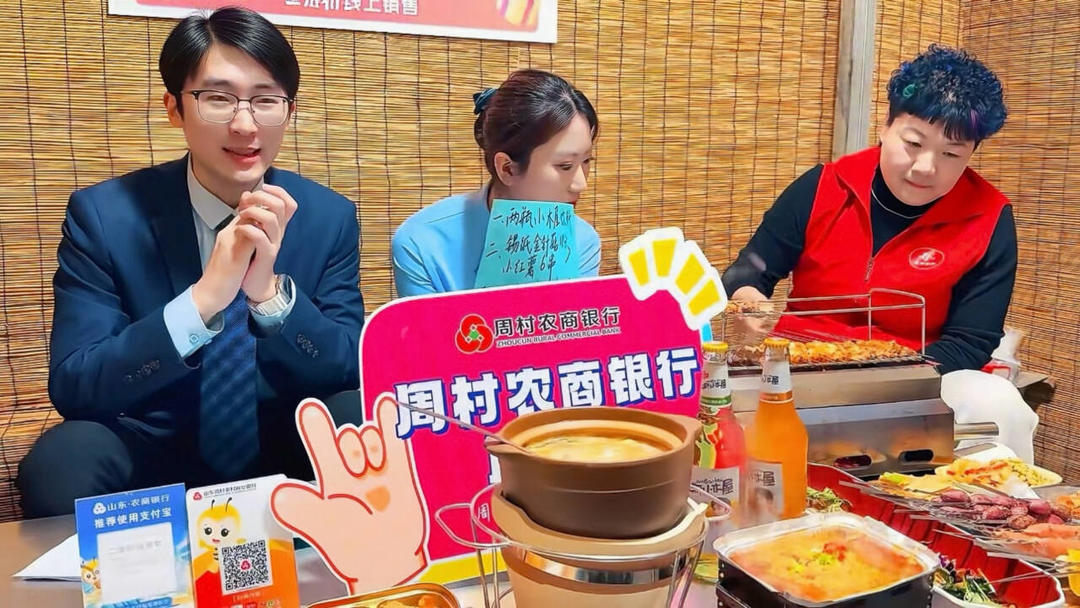
Core Insights - The article highlights the transformative role of live streaming in connecting urban and rural economies, particularly through the initiatives of Zhoucun Rural Commercial Bank, which has successfully integrated financial services with local consumption and agricultural promotion [1][10]. Group 1: Live Streaming Impact - Zhoucun Rural Commercial Bank conducted 32 live streaming events in 2025, including 11 "agricultural assistance" streams and 8 "cross-industry alliance" streams, attracting over 200,000 viewers and generating more than 100,000 likes [1]. - The live streaming initiatives resulted in an average sales increase of over 40% for local products and services, significantly boosting the income of farmers and merchants [2]. - The live streams successfully drove over 1,500 physical visits to local business outlets, demonstrating effective online-to-offline conversion [4]. Group 2: Financial Services Evolution - The bank has shifted from being a mere "fund manager" to an active "channel developer," engaging directly with farmers to enhance their sales through live streaming [5]. - Zhoucun Rural Commercial Bank has evolved into an "ecological organizer," connecting various local consumption scenarios and becoming a central hub for community trust and interaction [7]. - The bank's role has transformed from a "service provider" to a "trust community hub," facilitating connections among producers, consumers, and merchants [7]. Group 3: Regional Economic Activation - The live streaming initiatives have revitalized the regional consumption landscape, offering consumers a comprehensive experience that combines product purchasing, leisure discovery, and financial advice [8]. - The integration of agricultural products with local services has created cross-industry synergies, enhancing the internal circulation of the county's economy [8]. - The live streaming efforts have not only sold products but also promoted local culture and increased the value recognition of rural industries [10].

中经评论:从黑草莓走红看果业新动向
Jing Ji Ri Bao· 2026-01-27 00:02
Core Viewpoint - The rise of black strawberries and other third-generation fruits reflects new trends in the fruit industry, highlighting the need for competitive cultivation practices and market adaptability [1][2]. Group 1: Market Trends - Black strawberries have gained popularity with prices reaching over 100 to 300 yuan per pound, leading to discussions about their market positioning as a "new luxury fruit" [1]. - The fruit industry in China is characterized by a diverse range of products, catering to various consumer preferences and price points, which is essential for meeting the needs of a large population [2]. - The market for unique fruits can be lucrative; even a small percentage of consumer interest can lead to significant market opportunities [2]. Group 2: Consumer Behavior - Consumer preferences vary, with some willing to pay a premium for novelty, while others find satisfaction in more affordable options [2]. - The perception of fruit value is influenced by factors such as rarity and production costs, with high prices often reflecting limited supply [1]. Group 3: Industry Development - The concept of "third-generation fruits" includes newly cultivated varieties that are gaining market attention, while traditional fruits remain valuable and economically viable [3]. - The fruit industry has seen a shift towards premium pricing for high-quality products, encouraging producers to innovate and develop new varieties [3]. - Despite advancements in domestic fruit cultivation, the industry faces challenges from increasing imports and declining international competitiveness [3][4]. Group 4: Future Directions - The development of high-quality fruit varieties requires long-term investment and commitment, with successful examples like the Giant and Sunlight Rose grapes demonstrating the potential for market success [4]. - Future growth in the fruit industry will depend on meeting basic consumer needs while also focusing on market-driven research, standardized cultivation, and social services to enhance domestic fruit production [4].
科技小院赋能 特色浆果产业提质增效
Xin Lang Cai Jing· 2026-01-07 22:25
Core Viewpoint - The article highlights the role of technology in enhancing the raspberry industry in Heilongjiang Province, focusing on research and development efforts to improve processing techniques and product value [6][7]. Group 1: Technological Development and Research - The Heilongjiang Provincial Technology Special Commissioner and professors from Northeast Agricultural University are leading a research initiative to improve raspberry processing and fertilization techniques [6]. - The research team is investigating the physiological benefits and potential uses of raspberry seeds, which are often discarded despite their nutritional value [6][7]. - The team aims to provide ongoing technical support in areas such as the selection of processing varieties, development of new health products, and comprehensive utilization of fruit residues [7]. Group 2: Industry Growth and Impact - The City of Shangzhi has developed a 1,500-acre open-field raspberry planting base and constructed three modern intelligent greenhouses for off-season production [7]. - The establishment of the Shangzhi Small Berry Technology Academy has led to the creation of nearly 1,000 acres of experimental demonstration bases, resulting in an additional 10,000 acres of raspberry cultivation [8]. - Each acre of raspberry cultivation has achieved an increase in yield of approximately 10%, translating to an additional income of 800 to 1,000 yuan [8]. Group 3: Future Directions - The academy will continue to focus on the development of the raspberry industry in Shangzhi, emphasizing variety improvement, green cultivation, post-harvest processing, and brand building [8]. - The initiative aims to inject continuous technological power into the rural revitalization efforts in the region [8].
农业新质生产力 绘就粮仓新图景|黑土珍味多佳品 寒地浆果产业兴
Xin Lang Cai Jing· 2025-12-24 22:54
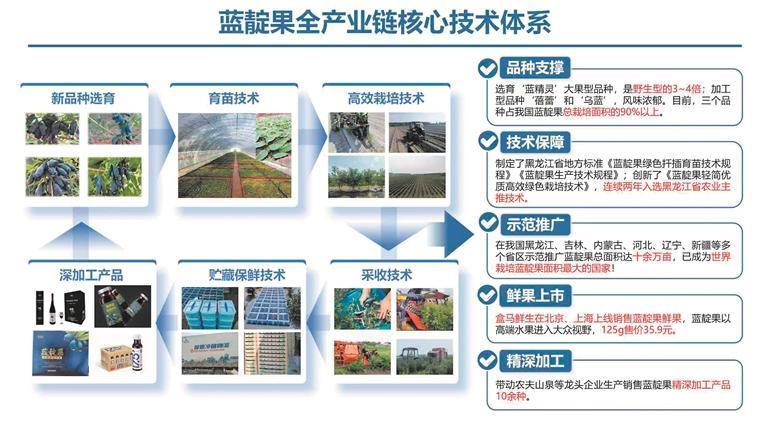
Core Viewpoint - The article highlights the development and commercialization of cold-climate berry agriculture in Heilongjiang Province, emphasizing the successful cultivation, innovation, and market entry of various berry species, particularly the blue honeysuckle and its new varieties. Group 1: Berry Cultivation and Resources - Heilongjiang Province is positioned in the world's northern latitude "golden berry belt," making it the largest area for cold-climate berry cultivation in China, with significant advantages in land, climate, and ecology [20] - The province has established a modern agricultural technology innovation system for cold-climate berries, achieving breakthroughs in germplasm innovation, cultivation techniques, and rural revitalization [20][21] - The province maintains the largest germplasm resource banks for blue honeysuckle and currants in China, with over 300 and 200 germplasm resources respectively, and has developed numerous new varieties with strong cold resistance and high yield [21][23] Group 2: Technological Innovations - The province's cold-climate berry system has formed cross-disciplinary research teams to address cultivation, seedling, harvesting, preservation, and processing challenges, leading to a series of innovative results with independent intellectual property rights [24] - Efficient cultivation techniques have been developed, increasing the marketable fruit rate by 23% and improving overall economic benefits by 24% [24] - New preservation technologies have extended the shelf life of berries from 10 days to 90 days, addressing the short shelf life issue that has hindered market access [25] Group 3: Market Entry and Product Development - Blue honeysuckle has recently entered high-end markets, with fresh fruit being sold at 35.9 yuan for 125 grams in Beijing's Hema Fresh, marking a significant step for the industry [28] - The new varieties "Blue Elf" and "Black Blue" have gained recognition, with "Blue Elf" topping the berry price list in Shanghai and achieving a 165% increase in sales [28] - The province has attracted major companies like Nongfu Spring to participate in the blue honeysuckle processing sector, enhancing product offerings and market presence [28] Group 4: Rural Revitalization and Economic Impact - The cold-climate berry system supports rural revitalization by establishing a model that integrates government guidance, system support, cooperative promotion, and farmer participation, leading to increased income for local farmers [29] - In Qiqihar City, raspberry cultivation has generated significant income for local residents, with projected earnings of nearly 639 million yuan from raspberry harvesting [30] - The province's focus on high-quality sea buckthorn production has resulted in over 80,000 acres of cultivation, contributing to local economic development and recognition as a geographical indication product [31]
听见丰收丨树莓正红时
Yang Guang Wang· 2025-09-28 01:08
Core Viewpoint - The raspberry harvest season in Qinglong County, Hebei Province, is thriving, with significant increases in production and income for local farmers, particularly for Zhang Yu, who has successfully cultivated raspberries with the help of a village work team. Group 1: Raspberry Cultivation - Zhang Yu, a 70-year-old farmer, began cultivating raspberries two years ago with the assistance of a village work team, managing to plant 40 acres of raspberries through land transfer and self-funding [2][3] - The raspberry variety cultivated matures quickly, leading to a projected yield increase of 70-80% compared to the previous year, necessitating additional labor for harvesting [3] Group 2: Economic Impact - Local pickers, referred to as "harvesting experts," earn approximately 100 yuan per day, contributing to the local economy [4] - Zhang Yu's investment in a small cold storage facility, costing over 60,000 yuan, has proven beneficial for preserving the harvested raspberries, which are then sold for a total of 147,900 yuan [6][7] - The raspberries are expected to be exported for use in products such as canned goods, jams, and juices, indicating a growing market demand [7] Group 3: Future Plans - Zhang Yu aims to expand raspberry cultivation to 180 acres in the coming year, with the goal of increasing community involvement and income generation [8]
沃野金黄、瓜果飘香、渔获满仓铺展喜人“丰”景 “科技+”让农业向“智”而行
Yang Shi Wang· 2025-09-26 04:14
Group 1: Agricultural Production Overview - The latest agricultural report indicates that approximately 20% of the national autumn grain has been harvested, with over 30% of the middle rice and more than 10% of corn and soybeans harvested [1] - In regions like Southwest China, nearly 60% of the corn has been harvested, while the Yangtze River middle and lower reaches have over 20% harvested [1] Group 2: Corn Production Innovations - The introduction of high-yield and quality corn varieties, such as "Zhongyu 303," is significantly contributing to increased corn production in Inner Mongolia [2][4] - The planting area for "Zhongyu 303" in Tongliao has reached over 500,000 acres, expected to substantially boost grain output [8] Group 3: Agricultural Competitions and Community Engagement - A unique competition during the harvest festival in Tongliao allows farmers to showcase their freshly harvested products, promoting community engagement and sharing of agricultural success [7][10] - The competition includes various categories, measuring both weight and taste of different agricultural products [7] Group 4: Technological Advancements in Agriculture - The use of smart agricultural systems is enhancing farm management efficiency, allowing farmers to enjoy improved living conditions and more leisure time [15][18] - In Heilongjiang, advanced technologies like satellite remote sensing and IoT are being utilized for efficient rice harvesting, transforming traditional farming practices [19][21][23] Group 5: Regional Agricultural Highlights - In Zhejiang, full mechanization of rice planting and harvesting is significantly improving efficiency, with various crops like loofah and kiwi also seeing high yields [24][26][28][30] - In Gansu, the raspberry industry is expanding through value-added processing and cooperative farming, increasing local farmers' incomes [31][33] - In Fujian, the seasonal catch of tilapia in the artificial freshwater lake is expected to yield approximately 13,000 tons of freshwater products, valued at around 230 million yuan [34][35]
困在高端梦里的百果园,又贵又不赚钱
虎嗅APP· 2025-08-19 13:20
Core Viewpoint - The article discusses the challenges faced by Baiguoyuan, a fruit retail chain, highlighting its struggle to maintain a high-end image while dealing with declining sales, franchisee losses, and consumer dissatisfaction with pricing [4][5][21]. Summary by Sections 1. Consumer Perception and Pricing Issues - Baiguoyuan's chairman emphasized a commitment to quality over consumer preferences, which has led to backlash as consumers perceive the brand as overpriced [4][5]. - Despite a strategic focus on "high cost-performance" in 2024, the chairman's statements have undermined the company's efforts [4][5]. 2. Franchisee Challenges - Franchisees are facing significant difficulties, with many reporting losses and some choosing to close their stores due to high costs and low sales [7][13]. - The company's supply chain practices, including high inventory costs and rigid pricing, have made it difficult for franchisees to operate profitably [10][12]. 3. Historical Context and Expansion - Baiguoyuan initially thrived during China's economic growth by positioning itself as a high-quality fruit retailer, rapidly expanding to over 2,600 stores [8][22]. - The company adopted a franchise model that allowed for rapid growth, but this has led to issues with quality control and franchisee profitability [17][21]. 4. Supply Chain and Operational Inefficiencies - The company's centralized supply chain model has resulted in high inventory turnover days, indicating inefficiencies in inventory management compared to competitors [18]. - Franchisees have reported high spoilage rates due to overstocking, which has further strained their finances [10][20]. 5. Market Competition and Consumer Choices - The rise of alternative retail channels, such as community group buying and e-commerce, has provided consumers with more affordable options, leading to a decline in Baiguoyuan's customer base [23][24]. - Consumers are increasingly opting for lower-priced alternatives, diminishing the perceived value of Baiguoyuan's premium pricing strategy [25]. 6. Future Outlook and Strategic Shifts - Baiguoyuan is attempting to adapt by exploring new online business models and membership strategies, but these efforts have yet to resonate with franchisees and consumers [25]. - The company must shift its focus from "educating consumers" to better aligning with consumer preferences to survive in a competitive market [25].

月月有鲜果、全城可采摘,济南推出“泉果飘香”区域公用品牌
Qi Lu Wan Bao Wang· 2025-07-02 05:19
Core Viewpoint - The Jinan municipal government is actively promoting agricultural and rural consumption through the "Qingcheng Consumption Promotion Action," focusing on enhancing the local fruit industry and supporting rural revitalization [1][2]. Group 1: Brand and Events - The "Qingguo Piaoxiang" regional public brand was launched to unify the branding of Jinan's fruit industry, with the first Jinan Specialty Fruit Picking Carnival initiated on May 16 [1]. - The initiative integrates 130 quality picking parks across 11 districts, featuring ten signature fruit picking seasons, including cherries, sweet apricots, peaches, grapes, and apples, providing a monthly fresh fruit experience for citizens and tourists [1][2]. Group 2: Activities and Participation - Over 80 "picking+" themed activities have been conducted, including fresh fruit tasting, nature education, orchard research, and rapid testing experiences, attracting a total of 500,000 visitors [2]. - The activities aim to enhance the convenience of fruit picking for citizens by integrating a smart fruit service system into the "Love Shandong·Qingcheng Office," allowing real-time queries for picking park information [1][2]. Group 3: Future Plans - Future efforts will focus on providing technical guidance for picking parks, including planting techniques, pest control, and brand promotion to improve management and fruit quality [2]. - Upcoming activities will include grape, apple, and kiwi picking seasons, along with promotional events to connect farmers directly with consumers, thereby expanding sales channels [2]. - The initiative aims to deepen brand development and promote the synergy between brand advantages, fruit industry strengths, ecological resources, and cultural tourism, achieving ecological, economic, and social benefits [2].
记者来信:“头雁”是这样炼成的
Xin Hua Wang· 2025-05-23 01:42
Group 1 - The article highlights the increasing trend of young people returning to rural areas in Liaoning province to start businesses, contributing significantly to local agricultural development [1][2] - The "Return to Nest" initiative in Donggang City has successfully invited 455 university graduates back to their hometowns, ensuring at least one graduate per administrative village is engaged in local governance or entrepreneurship [2] - The "Head Goose" project initiated by Liaoning province aims to provide tailored training and mentorship for selected rural talent, enhancing their skills in brand building and product processing [2][4] Group 2 - The article emphasizes the importance of creating a supportive ecosystem for young entrepreneurs, which includes not only financial support but also ongoing mentorship and community engagement [6] - The development of a "flock" of talent is crucial for rural revitalization, as demonstrated by the establishment of 1,741 "Rural Revitalization Skilled Masters" in Xinmin City, who receive various forms of support for their initiatives [4] - Successful case studies, such as Liu Jiafeng and Liu Chuang, illustrate how returning graduates can significantly impact local economies through innovative agricultural practices and community leadership [2][4]
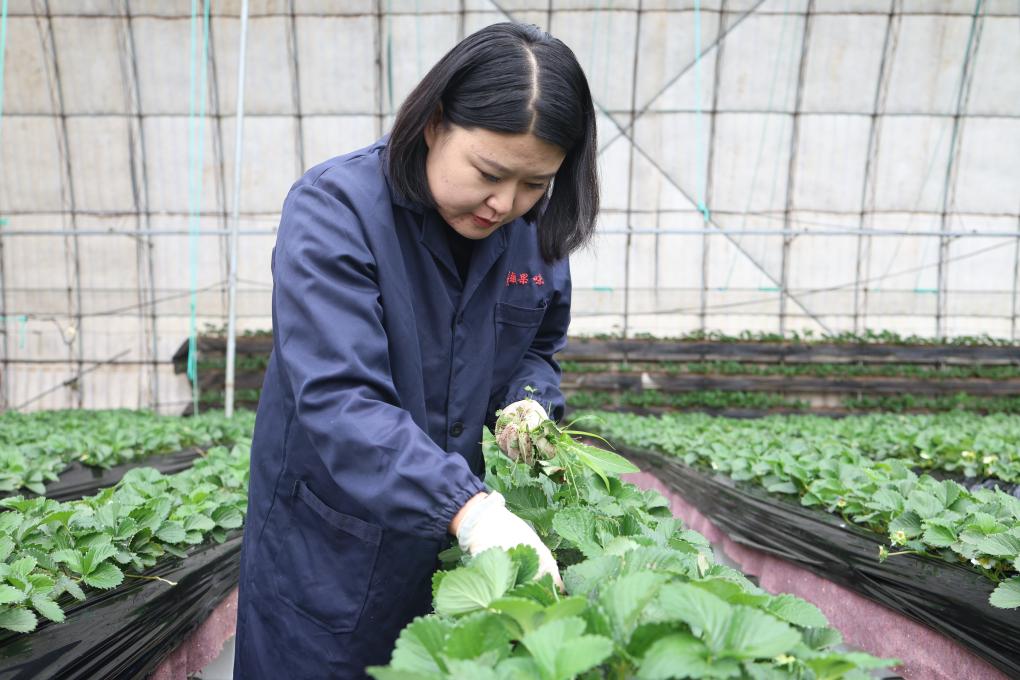
白领回乡“头雁”飞
Liao Ning Ri Bao· 2025-05-08 01:09
Core Insights - The article highlights the success story of Liu Jiafeng, who transitioned from a white-collar job to becoming a leader in raspberry cultivation, emphasizing the high nutritional value and market potential of raspberries [1][2] Group 1: Company Development - Liu Jiafeng's raspberry farm consists of 14 greenhouses, with rapid growth observed in the raspberry plants, leading to a harvest season starting in August [1] - The initial challenges faced by Liu included poor site selection and difficulties in establishing sales channels for the ripe fruit [1] - Liu has made significant improvements in product packaging, shifting from plastic bottles to high-temperature sterilized glass bottles to enhance customer convenience [2] Group 2: Industry Impact - The "Head Goose" project initiated in 2022 aims to cultivate a team of approximately 3,000 rural industry leaders over five years, supporting agricultural innovation and rural revitalization [3] - The project has already shown positive results, with 19 participants receiving national and local honors, and over 70 participants helping to increase the income of surrounding communities [3]