可控核聚变

Search documents
未来产业为什么要着手现在投入(读者点题·共同关注)
Ren Min Ri Bao· 2026-01-02 22:15
Core Viewpoint - The investment in future industries such as quantum technology, nuclear fusion, and brain-computer interfaces is essential despite their current low maturity and high uncertainty, as these innovations have the potential to drive significant societal advancements [1][2]. Group 1: Historical Context - Historical technological advancements like the steam engine and electricity, which initially faced skepticism, ultimately led to major industrial revolutions and societal progress [1]. - The current future industries may evolve into tomorrow's emerging and dominant industries, with significant investments from major economies to secure technological leadership and market influence [2]. Group 2: China's Practical Experience - China's technological breakthroughs today are the result of long-term investments made years ago, such as the successful push for 5G and the rapid growth of the new energy vehicle sector [3]. - The rapid pace of technological development necessitates a proactive approach to investment, as the window for opportunity in many fields is shrinking [3]. Group 3: National Strategy and Support - China ranks second globally in R&D expenditure and leads in the number of researchers, high-level international publications, and patent applications, providing a strong foundation for future industry development [4]. - The "14th Five-Year Plan" emphasizes the importance of forward-looking strategies for future industries, advocating for tailored approaches to avoid redundancy and overcapacity [4]. Group 4: Global Responsibility and Future Outlook - As the world's second-largest economy, China's exploration of future industries is not only vital for its own development but also aims to share technological advancements with humanity [5]. - The development of future industries is framed as a necessary endeavor, focusing on effective execution rather than questioning the need for such investments [5].
主线已在路上,2026 一起数涨停
Sou Hu Cai Jing· 2026-01-02 11:18
Group 1 - 2026 is expected to be a significant year, marking the beginning of the 15th Five-Year Plan and various industry milestones, including autonomous driving, liquid cooling, and commercial space travel [1] - The A-share market is characterized by a strong tendency to speculate on concepts, with several industries already experiencing heated speculation in 2025 [1] Group 2 - Predictions for 2026 include the Federal Reserve likely cutting interest rates more than twice, with a projected inflation rate of 2.6% and economic growth at 4.3% [2] - The Chinese yuan is expected to appreciate to 6.5 due to the weakening of the US dollar, attracting foreign capital into Chinese assets [2] - A rebound in both CPI and PPI is anticipated in the second half of 2026, driven by rising global commodity prices and a potential end to over 40 months of negative PPI growth [2] - The Shanghai Composite Index is projected to reach 4153 points in the first half of 2026, with a focus on emerging industries and low PE cyclical stocks [2] - The A-share market is expected to see a balanced style, with a concentration on new industries and a continuation of the bull market in precious and industrial metals due to the Fed's rate cuts [2] - The upcoming bull market in non-ferrous metals is expected to be significant, driven by both demand from AI-related industries and limited supply growth due to long-term industry stagnation [2]
月之暗面计划今年初上线多模态新模型;智元发布一体化具身大小脑系统GenieReasoner丨AIGC日报
创业邦· 2026-01-02 01:09
Group 1 - The "Moon's Dark Side" project is set to launch a new multimodal model, potentially named K2.1/K2.5, in January or March of this year [2] - DeepSeek released a new paper on New Year's Day, introducing a new architecture called mHC (Manifold-Constrained Hyperconnection) aimed at addressing instability issues in large-scale model training while maintaining significant performance gains [2] - Zhiyuan's Embodied Research Center announced the launch of the second-generation integrated embodied large brain system, GenieReasoner, which addresses the alignment challenges between semantic reasoning and action control in VLA models [2] Group 2 - AI is accelerating the commercialization of controlled nuclear fusion, which is seen as a key solution for global energy and environmental issues, with expectations for fusion energy to connect to the grid by the 2030s [2]


可控核聚变,2026将有新看头
Shang Hai Zheng Quan Bao· 2026-01-01 06:59
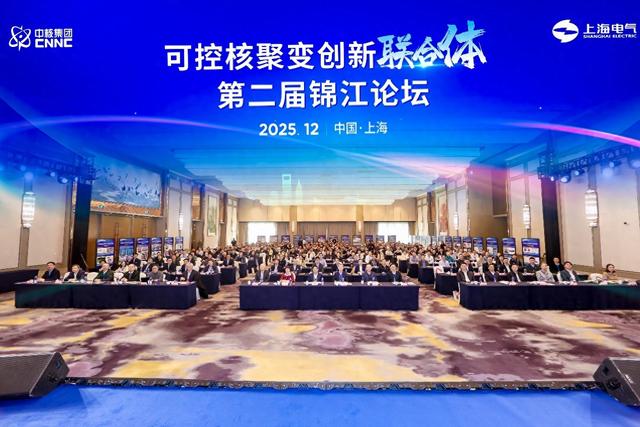
Group 1 - The controlled nuclear fusion industry has gained significant market attention, with the Wande controllable nuclear fusion concept index showing a cumulative increase of 83.19% in 2025 [1] - The implementation of the "Atomic Energy Law of the People's Republic of China" in 2026 will encourage and support controlled nuclear fusion research, providing institutional guarantees for innovation in fusion energy [1] - The controlled nuclear fusion sector is highlighted as a key forward-looking industry in China's 14th Five-Year Plan, with regions like Anhui, Sichuan, and Shanghai focusing on its development [1] Group 2 - The recent Jinjiang Forum indicated that global fusion energy research has entered a new engineering phase, with major fusion devices' progress becoming a direct window into the field's development [2] - The ITER project, the world's largest nuclear fusion experiment, aims to simulate the sun's fusion process and is expected to achieve full power operation by 2035, with significant advancements in construction since 2025 [2] - Chinese institutions have made substantial progress in the ITER project, including the completion of key components and contracts for essential systems [2][3] Group 3 - Major domestic fusion devices like EAST, BEST, and the Chinese Circulation III and IV are making notable advancements, with EAST achieving a high plasma temperature of 100 million degrees Celsius and stable operation for 1066 seconds in 2025 [3] - The BEST project in Anhui is set to be completed by 2027, with a bidding budget of 2.043 billion yuan in 2025, while the Chinese Circulation IV aims to validate the reliability of large high-temperature superconducting magnets [4][5] Group 4 - The fusion energy industry is seeing a surge in investment, with over 150 billion yuan planned for ongoing or upcoming projects, and expected investments of 14.9 billion yuan, 24.5 billion yuan, and 17.4 billion yuan from 2025 to 2027 [11] - The industry is anticipated to enter a peak bidding period, benefiting upstream raw material suppliers, midstream equipment manufacturers, and downstream operational sectors as fusion technology progresses [10][11] Group 5 - Regions like Anhui, Sichuan, and Shanghai are intensifying their focus on nuclear fusion, with Anhui emerging as a significant hub for fusion research and industry, housing nearly 60 related enterprises [7] - Shanghai is accelerating the development of cutting-edge technologies in fusion energy, with initiatives to enhance collaboration and innovation in the sector [8] - Sichuan's historical connection to controlled nuclear fusion is being revitalized, with plans to develop new industries and technologies related to fusion energy [9]



AI加速全球可控核聚变商业化进程
Xin Lang Cai Jing· 2026-01-01 00:18
受太阳启发,人类致力于在地球上实现可控核聚变,也因此将其誉为"人造太阳"。可控核聚变产生的聚 变能具有资源丰富、环境友好、安全零碳等突出优点,被视为解决全球能源与环境问题、推动人类社会 可持续发展的根本途径之一。世界经济论坛官网日前报道称,各国政府和工业界的研究表明,聚变能有 望在本世纪30年代开始接入电网。而如今蓬勃发展的人工智能(AI)技术,正成为加速可控核聚变迈 向商业化的重要推动力,多国政府与企业持续增加对可控核聚变的投入,多个聚变示范堆计划稳步推 进,商业化进程明显加快。(科技日报) ...
批量涨停,暴涨收官!军工ETF华宝(512810)再创阶段新高,2025年累涨超32%,成交创历史天量!
Xin Lang Cai Jing· 2025-12-31 09:49
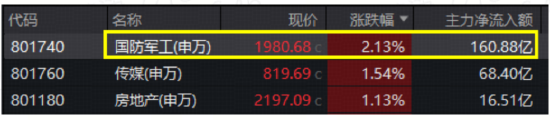
2025年最后一个交易日(12月31日),大热赛道商业航天收官大秀上演,所在国防军工行业快速冲上行 业涨幅榜第一!主力资金强力助攻,全天净买入160.88亿元,金额霸居全行业断层第一! | 序号 | ਜਨਸਤ | 名称 | 估算权重 | 现价 | 涨跌幅 ▼ | 成交额 | | --- | --- | --- | --- | --- | --- | --- | | 1 | 688375 | 国博电子 | 1.07% | 93.11 | 12.05% | 2665.6 | | 2 | ୧୫୫୧୧୫ | 中科是图 | 1.37% | 59.00 | 11.07% | 24.66 Z | | 3 | 600879 | 航天电子 | 3.12% | 21.32 | 10.01% | 127.07 亿 | | 4 | 601698 | 中国卫通 | 1.67% | 35.73 | 10.01% | 93.09亿 | | ટે | 000547 | 航天发展 | 2.32% | 33.01 | 10.00% | 179.32亿 | | 6 | 600118 | 中国卫星 | 2.78% | 94.95 | 10.00% ...
2025年A股月度财富盛宴,1万本金月月擒牛,年度斩获3600000000!
Jin Rong Jie· 2025-12-31 08:59
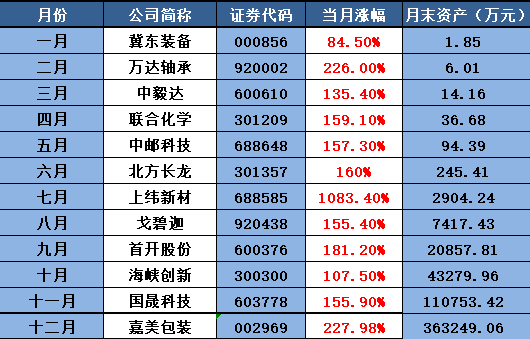
Market Overview - In 2025, the A-share market experienced a "policy-driven, technology-led, and structurally differentiated" growth, achieving a total market value exceeding 109 trillion yuan and an annual trading volume surpassing 400 trillion yuan [1] - The ChiNext Index led global major indices with an annual increase of nearly 50%, while the Shanghai Composite Index rose by 18.41%, surpassing the 4000-point mark for the first time since 2015 [1] - Significant sector rotation occurred, with strong performances in computing hardware, non-ferrous metals, banking, battery supply chains, innovative pharmaceuticals, commercial aerospace, and robotics, while traditional sectors like real estate and steel showed weak growth [1] Individual Stock Performance - A total of 4,073 stocks in the market had positive annual returns, with several stocks achieving remarkable monthly gains [2] - Notable monthly performances included: - January: Jidong Equipment with a 84.50% increase [4] - February: Wanda Bearings with a 226.00% increase [7] - March: Zhongyida with a 135.40% increase [9] - April: United Chemical with a 159.10% increase [12] - May: Zhongyou Technology with a 157.30% increase [14] - June: Beifang Changlong with a 160.00% increase [16] - July: Shangwei New Materials with a staggering 1083.40% increase [19] - August: Gebijia with a 155.40% increase [22] - September: Shoukai Shares with a 181.20% increase [25] - October: Haixia Innovation with a 107.50% increase [27] - November: Guosheng Technology with a 155.90% increase [29] - December: Jiamei Packaging with a 227.98% increase [31] Sector Highlights - The AI computing sector saw explosive growth due to increased demand for computing power, with related companies experiencing a surge in orders and stock prices [34] - The humanoid robotics sector gained traction following government support and advancements in technology, attracting significant capital investment [34] - The controlled nuclear fusion sector emerged as a promising future energy source, with stock prices responding positively to technological breakthroughs and policy support [34] - Mergers and acquisitions became a trend, with companies optimizing resources and achieving significant stock price increases through strategic consolidations [34]

竞速“人造太阳”破晓时刻,上海电气迎来核聚变核心装备交付上行期
Xin Lang Cai Jing· 2025-12-31 08:48
Core Viewpoint - The skepticism surrounding the commercialization of controlled nuclear fusion is diminishing due to advancements in high-temperature superconductors, increased commercial investments, and rapid developments in artificial intelligence, making the dream of ultimate energy more attainable [1]. Group 1: Industry Developments - The global race for "artificial sun" represents a multidimensional competition involving strategic determination, endurance, and strength, as controlled nuclear fusion transitions from basic research to engineering practice and commercial application [3]. - Shanghai Electric is one of the leading manufacturers of core equipment for nuclear fusion systems in China, having participated in major domestic and international fusion device constructions such as EAST, CRAFT, BEST, and ITER [3][5]. - The matrix of fusion devices covers various technological routes and engineering stages, providing Shanghai Electric with a significant competitive advantage in the fusion technology landscape [5]. Group 2: Technological Advancements - Shanghai Electric has a long history of involvement in fusion technology, dating back to the 1980s when it supplied two sets of pulse generator units for China's first Tokamak device [6]. - In 2025, significant breakthroughs in domestic fusion research devices are expected, including the achievement of a fusion triple product of 10^20 for the HL-3 device and the installation of key components for the BEST device [6]. - The company has developed the world's largest toroidal field magnet coil box, which is 21 meters high and weighs 400 tons, showcasing its advanced manufacturing capabilities [7]. Group 3: Strategic Initiatives - In July 2023, China Fusion Energy Co., a major player in fusion engineering, was established with a registered capital of 15 billion yuan, indicating a strategic move towards fusion commercialization [8]. - Shanghai Electric's long-term investments in cutting-edge technologies are expected to yield competitive advantages and collaborative synergies in the fusion energy sector [10]. - The company aims to explore new thermal conversion systems and efficient heat exchange devices while advancing into the supply of main equipment for controlled nuclear fusion [11]. Group 4: Future Outlook - The Chinese government has included nuclear fusion energy in its 14th Five-Year Plan, indicating a clear policy direction and stable long-term expectations for the industry [12]. - The industry is currently in the "burning experiment" phase, with plans to enhance plasma parameters significantly by the end of 2027 and to develop the first engineering experimental reactor by around 2035 [12]. - Shanghai Electric is committed to deepening its involvement in the national fusion strategy and accelerating the transition of fusion technology from laboratory feasibility to industrial application [13].
A股可控核聚变概念走强,王子新材直线涨停
Ge Long Hui· 2025-12-31 05:25
Core Viewpoint - The A-share market is experiencing a localized surge in the controlled nuclear fusion concept, with notable stocks such as Wangzi New Materials hitting the daily limit up and Libet approaching the limit up [1] Group 1: Market Performance - Wangzi New Materials has reached the daily limit up, indicating strong investor interest [1] - Libet has seen significant price movement, nearing the daily limit up [1] - Other companies such as Guoguang Electric, Guoji Heavy Industry, Hezhuan Intelligent, Changfu Shares, and Chenguang Medical are also experiencing upward trends [1] Group 2: Industry Outlook - The 2026 Nuclear Fusion Energy Technology and Industry Conference is scheduled to take place from January 16 to 17, 2026, in Hefei, Anhui [1] - According to a report by Zheshang Securities, the global nuclear fusion equipment market is expected to reach an average annual scale of 266 billion yuan by 2035 [1]


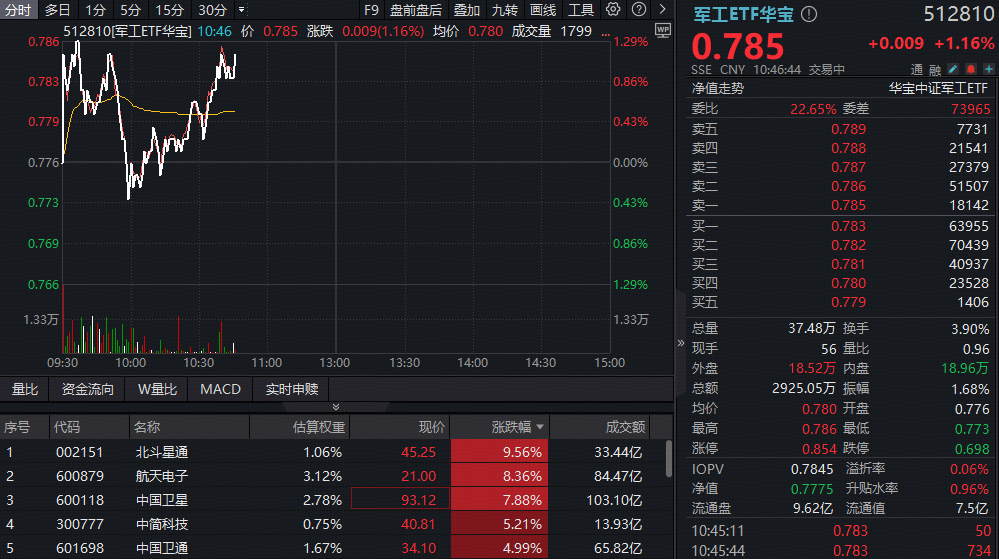
ETF盘中资讯|商业发射订单同比增41%!商业航天卷土重来,航天电子等多股继续新高!军工ETF华宝(512810)V字拉涨
Jin Rong Jie· 2025-12-31 03:44
Core Viewpoint - The commercial aerospace sector is experiencing renewed interest, with significant movements in related stocks and ETFs, particularly the Huabao Military Industry ETF (512810), which has seen a price increase of over 1% and reached a three-year high [1]. Group 1: Market Performance - The Huabao Military Industry ETF (512810) covers key military assets across land, sea, air, and space, including 24 commercial aerospace concept stocks, with a total weight of 28.64% [1][4]. - Following a short-term pullback, commercial aerospace stocks rebounded strongly, with Beidouxing Tong hitting the daily limit, and several stocks like Aerospace Electronics and China Satellite Communications reaching historical highs [1]. Group 2: Industry Developments - The National Defense Science and Technology Industry Bureau has emphasized the promotion of commercial aerospace development and the industrialization of the aerospace sector [2]. - The Shanghai Stock Exchange has released guidelines for commercial rocket companies to list on the Sci-Tech Innovation Board, marking a clear pathway for these companies to enter the capital market [2]. Group 3: Growth Projections - According to the "China Commercial Aerospace Industry Research Report," domestic commercial launch orders are expected to grow by 41% year-on-year by 2025, with a launch success rate of 98.5% [3]. - Analysts from Shenwan Hongyuan and Xiangcai Securities highlight that the commercial aerospace and low-altitude economy sectors are contributing to the recovery expectations of the military industry, supported by national policies and capital [3]. Group 4: ETF Composition - The Huabao Military Industry ETF (512810) includes various popular themes such as commercial aerospace, controllable nuclear fusion, low-altitude economy, large aircraft, deep-sea technology, and military AI, making it an efficient tool for investing in core military assets [3].