
产教融合

Search documents
政校企研四方牵手
Shen Zhen Shang Bao· 2025-10-11 06:17
Group 1 - Shenzhen University of Technology has signed cooperation agreements with Inner Mongolia Education Department, Shenzhen Guangming District Government, Yongjiang Laboratory, and Shenzhen Guangming Yinxing Life Health Industry Investment and Operation Co., Ltd to expand its educational and research industry network [1] - The collaboration with Shenzhen Guangming District Government includes the establishment of Shenzhen University of Technology Affiliated Experimental High School, focusing on a talent cultivation model that integrates high school and higher education, aiming to create a high-level, demonstrative high school characterized by "scientific innovation literacy" [1][2] - The partnership with Inner Mongolia Education Department will focus on talent exchange, educational development, research cooperation, and achievement transformation to support high-quality development in Inner Mongolia and assist Shenzhen University of Technology in becoming a first-class research university [1] Group 2 - Shenzhen University of Technology and Yongjiang Laboratory will initiate strategic cooperation in technology collaboration and high-level talent cultivation, including the establishment of a "New Materials Special Program" for joint graduate training and the production of high-level research outcomes [2] - The collaboration with Shenzhen Guangming Yinxing Life Health Industry Investment and Operation Co., Ltd will focus on AI+ pharmaceuticals, biomedicine, synthetic biology, and medical devices, aiming to promote industry-education integration and strengthen industry-academia-research collaboration [2][3] - The parties will jointly create the "Shenzhen University of Technology Science Park - Yinxing Yinzhi Science Park," utilizing an 11,000 square meter space for the university science park and establishing an AI pharmaceutical public technology service platform [3]
百年老校“向新力”!河海大学这样绿色发展添“新能”——
Yang Zi Wan Bao Wang· 2025-10-10 10:34
高校如何实现"科技+产教"双融合?河海大学有妙招。学校积极响应国家能源战略布局,依托传统水 利、土木等学科交叉优势,赓续能源专业悠久办学历史,通过"产教+科教"双融合,全链条添翼能源转 型发展。在新能源领域捷报频传,2024年以来,获批5项国家重点研发专项及国家科技重大专项,摘得 江苏省科学技术奖一等奖,充分彰显了百年老校的"向新能力"。 "学校一直非常重视新能源领域专业发展,2008年就开办了全国首批和江苏省最早的"风能与动力工 程"专业,后发展成为现今的'新能源科学与工程'专业,该专业结合学校水利、电气、力学、流体机械 等方面学科优势,在国内外形成了较大影响。2011年成为全国仅有的4个国家特色专业建设点之一, 2021年成为国家一流专业建设点,2022年获得交叉学科博士点。"新能源学院副院长、全国风电本科专 业发起人之一许昌教授说。 近年来,河海大学专家还逐步开拓海洋新能源。"我们不断拓展学科方向,瞄准潮流能、波浪能、海上 风能、海上光伏等新能源的高效利用与工程安全,在海洋能资源评估、海洋工程结构安全设计和多能互 补开发技术等方面取得一系列创新。"港航院管大为教授说。 1986年,面对能源重镇常州兴盛的 ...
1.48亿元!长春汽车职业技术大学近期大批仪器采购意向
仪器信息网· 2025-10-10 03:58
摘要 :近日,长春汽车职业技术大学发布多批政府采购意向,仪器信息网特对其中的仪器设备品目进行梳理,统计出30项仪器设备 采购意向,预算总额达1.48亿元。 特别提示 微信机制调整,点击顶部"仪器信息网" → 右上方"…" → 设为 ★ 星标,否则很可能无法看到我们的推送。 近日, 长春汽车职业技术大学发布 30 项仪器设备采购意向,预算总额达 1. 48 亿 元,涉及汽车导航工程技术实验 系统、飞行汽车教学系统、无人机实验教学系统 、汽车导航工程技术实验系统、通用航空教学系统 、电路分析及电子 实验台 等,预计采购时间为202 5 年 3~10 月。 详细采购清单: 长春汽车职业技术大学 202 5 年 3~10 月仪器设备采购 意向汇总表 | | | | 采 | | --- | --- | --- | --- | | 采购 | 需求概况 | 预算 | 购 | | 项目 | | 万元 | 时 | | | | | 间 | | 汽车 | | | | | 导航 | | | 202 | | 工程 | 本项目为我校以旧换新设备升级改造项目,拟购买汽车导航工程技术 | | 5 | | 技术 | 实验系统,用于融合汽车导航 ...


南皮县电商人才孵化基地落成:一根网线连通广袤城乡,一方屏幕激活区域发展新动能
Hua Xia Shi Bao· 2025-10-09 07:05
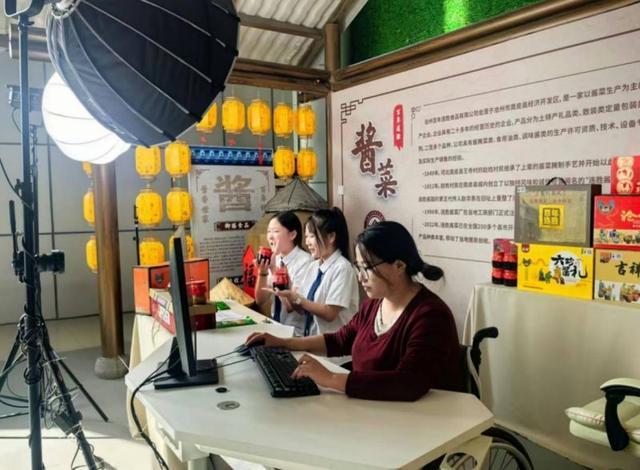
Core Insights - The establishment of the "E-commerce Talent Incubation Base" in Nanpi County aims to revitalize idle public assets while providing dual missions of youth e-commerce skills training and expanding the market for local agricultural products [3][4] - The base integrates vocational education, enterprise practice, and social welfare to cultivate applied e-commerce talents, which are essential for driving growth and brand development [2][5] Group 1: E-commerce Talent Incubation Base - The base features facilities such as theoretical classrooms, live streaming studios, and operational laboratories, employing a combination of theoretical and practical training to equip students with comprehensive skills in live streaming and e-commerce platform operations [5][9] - The base is a collaborative effort between the Nanpi County E-commerce Public Service Center and Aikang Shengbang Vocational Skills Training School, focusing on integrating education with industry needs [4][5] Group 2: Training Programs and Curriculum - The training programs emphasize the application of artificial intelligence tools in live streaming, with students learning to use models like DeepSeek and Doubao for content creation and enhancement [5][6] - The school is developing two main course systems: "Digital Soldiers for Medical Professionals" and "Digital Soldiers for Rural Areas," aimed at empowering medical students and farmers with digital skills for effective e-commerce [6][10] Group 3: Industry Collaboration and Employment - The collaboration between the training school and local enterprises addresses the talent shortage in e-commerce, creating a win-win situation where companies gain stable talent sources while students receive practical experience [9][10] - The school also plans to recruit underemployed college graduates, helping them acquire skills that enhance their employability in the e-commerce sector [10][11] Group 4: Social Impact and Community Support - The "E-road to Health" project exemplifies the base's commitment to social welfare, facilitating collaboration between farmers and enterprises to enhance agricultural product marketing while supporting disabled individuals in finding employment [12][13] - The project aims to create a sustainable ecosystem that benefits farmers, disabled individuals, and enterprises, promoting economic growth and community development [12][14] Group 5: Future Development and Goals - The base is in its exploratory phase, focusing on establishing a closed-loop system of "teaching-practice-revenue" to ensure students gain practical skills while earning income [14] - Future plans include leveraging the growing talent pool to promote Nanpi County's hardware and machinery products through e-commerce channels, aiming for national and global market reach [14]
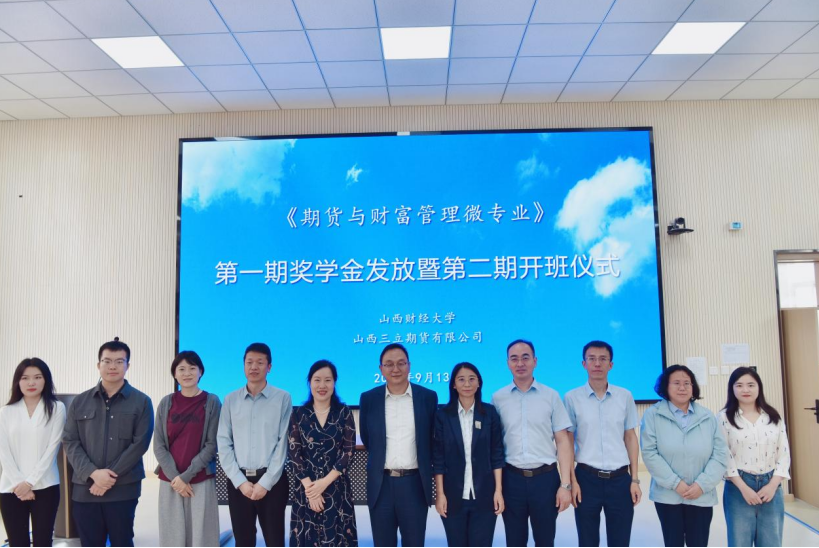
三立期货与山西财经大学微专业第一期奖学金发放暨第二期开班仪式典礼圆满举行
Qi Huo Ri Bao Wang· 2025-10-09 03:48
Core Viewpoint - The collaboration between Shanxi Sanli Futures Co., Ltd. and Shanxi University of Finance and Economics marks a significant advancement in the integration of education and industry, focusing on the development of high-quality financial talent through specialized programs [1][3][13]. Group 1: Event Overview - The first scholarship award ceremony and the opening of the second phase of the micro-major program were held at Shanxi University of Finance and Economics, attended by key figures from both the university and Sanli Futures [1][3]. - The event was hosted by the Dean of the Financial College, Li Jingping, who expressed gratitude for Sanli Futures' support and highlighted the importance of the micro-major program in enhancing talent cultivation [3]. Group 2: Program Highlights - The micro-major program includes a core course titled "Futures Investment Theory and Practice," which is supported by the Dalian Commodity Exchange and aims to integrate theoretical knowledge with practical market experience [3]. - The first phase of the program has shown significant success, with students improving their financial practical skills through a combination of theory and practice [3]. Group 3: Company Commitment - Sanli Futures' Deputy General Manager, Shi Haibing, emphasized the company's commitment to talent development and social responsibility, viewing the micro-major program as a key initiative for promoting collaborative development between academia and industry [5]. - The company plans to continue providing resources and support for the program, encouraging students to explore the potential of futures and financial markets [5]. Group 4: Recognition and Student Engagement - A scholarship award ceremony recognized outstanding students in the micro-major program, with awards ranging from excellent awards to first prizes, aimed at motivating students and acknowledging their academic and practical achievements [7]. - Student representatives shared their experiences, highlighting the professional growth and expanded perspectives gained from the program, and expressed their commitment to excel in the upcoming phase [11]. Group 5: Future Collaboration - Sanli Futures and Shanxi University of Finance and Economics will deepen their cooperation by optimizing the curriculum, enhancing practical teaching, and exploring diverse collaboration models to cultivate innovative and practical financial talent [13].
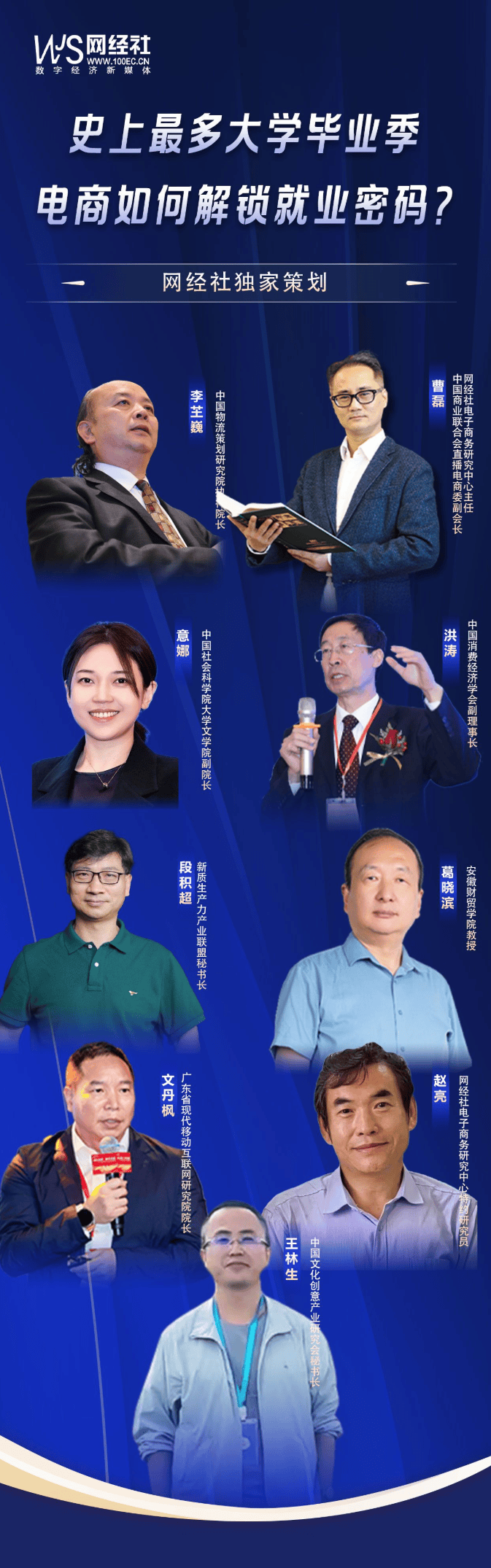
中国商业联合会直播电商委副会长、网经社曹磊:电商就业促进面临的现实挑战与结构性困境
Sou Hu Cai Jing· 2025-10-09 03:29
Core Viewpoint - E-commerce has become a significant driver of employment growth, creating numerous high-quality job opportunities and serving as a key engine for stabilizing employment and promoting development [1]. Group 1: Employment Creation by E-commerce - Major e-commerce platforms like Alibaba, JD.com, Pinduoduo, and Meituan not only create direct job opportunities but also provide diverse employment options through industry chain extension, model innovation, and regional collaborative development [1]. Group 2: Challenges Faced by E-commerce in Employment - **Structural Mismatch in Talent Supply and Demand**: There is a notable phenomenon of "jobs without people and people without jobs" in the e-commerce sector. Many graduates seek e-commerce positions, while companies struggle to find qualified professionals due to outdated educational curricula [5]. - **Regional Development Imbalance**: Job opportunities and resources in e-commerce are concentrated in specific regions, with significant talent shortages in western and rural areas, limiting local e-commerce development [6]. - **Employment Quality and Stability Issues**: The flexible nature of e-commerce jobs leads to stability concerns, with high work pressure and inadequate salary increases affecting job satisfaction [7]. - **Inadequate Skills Training and Certification Systems**: Current training programs do not meet industry needs, and there is a lack of standardized certification, which diminishes the credibility and recognition of qualifications [8]. - **Policy Support and Resource Allocation Bottlenecks**: Government support policies for e-commerce employment and entrepreneurship are fragmented, and resources tend to favor large platforms over small enterprises [9]. Group 3: Recommendations and Measures - **Deepening Industry-Education Integration**: Updating course systems and encouraging collaboration between universities and enterprises to enhance practical skills and reduce knowledge gaps [10]. - **Improving Vocational Training and Skills Certification**: Strengthening training for urgently needed professions and innovating skill evaluation mechanisms to align with real-world job requirements [11]. - **Promoting Regional Coordinated Development**: Implementing support initiatives for underdeveloped areas and encouraging talent mobility to enhance e-commerce capabilities in those regions [12]. - **Enhancing Employment Quality and Social Security**: Establishing labor standards for flexible employment and improving social security systems for e-commerce workers [13][14]. - **Optimizing Policy Environment and Increasing Support**: Implementing inclusive financial policies and enhancing employment services to support e-commerce job creation [15]. Group 4: Summary - While e-commerce has made significant contributions to employment, it faces challenges such as talent mismatches, regional disparities, low job quality, inadequate training systems, and insufficient policy support. Addressing these issues requires collaborative efforts from government, enterprises, educational institutions, and society to unlock the full potential of e-commerce in promoting employment [16].


校地携手共建产教融合平台 助力职业教育高质量发展
Jing Ji Guan Cha Bao· 2025-10-03 04:17
Core Points - The Beijing University of Science and Technology has officially commenced the construction of the Industry-Education Integration Engineering Center, which aims to cultivate high-quality technical and skilled talents [1] - The center will feature seven major practical training platforms to promote deep integration of industry and education, serving national strategic needs and the capital's "four center" functions [1] Summary by Categories Project Overview - The project covers a total construction area of 22,391 square meters, consisting of four above-ground floors and one underground floor [1] - The center will include various training facilities such as a composite manufacturing practice center, heavy-duty truck training center, automotive integration training center, aviation maintenance integration center, integrated circuit application innovation center, big data application innovation center, and a finance and trade professional group school-enterprise integration center [1] Objectives and Impact - The center aims to enhance the teaching and research infrastructure of vocational undergraduate education while promoting the "production-oriented" approach to practical training [1] - It seeks to create a real-world training environment, manage training in a corporate manner, and transform students into "employees," thereby fostering mutual integration and shared management between schools and enterprises [1] - The initiative is expected to significantly improve vocational education's ability to serve regional industrial development [1]
同仁堂携手党建联建成员单位 “进校园、进社区”“送服务、促消费”
Bei Jing Ri Bao Ke Hu Duan· 2025-10-01 22:13
Core Insights - The article discusses the ongoing initiatives of the "Party Building and Industry Innovation Joint Construction Mechanism" (referred to as "Party Building Joint Construction") in Beijing, emphasizing its role in enhancing industrial collaboration and public services [1][2][5] Group 1: Party Building Joint Construction Activities - The Party Building Joint Construction has expanded its activities into enterprises, campuses, and communities, demonstrating a commitment to high-quality development through high-quality party building [1][4] - In September, the initiative hosted a series of events, including a traditional Chinese medicine cultural festival and a campus integration event, which collectively served over 2,000 residents [2][4] - The activities included health services, product showcases, and job recruitment, effectively bridging the gap between industry needs and community services [3][4] Group 2: Collaboration with Educational Institutions - The partnership with Beijing Technology and Business University marks a significant step in integrating education with industry, establishing a framework for long-term collaboration [3][5] - The signing of a joint construction agreement aims to enhance the connection between education, talent development, and industry needs, fostering a collaborative ecosystem [3][5] - The campus market event featured over 40 booths offering health consultations, product sales, and employment information, showcasing the tangible benefits of the collaboration [3][4] Group 3: Societal Impact and Future Directions - The initiative reflects a dual empowerment model where enterprises provide quality products and services while local governments support business development, enhancing community well-being [5][6] - The Party Building Joint Construction is positioned to continue expanding its reach, aiming for a regularized approach to integrating health knowledge, quality products, and job opportunities into various sectors [6] - This model not only addresses the challenges of integrating party building with business operations but also supports the development of new productive forces, contributing to both economic and social benefits [6]


第五届“Botok杯”国际职业院校创新创业邀请赛总决赛成功举办
人民网-国际频道 原创稿· 2025-10-01 04:22
Core Insights - The fifth "Botok Cup" International Vocational College Innovation and Entrepreneurship Invitational Competition was successfully held in Nanning, Guangxi, from September 26 to 27, 2023, with a focus on the theme "China-Thailand Family" to celebrate the 50th anniversary of China-Thailand diplomatic relations [1][2][3] Event Overview - The competition featured two main events: the "Digital Youth Innovation Practical Competition" with participation from 73 institutions and 131 teams across six countries, and the "International Classroom Teaching Design Competition" with 66 institutions and 95 teachers involved [1] - The final competition included 10 teams from Thailand, 1 from the Philippines, 9 international mixed teams, and 30 teams from China [1] Performance Highlights - Thai vocational institutions demonstrated outstanding innovation, professional skills, and cross-cultural collaboration, particularly in the "Digital Youth Innovation Practical Competition" where two international mixed teams won first prizes [2] - The winning teams included "China-Thailand Youth Alliance" formed by Spatan University and Zhejiang Economic and Trade Vocational College, and "Dragon Elephant Team" formed by Bangkok Technical College and Dali Prefecture Finance and Trade School [2] Cultural Exchange and Cooperation - The event served as a platform for Thai and Chinese students to collaborate, overcoming language and cultural barriers, and showcasing their cultural integration during the live competition [2] - The Confucius Institute at Chiang Mai University played a significant role in promoting vocational education cooperation and youth exchange between China and Thailand [2][3] Future Prospects - The event highlighted the integration of AI skills assessment and advanced technologies like AIGC and virtual simulation into the competition, enhancing the innovation and application capabilities of participants [3] - The competition also emphasized the importance of industry-education integration, with brand collaborations and mentorship from industry professionals to accelerate the transformation of outstanding results into industrial value [3]

大模型确定868个紧缺专业 今年首期紧缺人才政策宣贯会解读专业需求
Su Zhou Ri Bao· 2025-10-01 00:08
Core Insights - The event "Talent Gathering and Intelligence Introduction: Empowering Development" was held in Suzhou, focusing on the implementation of talent policies and AI education integration [1][2] - The 2025 talent demand directory was introduced, highlighting 868 critical professional categories and 3373 job postings, aimed at guiding enterprises in talent acquisition [1][2] Group 1: Policy and Talent Development - The event was guided by the Suzhou Human Resources and Social Security Bureau and organized by Suzhou Talent Development Co., focusing on policy dissemination and talent cultivation [1] - The directory aligns with advanced manufacturing and service industry frameworks, expanding into areas like quantum computing and smart agriculture [1] - The introduction of the DeepSeek model analysis tool enhances the precision of talent recruitment for enterprises [1] Group 2: AI Integration and Industry Collaboration - Suzhou Talent Development Co. showcased the latest AI teaching tools and platforms, emphasizing their functionality and value in talent development [2] - Interactive Q&A sessions with AI experts addressed enterprise inquiries regarding AI tool operations and platform applications [2] - The event featured a strong emphasis on industry-education integration, with companies sharing experiences and suggestions for optimizing talent training and job matching [2] Group 3: Future Initiatives - A special online consultation service was established for enterprises, with plans for "Policy Application Guidance" and "AI Tool Experience Days" to facilitate policy implementation [2] - Suzhou aims to enhance talent aggregation efforts with more precise policies and quality services to support high-quality economic and social development [2]