气候变化

Search documents
亚投行十年关键词:“朋友圈”翻倍,多边合作共赢
Bei Jing Shang Bao· 2025-06-24 14:07
Core Viewpoint - The Asian Infrastructure Investment Bank (AIIB) has significantly contributed to infrastructure development in Asia over the past decade, with a focus on promoting connectivity and economic integration among member countries [1][4][5]. Group 1: AIIB's Establishment and Growth - AIIB was proposed in 2013 to address infrastructure deficits in Asia, with its founding members signing the agreement in 2014 [3]. - The bank officially commenced operations in January 2016, with a legal capital of $100 billion [3]. - As of June 2025, AIIB has expanded its membership from 57 to 110 countries, covering 81% of the global population and 65% of global GDP [4][5]. Group 2: Project Financing and Impact - AIIB has approved 320 projects with a total financing amount exceeding $60 billion, mobilizing over $200 billion in capital for infrastructure projects [5][7]. - Notable projects include the upgrade of Bangladesh's power distribution system, benefiting 12.5 million rural residents, and the Mumbai Metro Line 4, which reduced traffic by 35% [6][7]. - AIIB's financing has also supported projects in China, such as a $250 million loan for natural gas infrastructure in Beijing [6][7]. Group 3: Future Directions and Strategic Focus - AIIB aims to continue its focus on traditional infrastructure while also addressing digital infrastructure needs and climate change [8][9]. - By 2024, 67% of AIIB's approved financing will be related to climate change, reflecting a commitment to sustainable development [9]. - The bank's new leadership under the incoming president, Zou Jia Yi, will emphasize multilateral cooperation and sustainable infrastructure development [9][10].

普华永道:AI与气候变化双重挑战下,中国企业迎来独特机遇
Sou Hu Cai Jing· 2025-06-24 08:10
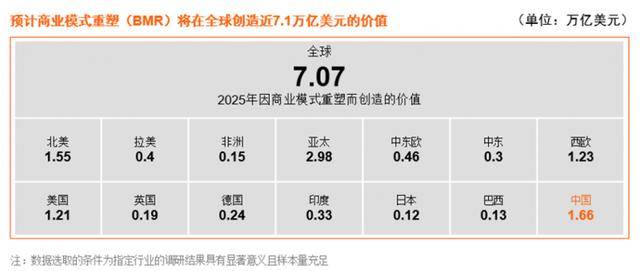
Core Insights - PwC's report highlights that Chinese companies are innovating and optimizing operational models to navigate the dual challenges of artificial intelligence and climate change, focusing on restructuring and optimizing their operational systems rather than merely applying technology [1][3] Group 1: Value Creation - By 2025, Chinese companies are projected to create up to $1.66 trillion in value through business model transformation, contributing to a global market value increase exceeding $7 trillion [2] - The report emphasizes that over 31,000 smart factories in China's manufacturing sector are utilizing AI, with over 230 factories reducing product development cycles by an average of 28.4% and cutting carbon emissions by an average of 20.4% [3] Group 2: Renewable Energy Leadership - China holds 40% of the world's green technology patents, which are being transformed into tangible benefits through new operational systems, supporting the country's dual carbon goals [3] - The report predicts that by 2025, China's renewable energy generation will surpass that of fossil fuels, further advancing its dual carbon objectives [3] Group 3: Strategic Recommendations - Companies are advised to reassess and formulate new business, operational, and energy strategies to adapt to the evolving global landscape, leveraging advancements in AI to optimize key processes [3][4] - PwC suggests that Chinese companies should move beyond a "follow the leader" strategy, prioritizing innovation in business, operations, and energy models to build a solid foundation for long-term growth [4]
《中国-新西兰领导人会晤联合成果声明》发布
news flash· 2025-06-20 11:49
Core Viewpoint - The joint statement from the China-New Zealand leaders' meeting highlights the ongoing cooperation in various sectors, emphasizing the importance of bilateral relations and cultural exchanges [1] Group 1: Areas of Cooperation - Both parties welcome cooperation in food safety, customs, agriculture, forestry, climate change, trade and economic facilitation, and improving the business environment [1] - Progress in the first round of negotiations on the negative list for services trade under the China-New Zealand Free Trade Agreement is acknowledged [1] Group 2: Cultural and Human Exchanges - The significance of cultural exchanges in tourism, culture, local government, sports, and scientific innovation for bilateral relations is reaffirmed [1] - The recent China-New Zealand Mayor Forum and the upcoming China-New Zealand Track II Dialogue are welcomed as important events [1]
英国气象局:英国可能面临45摄氏度以上高温天气
news flash· 2025-06-20 05:34
近日,英国气象局发布的研究报告指出,在当前气候条件下,英国再次出现40摄氏度高温的概率已达到 50%,达到45摄氏度甚至更高温度也完全可能,且这一趋势仍在上升。受气候变化影响,英国面临持续 一个月的热浪或将成为"新常态"。(央视新闻) ...
清华大学发表最新Nature论文
生物世界· 2025-06-19 23:52
Core Viewpoint - Climate change is likely to exacerbate the frequency and severity of supply-demand imbalances in high penetration wind and solar power systems in the future [2][4]. Group 1 - The research team utilized a scheduling optimization model to assess the potential hourly cost increases due to climate change under fixed and high penetration rates of wind and solar energy [4]. - During extreme periods, which are defined as the top decile of hourly costs, the study predicts that costs may rise significantly in most countries, primarily due to increased investment needs for flexible energy capacity [4]. - In the SSP126 scenario, it is anticipated that 47 countries will see an average hourly cost increase of over 5% during extreme periods, collectively accounting for approximately 43.5% of future global electricity supply, with the highest increase reaching 23.7% [4]. Group 2 - The research findings provide critical insights for constructing future electricity systems that are both climate-resilient and cost-effective [5].

打破 “各自为政”!大咖热议货币政策协同
Jin Rong Shi Bao· 2025-06-19 13:25
Core Viewpoint - The article discusses the urgent need for global monetary policy coordination in the context of rising inflation, high debt, and increasing international trade frictions, which are reshaping global supply chains and economic growth dynamics [1][2]. Group 1: Challenges in Global Monetary Policy Coordination - Significant differences in macroeconomic conditions among countries lead to a "self-governing" approach to monetary policy, complicating unified macroeconomic control [2]. - The spillover effects of major economies' monetary policies are increasingly impacting global economic patterns, with potential for rapid transmission through financial crises [2][3]. - The uncertainty surrounding U.S. tariff policies exacerbates global economic instability, affecting confidence in the U.S. dollar and U.S. Treasury securities [3]. Group 2: The Role of Alternative Currencies and Market Integration - In light of declining confidence in the U.S. dollar and Treasury securities, there is a call to develop alternative currency support systems, with China’s role being particularly highlighted [4]. - Europe is urged to address its strategic vulnerabilities by creating a more integrated market, such as a unified European debt market, to provide reliable investment alternatives to U.S. Treasuries [4]. Group 3: Factors Influencing Central Bank Policies - Central banks must consider multiple factors, including geopolitical tensions, climate change, and technological advancements, which pose significant challenges to their policy objectives [5][6]. - The need for enhanced communication and coordination among central banks is emphasized to stabilize inflation expectations and address emerging risks [6]. Group 4: Institutional Framework for Coordination - There is a lack of a formal institution to coordinate global macroeconomic or monetary policies, with existing platforms like the IMF facing limitations in their decision-making processes [7]. - Suggestions include enhancing the G20's mechanisms and possibly establishing a dedicated monetary policy department to improve the effectiveness of global policy coordination [7].
中国展馆容量继续在全球占据主导地位
Zhong Guo Jing Ji Wang· 2025-06-19 11:33
柯世祺认为,2025年的展览业呈现出五大趋势: 一是"是否进步了,足够好了吗?";二是气候变化对 运营的影响;三是人工智能的加速发展对行业产生的变化;四是身份认同和公众认知的对垒;五是要为 应对突发状况做好准备。 国际会展业CEO上海大会是全球会展业三大峰会之一,经过9届积累与沉淀,已成为上海市打造国际会 展之都的重要载体。本届大会于6月19日至20日在国家会展中心(上海)举办,以"会展创新,驱动可持 续发展"为主题,在上海市委市政府的支持下,在上海市商务委员会的指导下,由上海市会展行业协会 主办,国家会展中心(上海)作为联合主办。吸引了来自美国、英国、德国、意大利、西班牙、沙特阿 拉伯等国家和地区的国际展览集团和机构的高管,东南亚国家和地区的行业协会,以及全国会展行业主 管部门、协会、会展企业的负责人等300余位嘉宾参会。 柯世祺在《全球主要会展市场回顾与展望》的主题演讲中,对2024年全球会展各大市场进行回顾,并对 2025会展行业的发展进行了分析和展望。他在现场分享的《世界展馆地图2024》数据显示,2024年全球 举办了32000场展览,总租用面积达1.437亿平方米。亚太地区占全球场馆容量的38.5 ...
IMF批准8.33亿基那资金支持巴新
Shang Wu Bu Wang Zhan· 2025-06-18 05:26
Group 1 - The International Monetary Fund (IMF) approved a total funding support of $200 million (approximately 833 million kina) for Papua New Guinea (PNG) under its Extended Credit Facility (ECF) and Extended Fund Facility (EFF) [1] - Approximately $172 million (716 million kina) will be disbursed following the completion of the fourth review of the ECF/EFF [1] - The IMF also completed the first review of the Resilience and Sustainability Facility (RSF), approving about $28 million (approximately 116.6 million kina) to support PNG in addressing long-term structural vulnerabilities related to climate change [1] Group 2 - The total financing provided by the IMF to PNG has reached $655 million (approximately 2.7 billion kina) [1] - The ECF/EFF arrangement approved on March 22, 2023, totals 684 million Special Drawing Rights (approximately 4.03 billion kina) aimed at alleviating foreign exchange shortages and supporting structural reforms [1] - The RSF arrangement approved on December 11, 2024, totals 197 million Special Drawing Rights (approximately 1.16 billion kina), specifically addressing long-term international balance of payments risks due to climate change [1] Group 3 - The IMF maintains an optimistic economic outlook for PNG, projecting a growth rate of 4.7% in 2025, driven by strong performance in the resource sector and resilient development in the non-resource sector supported by exchange rate improvements [2] - Inflation is expected to rise from a low in 2024 to 4.8%, with core inflation slightly increasing to 4% [2] - In the medium term, economic growth is expected to stabilize above 3%, with inflation around 4.5% [2] Group 4 - The IMF warns of significant downside risks to PNG's economy, which is vulnerable to domestic and external shocks, governance bottlenecks, and social-political fragility [2] - Global risks such as commodity price fluctuations, geopolitical conflicts, and trade barriers may exacerbate inflationary pressures [2] - However, the initiation of large resource projects could significantly enhance exports and fiscal revenues in the medium term [2]
走过十年,亚投行如何助推多边主义发展?
Xin Hua Wang· 2025-06-17 11:17
0:00 新华社北京6月17日电 题:走过十年,亚投行如何助推多边主义发展? 新华社记者任军、高竹、谢晗 在全球的多边开发银行中,由中国倡议设立、57国共同创建的亚洲基础设施投资银行(亚投行)虽然年轻,但成果卓著。今年是亚投行成立 十周年,6月24日至26日,亚投行的最高决策和权力机构——理事会将召开第十届年会,系统回顾十年发展成果,并展望未来战略重点。 "十年是一个值得庆祝的时间点。"亚投行副行长兼秘书长陆书泽在接受新华社专访时表示,理事会年会是亚投行年度旗舰活动,本届年会将 以"互联助力发展,合作共创繁荣"为主题,预计近100个国家和地区的3500余名嘉宾将参会。 "此次年会上,我们会专门用虚拟现实技术展示亚投行投资的项目。"陆书泽介绍,截至目前,亚投行已批准318个项目,批准融资总额超600 亿美元,动员资本超2000亿美元,惠及38个亚洲域内与域外成员。 2015年12月成立,2016年1月开业运营,走过十年的亚投行一直以实际行动践行多边主义,通过聚焦加强基础设施互联互通,推动区域经济 一体化,提升民众生活水平。 陆书泽说,亚投行是一家以发展中国家为主体、发达国家广泛参与的新型多边开发机构,发展中国家 ...
大国院士丨追沙院士——专访中国科学院院士黄建平
Xin Hua She· 2025-06-17 08:52
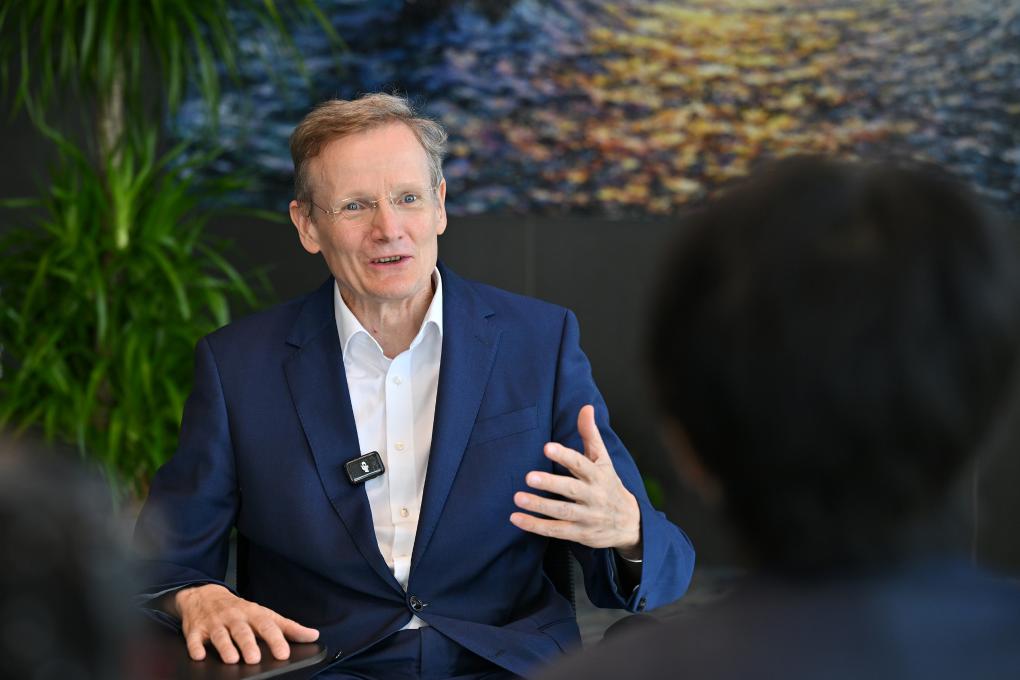
Group 1 - The article highlights the significant contributions of Huang Jianping, an academician and atmospheric scientist, in researching sandstorms and climate change, emphasizing his dedication to national scientific needs [2][3][5] - Huang's team has developed various innovative monitoring systems and theories related to climate change and sandstorm formation over the past two decades [6][8] - The article discusses the recent extreme sandstorm events in China, attributing them to climate change and the limitations of local afforestation efforts in combating high-altitude dust transport [10][13] Group 2 - Huang Jianping explains that while China's afforestation efforts have reduced local sandstorms by 40%, they cannot fully prevent dust from high altitudes, which often originates from Mongolia [13][15] - The article notes that global warming is causing more frequent extreme weather events, impacting atmospheric circulation and leading to various climate anomalies [15][16] - The ecological restoration of the Loess Plateau is attributed to national reforestation projects and favorable atmospheric conditions, although future climate trends remain uncertain [18][19] Group 3 - Huang expresses pride in China's leadership in combating desertification, highlighting successful projects like the "locking" of the Taklamakan Desert [21][23] - The article clarifies that while desertification control has been effective, deserts will not transform into grasslands, maintaining their ecological characteristics over millennia [23][25] - The commitment of Huang's team and the younger generation to continue working in harsh environments reflects a deep-rooted passion for environmental stewardship [25][27]