
现代化产业体系

Search documents
范波吴庆文会见中核集团总经理张涛一行
Su Zhou Ri Bao· 2025-12-27 23:37
张涛对苏州给予中核集团的支持帮助表示感谢。他说,苏州产业基础雄厚、市场空间广阔,是中核 集团战略布局的重点城市。在"十五五"新征程上,中核集团将聚焦主责主业,进一步加大在苏州投资力 度,加快推动重点项目建设、先进技术应用,更好服务苏州高质量发展。 中核集团总经济师、总审计师黄敏刚;市委常委、副市长顾海东,市政府秘书长徐本,苏州高新区 主要负责同志参加会见。 12月26日,市委书记范波、市长吴庆文会见了中国核工业集团有限公司总经理张涛一行。 会见中,范波、吴庆文对中核集团给予苏州发展的关心支持表示感谢。范波说,当前,苏州正深入 学习贯彻党的二十届四中全会精神和习近平总书记对江苏、苏州工作重要讲话重要指示精神,聚焦因地 制宜发展新质生产力,加快推进新型工业化,统筹做好传统产业升级、新兴产业壮大、未来产业培育, 加快建设现代化产业体系。中核集团作为我国核科技工业的国家队和主力军,拥有完整的核科技工业创 新链和产业链,与苏州合作基础深厚。希望中核集团持续深耕苏州、加码苏州,聚焦核医疗服务、核技 术应用、核装备制造,落地更多优质项目、先进技术、创新资源,携手打造更多标志性合作成果,更好 服务高水平科技自立自强。我们将持 ...
杨伟民:“十五五”期间经济保持合理增长需多领域取得重大突破
Bei Ke Cai Jing· 2025-12-27 11:14
Group 1 - The core viewpoint emphasizes the importance of promoting price recovery as a key objective during the "14th Five-Year Plan" period, particularly in the early stages of macroeconomic regulation [1] - The central economic work conference this year highlighted that the overall tone of macroeconomic regulation is to promote stable economic growth and reasonable price recovery, with monetary policy aimed at facilitating this price recovery [1] - Yang Weimin predicts that economic growth rates need to reach approximately 4.5% during the "14th Five-Year Plan" period and around 4% during the "15th Five-Year Plan," with an average growth rate of about 4.2% from 2025 to 2035 [1] Group 2 - The current focus on developing new productive forces is seen as crucial for China to succeed in the global technological revolution and industrial transformation [2] - The "14th Five-Year Plan" aims to target digitalization and low-carbon initiatives, accelerating breakthroughs in key core technologies and addressing critical technological bottlenecks [2] - To ensure economic growth remains within a reasonable range, there is a need to significantly increase the consumption rate of residents, as expanding total demand of 35 trillion yuan must largely come from increased household consumption [2] Group 3 - Optimizing the distribution system and structure is essential for comprehensive development and common prosperity, which directly impacts the increase in the consumption rate and the ability to maintain reasonable economic growth [2] - A significant breakthrough in optimizing the distribution structure is indicated by a noticeable increase in the proportion of per capita disposable income of residents relative to national income [2]
尚福林、杨伟民、白重恩、高培勇,最新发声!
证券时报· 2025-12-27 09:14
Core Viewpoint - The conference emphasized the importance of accelerating the construction of a financial power during the "15th Five-Year Plan" period, focusing on the organic unity of qualitative improvement and reasonable quantitative growth, as well as comprehensive, systematic, and leading advancements [2][5]. Group 1: Financial Development - The financial sector in China has achieved historic growth in scale and quality during the "14th Five-Year Plan," laying a solid foundation for building a financial power [5]. - Challenges remain in the financial development landscape, including imbalances in social capital allocation and the need for traditional financing and risk control models to adapt to new economic realities [5][6]. - The "15th Five-Year Plan" suggests focusing on financial services for the real economy, deepening financial system reforms, and enhancing global financial governance [5][6]. Group 2: Manufacturing and New Quality Productivity - The conference highlighted the need to maintain a reasonable proportion of manufacturing in GDP and globally, emphasizing that new quality productivity should not be confined to traditional industrial models [2][8]. - New manufacturing should focus on technology and product innovation, with a concentration of research and development personnel in central cities and urban clusters [10][8]. - The development of emerging and future industries is expected to primarily occur in key regions such as Beijing, Shanghai, and the Guangdong-Hong Kong-Macau Greater Bay Area [10][8]. Group 3: Policy Optimization - Policies should not only focus on expanding demand and optimizing supply but also on optimizing distribution to create a cohesive system of supply, demand, and distribution [3][12]. - The transition from consumption stimulus policies to income distribution adjustment policies is necessary to enhance the income of low-income groups and ensure that disposable income growth outpaces economic growth [12][11]. Group 4: Debt Management and Reform Investment - The proposal to replace local government debt with national bonds aims to alleviate repayment pressure on local governments, improve their cash flow, and foster economic growth [15][13]. - Investment in reform is crucial, with a focus on using fiscal and monetary policies to support the transitional costs of reforms, thereby facilitating better conditions for future reforms [14][15].


黄付生 :从旧基建转向新基建,头部科技型企业投资地位举足轻重
Feng Huang Wang Cai Jing· 2025-12-27 06:25
Group 1 - The 2025 Qingdao Wealth Forum focuses on "Intelligent Wealth: Technology Empowerment and Industry-Finance Win-Win" and is organized by various governmental and financial institutions [2] - Huang Fusheng, Vice President and Chief Economist of China Post Securities, delivered a speech on "Technological Change and Industrial Restructuring" [2] Group 2 - The 14th Five-Year Plan emphasizes building a modern industrial system and strengthening the foundation of the real economy, driven by technological innovation [4] - Key areas of focus include upgrading traditional industries, expanding strategic emerging industries, and achieving breakthroughs in core technologies, with a forward-looking layout for future industries [4] - Major discussions in the capital market include artificial intelligence, solid-state batteries, low-altitude aerospace, and robotics, expected to see large-scale commercialization by around 2028 [4] - The state has identified eight key technology directions, including artificial intelligence, brain science, aerospace, biomedicine, controllable nuclear fusion, quantum technology, integrated circuits, and carbon neutrality [4] Group 3 - The core theme during the 14th Five-Year Plan is to combat internal competition and establish a unified national market, focusing on building a modern industrial system [5] - China's economic growth is supported by high-end manufacturing and rapid increases in industrial output, with exports consistently exceeding expectations [5] - The shift from traditional infrastructure to new infrastructure investment requires technology companies' involvement, moving from renewable energy to data center construction [5]
杨伟民建言“十五五”:五大战略任务需实现重大突破
Xin Lang Cai Jing· 2025-12-27 06:02
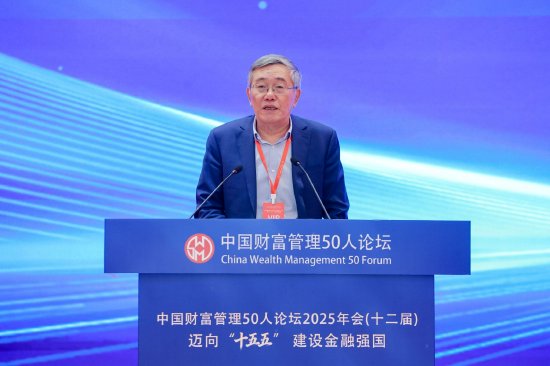
Core Viewpoint - The 2025 China Wealth Management Forum emphasizes the importance of achieving breakthroughs in five strategic tasks during the "14th Five-Year Plan" period to build a financial power [1] Economic Growth - Maintaining economic growth within a reasonable range is the top priority for the "14th Five-Year Plan," crucial for achieving significant progress in socialist modernization [3][12] - The target for reasonable growth is approximately 4.5% for both actual and nominal GDP, aligning with the goal of reaching the per capita GDP of a moderately developed country by 2035 [3][12] - The nominal growth is projected to be lower than actual growth in 2023, 2024, and 2025, leading to weaker growth in urban residents' income, corporate profits, and fiscal revenue, exacerbating insufficient domestic demand [3][12] Macro Control - The focus of macroeconomic control during the early phase of the "14th Five-Year Plan" must shift to promoting price recovery, as opposed to merely preventing price increases [4][13] - The overall tone of macroeconomic policy is to promote stable economic growth and reasonable price recovery, with monetary policy aimed at supporting this recovery [4][13] Development of New Productive Forces - The development of new productive forces is essential for the advancement of China's modern industrial system and is key to winning in the context of global changes and technological revolutions [5][14] - The focus during the "14th Five-Year Plan" should be on digitalization and low-carbon technologies, aiming for breakthroughs in critical and frontier technologies [5][14] Modern Industrial System - A modern industrial system must maintain a reasonable proportion of manufacturing, ensuring that the manufacturing sector's share of GDP remains stable and does not decline too rapidly [6][15] - Lessons from early industrialized countries indicate that a decline in manufacturing share can lead to vulnerabilities, such as falling into the middle-income trap [6][15] Consumer Spending - Increasing the resident consumption rate is identified as a core driver for economic growth, with a need to generate an additional 35 trillion yuan in total demand during the "14th Five-Year Plan" if growth is to be maintained at 4.5% [8][17] - The contribution of imports and exports to economic growth is expected to decline, necessitating a shift towards expanding domestic demand [8][17] Distribution Structure - Optimizing the distribution system is crucial for promoting common prosperity and increasing the consumption rate, which is vital for maintaining economic growth within a reasonable range [9][18] - Policies should focus on improving income distribution, raising minimum wage standards, and enhancing the income of low-income groups to ensure that disposable income grows faster than economic growth [9][18]
连续四个月保持增长!重要数据公布
Zhong Guo Zheng Quan Bao· 2025-12-27 04:23
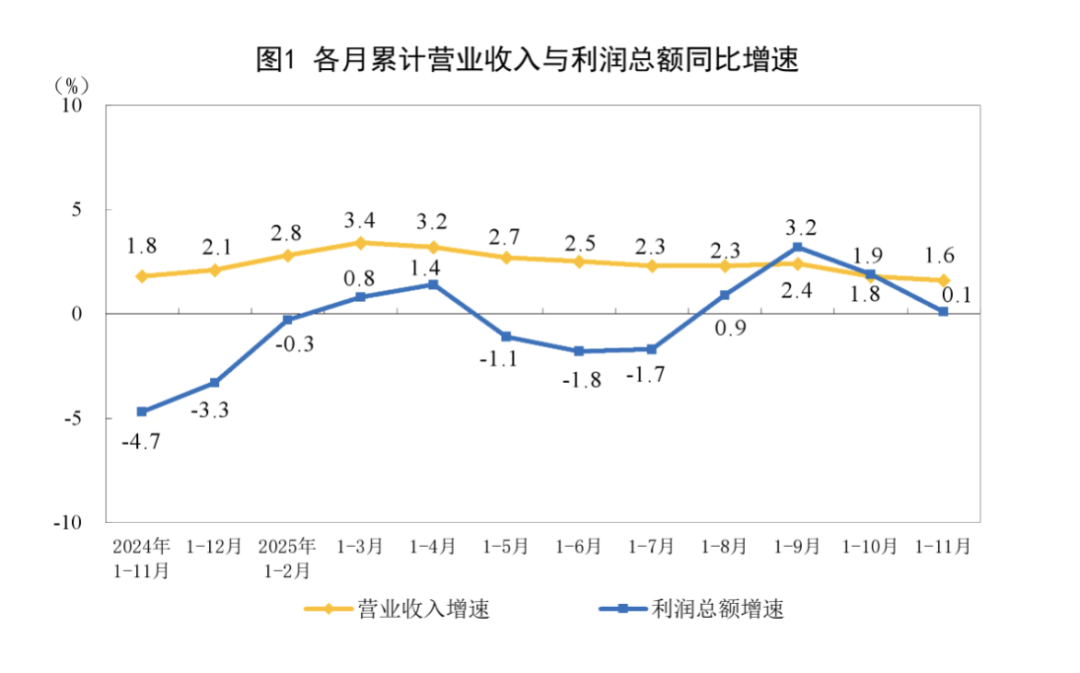
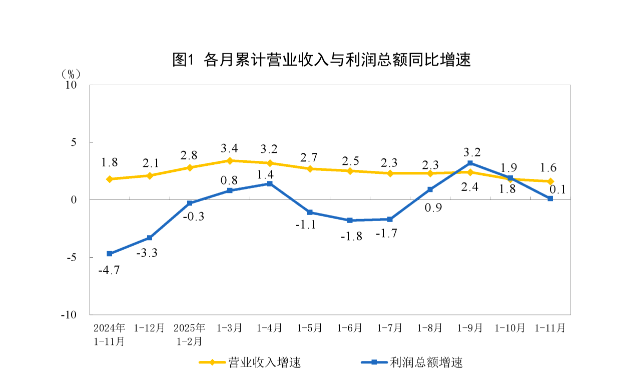
从三大门类看,于卫宁表示,1—11月份,制造业增长5.0%;电力、热力、燃气及水生产和供应业增长8.4%;采矿业下降27.2%,降幅较1—10月份收窄0.6 个百分点。 1—11月份,装备制造业利润带动作用明显。于卫宁表示,1—11月份,规模以上装备制造业利润同比增长7.7%,拉动全部规模以上工业企业利润增长2.8 个百分点,是对规模以上工业企业利润增长拉动作用最强的板块。 从行业看,装备制造业的8个大类行业中有7个行业利润实现同比增长,其中,铁路船舶航空航天、电子行业利润两位数增长,增速分别达27.8%、 15.0%;汽车行业利润增长7.5%,较1—10月份加快3.1个百分点;通用设备、专用设备、电气机械行业利润继续增长,增速分别为4.8%、4.6%、4.2%。 国家统计局12月27日发布数据显示,1—11月份,全国规模以上工业企业实现利润总额66268.6亿元,同比增长0.1%,自今年8月份以来累计增速连续四个 月保持增长。1—11月份,规模以上工业企业营业收入同比增长1.6%。 图片来源:国家统计局 国家统计局工业司首席统计师于卫宁表示,1—11月份,规模以上工业企业利润增速有所回落,但仍然延续8月份以 ...
明年经济工作怎么干?17市州主官这样说
Xin Lang Cai Jing· 2025-12-27 04:16
发展成绩来之不易,为我们在新起点上应对新挑战、夺取新胜利奠定了坚实基础。 转自:荆州发布 12月25日 省委经济工作会议在汉召开 研究部署2026年经济工作 17市州分组讨论 一致赞同省委、省政府 关于明年经济工作的安排 来看他们怎么说! ——武汉—— 对于省委经济工作会议有五点突出感受: 认识体会弥足珍贵,为我们做好当前和今后一个时期的经济工作提供了现实指导。 形势分析科学辩证,为我们全面做好经济工作坚定了信心决心。 目标安排务实进取,为我们更好引导预期、保持战略主动提供了重要依据。 工作任务重点突出,为全省上下抓好贯彻落实明确了主攻方向。 下一步,武汉将: 进一步强化内需主导,做强发展能级。扩大有效益的投资。激发有潜能的消费。培育有潜力的企业。 进一步壮大实体经济,加快发展新质生产力。加快打造"一城三廊一带"。加快构建现代化产业体系。加快建设基础设施体系。 进一步加快城市更新,建设现代化人民城市。深入推进城市更新三年行动。更好发挥"一委一办一平台"作用。 进一步推进区域协同,打造高质量发展重要增长极。持续"强核"。加快"壮圈"。全力"带群"。 进一步筑牢安全底线,持续增进民生福祉。加强生态保护。加强民生保 ...

明年恩施经济工作怎么干?州委书记这样说
Xin Lang Cai Jing· 2025-12-27 04:16
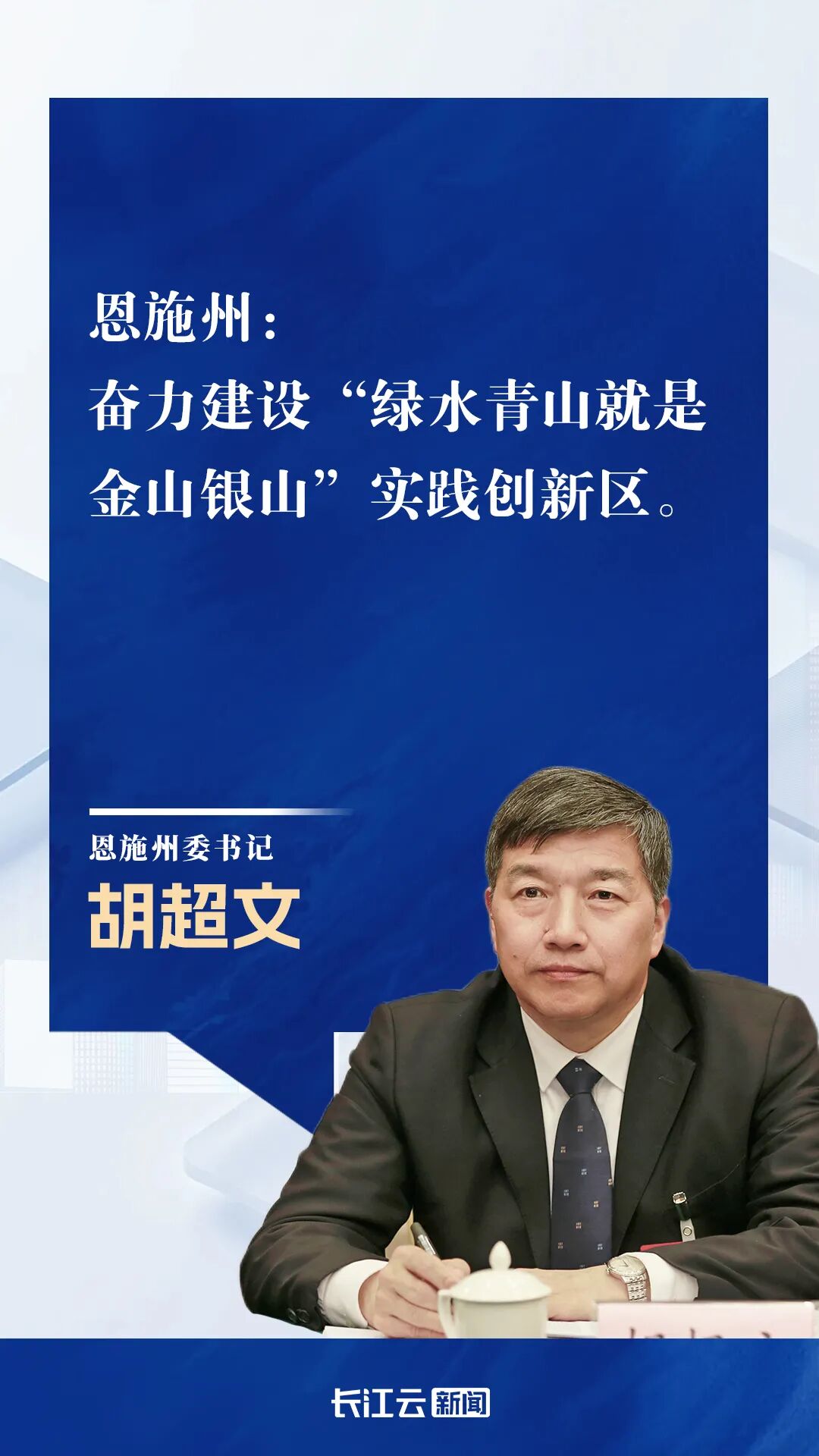
Core Viewpoint - The Hubei Provincial Economic Work Conference emphasizes the commitment to economic development and outlines strategic plans for 2026, focusing on enhancing consumption, investment, and industry growth in Enshi Prefecture [4]. Group 1: Economic Activation - The government aims to fully activate consumption by promoting various economic sectors such as the initial launch economy, silver economy, performance and event economy, and summer health tourism economy, facilitating the transformation and upgrading of consumption [4]. Group 2: Investment Expansion - There is a strong focus on expanding effective investment through the planning and implementation of major projects in transportation, water conservancy, energy, industry, openness, and tourism [4]. Group 3: Industry Development - The strategy includes a significant push to develop characteristic industries, particularly in selenium-rich products and ecological tourism and health industries, aiming to establish a "3310" modern industrial system [4]. Group 4: Reform and Opening Up - The government plans to deepen reforms in key areas and promote the export of selenium products, high-quality tea, and bulk tea to enhance market reach [4]. Group 5: Social Welfare - There is a commitment to addressing urgent issues faced by the public, ensuring that the benefits of development are distributed more equitably among all citizens [4].
工业利润累计增速连续4个月增长,装备制造业带动明显
Di Yi Cai Jing· 2025-12-27 02:34
Core Insights - In November, profits of industrial enterprises above designated size decreased by 13.1% year-on-year, with the decline expanding by 7.6 percentage points compared to the previous month [1] - From January to November, profits of industrial enterprises above designated size grew by 0.1%, maintaining a growth trend for four consecutive months since August [1] Group 1: Profit Trends - In the manufacturing sector, profits increased by 5.0% from January to November, while the electricity, heat, gas, and water production and supply sector saw an 8.4% profit growth [3] - The mining industry experienced a profit decline of 27.2%, although the decline was narrowed by 0.6 percentage points compared to the first ten months of the year [3] Group 2: Sector Performance - The equipment manufacturing sector significantly contributed to profit growth, with a 7.7% increase in profits from January to November, accounting for a 2.8 percentage point increase in overall industrial profits [3] - High-tech manufacturing profits accelerated, with a 10.0% year-on-year increase, surpassing the average growth rate of all industrial enterprises by 9.9 percentage points [3] - The raw materials manufacturing sector also saw a robust profit growth of 16.6%, contributing 2.0 percentage points to the overall industrial profit growth [4] Group 3: Future Outlook - The overall profit growth of industrial enterprises indicates a continued upward trend, supported by new industrial dynamics, although challenges remain due to international uncertainties and structural adjustments [5] - The Ministry of Industry and Information Technology has set goals for 2026, prioritizing the stabilization of the industrial economy, with an expected 5.9% year-on-year growth in industrial added value for the year [5] - Analysts predict that industrial profits may recover from low levels, potentially achieving around 10% growth by the end of 2026, indicating a shift from policy-driven to profit-driven market dynamics [5]
国家统计局:高技术制造业利润增速加快 原材料制造业利润较快增长
Xin Hua Cai Jing· 2025-12-27 02:34
Core Insights - The profit growth of industrial enterprises in China has shown a slight decline but continues to maintain an upward trend since August, with significant contributions from equipment manufacturing and high-tech manufacturing sectors [1][4]. Group 1: Industrial Profit Data - From January to November, the profit of large-scale industrial enterprises increased by 0.1% year-on-year, marking four consecutive months of growth since August [1]. - The manufacturing sector saw a profit increase of 5.0%, while the electricity, heat, gas, and water production and supply sector grew by 8.4%. In contrast, the mining sector experienced a decline of 27.2%, although this decline was 0.6 percentage points less than the previous month [1]. - The total operating revenue for large-scale industrial enterprises rose by 1.6% year-on-year during the same period [1]. Group 2: Equipment Manufacturing Sector - The profit of large-scale equipment manufacturing increased by 7.7% year-on-year, contributing 2.8 percentage points to the overall profit growth of large-scale industrial enterprises, making it the strongest driving sector [2]. - Among the eight major categories in the equipment manufacturing sector, seven reported year-on-year profit growth, with the railway, shipbuilding, aerospace, and electronics industries showing double-digit growth rates of 27.8% and 15.0%, respectively [2]. - The automotive industry also saw a profit increase of 7.5%, accelerating by 3.1 percentage points compared to the previous month [2]. Group 3: High-Tech Manufacturing Sector - The profit of large-scale high-tech manufacturing grew by 10.0% year-on-year, which is 9.9 percentage points higher than the average profit growth of all large-scale industrial enterprises [3]. - The "Artificial Intelligence+" initiative has positively impacted related equipment manufacturing, with profits in the electronic industrial specialized equipment sector increasing by 57.4%, and specific segments like semiconductor device manufacturing and electronic components seeing growth rates of 97.2% and 46.0%, respectively [3]. - The aerospace industry also experienced significant profit growth, with the aerospace and related equipment manufacturing sectors reporting increases of 13.3%, 192.9%, and 36.3% [3]. Group 4: Raw Materials Manufacturing Sector - The profit of large-scale raw materials manufacturing increased significantly by 16.6% year-on-year, contributing 2.0 percentage points to the overall profit growth of large-scale industrial enterprises [4]. - The steel industry has shown marked improvement in profitability this year, aided by low base factors, while the non-ferrous metals sector has maintained double-digit profit growth due to increased market demand and revenue growth [4].