
科技金融

Search documents
精耕细作金融“五篇大文章” 保险业交出高质量答卷
Jin Rong Shi Bao· 2025-12-17 04:27
Core Insights - 2025 is a pivotal year for the implementation of the financial "five major articles," with continuous policy dividends and deep integration of industry innovation practices, enhancing the quality and efficiency of financial services to the real economy [1] - The insurance industry plays a crucial role as an economic stabilizer and social stabilizer, focusing on key areas such as technology finance, inclusive finance, and green finance, thereby achieving dual improvements in scale and quality, as well as service and innovation [1] Policy Support - Multiple favorable policies are being released to facilitate the implementation of financial services, including the issuance of the "Guiding Opinions" by the State Council in March, which emphasizes the need to enrich technology insurance products and provide comprehensive financial services for technology enterprises [4] - In April, the regulatory authorities released an implementation plan for high-quality development of technology finance, encouraging insurance companies to develop insurance products covering the entire process of technological innovation activities [4] - In May, several departments proposed policies to support insurance funds in participating in equity investments and venture capital, promoting long-term investment reforms [4] Technological Innovation in Insurance - The insurance industry is focusing on developing a comprehensive risk protection network for technology innovation, launching innovative products tailored to the needs of high-risk technology sectors such as integrated circuits, biomedicine, and artificial intelligence [5] - By the third quarter of 2025, the premium income from technology insurance in China increased by 30% year-on-year, significantly outpacing the industry average, making it a core growth driver for financial services in technology innovation [5] Inclusive Insurance Development - The insurance industry is enhancing its inclusive insurance offerings to better serve small and micro enterprises, rural revitalization, and vulnerable groups, translating policy dividends into tangible benefits for the public [10] - Specific initiatives include the introduction of tailored insurance products for high-risk occupations and the development of low-threshold, affordable insurance products to meet the needs of the elderly and other vulnerable groups [11][12] Green Insurance Initiatives - The insurance industry is actively promoting green insurance and investment to support the comprehensive green transformation of the economy and society, with a focus on developing targeted risk protection solutions and enhancing the green insurance system [13] - As of mid-2025, insurance funds have invested significantly in green projects, with over 1.38 trillion yuan in debt investments and more than 700 billion yuan in equity investments directed towards green industries [14]

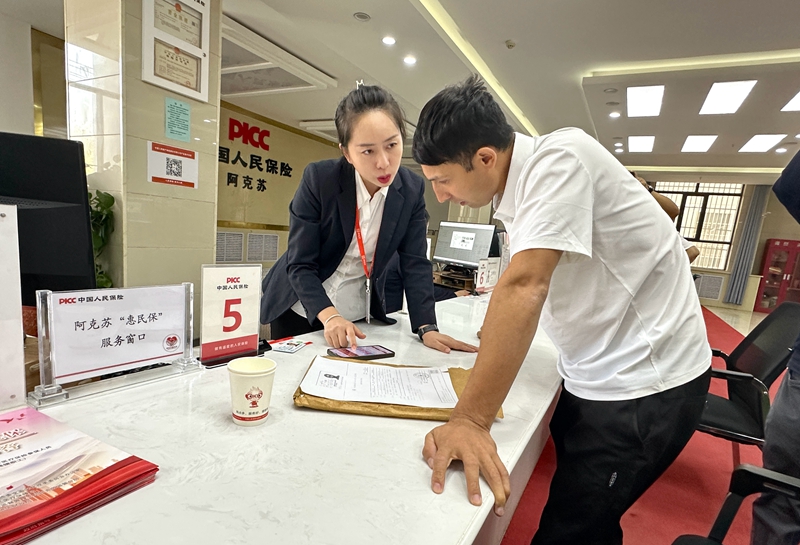
协同发展 创新赋能 安全筑基
Jin Rong Shi Bao· 2025-12-17 02:12
Core Insights - The financial development logic is shifting from "scale expansion" to "quality upgrade," with digital finance being reshaped by new technologies such as AI, big data, blockchain, and cloud computing, emphasizing intelligent, scenario-based, and inclusive finance as new competitive advantages globally [1] - Digital finance is accelerating its penetration into the entire financial service chain, becoming a key engine for improving the quality and efficiency of the financial industry, while also presenting new challenges such as data security and cross-border regulatory adaptation [1] Digital Finance and Technological Finance Collaboration - The core content of building a strong financial nation is to vigorously develop digital finance and technological finance, where technological finance provides support and digital finance offers operational methods [2][3] - Policies are being implemented to enhance the deep integration of technological finance, digital finance, and the real economy, with local policies accelerating their implementation [3] Policy Framework and Local Initiatives - A framework for the deep integration of technological finance, digital finance, and the real economy is being rapidly improved, with local policies like those from Beijing's Haidian District focusing on creating a diversified financial service system that meets the financing needs of technology enterprises [3] - Key initiatives include upgrading venture capital ecosystems, expanding credit for technological innovation, enhancing support for public listings, and extending technology insurance to better serve small and medium-sized enterprises [3] Core Value of Digital Finance - Digital finance is recognized as a "key engine" for serving the real economy, with a consensus that it should act as an accelerator for high-quality economic development [4] - The core value of digital finance lies not only in exploring new markets but also in enhancing the survival capabilities of the financial industry, helping it operate steadily in complex environments [4] Trends in Digital Finance - The "China Financial Technology and Digital Finance Development Report (2025)" identifies five trends in digital finance, including the integration of generative AI into core banking operations, the evolution of AI agents into collaborative business partners, breakthroughs in quantum computing for financial applications, differentiated strategies for digital investments, and the importance of data governance and security for future growth [4] Challenges in Digital Finance - Despite positive trends, digital finance faces challenges such as insufficient compliance for cross-border data flow and lagging regulation for new business models, necessitating a balance between innovation and security [5] - The relationship between innovation and security in digital finance should be viewed as a mutually reinforcing cycle, promoting high-level financial regulation and innovation to prevent risks while fostering an inclusive innovation environment [5]
多措并举支持国家重大战略、 重点领域和薄弱环节
Jin Rong Shi Bao· 2025-12-17 01:38
会议要求,国家开发银行要着力配合宏观调控,精准有力服务实体经济。全力配合更加积极的财政 政策,多措并举支持国家重大战略、重点领域和薄弱环节。认真落实适度宽松的货币政策,加力支持扩 大内需、科技创新、中小微企业等重点领域。着力服务基础设施,助力扩大内需、做强国内大循环。围 绕五大基础设施领域持续加大支持力度,积极配合优化"两重"项目和"两新"政策实施,大力支持中央预 算内投资项目,做好对地方政府专项债券、超长期特别国债支持重大项目的超长期贷款配套融资,继续 发挥新型政策性金融工具作用,加大服务城市更新工作力度。着力服务创新驱动,助力科技创新、因地 制宜发展新质生产力。 12月12日,国家开发银行党委召开会议,传达学习中央经济工作会议精神,落实全国金融系统工作 会议部署要求,研究贯彻落实工作。受国家开发银行党委书记、董事长赵欢委托,国家开发银行党委副 书记、行长谭炯主持会议。 要做好科技金融大文章,积极助力建设现代化产业体系。加快支持适度超前布局新型基础设施和信 息通信网络、全国一体化算力网、重大科技基础设施等建设,支持传统基础设施更新和数智化改造,加 大对国家战略科技力量、关键核心技术攻关、科技型企业支持力度。 ...
毛锦凰:拓展数字金融服务实体经济广度深度
Jing Ji Ri Bao· 2025-12-17 00:05
Core Viewpoint - Digital finance is a powerful tool for optimizing financial services and is crucial for advancing technology finance, green finance, inclusive finance, and pension finance [1] Group 1: Integration of Digital Technology in Finance - Digital finance integrates technologies such as big data, cloud computing, blockchain, and artificial intelligence into the financial sector, creating new products, services, and business models [1] - This integration helps break down traditional financial information barriers and expands service boundaries, allowing funds to flow more efficiently to the real economy [1] Group 2: Addressing Information Asymmetry - Traditional financial services face information asymmetry, making it difficult for institutions to accurately assess credit risks, leading to high financing thresholds [2] - Digital finance can build a multidimensional credit assessment system by deeply mining data, providing comprehensive customer information to financial institutions [2] - As of February 2025, banks have issued loans totaling 37.3 trillion yuan through a national integrated financing credit service platform, effectively meeting corporate financing needs [2] Group 3: Avoiding Resource Misallocation - Traditional financial models often concentrate credit resources on large enterprises, neglecting small and micro enterprises due to high risks and costs [3] - Digital finance enhances the precision of products and services, improving the financing environment for small and micro enterprises [3] - For instance, over 70% of enterprises receiving credit from WeBank's "Micro Business Loan" have annual revenues below 10 million yuan [3] Group 4: Reducing Costs and Increasing Efficiency - Digital finance supports the use of digital currencies and mobile payments, enabling financial institutions to shorten business processes and reduce manual intervention [4] - The application of technologies like AI and blockchain allows for real-time risk monitoring and cost reduction [4] - The "14th Five-Year Plan" emphasizes the need for financial institutions to accelerate digital transformation and enhance service quality for the real economy [4] Group 5: Expanding Coverage and Precision - Digital finance should provide flexible credit support to new employment forms and bridge the digital divide for special groups [5] - Financial services should extend to traditional industries and create a comprehensive financial service system covering the entire innovation chain [5] - Enhancing rural digital inclusive finance and optimizing service points in central and western regions is also essential [5] Group 6: Improving Mechanisms for Development Quality - Accelerating the construction of digital financial infrastructure and optimizing computing power layout is crucial for building a secure and reliable technical foundation [6] - Implementing differentiated incentive policies can lower service costs and establish a market-oriented pricing and risk-sharing mechanism [6] - Strengthening data security and establishing a transparent regulatory system are necessary to ensure the safe and controllable expansion of digital financial services [6]
破局“首公里” 金融陪伴企业跑赢科创“马拉松”
Jing Ji Ri Bao· 2025-12-16 23:32
Core Viewpoint - The recent Central Economic Work Conference emphasizes the integration of technological and industrial innovation to develop new productive forces, highlighting the role of financial services in supporting the entire lifecycle of technological innovation [1] Group 1: Challenges in Financing Technology Startups - Technology innovation is characterized as a high-investment, long-cycle "marathon," with the most challenging phase often being the initial stage where startups face difficulties in obtaining loans due to lack of revenue and collateral [2] - Shenzhen Guarantee Group has introduced the "Crossing Loan" program to address the financing challenges faced by startups, providing 4 million yuan in initial loan support to a technology company focused on AI-driven manufacturing systems [2] Group 2: Credit and Financing Solutions - The People's Bank of China in Shenzhen is promoting collaboration among local credit platforms, government financing guarantee institutions, and banks to provide credit scoring and guarantee services for "no-loan" technology enterprises, resulting in 2 billion yuan in loans approved for 69 companies through the "Crossing Loan" program [3] - The "Technology Startup Pass" initiative offers a digital credit solution for early-stage tech companies, utilizing public and industry data to create comprehensive credit scores and reports, helping over 5,000 companies secure 8 billion yuan in loans [3] Group 3: Investment and Support for Technological Development - Shenzhen Zhujidongli Technology Co., known for its humanoid robots, has attracted investment from Dongfang Fuhai, which issued a 400 million yuan technology innovation bond to support hard tech sectors like AI and semiconductors [4] - Guangdong Blue Potential Marine Technology Co. has developed underwater robots and received nearly 20 million yuan in integrated financing support through a collaborative model involving equity investment and credit loans, aiding in their production expansion [6][7] Group 4: Cross-Border Financial Innovations - The "Kehui Tong" pilot program facilitates cross-border flow of innovation elements between Shenzhen and Hong Kong, with over 77 million yuan in research funds successfully transferred to research institutions in the Qianhai Shenzhen-Hong Kong Cooperation Zone [8][9] - Financial institutions are expanding their services to include high-end research talent and providing comprehensive financial services to core research institutions and scientists in the cooperation zone [9]
多地发布“十五五”规划建议 区域经济发展将更注重优化金融资源配置
Zhong Guo Zheng Quan Bao· 2025-12-16 22:19
Group 1: Core Insights - Multiple provinces have released local "14th Five-Year" planning suggestions focusing on technology finance, promoting quality enterprise listings, and developing green finance as high-frequency terms [1] - Experts believe these initiatives address the actual needs of enterprises for technological innovation and green transformation, optimizing financial resource allocation to inject financial vitality into regional economic development during the "14th Five-Year" period [1] Group 2: Technology Finance Initiatives - Various regions emphasize leveraging government investment guiding funds to enhance technology finance, with Jiangsu and Shandong highlighting the role of strategic emerging industry funds [2] - Some areas are exploring risk-sharing mechanisms due to the long return cycles and high risks associated with emerging industries, as seen in Heilongjiang's proposal for a future industry investment growth and risk-sharing mechanism [2] - The integration of diverse financial tools can effectively match the financing needs of enterprises at different development stages, promoting the optimization of financial resource allocation [3] Group 3: Supporting Quality Enterprise Listings - Local governments are deploying strategies to support the quality and quantity of listed companies, with initiatives in Guizhou, Henan, and Chongqing focusing on nurturing mechanisms and integrated service systems [4] - Emphasis is placed on improving the quality of listed companies, with suggestions for establishing quality assessment mechanisms and dynamic management to ensure timely adjustments [4] - Recommendations for mergers and acquisitions include implementing pre-review processes and performance evaluation mechanisms post-merger to ensure industry logic and valuation rationality [4] Group 4: Development of Green Finance - Energy-rich provinces like Inner Mongolia, Shanxi, and Qinghai are proposing the development of green finance, with innovative financial products and services based on ecological product values [5] - Green finance is seen as a means to reshape local government industrial policy preferences and enterprise project selection, promoting green investment expansion and restructuring regional growth models [5][6] - Future efforts should focus on unifying green standards, enhancing information disclosure, activating long-term capital, and preventing risks in green finance practices [6]
区域经济发展将更注重优化金融资源配置
Zhong Guo Zheng Quan Bao· 2025-12-16 20:19
Group 1 - The article highlights the emphasis on technology finance, quality enterprise listings, and green finance in the "14th Five-Year Plan" proposals from various provinces in China, aiming to optimize financial resource allocation for regional economic development [1][2] - Multiple regions are focusing on leveraging government investment funds to stimulate technology finance, with specific initiatives such as Jiangsu's strategic emerging industry fund and Shaanxi's establishment of a comprehensive technology finance service platform [1][2] - The establishment of risk-sharing mechanisms is being explored in some areas, such as Heilongjiang's proposal to create a future industry investment growth and risk-sharing mechanism [1] Group 2 - Regions are also working on improving financial service mechanisms to support technology enterprises, with initiatives like Sichuan's enhancement of the technology finance service system and Henan's development of a government-bank guarantee linkage mechanism [2] - The article discusses the importance of nurturing quality enterprises for listing, with various provinces implementing measures to enhance the listing cultivation system and improve the quality of listed companies [2][3] - The focus is shifting from quantity expansion to quality improvement in enterprise listings, with suggestions for establishing quality assessment mechanisms and dynamic management of listings [3] Group 3 - The development of green finance is being prioritized in energy-rich provinces, with initiatives such as Qinghai's innovation in green financial products and Inner Mongolia's creation of a carbon peak and neutrality financial service zone [3][4] - The article emphasizes the need for institutional innovation in regional economic transformation through green finance, including the establishment of unified green standards and robust information disclosure mechanisms [4] - Concerns about "greenwashing" and the importance of regulatory frameworks for green financial products are highlighted, stressing the need for credible identification and verification mechanisms [4]
寻找科技金融“新密钥”:江苏金融创新给出科创企业融资N种解法
Mei Ri Jing Ji Xin Wen· 2025-12-16 12:23
Core Insights - The article discusses the challenges and innovations in financing technology-driven enterprises, particularly in Jiangsu Province, where traditional credit models struggle to meet the unique needs of these companies [1][4]. Group 1: Innovation in Financing - Jiangsu Province is leading in regional innovation capabilities, moving away from traditional collateral-based lending to a system using "Su Chuang Points" to evaluate innovation [2][4]. - The "Su Chuang Points Loan" product has been developed to assist enterprises in their growth, particularly in the biomedicine sector, which has high funding demands and long development cycles [3][11]. Group 2: Financial Products and Support - Since its establishment in December 2024, the Nanjing Biomedicine Sub-center has facilitated project financing totaling 225 million yuan, collaborating with banks to create tailored credit products for university research projects [3]. - By the end of Q3 2025, nearly 40,000 enterprises were classified as "priority support" or "recommended support," with a loan balance of 381.2 billion yuan under the "Su Chuang Points Loan" program [5]. Group 3: Digital Financial Innovations - Digital financial tools are enhancing the capabilities of technology finance, with banks creating comprehensive profiles and scoring systems for enterprises based on their innovation capabilities [6][7]. - The China Bank Jiangsu Branch has developed a digital financial platform that provides real-time insights into industry chains and pre-approval credit limits for technology enterprises [7]. Group 4: Policy Support and Collaboration - The People's Bank of China is working with the Jiangsu Provincial Science and Technology Department to introduce special support policies for technology finance, addressing the mismatch between traditional credit models and the needs of tech enterprises [4][8]. - The "Su Chuang Rong" product has supported technology SMEs with loans totaling 397.8 billion yuan by the end of Q3 2025, demonstrating the effectiveness of policy-driven financial support [8]. Group 5: Tailored Services for Startups - Local banks are focusing on small and micro enterprises, emphasizing non-credit services such as equity financing and resource matching to better meet the needs of early-stage technology companies [9][10]. - The establishment of specialized banking teams with expertise in finance, industry, and risk management is crucial for effectively serving technology enterprises [9]. Group 6: Comprehensive Financial Service Systems - A comprehensive financial service system has been established in Suzhou, integrating digital credit platforms and specialized financial products to support innovation and technology-driven enterprises [13][14]. - The "Innovation Index" has been developed to help financial institutions better understand and support the operational needs of innovative companies [13].

第十九届深圳金博会:擘画产业金融新图景 谱写科创赋能新篇章
Zheng Quan Shi Bao Wang· 2025-12-16 12:17
Core Insights - The 19th Shenzhen International Financial Expo successfully concluded, showcasing Shenzhen's financial strength and exploring new paths for financial services to the real economy [1] - The expo highlighted Shenzhen's ambition to become a globally influential industrial financial center by 2025, focusing on six key areas including financial technology and cross-border RMB services [7][8] Group 1: Scale and Participation - The expo attracted 47,400 attendees from 25 countries and regions, marking a 58% increase year-on-year, demonstrating significant internationalization and professionalism [2] - A record 288 financial institutions and enterprises participated, with a year-on-year growth of 80%, creating a diverse financial ecosystem [2] - Major financial institutions, including the Shenzhen Stock Exchange and various state-owned banks, showcased their latest products and services [2] Group 2: Key Themes and Innovations - The expo focused on five major themes: technology finance, green finance, inclusive finance, pension finance, and digital finance, releasing 18 new policies and innovative products [3] - Notable innovations included the launch of a global risk management feature for SMEs and the establishment of the first digital RMB application lab for agricultural supply chains [4] Group 3: Technology Integration - Over 30 fintech companies showcased advancements in AI risk control, smart investment advisory, and blockchain applications, emphasizing the deep integration of technology and finance [5] - Huawei and 11 partners presented solutions in financial AI models and resilient infrastructure, highlighting successful digital transformation cases [6] Group 4: Future Planning - The expo served as a platform for outlining Shenzhen's future plans, aiming to create a comprehensive financial service system covering all stages of enterprise development [7] - The event underscored the need for a profound transformation in the financial ecosystem to support the shift towards technology-driven economic growth [7]
以金融动能服务新质生产力跑出“加速度”
Qi Lu Wan Bao· 2025-12-16 10:27
Core Insights - The article emphasizes the role of technology finance in empowering the entire innovation chain and enhancing new productive forces through tailored financial services for tech enterprises [1][6] Group 1: Technology Finance - Minsheng Bank's Jinan branch has established a comprehensive service system for tech innovation, focusing on a three-tier collaborative mechanism to support tech enterprises at different growth stages [1] - The bank has created a full-cycle service model that integrates debt, equity, services, and resources to foster a collaborative ecosystem for tech innovation [1] - A case study of a tech company in the automotive aftermarket illustrates how the bank's support through intellectual property pledge financing helped the company convert core technology into development capital [1] Group 2: Digital Finance - The Jinan branch is leveraging digital finance to support industrial digital transformation, exploring new financial models that integrate digital capabilities with traditional industries [2] - The bank has launched online products like "Order/Supply Quick Loan" to provide precise services and ensure the stability and efficiency of supply chains [2] - By the end of Q3 2025, the bank had over 6,000 supply chain financing clients, with a cumulative investment exceeding 47 billion [2] Group 3: Green Finance - The bank is committed to supporting green projects and traditional industry transformation by providing quick approval channels and differentiated credit policies for green projects [3] - It actively engages with high-energy-consuming enterprises to support their transition to clean energy projects, including wind and solar energy [3] - The bank's efforts in green finance aim to inject financial power into regional green transformation initiatives [3] Group 4: Inclusive Finance - Minsheng Bank's Jinan branch has developed a comprehensive support system for small and micro enterprises, focusing on customized and integrated financial services [4] - The bank has conducted extensive outreach to small and micro clients, approving over 20 billion in credit for more than 9,700 clients since October 2024 [5] - The number of inclusive loan clients increased from 11,503 to 17,124, marking a 49% growth, while inclusive loans rose from 178 billion to 257 billion, a 44% increase [5] Group 5: Overall Strategy - The Jinan branch aligns its financial services with the central government's directives to foster new productive forces and support high-quality development in Shandong [6] - The bank aims to continuously innovate its product offerings and enhance service efficiency to better serve the real economy and promote sustainable growth [6]
