智能体

Search documents
Altman对话YC总裁:OpenAI的开源模型将远超期待
Hu Xiu· 2025-06-23 02:27
Group 1 - OpenAI is set to release a powerful open-source model, GPT-5, which will be a significant step towards achieving full multimodal capabilities [2][3] - GPT-5 is expected to support various input types including voice, images, code, and video, enhancing user interaction and application development [3][4] - The cost of using AI models is rapidly decreasing, with GPT-3's costs dropping to one-fifth within a week, indicating a trend that will continue [5][4] Group 2 - This year is referred to as the "Year of the Agent," where AI agents are expected to perform tasks similar to entry-level employees, potentially replacing many computer-based jobs [6][8] - OpenAI's vision for AGI is categorized into five levels, with GPT-5 being a step towards achieving deeper reasoning and real-time content generation capabilities [9][27] Group 3 - Entrepreneurs are encouraged to seize the technological transformation opportunities, as this is considered the best time in tech history for startups [10][42] - Successful startups should focus on unmet market needs rather than replicating existing products like OpenAI's core chat assistant [11][32] Group 4 - The integration of AI into everyday life is evolving, with users beginning to treat ChatGPT as an operating system that connects various data sources [21][24] - The future of human-computer interaction is expected to minimize traditional interfaces, allowing for more seamless and intuitive user experiences [40][41] Group 5 - OpenAI aims to create a comprehensive model capable of reasoning and generating real-time video content, which would revolutionize computer interfaces [27][26] - The potential for robotics is highlighted, with expectations that humanoid robots will soon be able to perform useful tasks in the real world [28][29] Group 6 - The discussion emphasizes the importance of building defensible companies in the face of competition from larger entities like OpenAI, suggesting that unique and innovative approaches are crucial for success [30][33] - The conversation reflects on the rapid advancements in AI and the need for new infrastructure to support these developments, drawing parallels to the historical impact of the transistor [62][63]
通信行业周报2025年第25周:Marvell预测2028年AI基建超万亿美元,AI算力高景气度延续-20250622
Guoxin Securities· 2025-06-22 15:22
Investment Rating - The report maintains an "Outperform the Market" rating for the communication industry [5][56]. Core Insights - Marvell predicts that North American CSP cloud capital expenditures (Capex) will exceed $1 trillion by 2028, with a compound annual growth rate (CAGR) of 20% from an expected $595 billion in 2025 [2][13]. - The customized ASIC market is expected to grow significantly, from $6 billion in 2023 to $40.8 billion by 2028, reflecting a CAGR of 47% [2][14]. - Marvell's data center business is projected to capture a market share of 20% by 2028, with potential revenue reaching $94 billion, driven by high demand for customized chips [19][20]. Summary by Sections Industry News Tracking - Marvell's AI Day highlighted the rapid growth of Capex among North American CSPs, with a revised potential market size for data centers increasing to $94 billion, up from a previous estimate of $75 billion, indicating a 26% growth [13]. - The demand for AI ASICs is rising, with Marvell reporting 18 customer projects involving major players like Tesla and OpenAI [14][19]. Market Performance - The communication index rose by 1.58% this week, outperforming the Shanghai Composite Index, which fell by 0.45%, resulting in a relative return of +2.04% [3][45]. - Key sectors such as optical modules, IoT controllers, and optical fiber cables showed strong performance, with respective increases of 4.22%, 1.29%, and 1.20% [45][48]. Investment Recommendations - The report suggests focusing on AI development on both cloud and edge sides, while also considering the high dividend value of major telecom operators [4][52]. - Recommended stocks include China Mobile, Zhongji Xuchuang, Tianfu Communication, and Guanghe Communication for the upcoming week [4][52].
操作系统三分天下之战:“纯血鸿蒙”进化,政企市场成生态扩张突破口
Hua Xia Shi Bao· 2025-06-21 11:21
Core Insights - Huawei officially launched the developer Beta for HarmonyOS 6, emphasizing the importance of ecosystem reconstruction over merely building an operating system [2] - The number of registered developers for HarmonyOS has exceeded 8 million, with over 40 Huawei devices running HarmonyOS 5 and more than 30,000 applications in development [2][3] - HarmonyOS 6 aims to enhance user experience, integrating AI capabilities into its architecture and supporting over 50 smart applications [3][4] Ecosystem Expansion - Huawei's hardware strategy includes default installation of the native HarmonyOS on new devices, with plans for older models to receive upgrades [5] - The number of applications for HarmonyOS computers is expected to surpass 2,500 by the end of June, with over 100 general office platforms already adapted to HarmonyOS [5] - Huawei aims to achieve a market share of 19% in China's smartphone market by Q4 2024, surpassing Apple's iOS by 2% [6] Technical Advancements - HarmonyOS 6 features a self-developed architecture that enhances system fluidity by 30%, reduces memory usage by 1.5GB, and improves battery life by nearly one hour [4] - The introduction of the HarmonyOS Intelligent Agent Framework (HMAF) allows developers to create low-latency applications with autonomous capabilities [4] Future Goals - Huawei's target for the HarmonyOS ecosystem includes reaching 100,000 applications by 2025, marking a significant milestone for ecosystem maturity [6] - The company is encouraged to lower developer fees and establish a vendor alliance to increase the number of HarmonyOS devices in the market [6]

中兴通讯罗炜:在“红海”中突围,要懂技术,更要懂年轻人
Nan Fang Du Shi Bao· 2025-06-20 12:33
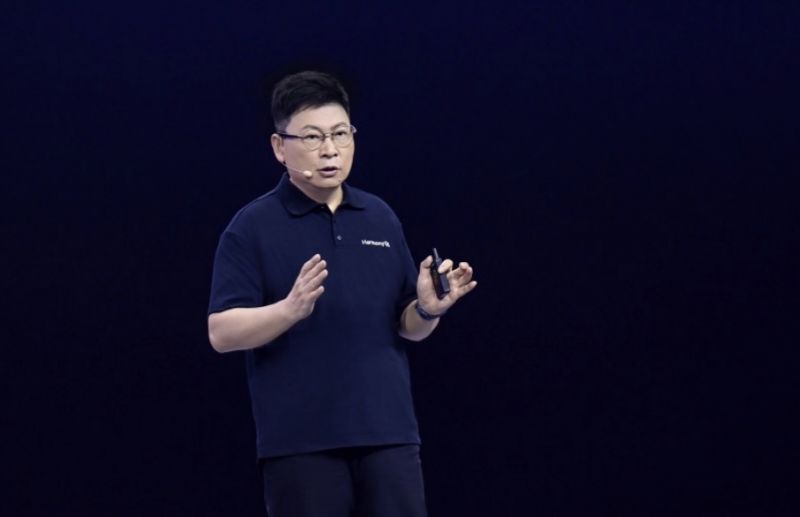
Group 1 - The core industry signal observed is the shift from providing "connectivity" to offering "intelligence" as 5G-A scales up, with AI becoming the central driving force in restructuring network architecture and the entire value chain [2] - Traditional equipment manufacturers and terminal vendors face dual challenges and opportunities as AI's demand for computing power and energy grows exponentially, necessitating efficient and sustainable infrastructure [2][4] - Companies are focusing on precise differentiation and capturing emerging growth points to navigate intense market competition, with ZTE emphasizing emotional resonance with Generation Z through a blend of technology and culture [2][6] Group 2 - AI models have rapidly evolved from technical iterations to ecological symbiosis since the release of ChatGPT in 2022, with efficient infrastructure and algorithms remaining key themes [3] - The demand for computing power and energy is continuously increasing, leading to a need for sustainable infrastructure solutions across various industries [4] - ZTE proposes a systematic innovation approach to create an integrated intelligent foundation of "network, computing power, and energy," aiming to transition network architecture to "AI-native" [4][5] Group 3 - ZTE's strategy includes modular and prefabricated designs to reduce delivery cycles by 40%, and the introduction of AI's autonomous learning capabilities to improve operational efficiency by over 10% [5] - The collaboration of AI agents is being explored, with the industry pushing towards standards for agent cooperation, which will enhance AI applications in complex scenarios [5] - ZTE's terminal strategy focuses on precise differentiation and leveraging its three brands to address the competitive landscape, with an emphasis on making high-end technology accessible to a broader audience [6][7] Group 4 - The ultimate goal is to transform the company's B-end technology advantages into perceptible C-end consumer experiences, creating a seamless integration of technology into daily life [7][8] - The integration of devices such as smartphones, AI screens, and home gateways will enable non-intrusive interactions and proactive services, enhancing user experience through collaborative technology [8] - The industry is undergoing a transformation from connectivity to intelligence, with the challenge being to effectively leverage ICT technology to drive sustained growth in terminal businesses [8]

2025年第23周:数码家电行业周度市场观察
艾瑞咨询· 2025-06-20 09:08
Group 1: Kitchen Appliances and AI Integration - The kitchen appliance industry is facing challenges due to changing consumer preferences, with a focus on attracting younger users through AI-integrated smart products like the "Food God" model [1] - Companies are exploring diversification, optimizing designs, and accelerating international expansion to adapt to market conditions, including real estate downturns and overseas competition [1] - Future opportunities lie in expanding the food industry chain and leveraging AI to lower cooking barriers, reshaping market dynamics [1] Group 2: AI Glasses Market - The global sales of AI glasses are projected to reach 600,000 units in Q1 2024, marking a 216% year-on-year increase, significantly outpacing VR and AR products [2] - Despite the promising growth, challenges such as design balance, insufficient SKUs, and production capacity issues remain, with the upcoming 618 shopping festival being a critical test for domestic AI glasses [2] - The next two to three years are deemed crucial for competition in the AI glasses market, necessitating Chinese brands to enhance their efforts in rule-making and technological breakthroughs [2] Group 3: Space Computing - INAIR's new AI space computer emphasizes lightweight design and efficient multi-window operations, while Apple’s Vision Pro integrates digital and physical worlds but faces high pricing and limited battery life [4] - Meizu's StarV Air2 offers lightweight daily assistance but lacks capabilities for complex tasks, representing different approaches to space computing [4] - Success in this field will depend on meeting user needs and adapting to practical scenarios [4] Group 4: Bathroom Industry Trends - The bathroom industry is evolving from functional spaces to comfort-oriented environments, with trends focusing on scene-based, intelligent, and age-friendly designs [5] - Brands are showcasing comprehensive solutions and customized offerings at industry exhibitions, enhancing user experiences [5] - The shift from scale competition to value competition emphasizes technological depth and humanistic care to meet diverse consumer demands [5] Group 5: AI Glasses Market Challenges - The AI glasses market is experiencing rapid growth, with ten new products launched in May, and hardware performance aligning with high-end smartphones [6] - Despite advancements, the industry faces challenges such as the lack of "killer" features and insufficient user experience, with AR glasses dominating the market [6] - By Q1 2025, sales are expected to grow by 45%, but AI features are not the core selling point, indicating a need for practical optimization and scenario expansion [6] Group 6: AI Model Market Dynamics - The domestic AI model market is transitioning from a "hundred models war" to a consolidation phase, with major players like ByteDance, Alibaba, and Tencent competing through various strategies [7] - Emerging companies are rapidly gaining traction, while some established players are shifting focus towards application scenarios [7] - Future competition will prioritize technological implementation and productization capabilities, with resources and innovation being key determinants of success [7] Group 7: Automotive Industry and Humanoid Robots - The automotive sector is increasingly showcasing humanoid robots, with 19 major car manufacturers entering the field, driven by advancements in generative AI [8] - Despite having supply chain advantages, the industry faces challenges in supply chain management, commercial orders, and technical bottlenecks [8] - Overall, humanoid robots are still in the early stages, with technology and market acceptance being critical hurdles [8] Group 8: Data Industry and Economic Value - The global trend of restricting data flow is highlighted by the U.S. NIH's ban on Chinese access to key databases, prompting China to accelerate its digital economy initiatives [9] - By 2025, the goal is for the core digital economy sectors to account for over 10% of GDP, with the data industry projected to reach 7.5 trillion yuan by 2030 [9] - The establishment of high-quality data sets supports domestic model development, but challenges in data quality and utilization efficiency persist [9] Group 9: Refrigerator Market Innovations - The refrigerator market is expected to see growth in Q1 2025, driven by fiscal subsidies and technological innovations, with mid-to-high-end products leading the way [10] - Major brands like Haier and Bosch are focusing on differentiation through preservation, health management, and design [10] - Meeting the demands of younger consumers through preservation upgrades and AI applications is crucial for future growth [10] Group 10: Strategic Collaborations and Investments - Meitu and Alibaba have entered a strategic cooperation involving a $250 million convertible bond, focusing on e-commerce, AI technology, and cloud computing [14][15] - This partnership aims to enhance Meitu's capital structure and broaden its shareholder base while driving breakthroughs in respective fields [15] - Hong Kong Investment Management Company, known as "Hong Kong's Temasek," is actively investing in AI computing and hard technology, managing over HKD 62 billion [18] - Honor is entering the robotics sector with significant investments planned for AI research and hardware development, showcasing its technological capabilities [19]





明略科技发布全球化广告测试及优化产品AdEff
Zheng Quan Ri Bao Wang· 2025-06-20 07:18
Core Insights - Minglue Technology officially launched AdEff, an AI-driven global advertising testing and optimization product, on June 19 [1] - AdEff is developed based on Minglue's proprietary Hypergraph Multimodal Large Language Model (HMLLM) and employs a collaborative architecture of large models and mixed expert models [1] - The product aims to address long-standing challenges in advertising testing and optimization regarding time and cost, providing a new efficiency tool for the creative industry [1] Group 1 - AdEff can simulate consumer feedback on advertising creativity in just a few minutes and provide targeted optimization suggestions [1] - The product enables marketing and creative professionals to make more agile and informed decisions based on data, enhancing the success rate of advertising campaigns [1] - AdEff significantly reduces the cost of advertising testing, allowing companies to test every advertisement and find a balance between "creative sensibility" and "commercial rationality" [1] Group 2 - AdEff represents the latest application of generative AI technology and intelligent agents in the marketing services sector, indicating the future direction of marketing tool development [2] - The company plans to continue enhancing AdEff in areas such as brand content measurement types, technical optimization, personalized adaptation, and global ecosystem expansion [2]
智能体成为人工智能产业新“C位”!科创板人工智能ETF(588930)低开低走,实时成交额突破3000万元
Mei Ri Jing Ji Xin Wen· 2025-06-20 05:25
Group 1 - The core viewpoint of the news highlights the significant integration of AI capabilities in global applications, with 90% of the Top 100 applications incorporating AI, leading to over 1.2 billion monthly active users in AI applications [1] - The shift in mobile terminals from an app-centric model to an agent-centric model is emphasized, predicting nearly 10 billion personal AI agents by 2030, which will transform user interaction experiences [1] - The A-share market experienced a slight decline, but certain AI-related stocks showed resilience, with notable increases in companies like Chipone Technology and others, indicating a high market interest in AI themes [1] Group 2 - Open Source Securities indicates that the investment value in the AI sector is becoming increasingly evident, driven by the rapid iteration and performance enhancement of AI large model technologies [2] - The practical application of AIGC technology is being reinforced, particularly in education, coding, and gaming, supported by recent policies in Beijing that incentivize game companies to enhance R&D efficiency through AI [2] - The demand for AI computing power is being driven by low-latency applications such as AI video calls and online gaming, which are boosting the overall demand for domestic AI computing power [2]
联影智能获10亿元A轮融资,将投入医疗大模型和智能体等研发
Sou Hu Cai Jing· 2025-06-20 04:24
Group 1 - Shanghai United Imaging Intelligence Medical Technology Co., Ltd. (United Imaging Intelligence) successfully completed a Series A financing round with a total scale of 1 billion yuan [1] - The financing was led by E Fund Private Equity Fund Management Co., Ltd. and Shanggong Investment Management, with participation from various institutions including Shanghai United, Shengshi Capital, and others [1] - United Imaging Intelligence is a subsidiary of United Imaging Group, focusing on artificial intelligence in healthcare, providing integrated AI solutions across multiple scenarios and diseases [1] Group 2 - The completion of the Series A financing will accelerate both technological innovation and product implementation [2] - The company plans to increase investment in research and development in cutting-edge areas such as medical large models and intelligent agents, enhancing the depth of AI technology innovation in healthcare [2] - United Imaging Intelligence aims to optimize its product service system and accelerate market expansion, facilitating the clinical transformation of technological innovations for the benefit of more medical institutions and patients [2]
YC AI 创业营 Day 2:纳德拉、吴恩达、Cursor CEO 都来了
Founder Park· 2025-06-19 09:10
Core Insights - The event featured prominent figures discussing AI technology and entrepreneurship, emphasizing the transformative potential of AI in various sectors [1][2]. Group 1: Satya Nadella (Microsoft CEO) - AI should not be anthropomorphized; it is a tool with distinct capabilities compared to human reasoning [4][10]. - The next frontier involves enhancing AI with memory and action capabilities, which requires user trust and seamless interaction [4][10]. - Products with feedback loops, like Agentic AI, outperform one-time task tools, as continuous interaction optimizes outcomes [4][6]. - The speed of prototyping has increased by 10 times, and the efficiency of developing production-grade software has improved by 30-50% [4][8]. - Real-world data is irreplaceable, especially for complex visual and physical tasks, despite the usefulness of synthetic data [4][8]. - AI's best application is to enhance iteration speed rather than seeking one-click solutions [4][9]. - Trust in AI is built through practical value, exemplified by a chatbot deployed for Indian farmers [10][10]. Group 2: Andrew Ng (Deep Learning.AI Founder) - Execution speed is a key determinant of a startup's success, with AI enabling exponential growth in learning [15][15]. - Most opportunities lie in the application layer, focusing on applying existing models to valuable user scenarios [15][15]. - Agentic AI, which includes feedback loops, significantly outperforms one-time tools [15][16]. - A new orchestration layer is emerging between foundational models and applications, supporting complex multi-step tasks [15][17]. - Specific ideas lead to faster execution; clear, detailed ideas from domain experts facilitate rapid development [15][17]. - Avoiding grand narratives in favor of specific, actionable tools can enhance efficiency [15][17]. - Rapid prototyping has become crucial, with a 10-fold increase in prototyping speed and a 30-50% increase in software development efficiency [15][18]. Group 3: Chelsea Finn (Physical Intelligence Co-founder) - Robotics requires a full-stack approach, necessitating the construction of an entire technology stack from scratch [24][24]. - Data quality is more important than quantity; high-quality, diverse data is essential for effective AI applications [24][24]. - The best model training approach combines pre-training on broad datasets with fine-tuning on high-quality samples [24][24]. - General-purpose robots are proving more successful than specialized systems, as they can adapt across tasks and platforms [24][24]. - Real-world data remains crucial for complex tasks, despite the advantages of synthetic data [24][25]. Group 4: Michael Truell (Cursor CEO) - Early and continuous building is essential, even amidst partner changes; practical experience fosters confidence and skills [27][27]. - Rapid validation is possible even in unfamiliar fields, emphasizing learning through practice [27][27]. - Differentiation is key; focusing on full-process development automation can carve out market space [27][27]. - Quick action from coding to release can significantly enhance product direction [27][28]. - Focus is more effective than complexity; prioritizing AI functionality led to faster development [27][28]. Group 5: Dylan Field (Figma CEO) - Finding an inspiring co-founder can drive motivation and innovation [29][29]. - Starting early and learning through doing is crucial for entrepreneurial success [29][29]. - Rapid release and feedback loops are vital for product evolution [29][30]. - Breaking down long-term visions into short-term goals ensures speed and execution [29][30]. - Design is becoming a key differentiator in the age of AI, with Figma adapting to this trend [29][32].


李君:共同见证大模型和智能体的“群星闪耀”
Ren Min Wang· 2025-06-19 06:01
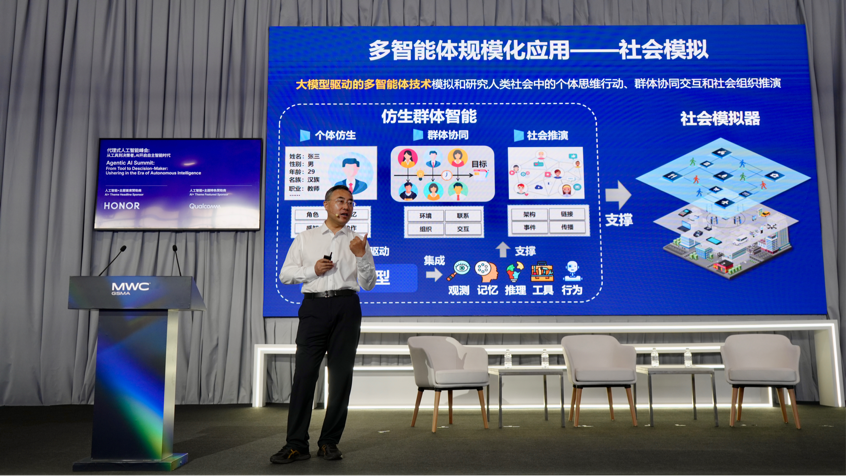
Group 1 - The 2025 World Mobile Communication Conference (MWC Shanghai) is being held from June 18 to 20, focusing on the transformative potential of artificial intelligence, particularly in large models and intelligent agents [1] - The "Knowledge, Action, Understanding" framework proposed by the National Key Laboratory for Content Cognition integrates humanities perspectives and Chinese characteristics, categorizing AI into four dimensions: intelligence (knowledge), physical action (action), emotional intelligence (understanding), and leadership/creativity (wisdom) [2] - The importance of intelligent agents as a key evolution direction in AI is emphasized, with a comparison to Turing's concept of "highly intelligent organic beings," highlighting their ability to autonomously complete complex tasks [2] Group 2 - The intelligent agent's role in transforming media and broader fields is explored, with a focus on its applications in content production and the full automation of editorial processes, creating new industry ecosystems [3] - The "Chuxin" intelligent agent platform developed by People’s Daily leverages vast data resources and AI capabilities to enhance content production, public opinion analysis, and social governance across its business chain [5] - The "Chuxin" platform offers five core advantages: ideological security, national data privacy protection, user-friendliness, strong adaptability, and an open co-creation ecosystem, aiming to provide a safe and efficient technological engine for intelligent transformation in the industry [5]