净息差

Search documents
江苏银行(600919):净利息收入高增
CMS· 2025-04-28 14:10
Investment Rating - The report maintains a strong buy recommendation for Jiangsu Bank (600919.SH) [4] Core Views - Jiangsu Bank's net interest income saw a significant increase of 22% year-on-year in Q1 2025, reaching 16.6 billion yuan, driven by rapid asset growth and optimized liability costs [2][3] - The bank's asset quality remains robust, with a non-performing loan ratio of 0.86% and a provision coverage ratio of 343.51% as of Q1 2025 [2][3] - The bank's non-interest income experienced a decline of 32.72% year-on-year, primarily due to a significant drop in fair value changes, although investment income increased by 30.1% [3] Summary by Sections Performance - In Q1 2025, Jiangsu Bank reported a revenue growth of 6.21%, PPOP growth of 7.88%, and a net profit growth of 8.16% compared to the previous year [1][11] - The bank's total assets reached 4.46 trillion yuan, with total deposits of 2.46 trillion yuan [11] Non-Interest Income - The bank's net fee and commission income grew by 21.77% year-on-year in Q1 2025, benefiting from a recovery in the capital market and macroeconomic conditions [2][3][29] Interest Margin and Asset Quality - The bank's interest-earning assets grew by 27.82% year-on-year, with loans increasing by 18.83% [2] - The net interest margin showed a slight decline but was supported by effective cost management on liabilities [2][3] Capital and Shareholder Information - Jiangsu Bank's return on equity (ROE) was reported at 16.50% for Q1 2025, with a target price of 10.13 yuan per share [4][27] - The bank's major shareholder is Jiangsu International Trust Co., holding a 6.98% stake [4]

盛京银行的阵痛与曙光:2024年净利润6.2亿、同比降幅收窄,净息差仅0.8%创新低
Sou Hu Cai Jing· 2025-04-28 10:55
Core Viewpoint - Shengjing Bank is struggling to transform itself two years after shedding its "Evergrande system" identity, facing significant historical burdens and declining financial performance, with a strategic goal of "stabilizing growth, improving quality, increasing efficiency, and enhancing effectiveness" for 2024 [2] Financial Performance - In 2024, Shengjing Bank reported revenue of 8.577 billion yuan, a year-on-year decrease of 14.57%, and a net profit attributable to shareholders of 621 million yuan, down 15.21%, marking the fourth consecutive year of revenue and profit decline [2] - The bank's net interest margin was only 0.8%, down 16 basis points year-on-year, significantly lower than the average for commercial banks and city commercial banks, which were 1.52% and 1.38% respectively [4][3] - Total interest-earning assets decreased by nearly 70 billion yuan to 8555.16 billion yuan, a decline of 7.5% year-on-year, with a significant gap between interest-earning assets and interest-bearing liabilities [5] Asset Quality and Loan Performance - As of the end of 2024, Shengjing Bank's total assets grew by 4% to 1.12 trillion yuan, with loans issued amounting to 500.6 billion yuan, a year-on-year increase of 4.8% [9] - The bank's corporate loans, which account for over two-thirds of its credit portfolio, reached 337.88 billion yuan, growing by 9.67% year-on-year, while personal loans showed mixed performance with a notable increase in personal consumption loans [10] - The non-performing loan (NPL) ratio for personal loans was 2.9%, with mortgage loans having a particularly high NPL ratio of 3.66% [12][11] Non-Interest Income - Shengjing Bank achieved non-interest income of 1.69 billion yuan in 2024, a significant increase of 44% year-on-year, attributed to improved investment trading capabilities [7] Market Performance and Shareholder Sentiment - The bank's stock price in the Hong Kong market has been underperforming, trading around 1.06 HKD per share, significantly lower than its initial listing price of 7.65 HKD in 2014, with liquidity issues evident as trading volumes dropped to zero during certain periods [15] - The number of H-share shareholders has dwindled to just 124, reflecting market skepticism regarding the bank's future profitability and growth prospects [15] Strategic Direction - Shengjing Bank is actively pursuing a "de-Evergrande" strategy, having removed references to Evergrande from its annual reports since 2023, and has undergone significant management restructuring to align with its vision of becoming a "good bank for enterprises and the public" [16][17]

江苏银行年报,不能细看
Hu Xiu· 2025-04-28 10:06
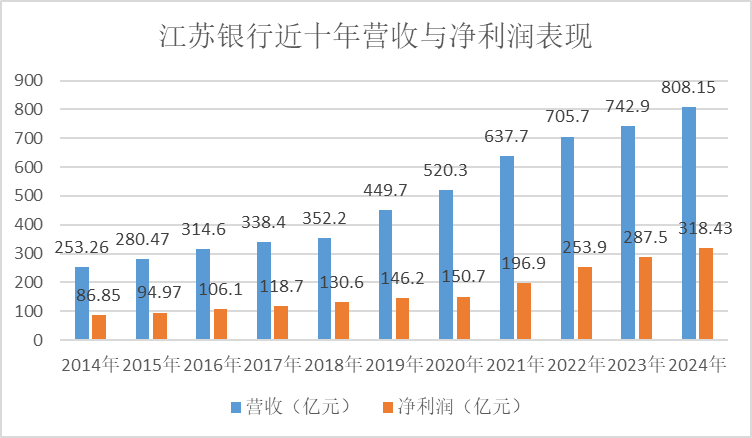
图片来源 | AI制图 近日,江苏银行发布年报,2024年,营收808.15亿元,同比增长8.78%;归母净利润318.43亿元,同比增长 10.76%。增速与城商行前三甲中的其他两家北京银行和宁波银行相比,都是最高的。 从近十年数据看,江苏银行也是上市城商行乃至上市银行中,业绩成长性最强的一家之一。江苏银行的高 成长性,应该说跟两任董事长夏平和葛仁余高度相关。 这二位在三家银行里搭档了十余年。2013年3月,原南京银行行长夏平就任江苏银行董事长,同年8月,南 京银行信息技术部总经理葛仁余也加盟江苏银行,任首席信息官、信息技术部总经理。这是二人的第三次 搭档。早年夏平和葛仁余均任职于建行江苏分行,此后又都到南京银行任高管。夏平执掌江苏银行十年, 将江苏银行一路带成了国内营收与利润首屈一指的城商行。在2023年,60岁的夏平退休,葛仁余从行长位 置上升任董事长。到2025年,1965年10月出生的葛仁余也临近退休,江苏银行业绩依旧出色。 除了营收与利润增长不错,资产扩张和负债均保持了较快的增长,不良率与2023年持平,拨备覆盖率维持 在较高水平。 不过美中不足的是,江苏银行净息差下滑较多,是已披露年报的头部城商 ...
现在,轮到银行急疯了
3 6 Ke· 2025-04-28 01:20
Core Viewpoint - Recent restrictions by banks on early repayment of housing loans indicate a shift in their lending strategies, aimed at managing profitability amidst declining net interest margins and increased early repayment requests [1][5][10]. Group 1: Banking Pressure - Banks are facing a dual pressure of reduced lending opportunities and increased deposits, leading to a shrinking net interest margin, which is currently at 1.52%, below the warning line of 1.8% [5][10]. - In February, the People's Bank of China reported a decrease of 115 billion yuan in long-term loans, indicating a trend of borrowers opting for early repayments [6][10]. - The total balance of personal housing loans was 37.68 trillion yuan at the end of last year, down 1.3% year-on-year, reflecting a growing number of borrowers repaying loans early [6][10]. Group 2: Changes in Loan Terms - Banks have implemented restrictions on the number of early repayment requests and the amount that can be repaid at once, with some banks limiting online repayments to two times a year and a maximum of 200,000 yuan per transaction [1][10]. - The average interest rate for existing housing loans has dropped from 4%-5% in 2023 to 3.3% in 2024, further squeezing bank profits [10]. - The increase in early repayments is causing banks to lose significant future interest income, with one insider noting that every 1 million yuan repaid early results in a loss of interest income for several years [10]. Group 3: Deposit Trends - There has been a significant increase in household deposits, with new deposits reaching 14.26 trillion yuan in 2024, and 6.2 trillion yuan in just the first two months of this year [10]. - The total balance of household deposits has surpassed 157 trillion yuan, with per capita deposits exceeding 110,000 yuan, indicating a shift in consumer behavior towards saving rather than borrowing [10]. Group 4: Strategies for Borrowers - Borrowers are advised to understand their loan agreements, as restrictions on early repayment may vary by bank and region [16]. - Exploring offline repayment options may provide more flexibility, as these channels are less restricted compared to online methods [18]. - A rational decision-making process is recommended for borrowers considering early repayment, comparing the interest rates of their loans with potential investment returns [19][21].
沪农商行(601825):基数效应影响营收增速,分红比例继续抬升
Orient Securities· 2025-04-27 13:23
Investment Rating - The report maintains a "Buy" rating for the company [5] Core Views - The revenue growth rate is impacted by the base effect, while the dividend payout ratio continues to rise [2][9] - The company is expected to experience a slight increase in net profit for the years 2025, 2026, and 2027, with projected growth rates of 0.3%, 1.8%, and 1.6% respectively [3] - The current stock price corresponds to a price-to-book (PB) ratio of 0.65X for 2025, 0.62X for 2026, and 0.60X for 2027, indicating potential undervaluation [3] Financial Performance Summary - For 2023, the company reported a revenue of 26,414 million yuan, with a year-on-year growth of 3.1% [4] - The net profit attributable to the parent company for 2023 was 12,142 million yuan, reflecting a year-on-year increase of 10.6% [4] - The earnings per share (EPS) for 2023 was 1.26 yuan, with projected EPS of 0.72 yuan for 2024 [4] - The company’s total assets are projected to grow from 1,392,214 million yuan in 2023 to 1,653,004 million yuan by 2027 [12] Profitability and Valuation Metrics - The report forecasts a decline in net interest income from 20,700 million yuan in 2023 to 19,675 million yuan in 2025 [12] - The average return on equity (ROE) is expected to decrease from 11.34% in 2023 to 9.31% by 2027 [12] - The price-to-earnings (P/E) ratio is projected to decrease from 6.86 in 2023 to 6.54 in 2027, indicating a potential increase in valuation attractiveness [12] Dividend Policy - The dividend payout ratio is expected to increase from 33.1% to 33.9% in 2024, supported by strong core capital adequacy [9]
长沙银行(601577):2024年度报告暨2025年一季报点评:贷款增长“开门红”,县域业务多点突破
EBSCN· 2025-04-27 12:13
Investment Rating - The report maintains a "Buy" rating for Changsha Bank (601577.SH) with a current price of 9.39 CNY [1]. Core Views - Changsha Bank achieved an operating income of 25.936 billion CNY in 2024, a year-on-year increase of 4.6%, and a net profit attributable to shareholders of 7.827 billion CNY, up 4.9% year-on-year [4]. - The bank's loan growth remains robust, with a year-on-year increase of 12.6% in loans as of the end of Q1 2025, indicating strong credit demand [6]. - Non-interest income grew by 10% in Q1 2025, contributing 25% to total revenue, reflecting an improvement in the bank's revenue diversification [9]. Summary by Sections Financial Performance - In 2024, Changsha Bank's operating income was 25.936 billion CNY, with a net profit of 7.827 billion CNY, and a return on equity (ROE) of 12.31% [4][28]. - For Q1 2025, the bank reported an operating income of 6.8 billion CNY and a net profit of 2.2 billion CNY, both showing a growth of 3.8% year-on-year [4]. Loan and Asset Growth - As of Q1 2025, the bank's interest-earning assets and loans grew by 11.3% and 12.6% year-on-year, respectively, with a significant increase in loan issuance [6]. - The total new loans for 2024 were 56.7 billion CNY, with Q1 2025 alone contributing 42.8 billion CNY, indicating a strong start to the year [6]. Non-Interest Income - Non-interest income for Q1 2025 reached 1.7 billion CNY, up 10% year-on-year, with net fees and commissions contributing significantly to this growth [9]. Asset Quality - The non-performing loan (NPL) ratio remained stable at 1.17% at the end of 2024, with a coverage ratio of 312.8%, indicating strong risk management [10][24]. - The bank's credit impairment losses for Q1 2025 were 2.5 billion CNY, reflecting a year-on-year increase, but the overall asset quality remains solid [10]. Capital Adequacy - As of Q1 2025, the core tier 1 capital adequacy ratio was 9.7%, indicating a strong capital position despite the expansion of risk-weighted assets [10][27]. Valuation and Forecast - The report adjusts the EPS forecast for 2025 to 2.02 CNY, with corresponding price-to-earnings (P/E) ratios of 4.64 for 2025, maintaining a "Buy" rating based on the bank's growth potential and asset quality [11][12].
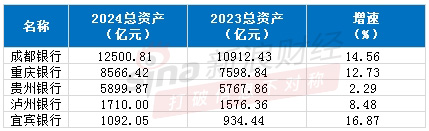
西南上市城商行大比拼!贵州银行不良率升至1.72%,重庆银行净息差降至1.35%
Xin Lang Cai Jing· 2025-04-27 11:02
Core Viewpoint - The Southwest region of China, comprising Sichuan, Yunnan, Guizhou, Chongqing, and Tibet, is a significant driver of western development, with several listed banks reporting positive growth in assets and operating performance for 2024 [1][2]. Group 1: Asset Scale and Growth - Chengdu Bank is the only bank in the region to surpass 1 trillion yuan in total assets, reaching 1.25 trillion yuan with a growth rate of 14.56% [2][3]. - Chongqing Bank follows with total assets of 856.64 billion yuan, growing by 12.73% [3]. - Guizhou Bank's total assets exceeded 580 billion yuan, with the lowest growth rate among the five banks at 2.29% [3]. - Luzhou Bank and Yibin Bank have asset scales below 200 billion yuan, with Luzhou Bank at 171 billion yuan and Yibin Bank at 109.21 billion yuan [4][5]. Group 2: Operating Performance - All five banks reported increases in both operating income and net profit for 2024, with Guizhou Bank showing the highest revenue growth at 9.46% [6][7]. - Chengdu Bank led in revenue with 22.977 billion yuan, a 5.88% increase, although its growth rate has been declining in recent years [7]. - Chongqing Bank's revenue was 13.679 billion yuan, up 3.54%, with a notable increase in non-interest income [7][8]. - Luzhou Bank and Yibin Bank had revenues below 5.5 billion yuan, with Yibin Bank's revenue growth slowing significantly [8]. Group 3: Asset Quality - Chengdu Bank boasts the lowest non-performing loan (NPL) ratio at 0.66%, while Guizhou Bank has the highest at 1.72%, marking the only increase among the banks [10][11]. - The provision coverage ratio for Chengdu Bank is the highest in the region at 479.28%, indicating strong risk management [10][13]. - Luzhou Bank's NPL ratio decreased to 1.19%, while Chongqing Bank's NPL ratio fell to 1.25% [10][11]. - Yibin Bank's NPL ratio slightly decreased to 1.68%, but it still faces significant risks in certain sectors [11][13].
South State (SSB) - 2025 Q1 - Earnings Call Transcript
2025-04-26 02:27
SouthState (SSB) Q1 2025 Earnings Call April 25, 2025 10:27 PM ET Company Participants William Matthews - CFO & Executive VPJohn Corbett - CEO and DirectorMichael Rose - Managing DirectorSteven Young - Chief Strategy OfficerCatherine Mealor - Managing DirectorStephen Scouten - Managing DirectorRussell Gunther - Managing DirectorJared Shaw - Managing DirectorChristopher Marinac - Director of Research Conference Call Participants None - Analyst Operator Thank you for standing by. My name is Eric, and I will b ...

长三角谁最强?“3万亿俱乐部”再添一员,上海银行不良率最高
Xin Lang Cai Jing· 2025-04-25 00:25
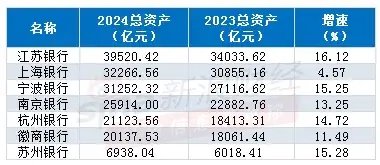
Core Insights - The Yangtze River Delta urban agglomeration is a crucial intersection of the "Belt and Road" initiative and the Yangtze River Economic Belt, comprising Shanghai, Jiangsu, Zhejiang, and Anhui provinces, with seven listed city commercial banks [1] - In 2024, the total asset scale of these seven banks reached 17.72 trillion yuan, with Jiangsu Bank, Shanghai Bank, and Ningbo Bank each exceeding 3 trillion yuan [1][3] - All seven banks reported positive growth in revenue and net profit, with asset quality remaining strong, as six banks maintained non-performing loan ratios below 1% [1][18] Asset Scale and Growth - Jiangsu Bank's total assets reached 39,520.42 billion yuan, a 16.12% increase from the previous year [3][5] - Shanghai Bank's total assets were 32,266.56 billion yuan, growing by 4.57% [3][5] - Ningbo Bank's total assets amounted to 31,252.32 billion yuan, with a growth rate of 15.25% [3][5] - Nanjing Bank, Hangzhou Bank, and Huishang Bank surpassed 20 trillion yuan in assets, while Suzhou Bank had the smallest asset scale at nearly 700 billion yuan [1][3] Revenue and Profitability - Jiangsu Bank led in revenue with 808.15 billion yuan, marking an 8.78% increase [10][12] - Ningbo Bank followed with 666.31 billion yuan in revenue, up 8.19% [10][12] - Nanjing Bank achieved a revenue growth rate of 11.32%, the only bank with double-digit growth [10][12] - Net profit for Jiangsu Bank exceeded 300 billion yuan, with a growth of 10.76% [13][12] Asset Quality - The non-performing loan ratio for Jiangsu Bank was 0.89%, while Ningbo and Hangzhou Banks had the lowest at 0.76% [18][19] - Shanghai Bank had the highest non-performing loan ratio at 1.18% [17][18] - The provision coverage ratios for most banks were robust, with Jiangsu, Nanjing, and Ningbo Banks exceeding 300% [20][18] Loan Distribution - Jiangsu Bank's loans in Jiangsu province accounted for 86.13% of its total loans, with significant portions also allocated to the Yangtze River Delta and Guangdong-Hong Kong-Macau Greater Bay Area [7] - Nanjing Bank's loans were primarily distributed in Jiangsu, with 84.92% of its loans in the province [7] - Huishang Bank's loans were predominantly in Anhui, making up 88.87% of its total [8]




城商行“一哥”变“老三”——北京银行2024年财报分析
数说者· 2025-04-24 23:07
北京银行前身是由原北京 90 家城市信用社于 1996 年初组建而成的北京城市合作银行股份有限公 司, 1998 年更 名为 北京市商业银行股份有限公司 , 2004 年正式更名为北京银行股份有限公司。 2005 年,北京银行引入外资战略投资者 荷兰国际集团 ( ING BANK N.V )成为第一大股东, 2007 年在上交所 上市,股票代码为 601169 。 北京银行经营网络已经覆盖除北京外的,天津、石家庄、济南、青岛、上海、南京、苏州、杭州、宁波、深圳、 南昌、长沙、西安、乌鲁木齐等全国十余个中心城市,在香港特别行政区、荷兰设有代表处。但作为城市商业银行, 北京银行业务仍主要集中在北京及周边地区。 2024 年,京津冀及环渤海地区的营业收入、利润总额分别占全部收入和利润总额的 77.05% 和 85.66% 。 | 地区 | 营业收入 | 利润总额 | 资产总额 | | --- | --- | --- | --- | | 京津冀及环渤海地区 | 53,874 | 24,365 | 3,078,348 | | 长三角地区 | 6,936 | 1,675 | 636,718 | | 其他地区 | 9,10 ...