物理AI

Search documents
股价拉升!何小鹏回应“人形机器人里藏真人”
第一财经· 2025-11-06 05:33
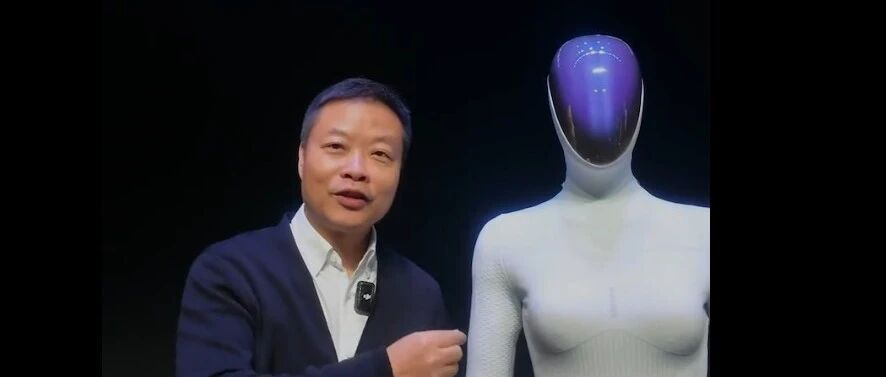
为回应公众好奇,今日, 何小鹏在其个人微博发文表示,"总有人不相信这个世界变化如此快,今天早上他们强迫我拍个一镜到底无剪辑的视频,回应一 下这个质疑,希望大家辨别真假,也帮助我们澄清一下。 " 11月6日,港股小鹏汽车午后拉升,截至发稿,股价涨超5%。 11月5日举办的第七届小鹏科技日上,小鹏汽车发布"物理AI"四项重要应用。其中,全新一代IRON机器人的现场走秀环节引发热议:其高度拟人的姿态 和流畅的动作让不少观众惊叹"太像人了",甚至一度被质疑是否由真人扮演,相关话题迅速登上热搜。网友纷纷留言调侃:"里面是不是藏了真 人?"、"连耳朵都有,太逼真了吧!" 编辑丨瑜见 ...

何小鹏回应“女机器人藏真人”热议,小鹏汽车股价盘中一度上涨超2%
Di Yi Cai Jing· 2025-11-06 04:35
昨日,在2025小鹏科技日上,小鹏汽车重磅发布"物理AI"四项重要应用。其中,全新一代IRON机器人 的现场走秀环节引发热议:其高度拟人的姿态和流畅的动作让不少观众惊叹"太像人了",甚至一度被质 疑是否由真人扮演,相关话题迅速登上热搜。网友纷纷留言调侃:"里面是不是藏了真人?"、"连耳朵 都有,太逼真了吧!" 揭秘视频发布后,市场反应迅速。小鹏汽车-W(09868.HK)港股盘中拉升,截至发稿涨幅达2.74%, 报90.10港元。 为回应公众好奇,今日上午,何小鹏以"一镜到底"的方式,再次完整呈现了机器人走秀的全过程,并邀 请研发团队现场拉开机器人背部拉链,全方位展示其内部结构——从背部的晶格肌肉与核心控制器,到 肩部运输固定器、耳部麦克风阵列、手部谐波关节等细节逐一揭示,充分展示了其"纯机器"本质。 ...

第二代VLA上车大众、高德助力Robotaxi、IRON入驻宝钢,小鹏创新有强援
Zhong Guo Jing Ji Wang· 2025-11-06 03:47
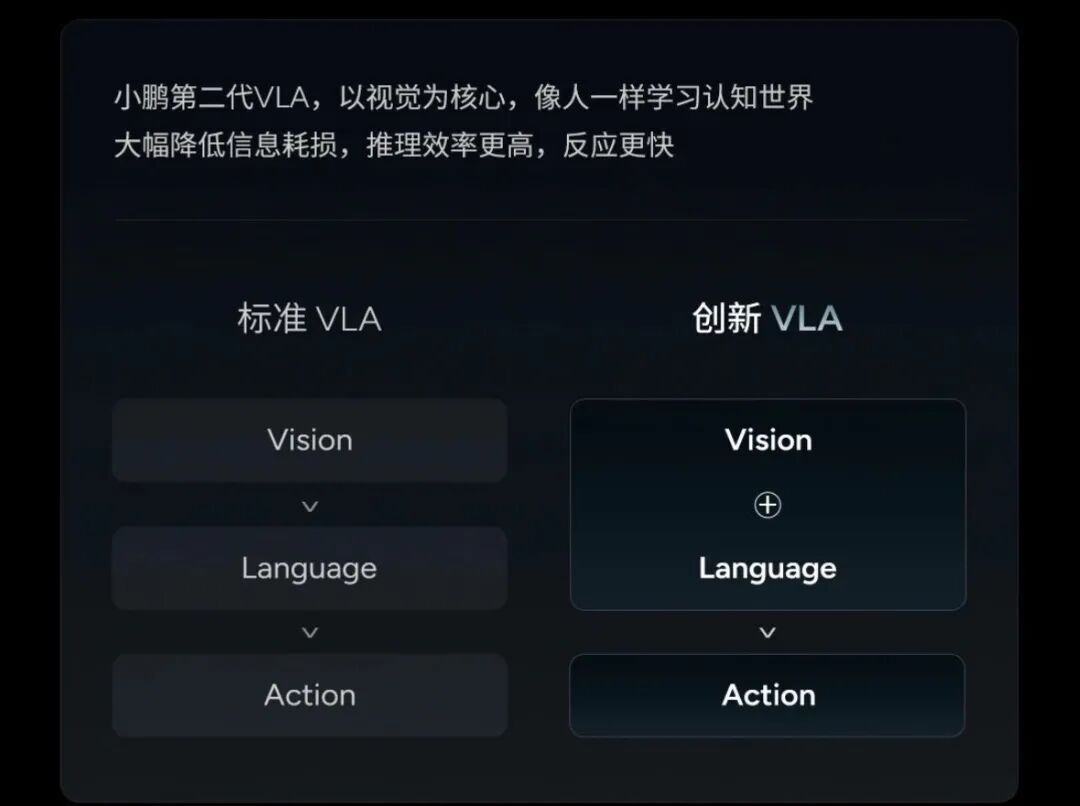
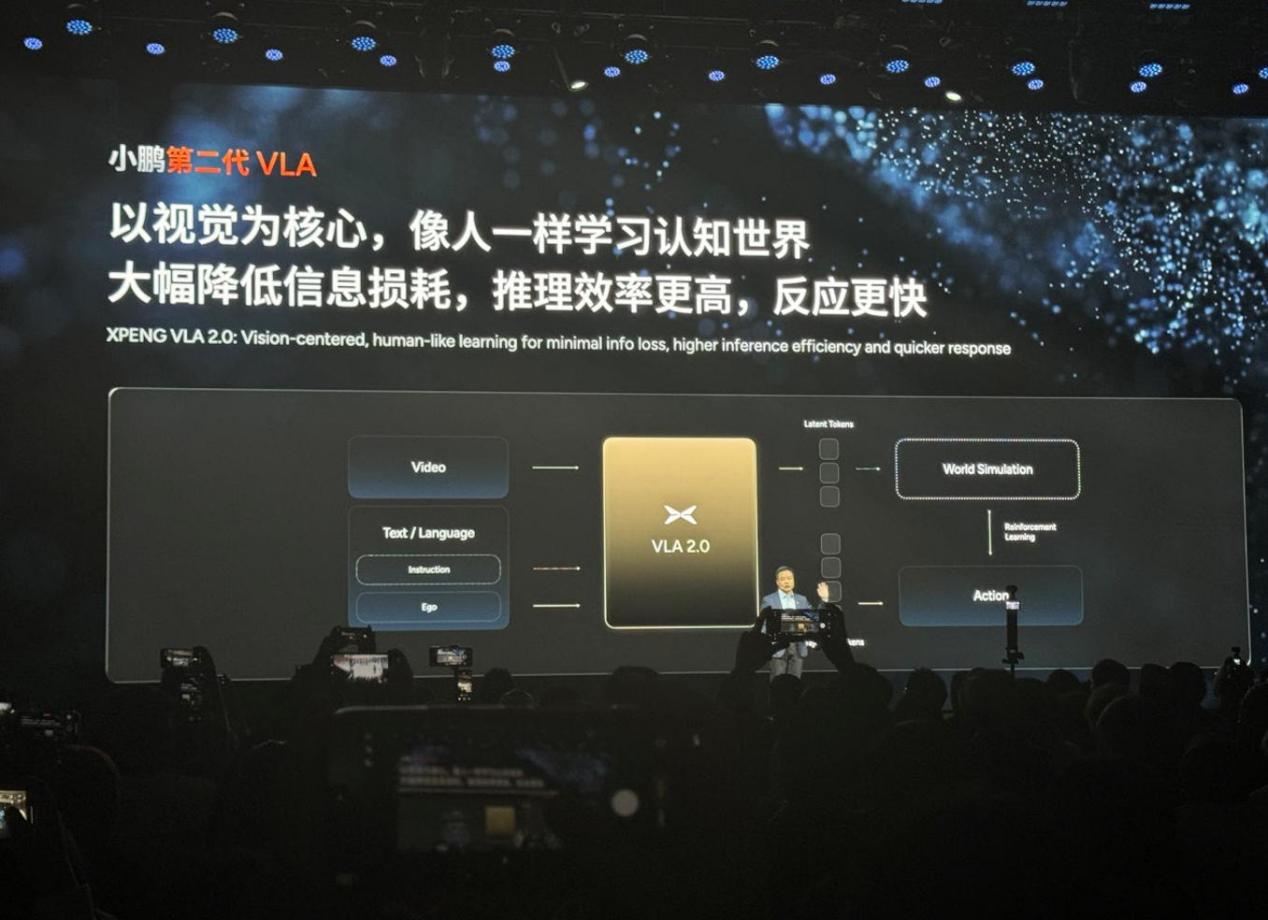
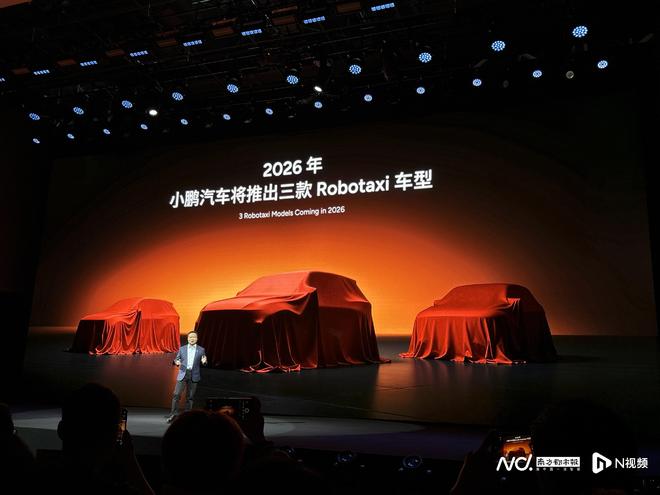
Core Insights - Xiaopeng Motors showcased significant advancements in AI technology at the 2025 Xiaopeng Technology Day, emphasizing its commitment to becoming a leader in the "physical AI" sector [3][5][6] Group 1: Event Overview - The 2025 Xiaopeng Technology Day, themed "Emergence," was held in Guangzhou, highlighting four major applications of "physical AI" [3] - Xiaopeng Motors announced its repositioning as a "global embodied intelligence company" focused on exploring transportation in the physical AI realm [5] Group 2: Key Innovations - The second-generation VLA was introduced, eliminating the "language translation" step and enabling direct generation of action commands from visual signals, applicable across various vehicles [6] - The upcoming "Xiaolu NGP" feature will enhance intelligent driving performance on complex roads, with a 13-fold increase in average takeover mileage [8] - Xiaopeng will launch three Robotaxi models in 2026, featuring 4 Turing AI chips with a total computing power of 3,000 TOPS, utilizing a pure vision approach without relying on LiDAR [12] Group 3: Strategic Partnerships - Volkswagen has become the first customer for Xiaopeng's second-generation VLA, and the Turing AI chip has been designated for Volkswagen [10] - Gaode has been announced as the first global ecological partner for Xiaopeng's Robotaxi service [14] Group 4: Robotics Development - The new generation of the IRON robot features a highly humanoid design with 82 degrees of freedom and is powered by three Turing AI chips, achieving a computing power of 2,250 TOPS [16] - The IRON robot will initially serve in commercial scenarios such as guiding and inspecting, with Baosteel as a key ecological partner for industrial applications [17] Group 5: Aviation Innovations - Xiaopeng is developing two flight systems for low-altitude travel, including the A868, which is designed for efficient multi-passenger travel and is currently in the flight verification phase [19] - The land carrier has surpassed 7,000 global orders and is on the verge of mass production, with an initial capacity of 5,000 units per year [20]

小鹏科技日分享物理AI涌现成果 第二代VLA大模型与三大具身智能产品齐发
Zhong Guo Zhi Liang Xin Wen Wang· 2025-11-06 03:26
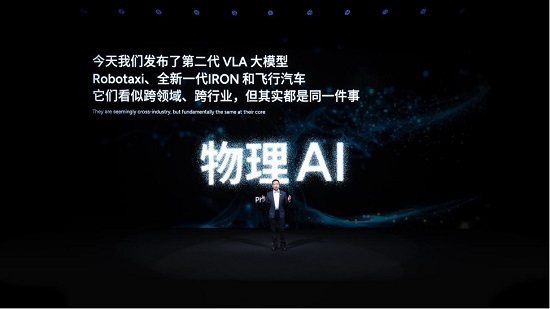
Core Insights - The 2025 XPeng Technology Day showcased the company's advancements in "Physical AI" and its applications in future mobility [1][3] - XPeng's CEO announced a strategic shift in positioning to become a "global embodied intelligence company" focused on Physical AI [3][5] Group 1: Technology Developments - Four key applications of Physical AI were unveiled: the second-generation VLA, Robotaxi, the new generation IRON, and two flight systems [3][5] - The second-generation VLA is designed to directly generate action commands from visual signals, eliminating the traditional language translation step [10][12] - XPeng has developed a comprehensive self-research Physical AI system covering chips, operating systems, and smart hardware, which will support various intelligent vehicles [7][12] Group 2: Product Launches - The second-generation VLA will enhance the performance of complex driving scenarios, with a 13-fold increase in average takeover mileage [15] - XPeng plans to launch three Robotaxi models in 2026 and initiate trial operations [18][20] - The new generation IRON robot features advanced humanoid design and capabilities, with plans for mass production by the end of 2026 [30][32] Group 3: Market Strategy - XPeng aims to open-source the second-generation VLA to accelerate global applications and ecosystem development [18] - The company is collaborating with partners like Didi to build a Robotaxi ecosystem [26] - XPeng is also venturing into low-altitude economy with its flying vehicles, including the A868, which is currently in the flight verification phase [34][36] Group 4: Future Outlook - XPeng's new headquarters and smart manufacturing plant will open in December, showcasing its commitment to technological innovation [42] - The company is focused on creating a robust ecosystem for its humanoid robots and flying vehicles, aiming for widespread commercial applications [32][40]
小鹏汽车-W科技日后一度跌超5% 日前展现智能驾驶、机器人等最新成果
Zhi Tong Cai Jing· 2025-11-06 02:48
Core Insights - Xpeng Motors experienced a stock decline of over 5%, currently trading down 3.08% at 85 HKD with a trading volume of 1.087 billion HKD [1] Group 1: Event Highlights - On November 5, Xpeng Motors held its 2025 Technology Day themed "Emergence," focusing on "Physical AI" [1] - The event showcased four major products: the second-generation VLA (Vision-Language-Action) model, Robotaxi, the new humanoid robot IRON, and a flying car [1] - CEO He Xiaopeng announced that the second-generation VLA model will be open-sourced for global business partners [1] Group 2: Product Developments - The Robotaxi is set to scale up and expand globally, with the necessity for a complete vehicle manufacturer to lead the initiative [1] - The humanoid robot IRON was presented with a highly human-like appearance and agile movement, generating significant buzz on social media [1] - He Xiaopeng mentioned that the humanoid robot's current applications in factories and households are not optimal, with plans to launch three Robotaxi models by 2026 [1]
港股异动 | 小鹏汽车-W(09868)科技日后一度跌超5% 日前展现智能驾驶、机器人等最新成果
Zhi Tong Cai Jing· 2025-11-06 02:33
Core Viewpoint - XPeng Motors experienced a stock decline of over 5%, currently trading at 85 HKD with a transaction volume of 1.087 billion HKD, following the announcement of its 2025 Technology Day event focused on "Physical AI" [1] Group 1: Product Launches - The event showcased four major products: the second-generation VLA (Vision-Language-Action) model, Robotaxi, the new humanoid robot IRON, and a flying car [1] - The second-generation VLA model will be open-sourced for global business partners [1] - XPeng plans to launch three Robotaxi models by 2026, emphasizing the need for automakers to be directly involved in scaling the Robotaxi initiative [1] Group 2: Humanoid Robot - The new humanoid robot IRON was highlighted for its lifelike appearance and smooth walking gait, generating significant buzz on social media [1] - There were speculations on social media regarding the realism of the IRON robot, to which the CEO of XPeng responded positively [1]
小鹏汽车的AI野心:明年量产无人出租、机器人和飞行汽车
Nan Fang Du Shi Bao· 2025-11-06 02:22
Core Insights - Xiaopeng Motors plans to achieve mass production of three major product lines: Robotaxi, humanoid robots, and the split flying car "Land Aircraft Carrier" by next year [1][10] - The upgraded second-generation VLA (Vision-Language-Action) intelligent driving model will also be implemented next year, enhancing efficiency by directly converting visual signals into motion instructions without language translation [1] - Xiaopeng has partnered with Volkswagen as the first strategic partner for the second-generation VLA model, with its self-developed Turing AI driving chip selected as a supplier [1] Robotaxi Development - Xiaopeng Motors aims to launch three Robotaxi models next year and initiate trial operations in cities like Guangzhou [2] - The company has been exploring the Robotaxi business since 2021, with its G9 model obtaining road testing licenses in Guangzhou [4] - Xiaopeng's Robotaxi will not rely on high-precision maps or LiDAR, instead using a pure vision-based approach to navigate various road types and traffic environments [5] Humanoid Robot Insights - The new IRON humanoid robot will be launched in November 2024, featuring a more human-like appearance and advanced capabilities [7] - The IRON robot will utilize solid-state batteries, which offer higher energy density and safety compared to traditional lithium-ion batteries [8] - The initial application scenarios for the IRON robot are limited to guiding, shopping, and inspection, with challenges in manufacturing and home environments [9] Flying Car Developments - The "Land Aircraft Carrier" flying car has successfully completed its first production run, with a planned annual production capacity of 5,000 units initially, scaling up to 10,000 [10] - The flying car can carry two passengers and has received over 7,000 global orders, with plans for commercial operations in the Middle East [10][11] - A new hybrid electric flying car capable of carrying six passengers and achieving a range of 500 kilometers is set to enter trial flights in 2025 [11] Competitive Landscape - The flying car sector may see increased competition as Tesla's CEO Elon Musk hinted at the potential release of a flying car by the end of 2025, which could position Xiaopeng Motors against Tesla in this emerging market [13]
小鹏Robotaxi和IRON发布:物理AI“安全大考”才刚刚开始
3 6 Ke· 2025-11-05 23:13
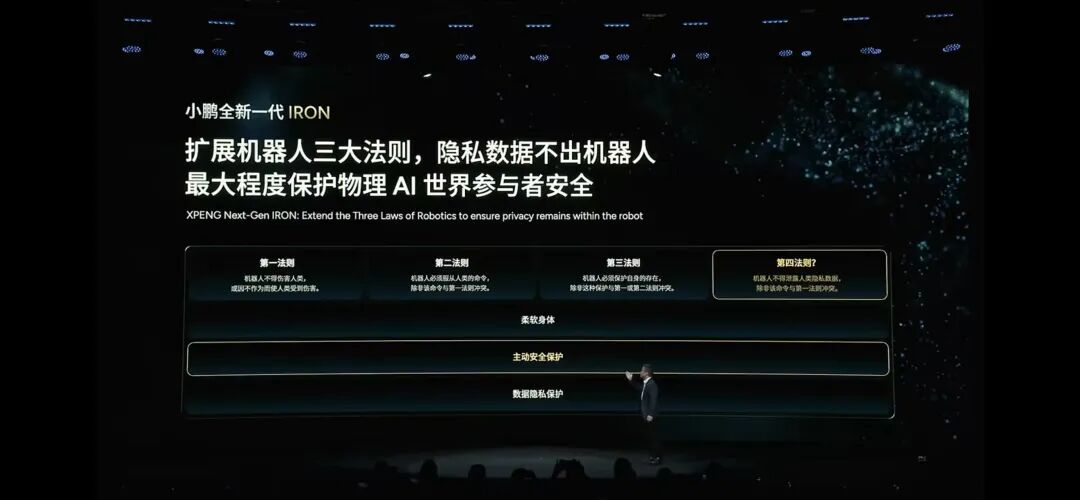
Core Insights - The core question raised during the Xiaopeng Technology Day is how AI can safely integrate into the real world as physical partners, moving beyond mere algorithms on screens [1] Group 1: Robotaxi Development - Xiaopeng announced plans to trial L4-level Robotaxi by 2026, showcasing a robust technological framework that includes dual redundancy in six core systems, ensuring safety without a physical safety driver [2] - The second-generation VLA model allows AI to operate without reliance on high-precision maps, enabling it to adapt to various traffic rules and environments, thus enhancing its decision-making capabilities [2] - Xiaopeng aims to accelerate commercialization by opening its SDK to partners like Amap, which expands the safety responsibility within a more complex collaborative ecosystem [2] Group 2: IRON Robot Features - The IRON robot, standing at 178 cm, represents AI's entry into personal living spaces, emphasizing its ability to navigate safely rather than just its mobility [4] - Equipped with an indoor AEB (Automatic Emergency Braking) system, the IRON robot can detect and avoid obstacles in home environments, enhancing its practical utility [7] Group 3: Physical World Model - Both the Robotaxi and IRON robot are powered by a physical world model, which fundamentally differs from internet models like ChatGPT, as it must adhere to strict physical laws [6] - Xiaopeng's model, with 720 billion parameters, enables AI to understand complex physical interactions, such as recognizing reflective surfaces or assessing water depth, marking a significant advancement in physical AI capabilities [9] Group 4: Safety as a Priority - Xiaopeng's approach emphasizes "edge-side reinforcement," where high levels of intelligence are paired with robust safety redundancies, highlighting the critical nature of safety in physical AI applications [10] - The industry is exploring alternative safety frameworks, such as the "system-level collaboration" exemplified by Mogu Car Union, which aims to enhance overall traffic safety through interconnected AI systems [10] Group 5: Future Challenges - The future of physical AI will hinge on its ability to interpret human social intentions and the legal implications of accidents, which will determine the extent of its integration into society [12] - The industry has made significant strides by prioritizing safety over mere technological display, marking the beginning of a crucial phase in the development of physical AI [12]
今日新闻丨小鹏发布无人驾驶出租车等四大黑科技!奔驰纯电CLA上市,售价24.9-28.56万元!大众宣布与地平线联手自研芯片!
电动车公社· 2025-11-05 16:18
Group 1: New Vehicle Launches - Zeekr X has been launched with a price range of 155,800 to 175,800 CNY, offering three models [2][3] - The new Zeekr X features a compact SUV design with dimensions of 4450/1836/1572mm and a wheelbase of 2750mm [6] - The vehicle is equipped with a Qualcomm Snapdragon 8155 cockpit chip, a 14-inch electric sliding smart screen, and offers both 4-seat and 5-seat configurations [8] - The two-wheel drive version has a maximum power of 250kW and can accelerate from 0 to 100 km/h in 5.6 seconds, while the four-wheel drive version has a maximum power of 365kW with a 0-100 km/h time of 3.69 seconds [10] - Mercedes-Benz has launched its pure electric CLA model priced between 249,000 to 285,600 CNY, featuring a new design language and a maximum power of 200kW with a CLTC range of 866 km [13][19] Group 2: Technological Innovations - XPeng Motors has introduced its second-generation VLA model and self-developed Robotaxi, showcasing advancements in AI and autonomous driving technology [21][22] - The second-generation VLA eliminates the "language translation" step, allowing for direct generation of action commands from visual signals [24] - The XPeng Robotaxi is designed for L4-level autonomous driving, featuring four Turing AI chips with a total computing power of 3,000 TOPS [26] - XPeng is also developing two flight systems for low-altitude travel, with the A868 flying car expected to achieve a range of 500 km and a maximum speed of 360 km/h [30][32] Group 3: Strategic Partnerships - Volkswagen has announced a partnership with Horizon Robotics to develop system-level chips with computing power between 500-700 TOPS, aimed at enhancing advanced driver assistance systems [33][34] - The collaboration marks the second phase of their partnership, focusing on improving local intelligent driving capabilities for the Chinese market [36] - Volkswagen plans to launch approximately 30 new energy vehicle models in China by 2027, increasing to around 50 by 2030, including 30 fully electric models [42][44]


机器人走“猫步”!小鹏新一代IRON亮相,网友:“太像人”
Zhong Guo Zheng Quan Bao· 2025-11-05 15:20
Core Insights - XPeng Motors held its 2025 Technology Day event themed "Emergence," showcasing four major products: the second-generation VLA model, Robotaxi, the new humanoid robot IRON, and a flying car [1][2][5] Group 1: Product Developments - The second-generation VLA model is designed to enhance interaction with the physical world, marking a significant advancement in intelligent driving technology [5][7] - XPeng plans to launch three Robotaxi models in 2026, aiming for large-scale deployment and international operations [10] - The humanoid robot IRON features a highly human-like design and is intended for commercial applications, with plans for deployment in XPeng stores by 2026 [12][14] Group 2: Strategic Partnerships and Market Positioning - The second-generation VLA model will be open-sourced to global business partners, with Volkswagen as the first client [9] - XPeng's Robotaxi will collaborate with Gaode to build a global ecosystem, integrating with Gaode's ride-hailing platform [11] - The company has redefined its positioning as a "mobility explorer in the physical AI world," focusing on embodied intelligence [3]