
现代化产业体系

Search documents
2026年全省发展改革重点任务圈定 八个着力点推动经济量质齐升
He Nan Ri Bao· 2025-12-25 23:43
Core Viewpoint - The provincial development and reform work meeting emphasizes the implementation of the spirit of the 20th National Congress and the Central Economic Work Conference, focusing on the achievements and progress in 2025 and setting key tasks for 2026 [1][2]. Group 1: Key Achievements in 2025 - The development and reform system has effectively integrated into the national unified market, accelerated the construction of a modern industrial system, and deepened urban-rural integration [1]. - There has been a steady advancement in green and low-carbon transformation, with increased efforts in safeguarding people's livelihoods, contributing positively to the province's economic stability and resilience [1]. Group 2: Focus Areas for 2026 - The focus will be on the "1+2+4+N" target task system, balancing relationships between various sectors such as technological innovation, urban-rural integration, and ecological protection [2]. - Key tasks include stabilizing employment, enterprises, markets, and expectations while enhancing advantages, momentum, vitality, and efficiency to achieve qualitative and quantitative economic growth [2]. Group 3: Eight Key Work Areas - Promote integration into the national unified market by implementing the "five unifications and one openness" requirements and addressing market circulation bottlenecks [3]. - Explore effective demand potential in investment and consumption, utilizing policy funds and enhancing project construction [3]. - Build a modern industrial system by upgrading traditional industries, developing emerging industries, and enhancing service quality [3]. - Deepen reforms and expand openness by creating a favorable business environment and promoting high-quality development of the private economy [3]. - Foster regional coordination and urban-rural integration, focusing on a structured urban development pattern [3]. - Improve infrastructure capabilities by enhancing transportation networks and energy systems [3]. - Accelerate green transformation in economic and social development, implementing carbon peak actions and ecological protection [3]. - Increase efforts to safeguard and improve people's livelihoods, ensuring basic living conditions for vulnerable populations [3].
西部证券边泉水:2026年延续修复式增长 宏观经济或呈现四大新变化
Mei Ri Jing Ji Xin Wen· 2025-12-25 22:34
Economic Growth Outlook - China's economy is expected to maintain a recovery growth pattern, with GDP growth projected at around 5% for 2025 and 2026, supported by policy measures and internal demand expansion [1][2] - The nominal GDP growth is anticipated to improve significantly from 4% in 2025 to 5% in 2026 due to rising inflation and a recovery in the Producer Price Index (PPI) [1][2] Inflation and Consumer Prices - The improvement in nominal GDP growth is driven by inflation recovery, with PPI expected to decline at a much slower rate of approximately -0.6% in 2026 compared to -2.6% in 2025, while Consumer Price Index (CPI) growth is projected to turn positive at around 0.4% [2] Trade and External Demand - The easing of trade tensions between China and the U.S. is expected to support export growth, with a forecasted export growth rate of about 5% in 2026, while imports may rise to around 3% due to recovering domestic demand [2] Consumer Spending - Consumer spending is projected to improve in 2026, with retail sales growth estimated at 4.4%, aided by policies such as child-rearing subsidies and free preschool education [3] Investment Trends - Fixed asset investment growth is expected to recover slightly in 2026, with overall growth projected at around 2%, despite ongoing declines in real estate investment [3][4] Industry Transition - A shift from traditional industries to emerging sectors is becoming more pronounced, with the real estate sector undergoing significant adjustments and transitioning towards a focus on housing attributes [4] Economic Rebalancing - The emphasis on expanding domestic demand is crucial for long-term economic stability, with policies aimed at increasing consumer spending and enhancing income distribution expected to be prioritized [6][8] Policy Measures - The macroeconomic policy framework will focus on balancing short-term and long-term strategies, with continued support for fiscal and monetary policies to stimulate economic recovery [7][8]

推动科技创新和产业创新深融合
Xin Lang Cai Jing· 2025-12-25 22:29
□四川日报全媒体评论员 科技创新和产业创新融合的关键,是强化企业科技创新主体地位。企业是经济活动的主要参与 者,更是科技创新的"出题人""答题人""阅卷人"。必须进一步强化企业科技创新主体地位,明确 科技型企业主导地位,全面推进产业技术研究转化新模式,完善创新型企业梯度培育体系和支持 政策,创新科技金融服务,更大力度推动资金、人才、科技项目等创新资源向企业集聚。 科技创新和产业创新融合的途径,是促进科技成果转化应用。要完善科技成果转化体系,全面推 进产业技术研究转化新模式,健全科技创新服务体系,优化"线上科创通+线下科创岛"服务模式, 深入推进"双向揭榜挂帅""校(院所)企双进·找矿挖宝",加快重大科技成果高效转化应用。 推动科技创新和产业创新融合发展,是我省科技和产业发展进入新阶段的战略之举。全省上下必 须坚定贯彻省委决策部署,以科技创新为产业创新提供内生动力,以产业创新为科技创新创造价 值。通过持续深化两者融合,必将为四川高质量发展注入新动能,在"十五五"开局之年塑造更多 新优势。 推动科技创新和产业创新深度融合,是加快高水平科技自立自强、引领发展新质生产力的内在要 求。科技创新能够催生新产业、新模式、新 ...
聚力高质量 冲刺千亿级
Xin Hua Ri Bao· 2025-12-25 21:11
Group 1 - The core viewpoint of the article highlights the rapid construction and project approval reforms in the Nantong Economic and Technological Development Zone, which have led to significant advancements in project initiation and execution [1][2][3] - The development zone has implemented a "one project, one leader, one special team, one progress chart" mechanism, reducing average project approval times by 60% and increasing business environment satisfaction from 85% in 2022 to 95% [2][3] - In 2023, nearly 50 new industrial projects with investments exceeding 100 million yuan have commenced, with a total investment of nearly 30 billion yuan, indicating a strong trend in high-value project initiation [2][3] Group 2 - The Nantong Development Zone aims to achieve a regional GDP of 97.758 billion yuan in 2024, with a projected year-on-year growth of 6% in the first half of 2025, positioning itself close to becoming Jiangsu's first "trillion-level park" [3] - The development zone is actively engaging in international investment promotion, having conducted three promotional activities in Germany and Switzerland, targeting the life and health industry and establishing preliminary cooperation intentions with major companies like Siemens and Bayer [3] - The zone is focusing on optimizing traditional industries while developing emerging pillar industries and future industries, aiming to enhance its competitiveness as a top-tier development zone in the country [4]
成都如何加快建设全国先进制造业基地?
Xin Lang Cai Jing· 2025-12-25 18:26
Core Viewpoint - The construction of a national advanced manufacturing base in Chengdu is a strategic initiative aimed at enhancing the city's competitiveness and supporting national manufacturing development goals [4][10]. Group 1: Strategic Importance - The national government aims to optimize the spatial structure of productivity and enhance the resilience and security of industrial supply chains through the establishment of advanced manufacturing bases [4]. - Chengdu is expected to play a crucial role in supporting high-quality national manufacturing development and act as a significant growth pole in the new development landscape [4][10]. - The city is tasked with not only strengthening its own manufacturing capabilities but also leading regional manufacturing coordination and development [4][5]. Group 2: Current Challenges - Chengdu has made significant progress in manufacturing, establishing five national-level advanced manufacturing clusters and eleven trillion-level industrial chains, but still lags behind cities like Shanghai and Shenzhen in terms of scale, core competitiveness, and innovation capabilities [5][10]. - The number of national high-tech enterprises in Chengdu is approximately half that of Shanghai and Shenzhen, indicating a need for improvement in technological support [5]. Group 3: Development Strategies - Chengdu aims to strengthen its key industrial chains by supporting leading enterprises in sectors like new displays and aerospace to integrate into national productivity layouts [6]. - The city plans to enhance industrial chain quality and efficiency by creating detailed maps of manufacturing chains and attracting high-quality supporting projects [7]. - Collaborative efforts between Chengdu and the surrounding regions, particularly in the Chengdu-Chongqing area, are essential for mutual development and leveraging complementary advantages [8][9]. Group 4: Future Directions - The city is focused on building an advanced manufacturing industry system that emphasizes new industrialization and the development of emerging industries [11]. - An innovation system will be established to support the growth of technology enterprises and foster collaboration between large enterprises and specialized small and medium-sized enterprises [12]. - Chengdu will enhance its industrial park system to improve competitiveness and visibility, ensuring a robust foundation for the advanced manufacturing base [12].


踔厉奋发破局跃升,全域攻坚筑就品质
Xin Lang Cai Jing· 2025-12-25 17:24
Core Viewpoint - The "14th Five-Year Plan" period marks a significant phase for Binzhou, characterized by resilience and growth despite a complex macroeconomic environment, focusing on high-quality development and structural optimization across various industries [2][12]. Economic Growth - The GDP of Binzhou is projected to grow from 261.43 billion yuan in 2020 to 340.47 billion yuan in 2024, with an average annual growth rate of 6.0% [2]. - Per capita GDP is expected to rise from 66,620 yuan in 2020 to 87,542 yuan in 2024, reflecting an annual growth of 6.3% [3]. Fiscal and Financial Support - General public budget revenue is anticipated to increase from 25.28 billion yuan in 2020 to 30.69 billion yuan in 2024, with an average annual growth of 5.0% [4]. - By the end of 2024, the balance of RMB loans and deposits in financial institutions is projected to reach 534.69 billion yuan and 435.25 billion yuan, respectively, marking increases of 55.3% and 49.9% since 2020 [4]. Industrial Development - The industrial sector's revenue is expected to exceed 1 trillion yuan for the first time in 2024, reaching 1,043.58 billion yuan, with an annual growth rate of 6.8% [5]. - Binzhou aims to establish five trillion-yuan industrial clusters and has been recognized as one of the top 100 advanced manufacturing cities in China for four consecutive years [5]. Agricultural Progress - The total output value of agriculture, forestry, animal husbandry, and fishery is projected to reach 62.43 billion yuan in 2024, with an annual growth of 6.6% [4]. - The number of agricultural industrialization leading enterprises is expected to grow from 396 in 2020 to 470 in 2024 [4]. Investment and Consumption - Fixed asset investment is projected to grow at an average annual rate of 10.3% from 2021 to 2024, with a growth of 6.4% in the first three quarters of 2025 [6]. - Retail sales of consumer goods are expected to exceed 100 billion yuan in 2024, reaching 109.50 billion yuan, which is 1.5 times that of 2020 [6]. Foreign Trade and Investment - The total import and export value is projected to reach 129.66 billion yuan in 2024, a 58.6% increase from 2020 [6]. - Cumulative actual foreign investment is expected to reach 3.11 billion USD by September 2025 [7]. Innovation and R&D - R&D expenditure is projected to increase from 8.42 billion yuan in 2020 to 12.23 billion yuan in 2024, with an average annual growth of 9.8% [8]. - The proportion of high-tech industry output value is expected to reach 46.0% of the total industrial output by 2024 [9]. Employment and Social Welfare - By the end of 2024, the number of new urban jobs is expected to reach 43,300, with an average annual growth of 4.4% [10]. - Per capita disposable income is projected to rise from 29,718 yuan in 2020 to 37,954 yuan in 2024, reflecting an annual growth of 6.3% [10]. Sustainable Development - The total grain output is expected to reach 3.88 million tons in 2024, with a steady annual growth of 1.2% [11]. - The energy consumption per unit of GDP is projected to decrease by 31.5% by 2024 [11].
加快打造港产城融合发展先行区 奋力实现“十五五”良好开局
Xin Lang Cai Jing· 2025-12-25 17:23
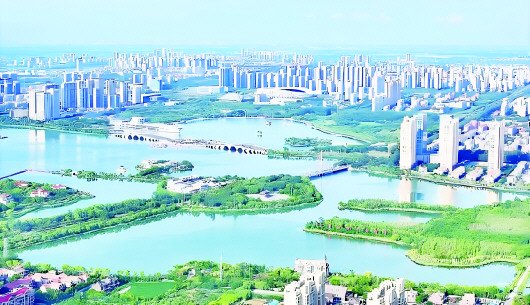
Group 1 - The core viewpoint emphasizes the commitment to high-quality development in the city, driven by systematic deployment of goals and tasks from the municipal economic work meeting [2] - The focus is on expanding effective investment through mechanisms such as "one leader" investment promotion and project landing strategies, aiming for all new projects to commence by September next year [2][3] - The strategy includes building a modern industrial system by enhancing industrial integration and developing key industries like energy electronics and modern service sectors [3] Group 2 - There is a strong emphasis on fostering new momentum for external openness by leveraging multi-modal transport advantages and developing logistics and industrial parks [3] - Efforts are being made to reduce disparities in wealth and urban development, with initiatives aimed at enhancing urban infrastructure and promoting rural development [3][4] - The construction of a safe and secure environment is prioritized, with a focus on modernizing governance systems and achieving significant breakthroughs in safety management [4]
【甘快看】甘肃着力构建体现甘肃特色和优势的现代化产业体系
Xin Lang Cai Jing· 2025-12-25 15:18
Core Viewpoint - The Gansu Provincial Committee of the Communist Party of China has approved the recommendations for the 15th Five-Year Plan, focusing on building a modern industrial system and enhancing the province's economic development over the next five years [1][2]. Group 1: Industrial Development - Gansu aims to establish a national regional modern manufacturing base, enhancing its industrial strength through traditional industry upgrades and the promotion of new technologies and products [1][2]. - The province plans to develop several national and provincial advanced manufacturing clusters, focusing on a modern industrial system centered around advanced manufacturing [1]. Group 2: Energy Sector - Gansu will leverage its abundant energy resources to build large-scale wind and solar power bases, improve energy transmission channels, and implement integrated renewable energy development projects [2]. - The province aims to transition from being an energy-rich province to an energy-strong province by expanding its wind, solar, thermal, hydrogen, and energy storage industries [2]. Group 3: Service Industry - Gansu will enhance its service sector by improving the integration of modern services with advanced manufacturing and modern agriculture, aiming for higher quality and diversified service offerings [2]. - The province will implement a plan to double the number of service enterprises, supporting their growth and development [2]. Group 4: Infrastructure Development - Gansu will address infrastructure shortcomings by advancing both traditional and new infrastructure projects, including optimizing the Lanzhou railway hub and developing major highway corridors [3]. - The province aims to establish a modern infrastructure system that is efficient, safe, and environmentally friendly [3].
江西抚州现代化产业体系加速形成
Jing Ji Ri Bao· 2025-12-25 08:01
Group 1 - The core objective of Fuzhou, Jiangxi Province, is to build a "modern manufacturing strong city" by promoting project construction, technological innovation, and industrial clusters as a three-pronged approach [1] - In the first ten months of the year, the city's industrial added value above designated size grew by 11% year-on-year, maintaining double-digit growth for 28 consecutive months [1] - The five leading industries, including new energy vehicles, advanced manufacturing, new materials, pharmaceuticals and food, smart cultural tourism, and specialty agriculture and deep processing, saw a 16.5% increase in output value year-on-year [1] Group 2 - Infrastructure construction is accelerating in platforms like Fuzhou High-tech Zone and Donglin New District to concentrate resources and elements towards industry [1] - Jiangxi Tongbo Technology Co., Ltd. has expanded its production capacity from 15,000 tons to a planned total capacity of 70,000 tons since settling in Fuzhou in 2016, achieving large-scale production of 4.5-micron lithium battery copper foil [1] - The city is innovating its industrial financial ecosystem by implementing a "loan-equity linkage" mechanism, injecting 680 million yuan to support key project upgrades, and issuing 400 million yuan in sci-tech bonds [1] Group 3 - Fuzhou has established a dynamic monitoring mechanism for key enterprises and a "chain leader system" to provide precise services, ensuring accelerated project construction [2] - The expected growth rate of industrial added value above designated size for the entire year is projected to remain above 11% [2] - The city aims to seize opportunities from the new round of technological revolution and industrial transformation, focusing on strengthening industrial competitiveness [2]
安伟主持召开各开发区、区(市)2026年经济工作座谈会时强调
Zheng Zhou Ri Bao· 2025-12-25 07:52
Core Viewpoint - The upcoming year 2026 is crucial for the economic work as it marks the beginning of the "14th Five-Year Plan" period, emphasizing the need for strategic planning and implementation of policies to ensure robust economic growth and development [1][2] Group 1: Economic Planning and Policy Implementation - The city leadership is focused on thoroughly studying policy directions and leveraging existing policies while seeking additional support to facilitate the implementation of significant national and provincial projects in Zhengzhou [2] - Emphasis is placed on enhancing project planning and execution, particularly in high-tech industries and industrial upgrades, to expand industrial investment and build a modern industrial system [2] Group 2: Innovation and New Economic Growth - There is a strong focus on fostering new business formats, emphasizing domestic demand, and creating new products, models, and scenarios to cultivate new economic growth points [2] - The initiative includes promoting green and low-carbon transitions, with a commitment to environmental protection and ecological safety [2] Group 3: Business Environment and Governance - Efforts are being made to optimize the business environment by integrating into the national unified market and advancing comprehensive reforms for market-oriented resource allocation [2] - The governance strategy includes enhancing the grid-based governance system led by party building, aiming for high-level safety and quality development through efficient governance [2]