
碳达峰碳中和

Search documents
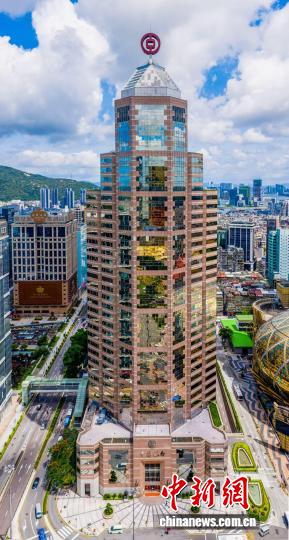
澳门中银牵头协助深圳在澳首发地方政府债券
Zhong Guo Xin Wen Wang· 2025-09-10 12:13
Core Viewpoint - The issuance of offshore RMB local government bonds by Shenzhen in Macau, led by Bank of China Macau Branch, marks a significant step in promoting green finance and sustainable development in the region [1][3]. Group 1: Bond Issuance Details - Shenzhen City Government issued offshore RMB local government bonds amounting to 1 billion RMB [1]. - The bond is a 3-year green bond themed on climate change, with a pricing interest rate of 1.74% [3]. - The issuance attracted significant market interest, with a peak order book size of 6.62 billion RMB and a subscription multiple of 6.62 times, setting a historical high for RMB bond issuance in Macau [3]. Group 2: Purpose and Impact - The funds raised from the bond will be directed towards projects such as clean transportation, aligning with Shenzhen's strategy for green and sustainable development [3]. - This initiative supports Macau's economic diversification and integration into the national development framework, showcasing a collaborative effort between Shenzhen and Macau [3]. Group 3: Future Outlook - Bank of China Macau Branch plans to leverage its expertise in cross-border debt capital markets and offshore RMB business to contribute to the development of Macau's modern financial industry [3].

报告显示:我国应对气候变化和“双碳”工作取得显著成效
Xin Hua She· 2025-09-10 11:57
Group 1 - The report highlights that this year marks the fifth anniversary of China's carbon peak and carbon neutrality goals, with significant progress made in renewable energy development and carbon intensity reduction [1] - China has built the world's largest and fastest-growing renewable energy system, contributing to a quarter of the global increase in green areas, with non-fossil energy consumption meeting the 2030 Nationally Determined Contributions (NDC) expectations [1] - By June 2025, the proportion of non-fossil energy installed capacity is expected to reach 60.9%, with solar panel and lithium battery production increasing by 3.7 times and 6.4 times respectively since the 14th Five-Year Plan [1] Group 2 - The report indicates that in 2024, new green building area in urban areas will reach 1.69 billion square meters, accounting for 97.9% of the total new urban construction area [2] - The establishment of a clean and low-carbon transportation system is underway, with approximately 70% of major goods in key industries expected to be transported cleanly by 2024 [2] - The report emphasizes the ongoing challenges in achieving carbon peak and neutrality, with a call for continued implementation of national strategies and the formulation of 2035 NDC goals to foster a new phase of green, low-carbon, and high-quality development [2]
人大常委会 | 报告显示:我国应对气候变化和“双碳”工作取得显著成效
Shang Hai Zheng Quan Bao· 2025-09-10 11:32
Core Insights - The report highlights China's progress in achieving its carbon peak and carbon neutrality goals, marking the fifth anniversary of these targets [1][2] - Significant advancements have been made in renewable energy, with China establishing the world's largest and fastest-growing renewable energy system [1] - The report emphasizes the importance of continuing efforts towards green and low-carbon transformation, despite challenges ahead [2] Renewable Energy Development - China has built the largest and most complete new energy industry chain globally, contributing to a quarter of the world's new green area [1] - As of June 2025, the proportion of non-fossil energy installed capacity is expected to reach 60.9% of total installed capacity [1] - The production of photovoltaic components and lithium batteries has increased by 3.7 times and 6.4 times, respectively, since the 14th Five-Year Plan [1] Transportation and Construction - In 2024, the area of newly constructed green buildings in urban areas is projected to be 1.69 billion square meters, accounting for 97.9% of the total new urban construction area [2] - The clean transportation ratio for key industries is expected to reach approximately 70% in 2024, with notable progress in civil aviation's green transition [2] Climate Governance and Challenges - The national carbon market is gradually improving, with ongoing efforts in climate change adaptation and foundational capacity building [2] - The report acknowledges the significant challenges in controlling carbon emission intensity and achieving peak carbon emissions in the shortest historical timeframe [2] - A call for the continuous implementation of a proactive national strategy to address climate change and promote high-quality green development is emphasized [2]
报告:2024年城镇新建绿色建筑面积16.9亿平方米
Zhong Guo Xin Wen Wang· 2025-09-10 11:23
Core Viewpoint - The report highlights significant progress in green building initiatives and energy transition in China, with a target of 1.69 billion square meters of new green buildings in urban areas by 2024, representing 97.9% of total new construction [1][2]. Group 1: Green Building Development - In 2024, the area of newly constructed green buildings in urban areas is projected to reach 1.69 billion square meters, accounting for 97.9% of the total new building area [1]. - The government is committed to promoting high-quality development of green buildings and advancing green construction practices [1]. Group 2: Energy Transition - By June 2025, the installed capacity of non-fossil energy is expected to reach 2.22 billion kilowatts, making up 60.9% of the total installed capacity [1]. - The report emphasizes the importance of improving the clean and efficient use of fossil energy, including the elimination of outdated coal power capacity and the steady increase in natural gas production and utilization [1]. Group 3: New Energy Production - Since the 14th Five-Year Plan, the production of photovoltaic components and lithium batteries has increased by 3.7 times and 6.4 times, respectively, with new energy vehicle production and sales leading globally for ten consecutive years [1]. Group 4: Carbon Market Development - The national carbon market is gradually improving, with a cumulative trading volume of carbon emission allowances reaching 670 million tons and a transaction value of 45.93 billion yuan by June 2025 [1]. Group 5: Challenges and Future Work - Despite progress, challenges remain in controlling carbon emission intensity and advancing green low-carbon transformation, necessitating improvements in the legal framework and policy coordination [2]. - Future work will focus on enhancing legal policies, accelerating green low-carbon transformation in key areas, and improving the capacity to adapt to climate change [2].
中环协郭承站:中国环保产业正从“跟随者”向“引领者”转型
Xin Lang Cai Jing· 2025-09-10 10:59
Group 1 - The 2025 China International Service Trade Fair has opened, featuring a forum on ecological and environmental protection industry and the "dual carbon" strategy [1] - Significant achievements in ecological and environmental technology transformation have been reported, including PM2.5 concentration reduction to below 30 micrograms per cubic meter, over 90% of surface water meeting good quality standards, and nearly 100% urban sewage treatment rate [1] - In 2024, approximately 100,000 environmental technology patent applications are expected, with accelerated localization of monitoring technology and a shift from "environmental costs" to "green assets" [1] Group 2 - The role of academicians in empowering the environmental protection industry should focus on three dimensions: leading, promoting, and acting [2] - As leaders, the focus should be on energy conservation, emission reduction, and the development of green low-carbon technologies to support pollution prevention and carbon neutrality [2] - The integration of government, industry, academia, research, and application is essential for promoting ecological industrialization and optimizing energy structure [2]
人大常委会丨报告显示:我国应对气候变化和“双碳”工作取得显著成效
Xin Hua She· 2025-09-10 10:57
Group 1 - The report highlights that China has established the world's largest and fastest-growing renewable energy system, contributing to a quarter of the global increase in green area [1] - As of June 2025, the proportion of non-fossil energy installed capacity is expected to reach 60.9% of total installed capacity [1] - The production of photovoltaic components and lithium batteries has increased by over 3.7 times and 6.4 times respectively since the 14th Five-Year Plan, with new energy vehicle sales leading globally for ten consecutive years [1] Group 2 - In 2024, the area of newly built green buildings in urban areas is projected to be 1.69 billion square meters, accounting for 97.9% of the total new urban construction area [2] - The report indicates that the carbon market is gradually improving, with significant contributions to global climate governance [2] - The challenges of achieving carbon peak and carbon neutrality are acknowledged, emphasizing the need for a robust national strategy and the formulation of 2035 NDC targets [2]
人大常委会|报告显示:我国应对气候变化和“双碳”工作取得显著成效
Xin Hua She· 2025-09-10 08:51
Core Viewpoint - The report highlights China's significant progress in achieving carbon peak and carbon neutrality goals, emphasizing the establishment of the largest renewable energy system globally and the completion of key targets ahead of schedule [1][2]. Group 1: Renewable Energy Development - China has built the world's largest and fastest-growing renewable energy system, contributing to a quarter of the global increase in green areas [1]. - As of June 2025, the proportion of non-fossil energy installed capacity is expected to reach 60.9% of total installed capacity [1]. - The production of photovoltaic components and lithium batteries has increased by 3.7 times and 6.4 times, respectively, since the 14th Five-Year Plan [1]. Group 2: Green Development in Key Areas - In 2024, the area of newly constructed green buildings in urban areas is projected to be 1.69 billion square meters, accounting for 97.9% of the total new urban construction area [2]. - The clean transportation ratio for major goods in key industries is expected to be around 70% in 2024, with notable progress in the green transformation of civil aviation [2]. Group 3: Challenges and Future Goals - The report acknowledges the significant challenges in controlling carbon emission intensity and the ambitious timeline to achieve carbon peak and carbon neutrality [2]. - There is a call for the continuous implementation of a proactive national strategy to address climate change and to formulate and implement the 2035 Nationally Determined Contributions (NDC) targets [2].
“两山”理念在河南丨节能增绿 中原何以“减”装轻行?——“美丽河南面面观”系列观察之降碳篇
He Nan Ri Bao· 2025-09-05 23:22
Core Viewpoint - The article highlights the significant transformation in Henan's development trajectory towards a low-carbon economy, emphasizing the integration of clean energy, green transportation, and low-carbon lifestyle practices as part of a broader strategy for high-quality development [1]. Energy Structure Optimization - The Qinghai-Henan ±800 kV UHVDC project has transmitted over 700 billion kWh of clean energy from Qinghai to Henan since 2020, reducing coal consumption by 22.32 million tons [2]. - Henan's electricity grid has become a crucial hub for national energy distribution, with a capacity to deliver over 20 million kW, meeting about 25% of the province's load demand [2]. Renewable Energy Development - Since the 14th Five-Year Plan, Henan's renewable energy installed capacity has surpassed 85 million kW, a 162% increase from 2020, achieving over 100 billion kWh in annual generation and over 50% in installed capacity share [3]. - The share of coal in primary energy consumption has decreased, while non-fossil energy consumption has risen to 18%, an increase of approximately 7 percentage points since 2020 [3]. Green Transportation Initiatives - The launch of the "Yujiaotou 001" electric smart cargo ship marks a significant step in the electrification of inland shipping, reducing carbon emissions by over 90% and cutting fuel costs by 85% [4]. - Henan is actively promoting clean transportation, with initiatives like "road-to-rail" and "road-to-water" logistics, resulting in 189,000 TEUs sent via rail-sea intermodal transport and over 100,000 TEUs handled at inland ports [4]. Advocacy for Low-Carbon Lifestyle - The introduction of a carbon reduction certification program has led to the issuance of certificates for 3,560 projects, resulting in a total CO2 reduction of 1,266.4 tons, equivalent to the carbon sequestration of approximately 3,286 acres of forest [5]. - Public engagement in low-carbon practices is increasing, with initiatives such as waste sorting and the use of reusable shopping bags becoming more common among residents [6]. Environmental Conservation Efforts - Henan has implemented energy-saving standards for all new buildings, achieving a 32% reduction in per capita energy consumption in public institutions compared to 2020 [6]. - The province has successfully reduced energy consumption per unit of GDP by 15%, surpassing national targets ahead of schedule [6].
生态环境法典总则编等法律草案将提请审议
Ren Min Ri Bao· 2025-09-05 22:22
Group 1: Legislative Developments - The 17th session of the 14th National People's Congress Standing Committee will review several important legal drafts, including the Atomic Energy Law, Public Health Emergency Response Law, National Park Law, and various amendments to existing laws [1][2] - The Public Health Emergency Response Law draft emphasizes the importance of monitoring and reporting for timely responses to public health emergencies, proposing a "smart multi-point trigger mechanism" for reporting [1] - The National Park Law draft aims to establish ecological civilization as a legislative goal, enhancing the collaborative protection of natural ecology and cultural heritage [2] Group 2: Environmental Legislation - The compilation of the Ecological Environment Code is intended to provide guiding principles for climate change and carbon neutrality, addressing the need for specific laws in these areas [3] - The Ecological Environment Code draft includes a separate section on green and low-carbon development, focusing on circular economy, energy conservation, and climate change response [3] Group 3: Public Participation in Planning - The National Development Planning Law draft emphasizes the importance of public participation in the planning process, encouraging social involvement and the collection of public suggestions [4] - The draft mandates that mid-term evaluation reports on the implementation of national development plans be made public [4]
韩立民:积极探索开展海洋碳汇核算
Jing Ji Ri Bao· 2025-09-05 00:03
Core Viewpoint - The article emphasizes the importance of marine carbon sinks, also known as "blue carbon," in carbon accounting and management, highlighting their potential to contribute to climate change mitigation and promote high-quality marine economic development [1][2]. Group 1: Importance of Marine Carbon Sinks - Marine carbon sinks, which include ecosystems like mangroves, salt marshes, seagrass beds, and human activities such as algae and shellfish farming, have a carbon removal capacity that surpasses terrestrial ecosystems [1]. - Conducting marine carbon sink accounting is crucial for supporting carbon peak and carbon neutrality goals, providing quantitative support for carbon asset management, carbon trading systems, and ecological compensation mechanisms [1][2]. Group 2: Progress in Marine Carbon Sink Accounting - Significant progress has been made in marine carbon sink accounting in China, including the gradual improvement of the policy framework and the establishment of standards such as the "Marine Carbon Sink Accounting Method" [2]. - Local governments have begun to develop regional guidelines and technical regulations for marine carbon sink accounting, with notable initiatives in places like Shenzhen and Hebei [2]. Group 3: Challenges in Marine Carbon Sink Accounting - Existing challenges include an incomplete accounting system, weak technical foundations, and an underdeveloped market mechanism, leading to potential underestimation of carbon sink capacity [3]. - There is a lack of comprehensive and high-precision monitoring systems for marine carbon flux, and key processes such as microbial carbon pumps and shellfish farming carbon sequestration mechanisms require further research [3]. Group 4: Recommendations for Improvement - The article suggests that establishing robust national accounting standards, enhancing technological support, and promoting market and financial innovations are essential for developing a comprehensive marine carbon sink industry chain [4]. - It advocates for the integration of marine carbon sinks into the national carbon trading market and the establishment of special funds to incentivize participation in blue carbon projects [4].