
人工智能教育

Search documents
朝阳区中小学人工智能教育中心成立
Xin Jing Bao· 2025-11-26 05:43
在课程体系方面,中心将聚焦学生核心素养,构建从小学到高中"学AI、用AI、创AI"的进阶课程图 谱,全面推行跨学科项目式学习(PBL),并利用AI技术变革教学方式,探索自适应学习、智能导师等 模式,打造螺旋上升的贯通式课程与教学体系,实现因材施教。 中心成立后,将以八十中教育集团为主体,形成"校家社企"四位一体的联动机制,通过"三导师+双基 地"等模式,打通学段、校际壁垒,开展人工智能教育活动。 在师资队伍打造方面,中心将通过内部系统性培育和外部柔性引进相结合的方式,设立特聘岗位,邀请 企业工程师和高校学者担任兼职导师,全力打造一支既精通教育又掌握技术的高水平复合型师资队伍, 为人工智能教育提供强大的人才支撑。 新京报讯 据"北京朝阳"微信公众号消息,朝阳区中小学人工智能教育中心日前成立。中心将以拔尖创 新人才的早期发现与系统培养为核心,整合各方资源,构建人工智能教育的新平台。 朝阳区中小学人工智能教育中心将系统构建人工智能与"课程—教学—资源—师资—评价"深度融合 的"五位一体"育人体系,实现全环节升级。 ...
全省第一
Nan Jing Ri Bao· 2025-11-26 02:29
Core Insights - Jiangsu Province has announced the list of "Quality Courses in Basic Education" for 2025, with Nanjing leading the province with 93 courses recognized as "Provincial Quality Courses" [1] - The selection process, initiated by the Ministry of Education in 2021, aims to adapt to the high-quality development needs of basic education in the new era [1] Group 1: Course Categories - Out of the 93 selected courses, 52 are in "Subject Courses," 29 in "Experimental Teaching," 8 in "Special Education," 3 in "Artificial Intelligence," and 1 in "Reading" [1] - Nanjing's performance in newly added and specialized categories, particularly in artificial intelligence, has been outstanding, achieving the highest award rate in the province [1] Group 2: Artificial Intelligence Education - The artificial intelligence course category was newly introduced this year, and Nanjing has excelled, with significant efforts made since 2018 to integrate AI into school curricula [1] - By 2023, Nanjing has cultivated 52 artificial intelligence experimental schools, demonstrating substantial progress in AI education over the past two years [1] Group 3: Special Education - Nanjing is a national leader in resource empowerment for special education, with all submitted works in the selection process receiving awards [1] - The city has utilized multi-level training and digital empowerment to consolidate various educational resources, including research and expert studios, into a cohesive effort [1] Group 4: Experimental Teaching Development - The city has made significant strides in experimental teaching, achieving full coverage of three subject resources at the elementary level [2] - Nanjing has developed a strong backbone team for experimental teaching, resulting in a doubling of award numbers in this category compared to previous years [2]
小学生如何与AI“共舞”
Ren Min Wang· 2025-11-20 01:01
Core Insights - The report titled "Nanjing Primary School Students' Generative AI Literacy White Paper" is the first of its kind in China, focusing on the generative AI literacy of primary school students [1] - It highlights the current state of generative AI application preferences among students and the factors influencing their literacy, revealing phenomena such as "GenAI literacy stratification" [1] Group 1: Survey Findings - Over half of the surveyed students (57.24%) use generative AI as a feedback tool for homework, while 42.28% use it to recommend or generate study materials [2] - A significant portion of students (53.20%) self-learned to use generative AI through online resources, indicating a proactive approach to technology [2] - The frequency of generative AI usage among students is relatively low, with 54.96% using it 1-2 times a week and 17.31% using it daily [2] Group 2: Limitations in Application - Despite familiarity with generative AI, students primarily use it for basic tasks like information retrieval and homework correction, lacking deeper integration with complex problem-solving [3] - More than 80% of students exhibit a strong critical awareness of the content generated by AI, yet nearly half struggle with identifying inaccuracies due to a lack of effective strategies [3] - Students face challenges in content verification and critical analysis, particularly with complex or obscure generated content [3] Group 3: Ethical Concerns - Some students choose to conceal their use of generative AI due to concerns about punishment or ethical boundaries, highlighting a disconnect between school evaluation systems and the widespread use of AI [4] Group 4: Recommendations for Improvement - The white paper suggests integrating generative AI literacy into the broader AI education framework in schools, including dedicated courses on AI principles and critical thinking [5] - Schools are encouraged to establish clear guidelines for the academic use of generative AI, helping students navigate ethical dilemmas [5] - Collaboration with professional institutions for workshops and public awareness activities is recommended to promote proper generative AI application [5] Group 5: Future Implications - The white paper is expected to advance the development of AI education in Chinese primary and secondary schools towards a more scientific, equitable, and high-quality approach [6]
关于小学生生成式人工智能使用 我市发布全国首份白皮书
Nan Jing Ri Bao· 2025-11-19 02:34
白皮书还就小学生生成式人工智能素养发展提出了前瞻性战略预判与路径探索,包括"精准干预""课 程嵌入""校社协同"等建议,为系统推进区域人工智能教育体系建设指明了方向。 市教育局相关负责人说,作为南京市在人工智能教育领域"先行先试"的又一成果,该白皮书兼具学 术严谨性与实践指导性,既是一份翔实的区域性人工智能教育诊断书,更是一份面向未来的教育行动宣 言。 全国知名教育信息化专家、华东师范大学教授祝智庭认为,这份研究成果将引发更广泛、更深入的 讨论与实践,共同推动我国中小学人工智能教育向着更加科学、更加公平、更高质量的方向迈进,为培 养能够驾驭未来、创造未来的新一代社会主义建设者和接班人奠定坚实的素养根基。 南京的小学生究竟是如何使用生成式人工智能的?生成式人工智能对他们的学习习惯、学习能力究 竟产生了什么样的影响?有了生成式人工智能,是不是小学生就不想自己写作业了?11月18日,《南 京市小学生生成式人工智能素养白皮书》正式发布,书中对这些问题进行了解答,这也是全国首份专门 针对小学生的生成式人工智能素养白皮书,对推动中小学人工智能教育纵深发展具有重要参考价值。 随着生成式人工智能在教育中的广泛应用,人工智能是 ...
今日智学&民生银行:港交所IPO上市政策与未来发展交流会
Sou Hu Cai Jing· 2025-11-14 06:26
Group 1 - The conference focused on future capital strategies and growth opportunities for enterprises, specifically addressing the changes in Hong Kong Stock Exchange (HKEX) IPO policies and international capital market trends [1][3] - The event was hosted by China Minsheng Bank, aiming to provide guidance and professional support for quality private enterprises looking to capitalize on their growth [1][3] - Minyin International, a subsidiary of China Minsheng Bank, shared insights on the latest HKEX listing criteria, industry review priorities, and compliance pathways for Chinese enterprises [3] Group 2 - Jiu Ling Era Company, the parent company of Today Zhixue, emphasized its commitment to "technology empowering education" and its focus on AI-driven educational solutions [5][7] - The discussions included in-depth exchanges on IPO preparation paths, financial standardization, and international investor communication strategies, with Minyin International expressing strong support for Jiu Ling Era's future listing in Hong Kong [7] - The collaboration between Today Zhixue and Minsheng Bank signifies a strategic move towards international capital markets, enhancing the brand's global presence and strategic expansion [8] Group 3 - The conference highlighted the importance of capital support for educational innovation, indicating a synergy between education and capital foresight in the context of a new technological revolution [8] - Jiu Ling Era plans to deepen strategic collaboration with financial institutions and accelerate its governance, transparency, and international strategy deployment [7] - The company aims to increase investments in AI education, cognitive science research, and learning efficiency to strengthen China's educational technology industry on a global scale [7]



点赞|惠阳教育局:聚力AI教师培训 助推高质量发展
Nan Fang Du Shi Bao· 2025-11-09 00:07
Core Insights - The Huizhou Huiyang District Education Bureau is focusing on the core needs of artificial intelligence (AI) education development by organizing specialized training for teachers from 18 AI education demonstration schools [2][3] - The training aims to enhance teacher capabilities, promote the popularization of AI education, and establish practical scenarios for high-quality development in basic education [2][3] - The project has achieved significant milestones since its initiation in February 2025, with 100% coverage of teaching equipment in the demonstration schools and the establishment of dedicated AI laboratories [3][4] Training Details - The training consists of four core modules: overall event planning and introduction to the World Robot Contest (WRC) rules, training for WRC events on the Ministry of Education's whitelist, training for the "Future of Innovation" on the Ministry of Education's red list, and practical experience in competitions [2] - The curriculum is designed to align with the requirements of recognized competition courses, ensuring both practicality and forward-thinking [2] Implementation and Impact - The project has provided over 50 course planning consultations, organized one general training for AI teachers, and conducted more than 40 internal teaching support services and over 10 competition coaching services within eight months [3] - More than 1,500 students have participated in AI course learning, and over 190 teachers have been involved, creating a positive environment where every school has equipment, every teacher can teach, and every student can experience AI [3] School Achievements - Several schools, including Huizhou No. 7 Middle School and Sanhe Middle School, have successfully integrated AI courses into their daily teaching since September, achieving notable results in competitions [4] - These schools have actively participated in related events organized by the Guangdong Provincial Education Technology Center and the WRC city selection and championship competitions, setting benchmarks for AI education development in the district [4]
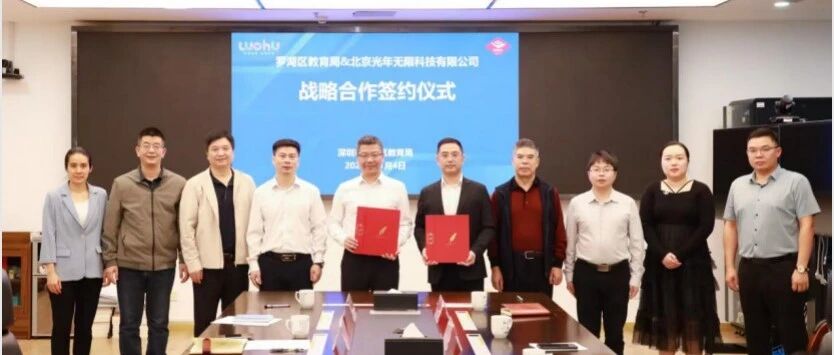
北京光年无限与深圳罗湖教育局战略合作、共创人工智能教育
图灵机器人· 2025-11-07 05:32
Core Viewpoint - The strategic partnership between Turing Robot and the Luohu District Education Bureau aims to enhance the quality of education through AI-driven innovations, aligning with the district's vision of cultivating innovative talents and reshaping academic disciplines [2][3][5]. Group 1: Partnership Details - The collaboration involves the establishment of an "AI + Education Innovation Laboratory" in Luohu, focusing on the development and iteration of AI companion products to facilitate personalized learning and intelligent tutoring [3]. - Key stakeholders from various educational institutions and Turing Robot participated in the signing ceremony, highlighting the collective effort towards educational advancement [2]. Group 2: Technological Contributions - Turing Robot will leverage its extensive experience in AI education technology, utilizing its core Turing Education Model to support the construction of the Luohu education system [3]. - The initiative aims to integrate intelligent tutoring and personalized learning pathways, enhancing the precision and individualization of the teaching process [3]. Group 3: Alignment with National Policies - The partnership reflects Turing Robot's commitment to national initiatives such as "Artificial Intelligence +" and the "Revitalization of County High Schools," promoting equitable and high-quality education [5]. - The application of AI companions in pilot schools is expected to improve teaching quality and foster innovative talent, serving as a replicable model for educational reform [5]. Group 4: Company Overview - Turing Robot, established in 2014, is one of the earliest AI dialogue robot development platforms in China, holding nearly 500 invention patents in AI technology and applications [6]. - The company has deployed over 100 million AI hardware units, facilitating billions of AI interactions daily across various sectors, including education and robotics [6].
Who’s funding Trump’s White House ballroom? Not taxpayers — but Apple, Coinbase, his lawsuit against YouTube, & more
MINT· 2025-10-25 06:43
Group 1: Project Overview - The White House ballroom project, valued at $300 million, is funded through private donations, including contributions from major companies like Google, Meta, and Coinbase [1][2] - Construction of the ballroom has commenced as part of efforts to modernize the White House, with Trump also pledging personal financial support [2] Group 2: Key Donors - Google made a significant donation of $22 million as part of a legal settlement related to Trump's YouTube ban [2] - Amazon's founder Jeff Bezos has expressed support for Trump, while the company faced criticism from Trump regarding tariff transparency [3] - Altria Group, a major tobacco company, is listed as one of the significant donors to the ballroom project [5] - Apple CEO Tim Cook previously served on Trump's advisory board and announced a $100 billion investment in U.S. jobs [6] - Meta has aligned itself with Trump and removed fact-checkers to cater to his supporters [7] - Microsoft CEO Satya Nadella met with Trump, indicating a close relationship between the company and the administration [9] - Coinbase, a leading cryptocurrency exchange, had a lawsuit dropped by the Trump administration earlier this year [10] Group 3: Additional Notable Contributors - Lockheed Martin, the largest defense contractor, expressed gratitude for the opportunity to support the ballroom project [25] - T-Mobile clarified that its donation was part of a broader initiative to restore national landmarks, including the ballroom [33] - The Winklevoss twins, known for their early investments in cryptocurrency, have established a significant presence in the blockchain sector [38]


【省教育厅】陕西“人工智能+教育”行动计划出炉
Shan Xi Ri Bao· 2025-10-08 22:39
Core Points - The "Artificial Intelligence + Education" action plan aims to integrate AI into education across all levels in Shaanxi Province by 2027 [1][2] - The plan includes the establishment of approximately 20 AI education bases in primary and secondary schools, the training of around 500 key teachers, and the creation of about 100 experimental schools [1][2] Group 1: Key Objectives - By 2027, the plan targets the cultivation of 20 AI education bases in primary and secondary schools and the establishment of 10 AI-focused vocational training bases [1] - The initiative aims to create around 60 quality academic programs in higher education institutions and establish approximately 5 AI colleges [1] - The plan includes the development of 30 research projects and the establishment of key laboratories focused on "Artificial Intelligence + Education" [1] Group 2: Implementation Strategies - The plan outlines five key tasks: improving the foundational environment for AI in education, creating key application scenarios, advancing AI education, enhancing AI literacy among teachers and students, and deepening research and international exchanges [2] - It emphasizes the use of data-sharing mechanisms to facilitate collaboration between educational institutions and government departments [2] - The introduction of the "Introduction to Artificial Intelligence" course as a mandatory part of the general education curriculum aims for full coverage at the undergraduate level [2] Group 3: Institutional Support - The provincial education department will prioritize AI projects in funding applications and integrate AI education into regular teaching and quality assessments [2] - Local educational authorities are encouraged to treat "Artificial Intelligence + Education" as a top priority within their development plans [2]
北京市全域推进人工智能通识教育——首批一百六十套课程资源覆盖全学段(解码·教育优质均衡发展)
Ren Min Ri Bao· 2025-09-29 22:03
Core Insights - Beijing has launched its first batch of 160 city-level artificial intelligence (AI) curriculum resources, covering all educational stages, with each set including approximately 15 minutes of teaching videos, teaching guides, and activity task sheets [1] - Starting this fall semester, over 1,400 primary and secondary schools in Beijing will fully implement AI general education courses [1] Group 1: Curriculum Structure - The curriculum for elementary school focuses on "experiential" learning, using image recognition and interactive games to spark interest; middle school emphasizes "cognitive" teaching, guiding students to experience model training and apply generative AI tools in their learning; high school centers on "comprehensive practice," fostering data processing, algorithm application, and interdisciplinary innovation skills [2] - The first batch of city-level curriculum resources is designed to meet the needs of teachers' preparation, teaching, and students' independent learning through a "video + tools + task sheets" model, establishing an AI "course supermarket" and "application supermarket" to support classroom teaching [2] Group 2: Teacher Training and Support - Schools are equipped with a teaching team that combines full-time and part-time educators, with information technology teachers as the primary source [2] - A summer training program called the "Hundred Thousand Seed Plan" was launched in July, with over 130 key teachers participating; since the start of the school year, AI education lecturer teams have been conducting tours to address challenges in education [2] Group 3: Integration of Resources - The Beijing Youth Artificial Intelligence Academy has been established, and various international AI academic activities are being held, reflecting the growing atmosphere of AI education in primary and secondary schools [3] - Beijing is integrating technological innovation resources by collaborating with universities, research institutes, and tech companies to create a collaborative education model [3] - The introduction of AI education in primary and secondary schools is seen as a necessary requirement for technological development and an important direction for educational reform [3]