
传统产业转型升级

Search documents
干在实处 闯出新路(前沿观察·挑大梁 看担当) ——广东省党员干部担当作为、服务经济发展一线见闻
Ren Min Ri Bao· 2025-08-11 21:44
Group 1: Economic Development and Government Support - The efficient construction and operation of the Yinxing Service Robot Intelligent Industrial Park in Shunde reflects the commitment of Guangdong's government officials to economic development, with the province's GDP exceeding 6.8 trillion yuan in the first half of the year [1] - The government is actively facilitating the transformation and upgrading of traditional manufacturing industries, which account for about 1/8 of the national industrial scale, by addressing the needs of enterprises and linking them with resources [2][3] - Guangdong's industrial technology transformation investment increased by 1.8% year-on-year in the first half of the year, accounting for over 30% of industrial investment, indicating steady progress in industrial transformation [3] Group 2: Emerging Industries and Talent Development - The establishment of the "Five Chains Integration" mechanism in Ronggui Street aims to break the bottlenecks in traditional manufacturing transformation by integrating industry, innovation, and talent [2] - The government is focusing on nurturing private entrepreneurs through training programs, with over 40,000 entrepreneurs trained to date, enhancing their capabilities to drive industrial growth [3] - New emerging industries are rapidly developing in regions like northern Guangdong, with local governments actively supporting talent acquisition and integration to meet industry needs [6] Group 3: High-Level Opening Up and Foreign Investment - The successful establishment of the ExxonMobil Huizhou Ethylene Project is a testament to Guangdong's efforts in optimizing the business environment and enhancing foreign investment attraction [8][9] - In the first five months of 2025, Guangdong saw the establishment of 12,000 new foreign-funded enterprises, with actual foreign investment amounting to 50.84 billion yuan, showcasing the province's growing appeal to foreign investors [11] Group 4: Rural Revitalization and Agricultural Development - The implementation of high-standard farmland construction in Nanhua City has led to increased agricultural efficiency, with collective income rising by 150,000 yuan in the first half of the year [13] - The "Hundred Counties, Thousand Towns, and Ten Thousand Villages" initiative aims to stimulate high-quality development in rural areas, with local governments actively engaging in infrastructure improvements and attracting investment in tourism [14]
龙门县有了“富贵竹”
Jin Rong Shi Bao· 2025-08-08 07:55
Core Insights - The bamboo processing industry in Longmen County, Huizhou, is a significant economic driver, with over 300 registered companies and 600 e-commerce enterprises, generating an annual output value of approximately 2 billion yuan [1] - Green Jianmu (Huizhou) Furniture Accessories Co., Ltd. has maintained annual revenue around 50 million yuan, supported by a 15 million yuan "bamboo processing loan" from Longmen Rural Commercial Bank [2] - The transformation and upgrading of traditional industries are essential for high-quality development, with Green Jianmu expanding its product applications to various sectors, including home living and health [3] Industry Overview - Longmen County has a bamboo forest area of 300,000 acres, accounting for 8.7% of the total county area, with a forest coverage rate of 76.6% [1] - The bamboo processing industry is a pillar of the local economy, providing significant employment opportunities, with over 7,000 jobs created through the bamboo processing supply chain [2] - The "bamboo processing loan" product from Longmen Rural Commercial Bank has provided 255 million yuan in credit to 700 bamboo processing clients, addressing funding challenges in the industry [4] Challenges and Solutions - Green Jianmu faces funding pressure due to the need to stockpile raw materials and long payment cycles from e-commerce platforms, which can extend up to six months [4] - The company has monthly raw material procurement costs exceeding one million yuan, leading to cash flow constraints [4] - Longmen Rural Commercial Bank's innovative credit solutions, including a 600 million yuan credit line to the local wood products industry association, aim to support the industry's branding and standardization efforts [4]

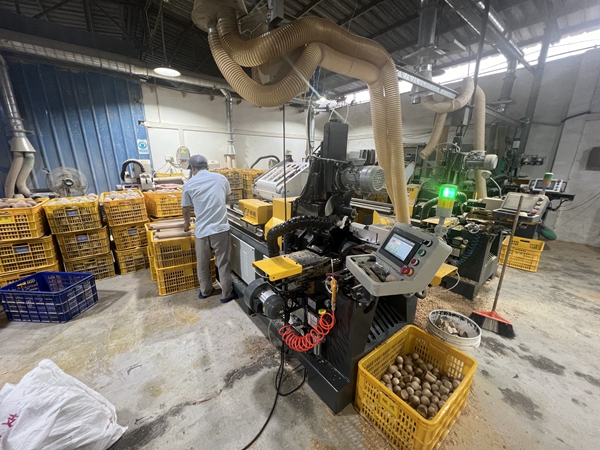
广州蓝皮书发布:强化产业互联网赋能传统特色产业,推动广州产业结构转型升级
Zhong Guo Fa Zhan Wang· 2025-08-05 09:05
Core Insights - The "Guangzhou Blue Book: Guangzhou Economic Development Report (2025)" highlights the significance of traditional industries in Guangzhou for economic stability and employment [1] - The report emphasizes the role of industrial internet as a key driver for the transformation and upgrading of traditional industries [1] Group 1: Current State of Traditional Industries - Guangzhou's traditional industries are characterized by large scale, strong features, significant potential, and vitality [1] - The city has initiated four empowerment models for traditional industries through industrial internet: production-side empowerment, sales-side reverse empowerment, full industry chain empowerment, and foundational empowerment [1] Group 2: Challenges Faced - There are challenges such as weak application motivation among small and micro enterprises, limitations in internet platform supply, and the need for improved policy planning and guidance [1] Group 3: Recommendations for Improvement - The report suggests learning from advanced experiences of cities like Shanghai and Beijing to create a highland for industrial internet policies, platforms, and talent [2] - Recommendations include enhancing policy guidance, increasing support for industrial and fiscal policies, and improving the regulatory framework for industrial internet platforms [2] - It also emphasizes the need for stronger enterprise guidance, platform development, model introduction, technological breakthroughs, and talent cultivation [2]
广东省传统产业转型升级成效初步显现,传统行业更显活力
Zhong Guo Chan Ye Jing Ji Xin Xi Wang· 2025-08-04 12:08
Core Viewpoint - Guangdong Province is making significant progress in the transformation and upgrading of traditional industries, with a focus on enhancing competitiveness and adopting advanced technologies [1][2]. Group 1: Current Status and Achievements - Traditional industries in Guangdong are showing increased vitality, with key sectors such as refined edible oils, beverages, and home appliances leading in national production [1]. - The automotive industry produced 1.3134 million units in the first half of 2025, ranking second in the country, while the annual crude oil processing volume exceeds 80 million tons [1]. - Digital transformation has been implemented in over 44,000 industrial enterprises, achieving a digital management penetration rate of 88.2% and a digital design tool penetration rate of 91.3% [2]. Group 2: Policy and Support Measures - Guangdong has introduced several regulations to support traditional industries, including the "Guangdong Province High-Quality Manufacturing Development Promotion Regulations" and the "Guangdong Province Digital Economy Promotion Regulations" [2]. - The province has initiated 14 pilot cities for industrial internet development and provides financial support for equipment upgrades through risk compensation and interest subsidies [2]. Group 3: Challenges and Recommendations - Some enterprises are hesitant to engage in the "three integrations" (digitalization, intelligence, and greening), facing issues such as lack of willingness, courage, and capability to transform [2]. - Recommendations include optimizing the development environment for traditional industries, enhancing the policy framework, and providing tailored transformation plans for different sectors [3]. - The introduction of models like "leading enterprises driving small and medium enterprises" is suggested to facilitate the development of smaller firms [3].
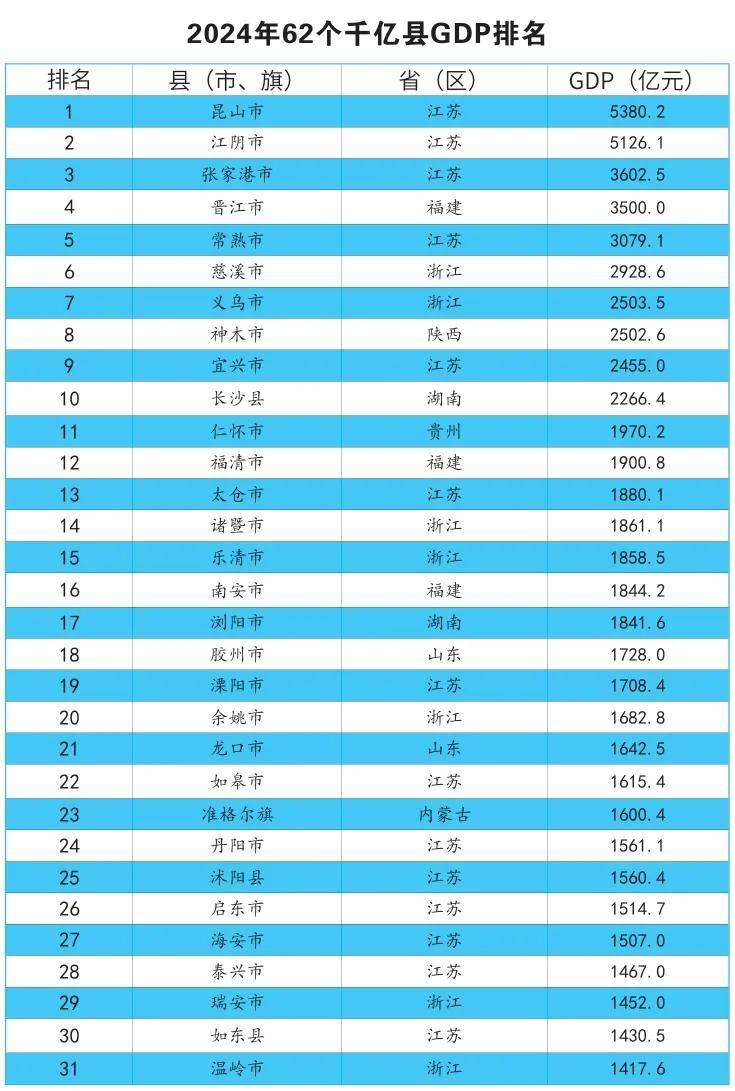
全国“千亿县”GDP排名来了!谁在领跑?谁新进榜单?
Sou Hu Cai Jing· 2025-08-02 05:18
Core Insights - The "billion-county" phenomenon plays a significant role in China's economy, contributing 7.8% of the national GDP while occupying only 1.3% of the land area [1][8]. Group 1: Growth and Distribution of Billion-Counties - The number of billion-counties in China has increased from the first three in 2007 to 62 by 2024, indicating a steady growth trend [2][4]. - The distribution of these counties shows a pyramid structure, with two counties (Kunshan and Jiangyin) exceeding 500 billion yuan in GDP, five counties surpassing 300 billion yuan, and 52 counties reaching 100 billion yuan [4][6]. - The eastern region is highly concentrated with 46 billion-counties, while the central and western regions are seeing a rise in their numbers, reflecting a shift in economic vitality [3][6]. Group 2: Economic Contributions and Characteristics - The 62 billion-counties collectively contributed over 10 trillion yuan to the national economy in 2024, showcasing their economic strength [8]. - These counties are characterized by a transformation in industrial structure, with traditional industries upgrading and new industries emerging rapidly [8][10]. - The counties are increasingly focusing on digital transformation and green development, enhancing their competitiveness [8][14]. Group 3: Industrial Development and Innovation - Many billion-counties are actively upgrading traditional industries while simultaneously developing new sectors, such as digital economy and clean energy [10][12]. - For instance, Jiangsu's Changshu is undergoing a digital revolution in its garment industry, while Shandong's Jiaozhou is promoting digital transformation in the steel industry [8][9]. - The counties are also forming industrial clusters to enhance competitiveness, with examples like Fujian's Fuzhou focusing on electronic information and chemical materials [13][22]. Group 4: Regional Integration and Collaboration - Billion-counties are integrating into urban agglomerations, leveraging the economic strength of surrounding cities to accelerate their growth [17][18]. - For example, Kunshan benefits from its proximity to Shanghai, becoming a hub for high-end industries [18]. - Collaborative efforts between neighboring counties, such as Cixi and Yuyao, are fostering regional economic synergy through complementary industries [19][25]. Group 5: Strategic Insights for Development - The success of billion-counties highlights the importance of leveraging local resources for industrial transformation and capturing emerging market opportunities [21][22]. - Building strong industrial clusters around leading enterprises is crucial for enhancing competitiveness and driving economic growth [22][23]. - The role of local governance, entrepreneurial spirit, and skilled labor is essential in fostering a conducive environment for economic development [24][25].
福建省级S母基金招GP
FOFWEEKLY· 2025-08-01 10:12
Core Viewpoint - The Fujian Provincial Government Investment Fund Company is seeking to select management institutions for the Fujian Science and Technology Innovation Relay S Fund, aiming to support strategic emerging industries and the transformation of traditional industries in line with national strategies [1][2]. Group 1 - The provincial government investment fund has a registered capital of 10 billion yuan, managed by Fujian Jintou Private Fund Management Company [1]. - The sub-fund must have a target scale of no less than 5 billion yuan, with an initial subscription scale of at least 2 billion yuan [1]. - The provincial fund's contribution to the sub-fund will not exceed 30% of the sub-fund's subscribed scale [1]. Group 2 - The sub-fund is expected to invest at least an amount equal to the contributions from various levels of government in Fujian [1]. - The investment focus includes strategic emerging industries, future industries, and the upgrading of traditional industries [1]. - The management team of the sub-fund is encouraged to be based in Fujian, and if a separate management structure is adopted, the general partner should also be located in the province [1]. Group 3 - The sub-fund must invest in existing underlying assets that are either in the exit period or have completed investment agreements, with at least 70% of the fund's subscribed scale [2]. - Detailed requirements regarding performance evaluation, early exit, investment restrictions, management fees, and performance rewards are outlined in the application guidelines [2].

广东传统产业谋变:强化人工智能赋能新型工业化
Sou Hu Cai Jing· 2025-08-01 02:03
Core Viewpoint - Traditional industries are crucial for Guangdong's economic structure, serving as a foundation for overall manufacturing growth and requiring transformation towards high-end technology and intelligent development to remain competitive globally [1][2][3]. Group 1: Importance of Traditional Industries - Traditional industries account for over 70% of the added value in large-scale manufacturing in Guangdong, contributing 65% of tax revenue and employing 75% of the workforce [2]. - Guangdong leads the nation in the production of over 160 industrial products, with significant contributions from traditional sectors such as textiles, apparel, and home appliances [2][4]. - The textile and apparel industry cluster in Guangdong has reached a scale of 2.86 trillion yuan, with an annual clothing production exceeding 4 billion pieces [2]. Group 2: Challenges and Transformation - The transformation of traditional industries is complex due to the predominance of small and medium-sized enterprises, which face difficulties in upgrading and transitioning [1][6]. - Issues such as lack of technology, talent, and experience hinder the transformation process, with many enterprises still reluctant or unable to adapt [6][7]. - The global economic environment poses additional challenges, including shrinking demand and declining global trade, which exacerbate existing issues in traditional industries [5][6]. Group 3: Policy and Innovation Support - Guangdong has implemented various supportive measures, including legislation for high-quality manufacturing and digital economy promotion, to facilitate the transformation of traditional industries [3][4]. - The province aims to enhance policy supply and project support, focusing on technological innovation and green development to drive the transformation of traditional industries [10]. - The integration of artificial intelligence and innovation is emphasized as a key driver for upgrading traditional industries, with examples of successful applications in companies like Feiya [7][9].
广东省发改委:稳住投资基本盘,推动传统产业转型升级
Nan Fang Du Shi Bao· 2025-07-31 11:41
Core Viewpoint - Guangdong Province is accelerating the integration of traditional industries with high-end, intelligent, and green development through a series of strategic initiatives and investments aimed at modernizing its industrial system [2][3][4]. Group 1: Industrial Structure - In February, Guangdong's provincial government released the "2025 Action Plan for Building a Modern Industrial System," which outlines comprehensive measures to enhance traditional industries by strengthening supply chains and promoting high-end, intelligent, and green development [2]. - Significant projects in the petrochemical sector are underway, including the completion of the ExxonMobil Huizhou Ethylene project on July 15 and the upcoming completion of the BASF Zhanjiang project within the year [2]. - Guangdong has established five integrated refining bases and several specialized chemical parks, further strengthening its petrochemical industry cluster [2]. Group 2: Application Scenarios - Since the beginning of 2023, Guangdong has released over 16 batches of application scenario opportunity lists, totaling more than 1,260 innovative projects, facilitating the first trials and applications of new technologies and products [3]. - The province plans to continue promoting application scenario innovation systematically, providing more platforms for enterprises to test new products and technologies [3]. Group 3: Fixed Asset Investment - Guangdong has maintained a large scale of investment, consistently ranking among the top in the country, with industrial investment rising to approximately 37% after four years of rapid growth [3]. - Infrastructure investment has also remained stable, exceeding 30% of total investment, supported by effective counter-cyclical adjustments [3]. - The province aims to implement major projects that optimize structure, fill gaps, and benefit livelihoods, ensuring a rolling development pattern of starting, constructing, and reserving projects [3]. Group 4: Business Environment - Guangdong has been enhancing its business environment by reducing institutional transaction costs and promoting a market-oriented, legal, and international business climate [4]. - Future efforts will focus on addressing the concerns of enterprises and the public to further improve the business environment [4].

重磅信号!工业产出和地产投资终转正,广州经济走出U型调整
Nan Fang Du Shi Bao· 2025-07-29 10:37
Economic Recovery in Guangzhou - The latest economic data from Guangzhou indicates a positive recovery, with the city's GDP growth reaching 3.8% in the first half of the year, up from 3.0% in the first quarter [2][4] - The industrial output value of Guangzhou has finally turned positive after a year of decline, supported by the automotive industry [2][4] - Real estate development investment in Guangzhou also saw a positive growth of 4.1% in the first half of the year, reversing a 10.8% decline in the first quarter [2][11] Automotive Industry Performance - The automotive industry in Guangzhou is still recovering, with a year-on-year decrease of 5.7% in automotive industrial value added, although this is an improvement from a 6.4% decline in the first quarter [4][8] - GAC Group reported a total automotive sales volume of 755,300 units in the first half of the year, a decrease of 12.48% year-on-year [5][7] - GAC Toyota managed to maintain stability with a slight increase in sales of 2.58%, accounting for 45.63% of GAC Group's total sales [7] Industrial Growth and Investment - The overall industrial value added in Guangzhou increased by 0.7% in the first half of the year, marking the first positive growth since June of the previous year [8] - Key sectors such as electronics and petrochemicals showed stable growth, with value added increasing by 1.6% and 6.3% respectively [8][9] - The city's fixed asset investment grew by 0.8%, with infrastructure investment rising by 4.2% [12] Real Estate and Policy Support - The positive growth in real estate investment is attributed to supportive policies, including the acceleration of central special bonds [11][12] - The issuance of special bonds is also facilitating the launch of other investment projects, contributing to a 12.0% increase in industrial investment [12] Consumer Market Dynamics - Retail sales in Guangzhou increased by 5.9% year-on-year, outperforming both national and provincial averages [13] - The "old-for-new" consumption subsidy policy significantly boosted sales, contributing to a total of 482.7 billion yuan in sales [13] Foreign Trade and Economic Events - Guangzhou's total import and export value reached 605.05 billion yuan in the first half of the year, a 15.5% increase year-on-year [15] - The upcoming 15th National Games is expected to further stimulate economic activity, particularly in the sports industry, which saw a revenue increase of 16.7% [15][17]
广州市召开“十五五”发展规划专家委员会咨询会议
Guang Zhou Ri Bao· 2025-07-26 01:52
Group 1 - The "15th Five-Year Plan" is a critical period for Guangzhou to achieve socialist modernization, serving as a bridge between past and future developments [2][3] - The city aims to align its development with national and provincial strategies, particularly focusing on the Guangdong-Hong Kong-Macao Greater Bay Area initiative [3] - Emphasis is placed on high-quality planning that addresses key issues such as industrial transformation, technological innovation, and urban renewal [3] Group 2 - Experts from various fields provided suggestions on promoting urban-rural integration, developing productive services, and innovating in the financial sector during the consultation meeting [2] - The city government is committed to incorporating expert advice into the planning process to enhance the effectiveness of the "15th Five-Year Plan" [2][3] - The goal is to create a robust framework for significant tasks and projects that will support long-term development objectives [3]