
大模型

Search documents
库克回应Mac mini卖爆,马斯克被判误导投资者,美团开源大模型,《红色沙漠》首日销量200万份,这就是今天的其他大新闻!
Sou Hu Cai Jing· 2026-03-21 17:29
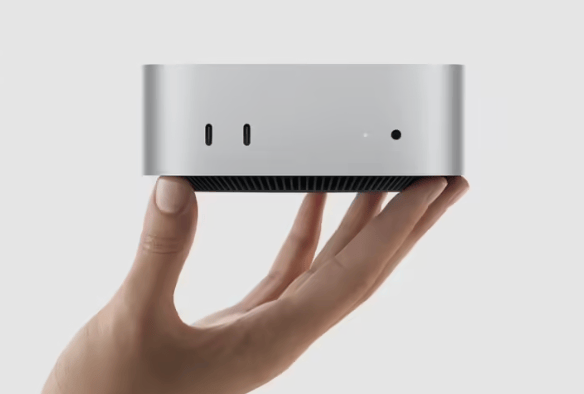
Group 1 - Apple CEO Tim Cook responded to the surge in Mac mini sales driven by OpenClaw, highlighting the integration of neural network engines in Macs for over a decade, which positions the Mac mini as ideal for AI tasks [4] - Apple plans to continue optimizing Mac performance for AI workflows, with users already able to train large language models on MacBook Pro [4] Group 2 - A San Francisco federal jury ruled that Elon Musk misled investors during his acquisition of Twitter in 2022, resulting in a potential compensation of approximately $2.5 billion to Twitter's former shareholders [7] - The jury found Musk responsible for misleading statements made in May 2022 regarding the investigation of fake accounts on Twitter, which affected the stock price [7] Group 3 - Meituan has open-sourced the LongCat-Flash-Prover large model, featuring 567.7 billion parameters and designed to tackle complex mathematical proof problems [10] - The model employs a mixture of experts framework and has achieved state-of-the-art results in benchmark tests, including a 97.1% score on MiniF2F-Test and solving 41.5% of problems on PutnamBench [10] Group 4 - The game "Crimson Desert" achieved over 2 million global sales on its first day, although it received mixed reviews, with an average score of 78 on Metacritic and a 6 from IGN [14] - Despite strong initial sales, the polarized reviews led to a 30% drop in the stock price of the developer, Pearl Abyss [14]



“你们搞大模型的都给我听好了!”
程序员的那些事· 2026-03-20 15:41
Group 1 - The article discusses the recent trend in a major company to implement rapid layoffs and restructuring, emphasizing the urgency of the process [2] - It highlights the phrase "all fired/cleared" as a new catchphrase within the industry, indicating a shift in corporate culture towards more aggressive workforce management [2] Group 2 - The article references a specific incident involving a large tech company, suggesting that this approach may become more common across the industry [2] - It points out that the speed of these changes is a critical factor, reflecting a broader trend in the tech sector towards efficiency and cost-cutting measures [2]

IPO申购指南:极视角(6636)
Guoyuan Securities2· 2026-03-20 09:45
Group 1: IPO Details - The IPO price is set at HKD 40.0 per share[1] - The total fundraising amount is approximately HKD 4.34 billion[1] - The total number of shares available for subscription is 12.48 million, with 95% allocated for international placement and 5% for public offering[1] Group 2: Company Overview - The company ranks eighth in China's emerging AI visual solutions market, with a projected revenue growth from CNY 10.7 billion in 2020 to CNY 36.8 billion by 2024[2] - The global enterprise-level visual solutions market is expected to grow from CNY 149.6 billion in 2024 to CNY 505.2 billion by 2029, with a CAGR of 27.6%[2] Group 3: Financial Performance - Revenue is projected to increase from CNY 102 million in 2022 to CNY 257 million in 2024[3] - The adjusted loss decreased from CNY 52.9 million in 2022 to CNY 44.3 million in 2023, with an expected adjusted profit of CNY 20.5 million in 2024[3] - The estimated market capitalization post-IPO is around HKD 45 billion, with a valuation of approximately 204 times the adjusted net profit for 2024 and a PS ratio of about 16 times, indicating a high valuation[3]
晚点独家丨地平线敲定征程 7 目标算力,舱驾一体产品命名 “星空”
晚点LatePost· 2026-03-20 08:16
Core Viewpoint - Horizon Robotics is preparing to launch its next-generation intelligent driving chip series, Journey 7 (J7), with the highest performance version, J7P, expected to significantly surpass NVIDIA's Thor-X in computing power, aiming for mass production in 2027 [4][6]. Group 1: Chip Development and Strategy - The J7 chip's product planning is primarily driven by the algorithm team, marking a shift from the previous J6 series, which was led by the chip team [6][7]. - The J7 will utilize Horizon's fourth-generation BPU architecture, "Riemann," and aims to compete directly with Tesla's AI5 chip [7][8]. - The new chip, "Starry Sky," is designed for integrated cockpit driving and will support localized large model deployment, with plans for release in April this year [4][6]. Group 2: Market Dynamics and Competition - The current generation of high-end driving chips is expected to support model evolution for only 2-3 years, necessitating a consistent upgrade cycle for driving chips [8][9]. - The industry is facing challenges beyond theoretical computing power, such as memory bandwidth and data transfer efficiency, which can limit the deployment of large models [9][10]. - Companies like Xiaopeng and Li Auto are focusing on optimizing the synergy between chips and algorithms to enhance efficiency rather than solely increasing peak computing power [10][11]. Group 3: Future Projections and Requirements - The anticipated computing power for L3 autonomous driving is projected to be between 500-1000 TOPS, while L4 may require up to 2000 TOPS by 2030 [9][10]. - Horizon Robotics is under pressure to maintain production schedules while also investing in next-generation platforms, balancing current product viability with future development needs [11].

从阿里云涨价看算力通胀演绎的节奏和阶段
2026-03-20 02:27
Summary of Conference Call Records Industry Overview - The records focus on the cloud computing industry, specifically the dynamics of token inflation and its impact on major cloud service providers such as Alibaba Cloud, Baidu Cloud, and Tencent Cloud [1][2]. Key Points and Arguments Token Inflation and Pricing Trends - Token inflation has been clearly transmitted to major domestic cloud service providers, with price increases marking a definitive trend [1]. - Token demand is experiencing exponential growth, while supply is increasing linearly, leading to a significant supply-demand gap [3][4]. - The price transmission path starts from wafer foundry/chips to IDC/power leasing, and finally to cloud and model vendors, with upstream entities having the strongest bargaining power [1][5]. Cost Dynamics in Video Generation - The cost of video generation has significantly decreased, with generating 1 second of video consuming approximately 20,000 tokens, costing about 1 yuan [1]. Investment Strategy - The investment strategy emphasizes prioritizing upstream sectors, particularly in GPU and core hardware segments, which have a favorable competitive landscape and high price increase certainty [1]. Market Evolution and Price Transmission - Since January 2026, the inflation transmission chain has shown a gradual spillover from upstream to downstream, with initial price increases observed in GPU and storage sectors [2]. - Major cloud providers like Amazon and Google have initiated price hikes, leading to expectations of similar actions from domestic providers [2]. Commercialization Strategies of Model Vendors - In 2026, model vendors are focusing on revenue growth, shifting from expansion to profitability and lightweight models due to changing capital market dynamics [8]. - Successful segments include AI Coding and Agent applications, which have shown strong revenue potential [9]. AI Coding Market Potential - The AI Coding market is currently the most penetrated AI application area, with potential market sizes estimated between $55 billion to $100 billion in China and $50 billion to $100 billion overseas [11]. Agent Applications and Token Consumption - Agent applications, such as Devin, have seen a significant increase in token consumption, driven by factors like persistent memory and multi-turn interactions [12][14]. - The demand for computing infrastructure is expected to rise due to the structural impacts of Agent applications, including increased needs for local, cloud, and edge computing resources [15]. CPU Demand and Market Perception - The rise of Agent applications is expected to increase demand for data center server CPUs, although current market perceptions may not reflect this due to the gradual adoption of these applications [16]. Supply-Side Constraints - Key factors affecting the supply of inference computing power include capital expenditure, physical performance of single cards, and algorithm optimization [18]. - Despite increased capital expenditure, physical constraints may hinder the realization of these investments [18]. Token Supply and Demand Dynamics - The demand for tokens is expected to grow exponentially due to applications in Coding, Agent, and multi-modal areas, while supply growth remains linear, leading to a persistent supply-demand tension [20]. Investment Strategy Recommendations - The investment strategy should focus on both ends of the AI industry chain: computing power and model vendors, with a preference for upstream investments in core hardware [23][24]. Additional Important Insights - The evolution of large model technology is centered around programming, agents, and multi-modal applications [7]. - The competitive landscape in the upstream segments is more concentrated, allowing for better price increase capabilities compared to the more competitive downstream segments [6]. - The recent price increases across the industry reflect a direct response to the supply-demand imbalance in the token market [20].
新一轮云涨价-狂潮
2026-03-20 02:27
Summary of Conference Call Records Industry Overview - The cloud service industry is experiencing a price increase wave, with Alibaba's PingTouGe chip prices rising by 34%, and expectations of 2-3 more rounds of price hikes in China by 2026 [1][5] - The core driving force has shifted from training to inference, with a surge in Token demand leading to frequent sellouts for companies like Zhipu AI, boosting the growth of computing power leasing businesses [1][2] Key Points and Arguments - The price increase in cloud services and AI computing power has exceeded market expectations in both scope and magnitude, initiated by North American giants like Amazon and Google, followed by domestic players such as UCloud and Alibaba [2] - The primary drivers of this price surge are robust supply and demand dynamics, particularly the explosive growth in Token demand, which has significantly increased the need for cloud services and large models [2][3] - Alibaba is restructuring its organization to focus on Token as a core strategy, aiming to integrate B-end and C-end business units with large model manufacturers to create synergies [4] - The increase in Alibaba Cloud's prices reflects strong AI inference demand, indicating a supply-demand imbalance in the market [4] Financial Indicators to Watch - Investors should focus on the growth rate of cloud business and profit margin changes in the upcoming financial reports, particularly comparing Q4 2025 and Q1 2026 data [4] Market Trends and Predictions - The current round of price increases is expected to be just the beginning, with continuous revenue and profit margin growth anticipated for major public cloud vendors in the domestic market [5] - The rise in Token prices is beneficial for the large model industry, with storage chip prices also increasing, positively impacting the entire computing power supply chain [6] Infrastructure and Technology Implications - The growth in AI inference demand is significantly impacting infrastructure, particularly in the IDC sector, with companies like GDS Holdings shifting from conservative to aggressive expansion strategies [7] - The demand for high-power cabinets is increasing, leading to potential structural price increases in specific regions with limited capacity [7] - The liquid cooling technology sector is also poised for growth, driven by new requirements from NVIDIA's Ruby series and interest from international giants like Google in domestic liquid cooling technology [6][7] Investment Opportunities - Identifying investment opportunities in the cloud computing supply chain involves understanding the sources and distribution of Tokens and profits across different segments [7] - Key players in the Token demand inflation include large model manufacturers like Zhipu AI and MiniMax, while cloud vendors are primarily focused on computing power cards, leading to investment opportunities in computing power leasing [7] - Companies deeply integrated with emerging model manufacturers, such as Digital China, are expected to gain more profits amid the cloud price increase wave [7]

罗福莉自曝“Hunter Alpha”:不是DeepSeek V4,是她的作业;小米推出三款大模型丨AIGC日报
创业邦· 2026-03-20 00:16
Group 1 - Xiaomi launched three self-developed large models: Xiaomi MiMo-V2-Pro, Xiaomi MiMo-V2-Omni, and Xiaomi MiMo-V2-TTS, with the first two models now offering API services [2] - The mysterious model "Hunter Alpha," initially thought to be an early version of "DeepSeek V4," is revealed to be the internal testing version of Xiaomi's flagship model MiMo-V2-Pro, indicating Xiaomi's significant commitment to the agent era [2][3] - Amazon announced the launch of its smart assistant Alexa+ in the UK as part of a "preview experience" program, which will be free during the trial period, with Prime members receiving it for free afterward, while non-Prime users will pay £19.99 per month [2] Group 2 - TaiChu YuanQi introduced an enterprise-level "shrimp farming" solution and launched the TaiChu Lobster integrated machine (TecoClaw), which is based on a fully domestic OpenClaw solution, enhancing security through various technological measures [2]


被全网猜是DeepSeek V4的神秘大模型,被小米认领了!还能免费「养龙虾」
36氪· 2026-03-19 13:43
Core Insights - Xiaomi has launched three major models in its MiMo series: MiMo-V2-Pro, MiMo-V2-Omni, and MiMo-V2-TTS, aimed at enhancing the capabilities of intelligent agents [6][12][14] - The MiMo models are designed to optimize performance in various applications, with MiMo-V2-Pro being a flagship model that supports complex workflows and long-term planning [12][19] - The models are positioned competitively in the market, with MiMo-V2-Pro ranking third domestically and ninth globally in comprehensive intelligence rankings [19][22] Model Features - MiMo-V2-Pro has over 1 trillion parameters and can handle a context length of 1 million tokens, significantly expanding its capabilities compared to previous versions [19][22] - MiMo-V2-Omni is a multimodal model that integrates text, visual, and audio inputs, enabling it to understand complex environments and execute plans autonomously [30][32] - MiMo-V2-TTS focuses on voice synthesis, allowing agents to communicate in a more human-like manner, with support for multiple dialects and emotional tones [41][43] Performance Metrics - MiMo-V2-Pro's API pricing is competitive, being one-fifth of the cost of similar models like Claude Opus 4.6, making it an attractive option for developers [12][27] - In benchmark tests, MiMo-V2-Pro demonstrated performance comparable to leading models in programming and task planning, indicating its advanced capabilities [24][22] - MiMo-V2-Omni's performance in multimodal tasks is close to that of Gemini 3 Pro, showcasing its effectiveness in real-world applications [33][30] Market Positioning - Xiaomi's release of these models suggests a strategic move towards integrating large models with system-level capabilities, potentially positioning the company as a leader in the intelligent agent market [46][45] - The models are designed to be accessible to developers, with a week-long free API access for testing, which may encourage widespread adoption [17][9] - Xiaomi aims to enhance its models' reasoning and decision-making abilities in complex environments, indicating a focus on advancing towards general intelligence [45][46]

对话原旷视联创唐文斌:现在很多具身订单都是“伪商业化”
虎嗅APP· 2026-03-19 12:25
Core Viewpoint - The article discusses the emergence of a new robotics company, Dexmal, founded by former executives of Megvii, aiming to explore the potential of embodied intelligence in robotics, which is seen as a continuation of their previous ambitions in AI technology [4][5][14]. Group 1: Company Background and Vision - Dexmal was established in March 2025, with the goal of revisiting and advancing the robotics ambitions that were not fully realized during the previous "AI four little dragons" era [5][18]. - The founder, Tang Wenbin, emphasizes the importance of creating functional value in robots, moving beyond mere emotional or display capabilities [8][9]. - The company adopts a unique approach by focusing on developing models first, which will then inform the hardware design, contrasting with other companies that prioritize hardware development [9][10]. Group 2: Industry Insights and Trends - The robotics industry is still in its early stages, lacking a consensus on technology routes, product forms, and commercial scenarios, and has not yet experienced a "ChatGPT moment" [11][12]. - Tang believes that the industry will eventually consolidate, but it is likely to retain a larger number of players compared to the large model sector due to the complexity of robotics, which involves various engineering disciplines [36][37]. - The article identifies three main application scenarios for robots: entertainment and research, industrial and logistics, and service-oriented interactions with consumers [41][42]. Group 3: Challenges and Opportunities - A significant challenge in transitioning from emotional value robots to functional value robots lies in the complexity of the robots' "intelligence" or cognitive capabilities [54]. - The current market is characterized by a prevalence of "pseudo-commercialization," where many robots are sold for demonstration purposes rather than for practical, ongoing use [48][51]. - The article highlights that many existing robots are not yet capable of sustained operation in real-world environments, indicating a gap between demonstration and practical application [53].

中信证券2026年春季资本市场论坛召开
Zheng Quan Ri Bao Wang· 2026-03-19 10:54
Group 1 - The 2026 Spring Capital Market Forum hosted by CITIC Securities took place on March 19-20, 2026, in Beijing, focusing on global macroeconomic trends and investment strategies [1] - Key topics discussed included national policy from the Two Sessions, the 14th Five-Year Plan, asset allocation, geopolitical conflicts, AI applications, real estate, REITs, and energy transition [1] - CITIC Securities emphasized the importance of high-quality development in response to external uncertainties, highlighting 2026 as a pivotal year for China's modernization goals [1] Group 2 - The capital market ecosystem is improving, with a focus on stabilizing the market and enhancing long-term investment, which is essential for high-quality development [2] - A more resilient capital market is emerging, driven by fundamental recovery and new capital inflows, transitioning from stock competition to incremental allocation [2] - Investment strategies for 2026 suggest focusing on undervalued sectors and pricing power, particularly in Chinese manufacturing [2] Group 3 - The macroeconomic outlook for China in 2026 predicts a continued recovery with an expected real GDP growth rate of around 4.9%, potentially showing a "V"-shaped growth pattern [3] - Fiscal policy is expected to remain proactive, with a deficit rate of 4% and an increase in special bonds aimed at project construction [3] - Monetary policy may allow for flexible adjustments, with expectations of 1-2 interest rate cuts and one reserve requirement ratio reduction throughout the year [3]
