
快递反内卷

Search documents
申万宏源:快递涨价传导至收入端得到验证 关注快递业三季报表现及旺季价格情况
Zhi Tong Cai Jing· 2025-09-19 02:13
Core Viewpoint - The express delivery industry is entering a new phase of anti-involution, with a focus on the performance of Q3 reports and pricing during peak seasons [1] Group 1: Industry Performance - In August, the express delivery business revenue reached 118.96 billion yuan, a year-on-year increase of 4.2%, while the business volume was 16.15 billion pieces, growing by 12.3% year-on-year [2] - The average single ticket revenue for the industry in August was 7.37 yuan per piece, with a month-on-month increase of 0.1% [3] - The growth rate of business volume in August showed a slight decline, with an expected annual growth rate of around 15% [3] Group 2: Company-Specific Insights - YTO Express completed a business volume of 5.39 billion pieces in August, a year-on-year increase of 9.82%, with a single ticket revenue of 2.15 yuan, down 1.13% year-on-year [2] - Shentong Express achieved a business volume of 4.434 billion pieces, a year-on-year increase of 14.47%, with a single ticket revenue of 2.06 yuan, up 3.0% year-on-year [2] - Yunda's business volume reached 4.119 billion pieces, a year-on-year increase of 5.16%, with a single ticket revenue of 1.92 yuan, down 3.52% year-on-year [2] Group 3: Pricing Trends - The express delivery companies are experiencing a rise in single ticket prices, with Shentong leading the increase at +0.09 yuan, followed by YTO at +0.07 yuan, and Yunda at +0.01 yuan [4] - In September, various regions across the country are following suit with price increases, indicating a continued upward trend in industry pricing [5] - The expectation is that the industry single ticket price will continue to rise, contributing to profit recovery for the leading companies in Q3 [5]



快递行业点评:快递涨价传导至收入端得到验证,看好业绩高弹性
Shenwan Hongyuan Securities· 2025-09-18 14:15
Investment Rating - The report gives an "Overweight" rating for the express delivery industry, indicating a positive outlook for the sector's performance compared to the overall market [3][9]. Core Insights - The express delivery business revenue reached 118.96 billion yuan in August, showing a year-on-year growth of 4.2%, while the business volume was 16.15 billion pieces, up 12.3% year-on-year [3]. - The average revenue per package in August was 7.37 yuan, reflecting a slight month-on-month increase of 0.1% [3]. - The report highlights a trend of price increases across various regions, with expectations for continued upward movement in industry pricing, particularly benefiting companies like Shentong Express and YTO Express [3]. - The report outlines three scenarios for the future of the industry: 1) Profit recovery leading to significant dividends while ensuring courier rights, 2) Continued competitive pressure in certain regions, and 3) Potential for mergers and acquisitions to optimize supply [3]. Summary by Sections Business Performance - YTO Express achieved a business volume of 5.39 billion pieces in August, a year-on-year increase of 9.82%, with a single ticket revenue of 2.15 yuan, down 1.13% [3]. - Shentong Express reported a business volume of 4.43 billion pieces, up 14.47% year-on-year, with a single ticket revenue of 2.06 yuan, an increase of 3.0% [3]. - Yunda Holdings completed a business volume of 4.12 billion pieces, a 5.16% year-on-year increase, with a single ticket revenue of 1.92 yuan, down 3.52% [3]. Price Trends - The report notes that the price increases in the express delivery sector are becoming more widespread, with various regions, including Jiangsu and Hubei, announcing price hikes [3]. - The report anticipates that the average industry price will continue to rise in September, contributing to profit recovery for major players [3]. Company Recommendations - The report recommends focusing on Shentong Express for its high elasticity, YTO Express for its competitive strength, and J&T Express for its growth potential in Southeast Asia [3]. - It also suggests keeping an eye on Zhongtong Express and Yunda Holdings for their performance in the upcoming quarterly reports [3].
严制裁的油轮和全面涨价的快递弹性测算
Changjiang Securities· 2025-09-14 14:13
Investment Rating - The report maintains a "Positive" investment rating for the transportation industry [11]. Core Insights - VLCC freight rates have reached a new high since March 2023, driven by limited supply and OPEC's production increase, indicating a tight oil tanker supply-demand situation [6][20]. - The express delivery sector is experiencing a nationwide price increase trend, with a significant recovery in profitability expected in Q4 2025 [7][39]. Summary by Sections Oil Tankers - VLCC freight rates have surged, with a notable increase of 39.3% to 78k USD/day, reflecting a tight supply situation due to limited new ship deliveries and stringent sanctions [9][20]. - The correlation between VLCC freight rates and annual profits of Zhongyuan Shipping indicates potential for price recovery in the sector [6][36]. - OPEC's production policy shift has led to increased exports, further supporting oil transportation demand [28][32]. Express Delivery - The regulatory stance against "involution" in the express delivery sector has strengthened, leading to a nationwide price increase that began as regional trials [51][52]. - The average price across the country has risen by 0.23 RMB since July, with potential net profit increases for major companies like Zhongtong and Yunda expected in Q4 2025 [7][53]. - The report highlights a significant recovery in profitability for major express delivery companies, with projected net profit increases of 7.8 billion RMB for Zhongtong and 5.3 billion RMB for Yunda by Q4 2025 [7][56]. Passenger Transport - Domestic passenger transport volume has shown improvement, with a 8% year-on-year increase in domestic passenger volume and a 14% increase in international passenger volume [61]. - The average domestic passenger load factor has improved by 3.2 percentage points, while international load factors have increased by 4.0 percentage points [67]. - Despite a slight decline in ticket prices, the overall market is expected to see marginal improvements in revenue as demand continues to recover [67][75].

快递反内卷:反内卷保障良性竞争,监管力度决定持续性
2025-09-09 14:53
Summary of the Express Delivery Industry Conference Call Industry Overview - The express delivery industry has undergone significant changes, transitioning from a "Spring and Autumn" phase (2017-2019) characterized by high growth and light asset models to a "Warring States" phase (2020 onwards) marked by heavy asset investments and price wars [3][10]. Key Points and Arguments - **Revenue Decline Factors**: The decline in single ticket revenue is attributed to three main factors: cost-driven efficiencies, rational competition, and irrational price wars. The past five years have seen revenue declines primarily driven by cost factors such as scale effects and automation upgrades [1][4][20]. - **Impact of New Entrants**: The entry of Jitu in 2020 triggered irrational price wars, leading to a decline in industry performance and valuations, putting pressure on networks and couriers [1][8]. - **Regulatory Actions**: Local governments, such as in Yiwu, have implemented measures to raise minimum delivery prices to curb irrational competition, which has stabilized the network and improved valuations for lower-ranked companies [1][9]. - **Market Recovery**: Following the anti-involution actions in 2021, leading companies regained market share, and single ticket revenue increased, significantly restoring profitability [10][11]. - **Future Price Competition**: The industry is expected to enter another price competition phase in the second half of 2024, with intensified price wars anticipated post-Chinese New Year in 2025 [1][12]. Important but Overlooked Content - **Regulatory Influence**: The effectiveness of the anti-involution measures heavily relies on regulatory strength, which has shown to alleviate competitive pressures in the short term and promote healthy competition in the long term [2][16]. - **Profitability Elasticity**: Future profitability in the express delivery sector will depend on the sustainability of price increases and regulatory actions. Current net profits for major companies are low, indicating a need for effective price adjustments to enhance profitability [17][21]. - **Long-term Implications**: The current anti-involution measures are expected to foster a healthy competitive environment, leading to industry consolidation and the rise of leading companies, ultimately benefiting consumers and investors alike [22]. Conclusion - The express delivery industry is at a critical juncture, with regulatory measures playing a pivotal role in shaping its future. The focus on sustainable pricing and profitability recovery presents significant investment opportunities in the sector, particularly for leading companies poised for growth in a more stable competitive landscape [19][22].

极兔速递-W(1519.HK):东南亚领先优势扩大 新市场EBITDA转正
Ge Long Hui· 2025-09-05 20:02
Core Insights - The company reported a significant increase in revenue and adjusted net profit for the first half of 2025, indicating strong growth in the Southeast Asian market and challenges in the Chinese market [1][2][3] Group 1: Financial Performance - In H1 2025, the company's revenue reached $5.5 billion, a year-on-year increase of 13.1% [1] - Adjusted EBITDA for H1 2025 was $440 million, reflecting a 24.2% year-on-year growth [1] - Adjusted net profit for H1 2025 was $160 million, showing a substantial increase of 147.1% year-on-year [1] Group 2: Southeast Asia Market - The company's business volume in Southeast Asia grew by 57.9% year-on-year to 3.23 billion pieces, with market share increasing by 5.4 percentage points to 32.8% [1] - The average revenue per piece and cost per piece were $0.61 and $0.50 respectively, down by $0.13 and $0.10 year-on-year [1] - Adjusted EBIT per piece increased by $0.007 to $0.073, with adjusted EBIT growing by 74.0% to $160 million [1] Group 3: China Market - In H1 2025, the company’s volume in China increased by 20.0% to 10.6 billion pieces, with market share rising by 0.1 percentage points to 11.1% [1] - Average revenue per piece and cost per piece in China were $0.30 and $0.28 respectively, both down by $0.04 year-on-year [1] - Adjusted EBIT per piece decreased by $0.006 to $0.001, with adjusted EBIT declining by 78.3% to $10 million due to intensified competition [1] Group 4: New Markets - The company’s volume in new markets grew by 21.7% year-on-year to 17 million pieces, with market share increasing by 0.1 percentage points to 6.2% [2] - Average revenue per piece and cost per piece in new markets were $2.18 and $1.92 respectively, both up by $0.04 year-on-year [2] - Adjusted EBIT per piece improved by $0.059 to -$0.106, leading to a positive EBITDA of $2 million [2] Group 5: Strategic Outlook - The company is well-positioned to capitalize on the expansion of Chinese cross-border e-commerce platforms, particularly in Southeast Asia [3] - The management model is effective in driving volume growth through high cost-performance services [3] - There is potential for recovery in the Chinese market as pricing stabilizes in key regions [3] - The company anticipates adjusted net profits of $340 million, $550 million, and $860 million for 2025, 2026, and 2027 respectively, with corresponding PE ratios of 34.8, 21.8, and 13.9 [3]
极兔速递-W(01519):东南亚领先优势扩大,新市场EBITDA转正
Changjiang Securities· 2025-09-05 07:01
Investment Rating - The investment rating for the company is "Buy" and is maintained [8]. Core Insights - In the first half of 2025, the company's revenue reached $5.5 billion, representing a year-on-year growth of 13.1%. Adjusted net profit was $160 million, a significant increase of 147.1% [2][5]. - The Southeast Asian market benefited from the expansion of e-commerce platforms led by TikTok, driving rapid growth in business volume and profits. The new markets achieved a positive EBITDA for the first time [2][10]. - The Chinese market faced price competition, leading to pressure on single-package profits, but there are signs of profit recovery in the second half of the year [2][10]. Summary by Sections Southeast Asia Market - The company saw a 57.9% year-on-year increase in business volume to 3.23 billion packages, with market share rising by 5.4 percentage points to 32.8%. The average revenue per package decreased by $0.13 to $0.61, while the average cost per package fell by $0.10 to $0.50 [10]. - The adjusted EBIT per package increased by $0.007 to $0.073, with adjusted EBIT growing by 74.0% to $160 million [10]. China Market - In the first half of 2025, the company’s package volume in China grew by 20.0% to 10.6 billion packages, with market share increasing by 0.1 percentage points to 11.1%. However, the average revenue and cost per package both decreased by $0.04 [10]. - The adjusted EBIT per package fell by $0.006 to $0.001, resulting in a 78.3% decline in adjusted EBIT to $10 million due to intensified competition [10]. New Markets - The new markets experienced a 21.7% year-on-year growth in package volume to 1.7 billion packages, with market share increasing by 0.1 percentage points to 6.2%. The average revenue per package rose by $0.04 to $2.18, while the average cost per package also increased by $0.04 to $1.92 [10]. - The adjusted EBIT per package improved by $0.059 to -$0.106, leading to a positive EBITDA of $2 million [10]. Future Outlook - The company is expected to benefit from the expansion of e-commerce platforms and the "anti-involution" trend in the Chinese market, which may drive profit recovery in the second half of the year. The adjusted net profit forecasts for 2025, 2026, and 2027 are $340 million, $550 million, and $860 million, respectively, with corresponding P/E ratios of 34.8, 21.8, and 13.9 [10][11].
海通国际:7月快递单价降幅收窄 反内卷持续扩散
Zhi Tong Cai Jing· 2025-09-03 06:20
Core Viewpoint - The express delivery industry in China is experiencing significant growth, with a notable increase in parcel volume and a trend towards "anti-involution" in pricing competition, which is expected to stabilize the market in the medium to long term [1][4]. Group 1: Industry Performance - In July 2025, the national express delivery volume reached 16.4 billion parcels, a year-on-year increase of 15.1%, while the volume for January to July 2025 totaled 112.05 billion parcels, up 18.7% year-on-year [1][2]. - The express delivery industry's revenue in July 2025 increased by 8.9% year-on-year, while the average revenue per parcel decreased by 5.3%. For the first seven months of 2025, revenue grew by 9.9%, with a 7.4% decline in average revenue per parcel [4]. Group 2: Company Performance - SF Express reported a remarkable business volume growth of 33.7% year-on-year in July 2025, leading the industry, with a 26.9% increase for the first seven months [2]. - Other major express companies such as YTO, Yunda, and Shentong also showed positive growth in July 2025, with year-on-year increases of 20.8%, 7.6%, and 11.9% respectively [2]. Group 3: Market Concentration - The market concentration in the express delivery sector is increasing, with the CR8 (concentration ratio of the top 8 companies) reaching 86.9% for January to July 2025, reflecting a 1.7% year-on-year increase [3]. - In Q2 2025, the market shares of leading companies such as Zhongtong, YTO, Yunda, Shentong, and Jitu increased compared to Q1, indicating a trend towards greater market concentration [3]. Group 4: Pricing and Competition - The decline in average revenue per parcel is narrowing, indicating a reduction in price competition due to the "anti-involution" measures being implemented. This trend is expected to ease competitive pressures in the short term while promoting healthy competition in the long term [4]. - The National Postal Administration has emphasized the need to combat "involution-style" competition, with recent meetings aimed at ensuring stable operations and pricing in the express delivery sector [4]. Group 5: Investment Recommendations - The "anti-involution" measures are anticipated to alleviate competitive pressures, with expectations for profitability recovery in the e-commerce express sector in the latter half of the year. The sustainability of price increases will be crucial for future profitability [5]. - Companies such as SF Express, YTO Express, Zhongtong Express, Jitu Express, and Yunda are highlighted as key investment opportunities due to their strong performance and potential for profit recovery [5].

快递行业2025年7月月报:快递单价降幅收窄,反内卷持续扩散-20250902
Haitong Securities International· 2025-09-02 12:10
Investment Rating - The report rates the express delivery industry as "Overweight" [1] Core Insights - In July 2025, the express delivery volume increased by 15.1% year-on-year, with S.F. Holding leading the industry with a volume growth of 33.7%. The overall industry is expected to maintain strong growth momentum, driven by trends such as smaller parcels and e-commerce promotions [6][59] - The report highlights a narrowing decline in express delivery prices, indicating a shift towards healthier competition in the industry. This "anti-involution" trend is expected to ease short-term competitive pressures while ensuring long-term healthy competition [1][56] Summary by Sections Industry Overview - In July 2025, the national express delivery volume reached 16.40 billion parcels, up 15.1% year-on-year, with revenue of 1206.4 billion RMB, reflecting an 8.9% increase. The average revenue per parcel was 7.36 RMB, down 5.3% year-on-year [6][59] - For the first seven months of 2025, the total express delivery volume was 1120.5 billion parcels, up 18.7% year-on-year, exceeding the postal bureau's forecast of over 8% growth for the year [6][59] Company Performance - In July 2025, the business volumes for major companies were as follows: S.F. Holding +33.7%, YTO Express +20.8%, Yunda +7.6%, and Shentong +11.9%. For the first seven months, the growth rates were +26.9%, +21.6%, +15.1%, and +19.3% respectively [31][32] - The market shares for these companies in July 2025 were: S.F. Holding 8.4%, YTO Express 15.8%, Yunda 13.2%, and Shentong 13.3% [32] Market Trends - The report notes that the industry concentration is increasing, with the CR8 index rising to 86.9 in the first seven months of 2025, up 1.7 year-on-year. This indicates a growing focus on leading companies in the market [28][59] - The report emphasizes that the "anti-involution" measures initiated by the postal bureau are expected to continue, which will help stabilize the market and promote healthy competition in the long run [56][59] Investment Recommendations - The report suggests that the easing of competition will reduce pressure on the industry, with expectations for profit recovery in the second half of 2025. Key companies to watch include S.F. Holding, YTO Express, ZTO, J&T, and Yunda [56][59]
快递涨价,第一批“9.9包邮”商家撑不住了?
3 6 Ke· 2025-09-01 08:28
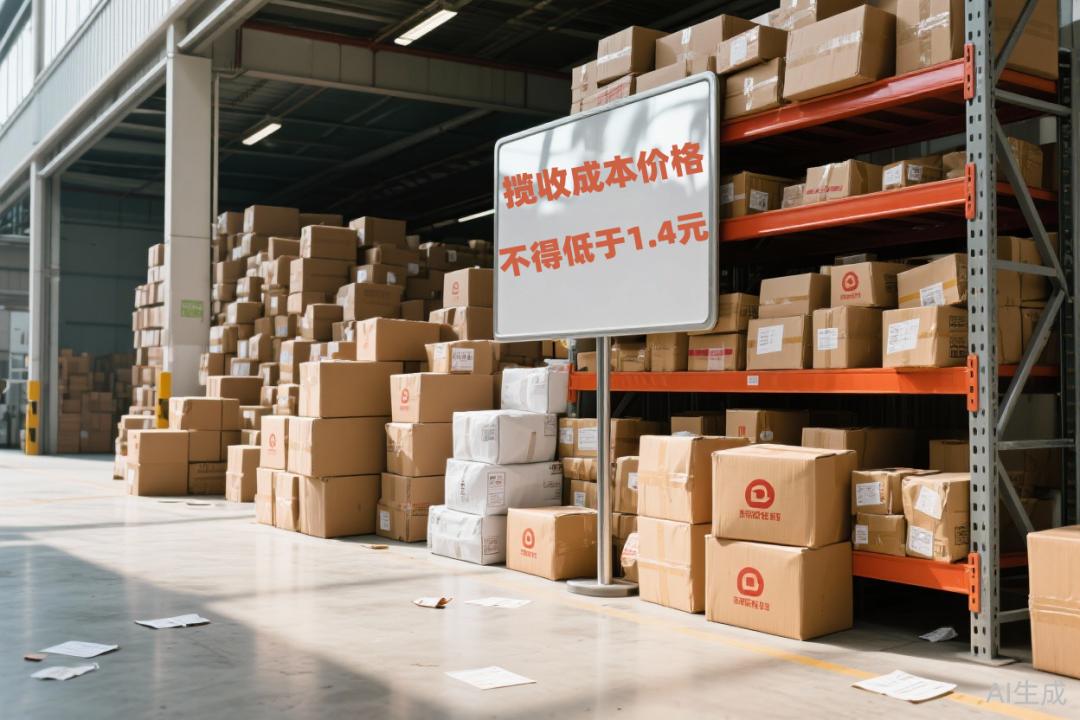
Core Viewpoint - The express delivery industry in Guangdong has initiated a significant price increase, impacting e-commerce sellers, particularly those relying on low-margin, high-volume sales models like "9.9包邮" [1][2][5] Group 1: Price Increase Details - Starting August 4, 2023, the Guangdong Postal Administration raised the base price for express delivery of light packages (0.3kg and below) by 0.4 yuan, resulting in an average price exceeding 1.4 yuan per package, marking a price increase of over 40% [2][4] - The price increase has been rapid and unprecedented, with many express companies implementing the new pricing within two days of notification [2][4] - The price adjustment is part of a broader "anti-involution" movement within the express delivery sector, aimed at stabilizing the market after years of price wars [2][4][19] Group 2: Impact on E-commerce Sellers - E-commerce sellers, especially those with low-priced products, are facing severe profit compression due to rising delivery costs, with some reporting a drop in daily orders by as much as 62.5% [8][11][12] - For example, a seller of a 9.9 yuan product has seen their profit per item decrease from 2 yuan to 1.5 yuan due to increased shipping costs, leading to a significant monthly profit reduction [9][11] - Many sellers are now forced to consider raising product prices, but fear losing customers due to price sensitivity [16][17] Group 3: Market Reactions and Adjustments - Some sellers are exploring alternative shipping options, such as moving inventory to provinces with lower shipping costs, like Jiangxi and Hunan, to mitigate the impact of rising prices in Guangdong [15][19] - The ongoing price increases are expected to spread to other provinces, potentially affecting the entire e-commerce landscape [2][7][15] - The express delivery price hikes are seen as a necessary step to break the cycle of unsustainable low pricing in the industry, although they create immediate challenges for many small and medium-sized e-commerce businesses [14][19]

韵达股份(002120):持续降本提效 看好2H25反内卷背景下业绩修复
Xin Lang Cai Jing· 2025-08-31 08:41
Core Viewpoint - The company reported a decline in profits and margins in the first half of 2025, but anticipates a recovery in performance in the second half due to cost-cutting measures and a favorable market environment for express delivery [1][2]. Financial Performance - In 1H25, the company achieved revenue of 24.83 billion yuan, a year-on-year increase of 6.8%, with a gross profit of 1.68 billion yuan, down 31.5% year-on-year; gross margin was 6.8%, a decrease of 3.8 percentage points [1]. - The net profit attributable to shareholders in 1H25 was 530 million yuan, a decline of 49.2% year-on-year, with a net profit margin of 2.1%, down 2.3 percentage points; the non-recurring net profit was 450 million yuan, down 45.6% year-on-year [1]. - In Q2 2025, the company reported revenue of 12.64 billion yuan, a year-on-year increase of 4.5%, with a gross profit of 740 million yuan, down 43.3% year-on-year; gross margin was 5.8%, a decrease of 4.9 percentage points [1]. Cost Structure - In 1H25, the average revenue per ticket was 1.92 yuan, a decrease of 0.16 yuan year-on-year; average profit per ticket was 0.04 yuan, down 0.05 yuan year-on-year [1]. - The average sorting cost per ticket was 0.28 yuan, down 0.03 yuan year-on-year; average transportation cost per ticket was 0.31 yuan, down 0.08 yuan year-on-year [1]. Strategic Initiatives - The company is optimizing its franchise express network and focusing on digitalization, automation, and unmanned delivery methods [2]. - As of 1H25, the company has doubled the number of grid warehouses to 1,926 and has 468 collection and distribution centers, enhancing efficiency and service quality [2]. - The company is implementing a "1+N+AI" technology strategy to improve operational quality and efficiency across various logistics functions [2]. - The deployment of drones and unmanned vehicles for last-mile delivery has been initiated in eight provinces and cities [2]. Investment Outlook - The company is expected to achieve net profits of 1.82 billion yuan, 2.20 billion yuan, and 2.48 billion yuan from 2025 to 2027, with corresponding price-to-earnings ratios of 13, 11, and 9 times [2]. - The company is considered a leading player in the express delivery industry with stable market share and steady growth in business volume, supported by ongoing digital transformation and cost reduction efforts [2].