
报行合一

Search documents
中国人保20251224
2025-12-25 02:43
中国人保 20251224 摘要 中国人保持续推进"报行合一",严格费用率管控,同时新能源车出险 率下降对车险产生积极影响。公司通过强化经营管理和风险定价模型, 提升非车险业务的盈利能力,并受益于大灾发生频率的下降。 新能源车保费占比约为 20%,虽然盈利水平不断改善,但出险率仍是燃 油车的两倍。公司通过差异化费率和风险评估,优化新能源车业务结构, 降低出险风险,目标是保持并提升在新能源汽车市场的份额优势。 非机动车保险业务中,意外和健康险、企财险增速较快,主要得益于个 人非机动车业务的改善和社保支付方式改革。公司预计通过法人业务的 综合治理,非机动车保险业务盈利将持续改善,但需谨慎看待大灾带来 的不确定性影响。 中国人保海外拓展聚焦服务新能源汽车企业和中资企业海外利益,已在 香港和泰国开展业务,并计划扩展至欧洲和南美。短期内没有具体数值 目标,但期望到 2030 年海外市场能显著贡献新增保费量。 2026 年开门红进展顺利,个险业务预计至少实现两位数增长,银保业 务增速可能更快。银保渠道方面,公司与多家国有银行合作良好,注重 降低负债端成本,减少利差损风险,以实现长期可持续发展。 Q&A 2025 年人保财 ...

i云保困局:融资捷报,难掩战略与增长之痛
Xin Lang Cai Jing· 2025-12-24 07:56
Core Viewpoint - iYunBao, an insurance technology platform, faces significant challenges despite recent C-round financing, including branch closures and regulatory pressures that threaten its business model and future prospects [3][4][6]. Business Model and Core Challenges - iYunBao operates on a ToA (To Agent) model, connecting insurance companies with agents through a high-commission structure, claiming nearly 4 million members and 200,000 agents [4][18]. - The company's growth, heavily reliant on high commissions, has been fundamentally shaken since 2024 due to regulatory changes that have halved commission levels across the industry [5][19]. - The "reporting and commission integration" policy has severely impacted iYunBao's ability to attract and retain agents, leading to significant operational cutbacks, including branch closures in multiple provinces [20][19]. Financial and Performance Analysis - iYunBao's financial performance reveals a weak profit margin, with a net profit of only 6.39 million yuan in 2023, resulting in a net profit margin of less than 0.4% [21][22]. - The company's aggressive commission structure, which exceeds industry averages by over 50%, has led to a precarious financial state, forcing layoffs of approximately 30% of staff in 2023 [21][7]. - The reliance on commission income without substantial technological service revenue highlights a fragile revenue model, lacking a diversified income stream [22][21]. Compliance and Reputation Crisis - iYunBao is plagued by compliance issues, particularly the "flying single" problem, where agents sell unauthorized products, damaging the company's reputation and leading to regulatory penalties [23][24]. - The company has faced multiple fines for falsifying financial data, undermining trust in its operational integrity and exposing significant internal control weaknesses [24][23]. Organizational Structure and Executive Challenges - The "Starry Sky Plan" aims to create a flat organizational structure to enhance agent productivity, but its sustainability is questioned as it relies on high commissions that are now under threat [25][11]. - Agent retention rates are alarmingly low, with only 18% remaining after 13 months, indicating challenges in building a stable and professional sales team [11][26]. - The management's response to industry changes has been characterized by strategic retreat rather than innovative solutions to core issues [26][11]. Comprehensive Challenges and Uncertain Future - iYunBao faces intertwined challenges across multiple dimensions, including reliance on high commissions, ongoing compliance issues, low agent retention, and a lack of technological innovation [28][29]. - The recent strategic investment from Canada’s Manulife Financial offers a potential lifeline, but it remains uncertain whether this will address the fundamental flaws in the business model or compliance issues [29][14]. - The company's future hinges on its ability to transition from a commission-driven model to a value-creating entity while establishing a robust compliance culture and sustainable operational practices [29][14].

“银进个退”底层账簿:压垮中小公司个险的最后一根稻草
Xin Lang Cai Jing· 2025-12-22 10:40
来源:今日保 越来越多的中小公司正在放弃在个险上的布局和努力,而发力银保。 事实上,整个寿险行业都出现了"银进个退"现象,更有人把银保称为 "C"位渠道。 这背后的原因其实是发展个险的成本高昂,无以为继。如果叠加会计准则切换与"报行合一"全覆盖,成 本问题更加突出。这对中小公司来说直接就是"致命"的。 苦战银保成为中小公司不得已而为之的选择。 而对于大公司来说,银保带来的快速流转的资金也能极大缓解在流动性方面的压力与挑战,自然成为重 要阵地。 所以,看上去,银保的确"C"了,而背后,是资产负债、投入产出、生死存亡的精细考量。 关键原因 下滑的"750曲线" 将极大改变太多机构的经营策略 作为保险公司的准备金负债评估折现率乃至寿险产品定价的重要基准 ,"750日移动平均国债收益率曲 线"的不断下行,对行业影响巨大,尤其是正在击穿中小寿险公司维持生存的平衡线。 "750曲线"在2020年后持续、明显地加速下降,被认为是寿险业面临的最大挑战,也是行业转型中最为 显著的外部压力。这个看上去具有很强专业性的词汇,成为直接关乎行业、甚至近乎能决定一众公司生 死存亡的关键词。 当然,无论是"750曲线"的变化与在保险业的影 ...

2025年保险业向“质”而行
Jin Rong Shi Bao· 2025-12-22 03:02
Group 1: Core Insights - The year 2025 is pivotal for China's insurance industry, marking the end of the "14th Five-Year Plan" and a critical year for high-quality development amidst a complex external environment [1] - The insurance industry is undergoing significant internal reforms, focusing on enhancing service to the real economy and improving public welfare through supply-side structural reforms [1] Group 2: Life Insurance Sector - The life insurance industry is transitioning from reliance on interest spread to a new cycle of value growth, emphasizing risk prevention and marketing system reform as dual engines for transformation [2] - A dynamic adjustment mechanism for the predetermined interest rate in life insurance has been implemented, with the minimum guaranteed rates set at 2.0% for ordinary products, 1.75% for participating products, and 1.0% for universal insurance [2] - The insurance agent workforce is being upgraded, with a shift towards professional and vocational roles, enhancing the industry's talent base for high-quality development [3] Group 3: Property Insurance Sector - The property insurance sector is addressing challenges such as the difficulty in insuring new energy vehicles and is enhancing management of non-auto insurance businesses [4] - The "Good Insurance for Cars" platform has been launched, involving 37 property insurance companies and providing coverage for over 1.1 million vehicles, with a total insured amount of 1.1 trillion yuan [5] - Non-auto insurance is entering a new regulatory phase, with measures to improve compliance and quality, aiming to resolve longstanding issues of high costs and low rates [5] Group 4: Insurance Capital - Insurance capital is increasingly being transformed into patient capital, with the total investment balance exceeding 37 trillion yuan, a year-on-year increase of 16.5% [7] - Policies supporting insurance capital market entry have been strengthened, including adjustments to the regulatory ratios for equity assets, enhancing the role of insurance funds as long-term capital [8] - The scale of long-term investment reform pilot programs has expanded, with a total of 222 billion yuan approved for participation, involving major insurance companies [9]

北京人寿总经理王修文:商业模式不能盲目定,要适合自己的才好
Xin Lang Cai Jing· 2025-12-19 11:55
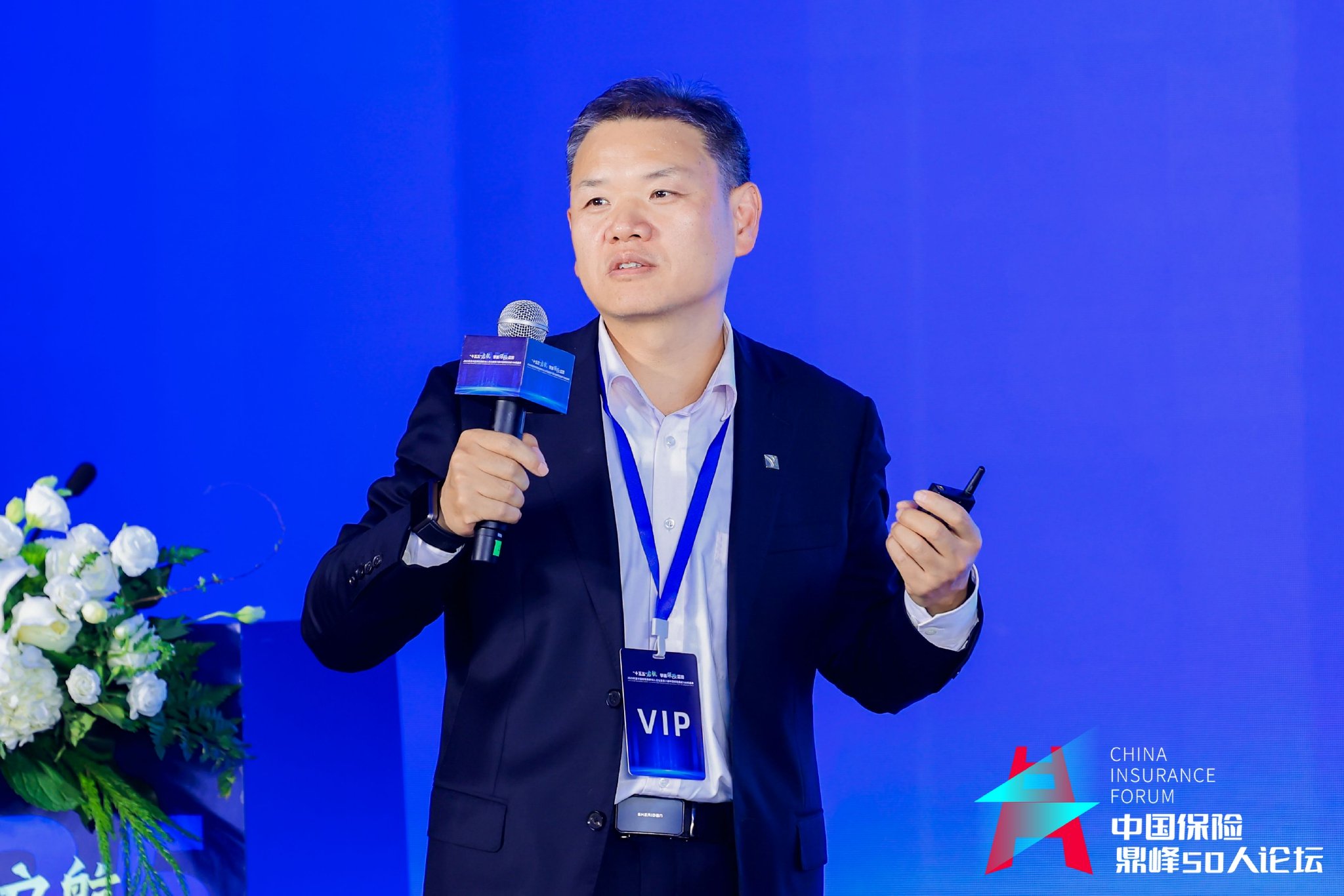
Core Insights - The "2025 China Insurance Summit Forum" was held on December 17, focusing on the theme "'14th Five-Year Plan' Launch: Charting the Insurance Blueprint" [1][5] - The forum gathered nearly a hundred representatives from the "Top 108 in Chinese Insurance," along with experts and executives, to discuss high-quality development paths for the insurance industry during the "14th Five-Year Plan" period [1][5] Group 1: Industry Challenges and Opportunities - The life insurance sector is currently facing pressures such as product homogenization and the need for cost reduction and efficiency improvement [3][7] - Despite these challenges, the overall outlook for the life insurance industry is optimistic, with opportunities outweighing challenges [3][7] - Key growth areas identified include health insurance, particularly critical illness insurance with potential for dividends and the development of long-term care insurance [3][7] Group 2: Strategic Recommendations - The industry is encouraged to seize new opportunities presented by initiatives like "Healthy China," "Silver Economy," and "Integrated Reporting" [3][7] - Innovation is emphasized as crucial for breaking through current challenges, with a focus on enhancing products, services, and technology to improve quality and efficiency [3][7] - Sustainable business models should align with the company's inherent strengths, avoiding strategies that do not match the company's capabilities [3][7]
2025年度中国保险鼎峰50人论坛成功举办
Zheng Quan Ri Bao Wang· 2025-12-19 10:53
Group 1 - The core theme of the forum is "The 14th Five-Year Plan: Setting Sail to Outline the Insurance Blueprint," focusing on the transformation and high-quality development of the insurance industry during this period [1] - Former Vice Chairman of the China Banking and Insurance Regulatory Commission, Chen Wenhui, emphasized the revolutionary impact of digitalization, particularly AI technology, on the insurance industry, suggesting that its comprehensive application is crucial for the survival of insurance institutions [1] - Chen Wenhui proposed a four-point strategy for the insurance industry to embrace AI, including implementing a digital transformation strategy, enhancing data value, increasing AI talent development, and being aware of potential risks associated with AI [1] Group 2 - Xie Yuantao, Dean of the School of Insurance at the University of International Business and Economics, highlighted the importance of cultivating composite insurance talents and promoting interdisciplinary integration and AI empowerment for high-quality development in the insurance sector [2] - Wang Xiuwen, General Manager and Chief Investment Officer of Beijing Life, noted that while the life insurance industry faces challenges such as product homogenization, the overall development opportunities outweigh the challenges, urging innovation through products and services [2] - Zhang Zongtao, President of Modern Property Insurance, stated that the company is focusing on new energy ride-hailing insurance to avoid homogenization and leverage structural opportunities arising from technological changes [2]
江泰经纪董事长沈开涛疑失联,公司面临不确定性
Xin Lang Cai Jing· 2025-12-19 02:33
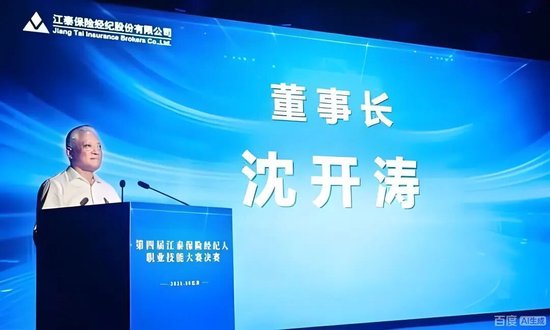
来源:燕梳师院 作者:颜清欢 董事长沈开涛疑失联 12月17日,江泰保险经纪董事长沈开涛被曝疑似失联。据多家媒体报道,其本人电话持续处于关机状 态,公司高管对此回应"不太清楚",未提供进一步说明。 作为国内保险经纪行业的开拓者,沈开涛创办江泰保险经纪,打开了国内保险经纪行业的大门。执掌公 司25年来,他曾主导参与南水北调、港珠澳大桥等国家级重大项目保险安排。 一个电话关机,一家公司缄默,一个行业在等待答案。作为"中国保险经纪第一人"创办的企业,江泰保 险经纪正因董事长沈开涛的疑似失联,陷入前所未有的迷雾与不安之中。 从其履历来看,沈开涛的职业生涯与中国保险中介行业的发展轨迹高度重叠。公开资料显示,沈开涛出 生于1964年1月10日,是江苏泰州的一个普通劳动者家庭,长江商学院EMBA学历,现为江泰保险经纪 董事长、北京快速工程规划建设管理公司董事长。 1980年高中毕业后参军,成为中国人民解放军北京基建工程兵,加入北京修建地铁的行列。1983年转业 后到北京城建集团工作并在1995年创办北京快速工程规划建设管理公司,涉足房地产,承揽了不少建筑 工程。 1998年,沈开涛敏锐捕捉到保险中介行业的发展机遇,率先向中 ...
2025三季度71家寿险公司退保率排行榜:2家超8%,5款产品退保超50亿!
13个精算师· 2025-12-18 10:28
Core Insights - The article highlights that over 80% of insurance companies have a surrender rate below 2%, indicating a positive trend in policy retention [7][12][20] - The total surrender scale exceeds 1.3 trillion, with lifetime insurance accounting for over 670 billion, reflecting significant market activity [11][9] - The average surrender rate has seen a continuous decline, with the median surrender rate for Q3 2025 recorded at 1.27% [12][14] Summary by Sections Surrender Rates and Trends - In Q3 2025, 71 life insurance companies reported a surrender rate, with 2 companies exceeding 8% and 3 exceeding 4% [7][22] - The average surrender rate for these companies is 1.73%, a decrease of 1.48 percentage points compared to three years ago [14][16] - A total of 58 companies have a surrender rate below 2%, which is approximately 82% of the surveyed companies, marking an increase of about 1.6 percentage points from the previous year [20][22] Surrender Scale and Product Types - The cumulative surrender scale for over 740 products reached more than 1.3 trillion, with 4 companies reporting over 100 billion in surrenders [11][9] - The increase in surrender scale is primarily attributed to lifetime insurance, which has surpassed 670 billion, while the share of annuity insurance in surrenders has significantly decreased [11][30] - The surrender rates for investment-linked and universal life products are notably high, indicating a shift in consumer preferences [26][28] Company Performance and Market Outlook - The article notes that the life insurance sector is expected to enter a golden development period by 2026, driven by improved liability quality and investment returns [7][8] - The net profit for 72 life insurance companies in the first three quarters of 2025 reached 461.96 billion, surpassing the total for the entire year of 2024 and setting a historical high for the industry [7][8] - The decline in surrender rates is attributed to the maturation of previously popular products and a shift towards more stable lifetime insurance offerings [16][31]



涉多项违法违规行为 财信吉祥人寿及其分支机构被罚合计超百万元
Zhong Guo Jing Ying Bao· 2025-12-16 06:19
中经记者 陈晶晶北 京报道 近日,财信吉祥人寿保险股份有限公司(以下简称"财信吉祥人寿")及其相关分支机构均收到监管行政 处罚。 监管披露的行政处罚文件显示,财信吉祥人寿因存在四项违法违规行为,国家金融监督管理总局湖南监 管局(以下简称"湖南金融监管局")对其予以38万元的行政处罚。 与此同时,财信吉祥人寿安徽分公司因虚列会议费、业务宣传费套取费用被处罚,长沙中心支公司、株 洲中心支公司、娄底中心支公司也均因虚列会议费、业务宣传费套取费用等原因被处罚。 对于上述处罚,财信吉祥人寿方面亦对《中国经营报》记者表示,一切以公司公告为准。 财信吉祥人寿在公告中称,"上述处罚未对公司造成重大影响,目前,公司经营一切正常,各项业务有 序推进。" 机构及相关负责人"双罚" 监管处罚文件显示,财信吉祥人寿因聘任不具有任职资格的人员,最低资本计量不合规,给予投保人、 被保险人、受益人保险合同约定以外的利益,电话销售过程存在销售误导行为等违法违规行为,对财信 吉祥人寿罚款共计38万元。 分支机构方面也因费用问题被处罚。财信吉祥人寿安徽分公司虚列会议费、业务宣传费套取费用,被监 管罚款30万元。长沙中心支公司虚挂代理人套取费用,虚 ...
中国平安20251212
2025-12-15 01:55
Summary of China Ping An Conference Call Company Overview - **Company**: China Ping An - **Industry**: Insurance and Financial Services Key Points Financial Performance and Market Outlook - Investors are optimistic about China Ping An's performance in Q4 2025 and 2026, particularly regarding net assets and net profits, driven by confidence in industry comparisons and internal metrics [2][4] - The company's valuation in the Hong Kong market is significantly underestimated, indicating substantial upside potential [2][4] - External factors, such as the Federal Reserve's interest rate cuts, are creating favorable conditions for capital inflow, with noticeable increases in foreign investment despite low initial allocations [2][4] - The "Pre享金悦" dividend-type whole life insurance product has received positive market feedback, with strong expectations for Q1 2026 [2][5] Product Development and Business Strategy - In 2025, the company introduced a 6-year premium payment period for its dividend insurance products, maintaining stable margins compared to previous years [2][6] - The value rate is expected to grow by approximately 70% due to regulatory factors and 30% from internal management improvements, such as reduced expense ratios [2][7] - The company is optimistic about the sales performance of its new products, although specific sales data will be available only after January 1, 2026 [5][6] Risk Management and Asset Exposure - The impairment related to Huaxia Happiness is nearing completion, with minimal remaining assets, indicating no significant future losses [2][9] - Exposure to Vanke is limited and manageable, with ongoing efforts to reduce related risks [2][10] - The company is adjusting its investment strategy in response to regulatory changes regarding equity price risk factors, aiming to optimize asset allocation and control risks [2][10] Future Projections - The company anticipates being able to eliminate most impairment issues by 2027, with 2025 and 2026 expected to be relatively smooth years [3][21] - The return on equity (ROE) is projected to rebound to around 17% or higher, which is expected to positively influence stock prices [3][22] - The non-auto insurance policy introduced in mid-October is expected to enhance underwriting profitability in the non-auto segment [2][23][24] Technology and Innovation - The technology segment has not negatively impacted overall group profits, with stable contributions expected moving forward [2][25] - Capital operations from subsidiaries like Lufax and Ping An Good Doctor are anticipated to stabilize, reducing volatility in profit contributions [2][25] Additional Insights - The company plans to maintain a balanced asset allocation strategy in 2026, with a cautious approach to increasing equity exposure despite favorable market conditions [2][17] - The impact of the real estate market on impairment levels is expected to be less severe than in previous years, contributing positively to overall performance [2][19][20] This summary encapsulates the key insights from the conference call, highlighting the company's optimistic outlook, strategic initiatives, and risk management approaches within the insurance and financial services industry.