数据资产

Search documents
首单数据资产赋能ABS在上交所发行 为中小微企业融资注入“数据活水”
Zheng Quan Shi Bao Wang· 2025-07-17 10:19
Core Viewpoint - The issuance of the first data asset-enabled Asset-Backed Securities (ABS) product marks a significant innovation in activating the value of data elements and supporting the financing needs of small and micro enterprises in the real economy [1][4]. Summary by Sections Product Issuance - The ABS product has a scale of 510 million yuan, with high-quality accounts receivable from central state-owned enterprises as the underlying assets [1]. - The innovation lies in the introduction of core data assets from China Investment Guarantee Corporation's subsidiary, which enhances the asset pricing process [1]. Financing Efficiency - The use of data assets optimizes the financing application review process, reducing the average review cycle by 3 to 5 working days, allowing for same-day approval and disbursement [2]. Risk Monitoring - A full lifecycle risk monitoring system is established, enhancing asset credibility through continuous tracking and analysis of accounts receivable post-loan [2]. Market Development - The issuance represents a new practice in multi-factor market development, facilitating the transition of data from "resource" to "product" to "asset" [3]. - The Shanghai Data Exchange plays a crucial role in ensuring the standardized application of data assets in financial scenarios [3]. Future Directions - The Shanghai Stock Exchange aims to continue optimizing market service systems and exploring new models for the integration of data elements with capital markets [4].
红宝书20250713
2025-07-15 01:58
Summary of Key Points from Conference Call Records Industry or Company Involved - **RDA (Real Digital Assets)** and **RWA (Real World Assets)** industry, focusing on digital asset integration and trading platforms - **Shanghai Steel Union** and its subsidiaries, particularly in the context of RWA listings and digital asset trading - **Healthcare IT** sector, specifically **JiuYuan YinHai** and its role in medical insurance data integration - **Stablecoin** and blockchain technology companies, including **GuAo Technology** and **ShiBei GaoXin** - **Natural Uranium** production and related companies, including **China National Nuclear Corporation** and **China General Nuclear Power Group** Core Points and Arguments - **RDA Development**: The Shanghai Municipal State-owned Assets Supervision and Administration Commission discussed the development trends of stablecoins and RDA, emphasizing the integration of data with physical assets [3][15] - **RWA Financing Channels**: RDA is expected to help establish four funding channels for RWA, including credit financing and global fundraising, addressing the core bottleneck in financing for physical assets [3] - **Shanghai Steel Union's RWA Listing**: The company held the world's first RWA listing for a steel trading enterprise, enhancing financing efficiency through real-time asset confirmation and flow, improving fund recovery efficiency by 70% [15] - **Healthcare IT Growth**: JiuYuan YinHai reported a revenue increase of 5%-15% year-on-year for H1 2025, with a significant rise in net profit due to its role in medical insurance data integration [4] - **Stablecoin Infrastructure**: Companies like GuAo Technology and ShiBei GaoXin are developing stablecoin infrastructure, with GuAo focusing on digital RMB hardware wallets and ShiBei collaborating with Ant Group on blockchain projects [4] - **Natural Uranium Production**: The successful production of the first barrel of uranium by the "National Uranium No. 1" project marks a breakthrough in China's uranium production capabilities, which is crucial for energy resource security [11] - **Uranium Supply Challenges**: Global uranium supply is tight, with a mismatch between demand and supply expected in the coming years, as new nuclear power installations increase while production remains limited [12] Other Important but Possibly Overlooked Content - **Data Trading Platforms**: Several companies are involved in data trading platforms, including Shanghai Data Exchange and various regional exchanges, indicating a growing trend in data asset trading [5] - **Market Dynamics**: The report highlights the sensitivity of uranium prices to market dynamics, noting that price increases may not significantly suppress demand due to the low cost proportion of uranium in nuclear power generation [12] - **Emerging Technologies**: The conference discussed the potential of AI and advanced semiconductor technologies, with companies like Nvidia planning to launch specialized chips for the Chinese market [6][10] - **Robotics and Automation**: Companies like DaYiLong are focusing on high-end robotics, with significant expected growth in net profit due to market expansion and product optimization [18] This summary encapsulates the key insights from the conference call records, providing a comprehensive overview of the discussed industries and companies, their growth prospects, and the challenges they face.


百望股份成立“百望数字经济产业基金” 重点聚焦数据资产等领域
Zheng Quan Shi Bao Wang· 2025-07-08 13:53
Group 1 - The core viewpoint of the news is that Baidong Co., Ltd. has established the "Baidong Digital Economy Industry Fund" to support its data intelligence strategy and promote the innovation of China's digital economy infrastructure [1] - The fund focuses on two main areas: data asset operation and global digital services, aiming to create a closed-loop ecosystem that combines AI technology with practical applications [1][2] - The fund is a collaboration between Baidong Co., Ltd., Wuxi Huishan Science and Technology Innovation Industry Group's wholly-owned subsidiary Benyuan Venture Capital, and Yuanli Investment [1] Group 2 - The internal investment strategy emphasizes the entire lifecycle of data asset management, including data resource registration, data directory services, and data market management, with a goal to establish a unified national data resource system [1] - Externally, the company aims to leverage its Hong Kong subsidiary to share China's successful digital governance experiences and attract cutting-edge technology and talent [1] - Recent collaborations include a strategic partnership with the Hong Kong University of Science and Technology to focus on global data intelligence and a comprehensive strategic cooperation agreement with Alibaba Cloud to deepen the integration of cloud computing and data intelligence [2]
2025全球数字经济大会:DVI报告揭示上市公司数字化价值投资新趋势
Sou Hu Cai Jing· 2025-07-08 09:06
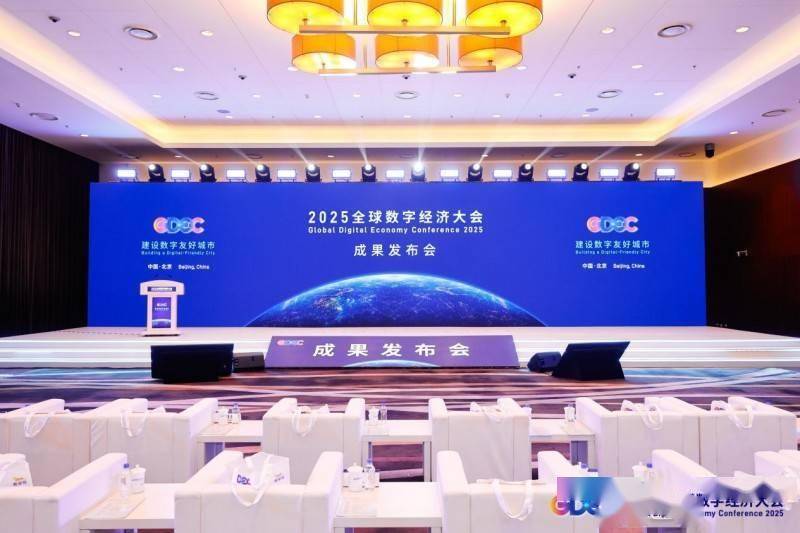
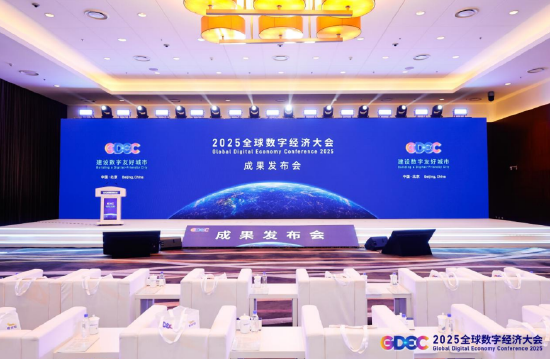
Core Insights - The 2025 Digital Value Investment System Report (DVI) was officially released at the Global Digital Economy Conference, marking the culmination of four years of research by various institutions [1][5] - The conference, now in its fifth year, emphasizes global leadership in digital economy discussions, focusing on international collaboration, technological innovation, and sustainable development [3] Digital Economy Progress - Chinese listed companies have achieved a high digitalization progress rate of 83.52% according to the DVI report [5] - The report specifically analyzed three key sectors: artificial intelligence, new energy vehicles, and digital finance, categorizing 50 exemplary companies in each sector [5] Investment Opportunities - The DVI report indicates that new digital financial concepts such as data assets, digital assets, stablecoins, and Real World Assets (RWA) are rapidly becoming new avenues for enhancing the value of listed companies [5] - The founder of DVI, Wang Shiyu, highlighted a milestone finding regarding the accelerated integration of traditional finance with digital assets, which could lead to a qualitative leap in the digital economy [5]

百望股份成立“百望数字经济产业基金”,构建从技术到资本的智能生态闭环
Cai Jing Wang· 2025-07-08 08:12
Core Viewpoint - The establishment of the "Baiwang Digital Economy Industry Fund" marks a strategic upgrade for Baiwang Co., Ltd., transitioning from technology implementation to ecosystem collaboration, reinforcing its core position in the industrial digitalization wave [1][6]. Group 1: Fund Positioning - The fund is jointly established by Baiwang Co., Ltd., Wuxi Huishan Science and Technology Innovation Industry Group's subsidiary Benyuan Venture Capital, and Yuanli Investment, focusing on data asset operation and global digital services [2]. - Internally, the fund aims to invest in the entire lifecycle of data asset needs, providing comprehensive financing support to enhance data value extraction through AI [2]. - Externally, the fund will leverage Hong Kong's international hub advantages to export China's digital governance experiences and attract cutting-edge technologies and talents [2]. Group 2: Data Foundation - Baiwang's ecosystem network covers over 28 million enterprise users, including major groups like China Petroleum and Industrial and Commercial Bank of China, processing invoice transaction amounts totaling 95.35 trillion yuan (equivalent to seven times the national GDP) [3]. - This extensive data network is viewed as a "scarce fuel" for training industry intelligence, providing a foundational support for the fund's investment value [3]. Group 3: Strategic Value - The fund aims to activate "data islands" by investing in comprehensive data asset service capabilities, unlocking the circulation value of hundreds of billions in transaction data within Baiwang's ecosystem [6]. - It seeks to define application paradigms for intelligent agents in financial risk control and supply chain decision-making, leveraging partnerships with companies like Zero One and Fourth Paradigm [6]. - The fund's launch is seen as a milestone in accelerating the scale of existing technology projects and fostering a more complete industrial ecosystem, enhancing China's global competitiveness in the "technology-scenario-capital" triad [7].
上市公司数字化价值投资(DVI)研究成果 在2025全球数字经济大会发布
Xin Lang Zheng Quan· 2025-07-05 08:40
Group 1 - The 2025 Digital Value Investment (DVI) report indicates that the digitalization process of Chinese listed companies has reached 83.52% [5][6] - The DVI report categorizes research into three dimensions: artificial intelligence, new energy vehicles, and digital finance, ranking the top 50 companies in each category [5] - The report highlights the significant impact of digital finance, particularly in the context of stablecoins and Real World Assets (RWA), on enhancing the value of listed companies [6] Group 2 - The Global Digital Economy Conference has evolved over four sessions, focusing on annual hotspots and key developments in the digital economy [3] - The 2025 conference marks its fifth anniversary, emphasizing global leadership in digital development and fostering international collaboration [3] - The DVI report's findings are expected to facilitate a revaluation of the Chinese capital market and reflect the substantial achievements in China's digital economy [6]
Equifax (EFX) 2025 Investor Day Transcript
2025-06-17 14:00
Equifax (EFX) 2025 Investor Day Summary Company Overview - Equifax is transitioning to a cloud-native data analytics company, emphasizing the completion of its cloud infrastructure and leveraging differentiated data assets for innovation and growth [1][2][3][4][5][6][7][8][9][10]. Strategic Priorities - **Innovation and New Products**: Focus on accelerating innovation and introducing new products to enhance customer value [4][6][12]. - **Cloud Utilization**: Achieved 90% completion of cloud infrastructure in North America, aiming to leverage this for competitive advantage [5][6][12][35]. - **Differentiated Data Assets**: Emphasizes unique data assets that competitors lack, particularly in income and employment data [6][7][38][41]. - **AI Integration**: Significant investments in AI to enhance product performance and market share [8][47][48]. - **Customer-Centric Approach**: Prioritizing customer and consumer needs as a core value [9][12]. Financial Metrics and Growth Projections - **Long-Term Growth Rate**: Reaffirmed long-term organic growth rate of 7% to 10%, with overall growth expectations of 8% to 12% [12][22][83]. - **Revenue Recovery**: Anticipates recovery in mortgage market contributing to revenue growth, with projections of $1 billion incremental revenue translating to $700 million EBITDA [70][71][88]. - **Capital Allocation**: Plans to invest approximately $1 billion annually in growth CapEx and maintain a $3 billion stock buyback program [15][66][67]. Market Opportunities - **Total Addressable Markets (TAM)**: Identified significant growth opportunities in government ($5 billion) and talent ($5 billion) sectors, alongside a broader $50 billion marketplace [21][23][32]. - **Subscription Revenue Growth**: Subscription revenue now constitutes 25% of total revenue, growing at 14%, indicating a shift towards more stable revenue streams [72][75]. Competitive Advantages - **Cloud-Native Infrastructure**: Positioned to outperform competitors due to a fully cloud-native architecture, enhancing speed and reliability of data services [99][100]. - **Data Fabric Development**: Integration of isolated data silos into a single data fabric to improve data accessibility and quality [105]. - **Innovative Solutions**: Introduction of consumer-friendly products, such as a revamped credit report and AI-driven credit score simulator [76][78]. Key Takeaways - Equifax is confident in its strategic direction post-cloud completion, focusing on innovation, customer engagement, and leveraging unique data assets for market differentiation [84][88]. - The company is committed to returning value to shareholders through dividends and buybacks, particularly as the mortgage market recovers [66][71][88].

基础化工行业研究:多产品价格持续上行,地缘风险溢价上升
SINOLINK SECURITIES· 2025-06-15 07:47
Investment Rating - The report suggests a cautious outlook on the chemical industry, with a focus on price increases for specific products and potential investment opportunities in companies like Kangkuan and nitrated cotton [1][2]. Core Insights - The chemical market is experiencing price increases, with notable price adjustments for products such as chlorantraniliprole and Bacillus thuringiensis, indicating a favorable pricing environment [1][2]. - Geopolitical tensions, particularly the Iran-Israel conflict, have led to increased oil prices, which in turn affects the chemical sector positively by raising the prices of related products like methanol and strontium carbonate [2][3]. - The report highlights significant events impacting the industry, including the launch of a new production facility by China Pingmei Shenma Group, which could alter the competitive landscape in the nylon industry [3][4]. Summary by Sections Market Overview - The basic chemical index fell by 0.01%, outperforming the CSI 300 index by 0.24% this week, with strong performances from specific stocks [1][11]. - Brent crude oil averaged $69.45 per barrel, up 6.22% week-on-week, while WTI crude oil averaged $67.89 per barrel, up 7.17% [11]. Key Events - The report notes the successful negotiation of a major potassium fertilizer contract at $346 per ton, indicating a positive outlook for the potassium fertilizer market [1]. - The establishment of a new 100,000 tons/year production facility by China Pingmei Shenma Group marks a significant development in the nylon supply chain [3]. Price Movements - The report tracks price changes for various chemical products, with significant increases noted in sectors such as textile chemical products and compound fertilizers [11][12]. - The report indicates that the prices of methanol and strontium carbonate are gaining attention due to their correlation with rising oil prices [2][11]. Industry Trends - The report emphasizes the ongoing recovery in domestic and international demand for chemicals, particularly in the tire and rubber sectors, which are seeing a resurgence in production rates [27][28]. - The AI industry is also highlighted, with significant investments being made, indicating a broader trend of technological integration within the chemical sector [4].




金融科技推动金融服务转型提质
Ren Min Wang· 2025-06-14 03:23
Core Insights - The financial industry is undergoing unprecedented digital and intelligent transformation driven by global technological trends, with fintech reshaping financial services and enhancing efficiency [1] - China's policy support for fintech has increased from the "Fintech Development Plan (2019-2021)" to the "Fintech Development Plan (2022-2025)", focusing on application services in risk management, product services, and channel operations [1] Group 1: Enhancing Service Experience - The combination of scenario finance and data assets allows banks to analyze customer consumption habits and preferences, providing precise marketing and risk management support [2] - The "Fintech Development Plan (2022-2025)" emphasizes strengthening data capabilities while ensuring security and privacy, promoting orderly data sharing and comprehensive application [2] - Financial institutions are shifting their focus to customer-centric data analysis, creating a positive cycle of "data-scenario-service" to enhance service precision and customer satisfaction [3] Group 2: Improving Service Efficiency - Financial technology enables small and medium-sized banks to not only upgrade technology but also restructure production relationships and productivity [4] - The application system construction for banks is not just about upgrading single systems but also about updating service methods to meet customer needs [4] - There is a need for small and regional banks to enhance their operational capabilities through team deployment and collaborative construction, creating an "ecological mobile banking" model [4] Group 3: Releasing New Cooperation Dynamics - The development of fintech in China presents new opportunities and challenges for global financial cooperation, with technology going abroad and cross-border finance being key pathways [6] - Financial technology capabilities are being exported to support overseas banks and new digital banks established by domestic capital [6] - As cross-border e-commerce and digital trade grow, cross-border financial institutions are restructuring their product capabilities, moving from simple settlement to comprehensive financial service platforms [6]
新大正20250604
2025-06-04 15:25
Summary of the Conference Call for Xinda Zheng Company Overview - Xinda Zheng has achieved a nationwide layout, shifting its business focus from Chongqing to first-tier and second-tier cities such as Beijing, Shanghai, Guangzhou, and Shenzhen, although profit growth is slightly lower than revenue growth due to economic conditions, industry competition, and rising costs [2][4]. Key Points and Arguments - **Robotics Technology**: Xinda Zheng began exploring robotics technology before its IPO, with expectations for technology maturity by the end of 2023 to early 2024, which will enable commercial applications. The company is currently in the early stages of large-scale human-robot collaboration, which is expected to reduce costs and transform industry logic [2][5][6]. - **Performance Impact**: The company's performance is affected by intensified competition and rising labor costs, with early investments impacting 2024 results. However, the core business remains stable, with limited fluctuations in gross and net profit margins. Future improvements depend on the promotion of new technologies [2][7]. - **Labor Challenges**: The property management industry faces recruitment challenges, with an increasing proportion of older employees and a lack of interest from younger generations. Xinda Zheng's self-recruitment and management model alleviates some recruitment difficulties, although structural changes are evident [2][8]. - **Robotics Applications**: Robotics in property management is primarily applied in cleaning services, with external applications being mature and internal applications still in early stages. Future expansions are expected into inspection and logistics, with customized development in collaboration with robotics companies [2][9]. - **Efficiency of Robotics**: Cleaning robots can replace approximately four human workers and may include features for patrolling and inspection. However, the complex use of these robots poses challenges to existing business models, requiring time for systematic integration [2][10]. - **Technological Breakthroughs**: Recent technological advancements and improved business conditions have made the application of robots in property management more feasible. The cost of cleaning robots has significantly decreased, from 500,000 to 600,000 yuan in 2023 to below 200,000 yuan in 2025, benefiting from domestic manufacturing advantages [3][11]. - **Residential vs. Non-Residential Applications**: The application and promotion speed of technology in residential property management is generally faster due to stronger influence from property companies. In contrast, non-residential environments face deeper and longer-term changes in business models, requiring more time for adaptation [12][13]. - **Data Asset Value**: The fluid nature of people and assets in non-residential environments generates valuable data that has not yet been widely commercialized. This data will become an important resource in the future, supporting the establishment of a data network for digitalization and asset formation [13][14]. Additional Important Content - The company is the first private enterprise in China to achieve a nationwide layout in the non-residential property sector, with a significant portion of its business now outside of Chongqing [4]. - The integration of robotics and data analytics in property management is expected to drive the industry towards greater intelligence and efficiency [14].