新能源集成融合发展

Search documents
【财经早报】锂电牛股 发布重要公告
Zhong Guo Zheng Quan Bao· 2025-11-12 23:59
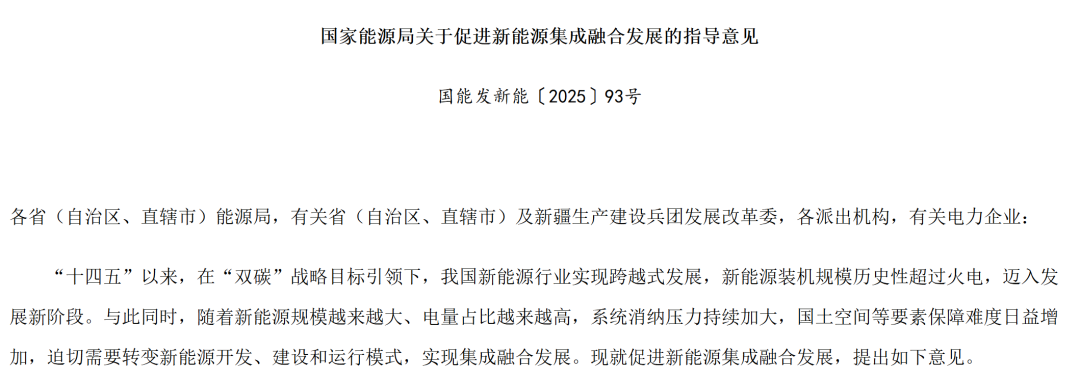
Group 1: Industry Insights - The Shanghai Stock Exchange is committed to enhancing the scientific and effective nature of regulation, supporting high-quality merger and acquisition cases to accelerate their implementation, and fostering a well-regulated M&A market [2] - The National Energy Administration has issued guidelines promoting integrated development in the renewable energy sector, aiming for significant improvements in reliability and market competitiveness by 2030 [4] - The Ministry of Industry and Information Technology is seeking public opinion on the regulatory conditions for the printed circuit board industry, emphasizing compliance with environmental and safety regulations [3] Group 2: Company News - Beijing Medical announced that its chairman and president has been arrested on criminal charges, but the company's control remains unchanged and operations are normal [4] - Tianji Co., a lithium battery stock, reported a 215.24% cumulative increase in stock price over 28 trading days, indicating severe trading volatility, while its stock price has risen 432.61% this year [5] - JA Solar Technology has denied circulating rumors that mislead public perception and damage the company's reputation, asserting that the claims are false [6] - ST Dongni received a fine of 15.7 million yuan for failing to disclose significant contract progress in a timely manner [6] - ST Zhongdi announced a 153.19% increase in stock price from October 16 to November 12, and will conduct an investigation into the stock's trading volatility [6] - Pinming Technology reported a 194.93% increase in stock price since September 25, urging investors to be cautious due to significant short-term fluctuations [6] - Baili Tianheng has delayed its global offering due to current market conditions, affecting its scheduled trading on the Hong Kong Stock Exchange [7]
新能源利好!国家能源局发文,集成融合发展撬动新产业
Zhong Guo Ji Jin Bao· 2025-11-12 23:38
Core Insights - The National Energy Administration has released guidelines to promote the integrated development of renewable energy, aiming for significant advancements by 2030 in reliability and market competitiveness of renewable energy sources, supporting a comprehensive green transition in the economy and society [1][3][15]. Summary by Sections Overall Requirements - The guidelines emphasize a systematic integration and unified development approach for large-scale renewable energy deployment and high-level consumption, enhancing reliability and stability of supply [14][15]. Accelerating Multi-Dimensional Integrated Development of Renewable Energy - The focus is on optimizing the energy structure and storage configurations in renewable energy bases, encouraging deep collaboration between renewable and coal power, and exploring the establishment of integrated water and wind energy bases [16][17]. Promoting Integrated Operation of Renewable Energy - Continuous improvement in power forecasting accuracy and the adoption of advanced network technologies are encouraged to enhance the controllability and predictability of renewable energy systems [19]. Promoting Synergistic Development with Multiple Industries - The guidelines advocate for the integration of renewable energy with traditional industries, encouraging the relocation of high-energy-consuming industries to areas rich in renewable resources, and promoting green design and production processes [21]. Promoting Diversified Non-Electric Utilization of Renewable Energy - There is a strong emphasis on enhancing the collaborative development of wind, solar, and hydrogen storage technologies, as well as establishing comprehensive industrial bases for green hydrogen and ammonia production [22][23]. Strengthening Organizational Support - The National Energy Administration will prioritize support for regions with high renewable energy penetration and optimize project management processes to facilitate the development of integrated renewable energy projects [24][25].

【财经早报】锂电牛股,发布重要公告
Zhong Guo Zheng Quan Bao - Zhong Zheng Wang· 2025-11-12 23:31
Group 1 - The Shanghai Stock Exchange's Vice President Wang Bo supports the acceleration of high-quality merger and acquisition cases [1] - The National Energy Administration states that by 2030, integrated and collaborative development will become an important method for the growth of new energy [1] - Tianji Co., Ltd. has announced a significant abnormal fluctuation in its stock trading [1] Group 2 - The Ministry of Commerce will hold a press conference today to introduce key recent work in the business sector [1] - The 2025 6G Development Conference will be held in Beijing from November 13 to 14 [1] - The central bank has 928 billion yuan of 7-day reverse repos maturing today [1]
盘前必读丨道指再创历史新高;晶澳科技深夜发布澄清公告
Di Yi Cai Jing Zi Xun· 2025-11-12 23:19
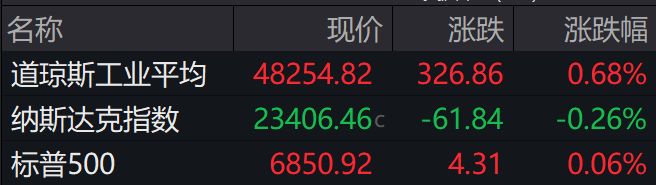
Group 1 - The 2025 6G Development Conference will be held in Beijing on November 13-14 [1] - The Baidu World 2025 Conference has taken place [2] - The EIA has released its monthly Short-Term Energy Outlook report [2] - The IEA has published its monthly Oil Market Report [3] Group 2 - Tencent Holdings, Bilibili, and JD.com have released their earnings reports [4] - The Dow Jones Industrial Average closed at 48,254.82, up 0.68%, marking a new historical high [5] - The Nasdaq Composite Index fell by 0.26% to 23,406.46, while the S&P 500 rose by 0.06% to 6,850.92 [5] - Nvidia shares increased by 0.3%, while major tech stocks like Apple, Google, Amazon, Tesla, Meta, and Oracle saw declines [5] - The financial sector showed strength, with Goldman Sachs up 3.5%, Citigroup up 2.0%, and JPMorgan Chase up 1.5% [6] - AMD shares surged by 9.0% following strong long-term financial guidance [6] - The Nasdaq China Golden Dragon Index fell by 1.46%, with notable declines in Alibaba, Baidu, and JD.com [6] Group 3 - International oil prices dropped significantly, with WTI crude oil down 4.18% to $58.49 per barrel and Brent crude down 3.76% to $62.71 per barrel [6] - International gold prices rose, with COMEX gold futures up 2.38% to $4,204.40 per ounce and silver futures up 5.36% to $53.33 per ounce [6] Group 4 - The People's Bank of China held a meeting to discuss the spirit of the 20th National Congress, emphasizing the importance of a robust central bank system for high-quality financial development [7] - The National Energy Administration released guidelines to promote the integrated development of renewable energy, aiming for significant improvements by 2030 [7] Group 5 - The value of A-shares held by foreign investors has increased from over 3 trillion yuan at the end of 2020 to over 3.5 trillion yuan currently [8] - The State Post Bureau reported that from October 21 to November 11, express delivery companies collected 13.938 billion packages, with a daily average of 634 million, marking a 17.8% increase [8] Group 6 - Alibaba's first self-developed flagship dual-display AI glasses are set to be released on November 27 [9] - Haibo Technology signed a strategic cooperation agreement with CATL [9] - Shengtun Mining plans to invest 1.423 billion yuan in its wholly-owned subsidiary [9] - Century Huatong intends to repurchase 500 million to 1 billion yuan of its shares [9] - Zhejiang Transportation Science and Technology won a project worth 11.103 billion yuan [9] Group 7 - Zhongyuan Securities suggests that the A-share market is at a critical turning point, with cyclical and technology sectors expected to alternate in performance [10]


【早报】国家能源局发文,新能源产业迎利好;国际油价创6月以来最大跌幅
财联社· 2025-11-12 23:10
Industry News - The China Photovoltaic Industry Association has denied rumors regarding the collapse of the polysilicon storage platform, emphasizing the importance of industry self-discipline and the fight against malicious rumors [5][6] - The National Energy Administration has released guidelines to promote the integration and development of new energy and emerging industries, including the construction of new integrated wind-solar bases [5][6] - Major storage companies, including Samsung, SK Hynix, Kioxia, and Micron, have reduced NAND flash memory supply in the second half of this year, with plans to increase NAND prices [5] Company News - JA Solar Technology announced that its board secretary has not made any statements in internal or external meetings regarding circulating rumors, which are misleading the public [8] - ST Zhongdi announced a suspension of trading due to unusual stock price fluctuations starting November 13 [8] - Luckin Coffee has stated that there is no confirmed timetable for its relisting, focusing on development for now [8] - BeiGene reported a net profit of 1.139 billion yuan for the first three quarters, marking a turnaround from losses [8] - Xingsheng Zhitong signed a strategic cooperation agreement with BAIC Group to purchase no less than 200 vehicles from BAIC's brands within three years [8] - Yiling Pharmaceutical announced that its subsidiary's application for the listing of the raw material drug for treating moderate to severe Alzheimer's disease has been approved [8]

能源早新闻丨市场监管总局:撤销1557张!
中国能源报· 2025-11-12 22:32
Group 1: Energy Sector Developments - The National Energy Administration emphasizes that by 2030, integrated development will become a significant approach for renewable energy, enhancing reliability and market competitiveness, thus supporting a comprehensive green transformation of the economy [2] - Major energy state-owned enterprises are accelerating their relocation to Xiong'an New Area, with headquarters and subsidiaries establishing a collaborative development pattern that includes headquarters, research bases, and supporting enterprises [2] - In October, China's production of power and other batteries reached 170.6 GWh, marking a year-on-year increase of 50.5% and a month-on-month increase of 12.9% [4] - Two 500 kV substations in Sichuan have been put into operation, adding a total of 480 MVA capacity, which will support the electricity supply and high-quality development in the Chengdu-Chongqing economic circle [4] - A significant natural gas discovery in Daban City, Xinjiang, has been reported, with an estimated geological resource of over 200 billion cubic meters, indicating potential for a large oil and gas field [5] Group 2: Regulatory and Market Changes - The Market Supervision Administration has revoked 1,557 mandatory product certification certificates following a validity check on 3,001 batches of products, indicating a focus on compliance in the certification process [3] - The global largest 65-ton lithium battery counterbalance forklift has been launched, representing a technological benchmark in the heavy-duty electric vehicle sector [3] Group 3: International Energy Market Impact - Bulgaria faces a fuel supply crisis due to U.S. sanctions on Russian oil companies, with available gasoline stocks sufficient for only about 35 days [6] - Russian shareholders of Serbia's oil company are willing to transfer control to a third party in response to U.S. sanctions, indicating potential shifts in ownership and operational control in the energy sector [6] Group 4: Power Demand Trends - Xinjiang's power grid recorded a historical peak load of 49.6 million kilowatts, reflecting a stable operation and reliable power supply amidst increasing demand [7]
国家能源局发文力促新能源集成融合发展
Zheng Quan Ri Bao· 2025-11-12 16:24
本报记者 杜雨萌 11月12日,国家能源局发布《关于促进新能源集成融合发展的指导意见》(以下简称《指导意见》)提出,到2030年,集 成融合发展成为新能源发展的重要方式,新能源可靠替代水平明显增强,市场竞争力显著提升,有力支撑经济社会发展全面绿 色转型,为加快中国式现代化建设提供更加安全可靠的绿色能源保障。 "近年来,我国新能源实现了大规模跃升式发展,取得了历史性成就。截至2025年9月份,全国风电和太阳能发电装机容量 已达到17.08亿千瓦,占全国发电装机的46%;今年前三季度,风光发电量合计达1.73万亿千瓦时,占同期全社会用电量的 22.3%。"国家能源局有关负责人说,随着新能源规模越来越大、电量占比越来越高,新能源发展也遇到了系统消纳压力加大、 要素保障难度增加等挑战,迫切需要转变新能源开发、建设和运行模式,实现从"单兵作战"向集成融合发展的转变。《指导意 见》的出台,旨在提升新能源发展自主性,增强新能源市场竞争力,打造新能源发展升级版。 在国家发展改革委能源研究所所长吕文斌看来,过去一个时期,我国新能源开发模式在一定程度上呈现"单兵突进、分散 布局"的特征。这种开发模式在渗透率较低的阶段有效地做大了 ...
新能源将与新兴产业融合互促发展
Bei Jing Shang Bao· 2025-11-12 15:47
Core Viewpoint - The National Energy Administration has released guidelines to promote the integrated development of renewable energy, aiming for significant improvements in reliability and market competitiveness by 2030, supporting a comprehensive green transition in China's economic and social development [1][3]. Group 1: Integrated Development of Renewable Energy - By 2030, integrated development will become a key approach for renewable energy, enhancing reliability and market competitiveness [1]. - The guidelines emphasize the need to shift from "single-point development" to "system integration," planning and constructing wind, solar, storage, and grid systems as a cohesive unit [4]. - The focus is on creating a new ecosystem that promotes new industries through renewable energy, particularly in regions rich in renewable resources [3][4]. Group 2: Multi-Dimensional Development - The guidelines propose three main strategies: accelerating multi-dimensional integrated development of renewable energy, promoting collaboration with various industries, and encouraging diversified non-electric utilization of renewable energy [3][6]. - In resource-rich areas, there will be an emphasis on enhancing the green application of renewable energy equipment and optimizing the layout of major infrastructure [3][6]. - The integration of renewable energy with emerging industries such as new materials and high-end equipment manufacturing is encouraged to foster cluster development [3][7]. Group 3: Addressing System Consumption Pressure - The guidelines address the increasing pressure on the system to absorb renewable energy, advocating for optimized layouts and collaborative operations with traditional industries [6]. - It suggests guiding high-energy-consuming industries to areas abundant in renewable resources to achieve local consumption [6]. - Advanced grid technologies will be adopted to enhance the controllability and optimization of various renewable energy sources [6][7]. Group 4: Heating Applications and Energy Efficiency - The guidelines propose orderly advancement in the application of renewable energy for heating, particularly in industries with high thermal demands [7]. - It encourages the development of multi-energy coupling comprehensive energy supply stations using renewable energy as the main source [7]. - The integration of geothermal energy and other renewable sources with existing heating systems is also highlighted to improve efficiency [7].
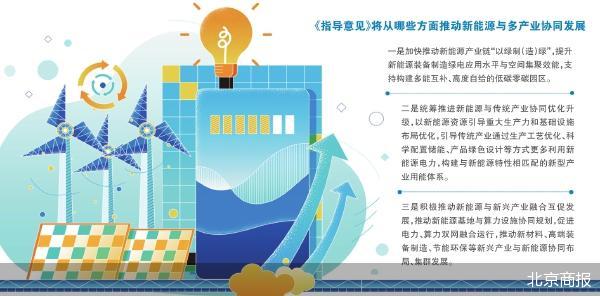
新能源升级版来了!国家能源局发文 集成融合发展撬动新产业
2 1 Shi Ji Jing Ji Bao Dao· 2025-11-12 15:45
Core Viewpoint - The National Energy Administration issued guidelines to promote the integrated development of renewable energy, aiming to enhance resilience, efficiency, and sustainability in the sector, marking a new phase in China's renewable energy development [1][4]. Group 1: Integrated Development - The guidelines emphasize the need for a shift from isolated operations to integrated development in the renewable energy sector, addressing challenges such as system consumption pressure and land resource constraints [4]. - By 2030, integrated development is expected to become a key approach in renewable energy, significantly enhancing reliability and market competitiveness, thus supporting a comprehensive green transition in the economy [4]. - The framework outlined in the guidelines focuses on "horizontal integration" to enhance energy supply reliability, "vertical integration" to convert resource advantages into industrial and economic benefits, and "forward-backward integration" to better link production and consumption of renewable energy [4]. Group 2: Collaboration with Emerging Industries - The guidelines highlight the importance of smart technology in fostering new industrial ecosystems, particularly through the integration of renewable energy with computing power infrastructure [6]. - The document encourages the development of "zero-carbon parks" through green electricity direct connections and smart microgrids, aiming to reduce carbon emissions and enhance international competitiveness of renewable energy products [6]. - It supports the establishment of new business models such as green certificate trading and the development of low-carbon parks that promote multi-energy complementarity and high self-sufficiency [6]. Group 3: Diversified Non-Electric Utilization - A significant focus of the guidelines is on promoting diversified non-electric utilization of renewable energy, particularly in sectors like transportation, chemicals, and textiles, where electricity consumption is relatively low [7][8]. - The guidelines advocate for enhancing the collaborative development of wind, solar, and hydrogen storage, as well as establishing comprehensive industrial bases for green hydrogen and ammonia [7][9]. - It emphasizes the need for technological support and the exploration of application scenarios in hydrogen-based energy and renewable heating, aiming to reduce reliance on the main power grid [8][9].
晚报 | 11月13日主题前瞻
Xuan Gu Bao· 2025-11-12 14:25
Group 1: PCB Industry - The Ministry of Industry and Information Technology is soliciting opinions on the management measures for the printed circuit board (PCB) industry, emphasizing the need to control low-technology capacity expansion projects and encourage industry clustering and innovation [1] - The global PCB market is expected to reach USD 96.8 billion by 2025, with China contributing over 50% of the output value, maintaining a compound annual growth rate of approximately 5.2% over the next five years [1] - The core development directions for the PCB industry include high-end, intelligent, and green technologies, driven by advancements in AI, 5G, smart vehicles, and data centers [1] Group 2: Artificial Intelligence - Tencent is expected to report a revenue of CNY 189.18 billion for Q3 2025, a year-on-year increase of 13.15%, with Tencent Cloud services projected to grow over 20% due to surging AI computing demand [2] - Tencent's cumulative capital expenditure on AI has reached CNY 83.16 billion since accelerating its AI strategy in Q4 last year, with over 90% of Chinese internet companies choosing Tencent Cloud for overseas expansion [2] - Baidu's World 2025 Conference will focus on AI applications and innovations, with expectations of significant announcements from the founder, highlighting the ongoing transformation of Baidu's business narrative through AI [4] Group 3: Sulfuric Acid Market - Recent data shows sulfuric acid prices have surged to CNY 773 per ton, a 111% increase from CNY 366 per ton on January 21, 2023, and a staggering 740% increase from CNY 92 per ton on May 26, 2023 [3] - The price increase is attributed to a combination of cost-driven factors and supply-demand imbalances, particularly due to rising demand from the new energy sector and restrictions on traditional sulfur supply [3] Group 4: Energy Sector - The National Energy Administration has released guidelines to promote the integration of renewable energy, encouraging the development of offshore wind power and green fuel for shipping [7] - The guidelines aim to create a multi-energy coupling comprehensive energy supply station, exploring new energy applications in heating and promoting the development of new materials and high-end manufacturing in resource-rich areas [7] Group 5: Robotics - A joint venture has been established between two companies to create globally influential interactive intelligent robot products, focusing on entertainment and technology experiences [5] - The robotics sector is seen as a core driver of industrial transformation and efficiency revolution, with a focus on high-tech barriers and increasing market penetration [6]