
港股市场

Search documents
港股强劲表现会持续到2026年!银河证券吴鹏:中资投行面临三大机遇
券商中国· 2025-11-30 07:29
Core Viewpoint - The strong performance of the Hong Kong stock market is expected to continue until 2026, driven by technology, consumer sectors, and support from state-owned enterprises [1][4]. Group 1: Hong Kong Stock Market Performance - The Hong Kong stock market has been one of the best-performing markets globally, with the Hang Seng Index outperforming major indices like Nasdaq and CSI 300 in 2025 [3]. - Technology and consumer sectors have shown the most significant performance in the Hong Kong market this year, with corporate earnings exceeding expectations [3]. - Factors such as the depreciation of the US dollar, inflow of southbound capital, supportive national policies, and a temporary easing of US-China relations are key drivers of the market's rise [3][4]. Group 2: Future Outlook - The current bullish trend in the Hong Kong stock market is not seen as a short-term phenomenon, with expectations of a favorable market environment in 2026, including large IPOs that could enhance investor interest [4]. - The three major opportunities for Chinese investment banks include leadership from technology and innovation enterprises, the consumer sector becoming a new growth line, and active support from state-owned and cornerstone investors [4]. Group 3: Internationalization of Chinese Investment Banks - Chinese investment banks face challenges in internationalization, including a lack of international talent outside Greater China and a limited range of product offerings [5][9]. - Cultural integration is identified as a significant challenge for the international development of Chinese investment banks, with efforts being made to promote cultural exchange and training [9]. Group 4: Achievements of Galaxy Securities - Galaxy Securities has made significant strides in internationalization through its entities, Galaxy International and Galaxy Overseas, with the former ranking among the top five Chinese brokers in IPO sponsorship [7]. - The firm has successfully completed several landmark projects and has a strong presence in Southeast Asia, covering 35 markets and 29 exchanges [8]. - Galaxy Securities is the only Chinese broker capable of hosting large-scale local roadshows in Southeast Asia, establishing close cooperation with local sovereign funds and large institutions [8].


【光大研究每日速递】20251128
光大证券研究· 2025-11-29 00:04
Group 1 - The A-share market experienced a general decline in November, with the major indices falling due to overseas expectation fluctuations and a decrease in market risk appetite. The Kweichow Moutai index saw the largest drop of 7.1%, while the Shanghai 50 index had the smallest decline of 1.3%. The performance across industries showed significant differentiation, with the comprehensive, banking, and media sectors leading in gains [4] Group 2 - Ideal Automotive reported a total revenue of 27.36 billion yuan in Q3 2025, reflecting a year-on-year decrease of 36.2% and a quarter-on-quarter decrease of 9.5%. The gross margin also fell by 5.2 percentage points year-on-year and 3.8 percentage points quarter-on-quarter to 16.3%. The company recorded a Non-GAAP net loss of 360 million yuan, marking its first quarterly Non-GAAP loss since 2023. The decline in performance was attributed to lower-than-expected sales and recall provisions [5] Group 3 - Pony.ai achieved a total revenue of 25.44 million USD in Q3 2025, representing a year-on-year increase of 72% and a quarter-on-quarter increase of 19%. The gross margin improved by 9 percentage points year-on-year and 2 percentage points quarter-on-quarter to 18%. However, the Non-GAAP net loss widened by 33% year-on-year and 19% quarter-on-quarter to 54.72 million USD [6]
超55亿元,“跑了”!
Zhong Guo Ji Jin Bao· 2025-11-28 05:46
Group 1 - On November 27, the A-share market showed mixed performance with the stock ETF market continuing a trend of net outflows, totaling over 5.5 billion yuan [2] - The total scale of the stock ETF market reached 4.54 trillion yuan, with a reduction of 2.678 billion fund shares on the same day, leading to a net outflow of 5.575 billion yuan [3] - The Hong Kong stock market ETFs and strategy style ETFs saw significant net inflows of 496 million yuan and 298 million yuan respectively, with the CSI A500 index products leading with a net inflow of 1 billion yuan [3] Group 2 - Major fund companies continued to attract net inflows into their ETFs, with E Fund's Hang Seng Dividend Low Volatility ETF seeing a net inflow of 146 million yuan, reaching a record high of 6.101 billion yuan [4] - The latest scale of the Huaxia Fund's Shanghai Stock Exchange 50 ETF and A500 ETF reached 180.191 billion yuan and 20.138 billion yuan respectively, indicating strong investor interest [4] - Industry theme ETFs experienced the largest net outflows, totaling 3.581 billion yuan, with the Sci-Tech 50 index products leading the outflows at 1.321 billion yuan [5]
三大逻辑支撑港股上行空间,恒生科技指数ETF(159742)连续20日“吸金”合计近2亿元
Sou Hu Cai Jing· 2025-11-27 05:24
Group 1 - The Hang Seng Technology Index has shown a slight increase of 0.15%, with notable gains from companies like Xiaomi Group (up 3.04%) and JD Group (up 2.00) [1] - Southbound funds have significantly contributed to the Hong Kong stock market, with a cumulative net purchase of HKD 1.38 trillion, marking a record high [1] - The Hang Seng Index has experienced an annual increase of nearly 30%, while the Hang Seng Technology Index has risen over 25% this year [1] Group 2 - The probability of a Federal Reserve rate cut in December has risen to 84.7%, boosting market confidence and activity in risk assets, including the Hong Kong stock market [2] - East Wu Securities maintains a positive long-term outlook for the Hong Kong stock market, citing three main factors: ongoing global rate cuts, the irreversible trend of AI industry growth benefiting tech leaders in Hong Kong, and expected improvements in economic fundamentals [2] Group 3 - The latest size of the Hang Seng Technology Index ETF has reached HKD 4.413 billion, with a record high of 5.804 billion shares [3] - The ETF has seen continuous net inflows over the past 20 days, totaling HKD 198 million, with a peak single-day net inflow of HKD 31.4563 million [3] - The top ten weighted stocks in the Hang Seng Technology Index account for 68.89% of the index, including major companies like Alibaba, Tencent, and Meituan [3]
期指 调整或是买入时机
Qi Huo Ri Bao· 2025-11-25 07:15
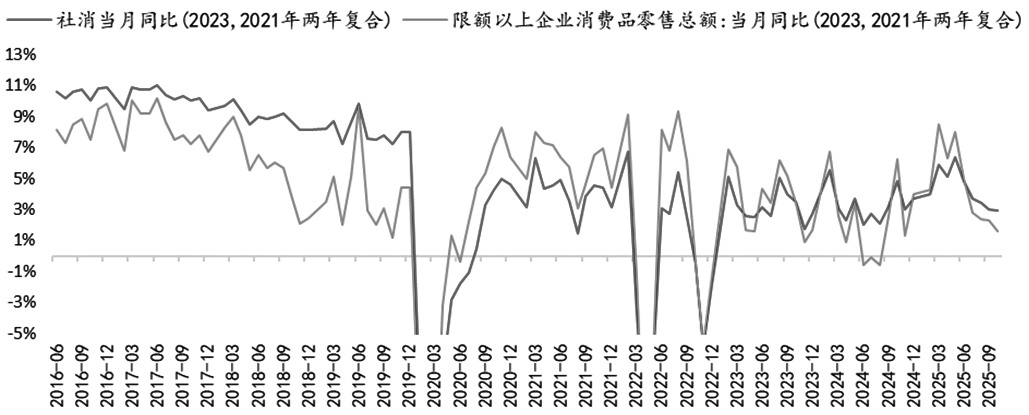
Group 1 - The A-share market has recently experienced significant adjustments due to three main reasons: a decline in domestic economic data from September to October, a stronger US dollar index affecting market risk appetite, and year-end pressures leading to a slowdown in capital inflow [1][5][6] - Economic data for October shows a continued weakening trend, with industrial value-added growth at 4.9%, retail sales down by 0.1 percentage points to 2.9%, and a decline in manufacturing investment growth [5][6] - The People's Bank of China (PBOC) has indicated that the most significant pressure points for the economy have likely passed, suggesting a lower probability of interest rate cuts in the fourth quarter, with more substantial easing measures expected in early 2026 [5][6][10] Group 2 - The US Federal Reserve's shifting expectations regarding interest rate cuts have created confusion in the market, with the dollar index rising, which has negatively impacted the Hong Kong stock market and indirectly affected A-shares [6][10] - A-share financing has seen a slight net outflow, with the total financing amount decreasing from 2.48 trillion yuan to 2.47 trillion yuan, although the proportion of financing balance to A-share market capitalization has increased [7] - The investment strategy for November and December is expected to focus on individual stocks rather than indices, with an emphasis on sectors with strong fundamentals and high dividend yields [8][10] Group 3 - Long-term projections for the A-share market in 2026 suggest a bullish outlook, with the CSI 300 index expected to rise by 15% to 22%, supported by both liquidity injections and improving fundamentals [10] - The anticipated nominal growth rate in 2026, despite a potential decline in actual GDP growth, is expected to drive earnings growth for the CSI 300 index by 5% to 6% [10]
聚焦企业赴港上市,陆家嘴金融沙龙第37期解析新机遇与挑战
财联社· 2025-11-25 03:08
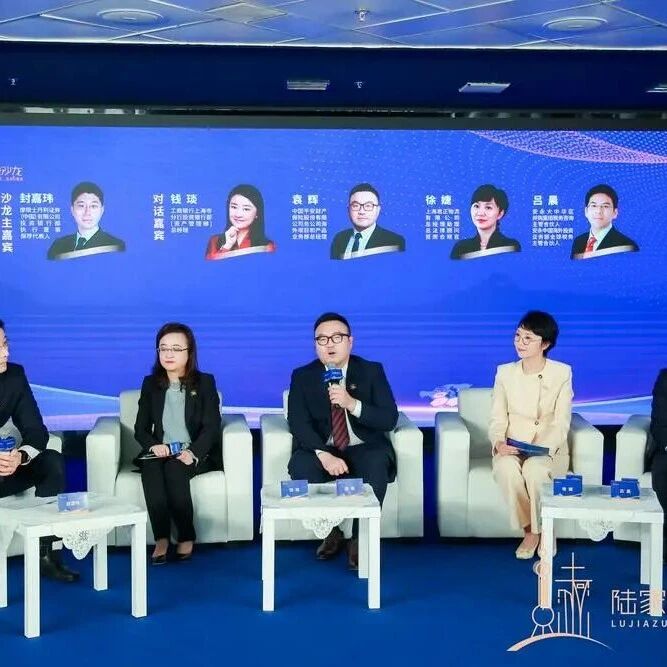
Core Viewpoint - The article discusses the recent trends and opportunities in the Hong Kong IPO market, highlighting the significant increase in IPO financing and the favorable conditions for companies considering listing in Hong Kong [3][4][5]. Group 1: Hong Kong IPO Market Performance - In 2023, Hong Kong's IPO financing exceeded 30 billion USD, with over 80 companies listed [4][5]. - The Hang Seng Index and Hang Seng Tech Index are expected to see substantial increases by 2025, although current valuations remain relatively low [4]. - The average daily trading volume in the Hong Kong market has nearly doubled, reaching approximately 130 billion HKD [4]. Group 2: Reasons for Companies to List in Hong Kong - Companies are increasingly choosing to list in Hong Kong as a step towards internationalization, allowing access to global capital and enhancing brand recognition [5]. - The Hong Kong Stock Exchange (HKEX) has introduced various rules, such as the 18A and 18C regulations, to accommodate companies at different stages, including those without commercial revenue [5][6]. Group 3: IPO Trends and Investor Participation - The top ten IPOs in Hong Kong accounted for over two-thirds of the total financing, indicating the importance of large projects in the market [8]. - The average first-day gain for IPOs was 38%, with a decrease in the IPO break-even rate from 34% last year to 23% this year [8][9]. - Over 85% of new IPOs included cornerstone investors, with a significant increase in the amount raised from these investors compared to the previous year [9]. Group 4: Challenges and Future Outlook - The article notes that while the market shows promise, it still faces uncertainties related to geopolitical factors and company valuations [9]. - The biopharmaceutical sector is highlighted as particularly capital-intensive, with the average cost to develop a new drug exceeding 2 billion USD [11]. - The HKEX's new measures are expected to facilitate the listing process for A-share companies, potentially increasing the number of firms opting for secondary listings in Hong Kong [6][12]. Group 5: Regulatory and Structural Considerations - The process for companies to list in Hong Kong typically involves either H-share or red-chip structures, with the latter requiring more complex arrangements [14]. - The China Securities Regulatory Commission (CSRC) has implemented a new overseas listing filing management system, which emphasizes legal compliance and data security [15][16]. - The average time for H-share projects to complete the CSRC filing is around 146 days, while more complex structures like VIE can take up to 287 days [16].
港股 重大调整!12月8日起生效
Zheng Quan Shi Bao· 2025-11-21 16:29
港股多个指数成份股进行调整。 11月21日,恒生指数公司宣布截至2025年9月30日的恒生指数系列季度检讨结果,相关变动将于2025年 12月5日(星期五)收市后实施,并于2025年12月8日(星期一)起生效。 根据相关调整,恒生指数成份股数目将进一步增加,由88只增加至89只。 港股市场多个指数调整成份股 11月21日,恒生指数公司宣布截至2025年9月30日的恒生指数系列季度检讨结果,恒生指数成份股数目 将由88只增加至89只,加入信达生物。 | 代号 | 公司 | 恒指分类指数 | | --- | --- | --- | | 1801 | 信达生物制药 | 恒生工商业分类指数 | 恒生中国企业指数成份股数目维持50只,加入中国宏桥、信达生物、百胜中国3只股票,同时剔除新奥 能源、海底捞、新东方-S。恒生中国企业指数成份股公司的变动亦适用于恒生中国企业精明指数。 | 代号 | 公司 | | --- | --- | | 1378 | 中国宏桥集团有限公司 | | 1801 | 信达生物制药 | | 9987 | 百胜中国控股有限公司 | | 代号 | 公司 | | --- | --- | | 9863 | ...

港股,重大调整!12月8日起生效
证券时报· 2025-11-21 15:56
Core Viewpoint - The Hong Kong stock market is undergoing significant adjustments in its index constituents, with changes set to take effect in December 2025, reflecting ongoing market dynamics and investor interest [2][5][12]. Group 1: Index Adjustments - The Hang Seng Index will increase its constituent stocks from 88 to 89, adding Innovent Biologics [3][5]. - The Hang Seng China Enterprises Index will maintain 50 constituents, adding China Hongqiao, Innovent Biologics, and Yum China, while removing New Horizon Energy, Haidilao, and New Oriental Education [7][8]. - The Hang Seng Composite Index will expand from 503 to 509 constituents, incorporating six new stocks: FWD Group, Hesai Technology, Aux Group, DJI Technology, Guangzhou Yinuo Pharmaceutical, and Chery Automobile [12]. Group 2: Market Performance - The Hong Kong stock market has shown weak performance recently, with the Hang Seng Index down 2.65% and the Hang Seng Tech Index down 8.68% since November [15][17]. - In the fourth quarter, the Hang Seng Index has declined by 6.09%, and the Hang Seng Tech Index has dropped by 16.55% [18]. - Several popular stocks within the Hang Seng Index have experienced significant declines, with multiple stocks falling over 20% since the beginning of the fourth quarter [19]. Group 3: Investor Interest - Despite the market's weak performance, southbound trading through the Hong Kong Stock Connect continues to show strong interest in Hong Kong stocks [20].

杨德龙:2026年本轮牛市行情将延续有望从结构牛走向全面牛
Xin Lang Ji Jin· 2025-11-19 09:56
从全球局势来看,G2格局逐步确立,未来国际格局中,中美有望出现你追我赶、齐头并进的发展态 势,而非美国在科技上遥遥领先的局面。未来,中美在经贸领域还会继续在合作中竞争、在竞争中发 展。我国在硬件和软件两个方面均实现突破,特别是DeepSeek大模型横空出世,以及在芯片、半导体 方面实现的突破,都提升了全球资本对于中国科技创新的信心,这也是这轮牛市以科技为主线的重要原 因。虽然前期科技板块涨幅较大,一些投资者选择暂时获利了结,导致科技板块出现调整,但科技牛市 预计并没有结束。人工智能带来的科技进步以及生产力提升的趋势将会延续。结构性牛市以科技为主, 主要体现在资金集中投资于少数科技创新板块,如机器人、芯片、半导体、算法创新、固态电池等;到 了全面牛市阶段,更多板块可能会出现上涨,这或将会给市场带来赚钱机会。因此,预计2026年市场的 赚钱效应可能比今年更强,投资机会可能也更多,投资者的体验也可能会更好。 2025年,市场虽走出了牛市走势,但呈现出典型的哑铃型结构:一头是以银行为代表的低估值、高股息 板块,部分个股甚至创新高;另一头是代表新质生产力的科技股大幅上涨,而大多数板块没有明显表 现。2026年,如基本面 ...
市场分析:船舶贵金属领涨,A股小幅上行
Zhongyuan Securities· 2025-11-19 09:20
分析师:张刚 登记编码:S0730511010001 zhanggang@ccnew.com 021-50586990 船舶贵金属领涨 A 股小幅上行 ——市场分析 相关报告 证券研究报告-市场分析 发布日期:2025 年 11 月 19 日 投资要点: ◼ A 股市场综述 《市场分析:传媒互联网领涨 A 股震荡整固》 2025-11-18 《市场分析:软件锂电行业领涨 A 股震荡整 理》 2025-11-17 《市场分析:光伏医药行业领涨 A 股小幅震 荡》 2025-11-14 联系人: 李智 电话: 0371-65585629 地址: 郑州郑东新区商务外环路10号18楼 地址: 上海浦东新区世纪大道 1788 号 T1 座 22 楼 周三(11 月 19 日)A 股市场冲高遇阻、小幅震荡上行,早盘股指低 开后震荡上行,盘中沪指在 3958 点附近遭遇阻力,午后股指维持震 荡,盘中船舶制造、贵金属、能源金属以及银行等行业表现较好; 互联网服务、软件开发、文化传媒以及电子元件等行业表现较弱, 沪指全天基本呈现小幅震荡上行的运行特征。创业板市场周三震荡 上扬,创业板成分指数全天表现强于主板市场。 ◼ 后市研判 ...
