现代化产业体系建设

Search documents
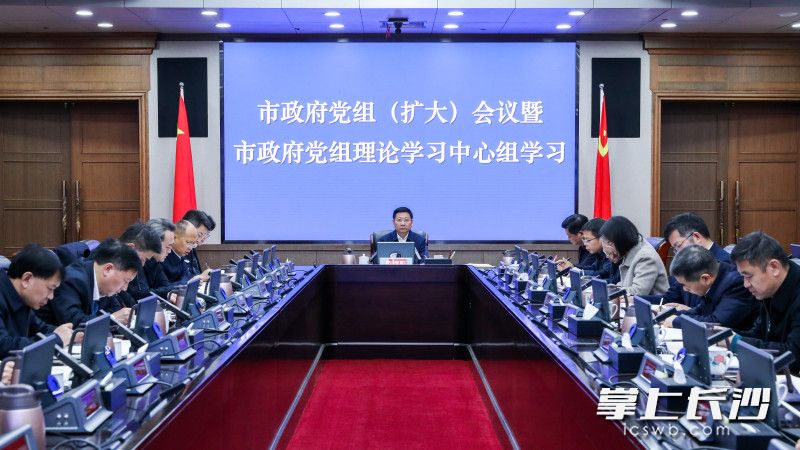
陈博彰主持市政府党组(扩大)会议暨市政府党组理论学习中心组学习
Chang Sha Wan Bao· 2026-01-06 04:04
Group 1 - The meeting emphasized the importance of deepening the understanding and implementation of Xi Jinping's important discourse on strengthening social work and enhancing social governance effectiveness [3] - The government system is required to align with the spirit of the Provincial Party Committee's economic work meeting and focus on achieving annual goals while contributing to the overall development of the province [4] - Key tasks include promoting rural revitalization, expanding domestic demand, building a modern industrial system, and enhancing safety measures [4] Group 2 - The meeting highlighted the need for high-quality organization of the annual democratic life meeting to set a standard for political life within the party [3] - There is a call for integrating the learning of the Central Political Bureau's meeting spirit with the implementation of the Party's innovative theories to drive high-quality development [3] - The government is urged to plan and act early to ensure a good start for the annual work, focusing on industrial development and strengthening social welfare [4]

上级动态 | 国家金融监督管理总局发布《商业银行并购贷款管理办法》
Xin Lang Cai Jing· 2026-01-04 12:25
Core Viewpoint - The Financial Regulatory Bureau has revised the "Guidelines for Risk Management of Mergers and Acquisitions Loans by Commercial Banks" to form the "Management Measures for Mergers and Acquisitions Loans by Commercial Banks," aiming to optimize M&A loan services and support the development of a modern industrial system and new productivity [1][2]. Summary by Sections Expansion of M&A Loan Scope - The revised measures broaden the applicability of M&A loans to include not only controlling mergers but also certain conditions for minority stake acquisitions [1][2]. Differentiated Business Qualification Requirements - The new regulations set differentiated asset scale requirements for commercial banks engaging in controlling and minority stake M&A loans, contingent on good regulatory ratings and compliance with key prudential indicators [1][2]. Optimization of Loan Conditions - The measures increase the upper limit of M&A loans as a percentage of the transaction price and extend the maximum loan term to better meet reasonable financing needs of enterprises [1][2]. Emphasis on Debt Repayment Capacity Assessment - Banks are required to assess the debt repayment capacity of the acquirer while considering the risks associated with the M&A transaction, focusing on the future development prospects, synergy effects, and operational efficiency of the acquired entity [1][2]. Implementation Guidance - The Financial Regulatory Bureau will guide commercial banks in implementing the new measures to promote healthy development of M&A loan business, aiding in industrial transformation and enhancing economic growth momentum [1][2].
一个个瞬间“拼”成新时代中国浩荡前行的洪流 一起走过很不平凡的2025年
Yang Shi Wang· 2025-12-31 08:21
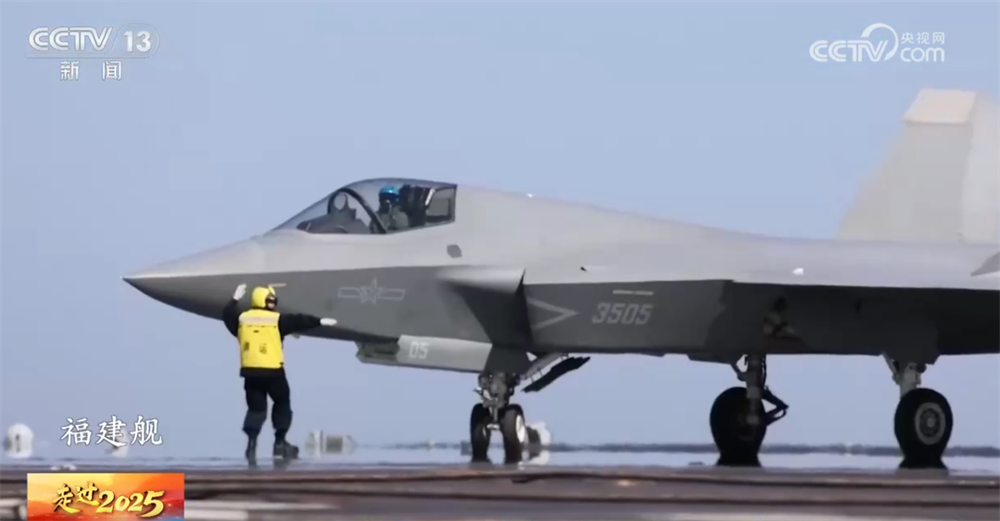
Core Viewpoint - The year 2025 is marked by significant achievements in China's high-quality development and modernization efforts, despite complex international challenges and domestic reform tasks [1] Group 1: Economic Development - China's economy has progressed under pressure, focusing on new and superior development, with continuous advancement in the construction of a modern industrial system [1] - The country has made positive progress in risk resolution in key areas, enhancing social welfare and security [1] Group 2: Reform and Opening Up - The year has seen new strides in reform and opening up, contributing to a strong start for the second centenary goal of national development [1] Group 3: National Spirit and Collective Effort - The collective efforts of the people in pursuing their dreams have contributed to the momentum of China's progress in the new era [1]
福建全省发展改革工作会议召开 强调扎实做好明年经济工作
Zhong Guo Fa Zhan Wang· 2025-12-30 07:12
Core Viewpoint - The meeting emphasized the importance of implementing the "14th Five-Year Plan" and outlined key tasks for economic and social development in Fujian Province for 2026, focusing on high-quality growth and effective policy execution [1][2][3]. Group 1: Economic Analysis and Policy Implementation - The provincial development reform system has shown overall stability and progress in economic and social development, achieving qualitative improvements and reasonable quantitative growth [2]. - Key strategies include conducting economic analysis and policy research, ensuring consistency in macro policy evaluation, and guiding social expectations [2][3]. Group 2: Planning and Project Management - The meeting highlighted the need for high-quality preparation and implementation of the "14th Five-Year Plan," ensuring alignment between provincial and local planning [3][4]. - Emphasis was placed on strengthening investment management and project construction, actively utilizing various policy funds to promote major projects [2][4]. Group 3: Reform and Innovation - The meeting called for deepening reforms and innovations, integrating into the national unified market, and addressing market access barriers [4][5]. - The promotion of the private economy and the implementation of the "Fujian Province Private Economy Promotion Regulations" were also discussed [4]. Group 4: Regional and Urban-Rural Development - The meeting stressed the importance of coordinated regional development and urban-rural integration, advancing new urbanization strategies, and enhancing county-level economies [5][6]. - Initiatives to improve the marine economy and develop a "Digital Ocean" were also highlighted [6]. Group 5: Green Transformation and Public Welfare - The meeting outlined plans for a comprehensive green transformation of economic and social development, including carbon emission control and ecological product value realization [6]. - Efforts to enhance public welfare, including employment stability and public service optimization, were emphasized [6][7]. Group 6: Safety and Stability - The meeting underscored the need for safety production and risk prevention, particularly in key sectors, to ensure social stability and harmony [7]. - It was also noted that the development reform system should closely align with the central government's directives and maintain a focus on achieving set goals [7][8].
明年起我国调整部分商品关税 惠及百姓生活、高端制造等
Yang Shi Xin Wen· 2025-12-29 23:43
Group 1 - The State Council Tariff Commission announced a tariff adjustment plan for 2026, which includes a temporary import tariff rate lower than the most-favored-nation rate for 935 items to enhance the synergy between domestic and international markets [1] - The adjustment aims to lower import tariffs on key components and advanced materials, promoting high-level technological self-reliance and the construction of a modern industrial system [1] - The import tariff for numerical control hydraulic cushions used in pressure machines will be set at 6%, benefiting high-end manufacturing industries such as automotive and aerospace [1] Group 2 - The adjustment plan includes a reduction in import tariffs for resource-based products like regenerated black powder for lithium-ion batteries, which can diversify raw material sources and support the lithium battery industry [2] - Importing 10,000 tons of regenerated black powder can reduce the extraction of approximately 500,000 tons of primary ore and lower carbon emissions by 25,000 tons [2] - The plan continues to lower import tariffs on essential medicines and medical devices, including artificial blood vessels and diagnostic kits for infectious diseases, to improve public welfare [2][3] Group 3 - The inclusion of artificial blood vessels in the tariff adjustment is expected to lower treatment costs for patients with cardiovascular diseases [3] - The plan also adds new tariff categories for smart bionic robots and bio-jet fuel, which are produced from renewable resources and can significantly reduce carbon emissions compared to traditional aviation fuel [3] - The rapid development of the robotics industry in China is supported by the new tariff classifications, allowing for better trade data analysis and strategic planning [4] Group 4 - The tariff adjustment will continue to apply preferential rates for goods from 34 trade partners under 24 free trade agreements, promoting economic cooperation with least developed countries by offering 100% zero-tariff treatment on certain products [4]
市场监管总局明年重点任务:深入整治“内卷式”竞争
Xin Lang Cai Jing· 2025-12-29 14:37
Core Viewpoint - The national market supervision work conference held on December 28-29 emphasizes the importance of planning and implementing the "14th Five-Year" market supervision plan to enhance comprehensive regulatory capabilities and promote a unified national market [1][3] Group 1: Key Tasks for 2026 - Continuous deepening of fair competition governance, strengthening anti-monopoly and anti-unfair competition enforcement, and addressing "involution" competition [2][4] - Promotion of the quality of business entities, improvement of market access and exit systems, enhancement of business credit levels, and strengthening of intellectual property and trade secret protection [2][4] - Reinforcement of regular supervision of the platform economy, ensuring platform enterprises fulfill their "gatekeeper" responsibilities, and accelerating the construction of a unified platform regulatory system [2][4] Group 2: Quality and Safety Measures - Advancement of quality-driven enterprise, chain, and regional development, leveraging quality to support enterprise growth, industrial chain strengthening, and sustainable urban development [5] - Implementation of detailed safety supervision measures in market regulation, innovation in food safety supervision, enhancement of drug safety risk prevention, and improvement of industrial product supervision methods [5] - Continuous deepening of international exchanges and cooperation, strengthening the interconnection of rules and standards, and actively supporting Chinese enterprises in going global [5] Group 3: Institutional and Cultural Development - Strengthening the foundational aspects of market regulation, improving basic regulatory systems, enhancing technical support capabilities, and promoting smart regulation to improve non-site and penetrating regulatory capabilities [5] - Focus on the construction of the regulatory workforce, launching a special education and rectification campaign for market regulation enforcement teams, and initiating cultural development within the market regulation system [5]
广州论坛2025年年会在穗举办 专家建言现代化产业体系建设
Zhong Zheng Wang· 2025-12-29 04:35
Group 1 - The forum focused on the construction of a modern industrial system in Guangzhou, emphasizing key issues and future directions for development [1][2] - Experts discussed the need for tax reform to stimulate investment from state-owned, private, and foreign enterprises in the context of the artificial intelligence era [1] - Recommendations were made to promote the transformation of traditional industries towards high-end, intelligent, green, and integrated models, while also developing emerging industries [1][2] Group 2 - The forum served as a high-level dialogue platform to gather global insights and support national strategies, addressing the practical needs of Guangzhou [3] - The Guangzhou Greater Bay Area Research Institute released significant research findings that provide a comprehensive decision-making reference for high-quality development in the region [2] - The institute aims to collaborate with domestic and international partners to establish the forum as a key platform for ideas and exchanges, enhancing Guangzhou's global presence [3]
张玉卓:坚定不移做强做优做大国有企业和国有资本
财联社· 2025-12-29 00:29
Core Viewpoint - The article emphasizes the importance of strengthening, optimizing, and expanding state-owned enterprises (SOEs) and state capital as a key strategy for economic reform and modernization in China [1][3]. Group 1: Reform and Development Goals - The reform tasks outlined by the 20th Central Committee must be completed by 2029, focusing on deepening SOE reforms as a crucial step for enhancing the strength and quality of SOEs [1][11]. - The 14th Five-Year Plan period is identified as a critical time for achieving decisive progress in socialist modernization, with SOEs playing a pivotal role in this process [4][7]. Group 2: Strategic Positioning and Challenges - Central enterprises are positioned at a new historical starting point, facing complex changes in the development environment, which requires them to enhance their strategic capabilities [4][5]. - The article highlights the need for deep transformation in response to rapid technological advancements and changing industrial structures, warning that failure to adapt could lead to marginalization [4][5]. Group 3: Enhancing Core Competitiveness - Central enterprises must focus on improving their core functions and competitiveness to support high-quality development and contribute to national goals [6][7]. - The article stresses the importance of technological self-reliance and innovation, urging central enterprises to strengthen their role in national strategic technology initiatives [10]. Group 4: Investment and Economic Contribution - The article calls for a focus on effective investment in key areas such as infrastructure, energy security, and emerging industries to support domestic economic growth [8][9]. - Central enterprises are encouraged to enhance their contributions to the national economy by increasing their value creation capabilities and improving operational efficiency [8][9]. Group 5: Governance and Management Improvements - The need for improved corporate governance structures and management practices is emphasized, including the integration of party leadership into all aspects of corporate governance [1][11]. - The article advocates for a differentiated approach to board construction and the implementation of a market-oriented employment model to enhance management efficiency [1][11].

粤商代表聚焦“现代化产业体系建设”展开对话
Xin Lang Cai Jing· 2025-12-28 15:19
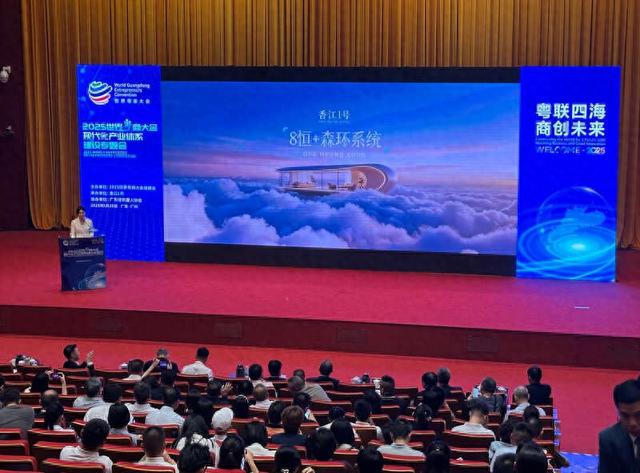
Group 1 - The 2025 World Cantonese Business Conference focused on the construction of a modern industrial system, with discussions led by representatives of outstanding Cantonese businesses [1] - Chen Lei, Deputy Director of the Guangdong Provincial Department of Industry and Information Technology, presented policies supporting innovation in the artificial intelligence and robotics sectors, providing a strategic blueprint for future planning [1] - City leaders from Guangzhou, Shenzhen, Shaoguan, and Dongguan promoted their investment environments, showcasing regional industrial vitality and investment prospects [1] Group 2 - National Committee member and Chairman of Xiangjiang Group, Zhai Meiqing, emphasized the importance of integrating enterprise innovation into national strategy for achieving high-quality development [3] - Zhai highlighted the role of "leading enterprises" in fostering collaborative innovation across the entire industry chain, rather than monopolizing resources [3] - The conference featured discussions on the application of humanoid robots in industry transformation and the commercial pathways for data-driven intelligent applications across various sectors [3] Group 3 - The conference released the "2025 Top 100 Private Enterprises in Guangdong Province" list, which was based on voluntary applications and audited revenue data for 2024 [5] - The entry threshold for the Top 100 Private Enterprises list was set at 12.332 billion yuan [5]
郑永年等海内外专家学者共议广州产业转型升级
Xin Lang Cai Jing· 2025-12-28 10:11
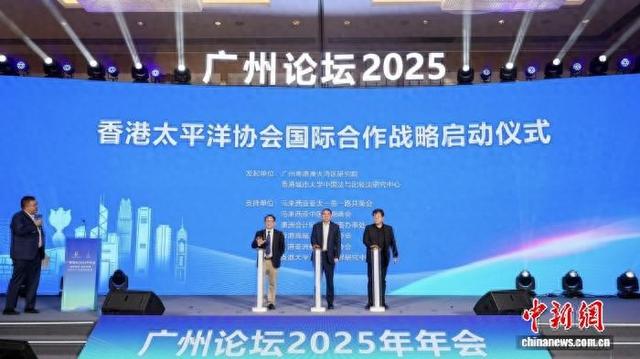
Core Viewpoint - The "Guangzhou Forum 2025 Annual Meeting" held from December 27 to 28 focuses on the theme "Smart Transformation of Business, Strengthening the Bay Area: A New Journey for Modern Industrial System," aiming to explore paths for industrial transformation and high-quality development in Guangzhou [1]. Group 1: Forum Highlights - The forum gathered representatives from various sectors, including government, industry, academia, and research, to discuss key issues and future directions for the construction of a modern industrial system in Guangzhou [1]. - The Hong Kong Pacific Association's international cooperation strategy was launched during the forum, aimed at promoting cooperation and international exchange within the Guangdong-Hong Kong-Macao Greater Bay Area [3]. Group 2: Expert Insights - Zheng Yongnian proposed five areas for systemic reform necessary for building a modern industrial system, emphasizing that competition in the era of artificial intelligence is fundamentally a competition of reforms [3]. - Xu Shanda analyzed the changes in productivity characteristics, capital, and labor demand in the AI era, advocating for a new round of tax reform to stimulate investment from state-owned, private, and foreign enterprises [3]. - Tian Jietang outlined a strategic framework for constructing a modern industrial system centered on advanced manufacturing, suggesting targeted policies for traditional industries to enhance their high-end, intelligent, green, and integrated transformation [4]. Group 3: Development Strategies - Cao Yuanzheng recommended leveraging China's large-scale industrial system to transform Guangzhou from a traditional port into a core service node of the global supply chain [4]. - Chen Xu highlighted Guangzhou's initiatives, such as establishing industrial task forces and mapping industrial chains, to promote collaboration with other cities in the Greater Bay Area and create a "business-friendly" environment [4]. - The forum also featured discussions on "Integration of Science and Technology with Industry: Urban Practices for Building a Modern Industrial System" and "The Path to Industrial Modernization in Guangzhou: Recreating a New Guangzhou," bringing together experts and industry representatives for in-depth dialogue [5].