
藏粮于技

Search documents
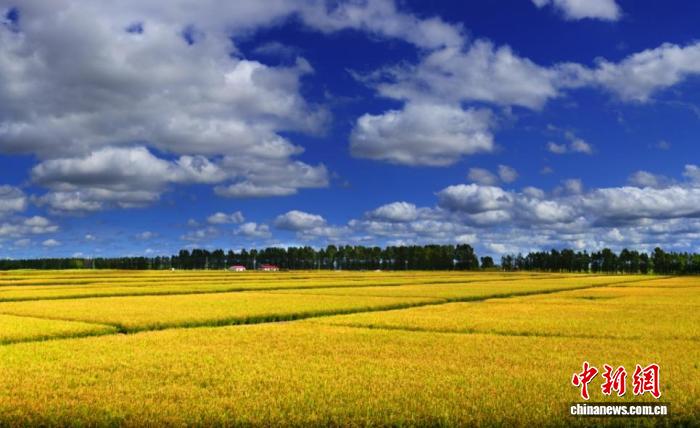
黑龙江佳木斯高标准农田超千万亩 粮食产量迭创新高
Zhong Guo Xin Wen Wang· 2025-11-13 04:22
Core Insights - Jiamusi City has achieved a record high grain production of 233.6 billion jin in the previous year, with an increase of nearly 1.3 billion jin compared to 2020, and is expected to set new records this year due to favorable agricultural conditions [1][3] Agricultural Development - The city has implemented the "Four Doubles" project, creating 10,000 demonstration fields and upgrading nearly 4 million acres of dry land with advanced seeding technology [3] - A total of 10.38 million acres of high-standard farmland have been established, accounting for 66.8% of the city's permanent basic farmland [3] - The area of national-level green food raw material standardized production bases has reached 15.6 million acres, representing 53% of the city's sown area, the highest among city-level regions in the country [3] Industry Integration - The number of large-scale agricultural product processing enterprises has increased to 265, up by 95 since 2020, with 130 leading agricultural industrialization enterprises at the city level [4] - Jiamusi has established the largest cranberry production base in Asia and the largest perilla product supply base in the country, along with the largest sturgeon industry park in Northeast China [4] - The brand value of Jiamusi rice has surpassed 21.29 billion yuan, with 15 geographical indication products cultivated [4] Rural Development - The city has created 112 demonstration villages, with over 6.658 million acres of farmland under large-scale management [4] - The per capita disposable income of farmers reached 20,801 yuan last year, an increase of 5,168 yuan compared to 2020 [4] - Infrastructure improvements in rural areas have significantly enhanced public services in education, healthcare, and elderly care [4]

李强对推进农田水利和高标准农田建设工作作出重要批示强调 高质量推进高标准农田建设 为保障粮食安全加快农业农村现代化作出更大贡献
Yang Shi Wang· 2025-11-07 12:32
Core Points - The State Council held a video conference on winter and spring agricultural water conservancy and high-standard farmland construction, emphasizing the importance of these initiatives for food security and rural modernization [1][2] - Premier Li Qiang highlighted the achievements in agricultural water conservancy and high-standard farmland construction, which have significantly supported continuous grain harvests and farmers' income growth [1] - The government aims to implement a new round of actions to enhance grain production capacity, focusing on high-quality farmland construction and modernization of irrigation systems [1] Summary by Categories Agricultural Water Conservancy - The government has accelerated the promotion of agricultural water conservancy, achieving notable results that support food security and farmers' income [1] - There is a focus on modernizing large and medium-sized irrigation areas and restoring agricultural drainage systems [1] High-Standard Farmland Construction - The initiative aims to enhance grain production capacity by implementing high-standard farmland construction [1] - The government encourages participation from farmers and social forces to contribute to national food security and agricultural modernization [1] Policy Implementation - The government emphasizes the need to adhere to Xi Jinping's thoughts and the central government's decisions in promoting these agricultural initiatives [1] - A comprehensive management mechanism will be established to ensure project quality, funding supervision, and effective resource allocation [1]
加快农业农村现代化
Ren Min Ri Bao· 2025-11-06 00:24
Core Viewpoint - The modernization of agriculture and rural areas is essential for the overall modernization of the country, as emphasized by General Secretary Xi Jinping [1][2]. Group 1: Significance of Accelerating Agricultural and Rural Modernization - The achievements in "three rural issues" since the 18th National Congress have been historic, with significant improvements in rural conditions and agricultural production capabilities [2]. - The comprehensive grain production capacity remains above 1.3 trillion jin, with expectations to exceed 1.4 trillion jin in 2024 [2]. - The contribution rate of agricultural science and technology has reached 63.2%, and the mechanization rate of crop farming exceeds 75% [2]. - The eradication of absolute poverty has been a historic achievement, with all farmers entering a moderately prosperous society [2]. - The per capita disposable income of rural residents is projected to reach 23,119 yuan in 2024, with the urban-rural income ratio decreasing to 2.34:1 [2]. Group 2: Relationship of Agricultural Modernization to National Goals - Agricultural modernization is a critical task for building a modern socialist country, addressing the imbalances and weaknesses in rural development [3]. - Strengthening the agricultural foundation is vital for national stability and food security, especially in the face of international uncertainties [3]. - Achieving agricultural modernization is essential for ensuring food security and providing a solid foundation for the modernization of China [3]. Group 3: Basic Requirements for Agricultural Modernization - Agricultural modernization is a major and urgent strategic task that requires prioritizing rural development and urban-rural integration [5]. - The relationship between setting goals and maintaining historical patience is crucial, as agricultural modernization is a systematic and dynamic process [6]. - Local conditions must be considered in the implementation of agricultural modernization, avoiding a one-size-fits-all approach [6]. - The integration of traditional agricultural practices with modern elements is necessary to preserve cultural heritage while advancing modernization [6]. Group 4: Strategic Deployment for Agricultural Modernization - The focus is on enhancing agricultural production capacity and quality, ensuring food security through modern agricultural practices [9]. - Establishing mechanisms to prevent poverty and ensure sustainable development in rural areas is essential [10]. - Building beautiful and livable rural areas is a priority, with an emphasis on improving infrastructure and public services [11]. - Strengthening policies that support farmers and enhance agricultural productivity is critical for achieving modernization goals [12].
加快农业农村现代化(学习贯彻党的二十届四中全会精神)
Ren Min Ri Bao· 2025-11-05 22:08
Core Viewpoint - The modernization of agriculture and rural areas is essential for the overall modernization of the country, as emphasized by General Secretary Xi Jinping and outlined in the 15th Five-Year Plan proposal [1][2]. Group 1: Significance of Accelerating Agricultural and Rural Modernization - The achievements in "Three Rural Issues" since the 18th National Congress have been historic, with significant improvements in rural conditions and agricultural production capabilities, maintaining grain production capacity above 1.3 trillion jin, and expected to exceed 1.4 trillion jin in 2024 [2]. - The contribution rate of agricultural science and technology has reached 63.2%, with mechanization rates exceeding 75%, placing agricultural innovation among the world's top ranks [2]. - The eradication of absolute poverty has been a remarkable achievement, with all farmers entering a moderately prosperous society, ensuring no large-scale return to poverty [2]. - Rural residents' per capita disposable income is projected to reach 23,119 yuan in 2024, with the urban-rural income ratio decreasing to 2.34:1 [2]. Group 2: Relationship of Agricultural Modernization to National Goals - Agricultural modernization is a critical task for building a modern socialist country, addressing the imbalances and inadequacies in rural development, which remain significant challenges [3]. - Strengthening the agricultural foundation is vital for national stability and food security, especially in the face of complex international environments [3]. - Achieving agricultural modernization is essential for ensuring food security and providing a solid foundation for advancing Chinese-style modernization [3]. Group 3: Basic Requirements for Agricultural Modernization - Agricultural modernization is a major and urgent strategic task, requiring a focus on prioritizing agricultural and rural development, and promoting urban-rural integration [5]. - The process must be systematic and patient, addressing the most pressing issues faced by farmers and gradually achieving significant results [5][6]. - Local conditions must be considered in the implementation of modernization strategies, avoiding a one-size-fits-all approach [6]. Group 4: Strategic Deployment for Agricultural Modernization - The 15th Five-Year Plan outlines key tasks for accelerating agricultural modernization, emphasizing the need for effective implementation of these strategies [8]. - Enhancing agricultural production capacity and quality is fundamental, with a focus on sustainable practices and technological advancements [9]. - Establishing mechanisms to prevent poverty and ensure continuous support for vulnerable populations is crucial for maintaining progress in rural areas [10]. - Promoting the construction of beautiful and livable rural areas is essential for improving the quality of life for farmers [11]. - Increasing the effectiveness of policies aimed at supporting agriculture and rural development is necessary to ensure sustainable growth [12].
金秋稻田“铁牛”竞技 减损增效筑牢“浙”里粮仓
Feng Huang Wang Cai Jing· 2025-11-04 08:00
Core Insights - The event held in Yuyiao City showcased the skills of rice harvesting machine operators and highlighted Zhejiang's implementation of the "grain storage in technology" strategy [1][2] - The competition featured participants from 11 cities in Zhejiang, emphasizing the importance of precision in agricultural machinery operation [1] - The event also included demonstrations of various advanced agricultural machinery, reflecting the latest achievements in mechanization in Zhejiang [2][3] Group 1: Competition Highlights - The first prize was awarded to Tian Huada from Ningbo, with other prizes going to participants from Zhoushan, Shaoxing, Jiaxing, Wenzhou, and Quzhou [2] - Tian Huada expressed a commitment to sharing knowledge and skills with younger operators to enhance the overall level of agricultural machinery operation in the province [2] Group 2: Mechanization Development - Zhejiang is actively addressing gaps in agricultural machinery by promoting mainstream equipment like transplanting and precision seeding machines, while also developing new technologies [2] - The province is enhancing its modern agricultural machinery service system through improved planning, equipment upgrades, talent cultivation, and strengthened agricultural services [2]
锐财经|中国经济顶住压力稳中有进
Ren Min Ri Bao Hai Wai Ban· 2025-11-04 05:19
Core Insights - China's economy has shown resilience and progress in the first three quarters, with effective investment and strong social welfare measures laying a solid foundation for achieving annual economic and social development goals [1][6]. Economic Performance - The GDP grew by 5.2% year-on-year, maintaining a leading position among major global economies [2] - Retail sales of consumer goods increased by 4.5%, accelerating by 1.2 percentage points compared to the same period last year [2] - Industrial output rose by 6.2%, marking the highest growth for the same period since 2022 [2] Sectoral Growth - The equipment manufacturing and high-tech manufacturing sectors saw value-added growth of 9.7% and 9.6%, respectively, with their shares in industrial output increasing by 2.1 and 0.8 percentage points year-on-year [2] - The integrated circuit and smart device manufacturing sectors experienced significant growth, with increases of 22.4% and 12.2% in value-added [2] Quality and Efficiency - Improvements in product prices and corporate profits were noted, with industrial enterprise profits rising by 3.2% year-on-year, and a notable 21.6% increase in September alone [3][4] Resilience in Exports - Despite external challenges, exports maintained a growth rate of 7.1%, with high-tech and electromechanical products growing by 11.9% and 9.6%, respectively [2] - Exports to countries involved in the Belt and Road Initiative increased by 12.4% [2] Consumer and Industrial Trends - The service retail sector grew by 5.2%, driven by popular events such as sports and concerts [3] - Production of high-end and green technologies is on the rise, with civilian drones and industrial robots increasing by 43.2% and 29.8%, respectively [3] Social Welfare and Food Security - The government has effectively ensured food security and energy supply, with measures in place to stabilize grain markets and enhance agricultural production conditions [4][5] - The national coal stockpile reached 220 million tons, sufficient for over 35 days, ensuring energy supply during the winter [4][5] Investment Expansion - The government is actively promoting effective investment, with 500 billion yuan allocated to support local government financial capacity and investment projects [6] - Over 2,300 projects have been supported, with total investments around 7 trillion yuan, focusing on digital economy, AI, and infrastructure [6] Future Outlook - International economic organizations have raised their forecasts for China's economic growth, indicating confidence in achieving annual development goals [6][7]
藏粮于技增收益
Jing Ji Ri Bao· 2025-11-03 22:37
Core Insights - The article highlights the importance of sweet potatoes in ensuring food security and economic prosperity in Pinggu District, Beijing, emphasizing their transition from a staple food to a profitable and healthy crop [1][2]. Group 1: Agricultural Innovation and Technology - The Pinggu District has made significant advancements in sweet potato seedling technology, producing 112,000 virus-free seedlings and 110,000 pounds of virus-free seed potatoes in 2024, marking a shift towards upstream seed source research [1]. - The district has established a comprehensive industrial chain for sweet potatoes, integrating variety selection, seedling cultivation, and deep processing to enhance product value [1][2]. - Pinggu is focusing on high-standard farmland construction, with 47,900 acres planned from 2021 to 2024, of which 21,200 acres have been completed and 26,700 acres are under construction [2][3]. Group 2: Crop Yield and Food Security - The introduction of high-yield soybean varieties, such as "Zhonghuang 203," has led to record soybean yields of 545 pounds per acre, contributing to food security efforts in the region [2]. - From 2021 to 2024, Pinggu District has achieved a continuous increase in grain harvest area and total output, expanding from 88,700 acres to 138,500 acres and increasing production from 42,500 tons to 57,100 tons [3]. Group 3: Future Development Plans - Pinggu District aims to strengthen its seed industry by addressing key challenges and fostering innovation in crop varieties, while also enhancing farmland quality to secure planting areas for major crops like wheat and corn [4]. - The district plans to promote the integrated development of the entire agricultural industry chain, including seedling production, cultivation, and processing, to ensure stable and abundant grain production [4].
沈阳以“良田+良种+良机”绘就秋粮“二十二连丰”
Xin Hua Wang· 2025-11-03 07:07
Core Insights - The agricultural sector in Shenyang is experiencing a significant harvest, with over 98% of autumn grain collected, indicating a potential for the 22nd consecutive year of bumper harvests [2] - The city has implemented a strategy focused on "storing grain in the land and technology," integrating high-quality land, seeds, and machinery to enhance agricultural productivity [2][3] Group 1: Agricultural Production - Shenyang's grain sowing area has exceeded planned targets, with a first-class seedling ratio of 93.5%, an increase of 3 percentage points compared to previous years [2] - The city has introduced innovative farming techniques, such as "stacked composting and deep soil loosening," which have improved soil organic matter content by 0.2 percentage points and increased efficiency by over 200 yuan per acre [3] - The mechanization rate for major crops has reached over 98%, with nearly 4,000 corn harvesters and 1,500 rice harvesters deployed [5] Group 2: Technological Advancements - Advanced planting techniques, such as the "two-row, one-empty" cultivation method, have been adopted, resulting in increased yields without reducing planting density [3] - The introduction of high-efficiency planting layouts, like the wide-narrow row "T-shaped" planting technique, has improved light utilization and increased corn yields by nearly 100 kilograms per acre [4] Group 3: Economic Impact - The investment in high-standard farmland construction has accelerated, with completion rates exceeding 60% for provincial demonstration projects [3] - The introduction of large-scale harvesting machinery has significantly increased operational efficiency, with new machines capable of harvesting over 200 acres per day, achieving a yield increase of 30 to 50 jin per acre [5] Group 4: Specialty Products and Branding - Shenyang is focusing on developing specialty products such as edible fungi and pickled vegetables, with the establishment of a national modern agricultural industrial park [6] - The city is promoting regional public brands like "Shenyang Zhenpin," enhancing the visibility of local agricultural products on a national scale [6] Group 5: Rural Reforms - Shenyang is advancing comprehensive rural reforms, including extending land contracts for an additional 30 years, which provides farmers with stability and encourages investment in land [7] - The city has allocated 14 billion yuan in financial support for rural revitalization, outlining specific measures to ensure food security and promote agricultural development [7]
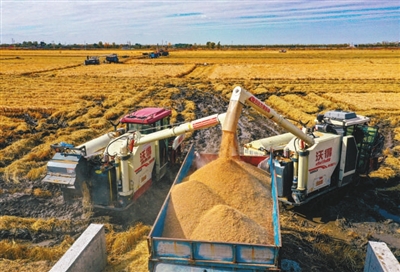
中国饭碗将端得更稳更牢
Jing Ji Ri Bao· 2025-11-02 21:52
Core Insights - The article emphasizes the importance of ensuring stable grain production in the face of complex climate conditions and extreme weather challenges by leveraging technology and policy support [1][2][3] Group 1: Technological Support - The Ministry of Agriculture and Rural Affairs has released key grain and oil varieties and promoted technologies to enhance grain production, focusing on stabilizing area, increasing yield, and improving quality [1] - During the harvest season from September to October, adverse weather conditions were mitigated through coordinated efforts in agricultural meteorology, machinery harvesting, and drying equipment to safeguard the autumn grain harvest [1] Group 2: Policy Support - A comprehensive policy system has been established to support grain production, including subsidies for farmland fertility protection, producer subsidies, agricultural insurance premium subsidies, and minimum grain purchase prices [1] - The central government has allocated disaster relief funds multiple times to assist in grain production and ensure harvests in response to frequent natural disasters [1] Group 3: Challenges and Risks - The article highlights ongoing challenges such as decreasing and deteriorating arable land resources, frequent extreme weather and pest outbreaks, water scarcity in northern regions, and declining willingness among producers to grow grain [1] Group 4: High-Standard Farmland Construction - High-standard farmland is deemed essential for stable grain production, necessitating continuous construction and upgrading, with a focus on quality and effective prevention of "non-grain" usage [2] - There is a need for organic integration of water-saving irrigation and other facilities in northern high-standard farmland to enhance disaster resilience and production stability [2] Group 5: Income Protection Mechanism - A robust income protection mechanism for grain farmers is crucial, requiring improvements in the agricultural policy system that integrates pricing, subsidies, and insurance [2] - The promotion of precision farming technologies and the establishment of a comprehensive "smart farming" model are encouraged to enhance efficiency and reduce costs [2] Group 6: Development of Socialized Services - Expanding and improving socialized services is vital for integrating smallholders into modern production and promoting advanced technology to ordinary farmers [3] - The strategy of storing grain in the land and technology aims to strengthen the foundation of grain production and ensure that China's grain bowl remains stable and secure [3]
中国式现代化离不开农业农村现代化 这个“重中之重” 如何抓紧抓实(乡村观察)
Ren Min Ri Bao· 2025-10-30 22:38
Core Viewpoint - The modernization of agriculture and rural areas is essential for China's overall modernization, as emphasized by the central government and the 14th Five-Year Plan, which prioritizes addressing "three rural issues" [1] Group 1: Agricultural Production - The 14th Five-Year Plan aims to enhance agricultural comprehensive production capacity and quality, with a target of surpassing 1.4 trillion jin (approximately 700 million tons) of grain production by 2024 [2] - The focus is on improving production capacity through high-standard farmland construction and advancing agricultural technology to ensure food security [2][3] - The integration of advanced machinery and technology in farming practices is crucial for increasing efficiency and productivity, with examples of significant investments in agricultural machinery [4] Group 2: Rural Development - The plan emphasizes creating livable and workable rural spaces, with initiatives to improve infrastructure and public services, enhancing the quality of life for rural residents [7] - Successful rural development involves collaborative efforts among neighboring villages to address common challenges and promote integrated growth [7][8] - The transformation of rural areas includes environmental improvements and the development of rural tourism, contributing to local economies [8] Group 3: Farmer Income - Policies aimed at increasing farmers' income include direct subsidies and support for agricultural machinery purchases, which have significantly reduced costs for farmers [10][11] - The stability of grain prices and the promotion of high-quality agricultural products are essential for enhancing farmers' earnings [10] - Financial support mechanisms, including insurance and credit products tailored for farmers, are necessary to mitigate risks and encourage agricultural investment [11][12]