
超级智能

Search documents
AI 教父 Hinton:未来 10 年,人和 AI,谁在给谁打工?
3 6 Ke· 2025-11-24 00:14
2025 年11月18日,谷歌发布 Gemini 3,号称"最智能的AI模型"。两天后,基于Gemini 3 的图像生成工 具 Nano Banana Pro 上线,Adobe、Figma等主流设计平台立即整合。 Gemini 3 比上一代提前了 7 个月发布。这是前所未有的加速。 就在 Gemini 3 发布的第二天,11 月 19 日,美国参议员伯尼·桑德斯(Bernie Sanders)在乔治城大学组 织了一场 AI 对谈。 过去一年里,Hinton 也不止一次公开警告:AI 会带来大规模失业,富人会更富,大多数人会被挤出 去。他给出的时间表是:超级智能可能在 10 到 20 年内出现,甚至更早。 而谷歌的节奏似乎在印证他的判断。Gemini 3 可以自主整理邮件、安排旅行、开发应用,Nano Banana Pro 让一个设计师完成原本需要整个团队的工作。一个分析师问:几年后这些步骤还需要几个人? Hinton在对谈中指向了三个层面: 那天,坐在现场正面回应的,是 AI 教父 Geoffrey Hinton。 在对谈中,桑德斯引用了两个人的话: AI 和机器人会把所有工作都干了。——马斯克 大部分事情都 ...

奥特曼内部信曝光:OpenAI领先优势缩小,预警“艰难时刻”到来
Hua Er Jie Jian Wen· 2025-11-21 11:13
Core Insights - OpenAI's CEO Sam Altman warns employees that the company's technological lead is shrinking and anticipates a challenging external environment for some time [1][2] - Google has made significant advancements in AI, particularly in pre-training, which poses a competitive threat to OpenAI [3][4] - OpenAI's dominance is being challenged by competitors like Anthropic, which may surpass OpenAI in revenue from AI sales this year [2][4] Competitive Landscape - Google has achieved unexpected breakthroughs in AI pre-training, an area where OpenAI has struggled, indicating a shift in competitive dynamics [3] - Anthropic, founded by former OpenAI employees, is excelling in generating computer code tailored to client needs, further intensifying competition [4] - Despite ChatGPT's current lead in usage and revenue, the gap with Google's Gemini chatbot is narrowing [2][4] Financial Considerations - OpenAI's rapid growth is contrasted with Google's financial strength, as Google generated over $70 billion in free cash flow in the past four quarters [5] - OpenAI is projected to consume over $100 billion in its pursuit of human-level AI, raising concerns among investors about its future cash flow sustainability [5] - The financial disparity between OpenAI and established companies like Google raises questions about the viability of OpenAI's growth trajectory [5] Long-term Strategy - Altman emphasizes the need for OpenAI to focus on ambitious technological bets, even if it means temporarily lagging behind competitors [6] - The company aims to make progress in using AI-generated data for training new AI and enhancing post-training techniques [6] - Altman expresses confidence in OpenAI's capabilities and the importance of maintaining focus on achieving superintelligence despite short-term pressures [6]
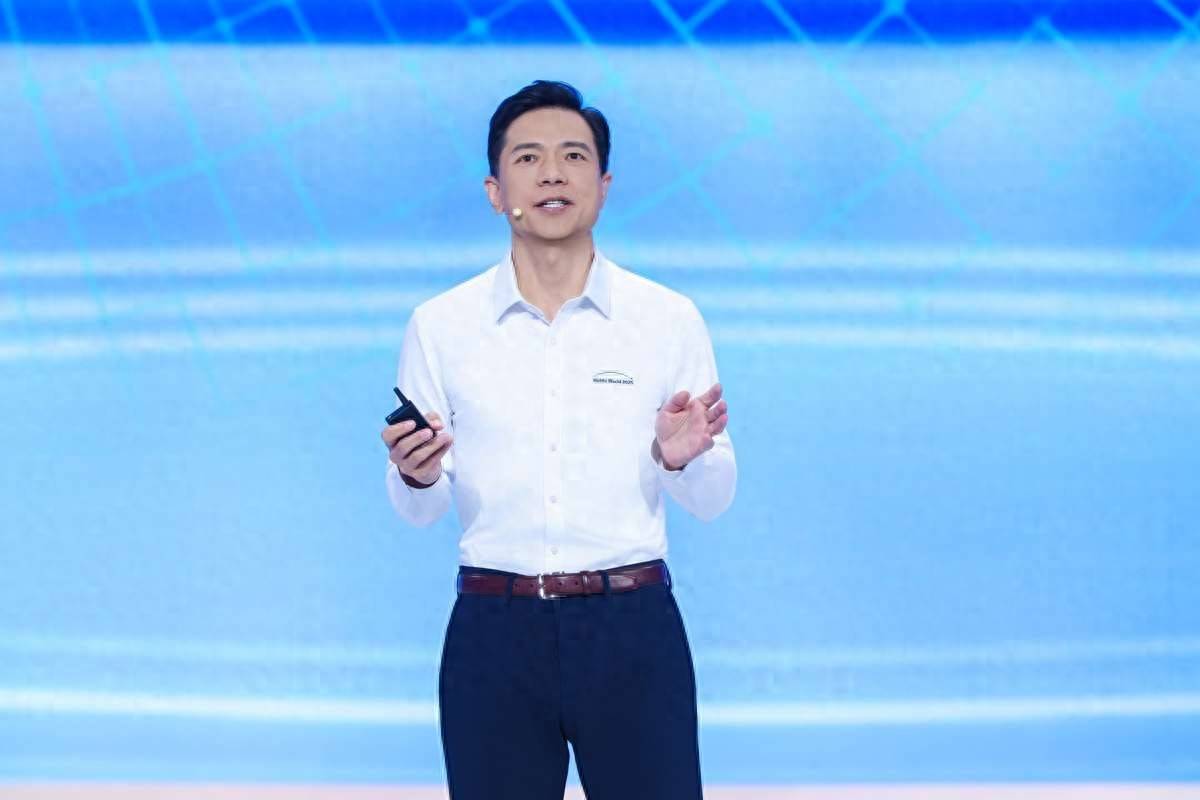
2025年百度世界大会 | 李彦宏:AI效果涌现奔向超级智能
Sou Hu Cai Jing· 2025-11-14 06:22
Core Insights - The core message emphasizes the necessity of internalizing AI as a native capability to trigger a comprehensive productivity revolution and drive economic growth, transitioning from "AI effect emergence" today to "superintelligence" tomorrow [1] AI Industry Structure - The AI industry structure is shifting from an unhealthy "pyramid" to a healthy "inverted pyramid," where the value generated by models is ten times that of chips, and AI applications can create a hundred times the value of models [3][4][6] - In the inverted pyramid structure, applications are the primary source of value creation, contrasting with the previous model where chips dominated the value distribution [4][6] Internalizing AI Capabilities - Internalizing AI capabilities transforms intelligence from a cost into a productivity driver, enhancing decision quality, discovering new growth points, reducing costs, increasing profit margins, and shortening innovation cycles [6][14] - Three representative application directions for enterprises to internalize AI capabilities include: 1. AI replacing repetitive tasks, exemplified by tools like Wenxin Kuai Ma for programming assistance [6] 2. Unlimited supply of productivity through AI-generated content, with 70% of search results now being AI-generated [6] 3. AI surpassing human cognition by discovering previously unknown solutions through extensive data processing [6] Digital Humans - Digital humans represent a new multimodal product form and serve as a universal interaction interface in the AI era, facilitating natural human-machine interactions across various sectors such as e-commerce, education, and healthcare [7][9] AI Transformation in Search - Baidu is leading the global AI transformation in search engines by reconstructing search result pages to prioritize rich media content over traditional text links, achieving a 70% coverage of rich media in top search results [9] Autonomous Vehicles - The advent of autonomous vehicles is expected to revolutionize urban living, with projections indicating a significant reduction in ride-hailing costs and a corresponding increase in demand, creating new possibilities for mobile living spaces [10] Global Optimal Solutions - Baidu introduced a self-evolving intelligent agent capable of finding global optimal solutions across various fields, including transportation, energy, finance, and drug development, by simulating evolutionary processes [10][11] Call to Action - A call for individuals and organizations to adapt their work methods by framing problems in a way that AI can address them, emphasizing the importance of internalizing AI as a native capability to realize its full potential [14]


微软获OpenAI授权独立研发AGI,AI领域竞争格局生变
Sou Hu Cai Jing· 2025-11-11 13:58
Core Insights - Microsoft is the largest shareholder of OpenAI, holding approximately $13 billion in shares, which raises concerns among investors about the sustainability of the current "AI bubble" and the unclear profitability model of OpenAI [1] - Tensions between Microsoft and OpenAI have escalated due to OpenAI's plans to transition into a for-profit entity, with rumors suggesting that Microsoft attempted to prevent this shift to protect its interests [1] Group 1 - A new "final agreement" has been signed between Microsoft and OpenAI, extending their collaboration and introducing new terms, including that OpenAI cannot unilaterally declare the achievement of AGI (Artificial General Intelligence) without validation from an independent expert panel [3] - The new agreement allows Microsoft to use OpenAI's models and products, including those developed post-AGI, until 2032, even if AGI is achieved before 2030 [3] - The agreement also permits Microsoft to independently or jointly develop AGI with other companies, effectively granting Microsoft significant control over AI advancements [3] Group 2 - Following the signing of the agreement, Microsoft has accelerated its efforts in the AI sector, with the CEO of its AI division stating that the company is pursuing "superintelligence" while ensuring that AI serves humanity [3] - Previously, Microsoft was restricted from independently pursuing AGI until 2030 to allow OpenAI to maintain its lead, but this limitation has now been lifted, enabling Microsoft to pursue its own initiatives [3] - The CEO emphasized that Microsoft will maintain an open technology approach and will not be overly committed to specific models, focusing solely on product usability [4]


速递|You.com CEO双线作战,计划10亿美元建AI实验室,让机器自主驱动科学研究
Z Potentials· 2025-11-11 02:14
Core Insights - Richard Socher, CEO of You.com and former Chief Scientist at Salesforce, plans to raise approximately $1 billion for a new AI research startup while continuing to lead You.com [1][4] - You.com has transitioned from a consumer-focused AI search engine to providing AI search tools for enterprises, highlighting the challenges faced by startups in competing with established companies like Google and OpenAI [5][9] Financial Performance - You.com achieved an annualized revenue exceeding $50 million this summer [3] - The company boasts a net retention rate of 150%, indicating strong customer retention and increased long-term spending [2] Business Strategy - Socher's new AI lab will focus on developing technologies for automating AI research, with a team of seven co-founders, including Tim Shi, former CTO of Cresta [1][6] - The lab aims to create AI systems that excel in generating innovative ideas, conducting experiments, and self-correcting, differentiating its approach from OpenAI and Anthropic [6] Market Position - You.com recently completed a funding round at a valuation of $1.5 billion, reflecting investor confidence despite concerns about Socher managing two companies simultaneously [4][5] - The shift to enterprise solutions and the introduction of APIs for real-time data updates demonstrate You.com's adaptability in a competitive landscape [9]

与 OpenAI 并行,微软 AI CEO:回到常识,把人放在中心
3 6 Ke· 2025-11-11 00:37
Core Insights - Microsoft has established the MAI Superintelligence Team, led by Mustafa Suleyman, to develop its own superintelligence independently from OpenAI [1][3][4] - The team aims to define the boundaries of intelligence, focusing on safety and control rather than merely enhancing capabilities [3][27] - Microsoft emphasizes a human-centered approach, prioritizing safety and explainability in AI systems [3][11][20] Group 1: Reasons for Establishing the Team - The core principle of the MAI team is to avoid creating systems that could become uncontrollable or autonomous [3][8] - Microsoft seeks to establish a more stable and controlled development path for superintelligence, rather than relying on external models [3][4][8] - Suleyman's perspective is that safety should be built into AI from the outset, rather than relying on post-hoc measures [7][8] Group 2: Focus Areas of the MAI Team - The MAI team is concentrating on three main areas: healthcare, daily assistance, and safety mechanisms [9][10] - In healthcare, the goal is to enhance diagnostic capabilities while ensuring that AI recommendations are understandable and traceable [11][12][14] - For daily assistance, the aim is to create AI that supports users without taking over their decision-making processes [15][16][22] - The team is also focused on establishing safety protocols, learning from other industries to implement robust safety measures in AI [17][18][19] Group 3: Communication and Control - Suleyman advocates for AI systems to communicate in ways that humans can understand, prioritizing explainability over sheer computational power [23][24][26] - The approach taken by Microsoft contrasts with other companies that prioritize model performance over human interpretability [23][27] - The emphasis is on ensuring that humans maintain control over AI systems, avoiding scenarios where AI manages AI without human oversight [26][30][31]
西安交大丁宁:大模型是“智能基建”,资本与技术融合重塑AI版图
2 1 Shi Ji Jing Ji Bao Dao· 2025-11-10 23:12
Core Insights - The rapid development of large models is driven by capital investment and industry collaboration, where capital acts as a magnifier for technology and technology serves as a multiplier for capital [1][4] Group 1: Industry Trends - The current phase of AI is characterized by a shift towards "multimodal fusion," where models are evolving from single-modal (text only) to integrating images, speech, and code [2][3] - The emergence of ChatGPT at the end of 2022 marked a turning point in AI development, initiating competition in the large model industry [2] - The mainstream large models are primarily based on the Transformer architecture, with a transition in training methods from "pre-training + supervised fine-tuning" to continuous learning and parameter-efficient fine-tuning [3] Group 2: Capital and Technology Dynamics - The high initial costs of training large models include computing power, data, algorithms, and talent, making capital investment essential for developing high-quality foundational models [4] - Without technological insights and research accumulation, capital alone cannot effectively drive industrial upgrades [4] - As of 2023, China leads globally in the number of AI-related patents, accounting for 69% of the total, while the country also produces 41% of the world's AI research papers [4] Group 3: Future Outlook - Future trends in AI development include multimodal integration, parallel advancements in large-scale and lightweight models, embodied intelligence, and exploration of artificial general intelligence (AGI) [5] - The concept of superintelligence, which refers to systems surpassing the smartest humans, remains a theoretical discussion and a potential future direction for AI development [5]
AI日报丨马斯克称特斯拉或需建造巨型AI芯片工厂,微软组建超级智能团队,聚焦医疗诊断等领域
美股研究社· 2025-11-07 11:30
Group 1 - L'Oréal China has formed a strategic partnership with Alibaba Cloud to enhance its intelligent customer service and marketing through AI capabilities [5] - Microsoft is aiming for "superintelligence" in AI, focusing on breakthroughs in healthcare and materials science, led by Mustafa Suleyman [6][12] - Meituan has fully integrated its AI operating assistant "Smart Manager" into all partnered dining establishments, providing a comprehensive AI service package [8] Group 2 - Tesla's CEO Elon Musk indicated the potential need for a large AI chip factory, possibly in collaboration with Intel, to support the development of its fifth-generation AI chips [9] - Google is set to launch its most powerful AI chip, Ironwood, which is four times faster than its predecessor, aimed at processing large model training and real-time AI tasks [11] - Tesla shareholders approved Musk's compensation plan, which could yield up to $878 billion, contingent on achieving ambitious operational goals [13]

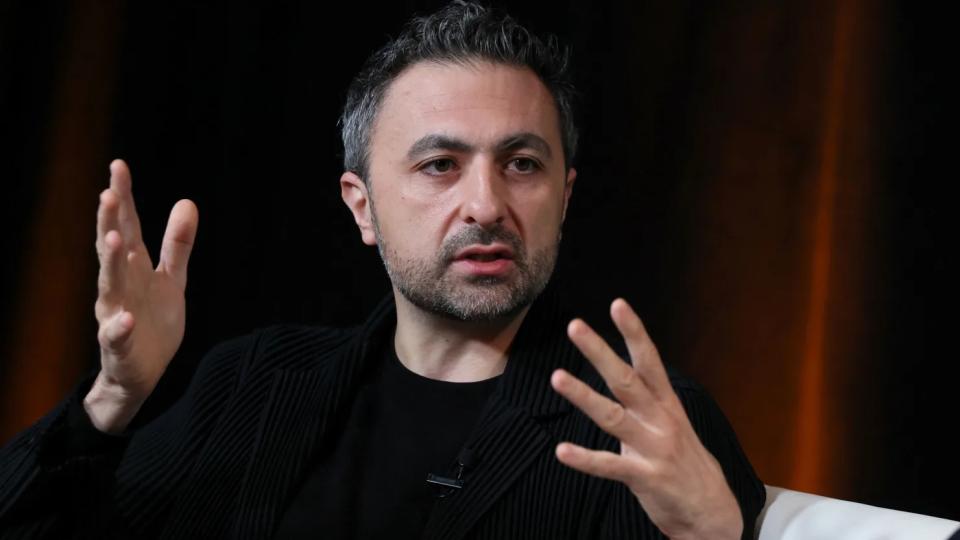
微软组建“超级智能”团队,AI业务负责人苏莱曼挂帅
3 6 Ke· 2025-11-07 09:40
Core Insights - Microsoft announced the formation of a new team focused on cutting-edge artificial intelligence research, led by Mustafa Suleyman, CEO of Microsoft's AI division [2] - The mission of the MAI Superintelligence team is to address practical issues and ensure that technological development remains robust and controllable, rather than pursuing abstract superintelligence [2] - The team will focus on three main areas: developing affordable AI companions, creating medical superintelligence for comprehensive diagnostics, and advancing clean energy technology through innovative workflow management [2] Summary by Categories AI Development - The team aims to develop affordable AI companions to enhance learning, work, and efficiency [2] - Microsoft is actively working on AI tools that have shown a fourfold increase in diagnostic accuracy compared to human doctors, while being significantly more cost-effective [2] Healthcare Focus - Healthcare is identified as a key area for Microsoft's AI initiatives, with expectations that it will be one of the first sectors to benefit from superintelligence [2] - Microsoft has partnered with Harvard Health to provide reliable medical answers for its Copilot and has introduced features to help users find doctors based on preferences [2] Competitive Landscape - Suleyman emphasized that the development of superintelligence is not a blind investment and must be approached with clear objectives [3] - Microsoft is reducing its reliance on OpenAI's technology by integrating the Inflection team and exploring solutions from other companies like Anthropic [3] - The competitive landscape includes OpenAI building its own data centers and forming partnerships with Amazon and Oracle, while Microsoft continues to develop its own voice, image, and text models [3]
宇树 G1 机器人家务全能,微软超级智能剑指医学新突破!
Mei Ri Jing Ji Xin Wen· 2025-11-07 07:20
Market Review - The Huaxia Sci-Tech AI ETF (589010) increased by 2.62%, closing at 1.410 yuan, indicating strong upward momentum with 22 constituent stocks rising and 8 falling, particularly in AI and optical perception sectors [1] - The Robot ETF (562500) rose by 1.91%, closing at 1.015 yuan, with 63 out of 73 constituent stocks gaining, showing significant structural rebound in small and mid-cap intelligent manufacturing and core components [1] - The trading volume exceeded 1.1 billion yuan, reflecting active trading, with a continued net inflow trend over the past three trading days [1] Hot News - Yushu Technology launched a full-body remote operation platform, showcasing its G1 robot performing household tasks under human control [2] - Microsoft is pursuing a more powerful form of AI called "superintelligence," aiming for breakthroughs in healthcare and clean energy, led by Mustafa Suleyman [2] - NVIDIA's CEO Jensen Huang stated that China is likely to win the AI race due to favorable regulatory environments and lower energy costs, criticizing Western approaches as hindering progress [2] Institutional View - CITIC Securities highlighted the rapid establishment of data collection factories across the country, emphasizing the unique advantages of China's embodied intelligence industry chain in utilizing real data for model training [3] - The report suggests that the circulation of data elements will benefit both downstream model developers and upstream manufacturers, positioning data accumulation as a valuable asset for the domestic embodied intelligence industry [3] - The focus on data collection is expected to elevate its importance in industry development, with recommendations to pay attention to companies with potential in data elements, model training, and ontology configuration [3] Popular ETFs - The Robot ETF (562500) is the only ETF in the market with a scale exceeding 20 billion, offering the best liquidity and comprehensive coverage of the Chinese robotics industry [4] - The Huaxia Sci-Tech AI ETF (589010) captures the "singularity moment" of the AI industry with a 20% price fluctuation limit and flexibility in small-cap stocks [4]
