
ESG投资理念

Search documents
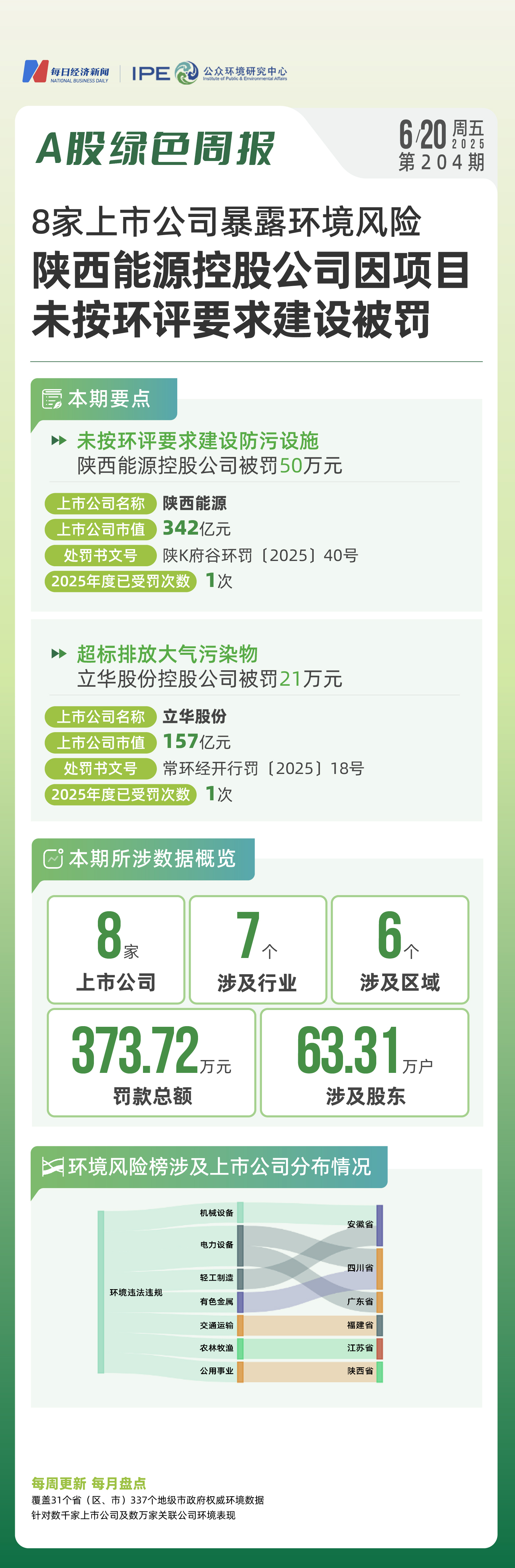
A股绿色周报|8家上市公司暴露环境风险 陕西能源控股公司项目未按环评要求建设被罚50万元
Mei Ri Jing Ji Xin Wen· 2025-06-20 11:11
Core Points - The article highlights the increasing environmental risks faced by listed companies in China, with a focus on recent penalties imposed for violations of environmental regulations [11][12][20] - A total of 8 listed companies were identified as having environmental risks, affecting approximately 633,100 shareholders [15][16] Group 1: Company Penalties - Shaanxi Energy Holdings Company was fined 500,000 yuan for failing to construct pollution prevention facilities as required by environmental assessments [17] - Lihua Co., Ltd. was penalized 210,000 yuan for exceeding emissions of air pollutants by its subsidiary [11][17] - Hualing Precision Engineering was fined 384,000 yuan for not re-evaluating environmental protection facilities after significant changes in production processes [18] Group 2: Regulatory Context - The article discusses the importance of environmental risk management as a critical aspect of corporate governance, alongside financial and operational factors [12][20] - It emphasizes the role of environmental information transparency in the capital market, facilitated by the collection and analysis of data from various government sources [11][20] Group 3: Broader Implications - The increasing focus on ESG (Environmental, Social, and Governance) factors among investors highlights the need for companies to prioritize sustainable development [20] - The article notes that the public's right to access environmental information is supported by legal frameworks, enhancing accountability for companies [20][21]



创业邦2025创投机构ESG最佳实践奖调研启动
创业邦· 2025-06-17 23:46
Core Viewpoint - The ESG investment concept is becoming a significant direction for the development of China's capital market, driven by global sustainable development goals and the "dual carbon" strategy [1] Group 1: ESG Investment Trends - Investors are increasingly focusing on companies' performance in environmental protection, social responsibility, and corporate governance when selecting projects [1] - Venture capital institutions are actively incorporating ESG factors into their investment decision-making processes to seize green investment opportunities and respond to market changes [1] Group 2: Best Practices in ESG - Some venture capital institutions have established a demonstration effect in ESG practices by integrating ESG concepts throughout the investment process, emphasizing long-term value creation over short-term financial returns [1] - The 2024 "Best Practices in ESG for Venture Capital Institutions" award aims to recognize institutions excelling in ESG practices and share their best case studies to encourage more institutions to contribute to sustainable development [2] Group 3: Award Details - The award evaluation considers aspects such as institutional systems, capacity building, investment processes, adherence to international initiatives, and transparency in ESG practices [2]

低利率时代,货基的挑战与应对 | 宏观经济
清华金融评论· 2025-06-17 12:19
Core Viewpoint - The recent reduction in deposit rates by major banks in China, with the one-year fixed deposit rate falling below 1%, poses challenges for money market funds and cash management products, prompting a need for strategies to adapt to this low-yield environment by learning from overseas experiences [2][3]. Group 1: Overview of Low-Interest Rate Environments - In the U.S., the money market fund (MMF) yield entered the "1%" era during three periods: 2003-2004, 2009-2017, and 2020-2021, with significant capital outflows during low yield periods [5][6][7]. - The Eurozone experienced a decline in MMF scale during low-interest periods, but saw an increase during negative interest rates due to the relative attractiveness of MMFs compared to other rates [9][10][11][12]. - Japan's MMFs faced extinction in a negative interest rate environment, with the money reserve fund (MRF) becoming dominant due to its association with securities accounts [14][16]. Group 2: Factors Influencing MMF Scale Changes - The elasticity of nominal interest rates to policy rate changes leads to different behaviors in fund flows, with MMFs showing higher sensitivity compared to bank deposits [21][22]. - The different approaches to negative interest rate policies in Europe and Japan resulted in contrasting outcomes for MMFs, with European funds expanding while Japanese funds contracted [42][43][45]. - Inflation impacts real interest rates, influencing market preferences for low-risk assets, with higher real rates encouraging savings and benefiting MMFs [48][49]. Group 3: Strategies for Fund Managers - Fund managers in low-interest environments often reduce fees to enhance client returns, as seen in the U.S. during the 2003-2004 period [51][56]. - Seeking yield through credit and liquidity premiums becomes crucial, with U.S. MMFs increasing allocations to commercial paper and corporate notes during low yield periods [52]. - Building product ecosystems and increasing overseas investments are strategies employed by fund managers to maintain competitiveness in challenging environments [54][58]. Group 4: Regulatory Responses - Overseas regulators have generally moved towards net asset value (NAV) reform for MMFs to ensure industry health in low-rate environments, with Europe implementing market value-based valuations [61]. - Japan's earlier reforms in MMF valuation have set a precedent for adapting to low-interest conditions, allowing for more flexible investment strategies [61]. Group 5: Implications for China - China's dual-track interest rate system means that the relationship between money market rates and deposit rates is influenced by both market and policy factors, with recent trends showing deposit rates adjusting more rapidly [63][64]. - The future of MMFs in China will depend on whether money market rates fall significantly below deposit rates, with current trends suggesting a continued advantage for MMFs [70]. - A potential decline in inflation could further elevate real interest rates, benefiting low-risk assets like MMFs [71].
中银理财绿色金融“加速度”:践行“两山”理念的多维突破
2 1 Shi Ji Jing Ji Bao Dao· 2025-06-15 16:10
Core Viewpoint - The article emphasizes the growing importance of green finance as a driving force for economic transformation, particularly in the context of China's "dual carbon" goals, with Bank of China Wealth Management leading the way in sustainable development initiatives [1][2]. Group 1: Green Finance Strategy - Bank of China Wealth Management has established a comprehensive green finance strategy, including a "14th Five-Year" plan that focuses on business development, environmental and social risk management, carbon operations, and collaboration [1][2]. - The "ESG Preferred" product series has shown strong performance, reflecting the company's commitment to responsible investment and sustainable development [3][4]. Group 2: Product Innovation and Market Impact - The implementation of the "High-Quality Development Implementation Plan for Green Finance" by regulatory authorities highlights the role of financial institutions as catalysts for green economic transformation [2]. - As of December 2024, the total scale of ESG-themed products reached over 70 billion yuan, demonstrating significant market demand and investor interest [2][3]. Group 3: ESG Investment Framework - The ESG investment framework integrates environmental, social, and governance factors into the investment decision-making process, enhancing risk management and value creation [5][6]. - Recent surveys indicate that 31% of institutions believe ESG investments significantly reduce risks, while 19% see a notable increase in returns, showcasing the effectiveness of this approach [5]. Group 4: Green Bond Market Growth - The green bond market in China has expanded rapidly, with the total balance growing from 0.26 trillion yuan in 2016 to 5.59 trillion yuan by 2024, reflecting an annual growth rate of 50.9% [7][8]. - Green bonds are becoming a core investment direction, with local government bonds holding the largest share of the market [8]. Group 5: Risk Management and Standards - Bank of China Wealth Management has developed a comprehensive risk management system for green finance, incorporating ESG risk identification, assessment, and mitigation processes [11]. - The company collaborates with various institutions to establish industry standards for ESG evaluation and information disclosure, promoting uniformity in green investment guidelines [10][11].
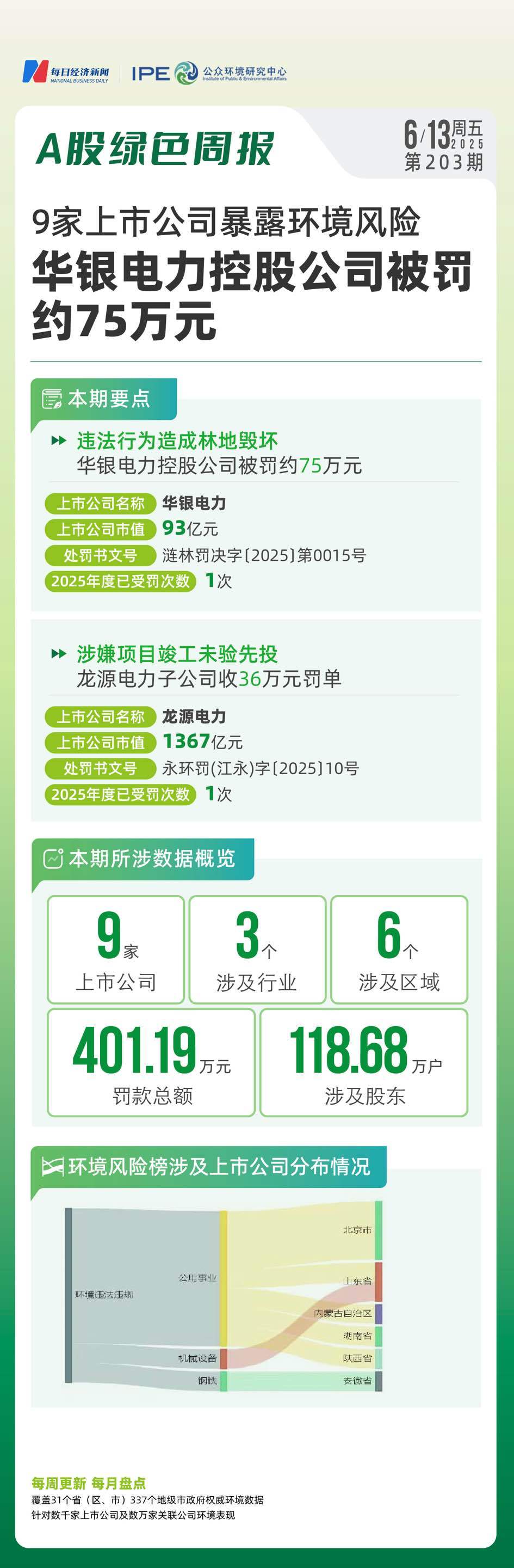
A股绿色周报丨9家上市公司暴露环境风险 华银电力控股公司被罚约75万元
Mei Ri Jing Ji Xin Wen· 2025-06-13 12:16
Core Viewpoint - Environmental risks are increasingly becoming a significant operational risk for listed companies, impacting both their development and corporate image [6][12]. Summary by Relevant Sections Environmental Penalties - A total of 9 listed companies have recently been exposed to environmental risks, all of which are state-controlled enterprises [7][8]. - The total fines imposed on these companies amount to approximately 118.68 million yuan [2][8]. - Specific penalties include: - Huayin Power was fined about 749,193 yuan for causing damage to forest land [9]. - Longyuan Power was fined 360,000 yuan for commencing operations without project completion verification [12]. Company Specifics - Huayin Power's subsidiary, Lianyuan New Energy, was penalized for actions that led to forest land destruction during solar project construction [9]. - Huaneng International's subsidiary, Qufu Thermal Power, was fined 350,000 yuan for improper wastewater management [9]. - Longyuan Power's subsidiary, Hengcheng Energy, faced penalties for operating wind turbine projects without necessary environmental assessments [12]. Investor Implications - The 9 companies involved have a combined total of 1.1868 million shareholders, indicating potential investment risks due to their environmental issues [8]. - The growing emphasis on ESG (Environmental, Social, and Governance) principles suggests that investors are increasingly focusing on companies' sustainable development capabilities [12].



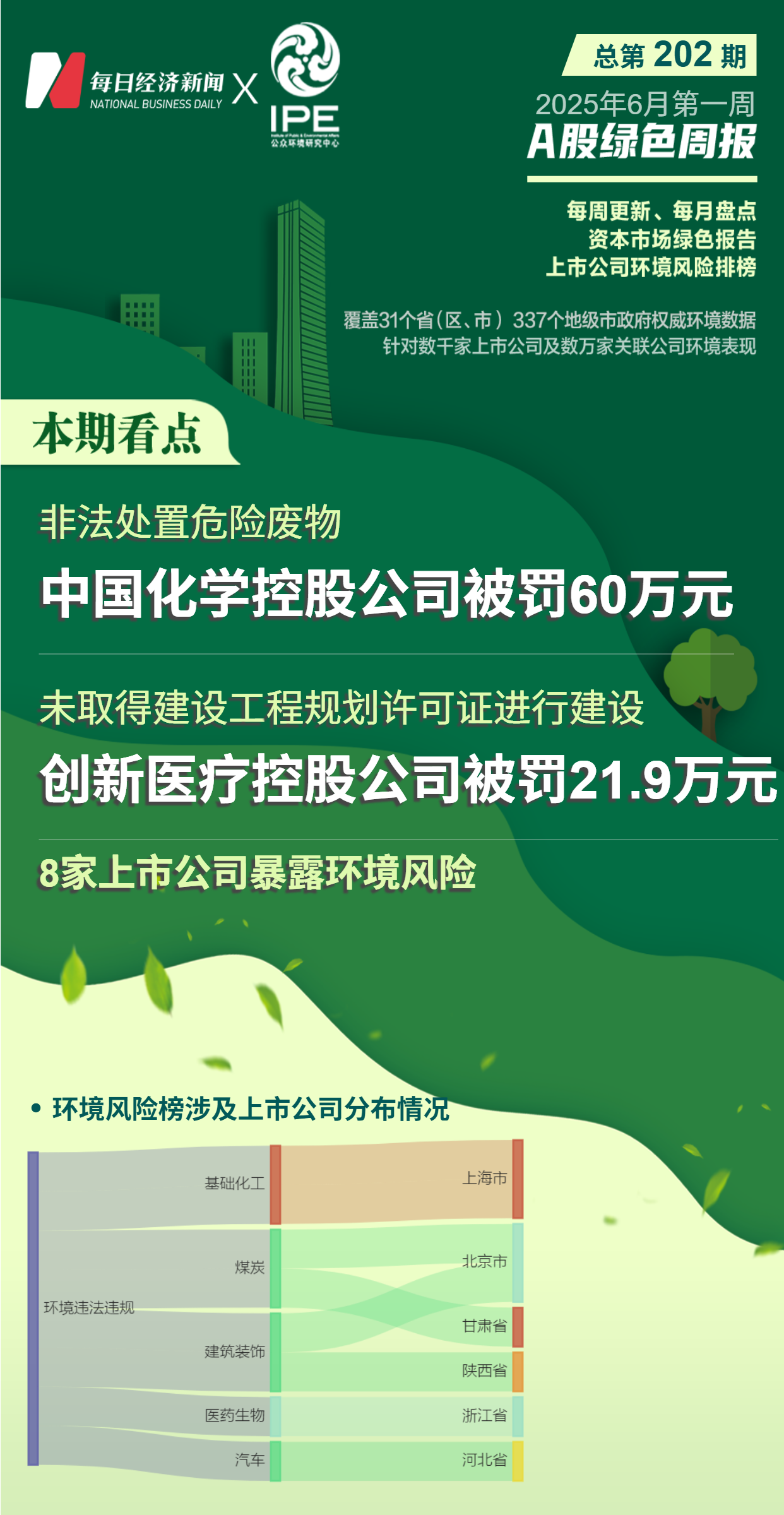
A股绿色周报|8家上市公司暴露环境风险 中国化学控股公司因非法处置固废被罚
Mei Ri Jing Ji Xin Wen· 2025-06-07 07:26
Core Viewpoint - Environmental risks are increasingly becoming a significant operational risk for listed companies, impacting both their development and public image [6][10]. Group 1: Environmental Violations and Penalties - China Chemical's subsidiary, China Chemical Second Construction Group, was fined 600,000 yuan for illegally disposing of hazardous waste by handing it over to an unqualified individual [8]. - Gansu Energy Chemical's subsidiary, Liuhua Chemical, was fined 609,000 yuan for exceeding water pollutant discharge limits, with chemical oxygen demand (COD) and ammonia nitrogen levels significantly exceeding regulatory standards [10][11]. - Innovation Medical's subsidiary, Haining Kanghua Hospital, was fined 219,050 yuan for constructing buildings without the necessary planning permits [9]. Group 2: Impact on Shareholders - The eight listed companies involved in environmental violations collectively have 628,000 shareholders, indicating potential investment risks for these stakeholders [7]. Group 3: Regulatory Context and Public Awareness - The report highlights the increasing importance of environmental information transparency in the capital market, driven by enhanced regulatory frameworks and public participation in environmental protection [12]. - The environmental information disclosure has been supported by legal frameworks, ensuring that citizens and organizations can access and supervise environmental protection efforts [12].


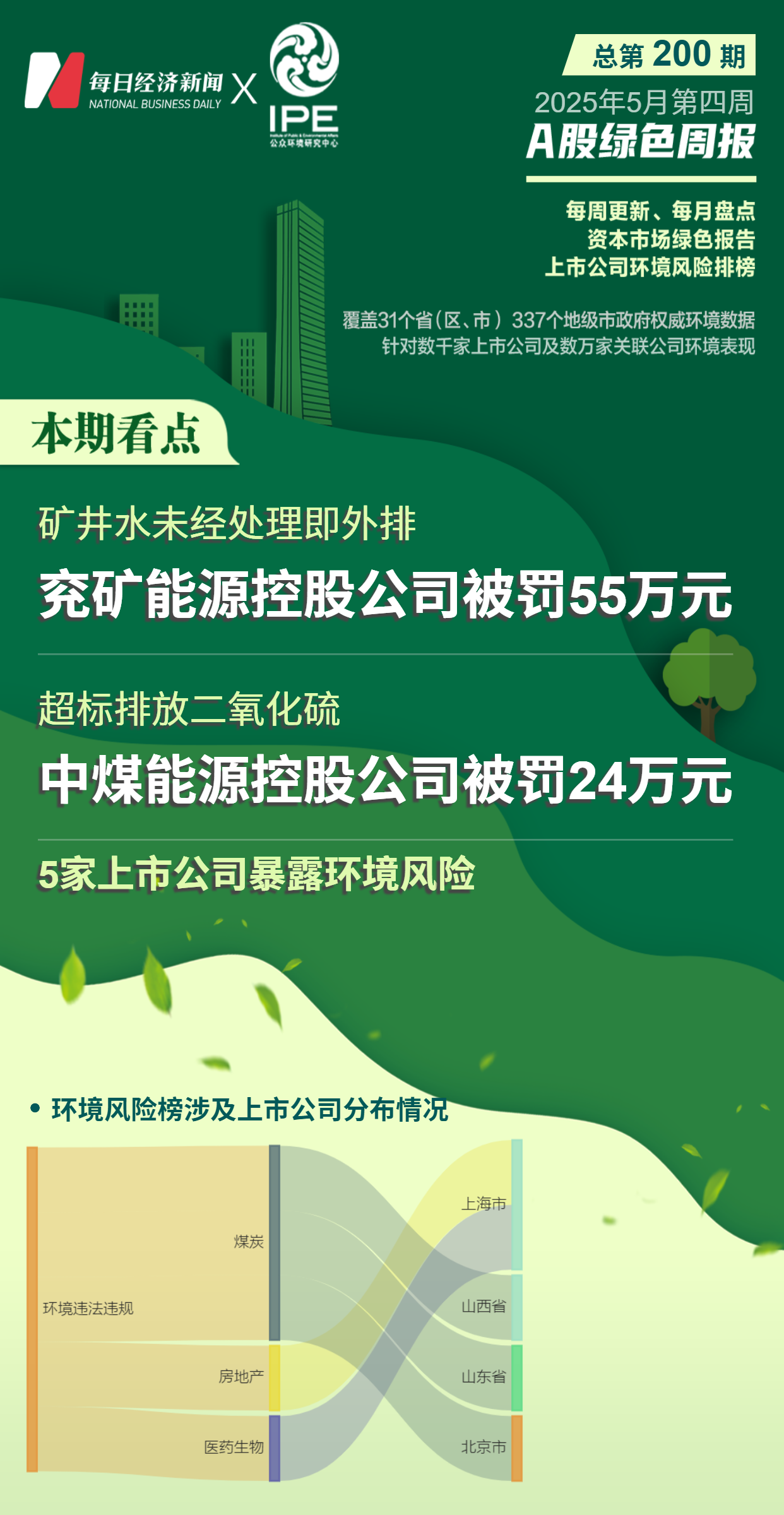
A股绿色周报丨5家上市公司暴露环境风险 兖矿能源控股公司被罚55万元
Mei Ri Jing Ji Xin Wen· 2025-05-23 12:52
Core Viewpoint - Five listed companies have recently exposed environmental risks, highlighting the increasing importance of environmental responsibility in corporate operations [11][12][14]. Group 1: Environmental Violations and Penalties - Yanzhou Coal Mining Company was fined 550,000 yuan for discharging untreated mine water into a scenic area [16]. - China Coal Energy Company was penalized 240,000 yuan for exceeding sulfur dioxide emissions [18]. - Guangxi Construction Group, a subsidiary of Greenland Holdings, was fined 100,000 yuan for failing to operate electronic transfer slips during construction waste disposal [17]. Group 2: Impact on Investors - The five companies involved have a total of 680,400 shareholders, indicating potential investment risks due to their environmental violations [15]. - The increasing focus on ESG (Environmental, Social, and Governance) principles among investors emphasizes the need for companies to demonstrate sustainable development capabilities [18]. Group 3: Regulatory Framework and Transparency - The environmental information disclosure has improved due to regulatory developments, ensuring public access to environmental data [19]. - The establishment of laws and regulations supports the public's right to obtain environmental information and participate in environmental protection [19].



北京基金小镇研究院:2025私募股权投资基金投后管理研究报告
Sou Hu Cai Jing· 2025-05-23 00:27
Core Viewpoint - The report from Beijing Fund Town Research Institute provides an in-depth analysis of post-investment management in private equity funds, highlighting regulatory frameworks, industry status, key points, and development trends. Group 1: Regulatory Framework and Tax Rules - The regulatory framework for post-investment management of private equity funds in China is gradually improving, encompassing laws, administrative regulations, departmental rules, and self-regulatory guidelines. Key laws include the Securities Investment Fund Law, which clarifies the fiduciary duties of managers, and the Private Investment Fund Supervision and Administration Regulations, which strengthen information disclosure and accountability [1][2][3] - Tax treatment varies significantly based on the fund's organizational structure. For partnership funds, the "first distribute, then tax" principle applies, while corporate funds are subject to corporate income tax. Cross-border investments involve complex issues related to tax policies and agreements [1][2][3] Group 2: Post-Investment Management Practices and Key Points - Post-investment management encompasses multiple dimensions, including operations, risk, valuation, tax, and value-added services. Effective operational management requires proper information disclosure, profit distribution, and documentation management [2][3] - Risk management involves identifying, assessing, monitoring, and responding to risks, establishing a risk grading system, and employing financial analysis and legal compliance checks to mitigate risks [2][3] - Valuation methods for non-listed equity typically include recent financing price methods and market multiples, while debt and derivatives use discounted cash flow methods [2][3] Group 3: Characteristics of Different Fund Types and Industry Post-Investment Management - Strategic industry funds focus on specific industry characteristics, such as technology investment in the new generation of information technology, data compliance in artificial intelligence, and supply chain security in aerospace [3][4] - Cross-border funds face challenges related to regulatory differences, tax agreements, and exchange rate risks, necessitating optimized investment structures and compliance management [3][4] Group 4: Development Trends and Institutional Building - Domestic post-investment management faces challenges such as insufficient specialization and lagging digitalization, with future trends leaning towards systematization, transparency, and technological advancement [4] - The international market exhibits more mature post-investment management practices, emphasizing post-merger industrial operations and digital empowerment, with a deep integration of ESG investment principles [4] Group 5: Comprehensive Guidance and Strategy Reference - The report combines theoretical insights with case studies to provide comprehensive operational guidance and strategic references for post-investment management in private equity funds, aiming to enhance management levels and investment returns in the industry [5]

宏创控股拟635亿收购宏拓实业,打造全球千亿铝业新航母
Quan Jing Wang· 2025-05-22 13:20
Core Viewpoint - Hongchuang Holdings is set to acquire Shandong Hongtuo Industrial Co., Ltd. for approximately 63.5 billion yuan, marking a record in A-share mergers and acquisitions, which will significantly enhance its profitability and market position in the aluminum industry [1][2]. Group 1: Acquisition Details - The acquisition involves issuing approximately 11.895 billion new shares at a price of 5.34 yuan per share to pay for the 100% stake in Hongtuo Industrial, which is valued at around 63.5 billion yuan [2]. - Post-acquisition, Hongchuang Holdings' asset scale will exceed 100 billion yuan, with net profit expected to rise above 10 billion yuan, transforming its financial health from negative to positive [4]. Group 2: Business Integration and Competitive Advantage - Hongtuo Industrial is a leading enterprise in the aluminum industry, with an annual production capacity of over 6.45 million tons of electrolytic aluminum and 19 million tons of alumina, holding nearly 15% of the national electrolytic aluminum capacity [3]. - The acquisition will eliminate competition between Hongchuang Holdings and Hongtuo Industrial, enhance overall profitability, and improve the company's competitive edge in the aluminum market [2][4]. Group 3: Financial Performance and Growth Potential - By the end of 2024, Hongtuo Industrial is projected to achieve revenues of approximately 149.29 billion yuan, a year-on-year increase of 15.77%, and a net profit of 18.14 billion yuan, reflecting a significant growth of 168.91% [4]. - The transaction is expected to elevate Hongchuang Holdings' net asset return rate from negative to nearly 40%, with earnings per share turning positive at 1.39 yuan [4]. Group 4: Industry Context and Future Outlook - The aluminum industry in China is experiencing a shift towards high-quality development, with a focus on supply-side structural reforms and resource optimization, which aligns with national policies [6][7]. - The demand for electrolytic aluminum is expected to continue growing, driven by sectors such as automotive lightweighting and renewable energy, with a projected supply gap of 500,000 to 1.3 million tons in the domestic market [8]. Group 5: Environmental and Technological Leadership - Hongtuo Industrial has established itself as a leader in energy efficiency and low emissions, being recognized as an industry "leader" in energy efficiency by the Ministry of Industry and Information Technology [9]. - The company is also advancing its technological capabilities with the implementation of AI and smart factory initiatives, enhancing production efficiency and sustainability [10].

中外资管巨头齐聚鹏城,热议大变局下全球资产配置机遇与挑战
Zhong Guo Ji Jin Bao· 2025-05-20 13:44
5月20日,来自欧美、中东及东南亚等全球十多个国家和地区的600多名中外嘉宾齐聚深圳,出席由中国 基金报主办的首届全球资产管理论坛系列活动。此次论坛围绕"大变局下的全球资产重估与配置"主题展 开探讨,是目前在深举办的国际化程度最高、行业影响力最大的资管盛会。 搭建全球资管沟通交流平台 以当下"小满"收获未来"大成" 当前,世界正经历百年未有之大变局:国际政治格局在重塑,全球经济秩序在调整,前沿技术的快速发 展正推动新一轮产业革命,社会思潮与文化正多元碰撞,全球治理体系正面临困境与革新。全球资产定 价逻辑应如何调整,资产管理行业运营应如何变革,方能在适应这一系列变化的同时,更好地服务实体 经济,并惠及广大投资者? 作为紫荆文化集团旗下的财经传媒机构,中国基金报始终坚持专业化、国际化、平台化发展战略,致力 于搭建全球资产管理行业与中国地方政府、金融机构及企业沟通交流的平台。 本次论坛的成功举办,标志着中国资产管理行业在全球舞台的话语权进一步提升。通过深港联动、中外 机构对话,论坛不仅为境内外投资者搭建了政策解读与经验交流的平台,更向国际社会传递了中国坚持 高水平开放的决心,论坛成果将为大变局下的全球资管行业注入信 ...