
双碳

Search documents
全国首部!衢州为碳账户立法
Xin Lang Cai Jing· 2025-12-23 18:05
Core Viewpoint - The article discusses the approval of the "Quzhou City Carbon Account Construction and Application Regulations," which will take effect on May 1, 2026, marking a significant legal and digital innovation in carbon management in China [1] Group 1: Legislative Framework - The regulations are the first in the country to focus specifically on the construction of a carbon account system, indicating a breakthrough in the integration of legal and digital approaches to carbon management [1] - Quzhou is recognized for incorporating carbon account system construction into the legal framework, contributing local wisdom and institutional innovation to the national "dual carbon" legal system [1] Group 2: Local Context and Challenges - As a national low-carbon pilot city and an important ecological barrier in the Yangtze River Delta, Quzhou faces dual pressures of industrial structure and ecological protection [1] - The city aims to balance economic development with low-carbon transformation, which has become a pressing issue since the establishment of China's "dual carbon" goals in 2020 [1] Group 3: Carbon Account System - Quzhou has pioneered a carbon account system that covers seven major areas: industry, agriculture, energy, construction, transportation, residential life, and forestry carbon sinks [1] - The system utilizes digital methods to address common global challenges such as unclear carbon emissions and difficulties in quantifying reduction effects, transforming invisible carbon emissions into manageable data akin to bank account deposits [1]
站在3个3000万辆新起点
Xin Lang Cai Jing· 2025-12-23 12:14
Group 1 - The Chinese automotive industry has achieved significant milestones, with major manufacturers like FAW-Volkswagen and Changan Automobile reaching their 30 millionth vehicle production mark, contributing to a total production and sales exceeding 31 million units, both up over 10% year-on-year [2][7] - Technological innovations are advancing rapidly, particularly in solid-state battery development and intelligent connected vehicles, with 64% of new passenger cars featuring combined driving assistance functions [2][7] - Despite growth, the industry faces challenges such as irrational competition leading to price wars and declining profit margins, alongside persistent issues of "involution" that threaten long-term brand value and sustainable development [2][7] Group 2 - The recent Central Economic Work Conference outlined eight key tasks, six of which are directly related to the automotive industry, emphasizing the need for a demand-driven approach, innovation, reform, and international openness [3][8] - Policies aimed at stimulating domestic demand have been effective, with over 11.2 million applications for vehicle trade-ins from January to November, and projections indicating that the trade-in market could exceed 180 billion yuan by 2025 [3][8] - The focus on addressing "involution" competition is set to intensify, with new guidelines for pricing behavior expected to shift competition from price to value, encouraging investment in technology and brand development [4][9] Group 3 - The establishment of the Hainan Free Trade Port is expected to enhance trade relations and provide opportunities for the automotive industry to explore cross-border data and vehicle modification [5][10] - By 2026, the automotive industry is anticipated to transition from growth based on scale to one focused on quality and efficiency, driven by domestic demand activation, competition regulation, and innovation [5][10]


锂电爆发引领行情,化工ETF(516020)盘中涨超1%!资金疯狂涌入化工板块!
Xin Lang Cai Jing· 2025-12-23 11:51
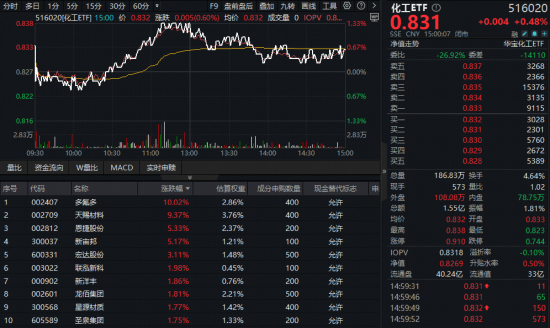
Group 1 - The chemical sector continues to rise, with the chemical ETF (516020) experiencing a maximum intraday increase of 1.33% before closing up 0.48% [1][10] - Key stocks in the sector include lithium battery-related companies, fluorochemicals, and phosphate chemicals, with notable performances from companies like Duofu Duo and Tianqi Materials, which surged by 9.37% and over 5% respectively [1][9] - The sub-index of the chemical ETF has shown a year-to-date increase of 34.27%, outperforming major A-share indices such as the Shanghai Composite Index (16.95%) and the CSI 300 Index (17.43%) [3][10] Group 2 - The basic chemical sector has seen significant capital inflow, with a net inflow of 14.218 billion yuan on a single day and a total of 37.722 billion yuan over the past five days, leading among 30 major industry sectors [2][11] - The lithium battery supply chain is experiencing a "warm winter" trend, driven by surging demand in energy storage and related sectors, leading to price increases across various components [4][12] - Analysts attribute the price increases in the lithium battery supply chain to unexpected growth in energy storage demand, with global energy storage installations expected to reach 150 GWh by 2025, a 50% year-on-year increase [5][13] Group 3 - The current valuation of the chemical sector is considered attractive, with the sub-index's price-to-book ratio at 2.48, which is at a relative low point historically [5][13] - Looking ahead, the chemical industry is expected to face a turning point in 2026, driven by supply-side contractions and strong policy support, potentially leading to a "Davis double play" scenario of valuation recovery and earnings growth [6][14] - The chemical ETF (516020) is recommended for investors looking to capitalize on the sector's rebound, as it tracks a comprehensive index covering various sub-sectors, with significant holdings in large-cap leading stocks [6][14]






中建环能承建的国能(成都金堂)龙源环保火电协同污泥资源化利用项目正式开工
Zheng Quan Ri Bao Wang· 2025-12-23 09:48
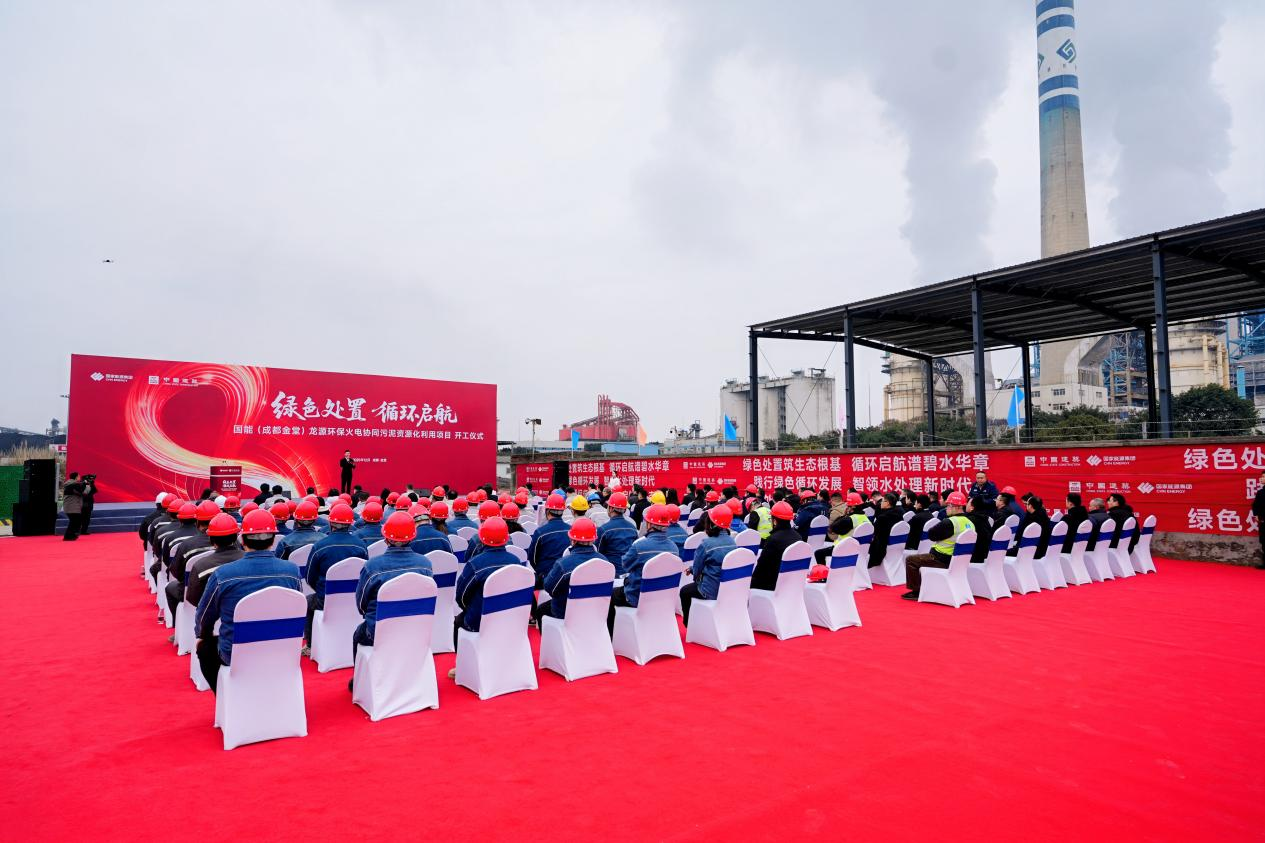
Core Viewpoint - The project led by Guoneng Longyuan Environmental Co., Ltd. and constructed by China Construction Environmental Technology Co., Ltd. aims to promote the "dual carbon" goals and circular economy development through the Guoneng (Chengdu Jintang) Longyuan Environmental Thermal Power Collaborative Sludge Resource Utilization Project, which has officially commenced in Jintang Economic Development Zone, Sichuan [1][4]. Group 1 - The project is a significant infrastructure initiative that aligns with national environmental goals and is expected to serve as a model for green development in Chengdu [4]. - The project will utilize a core technology of "heat pump low-temperature belt-type efficient drying + coupling co-firing with coal-fired boilers," with a capacity to process 500 tons of sludge daily and 16,000 tons annually [5]. - The full operational capacity of the project will enhance the region's ability to handle sludge in a harmless, reduced, and resourceful manner, supporting Chengdu's "waste-free city" initiative [5]. Group 2 - The project is positioned as a key driver for upgrading the regional environmental industry and fostering new productive forces [4]. - Guoneng Longyuan Environmental aims to ensure high standards in project management, safety, and quality to facilitate timely completion and delivery [4]. - China Construction Environmental Technology, as the only publicly listed environmental enterprise under China State Construction Engineering Corporation, will leverage its expertise to contribute to the high-quality development of Chengdu's green and low-carbon industry [4].

冰轮环境(000811) - 000811冰轮环境投资者关系管理信息20251223
2025-12-23 09:18
Group 1: Business Overview - The company focuses on providing advanced system solutions and lifecycle services in the energy and power sectors, with products including compressors and heat exchangers, covering a temperature range of -271℃ to 200℃ [3] - Key product types include screw compressors, centrifugal compressors, absorption chillers, piston compressors, and industrial heat pumps, among others [3] Group 2: Revenue and Market Performance - The low-temperature refrigeration segment experienced a slight decline in revenue in the first three quarters, with a decreasing rate of decline each quarter; however, the special air conditioning and thermal management segments showed year-on-year growth [4] - The company’s joint venture, Yantai Modern Ice Wheel Heavy Industry Co., Ltd., is expected to generate over 700 million in revenue in 2024, driven by strong market demand [8] Group 3: Data Center Applications - The company’s subsidiaries provide cooling equipment for data centers, including Dunham-Bush, which has a 131-year history and offers products like variable frequency centrifugal chillers [4][6] - Successful domestic projects include major data centers for national supercomputing and telecommunications companies, while international projects span North America, Australia, Southeast Asia, and the Middle East [4] Group 4: Nuclear Power Sector - The company is actively involved in the nuclear power sector, focusing on core applications such as nuclear island cooling and heat recovery, with innovative technologies developed for safe and efficient operation [6][7] - Recent projects include serving multiple nuclear power stations across China and winning contracts for floating small reactor cooling systems [7] Group 5: Thermal Management and Energy Recovery - The company’s thermal management segment is aligned with carbon neutrality policies, offering a full range of industrial heat pump services [8] - The subsidiary Beijing Huayuan Taima has been recognized as a national-level specialized "little giant" enterprise, holding 96 patents and 33 software copyrights [8] - Technologies developed include absorption heat exchangers and waste heat recovery systems, which are crucial for reducing energy consumption and carbon emissions in high-energy industries [8]

行业首个!日日顺填补物流业碳排放国家标准空白
Quan Jing Wang· 2025-12-23 08:10
想要在行业"无人区"主导制定第一份国家标准,需要长期的理论探索与深耕实践。近年来,日日顺供应 链将绿色低碳理念贯穿于供应链全流程,打造了涵盖仓储、运输、包装等环节的绿色运营体系。在仓储 环节,其规模化应用的"黑灯作业"智能仓库,通过24小时无人化操作显著降低能耗。在运输环节,构建 以新能源重卡为主的绿色运力网络,年均可减少约1500吨碳排放。在包装环节,创新推出的循环包装解 决方案,有效缓解传统纸箱堆积难题,并降低废弃物处理成本。这些系统性、可复制的低碳实践,为行 业碳排放管理提供了实证依据。 国家"双碳"目标各行各业都在推进,物流行业迫切需要有一套科学管碳、智能减碳的国家标准。由日日 顺供应链牵头的该国家标准,以数字化为核心路径,明确了从排放源识别、数据采集、数字化管理流程 到管理保障的全链条管理框架,覆盖运输、仓储、包装等关键环节,为企业构建统一、透明、可追溯的 温室气体排放数据的数字化管理提供了科学指引。 近日,由日日顺供应链牵头制定的国家标准《物流企业温室气体排放数据的数字化管理指南》正式发 布。据了解,该标准由全国物流信息管理标准化技术委员会(SAC/TC 267)与全国碳排放管理标准化 技术委员会 ...

酒行业周度市场观察-20251223
Ai Rui Zi Xun· 2025-12-23 07:39
Investment Rating - The report does not explicitly provide an investment rating for the industry Core Insights - The Chinese liquor industry is expected to face challenges in the next five years due to demographic changes, technological advancements, and internal adjustments, necessitating a shift from scale expansion to structural optimization [1] - The liquor distribution sector is transitioning from traditional inventory models to user operation and instant retail, with companies like 1919 leading the way by building over 100,000 pre-positioned warehouses [2] - The collaboration between liquor companies and new energy giants aims to reduce high energy costs in production and align with carbon neutrality goals, indicating a trend towards sustainability in the industry [5] - The introduction of e-commerce tax regulations is expected to create a more equitable market environment, benefiting compliant businesses while phasing out non-compliant ones [6] - The industry is witnessing a shift from profit based on price differences to a focus on service capabilities, emphasizing the importance of user engagement and data operations [7] Industry Trends - The liquor industry is projected to grow through three main variables: demographic changes, deepening technological revolutions, and internal adjustments, with a focus on value creation and AI-driven transformations [1] - The transition to instant retail is characterized by the development of core capabilities such as brand management, online customer acquisition, and supply chain efficiency [2] - The success of cross-industry products, like soda water, highlights the need for differentiated offerings in a market facing high inventory and slow sales [5] - The integration of new energy technologies in liquor production aims to lower costs and enhance sustainability, responding to both market pressures and environmental goals [5] - The e-commerce tax reform is set to regulate online sales, promoting fair competition and encouraging a shift from price wars to value-based competition [6] - The traditional liquor retail model is evolving, with a focus on service and user experience becoming critical for survival in a competitive landscape [7] Top Brand News - 1919 is leading the liquor distribution transformation by implementing a "center store + pre-positioned warehouse" model, aiming to enhance local service efficiency [2] - The launch of low-alcohol products like the 38-degree Guojiao 1573 has positioned it as a market leader, reflecting a growing consumer preference for healthier drinking options [16] - The collaboration between Guojiao 1573 and the Australian Open showcases the brand's commitment to cultural resonance and global outreach [19] - The introduction of new products by brands like JunTai emphasizes the importance of aligning with consumer trends in both everyday celebrations and high-end collections [22]



东亚银行何长明:应对气候风险是金融机构需要做的事情,也是未来的机遇
Xin Lang Cai Jing· 2025-12-23 07:01
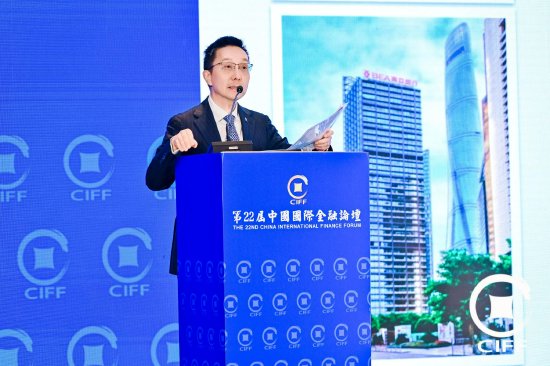
Core Viewpoint - The 22nd China International Financial Forum was held in Shanghai, focusing on building an intelligent financial ecosystem in the digital economy era [1][5]. Group 1: Company Overview - East Asia Bank (China) Limited was established in Hong Kong in 1918 and opened its first branch in Shanghai in 1920. It became one of the first foreign banks approved to register in mainland China in 2007, currently operating 29 primary branches across 38 cities in mainland China, ranking among the leading foreign banks in the region [3][7]. Group 2: ESG and Sustainability Initiatives - East Asia Bank actively aligns with the group's ESG strategy and China's dual carbon goals, announcing a net-zero target to achieve operational net-zero by 2030 and financing net-zero by 2050. The bank is focused on promoting green and sustainable finance, directing credit resources towards green low-carbon projects to facilitate corporate transitions to green and low-carbon practices [3][4][7]. Group 3: Green Finance Growth - Since the end of 2020, the proportion of East Asia Bank's green finance-related business increased from 8.1% to 20% of total corporate loans by October of this year, with expectations for further growth. Key investment areas include the new energy vehicle sector (27%), followed by renewable energy sectors such as wind and solar (18%), along with green buildings, wastewater treatment, and transportation [4][7].

中建环能一资源利用项目开工 拟将污泥“变废为宝”! 日处理500吨
Zheng Quan Shi Bao Wang· 2025-12-23 03:44
证券时报·e公司记者获悉,12月22日,国能(成都金堂)龙源环保火电协同污泥资源化利用项目(下 称"火电协同污泥资源化项目")在四川金堂经开区正式开工。项目由国能龙源环保主导实施,中建环能 (300425)具体承建。按照规划,该项目系践行"双碳"目标、推动循环经济发展的生动实践,将致力于 打造成为西南地区污泥低温干化协同燃煤电厂掺烧的示范工程。 据了解,火电协同污泥资源化项目采用"热泵低温带式高效干化+电厂燃煤锅炉耦合掺烧"核心工艺,建 设日处理500吨、年处理16万吨的污泥干化处理设施,通过"污泥干化—焚烧发电—灰渣利用"全链条资 源化模式,真正实现污泥"变废为宝"。项目全面投运后,将显著提升区域污泥无害化、减量化、资源化 处置能力,有效缓解传统填埋与焚烧带来的环境压力,为成都市"无废城市"建设提供强有力的技术支撑 和工程示范。 资料显示,中建环能主要从事环境治理、离心分离机械等业务。围绕环境治理领域,公司在厂网河湖整 体网联、城镇污水高效处理、污泥低碳干化焚烧、钢铁煤炭废水回用等场景有深厚的积累。 国能龙源环保董事长杨艳春指出,作为国家能源集团在固废综合处理领域重点打造的全国性3.0版本升 级项目,该项目 ...
发挥特色优势 助力绿色转型
Jin Rong Shi Bao· 2025-12-23 03:33
Group 1 - The central economic work conference emphasizes the importance of "dual carbon" goals, guiding the financial industry towards a comprehensive green transformation [1] - Trust companies and leasing companies are identified as key players in supporting green transformation, leveraging their unique advantages [1][2] - In 2024, trust companies will focus on green low-carbon industries, with significant investments in infrastructure green upgrades (59.39 billion) and energy green low-carbon transition (52.00 billion), accounting for 32.60% and 28.55% of their total investments respectively [2] Group 2 - Leasing companies are actively developing green finance strategies, focusing on clean energy sectors such as wind, solar, and hydropower, with companies like Hebei Jinzheng holding nearly 800 distributed solar power stations [3] - Trust and leasing companies are also involved in biodiversity protection and pollution control, with a total of 19 green charitable trusts registered, amounting to 19.46 million, targeting environmental protection and green rural construction [3][4] - Companies like Northern Trust and Xingye Jinzheng are establishing green charitable trusts and financing solutions to support biodiversity and pollution reduction efforts [4] Group 3 - Differentiated development is crucial for non-bank financial institutions like trust and leasing companies to promote high-quality green finance [5] - Companies are encouraged to leverage regional characteristics and focus on their core strengths to implement targeted green finance strategies [5][6] - For instance, Hebei Jinzheng plans to develop distributed solar business and independent energy storage equipment leasing in the Beijing-Tianjin-Hebei region [6] Group 4 - Trust companies with energy-related backgrounds are utilizing their resources to support green asset securitization and green industry funds, enhancing their market capabilities [7] - National Grid Leasing aims to optimize cooperation models for pumped storage projects, focusing on energy-saving upgrades and smart grid construction [7]