工业互联网

Search documents
辽宁省工业互联网布局显成效 赋能“新”“旧”产业多领域开花
Zhong Guo Jin Rong Xin Xi Wang· 2025-09-29 07:52
Core Insights - Liaoning Province is enhancing its industrial internet infrastructure to support the transformation of traditional manufacturing and the development of emerging industries [1][10] - Companies in Liaoning are leveraging digital technologies to improve efficiency, reduce costs, and enhance product quality [2][4][5] Group 1: Traditional Manufacturing Transformation - Shenyang Blower Works Group has implemented comprehensive digital transformation, achieving full online control over personnel, machines, materials, methods, and environment [2] - The company has successfully developed over 200 domestically produced products, including world-class items, and has been recognized for its digital transformation initiatives [2] - Anshan Iron and Steel's color coating plant has become a "dark factory," fully automating production, handling, storage, and testing processes, resulting in a 20% increase in production efficiency and a 10% reduction in costs [3][4] Group 2: Digitalization in Various Industries - TBEA Shenyang Transformer Group has established flexible production lines and automated processes, achieving significant automation in key operations [3] - The oil and petrochemical sector is also undergoing digital transformation, with integrated production control platforms enhancing operational efficiency and data sharing [5][6] Group 3: Robotics and Advanced Manufacturing - Shenyang Siasun Robot & Automation Co. is a leading player in the robotics industry, focusing on smart manufacturing and providing comprehensive support for industrial upgrades [7] - The company has developed advanced industrial robots and automation solutions, contributing to a sustainable industrial ecosystem [8] - Kede CNC has established a complete technology system for high-end manufacturing, achieving breakthroughs in aerospace and automotive sectors [9] Group 4: Policy and Ecosystem Support - Liaoning Province has implemented a robust policy framework to support industrial internet development, including a "1+1+N" policy system [10] - The Jinpu New Area's Industrial Internet Innovation Experience Center aims to bridge the digital divide for SMEs and promote digital transformation [10] - Anshan Group has built a high-level data center to provide cloud computing and AI resources, supporting various industries [11]
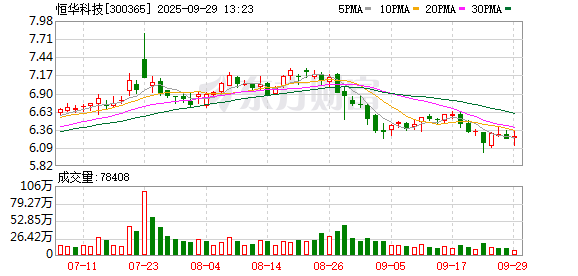
恒华科技:公司已承接涿州中珑云、中翰云、河北三河等大数据中心相关项目
Mei Ri Jing Ji Xin Wen· 2025-09-29 05:22
Group 1 - The core viewpoint of the article highlights that Henghua Technology is leveraging the "East Data West Computing" initiative to undertake various data center projects, which support the development of key industries such as artificial intelligence, big data, and industrial internet [2] - The company is primarily providing comprehensive energy solutions for data center projects, including energy planning, renewable energy design, and energy efficiency management, facilitating the coordinated development of computing power and electricity [2]


三一重工涨2.02%,成交额5.99亿元,主力资金净流入940.96万元
Xin Lang Cai Jing· 2025-09-29 02:39
Core Viewpoint - Sany Heavy Industry has shown significant stock performance with a year-to-date increase of 40.98% and a market capitalization of 192.62 billion yuan as of September 29 [1] Group 1: Stock Performance - On September 29, Sany Heavy Industry's stock price rose by 2.02% to 22.73 yuan per share, with a trading volume of 599 million yuan and a turnover rate of 0.32% [1] - The stock has increased by 5.33% over the last five trading days, 7.42% over the last 20 days, and 23.87% over the last 60 days [1] Group 2: Financial Performance - For the first half of 2025, Sany Heavy Industry reported a revenue of 44.78 billion yuan, representing a year-on-year growth of 14.64%, and a net profit attributable to shareholders of 5.22 billion yuan, up 46.00% year-on-year [2] Group 3: Shareholder Information - As of June 30, 2025, the number of shareholders for Sany Heavy Industry reached 532,900, an increase of 0.64% from the previous period, with an average of 15,902 circulating shares per person, a decrease of 0.51% [2] - The company has distributed a total of 29.26 billion yuan in dividends since its A-share listing, with 6.24 billion yuan distributed in the last three years [3] - The top ten circulating shareholders include Hong Kong Central Clearing Limited, which holds 1 billion shares, an increase of 130 million shares from the previous period [3]

中联重科涨2.05%,成交额2.96亿元,主力资金净流入810.42万元
Xin Lang Cai Jing· 2025-09-29 02:39
Company Overview - Zoomlion Heavy Industry Science and Technology Co., Ltd. is located at 361 Yinpan South Road, Changsha, Hunan Province, established on August 31, 1999, and listed on October 12, 2000. The company specializes in the research, manufacturing, sales, and service of construction machinery and agricultural machinery [1]. Financial Performance - For the first half of 2025, Zoomlion achieved operating revenue of 24.855 billion yuan, a year-on-year increase of 1.30%, and a net profit attributable to shareholders of 2.765 billion yuan, a year-on-year increase of 20.84% [2]. - Since its A-share listing, Zoomlion has distributed a total of 28.880 billion yuan in dividends, with 8.013 billion yuan distributed in the last three years [3]. Stock Performance - As of September 29, Zoomlion's stock price increased by 2.05% to 7.95 yuan per share, with a total market capitalization of 68.756 billion yuan. The stock has risen by 14.72% year-to-date, 2.98% over the last five trading days, 7.43% over the last 20 days, and 14.55% over the last 60 days [1]. - The stock's trading volume on September 29 was 296 million yuan, with a turnover rate of 0.54% [1]. Shareholder Structure - As of August 8, the number of shareholders of Zoomlion was 262,200, an increase of 1.00% from the previous period. The average circulating shares per person remained at 0 shares [2]. - As of June 30, 2025, the top ten circulating shareholders included China Securities Finance Corporation, holding 233 million shares, an increase of 4.2832 million shares from the previous period, and Hong Kong Central Clearing Limited, holding 182 million shares, a decrease of 50.5891 million shares [3]. Business Segmentation - Zoomlion's main business revenue composition includes: - Lifting machinery: 33.69% - Concrete machinery: 19.59% - Earthmoving machinery: 17.27% - Aerial work machinery: 10.43% - Other machinery and products: 10.09% - Agricultural machinery: 8.00% - Financial services: 0.93% [1]. Industry Classification - Zoomlion is classified under the Shenwan industry category of machinery equipment - construction machinery - construction machinery complete machines. The company is also associated with several concept sectors, including construction machinery, Yaxia power station concept, machinery, robotics concept, and industrial internet [1].
威尔高涨2.00%,成交额5189.73万元,主力资金净流出174.20万元
Xin Lang Cai Jing· 2025-09-29 02:18
Core Viewpoint - Weirgao's stock price has shown significant volatility, with a year-to-date increase of 61.32% but a recent decline of 4.45% over the past five trading days [2] Company Overview - Weirgao Electronics Co., Ltd. is located in Huizhou, Guangdong Province, and was established on April 7, 2017. The company went public on September 6, 2023, and specializes in the research, development, production, and sales of printed circuit boards (PCBs) [2] - The company's main business revenue composition is 87.45% from printed circuit boards and 12.55% from other businesses [2] Financial Performance - For the first half of 2025, Weirgao achieved operating revenue of 715 million yuan, representing a year-on-year growth of 58.71%. The net profit attributable to the parent company was 45.20 million yuan, up 18.31% year-on-year [2] - Since its A-share listing, Weirgao has distributed a total of 36.08 million yuan in dividends [3] Stock Market Activity - As of September 29, Weirgao's stock price was 56.07 yuan per share, with a market capitalization of 7.548 billion yuan. The trading volume was 51.89 million yuan, with a turnover rate of 1.74% [1] - The stock has appeared on the "Dragon and Tiger List" six times this year, with the most recent appearance on August 13, where it recorded a net purchase of 53.65 million yuan [2] Shareholder Information - As of August 20, the number of Weirgao's shareholders was 18,600, an increase of 13.93% from the previous period. The average circulating shares per person decreased by 12.22% to 2,901 shares [2] - As of June 30, 2025, Hong Kong Central Clearing Limited was the fourth-largest circulating shareholder, holding 723,900 shares as a new shareholder [3]
春风动力跌2.01%,成交额7328.14万元,主力资金净流出546.48万元
Xin Lang Zheng Quan· 2025-09-29 01:56
9月29日,春风动力盘中下跌2.01%,截至09:49,报269.50元/股,成交7328.14万元,换手率0.18%,总 市值411.20亿元。 资金流向方面,主力资金净流出546.48万元,特大单买入127.61万元,占比1.74%,卖出291.71万元,占 比3.98%;大单买入1169.48万元,占比15.96%,卖出1551.85万元,占比21.18%。 春风动力今年以来股价涨75.89%,近5个交易日涨1.05%,近20日跌0.92%,近60日涨14.71%。 今年以来春风动力已经3次登上龙虎榜,最近一次登上龙虎榜为7月18日,当日龙虎榜净买入-1.11亿 元;买入总计2.43亿元 ,占总成交额比24.74%;卖出总计3.54亿元 ,占总成交额比36.10%。 资料显示,浙江春风动力股份有限公司位于浙江省杭州临平经济开发区五洲路116号,成立日期2003年 12月9日,上市日期2017年8月18日,公司主营业务涉及全地形车、摩托车、游艇及休闲运动装备等后市 场用品的研发、生产和销售。主营业务收入构成为:四轮车47.95%,两轮车42.79%,配件及其他 6.89%,其他(补充)2.38%。 春风动 ...

研判2025!中国智能仪表行业发展历程、相关政策、发展现状及前景展望:国家基础设施建设推进及工业自动化水平提高,带动智能仪表规模增至7084亿元[图]
Chan Ye Xin Xi Wang· 2025-09-29 01:17
Core Insights - The smart instrument industry in China is experiencing significant growth, driven by rapid economic development, urbanization, and advancements in industrial automation, with the market size projected to increase from 492.4 billion yuan in 2018 to 708.4 billion yuan in 2024, representing a compound annual growth rate (CAGR) of 6.25% [1][10][11] - The future of smart instruments is expected to focus on increased intelligence, integration, high precision, and the fusion of multiple technologies, enhancing their role in industrial internet and smart city applications [1][11][17][18][19] Industry Overview - Smart instruments are high-tech products that integrate modern information and sensing technologies, capable of data collection, processing, and display, widely used in various fields such as industrial automation, environmental monitoring, medical diagnostics, and aerospace [1][10] - The classification of smart instruments includes temperature, pressure, and flow smart instruments, and they can be categorized by output methods such as local display, remote transmission, and network connection [3][4] Market Growth - The smart instrument market in China is projected to reach 757.3 billion yuan by 2025, indicating a continuous upward trend in demand due to urban management, energy monitoring, and water resource management [1][11] - The smart water meter market is expected to grow from 4.92 billion yuan in 2017 to 13.188 billion yuan in 2024, with a CAGR of 15.13% [11][12] - The smart electric meter market is also expanding, with the number of tenders increasing from 38.1875 million units in 2017 to 89.33 million units in 2024 [12][13] - The smart gas meter market is projected to grow from 5.636 billion yuan in 2017 to 10 billion yuan in 2024, with a CAGR of 8.54% [13] Industry Policies - The Chinese government has implemented various policies to support the development of the smart instrument industry, including initiatives aimed at innovation in manufacturing and quality improvement [7][10] Industry Structure - The smart instrument industry is characterized by intense competition, with companies categorized into two main types: those focusing on industrial automation solutions and those specializing in water and gas management [14] - Key players in the industry include Chuan Yi Automation, Hanwei Technology, and others, with a clear tiered structure based on revenue and market presence [14][15] Development Trends - The industry is moving towards deeper intelligence, with future smart instruments expected to incorporate AI algorithms for self-learning and predictive maintenance [17] - Integration is a key trend, with devices becoming more compact and multifunctional, enhancing operational efficiency [18] - High precision and the fusion of technologies such as IoT and big data are critical for meeting the demands of high-end manufacturing and environmental monitoring [19]


2025第八届工业互联网创新发展大会即将启幕
Sou Hu Cai Jing· 2025-09-28 13:22
Core Insights - The 8th Industrial Internet Innovation Development Conference will be held in Huangshi on October 24, 2025, focusing on the digital transformation of small and medium-sized enterprises (SMEs) and the integration of industrial internet technologies [1][5] - The conference aims to promote the deep integration of artificial intelligence and industrial internet, enhancing the quality and efficiency of manufacturing and SMEs [3][4] Group 1: Conference Overview - The conference will feature a theme of "AI Integration, Digital Intelligence Rebirth," focusing on three dimensions: "Artificial Intelligence + Industrial Internet," promotion of SME digitalization, and innovation in network integration [3][4] - A diverse activity matrix will be set up, including an opening ceremony, three thematic forums, and three major exhibition areas to showcase advancements in industrial internet and AI applications [3][4] Group 2: Industry Development - Huangshi has selected 346 provincial pilot enterprises for digital transformation, with 190 already completed, and has cultivated 36 national-level industrial internet pilot honors [1][4] - The city has initiated the construction of "10 Gigabit Cities" and "AI Cities," significantly accelerating the development of new productive forces [1][4] Group 3: Goals and Impact - The conference aims to establish a replicable model for SME digital transformation in Huangshi, contributing to high-quality development in China's manufacturing sector and new industrialization [5] - The event will gather experts and representatives from various fields to share the latest technological research and practical applications, fostering innovation and collaboration [4][5]

2025年中国电液伺服系统行业工作原理、产业链全景、运行现状、技术专利及发展趋势研判:核心技术攻关破“卡脖子”难题,国产替代向高端领域加速突破[图]
Chan Ye Xin Xi Wang· 2025-09-28 01:13
Core Insights - The electro-hydraulic servo system is a core technology in high-end equipment manufacturing, integrating electronic control and hydraulic power output, becoming the "control center" in aerospace, industrial automation, and new energy sectors [1][11] - The domestic market for electro-hydraulic servo valves is expanding, with a projected industry scale of 1.48 billion yuan in 2024, reflecting an 8.82% year-on-year growth [1][10] - Recent technological innovations in the industry are driving advancements towards intelligence and high reliability, with significant contributions from various universities and research institutions [1][15] Industry Overview - The electro-hydraulic servo system (EHSS) combines electronic control with hydraulic power output, allowing precise control of parameters such as position, speed, and force [2][3] - The industry chain consists of core component suppliers, system integrators, and end-users across military aerospace, high-end equipment manufacturing, and new energy sectors [8][10] Market Dynamics - The demand for electro-hydraulic servo systems is increasing due to the growth in industrial automation and the expansion of the aerospace market, with the aerospace equipment market expected to reach 153.5 billion yuan in 2024 [12][13] - The industrial robot market is also experiencing significant growth, with a 35.6% year-on-year increase in production in the first half of 2025, further driving the demand for electro-hydraulic servo systems [12][13] Technological Innovations - Recent breakthroughs in control algorithms and system integration are enhancing the precision and reliability of electro-hydraulic servo systems, with notable advancements from institutions like Shandong University and Hunan University of Science and Technology [15][16] - The industry is witnessing a shift towards high-pressure and high-frequency applications, particularly in aerospace and new energy sectors, necessitating extreme performance requirements [12][16] Future Trends - The industry is expected to integrate more deeply with artificial intelligence and industrial internet technologies, transitioning from traditional control components to intelligent control units [16][18] - There will be an expansion of application areas into commercial aviation, new energy, high-end medical equipment, and deep-sea exploration, creating a diversified market demand [17][18] - The domestic market is moving towards high-end breakthroughs in core technologies, with a focus on enhancing self-sufficiency and reducing reliance on imports [19]

警惕日本老路!盛松成:财富大迁移加速,低利率三大领域成新金矿
Sou Hu Cai Jing· 2025-09-27 11:46
Core Insights - The current low interest rate environment in China is driving a significant shift of household savings towards capital markets, indicating a "wealth migration" focused on new infrastructure, consumer infrastructure, and new urbanization [1][3][13] - This trend has raised questions about the potential positive effects of such a shift, particularly regarding the risk awareness of ordinary investors amid increasing market volatility [3][9] Group 1: Wealth Migration Trends - Data from the central bank shows a decrease of 600 billion yuan in household deposits year-on-year by August 2025, while non-bank deposits increased by 550 billion yuan, signaling a "deposit migration" [3] - The shift towards capital markets is seen as a natural trend in financial market development, with a focus on diversified asset allocation [5] Group 2: Investment Opportunities and Risks - Investment is increasingly directed towards areas aligned with national strategic goals, such as new infrastructure and consumer infrastructure, which have clear policy support and cash flow guarantees [7][16] - However, there are concerns about over-reliance on policy-driven growth, which may distort market pricing mechanisms, especially in projects with long return cycles [7][14] Group 3: Low Interest Rate Environment - The low interest rate environment is a key factor driving asset allocation adjustments, with one-year fixed deposit rates falling below 1% and large-denomination certificates of deposit generally below 1.4% [9] - There are debates about whether low interest rates necessarily increase risk appetite, as historical examples show that prolonged low rates can lead to cash hoarding instead of investment [9][11] Group 4: Sector-Specific Insights - The three identified sectors—new infrastructure, consumer infrastructure, and new urbanization—are closely aligned with the national "two new and one heavy" strategy [13] - New infrastructure projects, such as 5G and data centers, require specialized judgment and high capital thresholds, while REITs have a limited focus on consumer infrastructure [14][16] Group 5: Long-term Considerations - The core advantage of new infrastructure lies in technological iteration, while consumer infrastructure is linked to domestic demand expansion [16] - Investors must be cautious, as policy direction does not guarantee market success, and local fiscal pressures could impact project viability [16][18]