食品安全

Search documents
远望谷涨2.11%,成交额1.21亿元,主力资金净流入1442.91万元
Xin Lang Zheng Quan· 2025-09-16 03:09
Company Overview - Shenzhen Yuanwanggu Information Technology Co., Ltd. is located in Nanshan District, Shenzhen, Guangdong Province, and was established on December 21, 1999, with its listing date on August 21, 2007 [2] - The company's main business involves the development of ultra-high frequency radio frequency identification (RFID) technology and the production and sales of ultra-high frequency RFID system products [2] - The revenue composition of the main business includes: 82.51% from IoT solutions, 11.72% from IoT application products, and 5.77% from other sources [2] - The company belongs to the electronic industry, specifically in the subcategories of other electronics [2] Financial Performance - For the first half of 2025, the company achieved operating revenue of 281 million yuan, representing a year-on-year growth of 13.97% [2] - The net profit attributable to the parent company was 71.92 million yuan, showing a significant year-on-year increase of 61.91% [2] - Cumulatively, the company has distributed a total of 180 million yuan in dividends since its A-share listing, with 24.41 million yuan distributed over the past three years [3] Stock Performance - As of September 16, the stock price of Yuanwanggu increased by 2.11%, reaching 8.24 yuan per share, with a trading volume of 121 million yuan and a turnover rate of 2.12%, resulting in a total market capitalization of 6.096 billion yuan [1] - Year-to-date, the stock price has risen by 48.33%, with a 5.91% increase over the last five trading days, a 11.49% decrease over the last 20 days, and a 25.61% increase over the last 60 days [1] - The company has appeared on the "Dragon and Tiger List" twice this year, with the most recent appearance on July 25, where it recorded a net purchase of 44.45 million yuan [1]

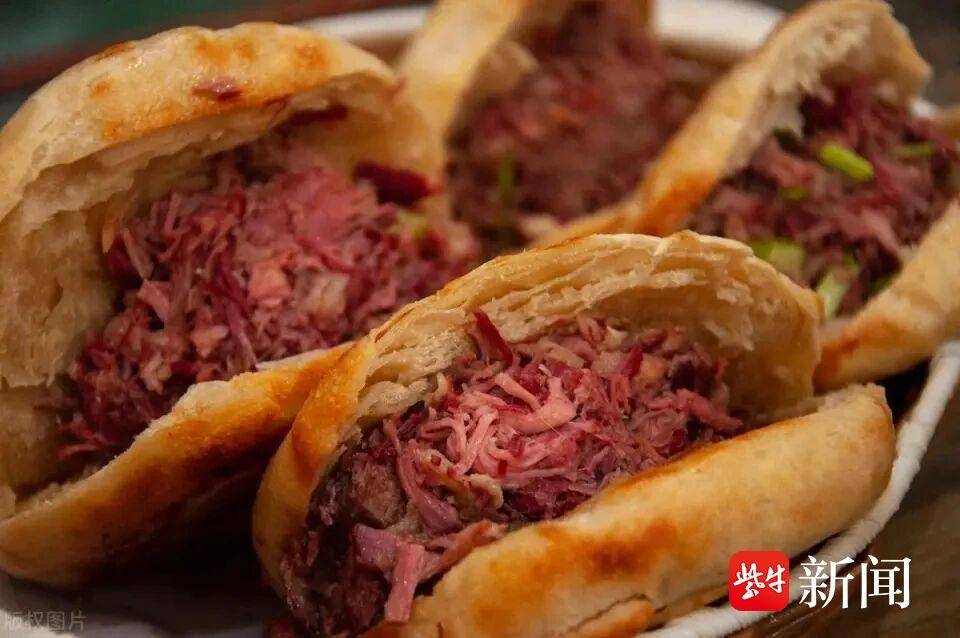
驴肉火烧没驴肉?立案调查!
Yang Zi Wan Bao Wang· 2025-09-15 10:58
Core Viewpoint - The article highlights the issue of food fraud in the sale of donkey meat products, specifically in Taicang City, where some vendors are selling cheaper pork and horse meat as expensive donkey meat, leading to consumer deception [1][3]. Group 1: Investigation and Findings - The Taicang Market Supervision Administration, in collaboration with the police, conducted undercover inspections of local vendors selling donkey meat products, testing five batches from two vendors for animal source verification [1][3]. - Test results revealed that some products labeled as "donkey meat" did not contain any donkey-derived components, instead showing traces of pork and horse meat, indicating fraudulent practices [3]. Group 2: Consumer Guidance - To help consumers avoid being deceived when purchasing donkey meat products, the Taicang Market Supervision Administration provided tips for identifying genuine donkey meat, including observing color, smell, texture, and checking the liver's color [5][7]. - Genuine donkey meat should have a deep red or brown color, a firm texture, and a faint sweet aroma, while any unusual colors or odors may indicate adulteration with other meats [5][7]. Group 3: Regulatory Actions and Recommendations - The Taicang Market Supervision Administration has initiated investigations against the implicated vendors, with one case being referred to the police for potential criminal charges [3]. - Consumers are advised to purchase donkey meat from reputable supermarkets, check for expiration dates, and be cautious of low prices to avoid food safety issues [7].

餐饮创业者评价西贝事件:预制菜其实是消费者的选择
Sou Hu Cai Jing· 2025-09-15 09:38
Core Viewpoint - The controversy surrounding Xibei's pre-made dishes has sparked widespread discussion about costs, pricing, and business models in the restaurant industry, particularly through the exchanges between founder Jia Guolong and Luo Yonghao [1] Group 1: Cost Structure Analysis - The perception of Xibei being expensive is shared by both outsiders and insiders, indicating a consensus on high pricing [2] - Key cost factors for Xibei include high rent due to large and well-located premises [3] - Significant investment is required for compliance with safety and health regulations, with costs ranging from millions to tens of millions for each store [4] - Labor costs are substantial, as Xibei employs many staff members, including waiters and chefs, particularly in major cities like Beijing, Shanghai, Guangzhou, and Shenzhen [4] - High investments in food safety and marketing are also noted, with promotional expenditures sometimes exceeding rent costs [5] Group 2: Market Dynamics and Consumer Preferences - The popularity of pre-made dishes reflects consumer choices, with many preferring quick service and flavorful options over fresh, high-quality ingredients [6][15] - The restaurant industry faces high turnover rates, and establishments must adapt to consumer preferences rather than expecting consumers to adjust to them [6] - The notion that food safety is a "pseudo-demand" is emphasized, as consumers often prioritize taste and speed over health considerations [7][15] - The market is increasingly favoring pre-made dishes and bold flavors, leading to a decline in restaurants focusing on fresh ingredients [16][17]

冰箱非“保险箱”!小心餐桌上的“健康刺客”
Xin Hua She· 2025-09-15 09:03
Group 1 - The article emphasizes the importance of food safety practices, including keeping raw and cooked foods separate, proper cooking methods, and safe storage to prevent foodborne illnesses [1][2] - Salmonella is identified as a leading cause of bacterial food poisoning, often associated with eggs, which can be contaminated through internal or external sources [1][2] - Listeria is highlighted as a significant risk in refrigerated foods, particularly in ready-to-eat meats, and poses a higher threat to vulnerable populations such as the elderly, pregnant women, and newborns [2][3] Group 2 - The average daily intake of fresh vegetables and fruits in China is reported to be below recommended levels, with 265.9 grams of vegetables and only 38.1 grams of fruits per person [2] - Recommendations for cooking vegetables include washing before cutting, quick cooking methods, and avoiding reheating to preserve nutrients [3] - The article suggests that consumers should learn to read food nutrition labels, focusing on energy, fat, sugar, and sodium content [3]
从争议到规范:预制菜产业当以安全为基
Di Yi Cai Jing· 2025-09-15 08:22
Core Viewpoint - The recent dispute between Luo Yonghao and the restaurant group Xibei has brought renewed attention to the pre-prepared food industry, highlighting the essential question of food safety standards in the restaurant sector [1][2]. Group 1: Food Safety as a Primary Concern - The debate emphasizes that the quality of food should not be simply categorized as "pre-prepared" or "freshly made," but should focus on the safety of ingredients, health guarantees, and quality control [2]. - Regulated pre-prepared food companies have advantages in ingredient control, as their raw materials undergo strict inspection and traceability, unlike some small restaurants that may face risks such as pesticide residues and lack of quarantine [2]. - Consumer safety remains the top priority, and discussions should focus on ensuring ingredient safety, production standards, and compliance in storage before considering taste, price, and convenience [2]. Group 2: Institutional Development and Food Safety Standards - The rise of the pre-prepared food industry is a result of consumption upgrades and advancements in the food industry, with the market expected to exceed 600 billion yuan by 2025, reaching 617.3 billion yuan, a year-on-year growth of 27.3% [3]. - The establishment of the "National Standard for Food Safety of Pre-prepared Foods" marks the beginning of a regulatory era, requiring no preservatives in pre-prepared foods and ensuring safety through freezing and refrigeration processes [3]. - This new standard complements existing local and group standards, creating a comprehensive system covering the entire production, distribution, and consumption chain, indicating a shift towards a more regulated and mature industry [3].
西贝致歉后于东来力挺,罗永浩逐一回应
Sou Hu Cai Jing· 2025-09-15 08:07
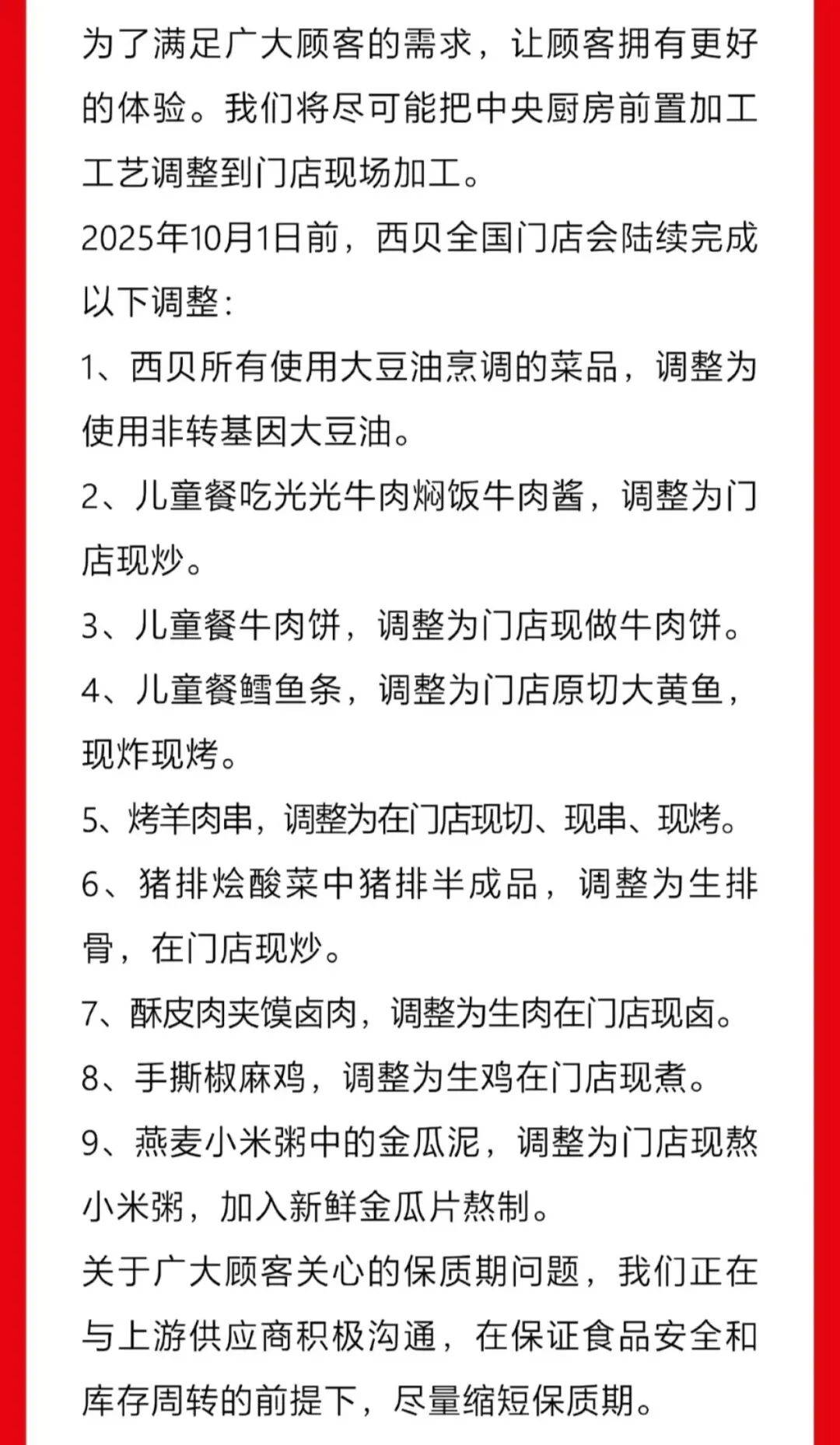
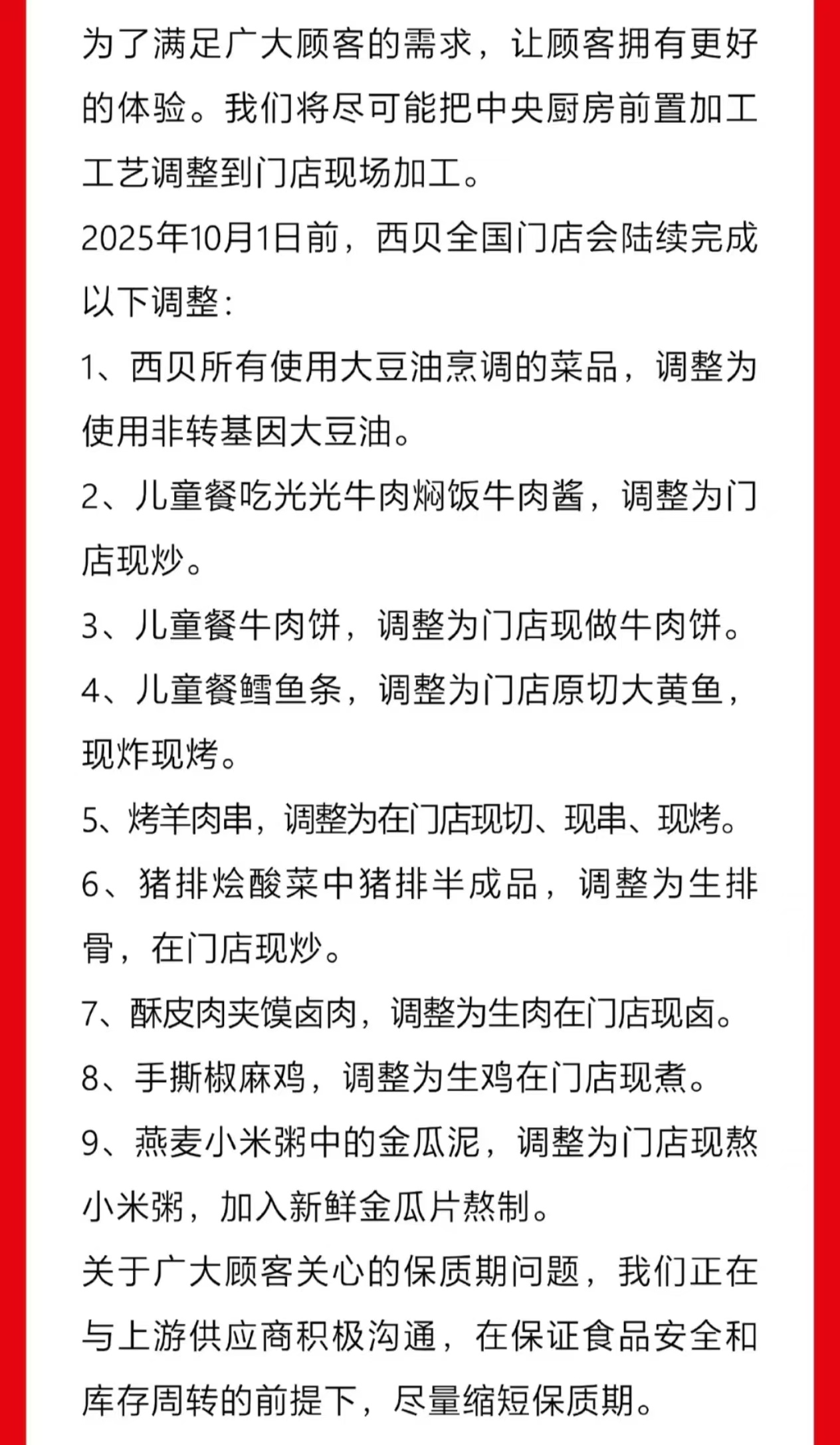
Core Viewpoint - Xibei Catering Group has issued an apology regarding the recent controversy over its "pre-made dishes," acknowledging a significant gap between its production processes and customer expectations, and committing to improvements by October 1, 2025 [1][2] Group 1: Company Response and Adjustments - Xibei plans to adjust its central kitchen processing to on-site preparation in stores, with nine adjustments to be completed by October 1, 2025, including switching all dishes cooked with soybean oil to non-GMO soybean oil [1] - The company has invited customers to supervise its improvement measures and will provide timely updates on the changes [2] Group 2: Industry Support and Reactions - Yu Donglai, founder of Pang Donglai Group, publicly supported Xibei, urging people to understand and help the company improve rather than destroy it [3] - Several industry leaders, including founders of various restaurant brands, have expressed their support for Xibei amidst the controversy [8] Group 3: Public Discourse and Criticism - Luo Yonghao responded critically to Xibei's apology, questioning whether the company would continue selling leftover dishes before the deadline [2] - Luo also criticized the marketing consulting firm Hua Yu Hua for its long-term service to Xibei, which he labeled as a "brand assassin," leading to an apology from the firm's representative [11]
西贝发文致歉,于东来及华与华董事长力挺,罗永浩逐一回应
Xin Lang Cai Jing· 2025-09-15 07:04
Core Viewpoint - Xibei Restaurant Group has issued an apology regarding the recent controversy over its pre-prepared dishes, acknowledging a significant gap between its production processes and customer expectations [1][2]. Group 1: Apology and Adjustments - On September 15, Xibei released an apology letter, admitting that its production methods did not meet customer needs and expectations [1]. - The company plans to adjust its central kitchen processing to on-site preparation at stores by October 1, 2025, including switching all dishes cooked with soybean oil to non-GMO soybean oil [1]. Group 2: Customer Engagement and Transparency - Xibei has invited customers to supervise its improvement measures and will provide timely updates on the adjustments [2]. - Founder Jia Guolong stated that Xibei will operate transparently and learn from the practices of other successful companies [2]. Group 3: Industry Support - Yu Donglai, founder of Pang Donglai Group, publicly supported Xibei, urging people to understand and help improve the company rather than harm it [4]. - Several industry leaders, including founders of other restaurant brands, have also expressed support for Xibei amid the controversy [8]. Group 4: Response to Criticism - In response to Yu Donglai's support, Luo Yonghao emphasized the importance of understanding the truth before forming opinions [6]. - Luo criticized the marketing consulting firm Hua Yu Hua for its long-term service to Xibei and labeled it as a "brand assassin" during a live-streaming session [11].
西贝致歉!删了重发的致歉信前后有何不同?
Zhong Guo Xin Wen Wang· 2025-09-15 07:01
Core Viewpoint - The company West Be has issued an apology letter addressing customer concerns and announcing a series of adjustments to improve food preparation processes in its restaurants by October 1, 2025 [1][3][4]. Summary by Categories Apology and Customer Engagement - West Be expresses deep apologies for the inconvenience and concerns caused to customers, thanking those who provided feedback [1][3]. - The company emphasizes its commitment to food safety and adherence to national laws and regulations [3][4]. Adjustments to Food Preparation - By October 1, 2025, West Be will implement the following changes in all its nationwide stores: 1. All dishes using soybean oil will switch to non-GMO soybean oil [1][3]. 2. The children's dish "Beef Braised Rice" will be prepared fresh in-store [1][3]. 3. The children's beef patties will be made fresh on-site [1][3]. 4. The children's fish sticks will be replaced with fresh-cut large yellow croaker, fried and baked on-site [1][3]. 5. Lamb skewers will be cut, skewered, and grilled fresh in-store [1][3]. 6. The pork chop in sauerkraut will be adjusted from semi-finished to fresh pork ribs, stir-fried in-store [1][3]. 7. The "Pork Sandwich" will use fresh meat for braising on-site [1][3]. 8. The "Shredded Chicken with Spicy Sauce" will be made with fresh chicken boiled in-store [1][3]. 9. The oatmeal millet porridge will be freshly cooked in-store with added fresh pumpkin slices [1][3]. Commitment to Continuous Improvement - The company acknowledges that the planned improvements are not sufficient and welcomes ongoing customer suggestions for further enhancements [4]. - West Be aims to maintain transparency and invites customers to supervise the implementation of these changes [4].

广东省梅州市市场监督管理局2025年食品抽检情况公示(第三期)
Zhong Guo Zhi Liang Xin Wen Wang· 2025-09-15 06:54
Summary of Key Points Core Viewpoint The Meizhou Market Supervision Administration has conducted food safety inspections, revealing that out of 759 batches tested, 736 were compliant while 23 were found to be non-compliant. Immediate actions have been mandated for the non-compliant products to mitigate risks and ensure consumer safety [1]. Group 1: Inspection Results - A total of 759 food batches were inspected, with 736 passing and 23 failing the safety standards [1]. - The non-compliant products will be investigated, and businesses are required to identify product distribution, remove, and recall the affected items [1]. Group 2: Consumer Safety Recommendations - Consumers are advised to purchase food from reliable sources and retain purchase receipts [1]. - It is essential for consumers to check product packaging for necessary labels, including production dates, expiration dates, and producer information [1]. - Consumers should avoid purchasing products without clear labeling or those that are past their expiration dates [1]. Group 3: Reporting Mechanism - The public is encouraged to participate in food safety oversight and report any non-compliant products found in the market to local authorities [1].
浙江省台州市市场监督管理局食品安全监督抽检信息通告(2025年第20期)
Zhong Guo Zhi Liang Xin Wen Wang· 2025-09-15 06:44
Group 1 - The Taizhou Market Supervision Administration conducted food safety inspections on 328 samples across 29 categories, with 311 passing and 17 failing the safety standards [3][4] - The non-compliance issues primarily involved excessive food additives and pesticide residues [3][4] Group 2 - Specific products found to be non-compliant include year cake sold by Taizhou Lianshang Supermarket, which contained excessive dehydroacetic acid [5] - Other non-compliant items include steamed buns with sweeteners and sauces, and various vegetables with pesticide residues exceeding safety limits [5][6] Group 3 - The local market supervision departments have been instructed to take immediate actions such as recalling and removing non-compliant products from shelves [4] - A report on the handling of these non-compliant products must be submitted to the Taizhou Market Supervision Administration within three months [4]