
现代化产业体系

Search documents
挺起工业发展“硬脊梁”
Guang Xi Ri Bao· 2025-12-22 02:11
Core Insights - The article highlights the transformation of Baise City into a modern industrial hub, focusing on the development of four key industries: aluminum, forestry, new energy, and new materials [1][2][3] Group 1: Aluminum Industry - Baise City has established a complete industrial chain from bauxite to high-end aluminum products, attracting leading companies like Geely and Aotai Aluminum [2] - The aluminum industry has seen a significant increase in transaction value, surpassing 110 billion yuan since the start of the 14th Five-Year Plan [2] - The production process has been optimized, with over 50% of the electricity used in aluminum production coming from clean energy sources [1] Group 2: Forestry Industry - The forestry sector in Baise has shifted from selling raw timber to selling products and brands, with a total output value reaching 850 billion yuan [2] - The city produces approximately 1 cubic meter of timber for every 15 cubic meters produced nationwide, indicating its significant role in the national timber market [2] - The industry has expanded from basic wood products to include plywood, custom furniture, and whole-house customization, enhancing the value chain [2] Group 3: New Energy Sector - Baise's main power grid now sources over 80% of its energy from clean energy, with annual electricity transmission exceeding 300 billion kilowatt-hours [3] - The city has attracted major companies in the renewable energy sector, forming clusters for wind turbine blades, photovoltaic components, and energy storage devices [3] - The continuous expansion of renewable energy installations has positioned Baise as a leader in Guangxi for two consecutive years [3] Group 4: New Materials Industry - The new materials industry in Baise has an annual output value exceeding 10 billion yuan, with multiple specialized industrial chains [3] - A notable project, the Shanghai Rongrong aluminum oxide continuous fiber product facility, has a total investment of 10.7 billion yuan and aims to become the largest of its kind in the country [3] - The restructuring of Baise's industrial framework has enhanced its resilience and competitiveness, moving from an aluminum-dominated economy to a diversified industrial base [3]

在高标准建设海南自由贸易港中扛起省会担当
Hai Nan Ri Bao· 2025-12-22 01:04
Core Viewpoint - Haikou aims to take on the responsibility of being the provincial capital by actively promoting the construction of the Hainan Free Trade Port and enhancing its role as a significant gateway for China's new era of opening up [2]. Group 1: Economic Development and Reform - Haikou will deepen reform and opening up, leveraging the opportunity of the Free Trade Port's closure to enhance various fields of reform [3]. - The city plans to expand the application of Free Trade Port policies, including increasing the coverage of zero-tariff policies and encouraging new industries [3]. - Haikou aims to build a modern industrial system, focusing on strategic industries such as biomedicine, digital economy, and high-value food, while also developing emerging industries like low-altitude economy and marine economy [4]. Group 2: Investment and Infrastructure - The city will promote investment and consumption as dual drivers of growth, establishing a comprehensive investment promotion network targeting key domestic and international regions [4]. - Haikou intends to upgrade key commercial areas and promote the integration of tourism, events, and performances to stimulate economic activity [4]. Group 3: Social Welfare and Urban Development - The city emphasizes a people-centered development approach, focusing on improving public services and addressing urgent social issues such as employment, education, and healthcare [5]. - Haikou plans to enhance urban quality through city renewal projects and improve environmental management to ensure a better living environment for residents [5]. Group 4: Governance and Party Discipline - The city will strengthen party governance and accountability, ensuring a clean political environment and promoting a culture of integrity among officials [6][7]. - Haikou aims to implement a system that encourages the use of capable and innovative leaders while maintaining a focus on anti-corruption measures [7].
11月全市经济保持平稳增长
Zheng Zhou Ri Bao· 2025-12-22 00:43
Economic Overview - The city's economy continues to show overall stability and improvement, with a focus on stabilizing employment, enterprises, markets, and expectations [1] Industrial Production - In November, the city's industrial added value above designated size grew by 9.2% year-on-year, with a cumulative growth of 8.8% from January to November [1] - Among 38 major industrial categories, 26 reported growth, expanding the growth coverage to 68.4%, an increase of 10.5 percentage points from the previous month [1] - The seven leading industries contributed significantly, with their added value increasing by 9.9%, driving an overall industrial growth of 8.2 percentage points [1] - The manufacturing sector saw an increase in added value of 9.6%, accelerating by 0.3 percentage points compared to the previous month [1] Fixed Asset Investment - From January to November, fixed asset investment in the city grew by 4.0% year-on-year [2] - Investment in projects worth over 100 million yuan increased by 12.5%, contributing 6.7 percentage points to overall investment growth [2] - Private investment rose by 9.4%, outpacing the overall investment growth by 5.4 percentage points, and has consistently exceeded the overall growth rate since May of the previous year [2] - Industrial investment surged by 26.2%, maintaining over 20% growth for 11 consecutive months, contributing 5.8 percentage points to total investment growth [2] - Investment in new industries, such as computer and office equipment manufacturing, and aerospace equipment manufacturing, grew by 29.4% and 18.4% respectively [2] Market Sales - In November, the total retail sales of social consumer goods reached 57.7 billion yuan, a year-on-year increase of 3.7% [2] - From January to November, total retail sales amounted to 608.85 billion yuan, with a year-on-year growth of 5.2% [2] - Over 70% of the 21 categories of goods in above-limit units saw retail growth, with significant demand for upgraded products [2] - Retail sales of wearable smart devices and smartphones surged by 94.1% and 91.4% respectively, accelerating by 49.7 and 27.2 percentage points compared to the previous month [2] Industrial Quality Improvement - The "Two Heavy" and "Two New" policies are showing positive effects, with the added value of equipment manufacturing in November increasing by 14.5%, outpacing the overall industrial growth rate by 5.3 percentage points [3] - Investment in equipment and tools grew by 6.1% year-on-year, exceeding the overall investment growth rate by 2.1 percentage points [3] - Retail sales of photographic and communication equipment surged by 320.3% and 78.9% respectively in November [3] - The added value of high-tech manufacturing increased by 24.8%, accelerating by 4.4 percentage points compared to the previous month [3] - Strategic emerging industries in the industrial sector saw an added value growth of 18.5%, contributing 7.9 percentage points to overall industrial growth [3] - The added value of high-tech industries grew by 13.1%, with an acceleration of 2.3 percentage points from the previous month [3] - The modern service industry also performed well, with significant revenue growth in broadcasting, television, film, and related services [3]
“十五五”时期国资央企将深化拓展“AI+”专项行动
Xin Lang Cai Jing· 2025-12-21 23:12
Core Viewpoint - The State-owned Assets Supervision and Administration Commission (SASAC) will actively undertake major national technological tasks during the 14th Five-Year Plan period, focusing on breakthroughs in critical areas and weak links, particularly in sectors requiring significant investment and long cycles, where other enterprises lack willingness or capability [1][4] Group 1: Traditional Industry Transformation - Emphasis on the transformation and upgrading of traditional industries through a new round of digital transformation actions, integrating AI, big data, cloud computing, 5G, and IoT with traditional industries [2][5] - Continuous promotion of technological upgrades and large-scale equipment renewal, leading the implementation of carbon peak plans in key industries, enhancing resource recycling, and accelerating product iteration and upgrading [2][5] Group 2: Emerging and Future Industries - Focus on cultivating emerging and future industries through actions that highlight engineering and scenario-driven approaches, targeting sectors with substantial size, rapid growth, and promising prospects over the next five years [6] - Active development in key areas such as new energy, new energy vehicles, new materials, aerospace, low-altitude economy, and advanced planning in cutting-edge fields like quantum technology, embodied intelligence, biomanufacturing, green shipping, and 6G [6] Group 3: Investment and Financing System - Development of a specialized and market-oriented investment and financing system, leveraging state-owned capital investment and operation companies, and utilizing various financial tools to support strategic emerging industries [3][6] - Establishment of a comprehensive investment decision-making mechanism covering all stages from seed to growth, aiming to create a high-level state-owned capital operation platform to support the long-term and strategic capital needs of the real economy [3][6] - SASAC aims to deepen the reform of state-owned enterprises, focusing on enhancing core functions and competitiveness [3][6]
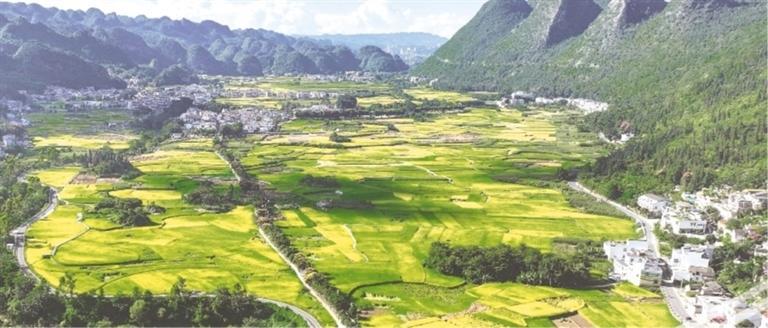
峰林潮涌展风采 金州大地焕新颜
Xin Lang Cai Jing· 2025-12-21 22:46
Core Viewpoint - The article highlights the significant economic and infrastructural development in Qianxinan, showcasing the region's progress in various sectors and its commitment to high-quality development during the 14th Five-Year Plan period [11][12]. Economic Growth - The regional GDP increased from 132.2 billion yuan at the end of the 13th Five-Year Plan to an estimated 147.67 billion yuan in 2024, with projections to exceed 150 billion yuan by the end of the 14th Five-Year Plan [12]. - Infrastructure investment has grown at an average annual rate of 12.3%, with industrial contributions to economic growth reaching 41.5% [12]. Industrial Development - Qianxinan has focused on four main industries: energy, basic materials and processing, new energy batteries and materials, and specialty light industry, aiming to build a competitive modern industrial system [13]. - The region has seen traditional industries expand, with electrolytic aluminum production capacity reaching 575,300 tons and aluminum processing output exceeding 21 billion yuan [14]. Agricultural and Tourism Advancements - The agricultural sector has introduced 19 nationally recognized specialty products, with significant contributions from brands like "Puan Red Tea" and "Xingren Job's Tears" [14]. - The creation of a national 5A scenic area at Wanfenglin and the integration of various tourism sectors have enhanced the region's tourism brand recognition [15]. Social and Environmental Initiatives - Qianxinan has invested over 1.22 billion yuan in infrastructure and industry development in poverty alleviation areas, ensuring stability in grain planting areas and maintaining a forest coverage rate of 63.19% [16]. - The region has achieved a 97.9% coverage rate for community elderly care services and ranks at the top tier in education levels within the province [16]. Future Outlook - As the 14th Five-Year Plan concludes, Qianxinan aims to continue its high-quality development trajectory, focusing on leveraging its advantages and pursuing modernization in line with national strategies [17].

做强做优做大国有企业和国有资本(权威访谈·学习贯彻党的二十届四中全会精神)
Ren Min Ri Bao· 2025-12-21 22:20
Core Viewpoint - The Chinese government emphasizes the importance of state-owned enterprises (SOEs) as a crucial pillar for governance and national development, with a focus on enhancing their strength and efficiency through reforms outlined in the 14th Five-Year Plan [1]. Group 1: Innovation and Technology - State-owned enterprises are identified as the national team for technological innovation, with R&D investments exceeding 1 trillion yuan for three consecutive years, focusing on key technologies such as industrial mother machines and software [2]. - The goal for the 14th Five-Year Plan is to enhance independent and original innovation capabilities, addressing major technological challenges that affect national security and long-term interests [2]. - There is a commitment to improve the conversion of research results into practical applications, with initiatives to establish major testing platforms and promote the market entry of innovative outcomes [3]. Group 2: Reform of State-Owned Enterprises - The 14th Five-Year Plan outlines clear objectives for deepening the reform of SOEs, focusing on enhancing their core functions and competitiveness [4]. - The reform will prioritize the alignment of SOEs with national strategic needs, ensuring that capital is directed towards critical industries and public services [4]. - There is an emphasis on improving corporate governance within SOEs, strengthening the leadership role of the Communist Party, and enhancing management efficiency [4]. Group 3: Optimization of Economic Layout - SOEs are actively involved in upgrading traditional industries and fostering new ones, with an average annual investment growth rate of over 20% in emerging sectors during the 14th Five-Year Plan [6]. - The focus will be on transitioning the industrial system towards higher value-added and technology-intensive sectors, with SOEs playing a leading role in this transformation [6]. - Initiatives will include digital transformation and the integration of advanced technologies such as AI and big data into traditional industries [6]. Group 4: Future Industry Development - The strategy includes nurturing new and future industries, with a focus on sectors like renewable energy, aerospace, and advanced materials, while also exploring cutting-edge fields such as quantum technology and 6G [7]. - A specialized and market-oriented investment and financing system will be established to support the development of these industries, leveraging state capital and various investment funds [7].
【滨州日报评论员文章】聚焦实体经济打造先进制造业强市——论深入学习贯彻市委十届十次全会精神
Xin Lang Cai Jing· 2025-12-21 16:36
Group 1 - The core viewpoint emphasizes the importance of manufacturing as the foundation of the nation and the basis for a strong country, with a focus on building a modern industrial system and advanced manufacturing city during the "14th Five-Year Plan" period [1] - The city aims to enhance the high-end development of traditional industries and scale up emerging industries, while promoting the park-based development of characteristic industries [2] - The strategy includes fostering new and future industries as growth drivers, with a focus on high-end equipment, new energy materials, and healthcare sectors [3] Group 2 - The plan highlights the need for high-quality service support and solid factor guarantees to enhance the advanced manufacturing sector, including the development of modern service industries and infrastructure [4] - It calls for the establishment of a quality infrastructure and brand-building initiatives to create high-end regional public brands with local characteristics [4] - The city is committed to implementing a comprehensive standardization innovation action to improve quality and ensure safety in water resources [4]
国务院国资委:“十五五”时期国资央企将深化拓展“AI+”专项行动
Zheng Quan Ri Bao· 2025-12-21 16:14
Core Insights - The State-owned Assets Supervision and Administration Commission (SASAC) aims to have state-owned enterprises (SOEs) take on significant national technological tasks during the 14th Five-Year Plan, particularly in critical areas where other companies lack the willingness or capability to invest [1] - The 14th Five-Year Plan emphasizes building a modern industrial system and strengthening the foundation of the real economy [1] Group 1: Traditional Industry Transformation - SOEs will focus on the digital transformation of traditional industries, integrating technologies like AI, big data, cloud computing, 5G, and IoT into all aspects of production [2] - There will be a push for technological upgrades and large-scale equipment renewal, aiming for smart, green, and integrated development [2] Group 2: Emerging and Future Industries - The SASAC will implement initiatives to cultivate emerging and future industries, focusing on sectors with significant growth potential such as new energy, aerospace, and platform economy [2] - The strategy includes a tiered approach to nurturing these industries, ensuring that efforts are aligned with market demands and future trends [2] Group 3: Investment and Financing System - A specialized and market-oriented investment and financing system will be established, leveraging state capital investment and various financial tools to support the development of strategic emerging industries [3] - The SASAC aims to create a comprehensive investment decision-making mechanism to enhance the efficiency and effectiveness of capital allocation in the real economy [3]
全国经开区高质量发展报告:国家级经开区迈入4000亿时代
Zhong Guo Xin Wen Wang· 2025-12-21 01:21
在产业升级方面,各经开区积极推进智能化、绿色化、融合化转型。苏州工业园区地区生产总值突 破4000亿元,成为全国首个迈上4000亿台阶的经开区。广州经开区、北京经开区亦有望于2025年突破这 一关口。芜湖经开区经济增速高达12.6%,北京经开区通过建设超级工厂、医药创新园区和商业航天基 地,推动区域经济增长9%。研发投入方面,2024年纳入研究的20家经开区平均研发强度达4.42%,较上 年提升0.26个百分点,科技创新与产业融合持续深化。 报告同时优化构建了"营商环境便利度指数体系",新增数字经济、高技术产业、数据服务企业集聚 度等反映新质生产力的指标,并调整了金融机构集聚度、工资水平等与企业经营密切相关的评价内容。 2025年营商环境便利度排名前列的包括苏州工业园区、昆山经开区、广州经开区、北京经开区、江宁经 开区等。各地在政务服务、审批效率、知识产权保护等方面推出一系列创新举措,如北京推动"企业自 主选择"服务模式、昆山实施并联审批压缩办理时长70%、长沙首创商业秘密数字化保护机制等。 报告指出,"十五五"时期是国家级经开区实现跨越式发展的关键阶段,需继续以现代化产业体系为 核心,以科技创新和要素改革为 ...
经济日报金观平:在质的有效提升上取得更大突破
Jing Ji Ri Bao· 2025-12-21 00:26
发展的根本目的是增进民生福祉。经济发展在"质"上的有效提升,最终要体现为人民群众生活水平的切 实提高。这既是发展的价值取向,也为持续发展创造稳定社会条件和内需基础。要坚持民生为大,着力 解决好就业、社保、教育、医疗、养老、托幼等人民群众关心的现实利益问题,推动发展更有温度、更 有质感。 需要强调的是,在质的有效提升上取得更大突破,量的合理增长是重要基础。高质量发展是宏观经济稳 定性增强的发展,对于我们这么大的经济体而言,保持经济平稳运行至关重要。要坚持稳中求进工作总 基调,实施更加积极有为的宏观政策,着力稳就业、稳企业、稳市场、稳预期,不断巩固拓展经济稳中 向好势头。 来源/经济日报(作者金观平) 当今世界动荡变革加剧,新一轮科技革命和产业变革加速突破,外部环境变化影响加深,同时,国内供 强需弱矛盾仍然突出。要在激烈国际竞争中赢得战略主动,要解决好发展中、转型中的问题,就必须在 转变发展方式、优化经济结构、转换增长动力方面下更大功夫,全力推动经济发展实现质的有效提升, 以高质量发展的确定性应对各种不确定性。我国经济基础稳、优势多、韧性强、潜能大,长期向好的支 撑条件和基本趋势没有变,中国特色社会主义制度优势、 ...