碳达峰碳中和

Search documents
事关全国碳市场建设,中办、国办重磅文件对外公布
券商中国· 2025-08-25 10:55
Core Viewpoint - The article outlines the Chinese government's strategic plan to enhance the national carbon market, emphasizing the importance of a unified carbon trading system to facilitate green and low-carbon transformation while ensuring economic development [2][3]. Group 1: Overall Requirements - The plan is guided by Xi Jinping's thoughts and aims to create a fair, transparent market environment for carbon trading, optimizing resource allocation and maximizing benefits [3]. - Key targets include achieving basic coverage of major industrial sectors in the carbon market by 2027 and establishing a comprehensive carbon trading system by 2030 [3]. Group 2: Accelerating Carbon Emission Trading Market Construction - The coverage of the national carbon emission trading market will be expanded based on industry development, emission reduction contributions, and data quality [4]. - A transparent carbon emission quota management system will be established, transitioning from intensity control to total volume control by 2027 [4]. Group 3: Developing Voluntary Greenhouse Gas Reduction Trading Market - A comprehensive methodology system will be developed to support voluntary emission reduction projects, ensuring effective management from project development to verification [6]. - The use of certified voluntary emission reductions will be promoted across various sectors, including government and enterprises, to offset carbon emissions [6]. Group 4: Enhancing Market Vitality - Financial institutions will be encouraged to develop green financial products related to carbon trading, enhancing support for greenhouse gas reduction [8]. - The introduction of new trading participants, including individuals and financial institutions, will be facilitated to broaden market participation [8]. Group 5: Strengthening Carbon Market Capacity Building - A robust management system will be established to support the development of the national carbon market, including digital and intelligent management systems [9]. - The carbon emission accounting and reporting management will be improved, with a focus on establishing national standards for greenhouse gas emissions [9]. Group 6: Organizational Implementation and Support - Local governments are tasked with implementing the carbon market construction and providing policy support for key emission units [11]. - Legal frameworks will be developed to support carbon market operations, ensuring compliance and addressing violations effectively [11]. Group 7: International Cooperation - The plan emphasizes active participation in international climate change agreements and collaboration on carbon market mechanisms [12].

中办、国办重磅发布!事关全国碳市场建设!
证券时报· 2025-08-25 10:36
Core Viewpoint - The article discusses the release of the "Opinions on Promoting Green Low-Carbon Transition and Strengthening National Carbon Market Construction" by the Central Committee of the Communist Party of China and the State Council, emphasizing the importance of carbon markets as a policy tool for addressing climate change and promoting economic transformation [3][5]. Summary by Sections Overall Requirements - The document emphasizes the need to adhere to Xi Jinping's thoughts on socialism with Chinese characteristics for a new era and to implement the spirit of the 20th National Congress of the Communist Party of China. It aims to balance green low-carbon transition with economic development while optimizing resource allocation in carbon emissions [6][7]. Accelerating the Construction of the National Carbon Emission Trading Market - The plan includes expanding the coverage of the national carbon emission trading market to major industrial sectors by 2027 and achieving full coverage of key areas in the voluntary greenhouse gas reduction trading market. By 2030, a comprehensive carbon trading market will be established with a transparent and unified methodology [8][7]. Actively Developing the National Voluntary Greenhouse Gas Reduction Trading Market - The document outlines the need to establish a complete methodological system for voluntary reduction projects, ensuring effective management throughout the project lifecycle. It also encourages the use of certified voluntary reduction amounts to offset carbon emissions [10][11]. Enhancing Market Vitality - The article suggests diversifying trading products and expanding trading participants, including financial institutions and individuals, to enhance market activity. It also emphasizes the importance of regulatory oversight to maintain market order and prevent manipulation [12][8]. Strengthening Capacity Building for the Carbon Market - The document calls for the establishment of a robust management system and the enhancement of carbon emission accounting and reporting standards. It stresses the need for accurate verification of carbon emissions and the quality of data throughout the process [13][14]. Strengthening Organizational Implementation Support - The article highlights the importance of leadership and coordination among various departments to ensure the effective implementation of the carbon market policies. It also mentions the need for legal support and international cooperation in carbon market mechanisms [15][16].

受权发布丨中共中央办公厅 国务院办公厅关于推进绿色低碳转型加强全国碳市场建设的意见
Xin Hua She· 2025-08-25 10:27
Core Viewpoint - The document outlines the Chinese government's strategic plan to enhance the national carbon market, emphasizing the importance of green and low-carbon transformation in response to climate change and economic development [2][3]. Overall Requirements - The plan is guided by Xi Jinping's thoughts and aims to establish a unified carbon market that balances green transformation with economic growth, optimizing resource allocation and maximizing benefits [3]. - Key targets include achieving comprehensive coverage of major industrial sectors in the carbon trading market by 2027 and establishing a robust carbon pricing mechanism by 2030 [3]. National Carbon Emission Trading Market - The coverage of the national carbon emission trading market will be expanded based on industry development, emission reduction contributions, and data quality [4]. - A transparent carbon emission quota management system will be established, transitioning from intensity control to total control, with a focus on balancing economic development and energy security [4]. - Guidance and supervision will be strengthened for existing pilot carbon trading markets to support regional low-carbon transitions [5]. Voluntary Greenhouse Gas Reduction Trading Market - The development of a voluntary reduction trading market will be accelerated, focusing on areas with significant sustainable development benefits [6]. - The use of certified voluntary reduction amounts will be promoted across various sectors, including government and enterprises, to offset carbon emissions [7]. Enhancing Market Vitality - Financial institutions will be encouraged to develop green financial products related to carbon trading, enhancing support for greenhouse gas reduction [8]. - The introduction of new trading participants, including individuals, will be gradually implemented in the voluntary reduction trading market [8]. - Regulatory measures will be strengthened to prevent market manipulation and ensure a stable trading environment [8]. Capacity Building for Carbon Market - A management system will be established to support the development of the national carbon market, incorporating digital and intelligent management systems [9]. - The carbon emission accounting and reporting management will be improved, with a focus on establishing national standards [9]. - Strict regulations will be enforced for carbon emission verification to ensure accuracy and credibility [9]. Organizational Implementation Support - Local governments are tasked with leading the implementation of the carbon market strategy, ensuring effective management of emission quotas and data quality [11]. - Legal frameworks will be developed to support carbon market operations, including regulations for voluntary reduction trading [11]. - International cooperation will be emphasized to align with global carbon market mechanisms and share China's experiences [12].
中办、国办:扩大全国碳排放权交易市场覆盖范围
Xin Hua She· 2025-08-25 10:10
Core Viewpoint - The document outlines the Chinese government's strategic plan to enhance the national carbon market, aiming for a more effective, vibrant, and internationally influential system to support green and low-carbon transformation by 2030 [1][2]. Group 1: Overall Requirements - The plan emphasizes the integration of economic development with green and low-carbon transformation, aiming for a unified national carbon market that optimizes resource allocation and maximizes efficiency [2]. - Key targets include achieving basic coverage of major industrial sectors in the carbon trading market by 2027 and establishing a comprehensive carbon pricing mechanism by 2030 [2]. Group 2: National Carbon Emission Trading Market - The coverage of the national carbon emission trading market will be expanded based on industry development, emission reduction contributions, and data quality [3]. - A transparent carbon emission quota management system will be established, transitioning from intensity control to total volume control by 2027 for stable emission sectors [3]. Group 3: Voluntary Greenhouse Gas Reduction Trading Market - The development of a voluntary reduction trading market will be accelerated, focusing on sustainable projects with significant social and ecological benefits [5]. - The government encourages the use of certified voluntary reduction credits in various sectors, including government and enterprises, to offset carbon emissions [6]. Group 4: Enhancing Market Vitality - Financial institutions will be encouraged to develop green financial products related to carbon emissions, enhancing support for greenhouse gas reduction [7]. - The introduction of new trading participants, including individuals and financial institutions, will be facilitated to broaden market engagement [7]. Group 5: Strengthening Market Capacity - A robust management system will be established to support the national carbon market, including digital and intelligent management systems [8]. - The document emphasizes the importance of accurate carbon emission accounting and reporting, with a focus on improving data quality and regulatory oversight [9]. Group 6: Organizational Implementation and Support - Local governments are tasked with implementing the carbon market strategy, ensuring effective supervision of emission units and quota management [11]. - Legal frameworks will be developed to support carbon market operations, including regulations for voluntary reduction trading [12]. Group 7: International Cooperation - The plan highlights the importance of participating in international climate agreements and promoting the recognition of China's carbon market practices globally [12].
推进绿色低碳转型加强全国碳市场建设的意见发布 加快建设全国碳排放权交易市场
Xin Hua She· 2025-08-25 10:05
Core Viewpoint - The article discusses the establishment and enhancement of China's national carbon market, emphasizing the importance of market mechanisms in addressing climate change and promoting green transformation in the economy [1][2]. Group 1: Overall Requirements - The initiative is guided by Xi Jinping's thoughts and aims to balance green transformation with economic development, focusing on creating a unified carbon market with a transparent environment [2]. - Key goals include achieving comprehensive coverage of major industrial sectors in the carbon trading market by 2027 and establishing a robust carbon pricing mechanism by 2030 [2]. Group 2: National Carbon Emission Trading Market - The plan includes expanding the coverage of the carbon trading market based on industry development, emission reduction contributions, and data quality [3]. - A transparent carbon emission quota management system will be established, transitioning from intensity control to total volume control by 2027 [3]. Group 3: Voluntary Emission Reduction Trading Market - The development of a voluntary emission reduction trading market will focus on creating a comprehensive methodology to support sustainable development and social expectations [5]. - There will be an emphasis on the integrity of project owners and verification agencies in managing voluntary reduction projects [5]. Group 4: Enhancing Market Vitality - Financial institutions will be encouraged to develop green financial products related to carbon emissions, enhancing support for greenhouse gas reduction [7]. - The introduction of new trading participants, including individuals and financial institutions, will be facilitated to broaden market participation [7]. Group 5: Capacity Building for Carbon Market - A management system will be established to support the development of the carbon market, including digital and intelligent management systems [8]. - The article emphasizes the need for strict verification and quality control of carbon emission data to ensure accuracy and reliability [9]. Group 6: Organizational Implementation and Support - Local governments are urged to strengthen leadership and policy support for carbon market operations, ensuring effective management of emission quotas and data quality [11]. - Legal frameworks will be developed to support carbon market construction and to combat illegal activities within the market [11]. Group 7: International Cooperation - The initiative aims to engage in international dialogue and cooperation on carbon market mechanisms, promoting mutual recognition of standards and data [12].
破解储能“卡脖子”难题:多场景收益与碳核算如何量化?
中关村储能产业技术联盟· 2025-08-25 09:32
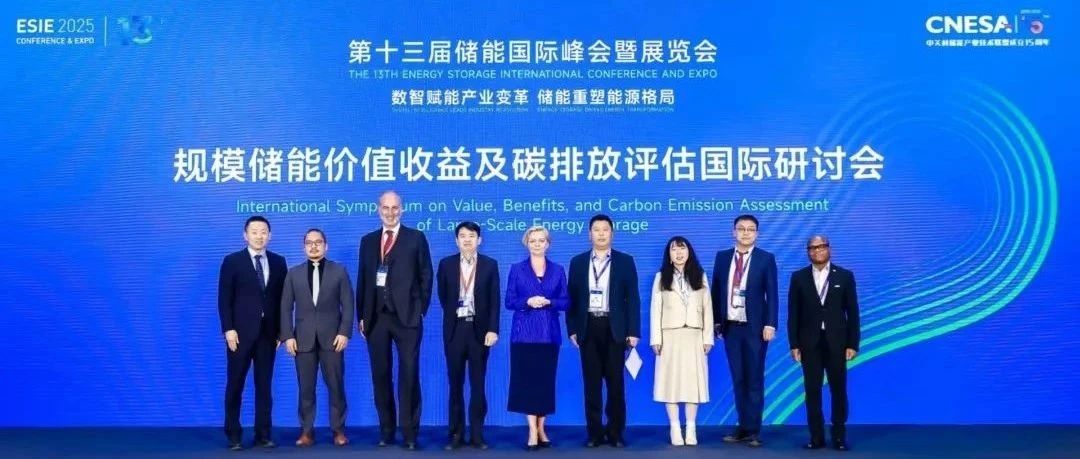
文 | 中关村储能产业技术联盟 国家重点研发计划战略性科技创新合作项目"规模储能价值收益及碳排放评估"(2024YFE0209100)第一次国际研讨会于2025年4月11日在北京 召开。来自产学研各界的专家围绕储能产业核心痛点、技术路径、碳足迹管理及国际合作等议题展开深入研讨。 02 如何构建储能碳排放评估体系及碳足迹管理体系? 中关村储能产业技术联盟常务副理事长俞振华 在会上指出,当前储能行业面临三大核心挑战: 成本评估难 (技术路线多样导致成本演变路径不 明确)、 综合价值评估难 (多场景收益难以量化)、 碳排放标准国际互认难 (国内外核算体系差异显著),导致储能在支持未来碳达峰碳中 和目标实现过程中遭遇重重困难。会议围绕三大挑战展开讨论,专家们抽丝剥茧聚焦堵点痛点纷纷发表精彩观点。CNESA将专家核心观点整理 出来以飨读者。 01全球视野下, 储能在碳达峰碳中和路径上的需求与定位 全球 国际可再生能源署政策官员冯金磊提出 ,根据ARENA的1.5℃温控情景预测,全球需在2050年前部署4000GW储能,其中长时储能占比超40%, 储能直接贡献15%的碳减排量。 欧洲 欧洲储能协会秘书长帕特里克·克莱伦斯 ...
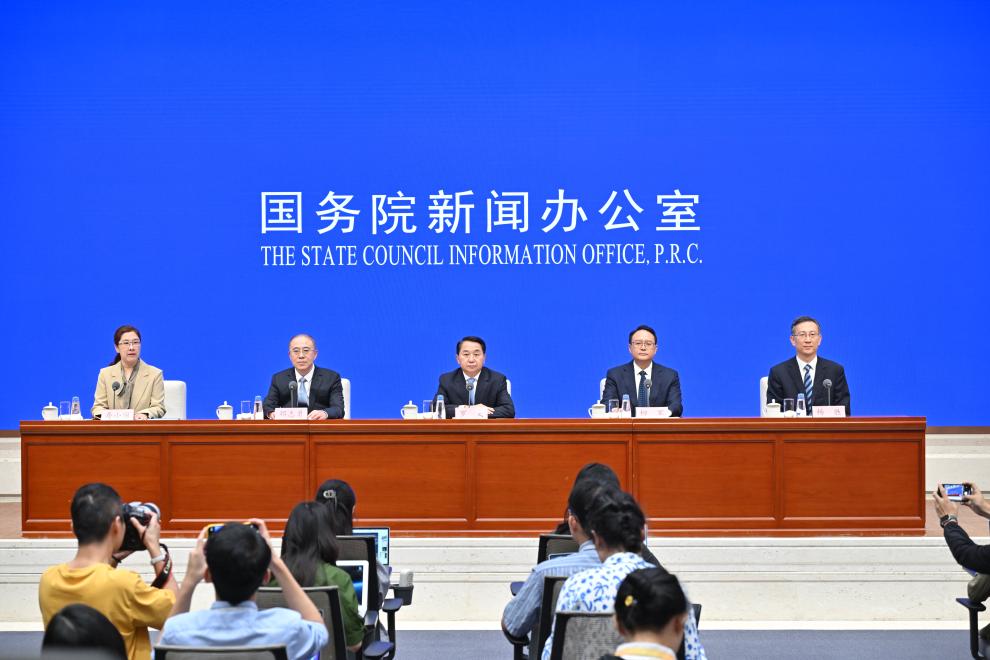
“十四五”期间新发布国家标准1.3万余项,国家标准总数已达到4.7万余项
Zhong Guo Xin Wen Wang· 2025-08-25 07:53
Core Viewpoint - The Chinese government is focusing on enhancing the national standard system during the "14th Five-Year Plan" period to support high-quality development, with significant progress in standard formulation and implementation [1][2][3]. Group 1: Standard Supply - The average development cycle for national standards has been reduced from 36 months to 16 months, optimizing the standard formulation and revision mechanism [1][2]. - Over 13,000 new national standards have been released during the "14th Five-Year Plan," bringing the total to over 47,000 [1]. Group 2: Standard Quality - More than 57% of important technology project standards have been established, with over 2,400 national standards released in key areas such as artificial intelligence and smart manufacturing [2]. - The revised energy consumption limit standard for crude steel is expected to save over 10 million tons of standard coal annually [2]. Group 3: Standard Effectiveness - Over 500 mandatory national standards related to safety production and consumer product safety have been introduced [2]. - In the first half of this year, there was a 131% increase in newly established mandatory national standards and a 58% increase in newly released standards compared to the previous year [2]. Group 4: Standard Cooperation - China has led the formulation of 1,079 international standards and adopted over 6,900 international standards during the "14th Five-Year Plan" [3]. - The country has promoted mutual recognition of over 500 standards and has implemented Chinese standards in several international railway cooperation projects [3].
中行上海市分行:深耕绿色金融,润泽绿水青山
Di Yi Cai Jing· 2025-08-25 02:48
Group 1 - The year marks the 20th anniversary of the concept "Lucid waters and lush mountains are invaluable assets," with the Bank of China Shanghai Branch enhancing diversified financial products and services to promote ecological value transformation and optimize energy structure for high-quality economic development in Shanghai [1] - The energy sector is crucial for economic development and carbon neutrality, with nuclear power providing significant advantages in safety, efficiency, and stability, supporting low-carbon energy transition [2] - The Bank of China Shanghai Branch has established a dedicated working group to provide tailored credit services to the State Nuclear Power Technology Company, marking a significant step in supporting green energy industry development [2] Group 2 - The Shanghai Municipal Action Plan for Modern Facility Agriculture (2024-2027) emphasizes promoting green and low-carbon agricultural energy utilization, including biogas power generation and complementary projects [3] - The Bank of China Shanghai Branch has provided targeted financial support for green and low-carbon agricultural development, including a loan of over 50 million yuan for a 50,000 kW photovoltaic project in Chongming District [3] - In Jinshan District, the bank has also financed a biomass waste resource utilization project, contributing to a win-win scenario for social, economic, and ecological benefits in agriculture [3] Group 3 - Transition finance focuses on mitigating climate change by providing financial services to traditional high-emission industries for their low-carbon transition, complementing green finance [4] - The Bank of China Shanghai Branch has developed a work plan to support the city's transition finance development, including 12 specific measures to optimize financial resource supply and establish evaluation mechanisms [4] - The bank has successfully executed Shanghai's first syndicated transition loan to support the organic chemical raw material manufacturing industry, aiding in the city's green and low-carbon economic development [4] Group 4 - The Bank of China Shanghai Branch aims to actively implement the "Lucid waters and lush mountains are invaluable assets" concept by expanding its financial product offerings and providing innovative financial services to contribute to Shanghai's international green finance hub [5]
新华财经丨市场监管总局:“十四五”期间 国家标准总数已达到4.7万余项
Xin Hua She· 2025-08-23 03:29
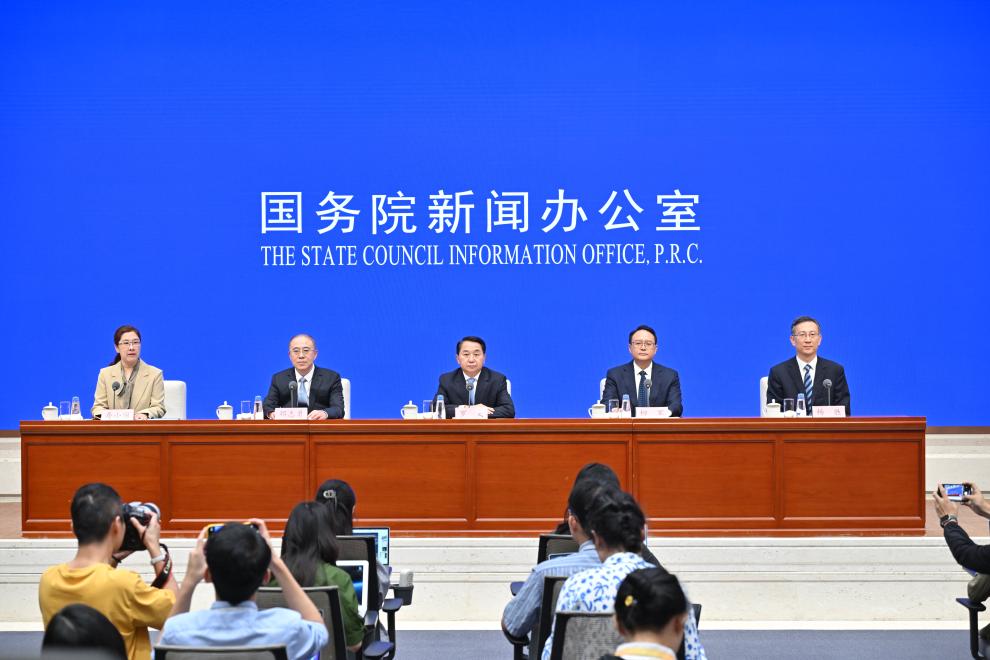
Core Viewpoint - The article discusses the efforts of the State Administration for Market Regulation in China to enhance the standardization system to support high-quality development, focusing on faster, better, stronger, and more open standards. Group 1: Faster Standard Supply - The average development cycle for national standards has been reduced from 36 months to 16 months [1] - Implementation of the action plan to upgrade traction equipment and promote the replacement of old consumer goods has led to the release of important standards for electric vehicles and home appliances [1] Group 2: Better Standard Quality - Over 57% of important technology project standards have been established [2] - More than 2400 national standards have been released in key areas such as artificial intelligence and smart manufacturing [2] - The revised energy consumption limit standard for crude steel is expected to save over 10 million tons of standard coal annually [2] Group 3: Stronger Standard Effectiveness - More than 500 mandatory national standards related to safety production and consumer product safety have been introduced [2] - In the first half of the year, there was a 131% increase in newly established mandatory national standards and a 58% increase in newly published standards [2] - The formaldehyde release limit for man-made boards has been upgraded to E0 level, meeting the strictest global requirements [2] Group 4: More Open Standard Cooperation - During the 14th Five-Year Plan period, China has led the development of 1079 international standards and adopted over 6900 international standards [2] - More than 500 standards have achieved mutual recognition between China and other countries [2] - Chinese standards are being used in several international railway cooperation projects and agricultural standardization demonstration zones in Africa [2]
新华财经|市场监管总局:“十四五”期间 国家标准总数已达到4.7万余项
Xin Hua Wang· 2025-08-22 12:56
Core Viewpoint - The article discusses the efforts of the State Administration for Market Regulation in China to enhance the standardization system to support high-quality development, focusing on faster, better, stronger, and more open standards. Group 1: Faster Standard Supply - The average development cycle for national standards has been reduced from 36 months to 16 months [1] - A series of important standards for electric vehicles and household appliances have been released to promote smarter and greener production and consumption [1] Group 2: Better Standard Quality - Over 57% of important technology project plans have formed standards [2] - More than 2,400 national standards have been published in key areas such as artificial intelligence and intelligent manufacturing [2] - The revised energy consumption limit standard for crude steel is expected to save over 10 million tons of standard coal annually [2] Group 3: Stronger Standard Effectiveness - More than 500 mandatory national standards related to safety production and consumer product safety have been introduced [2] - In the first half of the year, there was a 131% increase in newly established mandatory national standards and a 58% increase in newly published standards [2] - The formaldehyde release limit for man-made boards has been raised to E0 level, meeting the strictest global requirements [2] Group 4: More Open Standard Cooperation - During the 14th Five-Year Plan period, China has led the development of 1,079 international standards and adopted over 6,900 international standards [2] - Over 500 standards have achieved mutual recognition between China and other countries [2] - Chinese standards are being used in several international railway cooperation projects and agricultural standardization demonstration zones in Africa [2]