
绿色低碳转型

Search documents
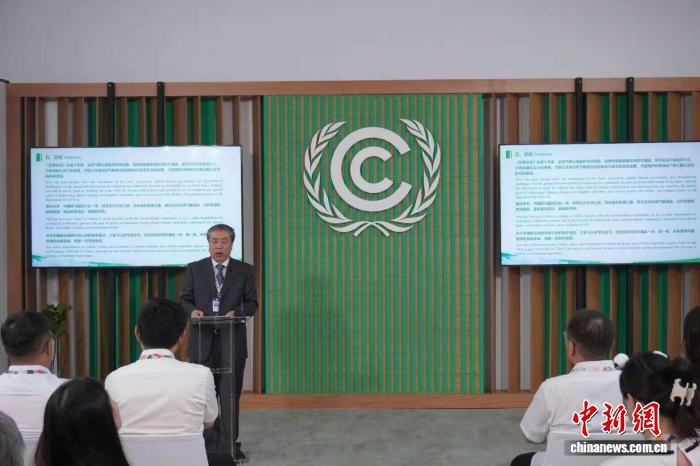
构建新型电力系统 推进绿色低碳转型——中国国家电网公司在COP30“中国角”举办主题边会
Xin Hua Cai Jing· 2025-11-15 07:19
Core Points - The China State Grid Corporation showcased its efforts in addressing climate change and promoting green low-carbon transformation at the COP30 conference, providing a model for energy transition for other countries [1][2] - China has become one of the fastest countries in reducing energy intensity, supporting over 6% economic growth with an average energy consumption growth rate of 3.4% [2] - The conference highlighted the importance of international cooperation and the establishment of unified international carbon accounting standards to support global climate governance [4] Group 1: Company Initiatives - The State Grid Corporation aims to empower better living and drive the energy revolution, collaborating with other countries to build a clean, low-carbon, safe, and efficient energy system [2][3] - The company, along with 51 other organizations, launched the "Global Time Zone Electric Carbon Factor Brazil Initiative" to promote research and practical application of electric carbon factors [3] Group 2: Industry Developments - The conference featured discussions on clean energy policies, new power system construction, and carbon business system development, emphasizing the need for precise carbon accounting methods [3][4] - The event showcased several reports and achievements, including the "State Grid Corporation Service New Energy Development Report" and the "State Grid Corporation Carbon Business System Construction Case Collection" [4]

COP30“应对气候变化和促进绿色低碳转型国际合作”边会在巴西贝伦举行
Zhong Guo Xin Wen Wang· 2025-11-15 03:08
欧洲气候基金会首席执行官劳伦斯·图比亚娜指出,全球绿色转型需要构建多元包容的治理框架, 应通过政策协调、标准互认等方式减少合作壁垒,推动形成技术共享、责任共担、利益共赢的合作格 局。 就有关深化绿色经贸合作加速推进全球气候目标的议题,能源转型委员会主席阿代尔·特纳表示, 过去十年间,太阳能电池、风能等关键低碳技术实现跨越式突破,中国在技术研发、产业规模化应用等 方面作出了突出贡献,为全球能源转型奠定了重要基础。 当地时间11月12日,中国国际发展知识中心在《联合国气候变化框架公约》第30次缔约方大会 (COP30)上联合举办"应对气候变化和促进绿色低碳转型国际合作"边会,邀请国内外专家和实践者围绕 全球气候变化、绿色经贸合作、绿色低碳转型国际合作等议题深入研讨。 中国气候变化事务特使刘振民在致辞中指出,气候变化是全球共同的,任何国家都无法置身事外。 作为全球南方国家的重要一员,中国始终秉持人类命运共同体理念,愿与各国携手构建更加公平、高 效、包容的绿色技术创新与产业合作环境,以实际行动推动全球气候治理向纵深发展。 国际可再生能源署总干事弗朗切斯科·拉卡梅拉表示,可再生能源是应对气候变化的核心力量,需 进一步强 ...
前10个月新需求不断扩大、新兴产业发展提速 我国经济转型升级态势持续
Jing Ji Ri Bao· 2025-11-15 01:35
Core Insights - The overall economic operation remains stable, with steady growth in production and demand, stable employment and prices, and ongoing transformation and upgrading of the economy [1][2][7] Economic Performance - In October, industrial production maintained stability, with the industrial added value of large enterprises increasing by 4.9% year-on-year [2] - The service sector's production index grew by 4.6% year-on-year, although the growth rate slightly declined due to a high base from the previous year [2] - Retail sales of consumer goods increased by 2.9% year-on-year in October, supported by holiday economic activities [2] Employment and Prices - The urban unemployment rate was 5.1% in October, marking a decrease for two consecutive months, with specific groups showing improved employment rates [2] - The consumer price index (CPI) turned from decline to growth in October, with the core CPI rising by 1.2% year-on-year, indicating a positive price trend [3] Structural Adjustments and New Growth Drivers - The economy is undergoing structural adjustments, with new growth drivers such as the digital economy and platform economy expanding rapidly [4][6] - The proportion of advanced manufacturing and modern services is increasing, with the added value of equipment manufacturing growing by 9.5% year-on-year [5] Future Outlook - The economic foundation remains strong, with favorable conditions for achieving annual targets, including a GDP growth of 5.2% year-on-year in the first three quarters [7][8] - The government is implementing proactive macro policies to stimulate demand and production, including a new policy financial tool worth 500 billion yuan [8]
中金 | 深度布局“十五五”:基础材料与工程篇
中金点睛· 2025-11-15 00:07
Core Viewpoint - The article emphasizes the importance of optimizing supply and focusing on high-quality development across various industries during the "15th Five-Year Plan" period, highlighting the need for structural adjustments and sustainable growth strategies. Coal Industry - The coal consumption is expected to peak between 4.95 to 5.1 billion tons during the "15th Five-Year Plan" period, with a slight decline to around 4.9 billion tons by 2030 [2] - Coal remains a crucial stabilizer for energy supply during the transition to a new energy system, with a gradual reduction in coal usage expected [3] - The coal sector is projected to maintain investment value due to favorable supply-demand dynamics, with high-quality companies expected to sustain profitability and cash flow [3] Building Materials - Cement demand is forecasted to decline by 30-40% from 2024 to 2030, necessitating capacity reduction to maintain profitability [4] - The industry is expected to focus on overseas expansion, particularly in Africa, as a growth strategy [4] - Glass fiber demand is anticipated to grow at an annual rate of around 5%, driven by wind power installations [4] - The construction materials sector is under pressure, but segments like coatings are expected to recover, with the market size projected to exceed 100 billion yuan by 2030 [5] Steel Industry - The steel industry is transitioning from scale expansion to quality and efficiency improvement, with a focus on high-end product development [6] - Demand for construction steel is expected to decline due to demographic changes, while high-end manufacturing will continue to drive demand for specialized steel products [6] - The industry is undergoing supply-side reforms to eliminate inefficient capacity and improve competitiveness [6] - Green transformation initiatives are being prioritized, with a focus on reducing carbon emissions and enhancing sustainability [7] - The industry aims to increase self-sufficiency in iron ore and expand overseas operations to enhance global competitiveness [8] Paper Industry - The paper industry is experiencing a slowdown in capacity expansion, with demand expected to recover moderately due to supportive consumption policies [9] - The industry is shifting towards self-produced pulp to enhance profit margins amid fluctuating raw material prices [9] Construction Industry - The construction sector is expected to focus on "stock clearance and incremental transformation," with significant government support for infrastructure investment [10] - The sector's financial health is projected to improve as local government debt restructuring progresses, enhancing cash flow and reducing impairment losses [10] - New business models and overseas expansion are seen as key growth drivers for construction companies [12]


杭州热电集团股份有限公司关于参与投资设立产业投资基金暨关联交易的公告
Shang Hai Zheng Quan Bao· 2025-11-14 19:20
Group 1 - The company plans to invest 200 million yuan as a limited partner in the establishment of the Hangzhou Guoling Yuanqi Venture Capital Partnership, accounting for 20% of the total subscribed capital of the investment fund [2][5] - The investment fund will be managed by Hangzhou Guoshun Equity Investment Co., Ltd., with ordinary partners being Hangzhou Guoyou Huitong Enterprise Management Co., Ltd. and Hangzhou Lingshang Zhiguang Sci-Tech Development Co., Ltd. [2][5] - The investment fund's total subscribed capital is 1 billion yuan, with contributions from various partners including the company and its affiliates [5][6] Group 2 - The board of directors has approved the investment, and the related party transactions will be submitted for shareholder approval [3][40] - The company has had no related party transactions with the same related party in the past 12 months, aside from routine transactions [3][21] - The establishment of the investment fund is expected to enhance the company's strategic positioning in the energy sector and optimize resource integration [22] Group 3 - The investment fund will focus on the gas and energy industries, targeting growth and mid-to-late stage projects [15] - The fund's management fees are set at 0.6% per year during the investment period, with a similar rate for the exit period [12][13] - The profit distribution will prioritize returning the capital contributions to partners before distributing any excess profits [17]


王善成:中国一直是全球气候治理的坚定行动派、重要贡献者
Zhong Guo Xin Wen Wang· 2025-11-14 12:32
Core Viewpoint - China is a steadfast action-oriented contributor to global climate governance, having explored a new path for sustainable development through its efforts [1][3]. Group 1: Policy and Achievements - China has established the most systematic and comprehensive carbon peak and carbon neutrality policy framework globally, integrating these goals into ecological civilization and overall economic and social development [3]. - The country has built the largest and fastest-growing renewable energy system in the world, with installed wind and solar power capacity exceeding 1.69 billion kilowatts, more than three times that of 2020, contributing approximately 80% of new power installations since 2020 [3]. - By the end of 2024, new energy storage capacity is expected to reach 73.76 million kilowatts, which is 20 times that of 2020, accounting for over 40% of global installed capacity [3]. Group 2: Economic Impact - The "three new" economy (new industries, new business formats, and new models) is projected to account for over 18% of GDP in 2024, an increase of 1.2 percentage points since 2020 [4]. - China has become the largest market for new energy vehicles, with a total of 36.89 million electric vehicles by mid-2025, representing over half of the global total [4]. - The penetration rate of new energy passenger vehicles in the domestic market reached 52.2% from January to September 2025, ranking first among major economies [4]. Group 3: Energy Efficiency and Circular Economy - China is one of the fastest countries in the world to reduce energy intensity, with a cumulative decrease of 11.6% in energy consumption per unit of GDP from 2020 to 2024 [5]. - The country has developed the most complete and efficient circular economy system globally, with a comprehensive utilization rate of major solid waste reaching 59% by 2024 [5]. - The annual utilization of major recycled resources exceeds 400 million tons, with the production of recycled non-ferrous metals reaching 19.15 million tons, maintaining the top position globally for 15 consecutive years [5]. Group 4: Environmental Contributions - China has achieved the fastest and largest increase in greening globally, with a forest coverage rate of 25.09% and a forest stock volume of 20.988 billion cubic meters by 2024 [5]. - The country has successfully realized "zero growth" in land degradation and a dual reduction in desertified and sandy land areas, contributing to a quarter of the world's new green area [5]. - China provides high-quality green low-carbon products to the world, supplying 70% of wind power equipment and 80% of photovoltaic components globally, significantly reducing costs in these sectors [5].
绿色工厂申报开启简便模式 企业为何感觉变难了
Zhong Guo Zheng Quan Bao· 2025-11-14 09:39
Core Viewpoint - The enthusiasm for applying for green factory certification has significantly increased among enterprises, driven by policy support and market demand, with a total of 1,382 new national-level green factories expected in 2024, bringing the cumulative total to 6,430 [1][5]. Summary by Sections Application Requirements Update - The application process for green factory certification has been simplified, with the removal of third-party evaluation reports, allowing companies to self-report through an online platform [2][3]. - The new evaluation criteria have been streamlined, reducing the number of secondary indicators from 92 to 14, focusing on five primary indicators: energy decarbonization, resource efficiency, clean production, product greenness, and land intensiveness [2][3]. Increased Standards for Certification - The evaluation now emphasizes quantitative assessments, with 11 out of 14 secondary indicators being quantitative, requiring companies to meet industry benchmarks for energy consumption and carbon emissions [3]. - The weight of the "energy decarbonization" criterion is set at 30%, necessitating detailed calculations of energy consumption and carbon emissions [3]. Corporate Engagement in Green Factory Applications - The number of applications for green factory certification has surged due to local government incentives, with financial rewards ranging from 200,000 to 1,000,000 yuan for successful applicants [5]. - Companies are increasingly motivated to pursue green factory status to comply with stricter environmental regulations and to enhance their market competitiveness [5][6]. Technological Innovation and Digital Management - Enterprises are leveraging technological innovations and digital management to facilitate their green transformation, focusing on energy efficiency and carbon reduction [7][8]. - The integration of digital technologies, such as IoT sensors and data analytics, is becoming crucial for real-time monitoring and optimization of energy consumption [8][9]. Recommendations for Companies - Companies are advised to maintain comprehensive records of their energy consumption and emissions data to support their green factory applications [9]. - It is recommended that enterprises prepare for certification by implementing systematic management practices and aligning with industry standards for sustainability reporting [9].

李高:中国过去十年加速推进能源转型
人民网-国际频道 原创稿· 2025-11-14 09:09
"构建新型电力系统 推进绿色低碳转型"主题边会由国家电网公司主办。李高表示,作为中国能源 领域的骨干力量,国家电网公司不仅保障了新能源的大规模接入与稳定输送,还通过数字化智能化手段 引导全社会低碳用能,为中国能源转型和应对气候变化作出了积极贡献。 他表示,气候变化是全球面临的共同挑战,任何国家都无法独善其身。今年10月,中共二十届四中 全会召开,对"加快经济社会发展全面绿色转型、建设美丽中国"作出系统部署,再次向世界宣示了中国 坚定走绿色发展之路的信心决心。中国将以更高站位、更宽视野、更大力度、更实举措谋划和推进生态 文明建设,持续实施积极应对气候变化国家战略,推动落实全球发展倡议、全球安全倡议、全球文明倡 议、全球治理倡议,努力为应对气候变化和全球环境治理作出新的贡献。 人民网巴西贝伦11月13日电 (记者陈一鸣)当地时间11月13日,《联合国气候变化框架公约》第 三十次缔约方大会(COP30)"中国角"举行"构建新型电力系统 推进绿色低碳转型"主题边会。中国代表 团团长、生态环境部副部长李高在致辞时表示,中国始终是全球气候治理的积极参与者和贡献者,在过 去十年加速推进能源转型。 李高表示,截至2025年6 ...
国家统计局:我国推进经济结构调整、加快培育新动能继续取得积极成效
Zhong Guo Xin Wen Wang· 2025-11-14 08:03
Core Insights - The Chinese economy is transitioning from high-speed growth to high-quality development, characterized by a shift in growth rate, structural optimization, and transformation of economic drivers [1][3] Group 1: Market Demand and Investment - Market demand is being revitalized, with new consumption patterns emerging. Online retail sales of physical goods accounted for 25.2% of total retail sales from January to October, an increase of 0.2 percentage points from the previous period [1] - Investment in high-tech sectors is growing rapidly, with aerospace and equipment manufacturing investment increasing by 19.7% and information services investment growing by 32.7% year-on-year [1] Group 2: Industrial Upgrading - The manufacturing sector is steadily moving towards mid-to-high-end production, with the added value of large-scale equipment manufacturing increasing by 9.5%, contributing 58.7% to the growth of large-scale industrial added value [2] - The modern service industry is also thriving, with the combined added value of information transmission, software, and IT services, as well as leasing and business services, reaching 16.3% of the tertiary industry, up 0.8 percentage points from the previous year [2] Group 3: Emerging Industries - The digital economy is rapidly developing, with significant growth in digital manufacturing and smart manufacturing sectors, which saw added value increases of 9.5%, 11.1%, and 12.3% respectively [2] - Emerging industries such as renewable energy, new materials, and artificial intelligence are expected to become new pillar industries, supporting the growth of new economic drivers [2]
国家统计局:三方面积极变化彰显我国加快培育新动能成效
Xin Hua Cai Jing· 2025-11-14 05:12
Group 1 - The core viewpoint of the article emphasizes the acceleration of new momentum cultivation and economic structure optimization in China, which is beneficial for economic development [1] Group 2 - Market demand is revitalizing, with new demands continuously expanding. From January to October, online retail sales of physical goods accounted for 25.2% of total retail sales, an increase of 0.2 percentage points from the previous period [1] - Investment in key areas is increasing, with high-tech sectors seeing rapid growth. From January to October, investment in the aerospace and equipment manufacturing industry grew by 19.7%, while information services investment increased by 32.7% [1][2] - The export of electromechanical and high-tech products is expanding, with electromechanical products accounting for 60.7% of total exports from January to October [2] Group 3 - The trend of industrial upgrading is evident, with advanced manufacturing and modern service industries increasing their share. From January to October, the added value of large-scale equipment manufacturing grew by 9.5%, contributing 58.7% to the growth of large-scale industrial added value [2] - The development of emerging industries is strengthening, with digital economy and green low-carbon transformation advancing. From January to October, the added value of the digital industry manufacturing sector grew by 9.5% [3] - The future outlook indicates that new production capacity and high-quality economic development trends are positive, with a focus on promoting high-quality development and integrating technological and industrial innovation [3]