固态电池技术

Search documents
产业链进展持续突破,固态进入中试关键期
2025-06-18 00:54
摘要 固态电池预计在 2027 年实现约 1GWh 的放量,2030 年有望突破 100GWh。工信部项目总资金约 60 亿,涉及宁德时代、比亚迪、一汽 等七家公司,旨在推动车规级电芯下线和固态电池量产及装车示范运营。 预计到 2028-2029 年,硫化固态电池成本将从千万级降至百万级,长 期或降至 20 万左右。硫化锂价格也将从大几百万降至 10-20 万左右, 性能和性价比将在未来几年显著改善。 比亚迪、国轩高科、一汽等提前半年实现了 60 安时车规级电芯落地。 中科固能硫化物电解质材料可实现千米级大卷量产,厚度做到 30 微米 以下,离子导率达到 3 到 5 之间,设备和材料端取得超预期进展。 硅碳体系固态电池能量密度可达 350-400 瓦时每公斤,充放电倍率为 0.5-1C,循环寿命约 1,000 次,成本约 2-3 元每瓦时,已达中试阶段。 硫化物基固态电池能量密度可达 450-500 瓦时每公斤,充放电倍率为 1-2C,但循环寿命仅 300-500 次,成本较高。 固态电池技术难点包括固固界面缝隙问题及材料工艺与设备能力不足。 解决缝隙问题需提升材料柔软性或提高设备精度。目前材料工艺与设备 能 ...


“史上最严电池安全令”将施行从“能量密度为王”转向“安全性能为先”
Zheng Quan Shi Bao· 2025-06-17 18:14
Core Viewpoint - The newly released national standard for electric vehicle batteries, known as the "strictest battery safety regulation in history," emphasizes the requirement for batteries to not catch fire or explode after thermal runaway, marking a shift from a focus on range to safety in the industry [1][2]. Group 1: New National Standard - The new national standard (GB38031-2025) will be implemented on July 1, 2026, and introduces mandatory safety requirements for batteries, including the ability to withstand thermal runaway without igniting or exploding [2][3]. - Compared to the 2020 version, the new standard includes additional testing requirements such as fast charging cycle safety tests and impact tests for battery packs [2][3]. - The new standard aims to reduce the probability of battery fires by enhancing testing protocols and safety measures, thus protecting consumer safety [2][3]. Group 2: Industry Impact - The introduction of the new standard is expected to raise industry entry barriers, accelerate the exit of low-end production capacity, and concentrate market resources among leading companies like CATL, BYD, and others [1][4]. - Companies that prioritize research and quality are anticipated to gain more growth opportunities as safety becomes a core competitive advantage [8]. - The new standard is seen as a "value reconstruction" in the standard system, shifting the focus from energy density to safety performance [3][8]. Group 3: Company Responses - Leading battery manufacturers, including CATL and BYD, have announced compliance with the new standards, with CATL being the first to meet the requirements [4]. - Companies like Xinwangda and others have also confirmed that their products meet or exceed the new safety standards, indicating a proactive approach to safety [4]. Group 4: Future Trends - The new standard is expected to accelerate the demand for solid-state batteries and sodium batteries, which are considered safer alternatives to traditional lithium batteries [6][8]. - The industry is likely to see a shift towards quality over price, as the new regulations may eliminate low-quality competitors and enhance the overall safety of battery technology [7][8].
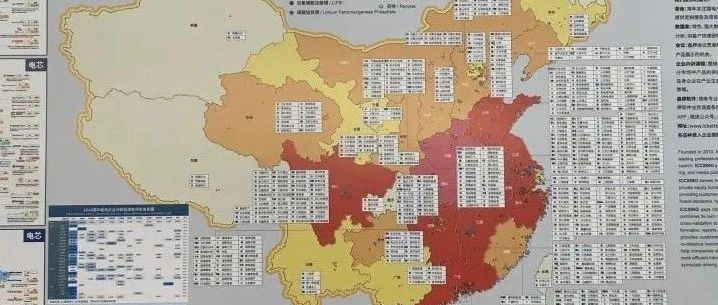
免费领取!2025年全球锂电产业链分布图
鑫椤锂电· 2025-06-17 11:58
Core Viewpoint - The article emphasizes the significance of the 2025 China Solid-State Battery Technology Development and Market Outlook Summit, highlighting the global lithium battery industry chain and its distribution across major regions [9]. Distribution Map Content - The distribution map measures 1.5 meters by 1 meter and intricately illustrates the entire ecosystem of the global lithium battery industry, covering raw materials, four main materials, battery manufacturing, and end applications [3]. - It includes major lithium battery industry clusters in China, North America, Europe, Japan, South Korea, and Southeast Asia [3]. Distribution Map Collection Eligibility - The distribution map can be collected on-site at the summit held on July 8-9, 2025, at the Holiday Inn in Pudong, Shanghai [4]. - Alternatively, it can be sent via SF Express, with shipping costs borne by the recipient [5]. Summit Details - The summit will take place on July 8-9, 2025, in Shanghai, organized by Xinluo Information [9][10]. - It will feature top experts, scholars, business leaders, and representatives from investment institutions to discuss the latest research advancements, industrialization paths, market application trends, and challenges and opportunities in solid-state battery technology [9].

太蓝新能源招聘:固态电池专家 25-45K 15薪
鑫椤锂电· 2025-06-17 08:33
如图 关注公众号,点击公众号主页右上角" ··· ",设置星标 "⭐" ,关注 鑫椤锂电 资讯~ -广告- Z、自感电池的测试与双语刀们, 3、根据测试数据分析提出调整方案: 4、按照实施方案开展固态电解质的改性工作: 6、熟练掌握锂离子电池相关实验设备: 7、固态电解质的性能评测. 8、固态电解质制备工艺的开发: 9、详细记录研发过程的数据并整理汇总; 10、最新相关文献、资料或专利的收集和分享。 任职资格 1、硕士以上学历、材料科学与工程/化学相关专业2年 以上相关工作经验,具备固态电解质材料研发经验: 2、组电池材料基础、锂电池检测分析、锂电池设计基 础、固态锂电池开发、有机聚合物及无机材料合成工 艺及设备相关基础知识、实验室安全与化学实验操作 基础知识: 3、熟练使用办公软件,具备文献、专利检索的能力: 4、锂电池材料中试合成操作能力、能够主导锂电池材 料中试和量产、投产; 5、熟练掌握智离子电池相关知识: 5、熟练使用Origin、Jade等数据处理及分析软件。 Zview軟件的熟练使用。 2025年7月8–9日,鑫椤资讯在 上海·浦东假日酒店 举办" 2025(第三届)中国固态电池技术发展与市 场 ...

小米汽车,固态电池新动作
DT新材料· 2025-06-16 15:41
Core Viewpoint - Xiaomi's recent patent for "solid-state battery composite electrodes and preparation methods" indicates its strategic exploration and technological advancements in the electric vehicle sector [1][2]. Summary by Sections Technology and Performance - The innovative composite electrode design significantly shortens the metal ion transport path, enhancing battery performance. Laboratory data shows an electrode loading capacity of 500 mg/cm², with a capacity retention rate of 75% under 2C fast charging conditions. The CLTC range exceeds 1200 kilometers, and a 10-minute charge can support 800 kilometers of driving [2]. - Solid-state batteries theoretically offer higher safety (reduced thermal runaway risk), energy density (over 1000 Wh/L), and improved low-temperature performance (20% efficiency increase at -20°C) compared to traditional liquid electrolyte batteries [2]. Market Position and Competition - Current liquid lithium batteries are nearing their theoretical energy density limits (300-400 Wh/kg), while solid-state batteries can exceed 500 Wh/kg, addressing consumer concerns about range. Xiaomi's 1200 km range directly targets high-end electric vehicle market pain points, outperforming competitors like Tesla Model S Plaid (780 km) and NIO ET7 (700 km) [3]. - The competitive landscape in the new energy vehicle market is intensifying. Despite the release of Xiaomi's SU7 and YU7 models, the company must leverage technological innovation to strengthen its market position [4]. Strategic Investments - Xiaomi has already begun investing in several companies related to solid-state battery technology, including Weilan New Energy and Ganfeng Lithium. Weilan New Energy is set to provide NIO with a 150 kWh semi-solid-state battery pack in 2024 and collaborates with multiple firms to advance solid-state battery technology commercialization [4].

亿纬锂能港股IPO:不甘“龙二”的宿命
阿尔法工场研究院· 2025-06-16 13:05
Core Viewpoint - EVE Energy aims to maintain its position as a "second-tier leader" in the lithium battery industry and effectively counter "black swan" events by proactively gathering funding sources [1][9][60] Group 1: IPO and Market Response - EVE Energy's announcement of its H-share IPO on the Hong Kong Stock Exchange did not receive a warm response from the capital market, unlike CATL [2][4] - Following the IPO announcement, EVE Energy's A-share price fell nearly 5% from 45.02 CNY to 42.78 CNY [3] - The muted market reaction is attributed to the slowdown in the lithium battery industry and investor concerns over the company's potential funding pressures [6] Group 2: Funding Needs and Global Expansion - The funds raised from the Hong Kong IPO are crucial for EVE Energy, described as a "lifeline" for the company [7] - EVE Energy plans to use the IPO proceeds for overseas factory construction, accelerating global capacity layout, and supplementing working capital [11] - The company has a cash balance of approximately 13.4 billion CNY, but its overseas projects require nearly 17.4 billion CNY, leaving a funding gap of about 4 billion CNY [19] Group 3: Customer Payment Challenges - EVE Energy's core business, power batteries, accounts for nearly 40% of its revenue, with automotive companies as its primary customers [25] - Following the IPO announcement, several automotive companies committed to reducing payment terms to within 60 days, highlighting a significant change in the supply chain [26] - The average accounts payable turnover days for domestic automakers is 171.6 days, significantly higher than the less than 60 days typical for Western brands [28] Group 4: Storage Battery Market and Competition - EVE Energy's storage battery revenue is projected to account for 39.14% of total revenue in 2024, with a shipment target of 50.45 GWh, making it the second-largest globally after CATL [36] - The U.S. market is a key target for EVE Energy, but changes in policy, such as the IRA, pose significant challenges for its downstream customers [38][39] - The bankruptcy of Powin, a major U.S. energy storage integrator and customer, raises concerns about future cooperation and payment uncertainties [40][43] Group 5: R&D Investment and Competitive Pressure - EVE Energy must invest heavily in R&D to keep pace with competitors, with R&D spending increasing from 700 million CNY to 2.942 billion CNY over the past five years [47] - The company plans to launch a pilot line for solid-state batteries by the end of this year, aiming for a 400 Wh/kg energy density by 2028, which lags behind competitors [49][55] - EVE Energy faces intense competition in large-capacity battery cells, with rivals rapidly advancing their technologies [56][58] Group 6: Overall Challenges and Future Outlook - EVE Energy is confronted with multiple challenges, including the need for funding for overseas expansion, risks in accounts receivable, difficulties in the storage market, and pressures from R&D investments [59] - The success of the Hong Kong IPO is critical not only for expanding financing channels but also for supporting overseas expansion and technological advancements [60]

小米汽车固态电池专利公布
高工锂电· 2025-06-16 12:47
会议预告 第十八届高工锂电产业峰会 ——产业链格局重整 全场景应用共振 2025高工新能源新材料产业大会 —— AI+新材料 引领能源变革 小米汽车近日公布的固态电池专利。 专利 名为《固态电池复合电极与制备方法及包含其复合电极的固态电池》。 根据国家知识产权局 公开信息,该专利申请于2023年12月12日,并于2025年6月13日正式公布。 小米汽车的固态电解质方案采用聚合物与金属盐复合材料。专利摘要显示,小米汽车研发的固态电 池复合电极由集流体和层叠电极材料层组成,其中固态电解质沿集流体厚度方向贯通整个电极材料 层,旨在缩短离子在厚电极中的传输路径,使传输速率显著提升,同时电极载量和倍率性能得到优 化。 小米汽车自2021年宣布造车以来,已将电池技术列为核心研发方向。此次专利公布前,小米已通 过投资卫蓝新能源、赣锋锂业等企业,布局固态电解质材料领域,并在江苏盐城建设电池试制线。 2025年3月,小米与宁德时代、北汽等合资成立电池公司,重点研发电芯级动力电池技术。目前 小米 长续航 车型 SU7 Max车型搭载宁德时代麒麟电池,续航达800km,而此次固态电池专利的 公布, 或将 是其 冲击"CLTC续航超 ...

重磅,小米汽车固态电池来了!
鑫椤锂电· 2025-06-16 08:52
关注公众号,点击公众号主页右上角" ··· ",设置星标 "⭐" ,关注 鑫椤锂电 资讯~ 本文来源:汽车行业早知道 日前, 小米汽车申请公布了一项全新的固态电池技术专利。 -广告- 其中, 鑫椤资讯将邀请 全球固态电池领域的顶尖专家学者、企业领袖、投资机构代表等,共同探讨固态电池技术的 最新研究进展、产业化路径、市场应用趋势以及面临的挑战与机遇。 专利中的复合电极由集流体和电极材料层构成,电极材料层沿集流体厚度方向层叠,内部固态电解质(含聚合物和金 属盐)贯通电极材料层。 这一设计缩短了金属离子的传输路径,提高离子传输速率,同时兼顾高电极载量和倍率性能。 该技术若应用于新能源汽车,可显著提升电池的续航能力和快充效率。 例如,实验数据显示,搭载此类电池的车型 CLTC续航可达1200公里,充电10分钟可支持800公里行驶。此外,固态电池的安全性更高,通过优化界面和电解 质材料,可降低热失控风险。 近三年小米申请的电池专利中,62%涉及固态电解质制备和极片成型工艺,覆盖材料、封装、工艺全链条。 预计, 全固态电池将在2027年实现小规模量产装车示范,2030年前后进入大规模应用阶段。 宁德时代、比亚迪等 头部企 ...
最新议题!2025(第三届)中国固态电池技术发展与市场展望高峰论坛
鑫椤锂电· 2025-06-16 08:52
Core Viewpoint - The article emphasizes the critical role of solid-state batteries as the next-generation battery technology, addressing the limitations of traditional liquid lithium-ion batteries and highlighting their potential in various applications, including electric vehicles and energy storage systems [2][3]. Group 1: Background and Market Demand - The global energy transition and low-carbon development trends are driving the demand for advanced battery technologies with higher performance and safety [2]. - Traditional liquid lithium-ion batteries face technical bottlenecks in energy density and safety, necessitating the development of solid-state batteries [2]. Group 2: Technological Advancements - Solid-state batteries utilize solid electrolytes, offering significant improvements in energy density, safety, and cycle life compared to traditional batteries [2]. - China has made substantial progress in solid-state battery technology, achieving breakthroughs in material systems, cell structure design, and manufacturing processes [3]. Group 3: Current Production and Challenges - In 2024, China's production of solid-state and semi-solid-state batteries reached 5.2 GWh [3]. - The commercialization of solid-state batteries faces challenges, including the need for improved ionic conductivity of solid electrolytes and the stability of electrode/electrolyte interfaces [3]. Group 4: Upcoming Forum - A summit titled "2025 (Third) China Solid-State Battery Technology Development and Market Application Forum" will be held on July 8-9, 2025, in Shanghai, aimed at discussing the latest research, industrialization paths, and market trends in solid-state battery technology [4]. - The forum will gather experts, industry leaders, and investment representatives to foster collaboration and accelerate innovation in the solid-state battery sector [4].
硫化物固态电池:技术路线全解析与产业化前景展望
鑫椤锂电· 2025-06-16 06:11
Core Viewpoint - Sulfide solid-state batteries are leading a technological revolution in the global power battery industry, with significant potential for commercialization by 2030, despite challenges in electrolyte stability, mass production processes, and high costs [1][39]. Group 1: Technical Characteristics and Advantages - Sulfide solid electrolytes exhibit high ionic conductivity, typically reaching 10⁻² to 10⁻³ S/cm, enabling rapid charging capabilities, allowing electric vehicles to charge from 20% to 80% in 10-15 minutes [3][4]. - The wide operating temperature range of sulfide solid-state batteries, from -40℃ to 80℃, makes them suitable for cold climates, maintaining good ionic conductivity even at low temperatures [4]. - The energy density of sulfide solid-state batteries can reach 300-400 Wh/kg, which is 1.5-2 times that of traditional liquid batteries, with potential to exceed 500 Wh/kg when using lithium metal as the anode [4][11]. Group 2: Challenges and Solutions - The primary challenge is the poor chemical stability of sulfide electrolytes, which are sensitive to air and moisture, leading to safety risks [6][32]. - Solutions include the development of artificial solid electrolyte interphase (SEI) layers to enhance stability and suppress lithium dendrite growth, with research showing improved cycle life [6][9]. - The complexity of mass production processes is another challenge, with traditional methods being unsuitable for sulfide electrolytes; advancements in dry electrode technology are being explored to improve production efficiency [7][8]. Group 3: Market Outlook and Industry Layout - The commercialization timeline for sulfide solid-state batteries is projected to see small-scale production by 2025, vehicle testing from 2026-2027, and mass production by 2030 [14][28]. - Major automotive companies, including Toyota, Nissan, and domestic players like SAIC and BYD, are actively developing sulfide solid-state battery technologies, with specific production timelines set [15][17]. - The market for sulfide solid-state batteries is expected to grow significantly, with projections indicating a market size of approximately 220 GWh by 2030, primarily driven by the automotive sector [36][24]. Group 4: Cost Optimization and Investment Value - Current costs for sulfide electrolytes are around tens of millions per ton, significantly higher than traditional liquid electrolytes; efforts are underway to reduce costs to 2.5 million per ton by 2026 and 100,000-200,000 per ton by 2030 [8][22]. - Cost reduction strategies include material innovation, process simplification, and achieving economies of scale through increased production capacity [23][33]. - The investment value in the sulfide solid-state battery sector is high, with opportunities across the supply chain, including electrolyte materials, battery manufacturing, and equipment [35][36].