大模型

Search documents
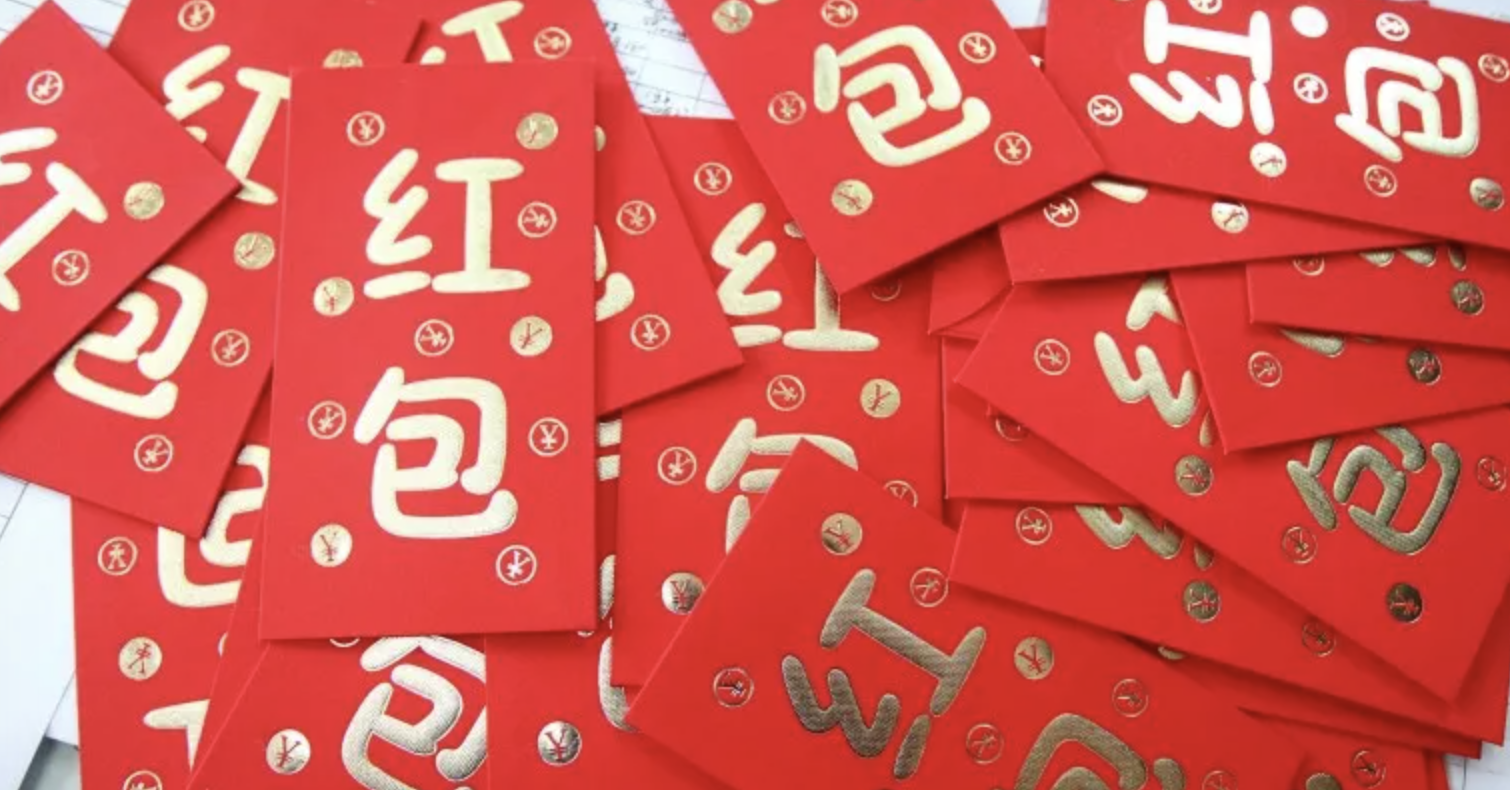
红包大战的“局外人”
Hua Er Jie Jian Wen· 2026-01-27 06:29
Core Insights - The article discusses the shift in strategy among internet companies during the Spring Festival, highlighting the focus on AI and the launch of Alibaba's Qwen3-Max-Thinking model as a significant development in the AI landscape [2][3]. Group 1: AI Strategy and Market Positioning - Alibaba's Qwen3-Max-Thinking model was launched on January 26, marking a departure from traditional marketing tactics during the Spring Festival, emphasizing intelligence over user scale [3][4]. - The model boasts over one trillion parameters and utilizes advanced reinforcement learning techniques, showcasing a significant technological advancement compared to competitors like GPT-5.2 and Claude Opus 4.5 [3][4]. - The emphasis on "Thinking" capabilities in Qwen3-Max-Thinking represents a fundamental shift from the fast-paced logic of previous internet products to a more deliberate, multi-step reasoning process [4][5]. Group 2: User Experience and Interaction - Qwen3-Max-Thinking enhances its agent capabilities, allowing for a more integrated user experience where the model can actively plan and adjust tasks, breaking the boundaries of traditional app usage [6][7]. - The model addresses the "hallucination" problem prevalent in large models, reflecting a practical approach to solving real-world issues and building long-term trust with users [7][6]. - The article suggests that the true value for users lies in the model's ability to think deeply and provide meaningful assistance, rather than relying on cash incentives [5][7].


研报掘金丨国元证券:维持海康威视“买入”评级,利润增长逐季加速
Ge Long Hui A P P· 2026-01-27 06:20
Core Viewpoint - Hikvision's total revenue is expected to remain stable in 2025, while net profit attributable to shareholders is projected to accelerate growth quarter by quarter [1] Group 1: Business Performance - Innovative business and international operations continue to grow, while domestic operations show a decline [1] - The company maintains a strong commitment to R&D investment and is advancing the application of large models, with smart factories gaining recognition [1] Group 2: Market Outlook - The prospects for smart perception and AI are broad, with related products gradually entering a growth phase [1] - The company offers video-centric smart IoT solutions and big data services to global users, possessing comprehensive advantages in technology, products, and solutions [1] Group 3: Investment Rating - Given the industry's growth potential and the company's sustained business growth, a "buy" rating is maintained [1]


微盟推出“AI试衣”赋能零售电商,搭载千问大模型构筑AI应用层护城河
Xin Lang Cai Jing· 2026-01-27 05:20
Core Viewpoint - The introduction of the "AI fitting" solution by Weimob Group aims to address the high return rates and low conversion rates faced by the retail e-commerce sector, particularly in the apparel industry, by providing an immersive shopping experience through AI technology [1][2][5]. Group 1: AI Fitting Solution - Weimob's AI fitting solution integrates Alibaba's Qianwen large model and Weimob's self-developed clothing recognition model, offering capabilities such as "realistic fitting effects" and "intelligent outfit recommendations" [1][2][3]. - The solution targets the pain points of consumers' purchasing decisions and aims to enhance conversion efficiency while reducing return rates for retailers [1][2][5]. - The AI fitting feature allows consumers to upload personal photos for real-time clothing matching, with plans to connect this capability to retail clients' sales agents for improved customer insights and recommendations [2][10]. Group 2: Industry Challenges - The apparel e-commerce sector faces significant challenges, with return rates for women's clothing reaching 50% to 60%, and even up to 80% for live-streamed sales, which severely impacts brand revenues [2][10]. - Traditional online shopping lacks fitting experiences, leading to issues such as inconsistent sizing and product mismatches, which contribute to high return rates [2][10]. Group 3: Competitive Advantage - Weimob leverages its deep industry know-how and extensive merchant ecosystem to differentiate itself in the AI fitting space, focusing on understanding retail scenarios and customer needs [3][11]. - The company has improved its clothing recognition accuracy from 50% to over 95% through its self-developed model, significantly enhancing user experience and reducing operational costs for merchants [3][11][12]. Group 4: AI Application Value - The current AI application landscape is experiencing explosive growth, shifting focus from computational power to application value, with SaaS companies like Weimob emerging as key players in realizing AI's commercial potential [5][13]. - Weimob's continuous application and iteration of AI large models have led to the development of a comprehensive AI product matrix centered around AI agents, enhancing customer engagement and lifecycle value [5][14]. Group 5: Future Prospects - Weimob's AI fitting function represents a significant step in integrating AI technology into the retail sector, showcasing its potential to solve core industry pain points and enhance productivity [7][15]. - As competition in the AI application layer intensifies, Weimob is well-positioned to achieve a new round of value reassessment due to its multi-scenario layout and proven merchant effectiveness [7][15].
50亿融资创纪录:阶跃星辰的扩张野心与大模型赛道的冷思考
Sou Hu Cai Jing· 2026-01-27 04:25
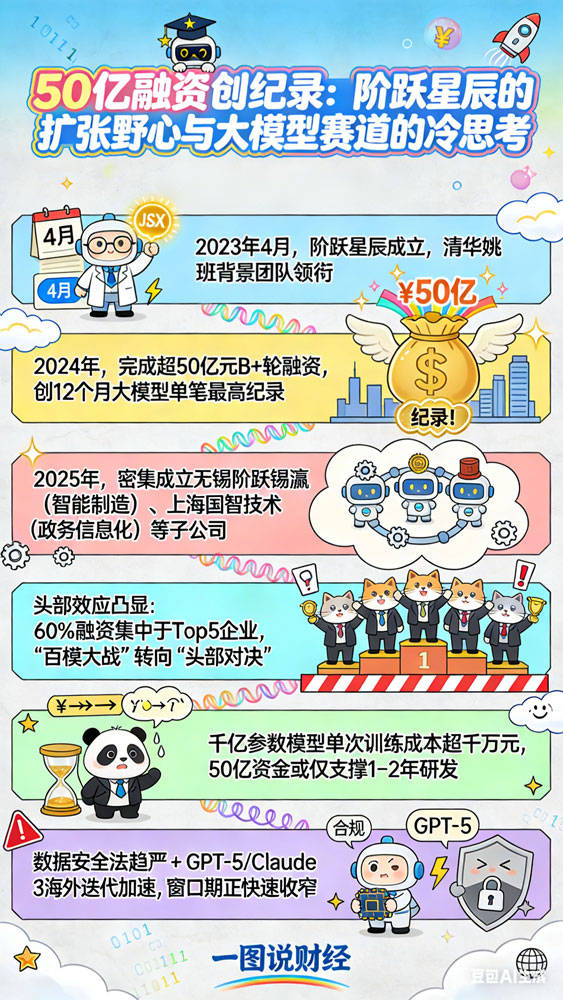
Core Viewpoint - The recent completion of over 5 billion yuan in Series B+ financing by Shanghai Jumpspace Intelligent Technology Co., Ltd. marks the highest single financing record in China's large model sector in the past 12 months, reflecting both the industry's rapid expansion and the presence of valuation bubbles [3][4]. Group 1: Company Overview - Shanghai Jumpspace was established in April 2023 and has already invested in 10 companies within a year, indicating aggressive growth and strategic positioning in the market [3]. - The company is led by renowned figures in the AI field, including Yao Ban talent Yin Qi, which enhances investor confidence in the technology's practical applications [3][4]. Group 2: Industry Trends - The large model sector is experiencing a shift from a "hundred model battle" to a "head-to-head competition," with over 60% of financing going to leading companies, indicating a trend towards resource concentration [3][4]. - The rapid expansion of Jumpspace is a strategic move to capture industry opportunities, focusing on high-value sectors such as healthcare, manufacturing, and government information technology [4]. Group 3: Financial Insights - The cost of training a large model with hundreds of billions of parameters can reach several million yuan, raising concerns about the sustainability of the 5 billion yuan funding if profitable applications are not quickly identified [4][5]. - There is a mismatch between the scale of financing and the company's current commercialization capabilities, which could lead to a "pre-expectation" bubble [4][5]. Group 4: Challenges Ahead - The industry faces challenges related to valuation bubbles and the sustainability of business models, as companies must convert financing advantages into lasting competitive strengths [5]. - Increasing regulatory requirements for data compliance and the rapid technological advancements of overseas models like GPT-5 and Claude 3 may dilute the financing advantages of domestic companies [4].
阿里发布千问最强模型,多项测试获全球第一
Guan Cha Zhe Wang· 2026-01-27 04:21
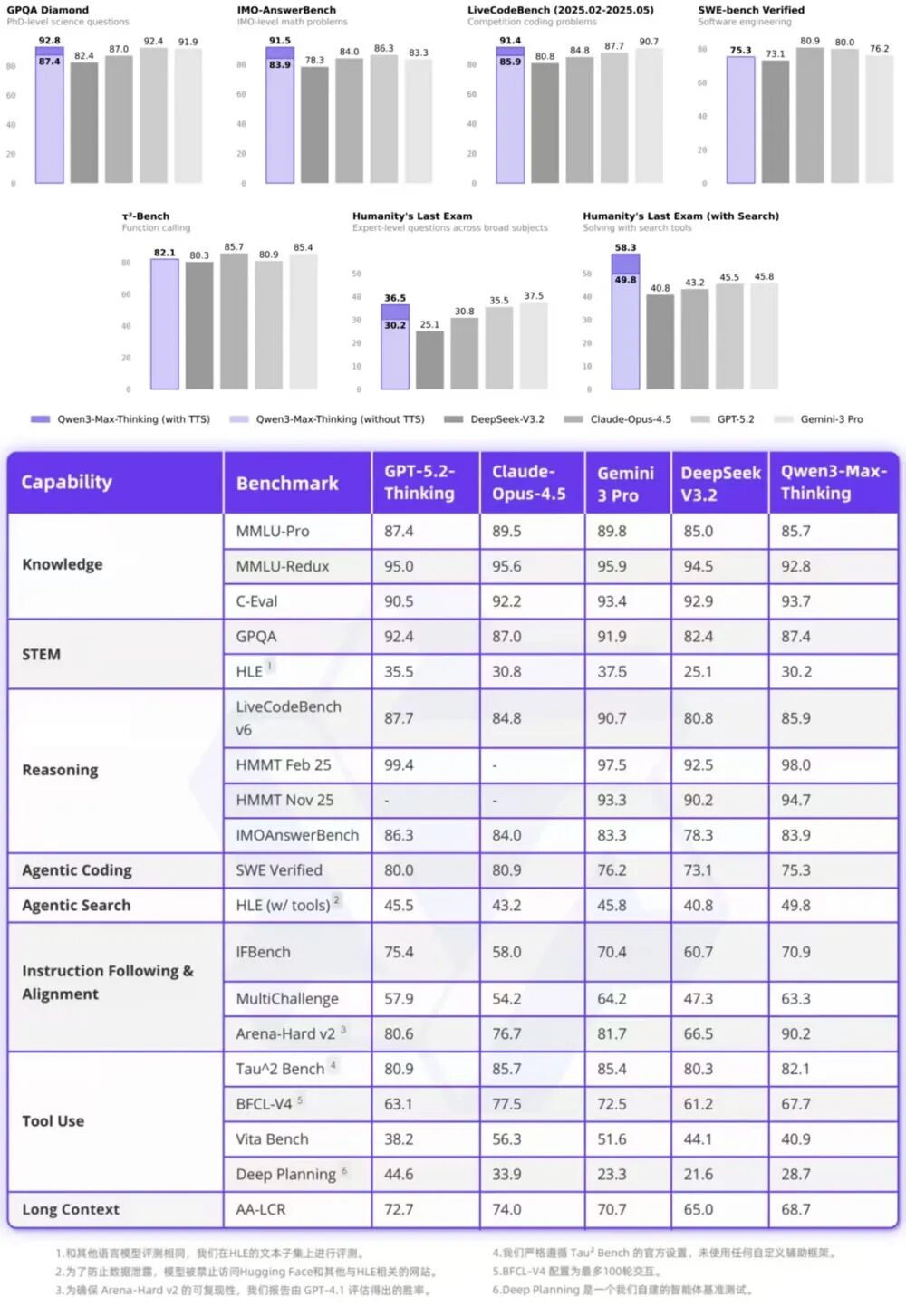
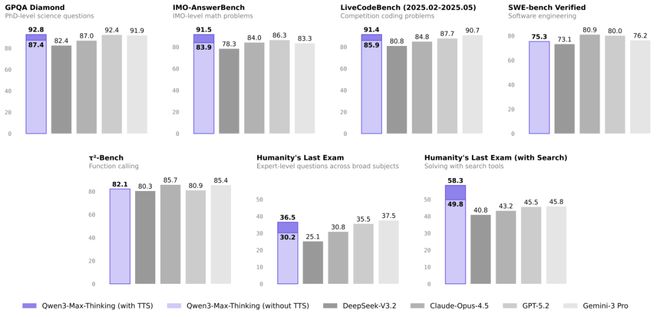
Core Insights - Alibaba has officially launched its flagship reasoning model Qwen3-Max-Thinking, which boasts over 1 trillion parameters and a pre-training data volume of 36 trillion tokens, making it the largest and most capable model in the Qwen series [1][2] - The model has set new state-of-the-art (SOTA) records in 19 recognized benchmark tests, demonstrating performance comparable to leading models such as GPT-5.2-Thinking, Claude Opus 4.5, and Gemini 3 Pro [1][4] Model Capabilities - Qwen3-Max-Thinking introduces adaptive tool invocation capabilities, allowing the model to autonomously select and utilize built-in functions like search, memory, and code interpreter without manual user input [3] - The model employs a testing expansion technique that reduces computational waste from repetitive tasks by focusing on unresolved uncertainties, enhancing context utilization efficiency [3] Performance Metrics - In the C-Eval Chinese authoritative assessment, Qwen3-Max-Thinking achieved a score of 93.7, ranking first globally and outperforming foreign models in understanding complex Chinese contexts [6] - The model scored 90.2 in the Arena-Hard v2 adversarial interaction test, significantly ahead of GPT-5.2's 85.3 and Gemini 3 Pro's 81.7, showcasing its ability to capture user subtleties and provide human-like responses [6] - In the intelligent agent tool search test (HLE (w/tools)), Qwen3-Max-Thinking scored 49.8, surpassing GPT-5.2-Thinking, demonstrating its capability to autonomously solve problems [6] Application Integration - The Qwen APP is set to integrate the new model, allowing all users to experience its capabilities, with over 400 AI service functions being launched [7] - The app has already connected with Alibaba's ecosystem, enabling functionalities such as food delivery, shopping, and flight booking, enhancing user interaction with AI [7] - The "Task Assistant" feature has been initiated for testing, which includes multi-step planning capabilities across various applications, with plans for broader user access post-testing [8] Future Developments - Alibaba plans to expand its AI capabilities globally through an overseas version, with significant investments in AI infrastructure anticipated by 2025 [9] - The company is mobilizing over a hundred developers to support the project, reflecting its commitment to both service development and the underlying technology infrastructure [9]
阶跃星辰50亿融资背后:李书福的万亿棋局
Sou Hu Cai Jing· 2026-01-27 04:13
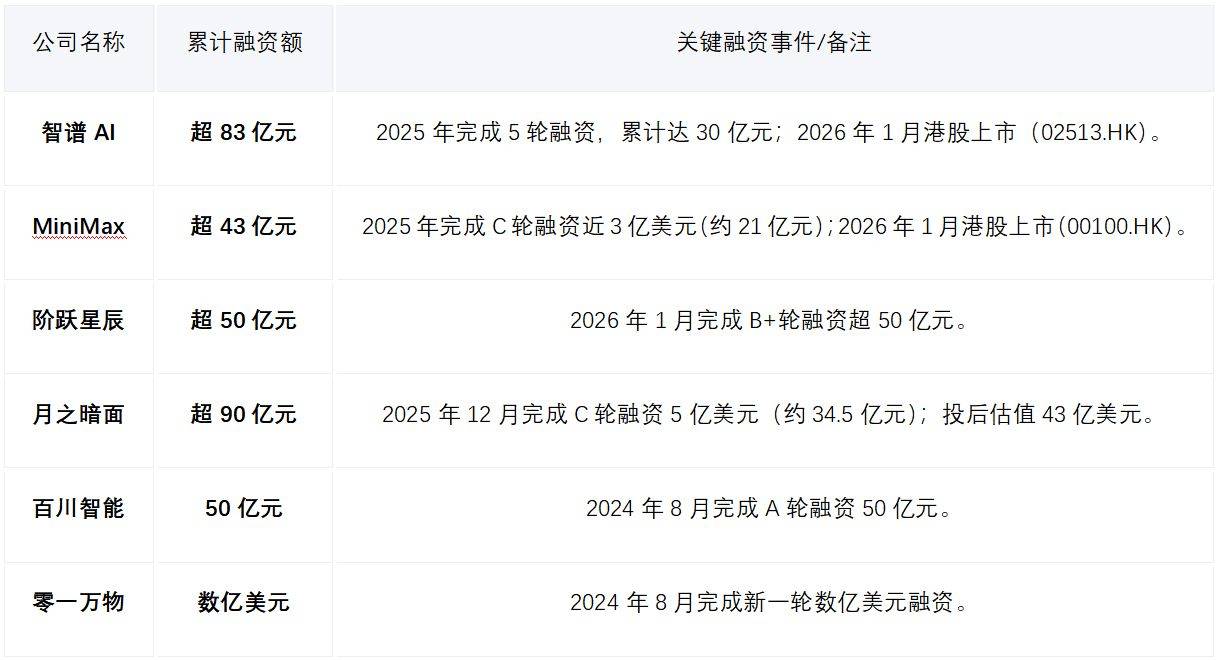
1月26日,阶跃星辰(StepFun)完成超50亿元B+轮融资,创下过去12个月中国大模型赛道单笔最高融资纪录。参投机构包括上国投先导基金、国寿股权、 浦东创投、徐汇资本、无锡梁溪基金、厦门国贸、华勤技术等产业投资人,腾讯、启明、五源等老股东进一步跟投。 阶跃星辰(StepFun)成立于2023年4月,由微软原全球副总裁姜大昕创立,联创包括张祥雨(前旷视研究院院长,印奇是旷视的创始人)、朱亦博(前微软 亚洲研究院研究员)等,已发布22款自研基座模型(含16款多模态模型),包括 Step-1千亿参数语言大模型、Step-1V 千亿参数多模态大模型、Step-2 万亿 参数 MoE 语言大模型等,产品覆盖语音交互、图像视频生成、多模态理解等领域,已落地 OPPO、荣耀、吉利汽车等手机厂商量产机型及金融、汽车等行 业场景。 据了解,印奇在阶跃星辰创立初期就深度参与,而后面阶跃星辰跟智谱AI、MiniMax、月之暗面、百川智能(医疗)、零一万物(政企)等AI六小虎的分野 也跟他有莫大的关系——阶跃星辰更强调跟智能手机、智能汽车等终端的结合,走向物理AI,而印奇任董事长的千里科技就承担着吉利汽车智能化开发的 重担。 吉 ...
前程无忧预计:今年高科技行业调薪4.9%,居薪酬增长榜首
Xin Jing Bao· 2026-01-27 04:12
Group 1 - The average salary increase for companies in 2026 is expected to slightly decrease to 4.0%, with the high-tech industry leading at 4.9% [1] - In 2025, 42.8% of companies implemented salary adjustments, down from 44.8% in 2024, with an overall salary increase of 4.1%, a decrease of 0.2 percentage points from 2024 [1] - The demand for AI talent is rising, with median monthly salaries for algorithm engineers nearing 25,000 yuan, and salaries for deep learning and natural language processing engineers also increasing [1][2] Group 2 - Salary increases for multi-modal algorithm engineers, autonomous driving algorithm engineers, machine learning engineers, and recommendation algorithm engineers exceed 23,000 yuan per month [2] - The pharmaceutical and healthcare industry shows a notable salary increase of 4.4%, while the finance and real estate sectors lag behind at 3.5% and 2.9%, respectively [2] - Salary increases for technical research and skilled professionals reach 5.3%, indicating that core talent driving innovation remains a priority for companies [2]
大模型厂商为何越来越需要证明自己?
3 6 Ke· 2026-01-27 04:04
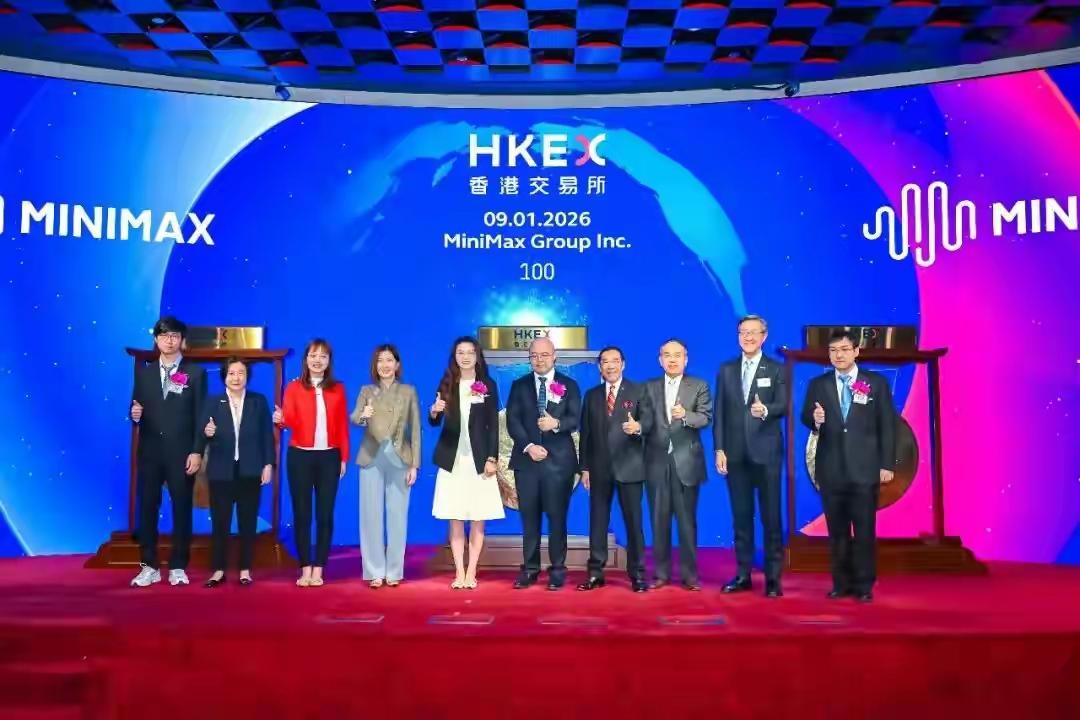
Core Insights - The AI industry is entering a phase where proving commercial value is crucial for players in the market, with significant capital expenditures expected in the coming years [1] - The competition is shifting from merely having advanced models to integrating chips, cloud services, models, and real applications into a cohesive ecosystem [1] - The trend of monetization in the large model sector is driven by technological maturity and capital cycles, with companies now focusing on profitability [2][3] Industry Trends - The AI sector is witnessing a transformation from "burning money for growth" to a focus on revenue and profit, as evidenced by the successful IPOs of companies like Zhizhu and Minimax [5][8] - Major companies are enhancing their AI monetization capabilities, with Baidu reporting over 50% year-on-year growth in its AI business revenue [6][5] - The market is becoming more discerning, with a decline in funding for AI startups, particularly in the large model sector, indicating a shift towards companies with clear commercialization paths [8][12] Competitive Landscape - The competitive dynamics are evolving, with a clear distinction emerging between companies that can deliver practical solutions and those that cannot [12][14] - The industry is expected to undergo a significant restructuring by 2026, with three tiers of companies emerging: ecosystem giants, vertical leaders, and technology specialists [13][14] - Companies lacking core competencies are likely to be eliminated, while those with technological barriers and commercial capabilities will gain more resources [14] Market Opportunities - The future of the large model industry will focus on practical applications, with AI becoming an essential part of production and daily life [14][16] - Key attractive sectors include AI hardware, digital services, and commercial aerospace, which are expected to see renewed growth and opportunities [16]


腾讯需要一场胜利
3 6 Ke· 2026-01-27 03:50
Core Viewpoint - Tencent has shifted from a passive observer to an aggressive player in the AI model arena, aiming to replicate the success of WeChat red envelopes with its new product, Yuanbao, which includes a cash giveaway of 10 billion yuan and a new group chat feature called "Yuanbao Pai" [1][2]. Group 1: Product Strategy - The launch of Yuanbao aims to leverage AI and social interaction, with the goal of creating a new social dynamic within group chats [1][5]. - The historical context of WeChat red envelopes is referenced, highlighting its rapid success during the 2014 Spring Festival, which caught competitors off guard [3][4]. - Yuanbao faces a more complex competitive landscape compared to WeChat in 2014, as it is not merely adding a feature to an established social platform but attempting to create a new social experience through an AI assistant [4][5]. Group 2: Competitive Landscape - The AI assistant market is crowded with established players, making it challenging for Yuanbao to gain traction [4]. - Tencent's previous successes were based on clear market opportunities and stable rules, but the AI model landscape is rapidly evolving, complicating Tencent's strategy [8][10]. - The company has experienced a decline in visibility and market presence since the initial launch of its AI model, "Hunyuan," which was initially well-received but has since lost momentum [10][11]. Group 3: Internal Challenges - Tencent's traditional strategy of waiting for the right moment to enter a market is proving ineffective in the fast-paced AI sector [8][12]. - The company has a wealth of data from over 900 business scenarios, but these capabilities are fragmented and not effectively integrated into a cohesive AI model [13][14]. - Recent organizational restructuring aims to consolidate AI teams and enhance the development of its core AI capabilities [14]. Group 4: Future Outlook - Tencent is under pressure to deliver a significant victory in the AI space, similar to its past successes with QQ, WeChat, and WeChat Pay [15][16]. - The upcoming 2026 Spring Festival is seen as a critical moment for Yuanbao to establish itself in users' daily habits, rather than being a temporary novelty [17][18]. - The success of Yuanbao will determine Tencent's position in the AI landscape for the next decade, emphasizing the need for innovation beyond past methodologies [19][20].
憋了4个月,阿里最大最强模型正式版发布,附一手实测
3 6 Ke· 2026-01-27 03:08
Core Insights - Alibaba has launched Qwen3-Max-Thinking, its most advanced reasoning model, which competes effectively with top models like GPT-5.2-Thinking and Gemini 3 Pro across 19 benchmark tests [1][4]. Model Capabilities - Qwen3-Max-Thinking demonstrates strong performance in various benchmarks, achieving scores close to or exceeding those of leading models in categories such as Knowledge, STEM, Reasoning, and Tool Use [3]. - The model features adaptive tool invocation capabilities, allowing it to automatically call upon search engines and code interpreters as needed, enhancing user experience [4][10]. Technical Innovations - The model employs a unique reasoning approach that focuses on efficient use of computational resources, prioritizing intelligent reasoning processes over merely increasing parallel reasoning paths [4][16]. - Qwen3-Max-Thinking integrates a context window of 256k and is believed to have over 1 trillion parameters, similar to its preview version [4]. Pricing and Accessibility - The API for Qwen3-Max-Thinking is available at a competitive rate of 2.5 yuan per million input tokens and 10 yuan per million output tokens, providing good value for users [5][6]. Additional Features - On the same day, Alibaba also released the Qwen3-TTS series, which includes advanced voice synthesis capabilities such as voice cloning and natural language-based voice control [7]. - The model's ability to combine search and code interpretation has been tested, showing its capability to handle complex tasks effectively, although some limitations in search accuracy were noted [10][15]. Industry Context - Alibaba's advancements in AI models reflect a broader trend in the industry towards optimizing computational efficiency and enhancing reasoning capabilities, addressing the constraints of available computational power in AI research [26].