两山理念

Search documents
做大做强绿色发展引擎——推动“十五五”时期经济社会发展向新而行③
Ren Min Ri Bao· 2025-11-18 03:09
Group 1 - The core viewpoint emphasizes the importance of developing the under-forest economy and strengthening the forestry and grass industry, as highlighted in the "14th Five-Year Plan" and the government work report [1] - By 2024, the total output value of the national forestry and grass industry is projected to reach 10.496 trillion yuan, with four pillar industries exceeding one trillion yuan each: wood processing, economic forests, forest tourism, and the under-forest economy [1] - The development of the under-forest economy and forestry industry is seen as a crucial approach to promote rural revitalization and the transformation of the "Two Mountains" concept [1] Group 2 - The article discusses the challenges of ecological product value realization, which has historically faced difficulties in measurement, collateralization, trading, and monetization [2] - The establishment of mechanisms for ecological product value realization and compensation is essential for sustainable and stable green development, as demonstrated by various local initiatives [2] - Continuous optimization of economic policies supporting green low-carbon development is necessary to provide robust support for green lifestyles and development [2] Group 3 - The current green development landscape faces deep-seated contradictions in systems, standards, and benefit structures, indicating a need for further reform and overcoming bottlenecks [3] - The article highlights the role of green production and consumption in enhancing food security, optimizing transportation, and promoting a circular economy [3] - Accelerating the formation of green production and lifestyle patterns is expected to strengthen the development momentum of the Chinese economy [3]
做大做强绿色发展引擎(评论员观察)
Ren Min Ri Bao· 2025-11-17 22:20
Core Insights - The article emphasizes the importance of establishing a robust mechanism for realizing the value of ecological products and ecological compensation, which will stimulate societal participation in green development [1][2][3] Group 1: Economic Development - The "14th Five-Year Plan" suggests the development of the under-forest economy and the expansion of the forestry and grass industry, with a projected total output value of 10.496 trillion yuan for the national forestry and grass industry by 2024 [1] - The under-forest economy and forestry industry are identified as key drivers for promoting rural revitalization and transforming the "Two Mountains" concept into practical outcomes [1] Group 2: Mechanisms and Policies - There are challenges in the realization of ecological product value, including difficulties in measurement, collateralization, trading, and monetization [1] - Various regions are implementing measures to enhance the realization of ecological product value, such as Beijing's technical standards for quantifying ecological service value and Xiamen's exploration of carbon trading through waste classification [2] - Continuous optimization of economic policy tools supporting green low-carbon development is crucial for providing strong backing for green development methods and lifestyles [3] Group 3: Challenges and Opportunities - Current green development faces deep-seated contradictions in systems, standards, and interest structures, with room for improvement in carbon market trading scale and activity [3] - The process of addressing these challenges is seen as a pathway for development, with a call for ongoing reforms to consolidate advantages and eliminate bottlenecks during the "14th Five-Year" period [3]
做大做强绿色发展引擎——推动“十五五”时期经济社会发展向新而行③(评论员观察)
Ren Min Ri Bao· 2025-11-17 21:57
Core Viewpoint - The emphasis on developing the under-forest economy and forestry industry is crucial for promoting green development and achieving rural revitalization, as highlighted in the "14th Five-Year Plan" and government reports [1][2]. Group 1: Economic Development - The total output value of the national forestry and grass industry is projected to reach 10.496 trillion yuan by 2024, with four pillar industries exceeding 1 trillion yuan each: wood processing, economic forests, forest tourism, and under-forest economy [1]. - The transformation of the "Two Mountains" concept is essential for rural revitalization, with the under-forest economy and forestry industry serving as key drivers [1]. Group 2: Mechanisms and Policies - The establishment of effective mechanisms for realizing the value of ecological products and ecological compensation is vital for encouraging participation in green development from all sectors of society [2][3]. - Various regions are implementing innovative policies, such as quantifying ecological service values and promoting ecological product value conversion, to support sustainable development [2][3]. Group 3: Challenges and Opportunities - There are existing deep-seated contradictions in the green development framework, including the need for improved carbon market activity and the maturity of ecological product pilot projects [3]. - The ongoing reforms and policy support are expected to enhance the positive cycle of the "Two Mountains" concept, providing essential resources for industry growth [3].
安徽旌德灵芝:林下生“金” 链上增值
Ke Ji Ri Bao· 2025-11-13 02:23
Core Insights - Anhui Province's Jingde County is enhancing the value of the "Jingde Ganoderma" brand and promoting high-quality development of the Ganoderma industry through a tourism-driven strategy [1][2] Company Overview - Anhui Huangshan Yunle Ganoderma Co., Ltd. has established a complete industrial chain from breeding to research and development, holding 12 national invention patents and successfully cultivating five new Ganoderma varieties [1][2] - The company has built a deep mountain under-forest planting base, utilizing natural secondary forests and returning farmland to forest, which enhances the quality of Ganoderma cultivation [2] Production and Economic Impact - In 2024, Yunle Ganoderma is projected to achieve an annual output value exceeding 40 million yuan, producing 100 tons of Ganoderma and spore powder, benefiting over 100 local farmers with an average annual income increase of 30,000 yuan [2] - The county has transitioned from wild harvesting to artificial cultivation combined with high-tech processing and pharmaceutical production, resulting in a comprehensive production, processing, and marketing system [2] Policy Support - Jingde County has implemented supportive policies for the Ganoderma industry, including tax reductions, technical transformation support, and product research and development subsidies, facilitating industry upgrades [2] - The county has developed over 200 products across ten series, including Ganoderma slices, spore powder, polysaccharide peptides, and tea, establishing a reputation as "China's Ganoderma Capital" [2]
践行“两山”理念 共促绿色发展
Ren Min Ri Bao· 2025-11-10 22:36
Core Viewpoint - China is actively promoting green development and ecological civilization by collaborating with developing countries to protect the environment and develop green industries, exemplified by various projects in Egypt, Bosnia and Herzegovina, and Peru [1][2][3][4][5][6][7][8]. Group 1: Egypt's "Canal Sugar" Agricultural Project - The "Canal Sugar" project transforms 50,000 hectares of desert into a sugar beet farm, achieving the feat of "growing sugar in the desert" through collaboration between Chinese companies and Egypt [2][3]. - The project utilizes advanced technology from China, including a precision drip irrigation system and innovative air foam drilling technology, significantly improving efficiency and reducing drilling time from 30 days to 14 days [2][3]. - Once fully operational, the project will produce 900,000 tons of sugar annually, increasing Egypt's self-sufficiency in sugar from 85% to 100% and saving approximately $500 million in sugar imports each year [2][3]. Group 2: Bosnia and Herzegovina's Ivo Vick Wind Power Project - The Ivo Vick wind power project, with a total installed capacity of 84 MW, is the largest wind power station in Bosnia and Herzegovina and the first renewable energy project built by Chinese companies in the region [3][4]. - The project generates an average annual electricity output of 260 million kWh, providing clean energy for 100,000 households [3][4]. - To protect local wildlife, the wind turbine blades are painted red to help birds avoid collisions, demonstrating a balance between ecological protection and economic development [4]. Group 3: Peru's Chagaya Hydropower Station - The Chagaya hydropower station, with a total installed capacity of 456 MW, is Peru's third-largest hydropower station, contributing 5.31% to the national electricity generation [5][6]. - A dedicated cleaning team has been established to remove debris from the reservoir, which has led to the resurgence of fish populations and the establishment of a new ecosystem [5][6]. - The project has also initiated a conservation program for endangered orchids and has planted over 100,000 trees, emphasizing the integration of ecological priorities into energy operations [6]. Group 4: Thailand's Mangrove Protection Initiative - China and Thailand have established a joint mangrove protection demonstration area to enhance cooperation in mangrove conservation and restoration efforts [7][8]. - Chinese companies have actively participated in mangrove planting activities, successfully planting 12,000 saplings with a survival rate exceeding 85% [8]. - The initiative aims to balance economic development with environmental protection, providing a successful model for ecological civilization construction [8].
环球时报社评:中国电动汽车为何成为气候大会“官方严选”
Bei Jing Ri Bao Ke Hu Duan· 2025-11-10 03:07
Group 1 - The COP30 conference will take place in Belem, Brazil, from November 10 to 21, highlighting China's role in promoting global green and low-carbon transformation [1] - China's electric vehicles were prominently featured at the climate summit, symbolizing its commitment to global climate governance [1] - The presence of electric vehicles and reduced emissions in Belem reflects the integration of green technology into daily life [1] Group 2 - COP30 marks the 10th anniversary of the Paris Agreement and is seen as a critical juncture for climate negotiations, with China recognized as a leading force in climate action [2] - Despite challenges such as geopolitical conflicts and funding issues, China's commitment to reducing emissions has been acknowledged globally, with its clean energy solutions becoming increasingly popular [2] - The decline in clean energy costs has countered the negative impacts of reduced climate financing from developed countries, making Chinese solar panels and batteries the cheapest power sources in many developing nations [2] Group 3 - Over the past decade, China's role in climate governance has evolved significantly, with Western media now recognizing its rapid advancements in clean technology manufacturing [3] - China's approach to climate governance emphasizes practical cooperation without political conditions, fostering equitable and sustainable climate action among developing countries [3] - The "Two Mountains" philosophy, which balances environmental protection with economic development, has become a model for other developing nations [3] Group 4 - While some countries remain cautious about China's electric vehicles, many others are embracing this green wave, emphasizing the need for global cooperation in addressing climate change [4] - The international community is encouraged to work together towards sustainable development, recognizing that no country can address climate challenges in isolation [4]
社评:中国电动汽车为何成为气候大会“官方严选”
Huan Qiu Wang Zi Xun· 2025-11-09 15:44
Group 1 - The COP30 conference, taking place from November 10 to 21 in Belém, Brazil, symbolizes China's significant role in promoting global green and low-carbon economic transformation [1][2] - China's presence at COP30, particularly through the use of Chinese electric vehicles by leaders and representatives, highlights the integration of green technology into daily life in Brazil [1] - The conference marks the 10th anniversary of the Paris Agreement, emphasizing the need for actionable commitments to avoid irreversible climate system breakdowns [2] Group 2 - Over the past decade, China's commitment to emission reduction has become increasingly recognized, with the country being seen as a leading force in global climate governance [2][3] - The decline in climate financing from developed countries is being offset by the decreasing costs of clean energy technologies, particularly solar panels and battery combinations from China [2] - China's "Two Mountains" philosophy, which balances economic development with environmental responsibility, serves as a model for other developing countries in achieving sustainable climate action [3] Group 3 - While some countries remain cautious about Chinese electric vehicles, many others are embracing this green wave, highlighting the importance of global cooperation in addressing climate change [4]
“两山”理念20年丨浙江湖州:从“因矿而生”到“因矿重生”
Zhong Guo Zi Ran Zi Yuan Bao· 2025-11-05 22:40
Core Viewpoint - Huzhou has transformed from a mining city with ecological scars into a model of green development, embodying the principle that "lucid waters and lush mountains are invaluable assets" through systematic ecological restoration and innovative practices [1][3][7]. Group 1: Historical Context and Policy Initiatives - Huzhou was known for its mining industry, which led to significant ecological damage due to high-intensity extraction practices [1]. - The concept of "lucid waters and lush mountains are invaluable assets" was introduced by Xi Jinping during a visit in 2005, marking a pivotal shift towards ecological civilization [1]. - Over the past 20 years, Huzhou has implemented the "Two Mountains" concept, focusing on ecological restoration and sustainable development [1][3]. Group 2: Phased Development of Green Mining - The transition to green mining occurred in four stages: 1. **Pilot Exploration (2005-2010)**: Initiated green mining construction trials and established standards for resource utilization and environmental protection [3]. 2. **Comprehensive Promotion (2011-2015)**: Expanded green mining initiatives citywide, creating a regulatory framework for sustainable practices [3]. 3. **Demonstration Creation (2016-2020)**: Huzhou became a national model for green mining, integrating local regulations and standards [3]. 4. **Intelligent Enhancement (2021-Present)**: Focused on integrating smart technology with green practices, establishing intelligent green mines [4]. Group 3: Systematic Innovations in Ecological Restoration - Huzhou's ecological restoration has evolved from merely addressing past damages to creating economic value through sustainable practices [5]. - The approach shifted from isolated repairs to a comprehensive planning strategy that integrates land use and ecological restoration [5]. - A scientific evaluation system was developed to ensure precise management of mining sites, moving from experience-based to data-driven governance [5]. Group 4: Achievements and Impact - Huzhou has successfully reduced the number of mining operations from over 1,000 to 28, achieving a "zero death" safety record since 2016 [7]. - The city boasts a 100% completion rate for green mines, with 15 recognized nationally, transforming ecological scars into environmental assets [7]. - Resource utilization efficiency has reached over 99%, with numerous patents filed, showcasing innovation in the mining sector [7]. - Successful case studies include the transformation of abandoned mines into parks and industrial hubs, attracting significant investments and tourism [8].
湘西州凤凰县以“守”调“色”绘就新篇
Zhong Guo Huan Jing Bao· 2025-11-05 01:11
Core Viewpoint - Fenghuang County has successfully integrated ecological preservation with economic development, earning multiple accolades such as "National Ecological Civilization Construction Demonstration Zone" and "National 5A Tourist Attraction" [2][3]. Group 1: Ecological Environment Management - Fenghuang County has invested 1.2 billion yuan to build 13 sewage treatment plants and over 60 kilometers of pipelines, establishing a "construction and management" system [2]. - The county has formed a team of over 2,000 personnel for river, forest, and cleanliness protection, ensuring that water quality standards have been met for three consecutive years [2]. - Projects like the "Water Beautiful Xiang Village" and the management of small rivers have been implemented to enhance the ecological landscape [2]. Group 2: Air Quality Improvement - The county has adopted multiple measures to combat air pollution, achieving an air quality good rate of 98.2% from January to October this year [3]. - Strict controls have been placed on dust emissions, including road watering and the regulation of construction sites [3]. Group 3: Green Development Initiatives - Since 2013, Fenghuang County has focused on ecological restoration, particularly addressing pollution from historical mining activities [3]. - The county has established a model for the restoration of mining sites, ensuring that no high-pollution or high-energy-consuming projects are introduced [3]. Group 4: Cultural and Tourism Development - Fenghuang County promotes the integration of culture and tourism, with initiatives like the "company + cooperative + village collective" model to share tourism benefits [3]. - The county aims to enhance rural income through ecological agriculture, with projected per capita disposable income reaching 34,861 yuan in 2024 [3]. Group 5: Comprehensive Development Strategy - The county government is committed to ecological restoration, mining governance, and cultural tourism integration, further enriching the "Fenghuang model" [4].

点绿成金 向美而行 “两山”理念绘就浙江新时代“富春山居图”
Zhong Guo Xin Wen Wang· 2025-11-01 10:52
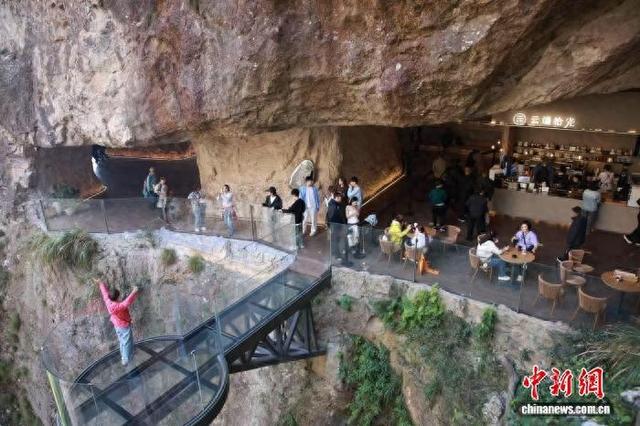
Core Viewpoint - Zhejiang province is transforming its economy by integrating ecological restoration with innovative development, leading to a model where environmental protection and economic growth coexist harmoniously [1][4][10] Group 1: Ecological Restoration and Economic Development - The transformation of abandoned mining sites into popular tourist attractions exemplifies the successful shift from an extraction-based economy to an ecological economy in Zhejiang [3][4] - The "geological + ecological + industrial" development model has been implemented, with projects like the "Waterfall Café" in Anji County expected to create 120 jobs and generate over 300,000 RMB annually for the local community [3] - The province has established 49 national ecological civilization demonstration zones and 14 "Green Water and Green Mountain is Gold Mountain and Silver Mountain" innovation practice bases since 2020, showcasing its commitment to ecological development [4][6] Group 2: Innovative Financial Mechanisms - Zhejiang has introduced the first provincial-level GEP (Gross Ecosystem Product) accounting standards in China, which standardizes the valuation of ecosystem services [7] - The province is exploring ecological product value realization mechanisms, including the development of "ecological credit loans" and the establishment of "Two Mountains Cooperatives" to facilitate carbon trading [6][9] Group 3: Green Energy and Sustainable Practices - The "Fishing and Solar Complementarity" project in Wenzhou, which combines solar power generation with aquaculture, is a key initiative aimed at reducing carbon emissions and enhancing energy independence [9] - Companies like Tongkun Group are implementing waste reduction and recycling practices, showcasing a commitment to green manufacturing and sustainable resource management [9][10] Group 4: High-Tech and Green Industry Growth - Zhejiang is fostering the growth of high-tech industries, with significant investments in sectors such as new energy, advanced equipment, and biomedicine, leading to a 15.2% year-on-year increase in high-tech industry investment [10] - The province's strategic focus on integrating ecological governance with industrial upgrading is creating new growth opportunities and enhancing overall economic resilience [10]