
公平竞争

Search documents
公牛回应宣传语争议称有权威数据支撑,已起诉家的公司索赔420万
Mei Ri Jing Ji Xin Wen· 2025-12-21 01:36
Group 1 - The core issue revolves around a dispute between Bull Group and Jia's Company regarding the misleading nature of the slogan "7 out of 10 Chinese families use Bull," which has led to legal action by Bull Group seeking 4.2 million yuan in damages [1] - Bull Group claims that over 200 videos targeting them were organized and published by Jia's sales personnel on social media, prompting Bull to pursue legal measures to protect its brand reputation and industry order [1] - Bull Group asserts that their slogan is backed by rigorous third-party research and complies with the Advertising Law of the People's Republic of China, emphasizing the importance of legal discourse over public opinion attacks [1] Group 2 - The data supporting the slogan comes from a survey conducted by Shanghai Shanjun Consulting Group, covering the entire household market in China (excluding Hong Kong, Macau, and Taiwan), indicating that over 70% of families have used Bull products [1] - The statistical analysis period for the data is from January 1, 2021, to December 31, 2024, with the statement regarding the research completion set for August 2025 [1]



必须做到既“放得活”又“管得好”——学习领会“五个必须”做好明年经济工作
Xin Hua Wang· 2025-12-17 14:49
Group 1 - The core message emphasizes the need for a balance between "letting go" and "managing well" in economic work, highlighting the importance of breaking down institutional barriers while ensuring a rule-based economy [1][9] - The concept of "letting go" aims to eliminate obstacles to productivity, while "managing well" focuses on establishing a legal framework for economic activities [1][6] - The central economic work meeting outlines the necessity of combining effective market mechanisms with proactive government roles to stimulate economic vitality and ensure stability [1][2][12] Group 2 - The implementation of machine-based bidding processes in Hunan has increased the winning rate of private enterprises from 73.65% to 82.9%, showcasing a move towards a fairer competitive market environment [2] - The "14th Five-Year Plan" emphasizes the need for a unified, open, competitive, and orderly market system, aiming to enhance the role of the market in resource allocation [2][10] - The introduction of new regulations and measures, such as the Administrative Law Enforcement Supervision Regulations, aims to strengthen oversight and accountability in market operations [5][10] Group 3 - The establishment of a social credit system is identified as a foundational aspect of the market economy, with recent policies aimed at enhancing credit construction and ensuring fair competition [10][11] - The central economic work meeting has set clear directives for stabilizing the real estate market and managing local government debt risks, emphasizing the importance of risk prevention in economic governance [11] - The need for continuous reform to improve the efficiency of market mechanisms and government interventions is highlighted, with various local initiatives aimed at enhancing market vitality [12][13][14]
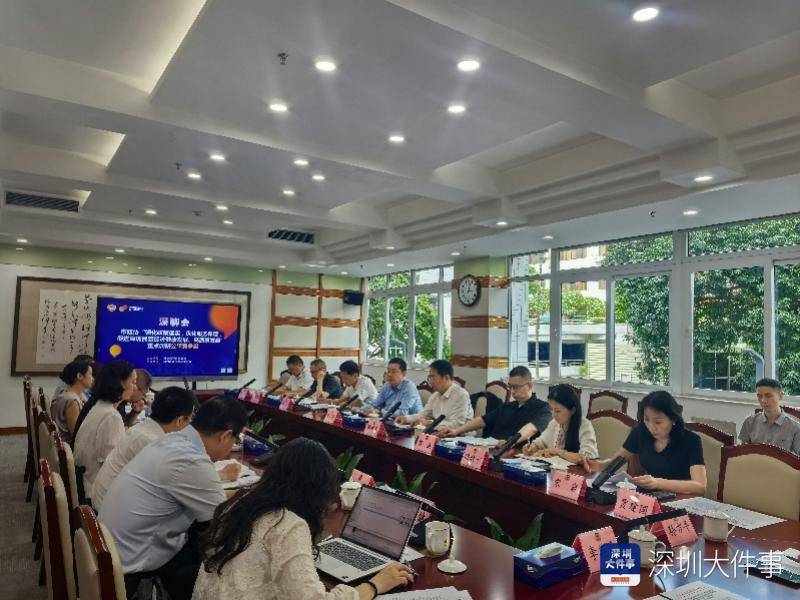
年度复盘|这四天四场深聊会探讨“大树底下如何长草”
Sou Hu Cai Jing· 2025-12-17 13:14
Core Viewpoint - The recent release of the Guangdong Provincial Government's 15th Five-Year Plan emphasizes the importance of private enterprises in Shenzhen, aiming to enhance their development and protect their rights [1][2]. Group 1: Private Economy Development - Shenzhen is recognized as the "first city of private economy," with over 2.6 million private enterprises expected by 2024, marking an increase of over 100,000 [2]. - The city aims to create a high-level business environment to support the growth of private enterprises from inception to maturity [2]. - The Shenzhen Municipal Political Consultative Conference has been actively engaging in discussions to promote healthy and high-quality development of the private economy [1][2]. Group 2: Legislative Support - Fair competition is a primary concern for private enterprises, with legislative efforts underway to enhance the local legal framework supporting private economic growth [2][5]. - A legislative task force has conducted extensive consultations with over 300 private enterprises to gather input for drafting relevant laws [2]. Group 3: Financing Challenges - Mid-sized enterprises, particularly those with 500-2000 employees, face significant financing challenges, being caught between small and large enterprises [5][7]. - There is a strong call for financial institutions to provide larger credit lines and longer-term financial products to support these enterprises [7]. - The need for innovative financing solutions, such as direct loan renewals, is emphasized to alleviate the financial pressure on small and medium-sized enterprises [7] . Group 4: Rights Protection - Legal protections for private enterprises are crucial for fostering long-term planning and confidence in the business environment [9][11]. - The focus is on ensuring equal treatment in legal disputes involving different ownership types and enhancing intellectual property protections [11]. Group 5: Individual Economy Activation - Individual businesses are vital to the local economy, with 1.6872 million registered individual businesses as of March 2025, representing 38% of all commercial entities [12]. - The rise of e-commerce and live streaming is seen as a new direction for individual businesses, with discussions on balancing regulation and development [13][15]. - The government is encouraged to provide skills training and support for individual businesses to thrive in a competitive environment [13][15]. Group 6: Urban Management and Economic Vitality - The discussions also highlighted the need to balance urban cleanliness with economic vitality, particularly concerning individual businesses like street vendors [15]. - Suggestions include enhancing local特色 and promoting cultural heritage to attract consumers, especially in light of tourism opportunities [15].
中国支付清算协会:鼓励市场主体积极参与条码支付互联互通
Bei Jing Shang Bao· 2025-12-16 11:24
Core Viewpoint - The China Payment and Clearing Association has issued an initiative to promote the healthy development of the mobile payment market, emphasizing innovation, fair competition, interoperability, and risk prevention [1] Group 1: Encouragement of Payment Innovation - The initiative encourages market participants to leverage their advantages and understand the changing needs of users and merchants, leading to continuous innovation in payment products and services [1] - It calls for increased investment in innovation while ensuring compliance with laws and regulations, aiming to optimize mobile payment offerings for consumers and merchants [1] Group 2: Maintenance of Fair Competition - Market participants are urged to strictly adhere to the Anti-Unfair Competition Law of the People's Republic of China to maintain a fair competitive market order [1] - The initiative promotes equal collaboration among businesses and encourages product innovation and technological upgrades to enhance competitiveness [1] - It prohibits practices that restrict the display of other legitimate payment products or limit business cooperation among market entities [1] Group 3: Promotion of Interoperability - The initiative encourages active participation in barcode payment interoperability, advocating for an open and equal acceptance network across various scenarios [1] - It aims to build an interconnected mobile payment industry ecosystem and contribute to the establishment of a unified domestic market [1] Group 4: Strengthening Risk Prevention - Market participants are advised to adhere to innovation while maintaining regulatory compliance, utilizing technologies like big data and artificial intelligence to enhance risk prevention capabilities [1] - The initiative emphasizes the importance of joint risk prevention and control, explicitly stating that payment channels must not be provided for illegal transactions [1]
新氧再“撕”上游供应商:过度控价时代一去不复返
Bei Jing Shang Bao· 2025-12-13 03:16
Core Viewpoint - Beijing Xinyang Technology Co., Ltd. (referred to as "Xinyang") has issued a statement in response to recent public criticisms from upstream medical beauty manufacturers regarding its product procurement channels and service capabilities, asserting that these claims are misleading and damaging to its reputation [1][2] Group 1: Company Response - Xinyang emphasizes that all medical devices used are sourced from legally qualified suppliers and are traceable through proper documentation [2] - The company asserts that its chain of clinics operates as legally established medical institutions, with physicians practicing in accordance with the Medical Practitioners Law [2] - Xinyang criticizes upstream manufacturers for prioritizing internal rules over regulatory requirements and consumer rights, stating that these manufacturers have a legal obligation to provide support to compliant medical institutions [2] Group 2: Industry Context - The statement highlights a shift in the medical beauty industry from a market dominated by scarce registration certificates and price control to one characterized by price transparency and fair competition [2] - Xinyang argues that attempts by upstream companies to create a sense of consumer anxiety through terms like "official" and "certified" are detrimental to market dynamics and consumer interests [2]

胡晓炼:市场竞争的核心内涵是反垄断和反不正当竞争
Mei Ri Jing Ji Xin Wen· 2025-12-12 07:30
每经讯:12月11日至13日,由每日经济新闻与海南国际经济发展局联合主办的2025第十四届上市公司发 展年会暨海南自贸港开放机遇交流大会系列活动在海口举行。中国国际经济交流中心副理事长、中国进 出口银行原董事长胡晓炼12日发表主旨演讲时表示,市场竞争的主体只有在公平竞争环境下才能够更好 地发展,市场竞争的议题不仅要从国有和非国有企业的角度来看,更要看到它的核心内涵是反垄断和反 不正当竞争。因此,海南自由贸易港要创造公平竞争的市场环境,也需要从这两个方面入手。 (文章来源:每日经济新闻) ...
招商靠“内卷”,不如练内功
Jing Ji Ri Bao· 2025-12-11 00:10
招商引资,一直以来是地方政府发展经济的关键抓手,过去数十年对推动我国经济高速增长发挥了 重要作用。然而,随着各地招商比拼之势愈演愈烈,各种违规"小政策""土政策"凿出一个个"税收洼 地",不但加重了地方财政负担,也加剧了不公平竞争,割裂了全国统一大市场,给产业健康发展埋下 隐忧。 习近平总书记在《纵深推进全国统一大市场建设》一文中明确提出,要"着力整治地方招商引资乱 象""统一政府行为尺度",要求地方在推动经济发展特别是招商引资时,哪些能干哪些不能干有明确规 矩,不能各行其是。 "内卷式"招商必将走向尽头。不过,彻底摆脱路径依赖、重塑招商逻辑,仍有一段长路要走。 "补贴竞赛"退场 "零和博弈"仍在 土地让利、税收返还、奖励补贴,是传统的招商引资"三板斧"。"血拼式"招商大行其道,看似为地 方引入大量企业,实则不少都"水土不服"、后劲不足。超出地方承受能力的巨额投入,已偏离了招商初 衷。 比如,一家汽车机器视觉领域企业多年来依赖政府补贴"输血"。2022年至2024年,该公司实现净利 润约1.47亿元,而同期获得的税收优惠和政府补助就高达上亿元。2025年,随着补助减少,这样的"纸 面富贵"将难以持续。 在各地 ...
从政府采购新规看开放气度
Sou Hu Cai Jing· 2025-12-10 23:44
规模超3.3万亿元的中国政府采购市场,迎来了一项重大变革。 今年9月,国务院办公厅印发《关于在政府采购中实施本国产品标准及相关政策的通知》(以下简称 《通知》)。这份定于明年1月1日起施行的文件,明确了"本国产品"的认定标准,设定了可量化、可检 验、可追溯的"硬杠杠",提升了政府采购的透明度,将为参与政府采购竞标的各类经营主体提供更稳定 的政策预期。 开放是中国式现代化的鲜明标识。党的二十届四中全会《建议》提出,"稳步扩大制度型开放"。在制定 实施各项政策的过程中,进一步提高以开放促改革、促发展的自觉性,持续建设市场化、法治化、国际 化一流营商环境,将为高质量发展蓄积更强的动力。 作者:曲哲涵 政府采购使用的是财政资金,对本国产品提供合理支持,符合国际惯例,关键在于能否科学界定其范围 和标准,确保平等对待各类经营主体。《通知》明确"本国产品"的标准,同时明确禁止以所有制形式、 组织形式、股权结构、投资者国别以及其他不合理条件对供应商实行差别待遇或者歧视待遇,体现了促 进公平竞争的改革方向,为在华投资的各类企业送上政策利好。 来源:人民日报 法治是最好的营商环境,公开透明是政府采购的生命线。自政府采购法实施以来 ...
招商靠“内卷” 不如练内功
Jing Ji Ri Bao· 2025-12-10 22:53
Core Viewpoint - Local governments have relied on investment attraction as a key strategy for economic development, but increasing competition has led to unfair practices and financial burdens, prompting a need for regulatory reform to ensure fair competition and a unified national market [1][2]. Group 1: Investment Attraction Practices - Traditional methods of investment attraction, such as land concessions and tax rebates, have led to unsustainable practices that deviate from the original intent of attracting businesses [2]. - The implementation of the "Fair Competition Review Regulations" in August 2024 marks a legal end to certain competitive practices, although some localities continue to find loopholes [2]. - There is a trend of "blindly seeking scale" in investment attraction, resulting in redundant construction and misallocation of resources [4]. Group 2: Economic and Competitive Pressures - Local governments face significant pressure from performance evaluations and fiscal constraints, leading to aggressive competition for investment [7][10]. - The relationship between government performance metrics and business success creates a "performance race" that can distort investment strategies [7]. - Some regions still cling to outdated investment attraction concepts, failing to adapt to the requirements of a unified national market [9]. Group 3: Policy and Structural Changes - There is a need for local governments to shift their focus from merely offering incentives to providing comprehensive services that meet the needs of businesses [12][13]. - Policies should be carefully crafted to promote fair competition without harming market dynamics, emphasizing the importance of regulatory frameworks [14]. - Collaborative efforts between regions can create new opportunities for shared economic benefits, as demonstrated by cross-regional projects [15]. Group 4: Long-term Transformation - The transition away from aggressive, unsustainable investment practices is expected to be a lengthy process, but it is essential for the establishment of a unified national market [16].
从政府采购新规看开放气度(人民时评)
Ren Min Ri Bao· 2025-12-10 22:12
这一政策的开放性,不止于坚持"内外资一视同仁",还在于为对接世贸组织《政府采购协定》(GPA) 和《全面与进步跨太平洋伙伴关系协定》(CPTPP)等国际高标准经贸规则预留了空间。倡导国际通行 规则下的公平竞争,在互利互惠中实现更大发展,正是我们一贯的信念与承诺。随着我国政府采购标准 更加清晰、政策透明度持续提升,一个以高水平开放为底色的竞争舞台正释放强大磁吸力。无论内资外 资,只要扎根、深耕,投身高质量发展,服务高品质生活,就能把握时代机遇、市场机遇,在公平竞争 中继续发展壮大。 政府采购使用的是财政资金,对本国产品提供合理支持,符合国际惯例,关键在于能否科学界定其范围 和标准,确保平等对待各类经营主体 开放是中国式现代化的鲜明标识。党的二十届四中全会《建议》提出,"稳步扩大制度型开放"。在制定 实施各项政策的过程中,进一步提高以开放促改革、促发展的自觉性,持续建设市场化、法治化、国际 化一流营商环境,将为高质量发展蓄积更强的动力。 规模超3.3万亿元的中国政府采购市场,迎来了一项重大变革。 (文章来源:人民日报) 政府采购使用的是财政资金,对本国产品提供合理支持,符合国际惯例,关键在于能否科学界定其范围 和 ...