汽车以旧换新政策

Search documents
数据简报 | 2025年7月乘用车产销情况简析
中汽协会数据· 2025-08-13 08:23
Core Viewpoint - The article highlights the positive impact of the vehicle trade-in policy and the continuous launch of new models, contributing to stable growth in the passenger car market in July 2025, with year-on-year sales increases. Group 1: Production and Sales Data - In July 2025, passenger car production and sales reached 2.293 million and 2.287 million units respectively, showing a month-on-month decline of 6% and 9.8%, but a year-on-year increase of 13% and 14.7% [3] - From January to July 2025, passenger car production and sales totaled 15.838 million and 15.841 million units, reflecting year-on-year growth of 13.8% and 13.4% [3][10] - In July 2025, among major passenger car types, the production of crossover vehicles saw rapid growth while sales slightly declined; all four major types of passenger cars experienced varying degrees of year-on-year growth, with crossover vehicles showing the most significant increase [6] Group 2: Export Data - In July 2025, passenger car exports totaled 499,000 units, representing a month-on-month decrease of 0.5% but a year-on-year increase of 25.2% [7] - From January to July 2025, passenger car exports reached 3.103 million units, marking a year-on-year growth of 13.3% [8] Group 3: Domestic Sales Data - In July 2025, domestic sales of passenger cars amounted to 1.788 million units, showing a month-on-month decline of 12.1% but a year-on-year increase of 12.1% [9] - From January to July 2025, domestic sales of passenger cars totaled 12.738 million units, reflecting a year-on-year growth of 13.4% [10]

数据简报 | 2025年6月乘用车产销情况简析
中汽协会数据· 2025-07-14 07:31
Core Viewpoint - The article highlights the positive trends in the passenger car market in China, driven by policies promoting vehicle trade-ins, increased consumer demand, and the launch of new models by manufacturers [1][3]. Group 1: Production and Sales Data - In June 2025, passenger car production and sales reached 2.441 million and 2.536 million units respectively, with month-on-month increases of 5.5% and 7.8%, and year-on-year increases of 12.1% and 14.5% [1]. - For the first half of 2025, passenger car production and sales totaled 13.522 million and 13.531 million units, reflecting year-on-year growth of 13.8% and 13% [1][6]. Group 2: Market Segmentation - In June 2025, among the main types of passenger cars, the production of crossover vehicles saw a significant decline, while sales experienced slight growth; other categories showed varying degrees of growth in both production and sales [3]. - In the first half of 2025, all four major categories of passenger cars exhibited growth in production and sales compared to the same period last year, with crossover vehicles showing particularly notable growth [3]. Group 3: Domestic and Export Sales - In June 2025, domestic sales of passenger cars reached 2.034 million units, marking a month-on-month increase of 7.9% and a year-on-year increase of 12.3% [5]. - For the first half of 2025, domestic sales totaled 10.95 million units, reflecting a year-on-year growth of 13.6% [6]. - In June 2025, passenger car exports amounted to 502,000 units, with month-on-month growth of 7.3% and year-on-year growth of 24.6% [7]. - In the first half of 2025, passenger car exports reached 2.581 million units, showing a year-on-year increase of 10.3% [8].
铝:消费淡季施压 期价将高位震荡
Wen Hua Cai Jing· 2025-07-10 14:12
Group 1: Aluminum Market Overview - The recent rebound in Shanghai aluminum prices has seen the main contract reach a peak of 20,750 yuan/ton, supported by low domestic aluminum inventory, but the seasonal decline in downstream consumption limits further price increases [2] - Domestic electrolytic aluminum production remains high, with a cumulative output of 21.6948 million tons in the first half of the year, a year-on-year increase of 2.42% [5] - As of the end of June, the domestic electrolytic aluminum production capacity was approximately 45.69 million tons, with an operating capacity of about 43.83 million tons [5] Group 2: Import and Export Dynamics - Since 2020, China's primary aluminum imports have shown strong growth, with 213.6 thousand tons imported in 2024, accounting for about 4.63% of domestic supply [7] - In May, China imported 22.32 thousand tons of primary aluminum, a month-on-month decrease of 10.9% but a year-on-year increase of 41.4% [7] - The net import of primary aluminum in May was 190.7 thousand tons, a month-on-month decrease of 19.5% and a year-on-year increase of 26.3% [8] Group 3: Cost and Profitability - The average cost of electrolytic aluminum in June was 17,076.84 yuan/ton, reflecting a month-on-month increase of 310 yuan/ton [12] - As of July 7, the instantaneous cost of electrolytic aluminum was approximately 16,477.84 yuan/ton, down 743.29 yuan/ton from early June [12] - The average profit for the electrolytic aluminum industry in June was 3,456.66 yuan/ton, showing a month-on-month increase of 97.22 yuan/ton [12] Group 4: Industry Challenges - The aluminum processing industry faced significant pressure in June, with the PMI composite index dropping to 40.1%, indicating weak demand during the consumption off-season [16] - The overall aluminum ingot inventory increased to 47.8 thousand tons by July 7, reflecting a shift towards inventory accumulation as consumption remains subdued [11] - The high aluminum prices are suppressing consumption, leading to a decrease in new orders and a reduction in operating rates across various sectors [20]

车市三极分化:自主内卷、合资反扑、豪华塌方
汽车商业评论· 2025-07-10 14:05
Core Viewpoint - The Chinese automotive market experienced record sales in June 2025, driven by government subsidies and aggressive pricing strategies from manufacturers, leading to significant shifts in market dynamics among domestic, joint venture, and luxury brands [2][3][4][11]. Group 1: Market Performance - In June 2025, retail sales of passenger vehicles reached 2.084 million units, a year-on-year increase of 18.1% and a month-on-month increase of 7.6% [3]. - The first half of 2025 saw cumulative retail sales of 10.901 million units, reflecting a year-on-year growth of 10.8% [3]. - Domestic brands achieved a retail volume of 1.34 million units in June, marking a year-on-year increase of 30% and a market share of 64.2% [8]. Group 2: Factors Driving Growth - The "two new" policy subsidies significantly reduced consumer costs, with 70% of private car buyers benefiting from the vehicle trade-in program [4][5]. - A surge in sales was also attributed to manufacturers lowering prices to boost sales as they approached mid-year targets, with over ten brands participating in price cuts [6][7]. Group 3: Competitive Landscape - The competitive landscape has shifted, with domestic brands gaining pricing power but facing challenges from aggressive price wars, leading to a breakdown of traditional pricing structures [11][12]. - Joint venture brands showed signs of recovery, with notable sales increases for major players like FAW-Volkswagen and SAIC-GM, indicating a stabilization of their market positions [22][23][25]. Group 4: Luxury Market Decline - The luxury vehicle segment is experiencing a downturn, with traditional luxury brands losing market share to both domestic and joint venture brands, marking a significant shift in consumer preferences [31][39]. - Despite the overall decline, Audi managed to achieve a year-on-year sales increase of 15.7% in the first half of 2025, highlighting potential opportunities for luxury brands that adapt to local market conditions [41][43].

上半年汽车产销均超1500万辆,以旧换新政策效应明显
Di Yi Cai Jing· 2025-07-10 06:56
Group 1: Industry Performance - In the first half of the year, China's automobile production and sales reached 15.62 million and 15.65 million units, respectively, with year-on-year growth of 12.5% and 11.4% [1] - New energy vehicle (NEV) production and sales were 6.968 million and 6.937 million units, showing year-on-year growth of 41.4% and 40.3% [1] - NEV sales accounted for 44.3% of total new car sales in the first half of the year [1] Group 2: Market Trends - In June, domestic automobile sales reached 2.312 million units, with a month-on-month increase of 8.3% and a year-on-year increase of 11.9% [2] - NEV production and sales in June were 1.268 million and 1.329 million units, with year-on-year growth of 26.4% and 26.7% [2] - NEV sales represented 45.8% of total new car sales in June [2] Group 3: Export Performance - From January to June, total automobile exports reached 3.083 million units, a year-on-year increase of 10.4% [2] - NEV exports totaled 1.06 million units, showing a significant year-on-year growth of 75.2% [2] - In June, automobile exports were 592,000 units, with a month-on-month increase of 7.4% and a year-on-year increase of 22.2% [2] Group 4: Industry Regulation and Competition - The industry is moving towards technology competition, with government bodies advocating against price wars and promoting fair market practices [3] - Key automotive companies have committed to paying suppliers within 60 days, supported by government initiatives to ensure compliance [4] - The Ministry of Industry and Information Technology plans to establish payment norms and promote a collaborative ecosystem in the automotive supply chain [4]
中汽协:新能源汽车延续快速增长态势,市场份额持续提升
news flash· 2025-07-10 03:04
Core Insights - The Chinese automotive market is experiencing significant improvement, with a year-on-year growth rate exceeding 10%, driven by the effectiveness of the vehicle replacement policy [1] - The rapid growth of the new energy vehicle (NEV) sector continues, with an increasing market share that is leading the industry towards accelerated transformation and upgrading [1] - Looking ahead to the second half of the year, the implementation of the "two new" policies, along with a continuous supply of new products from companies, is expected to further stimulate sustained growth in automotive consumption, ensuring the healthy and stable operation of the automotive industry [1]
截胡小米YU7话术泄露,雷军说是“诋毁和歪曲”
3 6 Ke· 2025-07-04 03:42
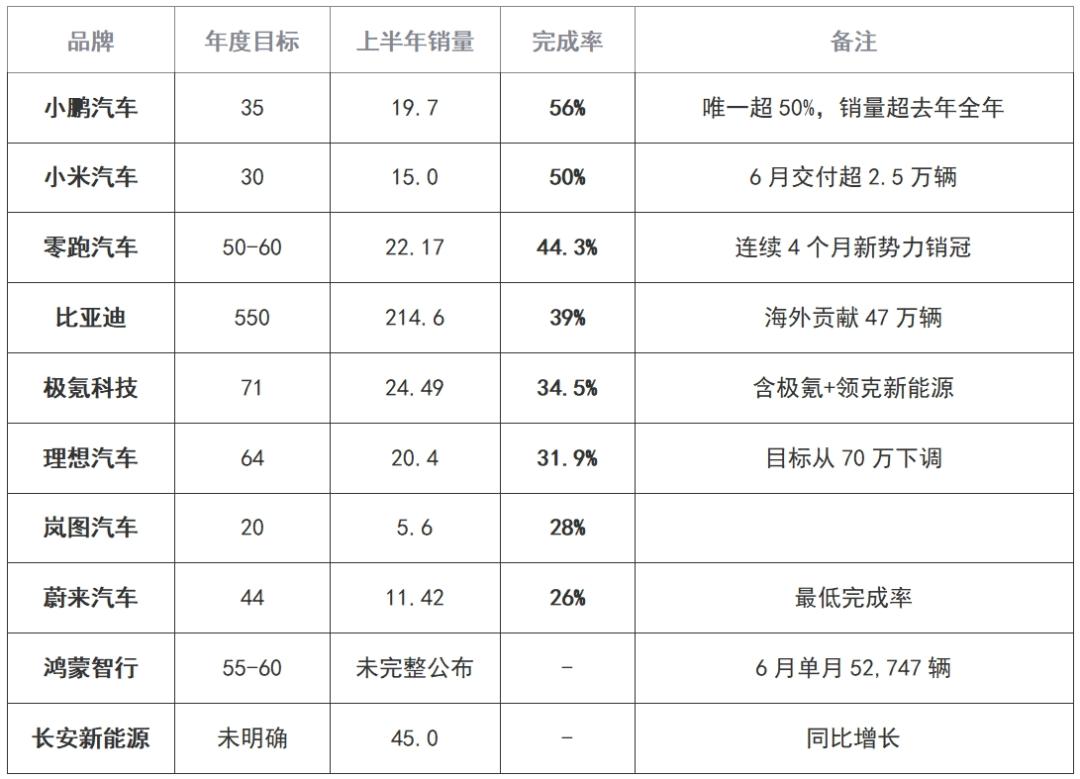
Core Viewpoint - Xiaomi's new model, the YU7, has achieved impressive pre-order numbers, raising questions about the validity of these orders and the competitive landscape in the electric vehicle market [1][2][3] Sales Performance - Xiaomi's annual sales target for its automotive division has been raised from 30,000 to 35,000 units, with the YU7 contributing significantly to this goal [2][3] - In the first half of the year, Xiaomi's SU7 series alone achieved a sales volume of 150,000 units, reaching a completion rate of 50% of its annual target [2][3] - The YU7 locked in 204,000 orders within 18 hours, even after excluding 36,000 orders from the SU7 series, indicating strong market demand [1][2] Competitive Landscape - Xiaomi's CEO Lei Jun emphasized that the YU7 is targeting Tesla's Model Y rather than competing with domestic brands, highlighting the competitive nature of the SUV market [5][8] - The YU7 is positioned as a luxury high-performance SUV with a starting price just below that of the Model Y, indicating a strategic pricing approach [5][8] Customer Demographics - The average age of YU7 buyers is around 33 years, with a notable 30% of buyers being female, which contrasts with the male-dominated customer base of competitors [7] - A significant portion of YU7 customers are existing Xiaomi smartphone users, indicating a strong brand loyalty and cross-selling potential [7] Market Strategy - Xiaomi is leveraging the upcoming vehicle trade-in policy in China, which is expected to boost demand for new vehicles, including the YU7 [8] - The company is focusing on innovative features in the YU7 to attract customers, such as zero-gravity seats and enhanced safety features [8] Challenges and Responses - There are concerns about the long delivery times for the YU7, with estimates of 40-50 weeks for initial orders, which may lead to customer attrition to competitors [9][11] - Lei Jun acknowledged the competitive tactics employed by rival companies to intercept YU7 customers, urging competitors to focus on their strengths instead of disparaging Xiaomi [9][11]
评论 | “国补”分批下达,切莫制造恐慌
Sou Hu Cai Jing· 2025-06-30 15:40
Group 1 - The government has confirmed that the "national subsidy" will continue, alleviating previous concerns about its suspension due to local halts [1][2] - A total of 300 billion yuan has been allocated for the consumption upgrade policy, with 162 billion yuan already distributed in two batches, and the remaining 138 billion yuan to be distributed in the third and fourth quarters [1][2] - The phased and precise distribution of funds aims to support the automotive market's sales growth and promote consumption upgrades, aligning with market and consumer demands [2][3] Group 2 - The implementation of the old-for-new subsidy policy has significantly contributed to the sustainable and high-quality development of the automotive industry, with 4.12 million applications for subsidies by May 31, 2023 [2][3] - The proportion of new energy vehicles in the old-for-new program has exceeded 53% since 2025, indicating a shift towards greener consumption [3] - The coordinated efforts of multiple government departments aim to enhance consumer benefits, market prosperity, and sustainable industry development through financial support and credit facilitation [3][4]
研判2025!中国报废汽车回收行业发展历程、行业现状及未来趋势分析:“以旧换新”政策的出台,为报废汽车回收行业注入新动能[图]
Chan Ye Xin Xi Wang· 2025-06-27 01:12
Core Viewpoint - The scrap vehicle recycling industry in China is experiencing significant growth driven by supportive policies and an increasing number of qualified enterprises, with a projected recovery volume of 7.872 million vehicles in 2024, a 70.7% year-on-year increase [1][19]. Industry Overview - Scrap vehicles are defined as those that meet national scrapping standards or are severely damaged and do not meet safety or emission standards [3]. - The recycling process involves extracting waste oil, dismantling reusable parts, and recycling materials such as tires, plastics, and electronic devices [3][7]. Industry Development History - Since 1980, China has gradually established vehicle recycling procedures, with significant policy improvements occurring after the implementation of State Council Order No. 715 in 2019, transitioning to a market-oriented model [9]. - The industry has shifted from a rough development model to a more ecological, resource-efficient, and circular economy approach, contributing positively to carbon reduction goals [9]. Development Drivers 1. **Policy Framework**: The government has introduced various policies to enhance the recycling system, emphasizing the importance of scrapping old vehicles and improving recycling channels [11][13]. 2. **Old-for-New Policy**: The implementation of the old-for-new vehicle policy has significantly boosted the recycling industry, with substantial subsidies for scrapping older vehicles [14][15]. 3. **Aging Vehicle Population**: The rapid growth of vehicle ownership since 2000 has led to a large number of vehicles entering the scrapping phase, indicating strong market potential [17]. Current Industry Status 1. **Recycling Volume**: The scrap vehicle recovery volume reached 7.872 million in 2024, with a 58.6% increase in the first quarter of 2025 [19]. 2. **Market Size**: The market for scrap vehicle recycling is estimated to be around 63.83 billion yuan in 2024, with a significant portion of vehicles entering illegal dismantling operations [23]. 3. **Enterprise Distribution**: The number of qualified recycling enterprises has surged from 755 in 2019 to over 1800 by mid-2025, with increasing competition and operational pressures [25]. Future Trends - The industry is expected to undergo rapid growth and restructuring, with a focus on diversified development, refined dismantling processes, and the integration of digital tracking and green technologies [27].
数据简报 | 2025年5月乘用车产销情况简析
中汽协会数据· 2025-06-16 09:22
Core Viewpoint - The automotive industry in China is experiencing a positive trend in passenger vehicle production and sales, driven by policies promoting vehicle trade-ins, increased consumer demand, and a series of new product launches and promotional events [1][3]. Group 1: Production and Sales Data - In May 2025, passenger vehicle production and sales reached 2.313 million and 2.352 million units respectively, with month-on-month increases of 2.5% and 5.8%, and year-on-year increases of 12.8% and 13.3% [1]. - From January to May 2025, passenger vehicle production and sales totaled 11.08 million and 10.996 million units, reflecting year-on-year growth of 14.1% and 12.6% [1][7]. Group 2: Vehicle Types Performance - In May 2025, among major passenger vehicle types, the production and sales of crossover vehicles saw a significant decline, while basic passenger vehicles (sedans) experienced a slight decrease in production but a small increase in sales [3]. - In the same month, other categories of passenger vehicles showed slight growth in both production and sales [3]. - From January to May 2025, all four major categories of passenger vehicles experienced varying degrees of growth in production and sales, with crossover vehicles showing the most significant growth rate [3]. Group 3: Domestic and Export Sales - In May 2025, domestic sales of passenger vehicles reached 1.884 million units, marking a month-on-month increase of 5.2% and a year-on-year increase of 12.3% [6]. - For the period from January to May 2025, domestic sales totaled 8.916 million units, reflecting a year-on-year growth of 13.9% [7]. - In May 2025, passenger vehicle exports amounted to 468,000 units, with month-on-month growth of 8.5% and year-on-year growth of 17.7% [8]. - From January to May 2025, passenger vehicle exports totaled 2.079 million units, showing a year-on-year increase of 7.4% [9].